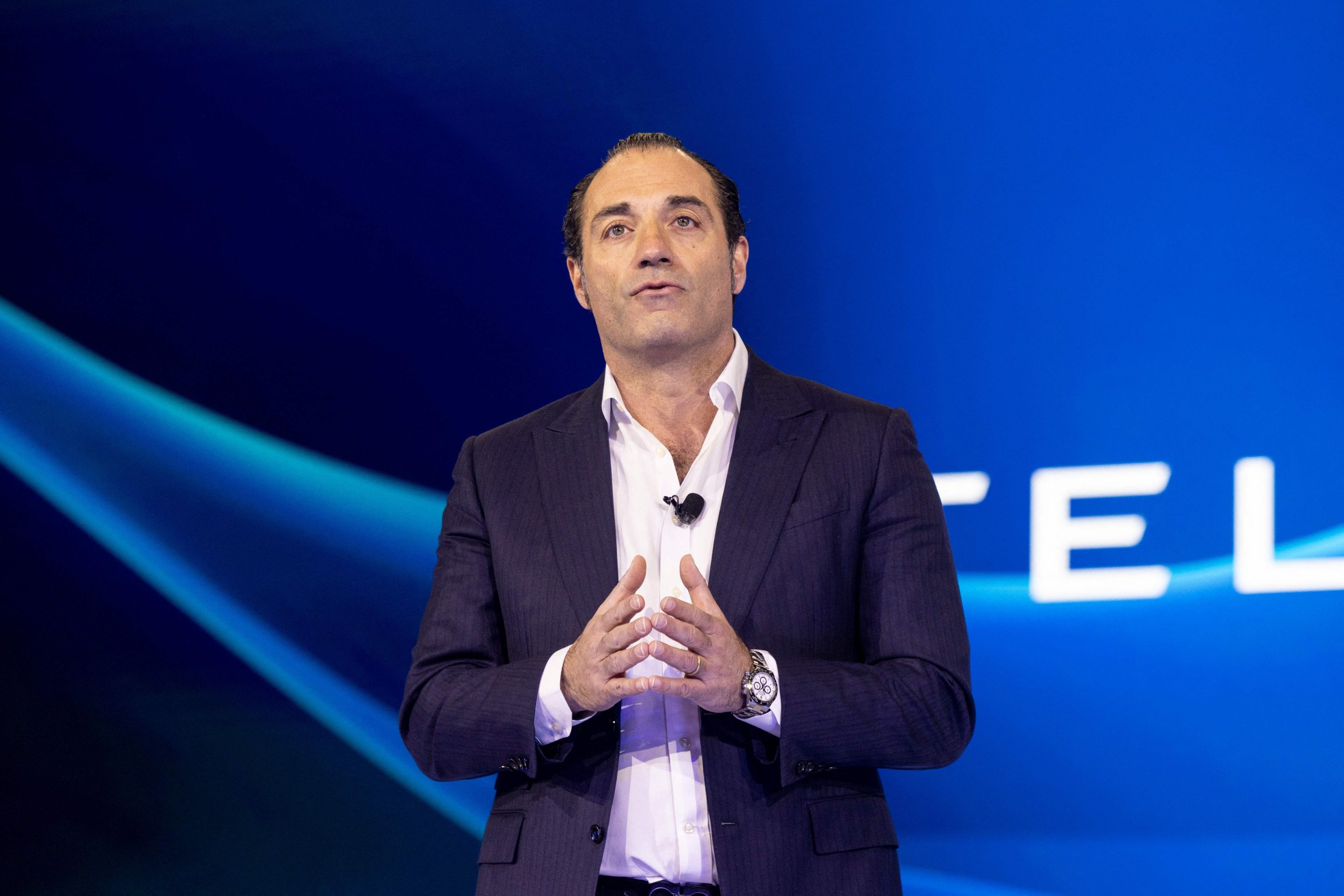
President Donald Trump’s aggressive new trade policies—designed to bolster domestic manufacturing—are hitting Ford Motor Company harder than many anticipated. Despite building roughly 80% of the vehicles it sells in the U.S. domestically, Ford is projecting a net $2 billion tariff-related drag on earnings for 2025, up from a prior estimate of $1.5 billion.
Big Three Automakers Earnings Loss – 3D Chart
Big Three to Lose $7 Billion in Earnings
Ford, GM, and Stellantis—the so-called Big Three—now expect a combined $7 billion earnings hit this year
3D column chart showing earnings losses for Big Three automakers: Ford $2 billion, GM $3.5 billion, Stellantis $1.5 billion, totaling $7 billion in losses.
Despite its domestic-heavy production footprint, Ford isn’t insulated. It reported an $800 million tariff hit in Q2, contributing to a net loss of $36 million, and revised its full‑year earnings forecast to $6.5 billion–$7.5 billion, down from previous guidance of $7.0 billion–$8.5 billion.
Made-in-America Isn’t Enough
Even though Ford produces nearly four in five U.S.-sold vehicles locally, much of its parts and materials—like steel, aluminum, and EV components—are sourced internationally. Under the White House’s new trade regime:
Foreign-made vehicle imports face new 25% tariffs, while automakers allied with USMCA countries can benefit from reduced levies as long as supplier sourcing meets content rules.
CEO Jim Farley warned the tariffs could “blow a hole in the U.S. industry” and force difficult choices in product planning and pricing strategy.
Thanks to trade agreements with the EU, Japan, and South Korea, many foreign automakers now pay only 15% tariffs, significantly less than the 25% levied on imports from Canada and Mexico or on non‑compliant parts.
Stellantis CEO Antonio Filosa noted that 8 million of the 16 million vehicles sold annually in the U.S.—made in Mexico or Canada with many U.S. components—now face higher tariffs than fully compliant imports from abroad.
In Q1 2025, Ford’s revenue declined 5% to $40.7 billion but still beat expectations, and net income dropped from $1.3 billion to $471 million.
Offset strategies include:
Transporting compliant vehicles from Mexico through bonded channels to avoid tariffs
Halting exports to China
Implementing internal cost reductions totaling about $1 billion planned for 2025
As of late July, Ford reinstated full‑year guidance, projecting $6.5 billion–$7.5 billion in adjusted EBIT, and affirmed $2 billion in tariff-related costs for the year.
Big Three Carmakers Earnings – Accurate Data
Analysts predict lower earnings at the Big Three carmakers
General Motors
Ford
Stellantis
Bar chart showing Big Three automakers’ net income from 2018 to 2026, with actual data through 2023 and analyst forecasts for 2024-2026.
A recent study estimates the entire auto industry could incur up to $108 billion in tariff costs, with the Big Three alone losing roughly $41.7 billion in 2025. Bernstein analysts forecast up to a 60% decline in free cash flow for the trio, due to rising production costs and shrinking margins.
Consumer pricing will likely rise: average new vehicle prices could increase by 4–8% by year-end, with some models seeing hikes up to $2,000, driven by imported parts tariffs and material cost inflation.
US Car Sales by Assembly Location
On average only half the cars sold in America are made there
US car sales by country of assembly % (US companies starred)
US
Canada/Mexico
Imported
020406080100
Horizontal stacked bar chart showing percentage of US car sales by assembly location for different manufacturers. US companies are marked with asterisks.
Ford’s commitment to “Made in America” now looks paradoxical. The company is suffering disproportionately from a tariff regime meant to favor U.S. businesses—because its deep integration with global parts supplies exposes it to amplified cost burdens. Farley’s characterization of Ford as “the most American company with a $2 billion liability” captures the irony and urgency of the moment.
Unless Washington revises or harmonizes its trade policies—particularly with key neighbors Mexico and Canada—the pain for Ford and its peers could deepen. Meanwhile, international competitors may seize market share just as consumer prices edge upward.
WASHINGTON, D.C. — The United States will impose a 25% tariff on goods from India, plus an additional import tax because of India’s purchasing of Russian oil, President Donald Trump said Wednesday.
India “is our friend,” Trump said on his Truth Social platform, but its tariffs on U.S. products “are far too high.”
The Republican president added India buys military equipment and oil from Russia, enabling Moscow’s war in Ukraine. As a result, he intends to charge an additional “penalty” starting on Friday as part of the launch of his administration’s revised tariffs on multiple countries.
Trump told reporters on Wednesday the two countries were still in the middle of negotiations on trade despite the tariffs slated to begin in a few days.
“We’re talking to India now,” the president said. “We’ll see what happens.”
The Indian government said Wednesday it’s studying the implications of Trump’s tariffs announcement.
India and the U.S. have been engaged in negotiations on concluding a “fair, balanced and mutually beneficial” bilateral trade agreement over the last few months, and New Delhi remains committed to that objective, India’s Trade Ministry said in a statement.
Trump’s view on tariffs
Trump’s announcement comes after a slew of negotiated trade frameworks with the European Union, Japan, the Philippines and Indonesia — all of which he said would open markets for American goods while enabling the U.S. to raise tax rates on imports. The president views tariff revenues as a way to help offset the budget deficit increases tied to his recent income tax cuts and generate more domestic factory jobs.
While Trump has effectively wielded tariffs as a cudgel to reset the terms of trade, the economic impact is uncertain as most economists expect a slowdown in U.S. growth and greater inflationary pressures as some of the costs of the taxes are passed along to domestic businesses and consumers.
There’s also the possibility of more tariffs coming on trade partners with Russia as well as on pharmaceutical drugs and computer chips.
Kevin Hassett, director of the White House National Economic Council, said Trump and U.S. Trade Representative Jamieson Greer would announce the Russia-related tariff rates on India at a later date.
Tariffs face European pushback
Trump’s approach of putting a 15% tariff on America’s long-standing allies in the EU is also generating pushback, possibly causing European partners as well as Canada to seek alternatives to U.S. leadership on the world stage.
French President Emmanuel Macron said Wednesday in the aftermath of the trade framework that Europe “does not see itself sufficiently” as a global power, saying in a cabinet meeting that negotiations with the U.S. will continue as the agreement gets formalized.
“To be free, you have to be feared,” Macron said. “We have not been feared enough. There is a greater urgency than ever to accelerate the European agenda for sovereignty and competitiveness.”
Seeking a deeper partnership with India
Washington has long sought to develop a deeper partnership with New Delhi, which is seen as a bulwark against China.
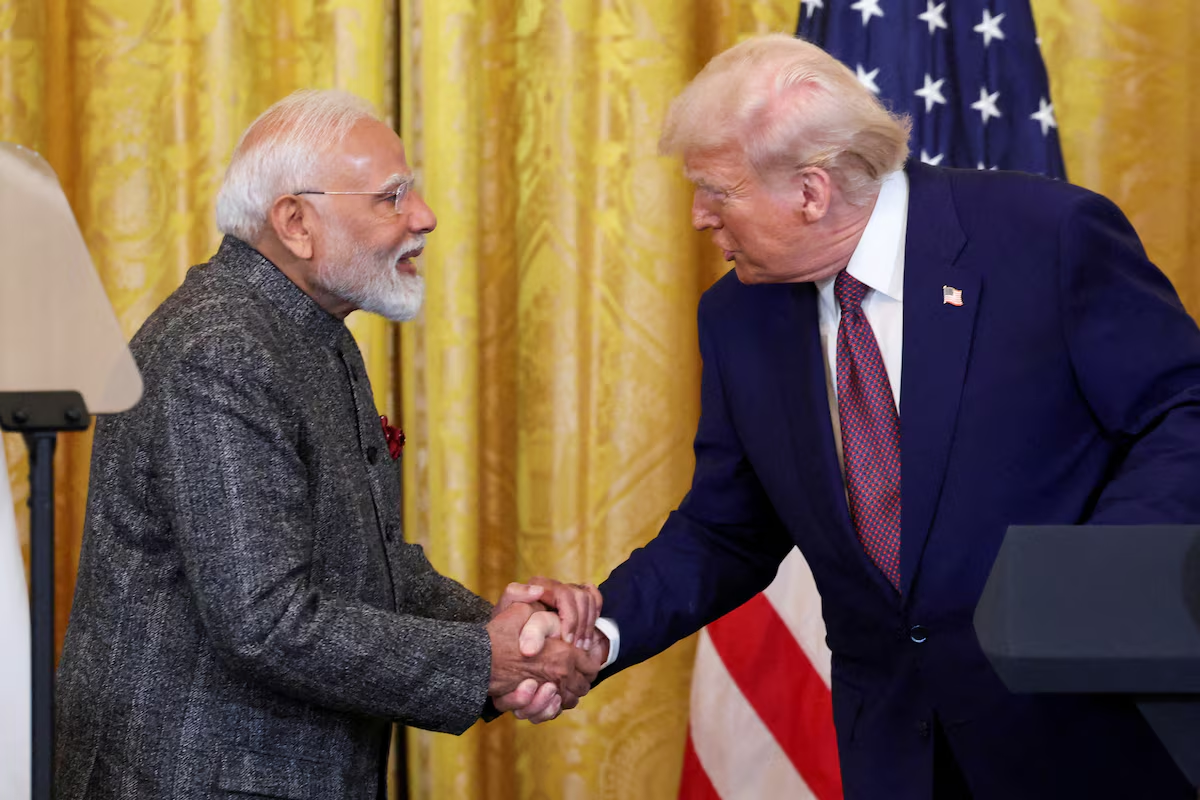
Indian Prime Minister Narendra Modi has established a good working relationship with Trump, and the two leaders are likely to further boost cooperation between their countries. When Trump in February met with Modi, the U.S. president said that India would start buying American oil and natural gas.
The new tariffs on India could complicate its goal of doubling bilateral trade with the U.S. to $500 billion by 2030. The two countries have had five rounds of negotiations for a bilateral trade agreement. While U.S. has been seeking greater market access and zero tariff on almost all its exports, India has expressed reservations on throwing open sectors such as agriculture and dairy, which employ a bulk of the country’s population for livelihood, Indian officials said.
The Census Bureau reported that the U.S. ran a $45.8 billion trade imbalance in goods with India last year, meaning it imported more than it exported.
At a population exceeding 1.4 billion people, India is the world’s largest country and a possible geopolitical counterbalance to China. India and Russia have close relations, and New Delhi has not supported Western sanctions on Moscow over its war in Ukraine.
The new tariffs could put India at a disadvantage in the U.S. market relative to Vietnam, Bangladesh and, possibly, China, said Ajay Sahai, director general of the Federation of Indian Export Organisations.
“We are back to square one as Trump hasn’t spelled out what the penalties would be in addition to the tariff,” Sahai said. “The demand for Indian goods is bound to be hit.”
In a sharp escalation of trade tensions, President Donald Trump has announced a 35% tariff on select Canadian imports, effective August 1, tightening pressure on Canada over issues ranging from fentanyl trafficking to retaliatory trade measures. Crucially, goods compliant with the United States–Mexico–Canada Agreement (USMCA) are exempted—at least for now.
Trump’s move targets products he claims are part of Canada’s inadequate response to the fentanyl crisis flooding into the U.S. He also cites longstanding Canadian barriers, particularly in dairy and agricultural sectors—some carrying “400%” duties as he alleged, hurting U.S. producers.
In a letter to Canadian Prime Minister Mark Carney shared publicly on Truth Social, Trump warned that tariff rates could rise further or be adjusted downward depending on Ottawa’s actions. He also pledged to penalize any “transshipment” efforts intended to avoid the new levies.
U.S. officials clarified that the 35% tariff applies only to non-USMCA-compliant goods, preserving preferential treatment for those that adhere to the trilateral agreement. This means most automotive parts and other USMCA-certified items remain tariff-free—but non-compliant sectors such as certain foods, potash, and energy may face the full burden.
The distinction provides Canada’s businesses with a temporary buffer, but uncertainty looms—particularly around goods whose compliance status is under review.
Financial markets responded swiftly: U.S. stock futures and Treasury yields slipped on worries over trade escalation. The Canadian dollar also dropped to a two-week low, reflecting investor anxiety .
Canadian exporters in non-USMCA sectors are bracing for disruption. Ottawa is considering retaliatory measures and invoking rule-based solutions under WTO frameworks and NAFTA-era mechanisms. Prime Minister Carney has indicated ongoing efforts to mitigate both the fentanyl flow and tariff fallout before the July 21 economic and security pact deadline.
The tariff threats form part of a broader U.S. strategy: Trump has issued similar warnings to over 20 countries, with proposals ranging from 15%–20% tariffs, including a temporary 50% levy on Brazilian goods. Several countries are now scrambling to negotiate carve-outs or exemptions to avoid steep duties.
The prevailing argument in Washington: these trade measures are aimed at correcting “unsustainable trade imbalances” that pose economic and national security risks .
“Carving out USMCA-compliant goods softens the blow but leaves too much uncertainty,” notes Alicia Fernandez, trade economist at NorthStar Insights. “We’re likely headed toward tit-for-tat tariffs and escalating legal dispute.”
Trump’s 35% tariff threat on Canadian goods—while sparing USMCA-compliant items—signifies a targeted yet volatile escalation in the U.S.–Canada trade relationship. With critical deadlines approaching and retaliatory steps underway, this confrontation may reshape North American trade policy well beyond August.
U.S. pharmaceutical companies are racing to assess the fallout from President Donald Trump’s proposal of a 200% tariff on imported pharmaceutical products, a policy that has sent shockwaves through the global drug industry and sparked intense scenario planning among manufacturers and investors.
Speaking on Tuesday, Trump reiterated that long-delayed, industry-wide tariffs are imminent, following the launch of a Section 232 national security investigation into pharmaceutical supply chains in April. While he hinted that the tariffs wouldn’t take effect immediately — instead offering a grace period of 12 to 18 months — industry analysts and executives warn the impact could be both disruptive and long-lasting.
“This kind of tariff would inflate production costs, compress profit margins, and risk severe supply chain disruptions, leading to drug shortages and higher prices for U.S. consumers,” analysts at Barclays warned in a research note Wednesday.
Even with a grace period, the pressure is building. UBS called the delay “insufficient time” for pharmaceutical manufacturers to shift operations back to the U.S., noting that relocating commercial-scale production typically takes four to five years.
According to Pharmaceutical Research and Manufacturers of America (PhRMA), a mere 25% tariff would already drive up U.S. drug prices by $51 billion annually, translating to as much as a 12.9% increase in consumer prices. The group blasted the proposed 200% levy as “counterproductive” to public health, especially given rising inflation and mounting healthcare costs.
“A 100% or 200% tariff would be potentially disastrous for every person because we need those pharmaceuticals, and it takes those companies a long time to produce them here in the U.S.,” said Afsaneh Beschloss, founder and CEO of RockCreek Group, speaking on CNBC’s Closing Bell.
Many of the world’s leading drugmakers — including Roche, Novartis, Sanofi, Bayer, and AstraZeneca — manufacture much of their product outside the U.S., particularly in Europe, India, and Asia, where costs are lower and supply chains more mature.
In anticipation of potential fallout, global firms are exploring relocation strategies and cost restructuring. Roche, for instance, stated it is “monitoring the situation closely” and advocating for policies that reduce barriers to patient access while continuing to expand its U.S. manufacturing footprint.
Bayer said it is focused on “securing supply chains and minimizing any potential impact,” while Novartis confirmed no changes to its current U.S. investment strategy but emphasized ongoing collaboration with the U.S. administration and trade associations.
Other firms — such as Sanofi, AstraZeneca, and Novo Nordisk — have remained largely silent, either declining comment or citing pre-earnings quiet periods.
Trump’s administration argues that reshoring pharmaceutical production is a national security imperative, especially after the COVID-19 pandemic exposed vulnerabilities in the global medical supply chain. Historically, pharmaceuticals have been exempt from trade tariffs due to their essential nature. But Trump has long criticized the industry for “offshoring profits” while “overcharging American patients.”
The president’s remarks on Tuesday reinforced this stance, describing the move as a necessary step toward bringing “American-made medicine” back to domestic shelves. Critics, however, argue that such sweeping tariffs could drive up drug costs while placing undue stress on an industry already grappling with R&D inflation, regulatory pressures, and price transparency reforms.
The pharmaceutical industry had hoped for a carve-out from broad tariffs — a strategy that appears increasingly unlikely. Some optimism has shifted toward future trade negotiations that might soften the blow.
The recently signed U.S.-U.K. trade agreement, while thin on specifics, includes a provision to negotiate preferential treatment for British pharmaceutical products and ingredients, contingent on the outcome of the Section 232 probe.
Swiss and EU pharmaceutical exporters may be pursuing similar carve-outs, but progress has been slow. With the final Section 232 report due by the end of July, drugmakers are bracing for a pivotal policy moment — one that could redefine their long-term U.S. market strategy.
While the United States’ aggressive tariff strategies continue to dominate global trade headlines, a quieter but increasingly tense economic confrontation is unfolding between China and the European Union — one that could have lasting implications for global markets, supply chains, and industrial policy.
Behind the scenes, tit-for-tat measures between Brussels and Beijing have intensified in recent months, exposing a fractured relationship marred by accusations of unfair trade practices, overcapacity, and geopolitical divergence.
The European Union recently restricted Chinese companies from participating in public tenders for medical devices, citing concerns over procurement transparency and national security. China quickly retaliated by imposing import curbs on European medical products, marking a fresh escalation in the long-simmering standoff.
Simultaneously, China made good on its long-threatened tariffs on EU-made brandy, a move widely interpreted as a retaliatory response to the EU’s 2024 imposition of anti-subsidy duties on Chinese electric vehicles (EVs).
Both sides have since ramped up their criticism and countermeasures, with diplomatic language growing sharper and economic cooperation increasingly fraught.
“EU-China trade relations are now quite poor,” said Marc Julienne, director of the Center of Asian Studies at the French Institute of International Relations (Ifri), speaking to CNBC earlier this week. “What was once a domain of great opportunity and enthusiasm has now become more about managing risk.”
This sentiment is echoed across European policy circles. Grzegorz Stec, a senior analyst at the Mercator Institute for China Studies, noted that the two economies are increasingly on a collision course, especially on issues like industrial policy, trade diversion, and market access.
“Beijing’s increasingly urgent need to export contradicts the EU’s desire to protect its own industrial base,” Stec said, referencing China’s ongoing struggle with overcapacity and sluggish domestic demand. These structural issues have compelled Chinese exporters to look outward, often at prices and volumes that European officials say distort competition and threaten homegrown industries.
Beijing’s recent tariffs on European brandy are being described by analysts as “economic weaponization” — part of a broader strategy to pressure Brussels into scaling back scrutiny and protectionist measures. The Chinese investigation into European spirits began shortly after the EU initiated its own probe into Chinese EV subsidies.
This pattern of retaliatory trade policy is not new in global geopolitics, but the stakes are growing. Europe’s trade deficit with China continues to widen, and concerns are mounting over the environment for foreign firms in China, which many say has become increasingly restrictive and opaque.
Interestingly, some experts argue that U.S. tariffs under President Donald Trump could have served as a catalyst for closer EU-China cooperation. Instead, both parties have grown more entrenched in their respective trade positions.
“If anything, the EU and China should have used the U.S. pressure as a common ground for negotiation,” Julienne said. “But instead, geopolitical divergence and mutual distrust prevailed.”
Jean-Marc Fenet, senior fellow at the ESSEC Institute for Geopolitics & Business, believes part of the reason is that China feels it has already ‘won’ its tariff standoff with Washington, reducing the urgency to compromise with Brussels.
“Beijing no longer sees the need for a unified front with the EU,” Fenet said. “In fact, there’s growing concern in Beijing that the EU may fall in line with Washington’s harder stance on China.”
The China-U.S. trade framework agreement announced in June — covering contentious areas such as rare earth exports and technology regulations — only reinforced that perception. Earlier this year, Beijing had already moved to restrict exports of critical rare earth elements and magnets, leveraging its dominance in materials vital to the automotive, energy, and defense sectors.
With an upcoming EU-China Summit scheduled for July 24 in Beijing, hopes are low for a breakthrough. Sources confirm that European Commission President Ursula von der Leyen and Chinese President Xi Jinping are expected to meet, but even senior officials are bracing for a tense and possibly unproductive dialogue.
“The significant hardening of the European Commission’s trade stance, and the bolstering of protectionist tools in recent years, suggest more frictions ahead,” Fenet said.
Indeed, trade experts warn of a long and bumpy road for EU-China relations. As the EU pursues greater economic autonomy and retools industrial policy to protect key sectors, Beijing is unlikely to ease its assertive stance, particularly as it looks to export its way out of structural economic stagnation.
“The overcapacity issues, paired with China’s use of rare earths as leverage in EV tariff talks, suggest that this trade conflict has only just begun,” said Stec.
The brewing tension between two of the world’s largest economies — the EU (GDP $19 trillion) and China (GDP $17.5 trillion) — threatens to disrupt multiple industries, from luxury goods and automobiles to healthcare and green technology.
Companies operating across both markets may face regulatory uncertainty, new tariffs, and a rising compliance burden. Investor sentiment may also sour, particularly in sectors heavily reliant on EU-China trade flows.
As of July 11, European stock markets remain volatile, with the Euro Stoxx 50 down 0.8% over the past week. Chinese markets, meanwhile, have been weighed down by weak domestic data and trade anxiety, with the Shanghai Composite dipping 1.2% this week.
Former U.S. President Donald Trump is intervening in current transatlantic trade negotiations to bolster American oil giants by pressuring the European Union to relax its landmark climate regulations—moves that threaten to weaken global environmental commitments.
In recent trade discussions ahead of the July 9 deadline, Trump officials have floated proposals aimed at diluting the EU’s Corporate Sustainability Due Diligence Directive (CSDDD) and methane emissions mandates, both central to Brussels’ aggressive climate stance. These rules impose rigorous environmental and human rights oversight on companies and require verified methane caps for fossil fuel imports by 2030—a move the U.S. energy sector says could drive them out of the European market.
Executives from ExxonMobil, including CEO Darren Woods, explicitly lobbied Trump to use trade leverage against Brussels. Private sources confirm U.S. negotiators are now urging the EU to soften or delay these regulations in exchange for tariffs relief.
Trump has dangled a steep 50% tariff threat on EU exports if the EU doesn’t step back on its climate rules—a key tactic in forcing concessions. Meanwhile, Brussels, eager to avert a damaging tariff spike, is considering trade-off proposals such as increasing imports of U.S. LNG and adjusting methane oversight frameworks to qualify U.S. gas under equivalency schemes.
This duel underscores a broader conflict between climate ambition and trade power: Trump’s approach aims to fuse energy dominance with economic leverage, while the EU seeks to uphold its Green Deal principles.
Following reports of these contentious trade maneuvers, European carbon credit futures slipped approximately 1.2%, signaling investor anxiety over potential dilution of climate policy. Analysts caution that even talk of loosening methane or sustainability rules could erode confidence in the EU’s green market framework—while bolstering U.S. oil and gas margins temporarily.
Environmental groups have sounded the alarm, labeling the U.S. push “a direct attack on the Paris Agreement,” warning that any weakening of EU standards could unravel global climate governance.
EU Commission President Ursula von der Leyen has reaffirmed the EU’s “sovereign right” to set its own environmental rules and cautioned against ceding core Green Deal elements just to avert U.S. tariffs.
Yet internal EU divisions bite: some leaders argue for flexibility to secure broader trade benefits, while others—like France’s Stéphanie Yon-Courtin—warn that concessions risk setting a dangerous precedent on environmental sovereignty.
EU negotiators will decide whether to carve out limited flexibilities—such as pragmatic methane measurement standards or delayed rollout of the CSDDD—to soften U.S. trade pressure. If no deal is struck, Brussels is reportedly readying retaliatory tariffs worth up to €95 billion. This clash may redefine transatlantic relations—showing whether trade imperatives outweigh climate leadership at a critical geopolitical juncture.
Trump’s alignment with Big Oil in EU trade talks reveals more than one-off bargaining—it spotlights a strategic confrontation over whether commercial leverage can override environmental clarity. The outcome will signal how far Washington and Brussels are willing to bend in balancing market access against the planet’s future.
Homebuilder stocks rallied Thursday, in a sign that residential construction will benefit from the sweeping court ruling striking down President Donald Trump’s tariffs on imported good.
Shares of D.R. Horton and Lennar, the two largest U.S. homebuilders, rose about 0.7% in early trading, alongside a similar bump for other public companies in the sector. The benchmark S&P 500 gained 0.87% at the opening bell.
In a surprise ruling late Wednesday, the little-known U.S. Court of International Trade shot down Trump’s sweeping Liberation Day reciprocal tariffs on nearly all trading partners, as well as his 20% anti-fentanyl levies on China, Canada, and Mexico.
The Trump administration plans to appeal the ruling, and Trump is expected to seek other legal authority to reimpose the steep tariffs that have become a centerpiece of his economic agenda.
On Thursday afternoon, an appeals court ruled that Trump’s tariff’s could remain in place as the administration’s appeal plays out.
“Whether or not the tariffs are re-imposed in some form, I think the rally in residential construction stock speaks directly to the likely impact on the price of materials,” says The Budgets Senior Economist Sara William.
“When construction becomes less expensive, those savings can be passed on to homebuyers—and builders are more likely to move forward with new projects,” he adds. “That means more homes get built, which helps ease the housing shortage and improve affordability at the margin.”
The ruling was met with cautious relief from homebuilders, who had warned that the tariffs would drive up the cost of imported construction materials and make planning new developments more difficult.
“The situation on the tariff front remains fluid, and the trade court decision illustrates the need for the Trump administration to seek fair, equitable deals with America’s trading partners that roll back tariffs on building materials,” the National Association of Homebuilders wrote in an analysis of the new ruling.
Notably, the court ruling does not impact tariffs on Canadian lumber, which are currently at 14.5% and set to more than double later this year.
Canadian lumber, which accounts for about 70% of the imported lumber used in home construction, is subject to tariffs under different authority than the reciprocal tariffs impacted by the court ruling.
Earlier this month, homebuilders said in a key survey that Trump’s whirlwind trade policies have made planning challenging, with 78% reporting difficulties pricing their homes recently due to uncertainty around material prices.
Overall builder confidence in the market for newly built single-family homes dropped to a two-year low in May, according to the National Association of Home Builders/Wells Fargo Housing Market Index.
Construction activity on single-family homes has suffered since Trump began implementing his tariff scheme, with single-family starts dropping in April to an eight-month low.
That downturn came as unwelcome news for a housing market that is grappling with a housing shortage of nearly 4 million units, according to a recent analysis from the Realtor.com economic research team.
President Donald Trump on Friday demanded Apple and other smartphone makers like Samsung make their phones in the United States or face a 25% tariff.
“I have long ago informed Tim Cook of Apple that I expect their iPhone’s that will be sold in the United States of America will be manufactured and built in the United States, not India, or anyplace else,” Trump posted Friday morning on Truth Social. “If that is not the case, a Tariff of at least 25% must be paid by Apple to the U.S.”
Speaking to press in the Oval Office on Friday after signing executive orders, Trump said the tariff would apply to any phone maker selling devices in the US.
“It would be more. It would be also Samsung and anybody that makes that product,” Trump told reporters. “Otherwise it wouldn’t be fair.”
Trump last week during his Middle East trip said he was displeased with Cook, Apple’s CEO, over the company’s plan to manufacture iPhones set to be sold in the United States at newly built plants in India.
Over the past several years, Apple had been working to diversify its production capabilities. Some iPhone production had already moved to India, and Cook on Apple’s earnings call with investors earlier this month said he expected “the majority of iPhones sold in the US will have India as their country of origin.”
On that call, Cook said he expected Apple would face a tariff burden of up to $900 million this quarter. However, it could have been significantly worse: Apple and other US tech companies scored a big win last month when Trump exempted electronics from his massive tariffs on China.
Unlike Apple, Samsung doesn’t rely on China for smartphone production. The South Korea-based tech giant closed its last phone factory in China in 2019 after losing market share to domestic rivals, though it still has operations there. Sources within Samsung previously told CNN that the vast majority of its smartphone manufacturing takes place in South Korea, Vietnam, India and Brazil.
Despite lowering his tariff to at least 30% on most Chinese goods — down from 145% earlier this month — a 10% universal tariff remains on the majority of goods entering the United States. Roughly 90% of Apple’s iPhone production and assembly is based in China, according to Wedbush Securities’ estimates.
Trump met with Cook in Riyadh at the beginning of the president’s Middle East trip last week. In Qatar, he called out Cook for his plan to build US-bound iPhones in India.
“I had a little problem with Tim Cook,” Trump said last week in Qatar. “I said to him, ‘Tim, you’re my friend. I treated you very good. You’re coming in with $500 billion.’ But now I hear you’re building all over India. I don’t want you building in India.’”
Cook met with Trump once again at the White House on Tuesday, an administration official told CNN. The official did not divulge the subject matter of the meeting.
Treasury Secretary Scott Bessent said in an interview with Fox News on Friday morning that Trump is trying to “bring back precision manufacturing to the US.”
“I think that one of our greatest vulnerabilities are these, is this external production, especially in semiconductors, and a large part of Apple’s components are in semiconductors,” Bessent said. “So we would like to have Apple help us make the semiconductor supply chain more secure.”
Some of Apple’s chips are already made in the United States, thanks to its partnership with TSMC, which recently opened a chipmaking plant in Arizona. The company did not immediately respond to a request for comment.
‘Those jobs aren’t coming back’
The world’s most valuable publicly traded company is flush with cash and rakes in tremendous profit — more than any company in history. But Apple has long contended that it cannot manufacture iPhones in America.
Apple has invested billions of dollars training millions of skilled engineers abroad. China and India, with their massive populations, simply have more skilled engineers than the United States does. And it costs Apple significantly less to pay those workers.
Steve Jobs, Apple’s late CEO, famously brought up the issue during an October 2010 meeting with former President Barack Obama. He called America’s lackluster education system an obstacle for Apple, which needed 30,000 industrial engineers to support its on-site factory workers.
“You can’t find that many in America to hire,” Jobs told Obama, according to his biographer, Walter Isaacson. “If you could educate these engineers, we could move more manufacturing plants here.”
In a 2012 interview with tech journalists Kara Swisher and Walt Mossberg, Apple CEO Tim Cook said he agreed with Jobs’ assessment. When asked if the day would ever come when an Apple product is made in the United States, he said: “I want there to be … and you can bet that we’ll use the whole of our influence on this.”
The notion Apple can reshore iPhone production is a “fictional tale,” Dan Ives, global head of technology research at financial services firm Wedbush Securities.
US-made iPhones could cost more than three times their current price of around $1,000, he said, because it would be necessary to replicate the highly complex production ecosystem that currently exists in Asia.
“You build that (supply chain) in the US with a fab in West Virginia and New Jersey, they’ll be $3,500 iPhones,” he said, referring to fabrication plants, or high-tech manufacturing facilities where computer chips that power electronic devices are normally made.
And even then, it would cost Apple about $30 billion and three years to move just 10% of its supply chain to the US to begin with, Ives told Burnett.
Ives reiterated that stance in a statement following Trump’s Friday tariff threat, saying, “the concept of Apple producing iPhones in the US is a fairy tale that is not feasible.” He estimated moving all of Apple’s iPhone production to the United States would take five to 10 years.
An additional 25% tariff on Apple products could result in higher prices for US iPhone buyers. Rumors have already been swirling that Apple is considering raising prices when it releases its new lineup of iPhones in the fall — a move that could further irk Trump, although the company will likely avoid directly attributing the increases to tariffs.
Gene Munster, managing partner at Deepwater Asset Management, estimates it would be difficult for Apple not to raise iPhone prices if it faces tariffs of 30% or higher.
“Anything below 30, they will probably carry the vast majority of that increase,” he said. “But I think at some point they’re going to have to start to share it.”
While moving iPhone production to the United States may not be possible, Apple did announce a $500 billion investment to expand its US facilities earlier this year, in an apparent effort to appease Trump.
The company said the investment would create a new facility to produce servers — previously made outside the United States — in Houston to support Apple Intelligence, its new brand of artificial intelligence products. It will also expand data center capacity in several states, and plans to invest in corporate facilities and production of Apple TV+ shows in 20 states, among other efforts.
One day after House Republicans approved an expensive package of tax cuts that rattled financial markets, President Trump pivoted back to his other signature policy priority, unveiling a battery of tariff threats that further spooked investors and raised the prospects of higher prices on American consumers.
For a president who has fashioned himself as a shrewd steward of the economy, the decision to escalate his global trade war on Friday appeared curious and costly. It capped off a week that saw Mr. Trump ignore repeated warnings that his agenda could worsen the nation’s debt, harm many of his own voters, hurt the finances of low-income families and contribute far less in growth than the White House contends.
The tepid market response to the president’s economic policy approach did little to sway Mr. Trump, who chose on Friday to revive the uncertainty that has kept businesses and consumers on edge. The president threatened 50 percent tariffs on the European Union, and a 25 percent tariff on Apple. Other tech companies, he said, could face the same rate.
Since taking office, Mr. Trump has raced to enact his economic vision, aiming to pair generous tax cuts with sweeping deregulation that he says will expand America’s economy. He has fashioned his steep, worldwide tariffs as a political cudgel that will raise money, encourage more domestic manufacturing and improve U.S. trade relationships.
But for many of his signature policies to succeed, Mr. Trump will have to prove investors wrong, particularly those who lend money to the government by buying its debt.
So far, bond markets are not buying his approach. Where Mr. Trump sees a “golden age” of growth, investors see an agenda that comes with more debt, higher borrowing costs, inflation and an economic slowdown. Investors who once viewed government debt as a relatively risk-free investment are now demanding that the United States pay much more to those who lend America money.
That is on top of businesses, including Walmart, that say they may have to raise prices as a result of the president’s global trade war. The onslaught of policy changes has also left the Federal Reserve frozen in place, unsure as to when the economy will call for lower interest rates in the face of persistent uncertainty. As a result, borrowing costs for mortgages, car loans and credit cards remain onerous for Americans.
Still, Mr. Trump continues to proclaim that his policies will bring prosperity. This week, the White House released data showing that its tax cuts could increase U.S. output as much as 5.2 percent in the short term, compared with the gains it would have achieved if the bill is not adopted. The administration has stood largely alone in offering such rosy predictions about the effects of Mr. Trump’s policies on businesses, average workers and the nation’s fiscal future.
In report after report, economists this week predicted that Mr. Trump’s signature tax package could add well over $3 trillion to the national debt. Some found that the measure is unlikely to deliver substantial economic growth, and could enrich the wealthiest Americans while harming the poorest, millions of whom could soon lose access to federal aid for food and health insurance.
The tax cuts are largely an extension of ones that Congress passed in 2017, meaning that few taxpayers will see an increase to their after-tax income. In fact, some might see their financial situation deteriorate: Many of the lowest earners may even see about $1,300 less on average under the Republican bill in 2030, according to the nonpartisan Penn Wharton Budget Model, which factored in the proposed cuts to federal safety-net programs.
Facing an onslaught of red flags and dour reports, the White House has remained bullish.
“I think folks have cried wolf a lot,” Stephen Miran, the chairman of the president’s Council of Economic Advisers, said in an interview, stressing that Mr. Trump’s agenda would “grow the economy.”
In the past, investors and businesses might have rejoiced over Mr. Trump’s grand proclamations about lowering taxes, reducing regulations and opening access to foreign markets. But the most common reaction this week was concern over Mr. Trump’s sclerotic approach, which has renewed fears that the economy could enter a prolonged period of pain.
“It’s possible that you’re going to get a big benefit to growth, but the costs are so obvious and so clear that I think it’s hard to put a lot of faith in that at the moment,” said Eric Winograd, an economist at the investment firm AllianceBernstein.
By most metrics, Mr. Trump inherited a solid economy. Layoffs were low when he took office, and have stayed that way, helping to keep the unemployment rate stable. And consumers, even amid elevated prices, continued to spend apace.
Four months into his second term, however, there are signs that the economy is beginning to come under greater strain, in what experts worry is a prelude to a more substantive slowdown. While economists do not expect the economy to tip fully into a recession, they say Mr. Trump’s tariffs in particular have raised the odds of a downturn, as both businesses and consumers begin to cut back.
Many of the president’s allies maintain that Mr. Trump is doing exactly as he promised during the 2024 presidential campaign, acting out of a belief that his vision can spur robust economic growth. In doing so, that can help to create jobs, raise wages and generate the sort of activity that can lessen the nation’s fiscal imbalance, said Stephen Moore, a conservative economist who served as one of Mr. Trump’s advisers during his first term.
“So many of these problems are the result of low growth,” Mr. Moore said of the economy. Mr. Trump is aiming to get growth back up to 3 percent, Mr. Moore added.
But the administration has at times ignored a steady stream of data suggesting its policies may not deliver those gains.
The disparity between vision and reality became apparent Thursday as House Republicans voted to advance a bill that would extend the set of tax cuts enacted in the president’s first term. The measure also included Mr. Trump’s campaign promises to eliminate taxes on tips and overtime pay.
An analysis released Thursday by the Joint Committee on Taxation, a nonpartisan advisory arm of Congress, found that the new Republican measure may raise the average rate of growth in U.S. output by only 0.03 percentage points compared with current expectations through 2034. The finding cast doubt on the administration’s long-held assertion that economic activity can help to lower the deficit. The joint committee also said the president’s tax package could add $3.7 trillion to the nation’s debt over the next decade.
Mr. Miran maintained on Friday that congressional analysts and others had underestimated the effects of Mr. Trump’s initial tax cuts, and had done the same this year.
“Better tax policy creates better economic growth, and better economic growth creates better revenue,” he said.
Focusing on the debt, Kevin Hassett, the director of the White House National Economic Council, said on Fox News on Thursday that there was “a lot of spending reduction in this bill,” adding that the Trump administration would seek additional savings as the bill moved through the Senate.
The prospect of a worsening fiscal imbalance prompted Moody’s Ratings just last week to downgrade the U.S. credit rating, citing Republican tax cuts and the proclivity of past G.O.P. administrations to spend. Party lawmakers swiftly rejected the finding, but bond markets took notice, sending yields on longer-term U.S. debt higher. Soft demand at an auction of 20-year Treasuries on Wednesday gave markets another jolt, pushing up bond yields and weighing on U.S. stocks.
Mr. Trump sent markets into another tailspin on Friday as he abruptly shifted his attention to tariffs. He attacked the European Union and threatened to raise tariffs on its exports to a flat rate of 50 percent. He signaled a mixed appetite for negotiations, telling reporters in the Oval Office: “I don’t know. We’re going to see what happens.”
The president also took aim at Apple, signaling he would impose a 25 percent import tax on iPhones, months after his administration relaxed some of its trade policies to aid tech giants. Mr. Trump later suggested his new tariffs might also apply to Samsung.
The S&P 500 fell nearly a percentage point on Friday and pushed the U.S. dollar lower against a basket of its peers. Many from Washington to Wall Street yet again scrambled to decipher Mr. Trump’s intentions — and sort out the extent to which the president is serious, bluffing or set to walk back his policies again.
Some companies, including Walmart, have said they may have to raise prices as a result of the president’s global trade war. (Karsten Moran for The New York Times)
Some businesses have forecast price increases as a result of Mr. Trump’s tariff threats. A report this week from Allianz found that many businesses are trying to push the added tariff costs onto suppliers or consumers, with roughly half of its survey respondents saying they may increase prices.
The potential for rising prices while growth is slowing poses a unique challenge for the Fed and its voting members, forcing them to reconcile with conflicting missions — a goal to pursue low, stable inflation, and a desire to sustain a healthy labor market.
“The bar for me is a little higher for action in any direction while we’re waiting to get some clarity,” Austan Goolsbee, the president of the Chicago Fed and a voting member on this year’s rate-setting committee, told CNBC on Friday.
Mr. Goolsbee recalled a recent exchange with the chief executive of a construction business, who said: “We’re now in a put-your-pencils-down moment.” Businesses, Mr. Goolsbee said, now “have to wait if every week or every month or every day there’s going to be a new major announcement.”
“They just can’t take action until some of those things are resolved,” he added.
China’s giant logistics machine was humming inside rows of metal warehouses near Ho Chi Minh City in southern Vietnam this month. Hundreds of workers packed cosmetics, clothes and shoes for Shein, the Chinese fast-fashion retailer. Recruiters needing to fill hundreds more jobs were interviewing candidates outside.
At another industrial park, owned by the supply chain arm of Alibaba, the Chinese e-commerce giant, trucks drove in and out at a steady clip.
This kind of activity, powered by Chinese money, has brought jobs to Vietnam. It is one of the forces that have made Vietnam a thriving destination for companies around the world looking for alternatives to China’s factories.
But as President Trump’s trade war is turning supply chains upside down, China’s role is emerging as the biggest obstacle for Vietnam as it tries to avoid a 46 percent tariff.
Vietnamese officials are rushing to secure a deal before a 90-day pause on the new tariffs ends in early July. They met with administration officials in Washington this week for a second round of talks. The talks will resume next month, Vietnamese officials said.
The Trump administration wants Vietnam to do more to crack down on companies that are rerouting goods from China to Vietnam to avoid tariffs, a practice known as transshipment.
But the administration is also taking a view of the issue that goes beyond the usual definition of transshipment as it tries to wean the American economy off its dependence on Chinese imports. That puts countries that rely on China to make goods they export under heavy pressure.
For Vietnam, the challenge is proving that what it sends to the United States was made in Vietnam and not in China. In a sign of the awkward position it finds itself in, Peter Navarro, a top trade adviser to Mr. Trump, recently called Vietnam “a colony of China.”
Vietnam was a big beneficiary of tariffs that Mr. Trump placed on Chinese goods during his first presidency. Its trade surplus with the United States swelled to $123.5 billion in 2024, from $38.3 billion in 2017.
The reordering of trade flows accelerated in April, when China was facing 145 percent tariffs, Vietnamese imports from China ballooned to $15 billion while its exports to the United States totaled $12 billion. Beijing and Washington have since reached a temporary deal to slash the tariffs.
“The priority for Trump is for Vietnam to fix the transshipment problem and make sure that the two countries can sign something that shows Vietnam is taking action,” said Adam Sitkoff, the executive director of the American Chamber of Commerce in Hanoi.
In response, Vietnam created a special task force this month to “aggressively crack down on smuggling, trade fraud” and “the export of goods falsely labeled as ‘Made in Vietnam,’” and its finance ministry has met with U.S. Customs and Border Protection to talk about working together and sharing information.
Despite the efforts, Trump officials have said it is not enough.
“It has become very difficult for Vietnam to justify to the U.S. government that this isn’t just rerouting Chinese goods,” said Priyanka Kishore, an economist in Singapore and the founder of Asia Decoded, a consulting firm.
“China is Vietnam’s biggest intermediate goods supplier, so if you are pushing your exports to the U.S. up, you would see an increase in imports from China,” Ms. Kishore said.
Vietnam and other Asian countries depend on China for the supplies used to make finished goods. So as production shifts from factories in China to factories elsewhere, much of the spike in exports from China to its neighbors may be raw materials used by factories.
Still, some Vietnamese imports from China are undeniably finished goods shipped through Vietnam to other countries with their origin in China disguised, which is universally considered illegal.
There is little data on exactly how much falls into the category of transshipment, Ms. Kishore said. By one estimate, rerouting activity increased to 16.5 percent of exports to the United States after Mr. Trump’s first-term tariffs on China, driven in part by Chinese-owned companies.
The prohibitively high tariffs on Chinese goods last month caused more manufacturers to seek options in Vietnam. After Mr. Trump ended a loophole that let Americans buy cheap goods from China tax free, Shein offered guidance and subsidies to factories to move operations to Vietnam. Shein did not respond to a request for comment.
Much of that activity has been the legitimate movement of the supply chain as companies shift their production out of China and into places where tariffs are lower.
But the Trump administration is taking a hard line. “China uses Vietnam to transship to evade the tariffs,” Mr. Navarro said. The goal is to put a fence around China’s exports.
“The United States seems to be arguing that anything that comes from China is by default transshipment, so you tar and feather every single product that comes from China,” said Deborah Elms, the head of trade policy at the Hinrich Foundation, an organization that focuses on trade.
Stopping illegal transshipment is one thing; disconnecting supply chains from China would be much more complicated. Most of the things that Americans buy have raw materials from China — whether it is the plastic in their children’s toys, the rubber in their shoes or the thread in their shirts.
“Asian governments are being asked to redefine supply chains to something that might be decades in the making in exchange for what? It’s a little unclear,” Ms. Elms said.
For Vietnam’s textile and garment industry, taking China out of the equation would be hugely problematic. Factories import around 60 percent of the fabrics they use from China, according to Tran Nhu Tung, the vice chairman of the Vietnam Textile and Apparel Association.
“Without China, we cannot make products,” he said. “Vietnam would have no material to produce to make the finished goods. And without the U.S., Vietnam cannot export the finished goods. So the Vietnamese government has to find a balance between China and the U.S., and it’s very difficult for them to do this.”
To try to sweeten any deal with the Trump administration, Vietnam has offered to increase its purchase of American goods like agricultural products and Boeing aircraft, and curb the shipment of Chinese goods to the United States.
But the flood of investment and hiring by Chinese companies continues to complicate things.
In the southern province of Long An, where many shoe and textile factories are based, Shein is on a hiring drive.
On a recent Friday, Huy Phong, a recruiter, hung an advertisement for jobs on the fence outside a Shein warehouse soliciting work to load goods and sort, classify and package fashion items like handbags, clothing and footwear. The pay: $385 to $578 a month. Shein needs 2,000 workers for its warehouse and has hired only half that number so far, he said.
Finding workers was hard. A lot of warehouses and logistics companies were recruiting.
Nearby, Duong Minh Giang was leaving his interview feeling dismayed. He said the job would entail handling raw materials from China like thread and chemical dye to store at the warehouse and send to nearby factories to make clothes.
“But I don’t think I will take the job,” he said. “The salary is low.”
Cookie Consent
We use cookies to improve your experience on our site. By using our site, you consent to cookies.
Contains information related to marketing campaigns of the user. These are shared with Google AdWords / Google Ads when the Google Ads and Google Analytics accounts are linked together.
90 days
__utma
ID used to identify users and sessions
2 years after last activity
__utmt
Used to monitor number of Google Analytics server requests
10 minutes
__utmb
Used to distinguish new sessions and visits. This cookie is set when the GA.js javascript library is loaded and there is no existing __utmb cookie. The cookie is updated every time data is sent to the Google Analytics server.
30 minutes after last activity
__utmc
Used only with old Urchin versions of Google Analytics and not with GA.js. Was used to distinguish between new sessions and visits at the end of a session.
End of session (browser)
__utmz
Contains information about the traffic source or campaign that directed user to the website. The cookie is set when the GA.js javascript is loaded and updated when data is sent to the Google Anaytics server
6 months after last activity
__utmv
Contains custom information set by the web developer via the _setCustomVar method in Google Analytics. This cookie is updated every time new data is sent to the Google Analytics server.
2 years after last activity
__utmx
Used to determine whether a user is included in an A / B or Multivariate test.
18 months
_ga
ID used to identify users
2 years
_gali
Used by Google Analytics to determine which links on a page are being clicked
30 seconds
_ga_
ID used to identify users
2 years
_gid
ID used to identify users for 24 hours after last activity
24 hours
_gat
Used to monitor number of Google Analytics server requests when using Google Tag Manager