Netflix fared better than analysts anticipated during the first three months of the year, signaling the world’s largest video streaming service is still thriving as President Donald Trump’s policies cast a pall on the economy.
The numbers released Thursday indicated Netflix is still building on the momentum that enabled it to add 41 million worldwide subscribers last year—the biggest annual gain in the company’s 27-year history.
But it’s unclear precisely how many more subscribers Netflix picked up during the January-March period because this report marks the first time that that the Los Gatos, California, company hasn’t provided a quarterly update on its total subscribers.
Netflix announced last year it would no longer report subscriber numbers beginning with this quarter as the company seeks to shift investors’ focus to its profits after topping 300 million global subscribers in December. As part of that emphasis, Netflix is working to sell more advertising to supplement subscription dollars.
Netflix’s sharper focus on its finances paid off in this year’s first quarter with earnings of $2.9 billion, or $6.61 per share, a 24% increase from from the same time last year. Revenue climbed 13% from the same time last year to $10.54 billion. Both numbers exceeded forecasts compiled by FactSet Research. Without providing details, Netflix cited ongoing subscriber growth as the main reason for its strong start this year.
The robust growth came against a background of economic chaos and Trump’s fluctuating trade war. The tech industry has been hit particularly hard by the sweeping tariffs that Trump unveiled April 2 because so many bellwether companies rely on international supply chains that have been provided some relief by temporary freezes and exemptions from the fees.
But Netflix’s global streaming service hasn’t been touched by Trump’s tariffs yet, making the company a notable exception that has enabled its stock price to increase 9% so far this year, while the market values of most other major tech companies have plummeted.
“Netflix remains a standout in an otherwise volatile tech landscape,” said Andrew Rocco, a who tracks the stock market for Zacks Investment Research. The company’s shares rose nearly 3% in extended trading after its report came out.
The trade war could still hurt Netflix if it triggers a recession or fuels inflationary pressures as many economists fear. In those scenarios, more consumers may curtail their discretionary spending on entertainment.
The economic volatility could also result in a slowdown in advertising to the detriment of Netflix’s efforts to sell more commercials for a low-priced version of its streaming service that accounted for most of its last year’s subscriber growth.
“We’re paying close attention clearly to the consumer sentiment and where the broader economy is moving,” Netflix co-CEO Greg Peters said during a Thursday conference call. “But based on what we are seeing by actually operating the business right now, there’s nothing really significant to note.”
Peters also said Netflix’s low-cost option, currently priced at $8 per month in the U.S., should help insulate its video streaming service if households start tightening their belts.
In a sign of its confidence, Netflix reaffirmed its previous prediction for annual revenue of roughly $44 billion, up 13% from 2024.
“Historically in tougher economies, home entertainment value is really important to consumer households,” Netflix co-CEO Ted Sarandos noted during the conference call.
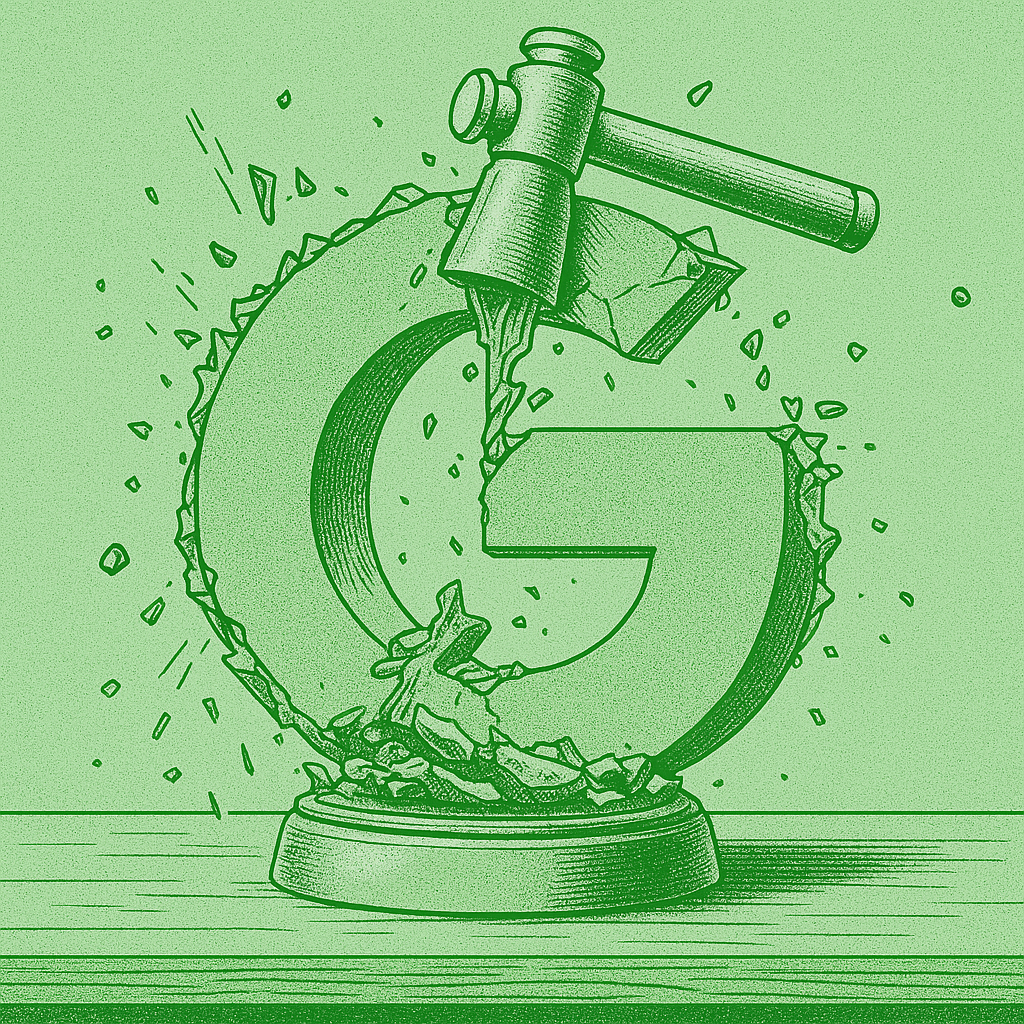
Google Partially Loses US Advertising Tech Antitrust Case. (Ryan McNom/The NewYorkBudgets)
In a landmark decision, a U.S. federal judge has ruled that Google, a subsidiary of Alphabet Inc., illegally monopolized key sectors of the online advertising technology market. The ruling marks a significant setback for the tech giant, which has long dominated the digital advertising landscape. The court found that Google’s practices in the publisher ad server and ad exchange markets violated Sections 1 and 2 of the Sherman Antitrust Act. However, the court dismissed claims regarding Google’s dominance in the advertiser ad network market.
The antitrust lawsuit, filed by the U.S. Department of Justice (DOJ) and 17 state attorneys general, accused Google of engaging in anticompetitive behavior to maintain its dominance in the digital advertising ecosystem. Specifically, the plaintiffs alleged that Google tied its publisher ad server (DoubleClick for Publishers) with its ad exchange (AdX), effectively forcing publishers to use both services and stifling competition.
The case, United States v. Google LLC, was filed in the U.S. District Court for the Eastern District of Virginia. The trial began on September 9, 2024, and concluded on September 27, with closing arguments delivered on November 25, 2024.Judge Leonie Brinkema presided over the case and issued the ruling on April 17, 2025.
Judge Brinkema’s 115-page ruling concluded that Google willfully engaged in a series of anticompetitive acts to acquire and maintain monopoly power in the publisher ad server and ad exchange markets for open-web display advertising. The court found that for over a decade, Google improperly tied its publisher ad server and ad exchange through policies and technology, harming publishers and web users.
However, the court dismissed the DOJ’s claim that Google also monopolized the advertiser ad network market, stating that the plaintiffs failed to prove that Google’s conduct in this area violated antitrust laws.
In response to the ruling, Google’s Vice President of Regulatory Affairs, Lee-Anne Mulholland, stated that the company would appeal the parts of the ruling it lost. She emphasized that the court found Google’s advertiser tools and acquisitions, such as DoubleClick, did not harm competition. Mulholland asserted that publishers have many options and choose Google because its ad tech tools are simple, affordable, and effective.
The court’s decision opens the door for the DOJ to seek structural remedies, including potentially breaking up Google’s advertising technology operations. Such remedies could involve forcing Google to divest key assets like Google Ad Manager or AdX. The outcome of the remedies phase will significantly impact the digital advertising industry, potentially creating opportunities for competitors and altering the dynamics of online ad auctions.
This ruling marks the second major antitrust loss for Google in recent months. In August 2024, a different court ruled that Google abused its dominance in the online search market. These cases are part of a broader effort by the U.S. government to rein in the power of Big Tech companies and promote competition in digital markets.
The partial loss in the advertising tech antitrust case represents a significant challenge for Google as it navigates increased regulatory scrutiny. The forthcoming remedies phase will determine the extent to which Google’s ad tech business may be restructured. As the digital advertising landscape evolves, the outcomes of such legal battles will shape the future of competition and innovation in the industry.
The U.S. Equal Employment Opportunity Commission (EEOC) has launched an investigation into allegations of workplace discrimination against Tata Consultancy Services (TCS), India’s largest IT services company. The probe follows complaints from American workers who claim they were unfairly replaced by lower-cost Indian employees on work visas.
The EEOC, a federal agency responsible for enforcing anti-discrimination laws, is examining whether TCS systematically favored Indian workers over U.S. citizens and green card holders in hiring and layoffs. The complaints allege that TCS disproportionately terminated American employees while retaining or hiring workers on H-1B and L-1 visas, which are often used to bring foreign talent into the U.S.
This is not the first time TCS has faced such scrutiny. In 2018, a U.S. jury ordered the company to pay $140 million in punitive damages to a former American employee who claimed he was fired because of his nationality. TCS later settled the case for an undisclosed amount.
According to sources familiar with the matter, multiple former TCS employees in the U.S. have submitted sworn statements to the EEOC, alleging:
Discriminatory Hiring Practices: Preferential treatment given to Indian workers in recruitment and promotions.
Biased Layoffs: American employees were disproportionately targeted in workforce reductions.
Retaliation: Some whistleblowers claim they faced retaliation after raising concerns internally.
The EEOC’s investigation could lead to a lawsuit if the agency finds sufficient evidence of systemic discrimination.
TCS, a subsidiary of Tata Group, has denied any wrongdoing. In a statement, the company said: “TCS is an equal opportunity employer and adheres to all local laws and regulations in the U.S. We value diversity and inclusion and are cooperating fully with the EEOC’s inquiry. The allegations do not reflect our corporate policies or practices.”
The company employs over 40,000 workers in the U.S. and has been expanding its local hiring initiatives in recent years, partly in response to stricter U.S. visa policies.
The case highlights ongoing tensions in the U.S. tech industry over the use of foreign work visas. Critics argue that some companies misuse the H-1B program to replace American workers with cheaper labor, while proponents say it helps fill critical skill gaps.
The Biden administration has taken steps to tighten H-1B regulations, including increasing scrutiny of visa applications and prioritizing higher-wage roles. If the EEOC finds merit in the claims against TCS, it could lead to stricter enforcement actions against other IT outsourcing firms.
The EEOC’s investigation is expected to take several months. If a settlement is not reached, the agency may file a lawsuit against TCS, potentially resulting in financial penalties and mandated changes to hiring practices.
Legal experts suggest that the outcome could influence how other Indian IT firms, such as Infosys and Wipro—which have faced similar allegations—operate in the U.S.
For now, the case serves as a reminder of the legal and reputational risks global companies face in balancing cost efficiencies with fair employment practices.
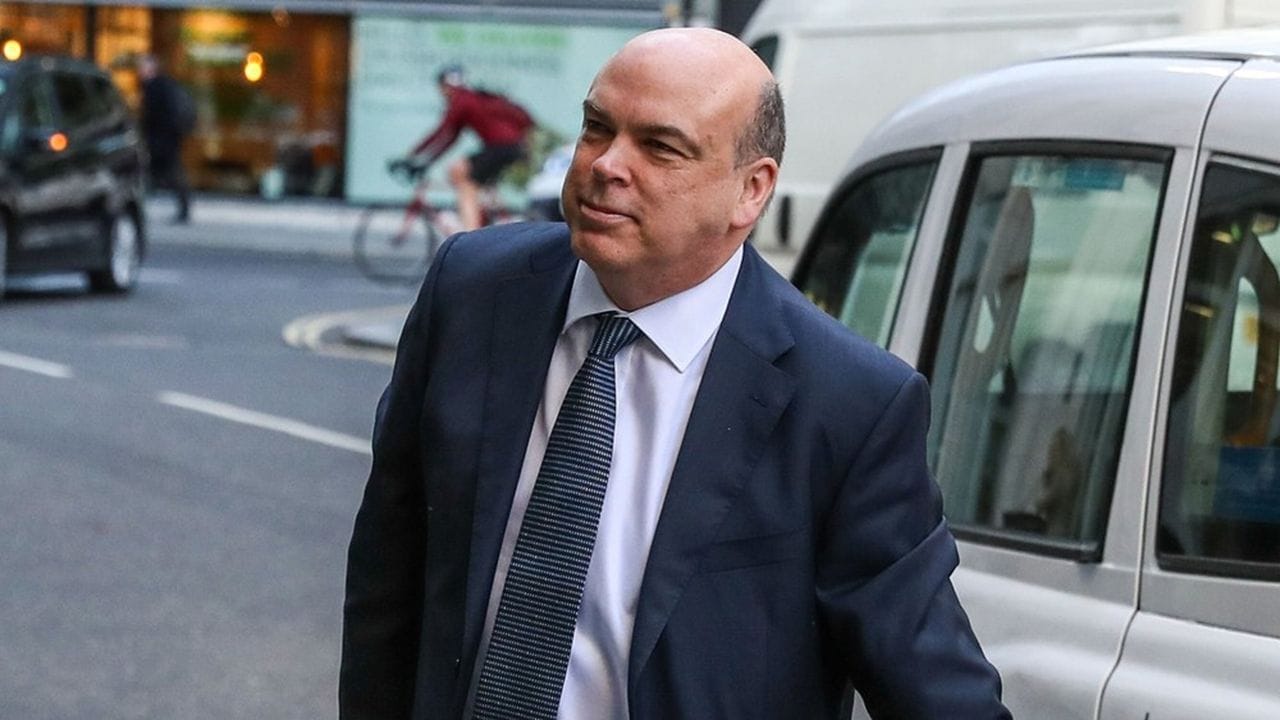
Mike Lynch, the British tech billionaire and founder of software company Autonomy, has lost his legal battle in the UK to appeal his extradition to the United States, where he faces a criminal trial over Hewlett-Packard’s ill-fated $11 billion acquisition of his company in 2011.
The UK High Court on Friday dismissed Lynch’s latest appeal, reaffirming the 2021 decision that allowed his extradition. The ruling marks a significant escalation in one of the most high-profile white-collar criminal cases involving transatlantic tech and finance sectors in recent memory.
Hewlett-Packard (HP) acquired UK-based Autonomy in 2011 for $11 billion in a bid to transform its business through software innovation. But just a year later, HP wrote down the value of the acquisition by $8.8 billion, claiming that Autonomy had fraudulently inflated its revenues and misrepresented its financials. The deal, once hailed as a cornerstone of HP’s global strategy, instead became a costly and controversial blunder.
The U.S. Department of Justice charged Lynch with 17 criminal counts, including conspiracy to commit wire fraud and securities fraud. Prosecutors allege that Autonomy’s accounting practices misled HP, resulting in a $5 billion overpayment. Lynch has denied any wrongdoing, asserting that HP mismanaged the integration and failed to understand Autonomy’s business.
Legal Challenges and Extradition Battle
Lynch’s legal team had argued that since Autonomy was a UK-listed company with operations, audits, and board oversight based in the UK, the case should be tried in British courts. His attorneys also cited that much of the alleged misconduct took place in the UK and that the Serious Fraud Office (SFO) had not ruled out pursuing charges domestically.
But the High Court rejected these arguments, siding with U.S. prosecutors and emphasizing that the majority of Autonomy’s revenue came from the U.S., making it an appropriate jurisdiction. “The case should be prosecuted in the U.S. as most of Autonomy’s revenues came from the U.S.,” the judges wrote in their opinion.
This decision means Lynch is now set to be extradited to California, where he will face a jury trial alongside evidence and witnesses previously examined in a related civil case.
Lynch’s Dual Legal Battle
In addition to the criminal trial, Lynch has already suffered a major defeat in the civil courts. In 2022, he lost a $5 billion civil fraud lawsuit brought by Hewlett Packard Enterprise (HPE)—a successor to HP following its 2015 corporate split. That case involved similar allegations and relied on many of the same witnesses expected to testify in the U.S. criminal trial.
Autonomy’s former CFO, Sushovan Hussain, was previously convicted in the U.S. and is currently serving a five-year prison sentence after being found guilty of fraud in 2018.
Lynch remains defiant. In a statement issued through a spokesperson, he said he was “very disappointed” with the ruling and criticized what he views as U.S. legal overreach into British jurisdiction. “The United States’ legal over-reach into the UK is a threat to the rights of all British citizens and the sovereignty of the UK,” he added.
He confirmed he will consider further appeals, including to the European Court of Human Rights.
The case has drawn intense scrutiny from business leaders, legal scholars, and market regulators on both sides of the Atlantic. It has become a cautionary tale for international mergers and acquisitions, especially those involving companies with complex cross-border financials and accounting systems.
The HP-Autonomy saga has long haunted HP’s reputation and investor confidence. While HP Inc. (which now focuses on computers and printers) has distanced itself from the deal, HPE (Hewlett Packard Enterprise), which manages enterprise services and cloud infrastructure, has remained active in seeking legal recourse.
Investors and corporate executives are closely watching Lynch’s criminal trial, which could influence future regulations on tech sector acquisitions, due diligence standards, and financial transparency in international transactions. Any developments may also affect investor sentiment toward UK-based tech firms involved in U.S. business deals.
SAN JOSE, Calif. — Elizabeth Holmes, the founder of the failed blood-testing start-up Theranos, was sentenced to more than 11 years in prison on Friday for defrauding investors about her company’s technology and business dealings.
The sentence capped a yearslong saga that has captivated the public and ignited debates about Silicon Valley’s culture of hype and exaggeration. Ms. Holmes, who raised $945 million for Theranos and promised that the start-up would revolutionize health care with tests that required just a few drops of blood, was convicted in January of four counts of fraud for deceiving investors with those claims, which turned out not to be true.
Judge Edward J. Davila of the U.S. District Court for the Northern District of California sentenced Ms. Holmes to 135 months in prison, which is slightly more than 11 years, followed by three years of supervised release. Ms. Holmes, 38, who plans to appeal, must surrender to custody on April 27, 2023.
In the courtroom on Friday, Ms. Holmes — who appeared with a large group of friends and family, including her parents and her partner, Billy Evans — cried when she read a statement to the judge.
“I am devastated by my failings,” she said. “I have felt deep pain for what people went through because I failed them.”
Ms. Holmes, who has a 1-year-old son and is pregnant with her second child, apologized to the investors, patients and employees of Theranos. She said she had tried to realize her dream too quickly and do too many things at once. She ended with a quotation from the poet Rumi and a promise to do good in the world in the future.
Though federal sentencing guidelines for wire fraud of the size that Ms. Holmes was convicted of recommend a maximum of 20 years in prison, a probation officer assigned to the case proposed nine years. Her lawyers had asked for just 18 months of house arrest, while prosecutors sought 15 years and $804 million in restitution for 29 investors.
Prosecutors had urged Judge Davila to consider the message that her case would send to the world. In court filings, they wrote that a long sentence for Ms. Holmes was important to “deter future start-up fraud schemes” and “rebuild the trust investors must have when funding innovators.”
Jeffrey Cohen, an associate professor at Boston College Law School and a former federal prosecutor, said it was somewhat surprising for a sentence to go beyond a probation report’s recommendation, but the high-profile nature of Ms. Holmes’s case had made it a symbol. The sentence also showed that courts take fraud seriously, he added.
“We rarely see these kinds of prosecutions,” he said.
Ms. Holmes’s case has taken on an almost mythic status among white-collar crimes. Few start-up founders reached the level of prominence that she did, appearing on magazine covers, dining at the White House and hitting a paper net worth of $4.5 billion. Since Theranos’s fraud was exposed in 2015, Ms. Holmes’s story has been told in podcasts, TV shows, books and documentaries.
Ms. Holmes with her parents and Mr. Evans before her sentencing on Friday. Theranos shut down in 2018. (Jim Wilson/The New York Times)
Exaggeration and hype are common among tech start-ups, but very few executives are indicted on fraud charges, let alone convicted and sent to prison. That trend may be changing as the Justice Department has said it plans to be more aggressive in its pursuit of white-collar criminals.
In October, Trevor Milton, the founder of the electric vehicle company Nikola, was convicted of fraud. And Sam Bankman-Fried, the founder of the cryptocurrency exchange FTX, which collapsed in bankruptcy last week, is under multiple state and federal investigations.
In court on Friday, Judge Davila asked if any victims of Ms. Holmes were present. A man in a blue suit stood up and introduced himself as Alex Shultz, the son of George Shultz, the former secretary of state who served on Theranos’s board and who died in 2021, and the father of Tyler Shultz, a Theranos employee who helped expose the fraud.
His voice shaking, Alex Shultz described how Ms. Holmes had nearly “desecrated” his family after she suspected Tyler Shultz of speaking to the media about Theranos. She hired private investigators to stalk them, threatened legal ruin and “took advantage of my dad,” Alex Shultz said.
Jeffrey Schenk, an assistant U.S. attorney and a lead prosecutor, criticized Ms. Holmes’s argument that Theranos’s failure was typical of a high-risk, ambitious Silicon Valley start-up. “It is a logical fallacy to suggest that start-ups fail, Theranos was a start-up, and, therefore, Theranos failed because it was a start-up,” he said. “That is not true.”
Kevin Downey, a lawyer for Ms. Holmes, said in court that because she had never cashed out her Theranos stock, there was no evidence of greed, like yachts, planes, large mansions and parties.
“We have a conviction for a crime where the defendant’s motive was to build technology,” he said.
Asking for leniency, Ms. Holmes submitted more than 100 letters of support from figures including Stanford professors, venture capital investors and Senator Cory Booker, Democrat of New Jersey, which painted her as a virtuous person who was a victim of circumstances.
“Much has been written in the media and addressed in the trial about the company and its failure,” Christian Holmes, her father, wrote in one letter. “Little has been said about the innovation Elizabeth strived for, sacrificed and accomplished in order to help the company continue.”
Ms. Holmes will be assigned to a prison by the Federal Bureau of Prisons based on factors such as location, space, her lack of criminal history and the nonviolent nature of her crime. The minimum security prison nearest to Ms. Holmes’s residence in Woodside, Calif., is likely the Federal Correctional Institution in Dublin.
Theranos created a machine that it claimed could run more than 1,000 tests on a drop of blood. It struck partnerships with major grocery chains to build test centers in their stores. (Jim Wilson/The New York Times)
Ms. Holmes’s dramatic rise and fall began more than a decade after she dropped out of Stanford University to create Theranos in 2003, a start-up that aimed to revolutionize health care with better diagnoses of illnesses. The company created a machine that it claimed could run more than 1,000 tests on a drop of blood and struck partnerships with major grocery chains to build test centers in their stores. Ms. Holmes also claimed the company’s technology was endorsed by pharmaceutical companies and used on battlefields in Afghanistan.
None of those claims turned out to be true.
Theranos’s deceptions were exposed by The Wall Street Journal in 2015, and a government inspection shut down the company’s lab soon after. Theranos dissolved in 2018, the year Ms. Holmes and her business partner, Ramesh Balwani, were indicted on fraud charges.
In July, Mr. Balwani was found guilty of 12 counts of fraud in a separate trial. He is set to be sentenced on Dec. 7. Ms. Holmes, who argued to separate the cases, did not cooperate with prosecutors on his case.
At her trial last year, Ms. Holmes testified for seven days, the only time she had spoken publicly about what had happened at Theranos since the company collapsed. She expressed regret for her harsh treatment of whistle-blowers and journalists who investigated the company, as well as for falsifying scientific research documents.
She blamed others at Theranos for many of the company’s shortcomings and said her exaggerations were simply painting a picture of the future that investors wanted to hear. “They weren’t interested in today or tomorrow or next month. They were interested in what kind of change we could make,” she said.
She also accused Mr. Balwani, whom she dated for more than a decade, and who is more than 20 years older than she is, of emotional and sexual abuse. Mr. Balwani has denied the accusations.
Ultimately, a jury concluded that Ms. Holmes was guilty of defrauding three of its largest investors and of conspiring to do so. After the verdict, Ms. Holmes made numerous attempts to get a new trial. She was denied.
Before he imposed his sentence, Judge Davila pondered Silicon Valley’s ethos and what had driven Ms. Holmes to commit fraud.
“Was there a loss of moral compass here? Was it hubris? Was it intoxication with the fame that comes with being a young entrepreneur?” he asked. He drew a distinction between investors who take big risks backing ambitious founders and those who don’t know that they are being lied to.
“The tragedy in this case,” he concluded, “is that Ms. Holmes is brilliant.”
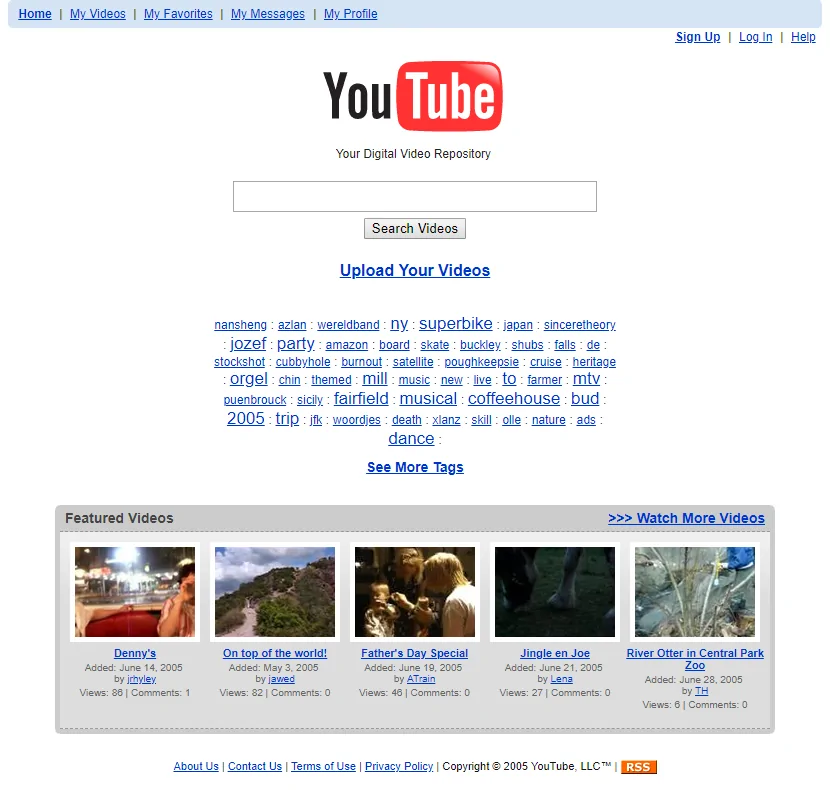
Google Inc. is snapping up YouTube Inc. for $1.65 billion in a deal that catapults the Internet search leader to a starring role in the online video revolution.
The all-stock deal announced Monday unites one of the Internet’s marquee companies with one of its rapidly rising stars. It came just hours after YouTube unveiled three agreements with media companies in an apparent bid to escape the threat of copyright-infringement lawsuits.
The price makes YouTube, a still-unprofitable startup, by far the most expensive purchase made by Google during its eight-year history.
Although some cynics have questioned YouTube’s staying power, Google is betting that the popular Web site will provide it an increasingly lucrative marketing hub as more viewers and advertisers migrate from television to the Internet.
“We are natural partners to offer a compelling media entertainment service to users, content owners and advertisers,” said Eric Schmidt, Google’s chief executive officer.
YouTube will continue to retain its brand, as well as all 67 employees, including co-founders Chad Hurley and Steve Chen. The deal is expected to close in the fourth quarter of this year.
“I’m confident that with this partnership we’ll have the flexibility and resources needed to pursue our goal of building the next-generation platform for serving media worldwide,” said Hurley, YouTube’s 29-year-old CEO.
“One of the problems with YouTube is that they’ve been known to carry copyrighted material without the permission of the copyright holders,” Magid said.
But Hurley and Chen, 27, have spent months dealing with the copyright hurdle by cozying up with major media executives in an effort to convince them that YouTube could help them make more money by helping them connect with the growing number of people who spend most of their free time on the Internet.
While Google has been hauling away huge profits from the booming search market, it hasn’t been able to become a major player in online video.
That should change now, predicted Forrester Research analyst Charlene Li. “This gives Google the video play they have been looking for and gives them a great opportunity to redefine how advertising is done,” she said.
Investors applauded the possible acquisition as Google shares climbed $8.50, or 2 percent, to close at $429 on the Nasdaq Stock Market.
Several other suitors, including Microsoft Corp., Yahoo Inc. and News Corp., reportedly have discussed a possible YouTube purchase in recent weeks.
“This deal looks pretty compelling for Google,” said Standard & Poor’s analyst Scott Kessler said. “Google has been doing a lot of things right, but they are not sitting on their laurels.”
Google’s YouTube coup may intensify the pressure on Yahoo to make its own splash by buying Facebook.com, the Internet’s second most popular social-networking site. Yahoo has reportedly offered as much as $1 billion for Palo Alto-based Facebook during months of sporadic talks.
“Yahoo really needs to step up and do something,” said Roger Aguinaldo, an investment banker who also publishes a deal-making newsletter called the M&A Advisor. “They are becoming less relevant and looking less innovative with each passing day.”
Selling to Mountain View-based Google will give YouTube more technological muscle and advertising know-how, as well as generate a staggering windfall for a 67-employee company that was running on credit card debt just 20 months ago.
Since Hurley and Chen founded the company in February 2005, YouTube has blossomed into a cultural touchstone that shows more than 100 million video clips per day. The video library is eclectic, featuring everything from teenagers goofing off in their rooms to William Shatner singing “Rocket Man” during a 1970s TV show. The clips are submitted by users.
“What’s nice from YouTube’s perspective is that they don’t even have to pay for a lot of that content,” reported Magid. “Much of it is uploaded by people who just want to use the service to show off their talent.”
YouTube’s worldwide audience was 72.1 million by August, up from 2.8 million a year earlier, according to comScore Media Metrix.
YouTube’s conciliatory approach with major media has recently yielded several licensing and promotional agreements that have eased some of the copyright concerns while providing the company with some financial breathing room until it becomes profitable.
To conserve money as it subsisted on $11.5 million in venture capital, YouTube had been based in an austere office above a San Mateo pizzeria until recently moving to more spacious quarters in nearby San Bruno.
As its negotiations with Google appeared to near fruition, YouTube on Monday announced new partnerships with Universal Music Group, CBS Corp. and Sony BMG Music Entertainment. Those alliances followed a similar arrangement announced last month with Warner Music Group Inc.
The truce with Universal represented a particularly significant breakthrough because the world’s largest record company had threatened to sue YouTube for copyright infringement less than a month ago.
Li and Kessler expect even more media companies will be lining up to do business with YouTube now that Google owns it.
“It’s going to be like, ‘You can either fight us or you can make money with us,”‘ Li predicted.
Cookie Consent
We use cookies to improve your experience on our site. By using our site, you consent to cookies.
Contains information related to marketing campaigns of the user. These are shared with Google AdWords / Google Ads when the Google Ads and Google Analytics accounts are linked together.
90 days
__utma
ID used to identify users and sessions
2 years after last activity
__utmt
Used to monitor number of Google Analytics server requests
10 minutes
__utmb
Used to distinguish new sessions and visits. This cookie is set when the GA.js javascript library is loaded and there is no existing __utmb cookie. The cookie is updated every time data is sent to the Google Analytics server.
30 minutes after last activity
__utmc
Used only with old Urchin versions of Google Analytics and not with GA.js. Was used to distinguish between new sessions and visits at the end of a session.
End of session (browser)
__utmz
Contains information about the traffic source or campaign that directed user to the website. The cookie is set when the GA.js javascript is loaded and updated when data is sent to the Google Anaytics server
6 months after last activity
__utmv
Contains custom information set by the web developer via the _setCustomVar method in Google Analytics. This cookie is updated every time new data is sent to the Google Analytics server.
2 years after last activity
__utmx
Used to determine whether a user is included in an A / B or Multivariate test.
18 months
_ga
ID used to identify users
2 years
_gali
Used by Google Analytics to determine which links on a page are being clicked
30 seconds
_ga_
ID used to identify users
2 years
_gid
ID used to identify users for 24 hours after last activity
24 hours
_gat
Used to monitor number of Google Analytics server requests when using Google Tag Manager