Starting Friday, the Trump administration is shelving a nearly century-old tax loophole that saved companies from paying tens of billions of dollars in fees on cheap imports, most of which come from China. The move stems from the sweeping tariffs President Donald Trump announced last month on most U.S. trading partners, and it will affect businesses from Etsy sellers and family-run footwear companies to e-commerce behemoths.
In fiscal 2022, 83 percent of all U.S. e-commerce imports used the “de minimis” loophole, according to a government report.
Trump initially did away with the de minimis exemption in February, but the move quickly overwhelmed U.S. Customs and Border Protection workers and prompted the U.S. Postal Service to briefly suspend inbound shipments from China and Hong Kong. The administration then reinstated the loophole to allow the Commerce Department to craft a way to collect the levy. The agency now has “adequate systems … in place to collect tariff revenue” on these low-value goods, the White House had said.
According to an executive order last month, imports from Chinathat previously qualified for the exemption now face a duty of at least 145 percent if they arrive via commercial shipping. Shipments through the Postal Service are subject to a fee of $100 per package — rising to $200 next month — or 120 percent of the import value.
“If a retailer is really reliant on manufacturing or shipping directly from China, this is going to be really painful for them,” Jess Meher, a senior vice president at the returns-management software company Loop, told The Post.
Ultimately, such costs generally filter down to consumers. Here’s why.
What is the de minimis exception?
In Latin, “de minimis” means something that is too small or insignificant to be considered. The rule, passed by Congress in the 1930s and amended over the years, spares merchandise worth less than $800 from import taxes.
E-commerce sites Shein and Temu have thrived off this loophole, allowing them to avoid paying billions of dollars in duties. Some trade experts contend that these retailers have fueled a surge in imports since fiscal 2015, when the number of de minimis entries hovered at about 139 million, according to CBP data. Between that fiscal year and 2023, the number of de minimis exceptions swelled over 600 percent. By 2024, they had surged to 1.36 billion, worth about $66 billion, said Gary Hufbauer, a nonresident senior fellow at the Peterson Institute for International Economics, a nonpartisan think tank based in Washington.
While those volumes represent a mere fraction of U.S. imports — now totaling more than $3 trillion annually — they help boost margins for small- to medium-size businesses in the United States, said Maggie Barnett, chief executive of LVK, a third-party logistics company with warehouses in the U.S. and Canada.
Many of these companies have about “30 percent of their revenue in retail, but the other 70 percent is leveraging the de minimis,” she said. If they’re not shipping directly from China, they often ship their items in bulk from manufacturers in China or Southeast Asia to warehouses in Canada or Mexico and “ship them over [to the U.S.] one by one when the orders come in,” she said.
So far, only items originating from China are prohibited from using the de minimis loophole, according to Trump’s executive order.
What does this have to do with Trump’s tariffs?
Killing the de minimis loophole is part of Trump’s broader strategy to boost domestic production. On April 2, he ordered a 10 percent tariff on all U.S. imports starting April 5, as well as additional taxes that would bring levies of as much as 50 percent on goods from certain countries starting April 9. Since then, Trump said he was pausing and lowering tariffs on goods from most nations for 90 days while simultaneously imposing a minimum tariff of 145 percent on all Chinese imports. Beijing responded with a 125 percent blanket levy.
Opposition to the de minimis loophole largely has been bipartisan, with some critics arguing that it has enabled illicit drugs, such as fentanyl, to be sent through the mail into the U.S. President Joe Biden, in his final days in office, issued limitations on the loophole, excluding certain imports from circumventing tariffs.
How will this affect my orders from Shein, Temu and Amazon Haul?
Without de minimis, prices on those orders could rise much as 30 percent, costing consumers about $22 billion annually, Hufbauer said.
A good chunk of that applies to Temu and Shein orders, which are responsible for an estimated 30 percent of packages shipped into the U.S. each day, according to a report from the Peterson Institute. Nearly half of all de minimis shipments originate in China, according to a report by House Republicans.
In a statement Friday, Temu said it is moving to a “local fulfillment model,” with U.S. orders handled by sellers in the U.S.
The vast majority of products for sale on Temunow have a green “local” sticker, indicating that they are already located in the U.S. at purchase. Shoppers took to social media this week to lament that a slew of items had been removed from their Temu shopping carts because they did not have that “local” tag. At one point last month, the company also displayed tariff-related costs to consumers by adding a charge at checkout for any imported item.
Shortly after Trump’s executive order ending de minimis, Shein said it would start making price adjustments on April 25. The retailer doesn’t break down import costs at checkout, but its website displays a message telling consumers that all tariff costs get included in the price they pay.
Also affected is Amazon, which launched its own platform in November called Haul that similarly sells cheap goods directly from China.Trump chastised the e-commerce giant this week after a news report said it planned to display tariff costs to consumers. An Amazon spokesperson previously told The Washington Post that the team that runs Haul “has considered listing import charges on certain products” but later added that “this was never approved and is not going to happen.”
With the tax loophole going away, brands that rely on sourcing low-cost goods, especially from China, “are going to have a really tough time because their margins are already really thin,” Meher said.
Shein, Temu and Amazon did not immediately respond to The Washington Post’s request for comment. (Amazon founder Jeff Bezos owns The Post.)
Who are the winners and losers?
American companies that haven’t been able to take advantage of the exemption could be the biggest winners, UBS analyst Jay Sole wrote in a February note after Trump initially revoked the loophole. He pointed to U.S. “fast fashion” retailers, specialty retailers, off-price retailers, department stores and kids’ clothing companies that have lost customers to these foreign e-commerce sites.
The flip side is that budget-seeking consumers, who have turned to these companies for cheap apparel and housewares, will bear the brunt of any price changes, Hufbauer said.
The same goes for small- and medium-size businesses, Barnett said. They have less cash on hand, less flexibility on inventory, fewer options to diversify their supply chain and less leverage to negotiate fair prices with major retailers selling their product.
“It’s going to be hard for those medium-sized businesses to maintain in this chaotic environment,” she said.
Elon Musk’s Net Worth Surges Past $400 Billion, Setting a Historic Record. (Forbes)
The past several weeks might have been tumultuous or even existential for a lot of U.S. businesses caught up in trade wars, but they’ve been pretty darn good for Starlink, the satellite company owned by Elon Musk.
After years of regulatory holdups, Starlink reached distribution deals in March with two giant internet providers in India, the world’s most populous country, and won approval in neighboring Pakistan as well. Another of America’s major trade partners, Vietnam, waived a rule that required Starlink to partner with a domestic company and said it would launch a five-year pilot program with Starlink.
Bangladesh, the second-largest exporter of garments to the U.S., just announced its own deal with Starlink after months of stalled negotiations. And in Lesotho, officials brushed aside long-standing objections to Starlink’s foreign ownership and granted the company a license.
I can find no publicly available data that lets us reliably compare the pace of Starlink’s dealmaking in the first part of this year to previous years. But all of these countries represent long-sought partnerships for Musk, and all of them but Lesotho will rank among Starlink’s top markets in terms of population.
This flurry of expansion, of course, comes as most of the world views Musk as the second most powerful man in D.C. So it raises some obvious questions.
Starlink Availability Data Chart
Starlink Availability Data
Visualization of Starlink service availability across different regions and continents.
Available
Coming soon
Waitlist
Blacklisted
By Continent
By Status
Expansion Timeline
Data represents the current global distribution of Starlink service availability as of May 2025.
I’ve spent the past month trying to untangle the complicated case of Bangladesh because it goes directly to the intersection of Musk’s unprecedented role in the Trump administration, his personal interests and American trade policy.
A country that somehow packs half the population of the United States into a land mass roughly the size of Alabama (think about that for a minute), Bangladesh finds itself in a particularly delicate position. Last year, a student-led uprising led to the ouster of the country’s authoritarian leader, Sheikh Hasina, and the establishment of an interim government led by Muhammad Yunus, a Nobel laureate. Yunus has attracted intellectuals and former dissidents to his government as he tries to build the country’s first functioning democracy, while facing stiff resistance from his much larger neighbor, India, where Hasina has taken sanctuary.
It’s the kind of democratic revolution America has often embraced — especially since Yunus is a past recipient of both the Presidential Medal of Freedom and the Congressional Gold Medal. But the Trump administration’s stance toward Bangladesh has hovered somewhere between indifferent and hostile. Trump’s director of national intelligence, Tulsi Gabbard, has echoed dubious allegations from India that the new government persecutes Hindus and harbors Islamist terrorists.
This is a major concern for the Bangladeshis, who rely heavily on exporting T-shirts and the like to America. So, in February, shortly after Trump took office, Yunus dispatched a special envoy, Khalilur Rahman, to Washington in hopes of building bridges on trade and security issues.
According to a source familiar with the Bangladeshi government, who spoke on the condition of anonymity, Rahman visited the White House complex in mid-Februaryand met with an official from the trade representative’s office, who pressed him on the issue of cotton imports. Bangladesh, the world’s largest cotton importer, gets most of its supply from West Africa and Brazil, and the United States was insisting it buy more American cotton if it wanted to head off tariffs.
According to the account from the source, Rahman readily agreed to this demand if it would lead to a new trade deal — but his visit wasn’t quite finished. Rahman was then led to an office where he was surprised to find the world’s richest man.
Musk wanted to discuss ongoing negotiations between Starlink and Bangladeshi regulators, who were under pressure from local telecom companies to keep Starlink out. I was told Rahman called Yunus from that meeting and relayed Musk’s concerns.The apparent implication, though it wasn’t stated outright, was that one of the world’s largest textile exporters would not be able to get favorable trade terms from the United States if Starlink wasn’t allowed entry into the Bangladeshi market.
When I asked the Bangladeshi government, through its embassy in D.C., whether any of its officials had met with Musk in Washington or if the country felt pressured to approve a license for Starlink, I got the same one-sentence reply to both: “The answer is no.” Privately, government officials maintain that Yunus’s government has long wanted to bring Starlink into the country (mainly because the previous regime had shut down the locally controlled internet in an effort to thwart the student revolution), so there would have been no need for Musk to lean on them.
There’s no doubt Bangladesh did want a deal with Starlink. It’s also true that officials there don’t want to disclose anything that would risk souring relations with Musk because the last thing they want right now is to antagonize the Trump administration. It’s hard to blame them for that.
We know a few otherthings for sure, too. Around the same time Rahman was in Washington, newspapers in Bangladesh reported that Yunus and Rahman met by videoconference for 90 minutes with Musk and Richard Griffiths, one of his lieutenants at Starlink, and that Yunus invited Musk to come to Bangladesh to witness the launch of the Starlink system. On X, Yunus posted that he had a “great meeting” with Musk and looked forward to working with him.
We also know that Bangladesh was not the only country trying to avoid tariffs that talked with Musk about Starlink. The same week that Rahman was in Washington, Musk met with India’s prime minister, Narendra Modi, at Blair House, across the street from the White House. According to India Today, which published a picture of Musk and three of his children sitting with Modi, a central agenda item was Starlink’s pending approval in India.
I realize it feels hopelessly naive to dwell on ethics laws in Washington these days (you might as well reminisce about all the spittoons that once dotted offices on Capitol Hill), but in case you were wondering: federal law generally makes it illegal for an official of the executive branch to take part “personally and substantially in an official capacity” in any discussion where he or she has a personal financial interest. A meeting between Musk and foreign leaders about Starlink from the White House would appear problematic.
When I told Sen. Mark R. Warner (Virginia), the ranking Democrat on the Intelligence Committee, about Starlink’s recent flurry of agreements and Musk’s purported discussions with foreign leaders on government grounds, he was taken aback.
“I think that crosses virtually every ethical and legal standard that has at least been the traditional way our country operates,” Warner said. “Musk has created some great companies, but they should not have such an unfair advantage that they get forced on countries by their founder sitting in government spaces.”
Even if Musk isn’t making an explicit connection in these meetings between Starlink approvals and his influence on the president, the perception that there is one has taken hold among anxious officials in other countries. As I was reporting this column, the story about Bangladesh was making its way around political and business circles in South Africa, which is seeking its own crucial trade deal with the Trump administration.
Like Vietnam, South Africa has a law against foreign communications companies operating without local partners — in this case, specifically a Black-owned partner, as the country continues to shed the vestiges of the apartheid era. Musk, a South African native, has repeatedly denounced that law as racist; in March, he posted on X that “Starlink is not allowed to operate in South Africa, because I’m not black.”
Two South African insiders told me that that they now assumedthat approval of a license for Starlink was a prerequisite for getting a favorable trade deal. As if to underscore that point, a leading legislator just introduced a controversial measure to exempt Starlink from the partnership law.
(The White House, which fields questions related to Musk’s work at the so-called Department of Government Efficiency, declined to answer questions about Starlink’s role in trade negotiations or Musk’s meetings with Rahman and Modi. It has previously said that Musk abides “by all applicable federal laws.”An email I sent to Starlink’s media department went unanswered, as well.)
The idea that some of America’s worried trade partners think they’re trading Starlink licenses for merciful policy is disturbing enough. What makes it even worse, perhaps, is that they could get suckered in the process.
Consider, again, the case of Bangladesh. After resolving its impasse with Musk and stepping up its efforts to import American cotton, Bangladeshi officials were stunned to turn on the television in early April and see their country listed on Trump’s giant whiteboard of targeted trade partners — next to a draconian tariff rate of 37 percent. All their efforts to placate Musk and Trump, just a few weeks earlier, had essentially won them nothing (although Trump has since paused the implementation of most tariffs).
You could argue that this proves there isn’t any link, after all, between trade negotiations and Musk’s business dealings. But it seems the Bangladeshis were under a different impression. Days later, after Trump laid out his proposed tariffs, Yunus sent a letter to the president, recounting the many ways in which Bangladesh was cooperating with American trade demands — such as the construction of a “bonded warehousing facility” to increase cotton imports — and pleading with the president to postpone the tariffs for three months. Among the concessions to which he pointed: the country’s pending approval of Starlink.
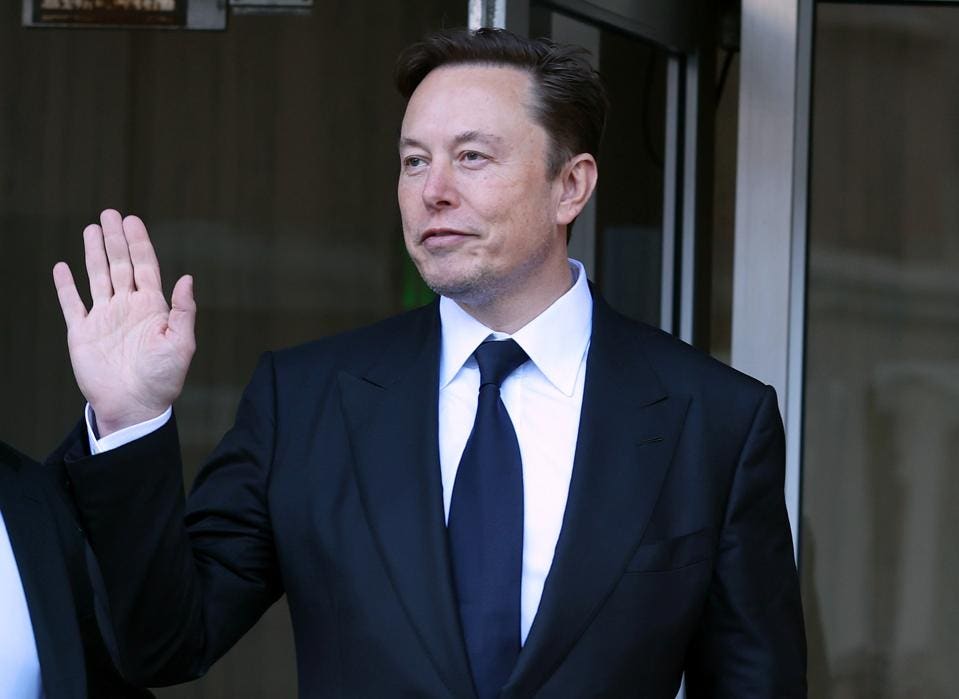
Elon Musk attends a Cabinet meeting at the White House on April 10. (Nathan Howard/Reuters)
As I talked about this with dozens of insiders in Washington and abroad over the past few months, what struck me most was the lack of evident outrage. I mean, this is a city that once found itself, in the Clinton years, paralyzed for weeks over possible conflicts of interest in the White House travel office. But in just the first three months since Trump returned to town and installed Musk as a kind of prime minister for efficiency, everyone seems to have resigned themselves to a new kind of ethical normal.
The conflicts between Musk’s government work and his private businesses are too myriad to track. Not only do licenses for Starlink appear to have worked their way into trade negotiations,but the service has now been installed across the federal government — including at the White House campus — and may soon be included in a federal grant program to low-income areas. Trump’s new NASA administrator, Jared Isaacman, is a friend of Musk’s who commanded the first-ever civilian spaceflight by SpaceX, Musk’s rocket company; he is now in charge of designing the missions for which SpaceX will be bidding. (At his confirmation hearing, Isaacman repeatedly assured senators that he would not be influenced by his relationship to Musk.)
The Wall Street Journal reported in February that a lawyer at X had pressured the large advertising firm Interpublic to direct more ads toward the social media platform — a move interpreted by the firm as a warning that its proposed merger with Omnicom could face government scrutiny if it didn’t. (X declined comment at the time.)According to Wired, the Social Security Administration is now moving its entire communications operation to X. And Trump himself held what amounted to a public sales pitch for Tesla on the White House grounds.
The most common take you hear on all this — at least among non-Trump supporters — is that Musk is all about enriching himself, which is why he’s ignoring ethical conflicts and bending the government to his will. This seems simplistic to me. Musk is worth more than $300 billion; it strains credulity to think that he’s executed a plan to take over Washington just so he can land a few more contracts. This is like saying Napoleon invaded Italy because he wanted more wine.
No, I’m inclined to believe Musk can’t actually conceive of the conflicts here because he fundamentally believes that his businesses are forces for good. This is the central theme of his career: that he is single-handedly saving the planet and leading humankind to colonize Mars. The getting-rich part is just what happens when you’re a visionary. A corollary to that theme is that Musk disdains any rule or regulation that would stand in the way of his saving humanity, which is why he generally loathes government.
So in Musk’s mind, there would be no conflict in using his power to proselytize for his technologies to the rest of the world. The world will be better off for it. Great men of action do not suffer ethical watchdogs in badly tailored suits.
In some respects, he may be right — hard as that is to admit. You can jump up and down about Trump hyping Teslas on the White House lawn, but aren’t we supposed to want the proliferation of cleaner cars? If Musk’s rockets can make the quest for Mars faster and cheaper, wouldn’t any competent government accept his help? If Starlink can bring reliable internet to countries where repressive governments have had the ability to shut off the internet, isn’t that a good thing?
The truth is that if Musk were merely an influential outsider who happened to own some of the most innovative companies in America, his getting richer off government contracts wouldn’t be hard to justify. In fact, it would be the government’s job to champion his cause, as it always does for American industries when they create jobs.
What Musk can’t seem to grasp is that he isn’t just an influential outsider; he is, instead, the most powerful government official with no apparent accountability that the country has ever seen (or at least he will be for another month or so, after which he has said he will step back).Practically everything he does after getting up in the morning and brushing his teeth raises an ethical dilemma.
For instance, Musk has emerged over these past few weeks as the most vocal critic of the tariff policy inside the administration, going as far as to attack Peter Navarro, Trump’s principal trade adviser. Musk has long been a free trader.
But given his spate of new Starlink deals, how do we know he isn’t engaged in lobbying against the tariffs on behalf of other governments, in exchange for those governments removing obstacles to his business? We don’t, which is exactly why ethics laws exist in the first place.
The damage from Musk’s arrogance isn’t simply that he is spinning a web of impenetrable conflicts. It’s that he is doing more than anyone — except perhaps Trump himself — to obliterate the concept of “American exceptionalism,” the idea that the United States conducts itself by a different code than other world powers, past and present.
This, after all, is the thing that shocks officials in Bangladesh and South Africa and other countries who feel caught in Musk’s grip — not that a billionaire businessman would have influence over trade policy but that he could brazenly discuss his company’s licenses from the White House complex in the middle of trade negotiations.
Things have long been done this way in most developing countries, but never in Washington, where our lofty ideals about the rule of law are what supposedly set us apart. Other governments used to grumble that America always behaved as if it were better and more righteous than the rest of the world. Under the Trump-Musk regime, they are coming to understand that we no longer give a damn.
The White House is coming down on Amazon over a Tuesday report from Punchbowl News that claimed the world’s largest online retailer will start showing how much Trump’s tariffs affect the price of each product. Amazon, however, says the report was inaccurate and “never a consideration for the main Amazon site.”
The Punchbowl report said Amazon planned to show the impact of tariffs “right next to the product’s total listed price,” according to a person familiar with the plans.
White House press secretary Karoline Leavitt erupted at Amazon over the report on Tuesday morning, calling it a “hostile and political act.”
But Amazon spokesperson Ty Rogers told Fortune on Tuesday morning that the company has only considered such a move, and that it would apply only to a new Temu-like section of the Amazon Haul shopping site that just launched six months ago—if implemented at all.
“The team that runs our ultra low cost Amazon Haul store has considered the idea of listing import charges on certain products,” Rogers said in the statement. “Teams discuss ideas all the time. This was never a consideration for the main Amazon site and nothing has been implemented on any Amazon properties.”
The company then followed up with a new, more definitive statement from a separate spokesperson, Tim Doyle, making clear the idea “was never approved and is not going to happen.”
Previously, Amazon spokesperson Ty Rogers hadclarified that if implemented, the move would be a reaction to the end of a longstanding trade loophole known as de minimis—which allows overseas companies to ship merchandise under $800 to U.S. customers without having to pay duties—and not explicitly to the Trump administration’s reciprocal tariffs. President Trump has signed an executive order that would ban the duty-free de minimis exception for goods from China and Hong Kong beginning May 2. In response, ultra-discounter Temu, which relies on de minimis to keep prices dirt-cheap, has begun listing “import fees” at checkout to help explain skyrocketing prices on its apps. Amazon had said the move under consideration would be a similar one.
But the White House press secretary was asked about the report prior to Amazon’s clarification.
“Why didn’t Amazon do this when the Biden administration hiked inflation to the highest level in 40 years?” Leavitt asked. “This is another reason why Americans should buy American.”
To be clear, the inflation Leavitt is referencing, which peaked during the Biden administration, was largely organic. An array of global and domestic factors played into inflation, from disruptions in the supply chain caused by the COVID-19 pandemic to the heightened consumer demand since everyone was locked down and forced to stay home. That time was also marked by labor shortages and a big spike in energy prices from Russia’s invasion of Ukraine in early 2022. In contrast, Trump’s tariffs—particularly on Chinese goods—were a conscious and targeted policy decision, the cost of his political strategy.
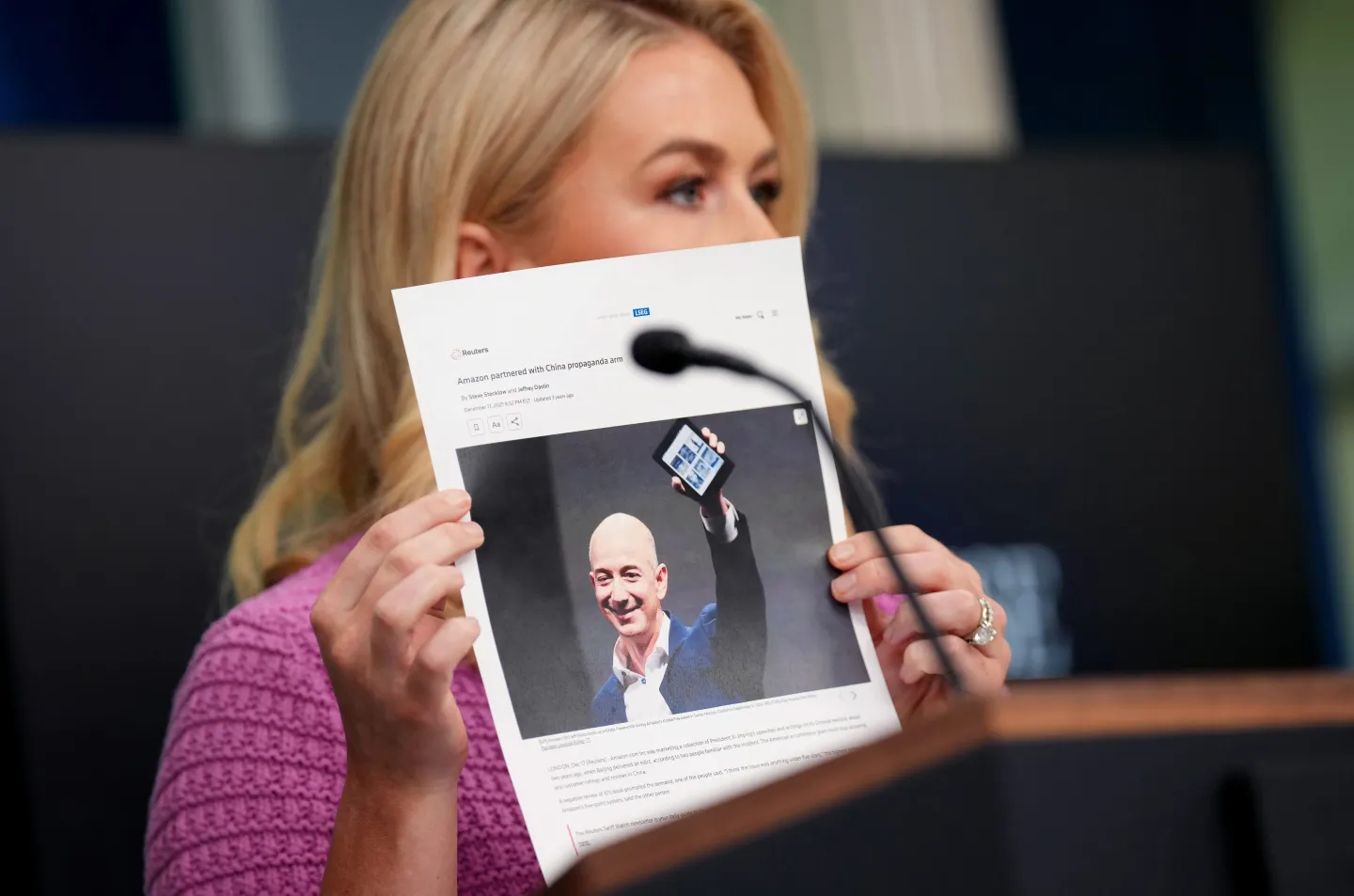
White House press secretary Karoline Leavitt, joined by Treasury Secretary Scott Bessent, holds a news article on Amazon CEO Jeff Bezos as she speaks during the daily press briefing on April 29, 2025, in Washington, D.C. (ANDREW HARNIK—GETTY IMAGES)
Before the press briefing, Leavitt said she had “just got off the phone with the president about Amazon’s announcement.”
Like many other retailers, especially those advertising discount prices like Shein or Temu, Amazon is particularly vulnerable to Trump’s proposed reciprocal tariffs on imports. Amazon sells millions of items across myriad product categories, from clothes to toys to electronics and more. Many of those products are manufactured in China, and Trump has imposed a 145% tariff on imports from the country, which is the world’s second-largest economy. Amazon’s third-party sellers are equally exposed.
The European Union fined Apple and Meta hundreds of millions of dollars last week.
The European Commission has fined Apple €500m (£429m) and Meta €200m for breaking rules on fair competition and user choice, in the first penalties issued under one of the EU’s landmark internet laws.
The fines under the EU Digital Markets Act (DMA), which is intended to ensure fair business practices by tech companies, are likely to provide another flashpoint with Donald Trump’s administration, which has fiercely attacked Europe’s internet regulation.
The Trump administration was indeed quick to rebuke the fines: a national security council spokesperson told Politico that the EU’s moves were a “novel form of economic extortion” that “will not be tolerated by the United States”.
Interesting, too, is that while the penalties are no small amount of money, their impact likely pales in comparison to the scrutiny the tech companies are facing in the US. Though the EU boasts more robust consumer protections when it comes to tech, the cases against these companies on their home turf, where they have enjoyed great latitude in the past, threaten their core corporate structure, which has been key to integrating their products with one another and creating the walled gardens that have earned them hundreds of billions of dollars.
Before Donald Trump ascended to the US presidency a second time, I would have predicted that little regulation of tech giants would emerge from his administration and that if there were any authority that would provide a check on Silicon Valley’s humongous and still growing influence, it would be Europe. That is not the regulatory landscape we find ourselves in, though. The US Department of Justice is engaged in serious pursuit of nearly every major American tech company for alleged monopolistic conduct. The bureau has filed suits against Apple, Amazon, Meta and Google within the past two years. Meta’s trial began two weeks ago and threatens to unwind its acquisitions of Instagram and WhatsApp.
Most severe – Google faces the consequences of losing two major antitrust cases in quick succession. The US has petitioned a judge to force the nearly $2tn company to divest one of its crown jewels, Chrome, the most popular web browser in the world.
The US wields the sharper sword here since the tech giants are headquartered there. Unlike the EU’s fines, the antitrust cases in the US threaten the corporate organization of the tech giants, which, if altered, would redirect the profits and change consumers’ experiences with their products. These massively profitable businesses have rolled over far larger fines like speed bumps – recall when the US Federal Trade Commission fined Facebook $5bn for privacy violations, which Mark Zuckerberg mentioned during a few subsequent earnings calls and then never again. Facebook continued operating largely as it did before. The EU fined Google fined €4.3bn in 2018 over Android’s preference for Google search. Apple was fined €1.8 just last year over music streaming payments.
A Chrome-less Google, on the other hand, would make for a less personalized experience of using the internet, I think, perhaps even for my fellow Safari users. YouTube and Google search could draw on less of your history. No other company serves ads in so many corners of the web, so the ads that follow you around would become quite different.
ChatGPT creator OpenAI and Yahoo would like to buy Google’s Chrome web browser if a federal judge orders a sale of the internet’s most popular gateway.
The interest of these companies emerged this week during a trial that will determine whether Alphabet’s Google search empire will be broken up by federal judge Amit Mehta, who ruled last year that Google operated an illegal online search monopoly.
The Justice Department wants Google to sell its Chrome browser, and potentially its Android operating system, among other remedies.
Executives from OpenAI and Yahoo both disclosed in court that they would like their names in the mix if Chrome were to become available.
Brian Provost, Yahoo Search’s general manager, said so Thursday, noting it would cost tens of billions and that the company would be able to fund it with backing from its owner, Apollo Global Management (APO).
He said Chrome would help boost Yahoo’s market share in search from 3% to double digits, according to The Verge. As of March 2025, Chrome dominated the browser market with a market share of about 66%. Apple’s Safari held roughly 18%, and Microsoft’s Edge held 5%.
It is “arguably the most important strategic player on the web,” Provost said, according to Bloomberg.
Under questioning, he also said Yahoo had been working to develop its own prototype browser.
Executives from artificial intelligence-based search providers also took the stand and said they would have an interest in Chrome if it were up for sale.
One was Nick Turley, head of product for OpenAI’s artificial intelligence-based search platform ChatGPT.
Turley said integrating ChatGPT with Chrome could expand OpenAI’s distribution and boost the quality of its search, which currently relies on Microsoft’s Bing browser technology. Microsoft is OpenAI’s biggest backer.
Dmitry Shevelenko, chief business officer for Perplexity AI, also testified that the AI-fueled search startup could effectively run Chrome and that Chrome could boost its growing business.
However, he cautioned that a buyer could shutter Google’s Chromium, the open-source technology that powers Chrome, which developers use to iterate and build new web browsers and other products.
For that and other reasons, Google has pushed back against the government’s divestiture proposal.
A Google representative told Yahoo Finance that forcing it to sell Chrome would jeopardize rival browser providers that rely on Chromium’s open-source code, including Microsoft’s Edge and others, and undermine privacy and security for consumers who use the search tools.
The trial is expected to conclude on May 9. Judge Mehta is expected to issue a decision by August on how to remedy Google’s anticompetitive practices.
Mark Zuckerberg’s plan is to make Meta the market leader in artificial intelligence. Investors will want to know how President Donald Trump’s tariffs-heavy trade policies will impact that strategy.
Those answers could start to come as soon as this week as Meta’s AI strategy takes center stage when the company hosts its first Llama-branded conference for AI developers on Tuesday then reports its latest quarterly earnings the next day.
Already, tech companies are starting to talk about the potential impact they’re bracing for as a result of the Trump tariffs.
Intel Chief Financial Officer David Zinsner said Thursday during the chip giant’s first-quarter earnings call that U.S. trade policies “have increased the chance of an economic slowdown, with the probability of a recession growing.” Meanwhile, Google CFO Anat Ashkenazi said that day during a first-quarter earnings call that the tech giant remains committed to its $75 billion investment in capital expenditures, or capex, this year, but also acknowledged that the “timing of deliveries and construction schedules” could cause some quarter-to-quarter spending fluctuation.
For now, analysts expect Meta to follow Google’s lead and remain firm in its plan to spend as much as $65 billion in capex for AI infrastructure this year when it reports earnings Wednesday. Some analysts believe Meta could even raise the figure because AI is a core priority for the company.
“We do not expect META to cut its CapX guidance of $60B-$65B in 2025, for its GenAI infrastructure, because they see this as an important 10-year investment, we believe,” Needham analysts wrote in a research note published Wednesday. “However, tariffs add risks of upward cost revisions.”
Investors will also be monitoring Meta’s LlamaCon event at its Menlo Park, California, headquarters for any signs that its AI investments are having an immediate business impact. This will be the first time Meta hosts a developer conference specifically for its Llama family of AI models.
“Investors want to see ROI on all these AI investments, and while Meta has shown clear benefits from leveraging AI to improve its products and drive faster revenue growth, it’s been hard to quantify those benefits,” Truist Securities analyst Youssef Squali told CNBC.
Meta in April released a couple of its new Llama 4 models, which Meta Chief Product Officer Chris Cox previously said can help power so-called AI agentsthat can perform tasks for users via web browsers and other online interfaces.
It’s critical that Meta keep improving Llama to create a major business involving AI agents that companies can use to interact with their customers within apps like Facebook and WhatsApp, William Blair research analyst Ralph Schackart said.
″Meta has an early mover advantage at scale in a multi-trillion dollar market,” Schackart said in an email. “We believe Meta is very well positioned to leverage its billions of global users across multiple platforms.”
Meta is unlikely to curb its Llama investment anytime soon, but should eventually consider doing so if it fails to generate enough money to justify its costs, said Ken Gawrelski, a Wells Fargo managing director of equity research.
“We do believe that over time Meta needs to continue to evaluate whether Llama needs to be competitive with the leading-edge models,” Gawrelski said. “This is a very expensive proposition and thus far, unlike Google, Meta does not directly monetize its model in any material way.”
Chris Cox, Chief Product Officer at Meta Platforms, speaks during The Wall Street Journal’s WSJ Tech Live Conference in Laguna Beach, California on October 17, 2023.(Patrick T. Fallon/AFP/Getty Images)
Meta AI and the consumer
Analysts are also following the Meta AI digital assistant. That’s because the ChatGPT rival represents the second pillar of Zuckerberg’s AI strategy.
Zuckerberg in January said he believes 2025 “is going to be the year when a highly intelligent and personalized AI assistant reaches more than 1 billion people, and I expect Meta AI to be that leading AI assistant.”
In February, The Budgets reported that Meta was planning to debut a stand-alone Meta AI app during the second quarter and test a paid subscription service, in which users could pay monthly fees to access more powerful versions like users can with ChatGPT.
Although Meta’s enormous user base across its family of apps gives Meta AI an advantage over rivals like ChatGPT in terms of reach, they may not interact with Meta AI in the same way they do with rival chat apps, said Cantor Fitzgerald analyst Deepak Mathivanan.
Gawrelski said that people may not want to use Meta AI within Facebook and Instagram if all they want to do is passively watch the short videos that Meta algorithmically recommends to their feeds.
“This is why a separate Meta AI, where Meta could clearly articulate its use case and value proposition, could be helpful,” Gawrelski said.
A stand-alone Meta AI app could help the company better market the digital assistant and distinguish it from rivals, said Debra Aho Williamson, founder and chief analyst at Sonata Insights.
“ChatGPT has such wide brand awareness, that it’s become a moat that is soon going to be very hard to overcome,” Williamson said.
Spotify informed The Budgets that they have paid podcast publishers and creators over $100 million since the start of January.
The payout is the result of a program introduced in 2025 that opened up new revenue streams to eligible hosts. But it is also an attempt to draw more creators (and their audiences) to Spotify, as the rise of video podcasting has driven many of them to YouTube.
Video has come to dominate podcasting. More than half of Americans over the age of 12 have watched a video podcast — but primarily on YouTube, according to an Edison Research report from January. The service claims to reach 1 billion podcast consumers every month, making it the dominant platform for podcasts — a media king and kingmaker — and leaving onetime audio-only platforms like Spotify and Apple Podcasts in the dust. (Spotify introduced video podcasts in 2019.)
Compared with YouTube, Spotify has become a podcast underdog, with about 170 million monthly podcast listeners among its total audience of 675 million. One indication of how far Spotify has to go to catch up to the top player: YouTube paid out more than $70 billion to creators and media companies from 2021 to 2024.
The company reports earnings on Tuesday and is expected to make about 540 million euros in pretax income on 4.2 billion euros in sales, according to S&P Capital IQ.
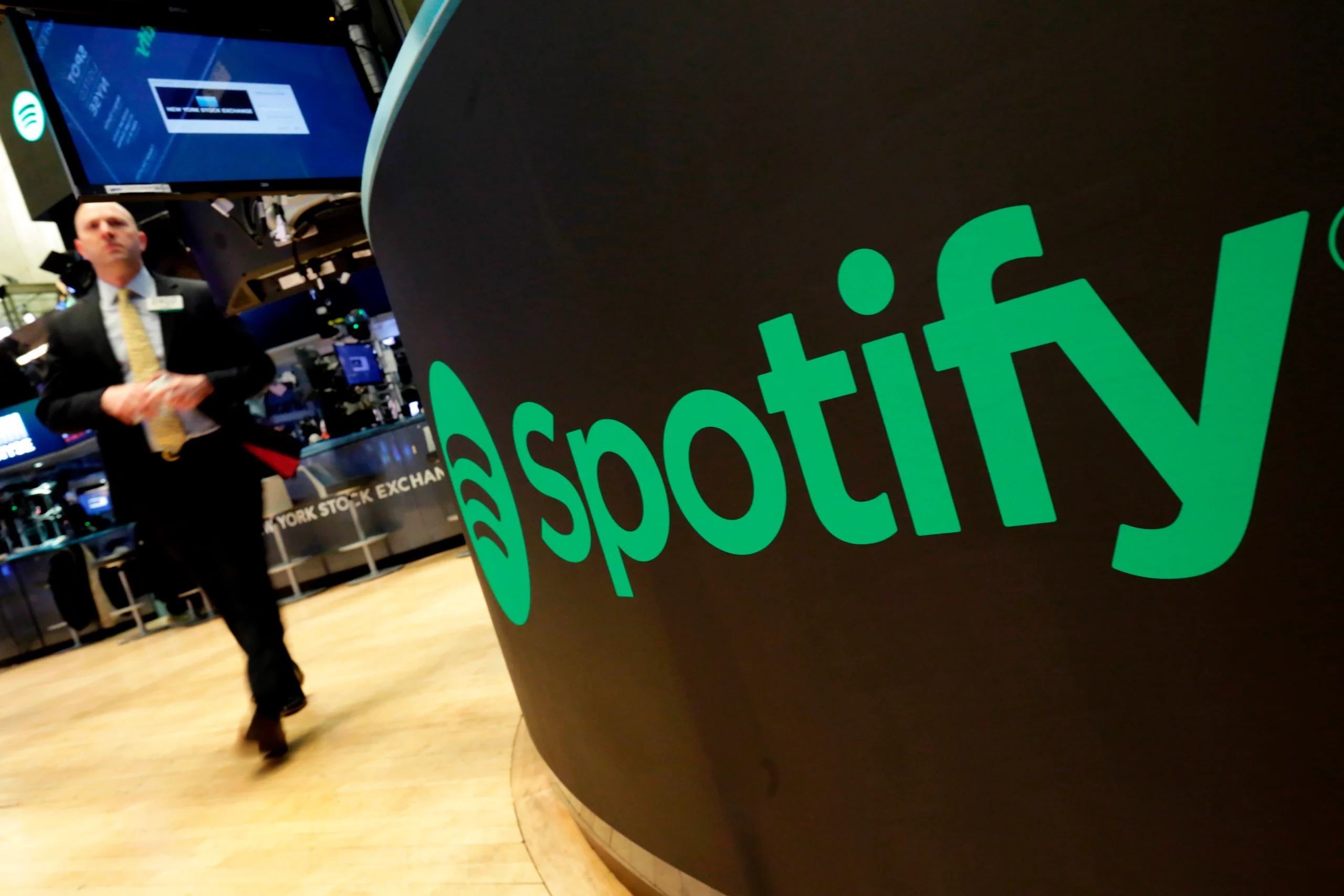
But Spotify, which is listed on the New York Stock Exchange but is based in Stockholm, remains a major player in the industry thanks in part to its talent roster — it distributes and sells advertising for the biggest podcast in the world, “The Joe Rogan Experience.” And it achieved its first full year of profitability in 2024. (Mr. Rogan’s podcasts are also available on YouTube.)
The new partner program aims to chip away at YouTube’s dominance. Spotify previously paid creators only by sharing advertising revenue with them, much like YouTube. Now it also gives them incentives to upload videos, with eligible creators earning additional money based on how much premium subscribers engage with their videos.
The company is trying to attract more viewers. At the same time that Spotify announced the partnership program in November, it announced that paid subscribers in certain markets wouldn’t have to watch dynamic ads in video podcasts. Video consumption has already increased by more than 40 percent since January, according to Spotify.
The question now is whether Spotify can persuade creators to shift priorities.
David Coles, host of the horror fiction podcast “Just Creepy: Scary Stories,” said he is re-evaluating his “home platform” after his Spotify revenue recently surpassed his YouTube revenue. Last quarter, Mr. Coles said he received about $45,500 from Spotify. After joining the company’s new partner program, his quarterly Spotify income rose to about $81,600.
This increase can be even more dramatic for larger shows and podcast companies, like YMH Studios, a comedy network with 2.1 million YouTube subscribers that produces popular podcasts including “2 Bears, 1 Cave.” While declining to share exact figures, YMH Studios said its quarterly Spotify revenue more than tripled after joining the partner program.
Although creators emphasized that these are still early days, Alan Abdine, the head of advertising revenue at YMH Studios, called the new payment program “a game-changer” and “a very happy surprise.”
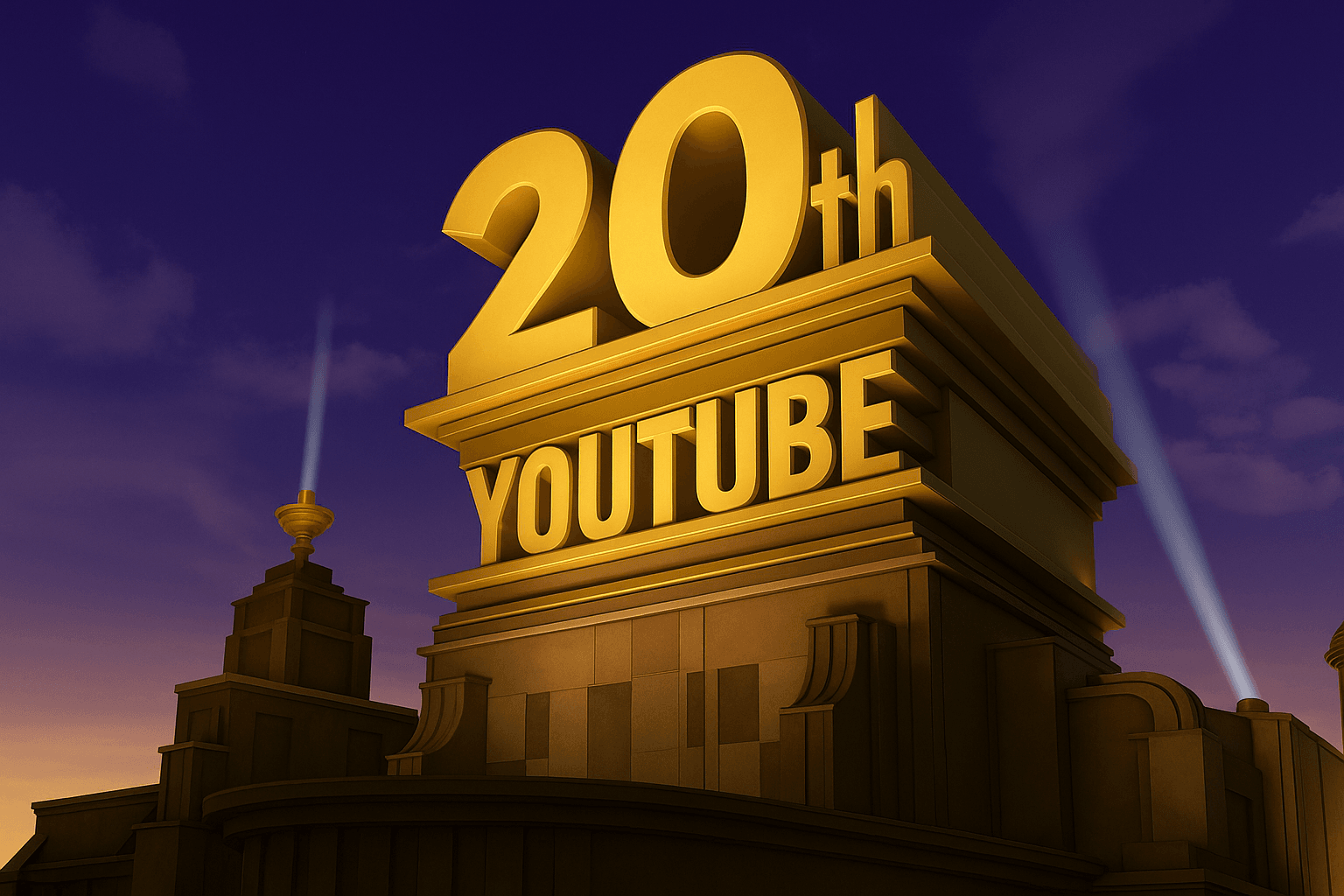
A picture of 20th century fox studios edit with AI and 20th YouTube. (20th century fox studios/The NewYorkBudgets/kenzie Utopia)A picture of 20th century fox studios edit with AI and 20th YouTube. (20th century fox studios/The NewYorkBudgets/kenzie Utopia)
Twenty years ago this past week, YouTube co-founder Jawed Karim posted the very first YouTube video, titled “Me at the Zoo.”
“All right. So here we are, in front of the elephants. The cool thing about these guys is that they have really, really, really long trunks. And that’s cool. … And that’s pretty much all there is to say.”
Twenty years ago this past week, YouTube co-founder Jawed Karim posted the very first YouTube video, titled “Me at the Zoo.” “All right. So here we are, in front of the elephants. The cool thing about these guys is that they have really, really, really long trunks. And that’s cool. … And that’s pretty much all there is to say.” Me at the zoo by jawed on YouTube
YouTube was so new that our Charles Osgood had to define it for “Sunday Morning” viewers back in 2006: “A website that lets just about anyone post videos for the whole world to see.”
Today, it doesn’t need explaining. YouTube is the second most-visited website on Earth, after Google, which bought YouTube for $1.65 billion in 2006.
Every single day, we collectively watch more than a billion hours of YouTube videos. Funny videos … how-to videos … cat videos. In these first 20 years, we’ve uploaded 20 billion videos to YouTube.
The most-watched of all? “Baby Shark Dance,” with about 16 billion views.
And people aren’t just watching on their phones. “People watch YouTube more than they watch any other streaming service on their big screens in their living rooms now,” said David Craig, who teaches media and culture at the University of Southern California at Annenberg.
Craig says that a key moment was the day YouTube started paying people for making videos. “YouTube came along and said, ‘Why don’t we give you some advertising revenue in exchange for the fact that you’re helping us grow our service?’” he said.
Today, YouTube roughly splits the ad revenue with the creator, according to Craig: “It does probably change a little bit for some of the bigger-name players out there who they obviously need to make sure are very happy with the service.”
Those bigger-name players include Rhett McLaughlin and Link Neal, creators of a daily show called “Good Mythical Morning.” Thirty-four million subscribers have watched their shows 14 billion times.
McLaughlin described the show’s appeal: “Two old friends hanging out, where you can be the third person in that friendship. We kind of stumbled upon this secret formula for having people come back every single day.”
They may film in a traditional TV studio, but what is the difference between YouTube and TV? “I’d like to say our talent,” Neal laughed.
“A big part of it is responding to the audience,” said McLaughlin. “You’ve got comments, right? So, there’s ways that you can connect with people online.”
David Craig said, “Creators on YouTube, specifically, are not content creators. They are for-profit community organizers. They are using this platform to build online communities that they can build a dozen different business models off of.”
For McLaughlin and Neal, those business models could include tours, books, sweatshirts, hoodies, magnets and pins. “And you can start to go bigger and sell hair products,” said Neal. “If we’re gonna spend as much time as we both spend on our hair, we are going to monetize it!”
Nobody’s monetized it better than Jimmy Donaldson, better known as MrBeast, whose videos of colossal giveaways and physical challenges have made him the most-followed YouTuber of all, with 380 million fans.
Last year, Amazon Prime spent $100 million to produce a MrBeast game show.
I asked David Craig, “Is being a YouTube star now considered a greater ambition than becoming a television star?”
“I hate to tell you this, David, but that’s been the case now for over 10 years,” Craig replied. “They’ve been surveying young people, and they’ve all said they want to grow up to be a creator or an influencer more than a celebrity – or, I’m sorry to say, a journalist.”
Rhett McLaughlin and Link Neal don’t think that the advertising industry has quite caught up with YouTube’s dominance. “If you look at the 18-to-34 age group, we outperform all of the other late-night shows combined,” said Neal. “But if you look at revenue that’s being spent on those shows versus our show, it’s not quite there yet.”
“And honestly, this is one of the reasons that we have really been interested in winning an Emmy,” McLaughlin added. “You know, we’re a part of the cultural conversation, as much as many shows that have won Emmys.”
YouTube’s detractors also worry about the algorithm. It studies which videos seem to grab your attention, and feeds you more videos like them. YouTube has been accused of letting the algorithm lead people to extreme viewpoints.
“We have this enormous diversity of opinions on our platform,” said YouTube CEO Neal Mohan. “We don’t allow adult content. We obviously don’t allow spam and fraud. And we have policies to protect young people and kids on the platform. But it’s fundamentally a platform for freedom of speech. “
So, with YouTube’s 20th anniversary upon us, what are the next few years going to be like? According to Mohan, “One of the areas that I’m very excited about is artificial intelligence. You can tell YouTube when you’re creating a video, ‘Put us in Central Park, and change the background, and have these types of birds because it’s a spring day.’ And that magical technology exists today.”
I asked, “Is there something about evolution or psychology that makes us so interested in watching other people?”
“I think it goes back to we, as human beings, are social beings,” said Mohan. “We connect with other people. We are storytellers. That is what happens billions of times a day on YouTube. And it’s back to our mission: give everyone a voice and show them the world.”
Google has illegally built “monopoly power” with its web advertising business, a federal judge in Virginia has ruled, siding with the Justice Department in a landmark case against the tech giant that could reshape the basic economics of running a modern website.
The ruling that Google violated antitrust law marks the US government’s second major court victory over Google in less than a year amid claims the company has illegally monopolized key parts of the internet ecosystem, including online search. And it is the third such decision since a federal jury in December 2023 found that Google’s proprietary app store is also an illegal monopoly.
Taken together, the trio of decisions highlights the breadth of trouble Google faces, raising the prospect of sweeping penalties that could reshape multiple aspects of its business, though ongoing and expected appeals will likely take years to play out.
Thursday’s decision by District Judge Leonie Brinkema, of the US District Court for the Eastern District of Virginia, addresses the $31 billion portion of Google’s ad business that matches website publishers with advertisers. This “stack” of technologies determines what banner ads appear on countless sites across the web.
The Justice Department’s lawsuit followed years of criticism that Google’s extensive role in the digital ecosystem that enables advertisers to place ads, and for publishers to offer up digital ad space, represented a conflict of interest that Google exploited anticompetitively.
Brinkema sided with the Justice Department’s argument that by tying its ad server and publisher ad exchange together, Google was able to “establish and protect its monopoly power in these two markets, she wrote in her 115-page decision.
But she also struck down one of the government’s claims related to Google’s online advertiser ad networks.
“We won half of this case and we will appeal the other half,” Google’s Vice President of Regulatory Affairs Lee-Anne Mulholland said in a statement following the decision.
“The Court found that our advertiser tools and our acquisitions, such as DoubleClick, don’t harm competition,” Mullholland said. “We disagree with the Court’s decision regarding our publisher tools. Publishers have many options and they choose Google because our ad tech tools are simple, affordable and effective.”
The Department of Justice did not immediately respond to requests for comment.
Google had argued that the Justice Department’s argument is “flawed” and would “slow innovation, raise advertising fees, and make it harder for thousands of small businesses and publishers to grow,” according to a statement from a company spokesperson after the lawsuit was filed in 2023.
However, Brinkema argued in her decision that Google’s practices have deprived “rivals of the ability to compete” and “substantially harmed Google’s publisher customers, the competitive process, and, ultimately, consumers of information on the open web.”
The decision could force Google to divest part of its online ad business. But the fact that the government did not win on all of its claims makes that outcome less likely, said William Kovacic, global competition professor of law and policy at The George Washington University Law School.
“The general idea in other antitrust cases is that the remedy has to be proportional,” Kovacic said. “The broader the finding of illegality, the deeper the finding of deliberateness… the greater the platform for a bolder remedy.”
Still, he said, Google could get stuck with a conduct remedy — such as restrictions on how it can operate or price its services — “that would not be good for them.”
Some tech critics and media organizations cheered the ruling.
“For years, Google wielded unchecked monopoly power over the digital advertising market – using it to suffocate the media industry and force middleman taxes on everything we buy online,” said Sacha Haworth, executive director of the Tech Oversight Project, who called the decision an “unequivocal win for the American people.”
Senator Elizabeth Warren said in a statement Thursday that the decision is “a big win in the fight to break up Big Tech … the result of years of work to rein in tech companies’ abuses.”
The decision is part of a wider push by regulators to check the power of large tech companies including Apple, Meta and Amazon in addition to Google parent Alphabet. Just this week, Meta CEO Mark Zuckerberg took the stand in a trial over a blockbuster antitrust lawsuit in which the US Federal Trade Commission accused the social media giant of buying would-be competitors to stifle competition.
Thursday’s decision, Kovacic said, could “lend impetus” to efforts around the world to crack down on Google and other tech giants and “give them confidence to push ahead.”
Silicon Valley’s tech giants have long regarded antitrust scrutiny as an irritating cost of doing business. There will be investigations, filings, depositions and even lawsuits.
Yet courts move slowly, while technology rushes ahead. Time works to the companies’ advantage, as the political winds shift and presidential administrations change. That dynamic often opens the door to light-touch settlements.
Antitrust experts said two big antitrust wins for the government against a single company in such a short time appeared to have no precedent.
“Two courts have reached similar conclusions in product markets that go to the heart of Google’s business,” said William Kovacic, a law professor at George Washington University and former chairman of the Federal Trade Commission. “That has to be seen as a real threat.”
The Google decisions are part of a wave of current antitrust cases challenging the power of the biggest tech companies. This week, the trial began in a suit by the F.T.C. claiming that Meta, formerly Facebook, cemented an illegal monopoly in social media through its acquisitions of Instagram and WhatsApp.
The government has also sued Apple and Amazon over allegations of anticompetitive behavior.
And on Monday, the judge who ruled against Google in August will hear arguments on how to restore competition in the online search engine market. The Justice Department has asked the court to order Google to sell Chrome, its popular web browser, and either spin off Android, its smartphone operating system, or be barred from making its services mandatory on its phones.
Google has described the government’s request as a “wildly overboard proposal” that “goes miles beyond the court’s decision.” The company suggested that it should change very little.
In the ad technology case, the judge gave both sides seven days to propose a schedule for the next phase of the case, which will also involve remedies. The government is likely to ask Google to sell some of its ad tools, the antitrust experts said.
Antitrust enforcement has taken an activist turn in recent years, as both the Trump and Biden administrations increased their scrutiny of the biggest tech companies. But filing cases by no means guarantees success.
The triumphs by the government in both Google cases, the experts said, signal that the courts are finally grappling with anticompetitive behavior in digital markets. For years, enforcement lagged technology’s explosive growth, in part because antitrust law typically focuses on rising prices for consumers. Many internet services are free.
The Justice Department’s wins against Google are “important affirmations of the ability of the government to pursue major monopolization cases and prevail — something there has been doubt about,” said Nancy Rose, an economist who is an antitrust expert at the Massachusetts Institute of Technology.
The goal of an antitrust remedy is to free up markets, creating a competitive environment that results in more new ideas, new companies, more innovation and lower prices.
The courts have long been reluctant to engage in the drastic surgery of a breakup. In the last major antitrust case against a tech company, the government reached a settlement with Microsoft in 2001, shortly after the George W. Bush administration assumed office. The agreement loosened up Microsoft’s contracts on personal computer software, which a court found to be anticompetitive, but left the company intact.
Google’s Android mascot at a trade show in Las Vegas. Divesting Android, the smartphone operating system, is one of the antitrust remedies that the Justice Department has proposed. Credit…Steve Marcus/Reuters
While the judges in the Google case will weigh breakup options again, the prospects are uncertain. Shifts in the political climate could also influence the outcome for Google, as they did for Microsoft.
So far, aggressive antitrust enforcement has had bipartisan support. The Google search case was filed in the waning days of the first Trump administration, and the ad technology case by the Biden administration.
“It’s pretty amazing when you look at the cases filed, the progress so far, and that the government enforcers seem consistently serious,” said Harry First, an antitrust expert at the New York University School of Law. “Maybe the tortoise is going to win here.”
Still, the Google rulings are early steps in an uncertain judicial process.
Google will appeal both, and has expressed confidence that it will ultimately prevail. The company contends that its strong market position in search and ad technology is the result of innovation and investment — superior products that consumers value — and not because of anticompetitive tactics.
Either or both of the Google cases may land before the Supreme Court, the experts said. Or the Trump administration could settle them.
“Trump is a deal maker, and that could be where this is headed,” said Herbert Hovenkamp, a professor at the University of Pennsylvania’s Carey Law School.
Cookie Consent
We use cookies to improve your experience on our site. By using our site, you consent to cookies.
Contains information related to marketing campaigns of the user. These are shared with Google AdWords / Google Ads when the Google Ads and Google Analytics accounts are linked together.
90 days
__utma
ID used to identify users and sessions
2 years after last activity
__utmt
Used to monitor number of Google Analytics server requests
10 minutes
__utmb
Used to distinguish new sessions and visits. This cookie is set when the GA.js javascript library is loaded and there is no existing __utmb cookie. The cookie is updated every time data is sent to the Google Analytics server.
30 minutes after last activity
__utmc
Used only with old Urchin versions of Google Analytics and not with GA.js. Was used to distinguish between new sessions and visits at the end of a session.
End of session (browser)
__utmz
Contains information about the traffic source or campaign that directed user to the website. The cookie is set when the GA.js javascript is loaded and updated when data is sent to the Google Anaytics server
6 months after last activity
__utmv
Contains custom information set by the web developer via the _setCustomVar method in Google Analytics. This cookie is updated every time new data is sent to the Google Analytics server.
2 years after last activity
__utmx
Used to determine whether a user is included in an A / B or Multivariate test.
18 months
_ga
ID used to identify users
2 years
_gali
Used by Google Analytics to determine which links on a page are being clicked
30 seconds
_ga_
ID used to identify users
2 years
_gid
ID used to identify users for 24 hours after last activity
24 hours
_gat
Used to monitor number of Google Analytics server requests when using Google Tag Manager