Category: Tech

  • GE Appliances is shifting washing machine production from China to Kentucky, and the reasons might surprise you

    GE Appliances is shifting washing machine production from China to Kentucky, and the reasons might surprise you

    Some of President Donald Trump’s steepest tariffs are on products like washing machines, and on Thursday, GE Appliances said it would spend a half a billion dollars to make even more of them in the United States.

    Tariffs, however, weren’t the driving factor behind the decision, the company’s CEO says, but they did serve as an accelerant.

    GE Appliances announced it would spend $490 million to move some washing machine production from China and build a high-tech clothes care operation at its massive industrial park and headquarters in Louisville, Kentucky, where it already churns out washers and dryers for the US market.

    The move of more than a dozen front-load washer models comes as US trade policy uncertainty has reached a high-stakes fever pitch as Trump’s July 9 tariffs deadline approaches.

    GE Appliances move that is expected to be complete in 2027 and add 800 jobs, has been in the works for six years — shortly after a new line of front-load washers launched in 2019 — and follows a several-year stretch of high-dollar investments made to bolster the company’s US manufacturing footprint, CEO Kevin Nolan told CNN.

    “We’ve had a strategy that making appliances in America makes sense; it’s an economic thing, and it’s also how we can serve our customers in a better, more efficient way,” Nolan said, adding that GE appliances is “not a company that was saying, ‘Hey, we’re going to outsource everything, and oh my God, now we’ve got to bring it back.’”

    “[The trade policy] makes the payback for these things much, much greater,” Nolan added. “And with that, of course it’s going to accelerate (plans), because the quicker we can do these things, the quicker we can realize those benefits.”

    The emergence and threat of tariffs also are influencing future decisions, Nolan said, noting that plans to reshore other components and parts are moving up the pecking order.

    Earlier this week, an expansion of Trump’s 50% tariffs on steel extended to “derivative products,” including consumer appliances such as dryers, washing machines, refrigerators, ovens and garbage disposals. The US currently has a minimum 30% tariff on Chinese exports; however, it has soared as high as 145% in recent months.

    “The current trade policy is the most dynamic thing anyone’s ever seen in their business career; I mean, it can change in a day, it can change in a week, it can change in a month,” Nolan said. “These investments are strategic, and you’ve got to look at the long term and what makes sense. You can’t do these just for trade policies.”

    The move follows similar reshoring efforts made by GE Appliances in recent years, Nolan said. The company, which has been a subsidiary of China-based Haier Group since 2016, has invested $3.5 billion in its US manufacturing facilities during the past decade, he said.

    Still, in recent months, the dramatic shifts in US trade policy and the Trump administration’s tumultuous tariff rates have loomed large over manufacturers like GE Appliances and its parent company’s appliance-making affiliate Haier Smart Home.

    Earlier this month, Haier Smart Home executives told investors that the company’s localized supply chain in North America could help reduce its tariff exposure, according to translated company filings from June 4. Haier also flagged opportunities in “tariff-driven competitor weakness,” according to the filing.

    Tariffs accelerated decision

    In 2019, GE Appliances wanted to move quickly to market after developing what it believed was an innovation in the clothes care space: Making a less stinky front-load washer.

    “To get this washer out fast, we said we’re going to tackle building the dryer plant (in Louisville) to make those and we’ll share the load and have the washer made in China,” he said. “We always had a forward-looking view that this thing was going to come back to America, but to get the things in the market quick, we did it that way in China first.”

    The high-tariff environment “definitely made the numbers on this look very good; so, we said, ‘OK, let’s pull this thing in; let’s get this thing done now,’ because it just makes sense. The engineering work’s been going on; there’s a reason we can move fast on this,” he said. “But these tariffs could go away tomorrow, and once we make these decisions, we don’t back off. So that’s where you’ve got to make sure it’s the right thing to do.”

    The half-a-billion-dollar investment announced Thursday will bring over more than 15 models of front-load washing machines, including a washer-dryer combo, to the 750-acre, multi-plant Appliance Park, where the company already manufactures top-load washers and clothes dryers.

    The latest addition — which is expected to heavily feature automation, including robotics, automated guided vehicles and autonomous mobile robots — is expected to bring the company’s clothes care production at the site to 33 football fields in size.

    Still, when it’s complete in 2027, the new production lines are expected to result in the addition of 800 full-time jobs to the 8,000-person campus.

    “It’ll definitely be our flagship plant from a technology standpoint, so a lot of opportunities for upskilling employees,” Nolan said, referring to efforts for employees to learn new skills. “In order to be able to successfully manufacture in the United States, we have to be efficient.”

    In recent years GE Appliances has touted a “zero distance” strategy to be closer to customers from a physical and design standpoint. To that end, the company’s 11 US plants include maker spaces and microfactories aimed at innovation and small-batch production.

    The approach is a far cry from that taken in the 1980s and 1990s, when then-General Electric CEO Jack Welch leaned heavily into outsourcing and offshoring.

    GE Appliances declined to share specifics as to what percentage of its manufacturing is now domestic versus overseas; however, the intent is to continue the reshoring efforts and expanding US manufacturing operations, Nolan said.

    Why reviving US manufacturing isn’t easy

    Trump, like presidents Obama and Biden before (and after) him, has long stated a desire to revive the US manufacturing industry and sought to wield tariffs to make that happen. However, economists and supply chain efforts have questioned the effectiveness in broad-based tariffs to that approach.

    Several companies in recent months have announced plans to make investments in US manufacturing in recent months — with the White House taking credit — however, not only were these decisions already longer term in nature, any kind of large-scale rebound in domestic manufacturing will take time, said Jason Miller, a professor of supply chain management at Michigan State University.

    “Right now, given all the profound uncertainty about tariffs, folks are not going to take action until some clarity emerges,” he said.

    Companies that are able to announce or make moves now, he added, likely have existing capacity currently in place. To build a factory from scratch not only would take many months, if not many years, and then companies would run up against another challenge: finding enough skilled workers, he said.

    About 22% of US plants have cited a lack of labor or labor skills as a key reason for their facilities running below full capacity, Miller said, citing his analysis of recent Census Bureau data.

    GE Appliances has a waitlist of folks for jobs at its plants, but there’s still a huge need for a stronger pipeline of skilled workers, Nolan said.

    “That’s just a national shortage,” he said. “When you look at us versus other countries, how many engineers are graduated, we’re way underrepresented. And then when you look at out of those engineers who are skilled in the art of manufacturing, it’s even worse. That’s the thing as a nation we’ve got to really grapple with.”
  • Meta won its AI copyright case, but the judge indicated that other lawsuits on the matter are still possible

    Meta won its AI copyright case, but the judge indicated that other lawsuits on the matter are still possible

    Meta on Wednesday prevailed against a group of 13 authors in a major copyright case involving the company’s Llama artificial intelligence model, but the judge made clear his ruling was limited to this case.

    U.S. District Judge Vince Chhabria sided with Meta’s argument that the company’s use of books to train its large language models, or LLMs, is protected under the fair use doctrine of U.S. copyright law.

    Lawyers representing the plaintiffs, including Sarah Silverman and Ta-Nehisi Coates, alleged that Meta violated the nation’s copyright law because the company did not seek permission from the authors to use their books for the company’s AI model, among other claims.

    Notably, Chhabria said that it “is generally illegal to copy protected works without permission,” but in this case, the plaintiffs failed to present a compelling argument that Meta’s use of books to train Llama caused “market harm.” Chhabria wrote that the plaintiffs had put forward two flawed arguments for their case.

    “On this record Meta has defeated the plaintiffs’ half-hearted argument that its copying causes or threatens significant market harm,” Chhabria said. “That conclusion may be in significant tension with reality.”

    Meta’s practice of “copying the work for a transformative purpose” is protected by the fair use doctrine, the judge wrote.

    “We appreciate today’s decision from the Court,” a Meta spokesperson said in a statement. “Open-source AI models are powering transformative innovations, productivity and creativity for individuals and companies, and fair use of copyright material is a vital legal framework for building this transformative technology.”

    Though there could be valid arguments that Meta’s data training practice negatively impacts the book market, the plaintiffs did not adequately make their case, the judge wrote.

    Attorneys representing the plaintiffs said in a statement said that they “respectfully disagree” with the decision.

    “The court ruled that AI companies that ‘feed copyright-protected works into their models without getting permission from the copyright holders or paying for them’ are generally violating the law,” the statement said. “Yet, despite the undisputed record of Meta’s historically unprecedented pirating of copyrighted works, the court ruled in Meta’s favor.”

    Still, Chhabria noted several flaws in Meta’s defense, including the notion that the “public interest” would be “badly disserved” if the company and other businesses were prohibited “from using copyrighted text as training data without paying to do so.”

    “Meta seems to imply that such a ruling would stop the development of LLMs and other generative AI technologies in its tracks,” Chhabria wrote. “This is nonsense.”

    The judge left the door open for other authors to bring similar AI-related copyright lawsuits against Meta, saying that “in the grand scheme of things, the consequences of this ruling are limited.”

    “This is not a class action, so the ruling only affects the rights of these thirteen authors — not the countless others whose works Meta used to train its models,” he wrote. “And, as should now be clear, this ruling does not stand for the proposition that Meta’s use of copyrighted materials to train its language models is lawful.”

    Additionally, Chhabria noted that there is still a pending, separate claim made by the plaintiffs alleging that Meta “may have illegally distributed their works (via torrenting).”

    Earlier this week, a federal judge ruled that Anthropic’s use of books to train its AI model Claude was also “transformative,” thus satisfying the fair use doctrine. Still, that judge said that Anthropic must face a trial over allegations that it downloaded millions of pirated books to train its AI systems.”

    “That Anthropic later bought a copy of a book it earlier stole off the internet will not absolve it of liability for the theft, but it may affect the extent of statutory damages,” the judge wrote.

  • Salesforce CEO Marc Benioff states that AI is handling up to half of the company’s workload

    Salesforce CEO Marc Benioff states that AI is handling up to half of the company’s workload

    Salesforce is accelerating its use of artificial intelligence in automating workloads, according to CEO Marc Benioff.

    “All of us have to get our head around this idea that AI could do things, that before, we were doing, and we can move on to do higher-value work,” he said in an interview with Bloomberg, noting that the technology currently accounts for about 30% to 50% of the company’s work.

    Technology companies are hunting for new ways to trim costs, boost efficiencies and transform their workforce with the help of AI.

    The aftershocks have already hit the tech industry, with the software giant cutting more than 1,000 positions earlier this year as it restructured around AI.

    Other technology companies have made similar moves, including cybersecurity giant CrowdStrike.

    Klarna CEO Sebastian Siemiatkowski said the company has shrunk its headcount by 40% due in part to AI investment, while Amazon CEO Andy Jassy said the e-commerce giant will use artificial intelligence to reduce roles.

    Benioff called the rise of AI in the workforce a “digital labor revolution,” estimating that the software company has reached about 93% accuracy with the technology.

    “It’s pretty good,” he said, but it’s not “realistic” to hit 100%. He added that other vendors are at “much lower levels because they don’t have as much data and metadata” to build higher accuracy.

  • Trump Mobile continues to assert its phones are ‘Made in the USA,’ despite having removed that claim from its website

    Trump Mobile continues to assert its phones are ‘Made in the USA,’ despite having removed that claim from its website

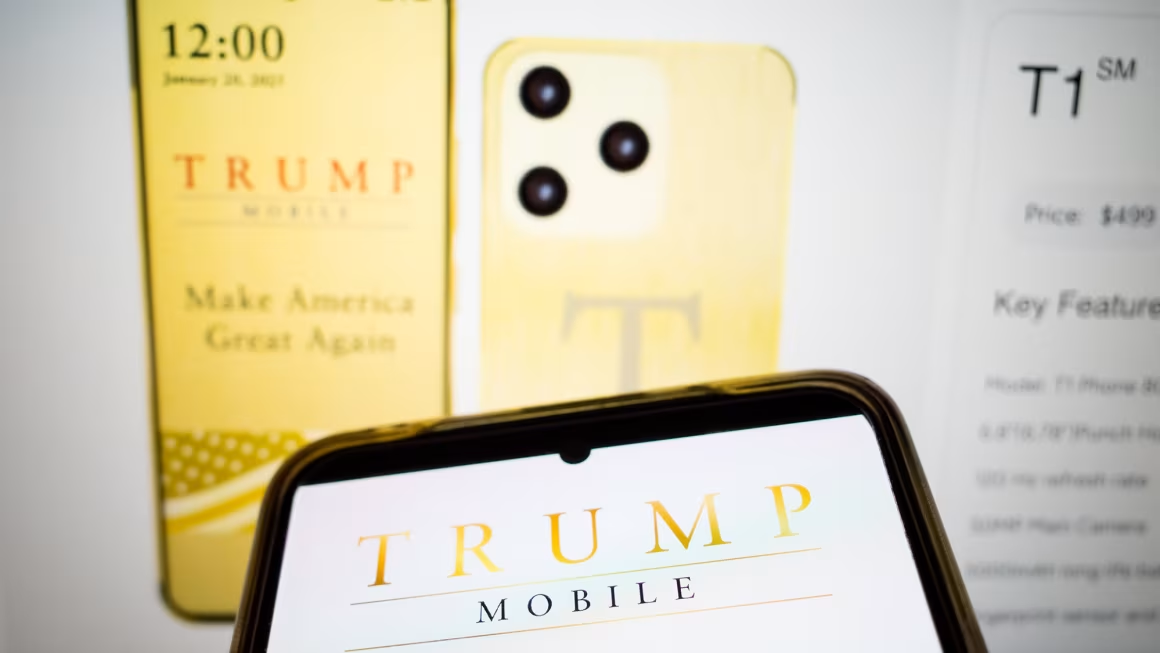
    Trump Mobile, the wireless service provider and phone company launched by the Trump Organization, no longer promises on its website that its upcoming smartphone will be made in America.

    The company adjusted language on its website on or around June 22 to drop the “Made in USA” claim, according to captures of the site by the Internet Archive. As of June 25, the company says the T1 8002 phone was “designed with American values in mind.” The website previously said the phone was “Made in the USA,” according to screenshots taken by NY Budgets earlier in June and archived versions of the site from June 18. The Verge first reported the change.

    The revised language comes after industry analysts expressed skepticism about the phone’s American origins, noting that its specifications resembled a phone made by a Chinese manufacturer.

    Despite changed language on the site, a spokesperson for Trump Mobile told Fox News that “the T1 phones are proudly being made in America.”

    “Speculation to the contrary is simply inaccurate,” the statement said.

    The Trump Organization’s press release from last week announcing Trump Mobile still says the $499 gold-colored phone will be “proudly designed and built in the United States.”

    In the formal announcement from Trump Tower on June 16, Trump Mobile partner Pat O’Brien said, ”we are going to be doing phones that we are going to build in America.” But later, in a clip from an interview with conservative media personality Benny Johnson, Eric Trump said “eventually all the phones can be built in the United States of America.”

    Ryan Reith, group vice president for the International Data Corporation’s Worldwide Device Tracker, previously told CNN that terms like “designed” and “built” are very vague. That makes it unclear precisely what parts of the phone making process would have taken place in the US. Apple, for example, designs its phones in California, but assembles them in areas like China and India with components from international suppliers.

    Trump Mobile’s website says the phone is “brought to life right here in the USA.”

    “There (are) no phones that are really being built in the US from start to finish,” Reith said last week when Trump Mobile was announced.

    Some of the T1 8002 phone’s specifications also have changed, according to the Trump Mobile website. While the phone was originally listed as having a 6.78-inch screen, the website now says it has a 6.25-inch screen. That’s a noticeable change in size similar to the difference between an iPhone 16 and an iPhone 16 Pro Max. It’s rare for a tech company to make such a drastic change after announcing a phone.

    Trump Mobile also no longer lists the phone’s memory, the part of the phone that stores app data and impacts performance when switching between apps.

    Todd Weaver, CEO of Purism, one of the only known companies to actually manufacture a cell phone in the United States, and Max Weinbach, an analyst at market research firm Creative Strategies, independently told NY Budgets previously that they believe the originally announced T1 phone looks like a version of the already available Revvl 7 Pro 5G. That phone is made by China-based Wingtech, which provides manufacturing services for smartphones and other products, and retails for around $169 on Amazon.

    The debut of Trump Mobile came as President Trump, who is not involved in the daily operations of the Trump Organization run by his sons, has been pressuring tech giants like Apple and Samsung to make their smartphones in the United States. The move is part of a push to bring manufacturing jobs back to America, although experts have said making phones domestically at scale is a challenging, if not impossible, task – particularly under the September timeframe originally promised.

    “Unless the Trump family secretly built out a secure, onshore or nearshore (fabrication) operation over years of work without anyone noticing, it’s simply not possible to deliver what they’re promising,” Weaver previously said.

  • Cybercriminals Hack Aflac Amid Broader Attack on U.S. Insurance Industry

    Cybercriminals Hack Aflac Amid Broader Attack on U.S. Insurance Industry

    Cybercriminals have breached insurance giant Aflac, potentially stealing Social Security numbers, insurance claims and health information, the company said Friday, the latest in a spree of hacks against the insurance industry.

    With billions of dollars in annual revenue and tens of millions of customers, Aflac is the biggest victim yet in the ongoing digital assault on US insurance companies that has the industry on edge and the FBI and private cyber experts scrambling to contain the fallout.

    Erie Insurance and Philadelphia Insurance Companies have also reported hacks this month, which in those cases have caused widespread disruptions to IT systems used to serve customers. All three insurance-company hacks are consistent with the techniques of a young and rampant cybercrime group known as Scattered Spider, people familiar the investigation tell CNN.

    “This attack, like many insurance companies are currently experiencing, was caused by a sophisticated cybercrime group,” Aflac said in a statement on Friday, without naming Scattered Spider. Aflac said it “stopped the intrusion within hours” after discovering it last week, that no ransomware was deployed, and that it continues to serve its customers.

    It was too early to tell, the company said, how much customer information may have been stolen, but the potential exposure is vast. Aflac is one of the largest providers of supplemental health insurance in the US for medical expenses that aren’t covered by a primary provider.

    The hackers used “social engineering” to worm their way into its network, according to Aflac. That tactic can involve duping someone into revealing security information to help gain access to a network. It’s a hallmark of Scattered Spider attackers, who are known to pose as tech support to infiltrate big corporations.

    The loose group of cybercriminals is considered dangerous and unpredictable, in part because it is believed to be comprised of youths in the US and the UK known for aggressively extorting their victims. Scattered Spider shot to infamy in September 2023 when they were linked to a pair of multimillion-dollar hacks on famous Las Vegas casinos and hotels MGM Resorts and Caesars Entertainment.

    The hackers’ tactics, and the way they target big swaths of American industries at a time, has cybersecurity executives pleading with companies to be wary of suspicious phone calls to their employees. Just last month, they were suspects in multiple cyberattacks on American retail companies.

    “If Scattered Spider is targeting your industry, get help immediately,” said Cynthia Kaiser, who until last month was deputy assistant director of the FBI’s Cyber Division and oversaw FBI teams investigating the hackers. “They can execute their full attacks in hours. Most other ransomware groups take days.”

    Scattered Spider often registers web domains that look very much like trusted help desks that companies use for IT support, the cybersecurity firm Halcyon, where Kaiser now works, says in a forthcoming report.

    While concerns about Iranian cyber capabilities are in the news because of the Israel-Iran war, “the threat I lose sleep over is Scattered Spider,” said John Hultquist, chief analyst at Google’s Threat Intelligence Group. “They are already taking food off shelves and freezing businesses. The Iranian hackers may not even have Internet access, but these kids are in play right now.”

  • Oracle launches a program aimed at assisting companies in selling technology to the Pentagon

    Oracle launches a program aimed at assisting companies in selling technology to the Pentagon

    Oracle is unveiling a program that it says will help vendors more easily sell technology, including artificial intelligence, to the Department of Defense.

    The program, called the Oracle Defense Ecosystem, is structured to help smaller companies break through the challenges they typically face in selling tech to the Defense Department, said Rand Waldron, Oracle’s vice president of sovereign cloud. 

    “It is far too hard to serve the American defense enterprise,” Waldron said. “We can provide an easy path for these companies to better get access to the defense market.” 

    Oracle said vendors participating in its program will have access to Oracle’s office spaces and be able to tap its expertise on navigating the Pentagon’s procurement processes. Participants also will receive a discount to data-mining company Palantir Technologies’ cloud and AI platform, as well as Oracle’s NetSuite business software. 

    Selling to the Defense Department has long been tricky for smaller businesses that lack the structural advantages major defense contractors have. That hurts not only smaller tech companies but also the Pentagon, which faces challenges in accessing and integrating cutting-edge technologies, Waldron said.

    “We are going to deter and win the next conflict based on how good our technology is,” he said.

    To start, the program will count under a dozen companies as members, including AI firms Blackshark.ai and SensusQ, analytics company Metron, and quantum-security firm Arqit. Member companies won’t pay for access to the program because the tech giant is providing the financial backing, Oracle said.

    The Austin-based company’s latest move comes when it is ramping up its visibility inside the White House. In January, co-founder Larry Ellison joined President Trump in a White House ceremony announcing Stargate, a set of data centers that Oracle alongside global tech investor SoftBank Group is building for generative AI provider OpenAI. The company was also a corporate sponsor of the 250th Army Birthday Parade and Festival on the National Mall.

    Alongside Palantir and defense-technology company Anduril Industries, Oracle has emerged among a wave of tech firms that have aimed to grow their federal defense business. Other tech giants, including Meta Platforms and OpenAI, have recently volunteered their executives to join a new Army innovation corps that will advise on AI and commercial tech acquisition.

    In 2022, the company was part of a collection of cloud providers, including Amazon.com, Google and Microsoft, that were awarded a major cloud services contract with the Pentagon.

    Despite the uncertainty in government contracting wrought by the Department of Government Efficiency, the organization most closely associated with Elon Musk and cutting government spending, Waldron said he expects Oracle’s Defense Ecosystem to fare well under DOGE’s efficiency mandate.

    Eliminating large, status quo contracts, which DOGE has said it would target, opens up more federal dollars for technology innovation from the likes of Oracle’s Defense Ecosystem members, Waldron said. The company is also in direct communication with DOGE, he added.

    A key, underlying goal of Oracle’s Defense Ecosystem is to entrench the company’s cloud-computing platform into the Defense Department, and encourage smaller tech startups to build on its cloud platform.

    “In many cases, these companies are or will become customers of Oracle,” Waldron said. “They will make a sale to the government, and then they will run the system that they have sold to the government on the Oracle Cloud.”

    Now over a decade into its cloud-computing shift, Oracle is still fighting for market share against its rivals, including Amazon Web Services and Microsoft Azure, which dominate the cloud market. But there are signs that with the growth of AI, Oracle is gaining some ground.

    The tech company last week reported that quarterly revenue grew 11% to $15.9 billion, exceeding analyst expectations. Oracle is forecasting that its total cloud growth rate will rise 40% this year, compared with 24% in the year prior.

  • Trump Threatens 25% Tariff on Apple, Says Samsung and Other Tech Firms Could Be Targeted Next

    Trump Threatens 25% Tariff on Apple, Says Samsung and Other Tech Firms Could Be Targeted Next

    President Donald Trump on Friday demanded Apple and other smartphone makers like Samsung make their phones in the United States or face a 25% tariff.

    “I have long ago informed Tim Cook of Apple that I expect their iPhone’s that will be sold in the United States of America will be manufactured and built in the United States, not India, or anyplace else,” Trump posted Friday morning on Truth Social. “If that is not the case, a Tariff of at least 25% must be paid by Apple to the U.S.”

    Speaking to press in the Oval Office on Friday after signing executive orders, Trump said the tariff would apply to any phone maker selling devices in the US.

    “It would be more. It would be also Samsung and anybody that makes that product,” Trump told reporters. “Otherwise it wouldn’t be fair.”

    Trump last week during his Middle East trip said he was displeased with Cook, Apple’s CEO, over the company’s plan to manufacture iPhones set to be sold in the United States at newly built plants in India.

    Over the past several years, Apple had been working to diversify its production capabilities. Some iPhone production had already moved to India, and Cook on Apple’s earnings call with investors earlier this month said he expected “the majority of iPhones sold in the US will have India as their country of origin.”

    On that call, Cook said he expected Apple would face a tariff burden of up to $900 million this quarter. However, it could have been significantly worse: Apple and other US tech companies scored a big win last month when Trump exempted electronics from his massive tariffs on China.

    Unlike Apple, Samsung doesn’t rely on China for smartphone production. The South Korea-based tech giant closed its last phone factory in China in 2019 after losing market share to domestic rivals, though it still has operations there. Sources within Samsung previously told CNN that the vast majority of its smartphone manufacturing takes place in South Korea, Vietnam, India and Brazil.

    Despite lowering his tariff to at least 30% on most Chinese goods — down from 145% earlier this month — a 10% universal tariff remains on the majority of goods entering the United States. Roughly 90% of Apple’s iPhone production and assembly is based in China, according to Wedbush Securities’ estimates.

    Trump met with Cook in Riyadh at the beginning of the president’s Middle East trip last week. In Qatar, he called out Cook for his plan to build US-bound iPhones in India.

    “I had a little problem with Tim Cook,” Trump said last week in Qatar. “I said to him, ‘Tim, you’re my friend. I treated you very good. You’re coming in with $500 billion.’ But now I hear you’re building all over India. I don’t want you building in India.’”

    Cook met with Trump once again at the White House on Tuesday, an administration official told CNN. The official did not divulge the subject matter of the meeting.

    Treasury Secretary Scott Bessent said in an interview with Fox News on Friday morning that Trump is trying to “bring back precision manufacturing to the US.”

    “I think that one of our greatest vulnerabilities are these, is this external production, especially in semiconductors, and a large part of Apple’s components are in semiconductors,” Bessent said. “So we would like to have Apple help us make the semiconductor supply chain more secure.”

    Some of Apple’s chips are already made in the United States, thanks to its partnership with TSMC, which recently opened a chipmaking plant in Arizona. The company did not immediately respond to a request for comment.

    ‘Those jobs aren’t coming back’

    The world’s most valuable publicly traded company is flush with cash and rakes in tremendous profit — more than any company in history. But Apple has long contended that it cannot manufacture iPhones in America.

    Apple has invested billions of dollars training millions of skilled engineers abroad. China and India, with their massive populations, simply have more skilled engineers than the United States does. And it costs Apple significantly less to pay those workers.

    Steve Jobs, Apple’s late CEO, famously brought up the issue during an October 2010 meeting with former President Barack Obama. He called America’s lackluster education system an obstacle for Apple, which needed 30,000 industrial engineers to support its on-site factory workers.

    “You can’t find that many in America to hire,” Jobs told Obama, according to his biographer, Walter Isaacson. “If you could educate these engineers, we could move more manufacturing plants here.”

    In a 2012 interview with tech journalists Kara Swisher and Walt Mossberg, Apple CEO Tim Cook said he agreed with Jobs’ assessment. When asked if the day would ever come when an Apple product is made in the United States, he said: “I want there to be … and you can bet that we’ll use the whole of our influence on this.”

    The notion Apple can reshore iPhone production is a “fictional tale,” Dan Ives, global head of technology research at financial services firm Wedbush Securities.

    US-made iPhones could cost more than three times their current price of around $1,000, he said, because it would be necessary to replicate the highly complex production ecosystem that currently exists in Asia.

    “You build that (supply chain) in the US with a fab in West Virginia and New Jersey, they’ll be $3,500 iPhones,” he said, referring to fabrication plants, or high-tech manufacturing facilities where computer chips that power electronic devices are normally made.

    And even then, it would cost Apple about $30 billion and three years to move just 10% of its supply chain to the US to begin with, Ives told Burnett.

    Ives reiterated that stance in a statement following Trump’s Friday tariff threat, saying, “the concept of Apple producing iPhones in the US is a fairy tale that is not feasible.” He estimated moving all of Apple’s iPhone production to the United States would take five to 10 years.

    An additional 25% tariff on Apple products could result in higher prices for US iPhone buyers. Rumors have already been swirling that Apple is considering raising prices when it releases its new lineup of iPhones in the fall — a move that could further irk Trump, although the company will likely avoid directly attributing the increases to tariffs.

    Gene Munster, managing partner at Deepwater Asset Management, estimates it would be difficult for Apple not to raise iPhone prices if it faces tariffs of 30% or higher.

    “Anything below 30, they will probably carry the vast majority of that increase,” he said. “But I think at some point they’re going to have to start to share it.”

    While moving iPhone production to the United States may not be possible, Apple did announce a $500 billion investment to expand its US facilities earlier this year, in an apparent effort to appease Trump.

    The company said the investment would create a new facility to produce servers — previously made outside the United States — in Houston to support Apple Intelligence, its new brand of artificial intelligence products. It will also expand data center capacity in several states, and plans to invest in corporate facilities and production of Apple TV+ shows in 20 states, among other efforts.

  • Pro-Trump Crypto Advocate Justin Sun Exemplified MAGA-Style Favor-Trading at Trump’s Crypto Gathering

    Pro-Trump Crypto Advocate Justin Sun Exemplified MAGA-Style Favor-Trading at Trump’s Crypto Gathering

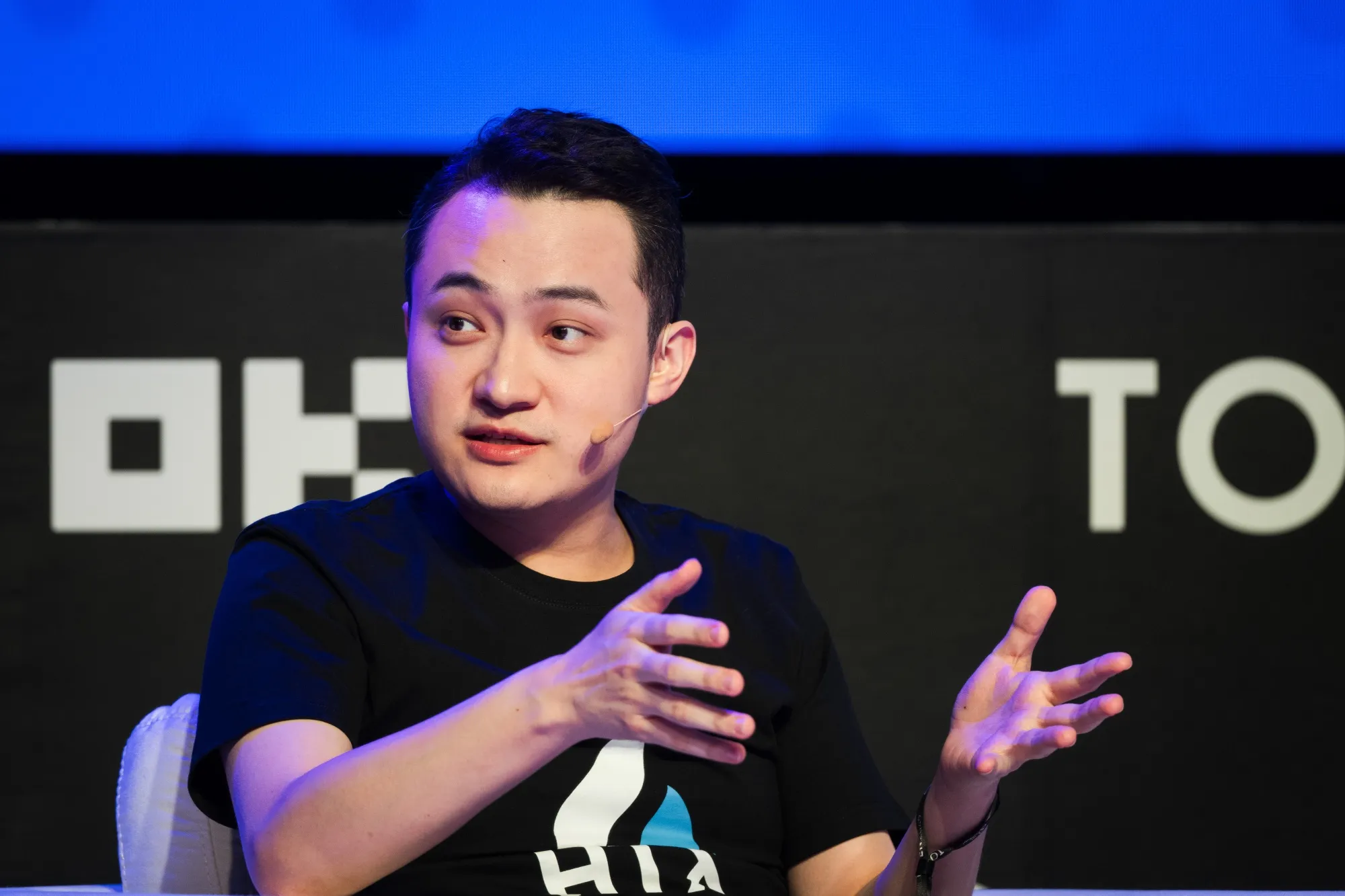
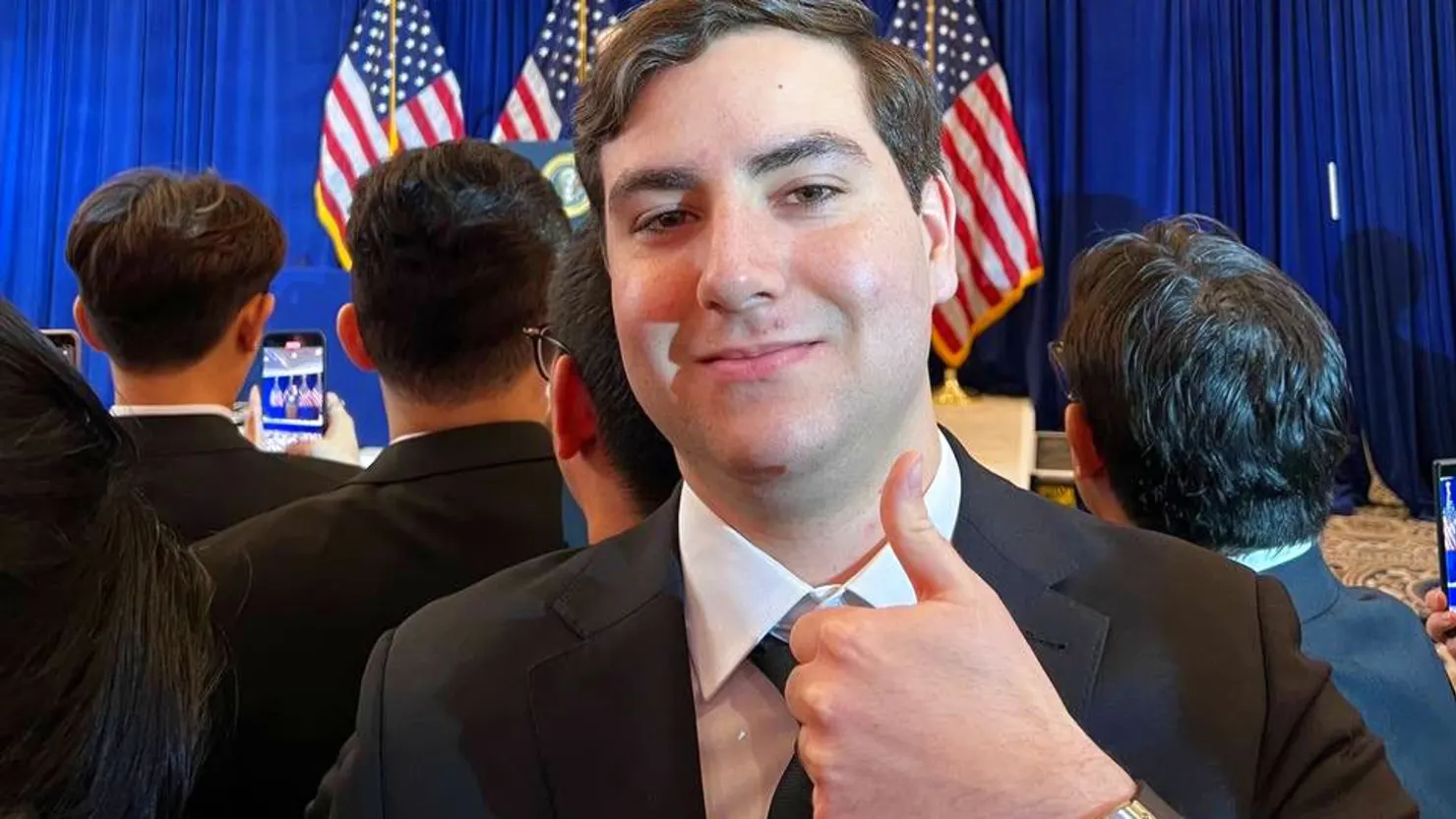
    If you’re looking for one image to summarize the grifter’s paradise that was Donald Trump’s cryptocurrency dinner Thursday night, behold:

    The event was a private dinner with the president at Trump National Golf Club, where “investors spent an estimated $148 million on the $TRUMP meme coin to secure their seats … with the top-25 holders spending more than $111 million,” Reuters reported, citing crypto intelligence firm Inca Digital. Reuters also cited an analysis that found the Trumps have made $320.19 million in fees from their meme coins.

    And the person in the photo is Justin Sun, a MAGA-aligned crypto bro who said he was “awarded” what he identified as a “Trump Gold Tourbillon” (a Trump-branded watch that retails for $100,000). The White House didn’t immediately respond to MSNBC’s question as to whether the president actually gifted this watch to Sun.

    Sun, whose dubious ventures have previously enlisted celebrities such as Lindsay Lohan and Jake Paul, claimed he’s the top holder (that is, the largest investor) of Trump’s meme coin, which has drawn many foreign investors — itself a whole ethical and legal quagmire.

    His investments in Trump have been considerable — but, for him, arguably worthwhile. Sun has been in the news in the last few months because, after he plowed $75 million into Trump family crypto, per NBC News, the SEC put a 60-day pause on the charges of market manipulation and offering unregistered securities it had been pursuing against him since 2023. (Sun did not reply to NBC News’ request for comment, but denied any wrongdoing to The Wall Street Journal in April.)

    NBC News published a dispatch on the president’s event, for a more thorough picture of the various attendees and the MAGA movement’s blatant disregard for ethics.

    But to really catch the flavor of what’s happening, it’s these images of brazen wealth and intolerably open corruption that one would expect from a president dead-set on dragging the United States back to the Gilded Age, an era marked by immense wealth inequality and widespread corruption.

    As Chris Hayes noted on “All In” on Thursday, the contrasting images of Trump that day — whipping votes for a House budget with deep cuts to social programs, such as food aid and health care, in the morning, and in the evening reportedly helicoptering into a ritzy and self-enriching dinner for a few minutes — is too glaring to ignore.

    Watch Hayes’ commentary on what he called the “Met Gala of pay-for-play” here:

  • At Trump’s $148 Million Meme Coin Dinner, the Food Was Bad and Security Was Weak, Attendee Says

    At Trump’s $148 Million Meme Coin Dinner, the Food Was Bad and Security Was Weak, Attendee Says

    The price of President Donald Trump’s meme coin plunged 16% as of Friday morning, just hours after he hosted a black-tie gala at his Virginia golf club for its biggest buyers — an elite crowd that spent a combined $148 million on the token for the chance to be there.

    It was billed as “the most exclusive invitation in the world.”

    Among the 220 attendees were crypto influencers, industry executives such as Sandy Carter of Unstoppable Domains, and former NBA star Lamar Odom, who used the occasion to praise Trump as “the greatest president” and promote his own token, $ODOM.

    The top 25 wallets were promised a private reception and guided tour. Others, such as 25-year-old Nicholas Pinto — whose dad drove him to the event in his Lamborghini — left underwhelmed and still hungry.

    “The food sucked,” Pinto said. “Wasn’t given any drinks other than water or Trump’s wine. I don’t drink, so I had water. My glass was only filled once.”

    Trump made only a brief appearance, Pinto said. “He didn’t talk to any of the 220 guests — maybe the top 25,” he said.

    All in, the president was there for 23 minutes, Pinto said. Trump delivered a brief address rehashing old crypto talking points then left on a helicopter before taking any questions or pictures with his meme coin contest winners, he said.

    Phones weren’t locked in RFID pouches, and security was lax, according to Pinto.

    “Once Trump left, they didn’t really worry about anything else,” Pinto added.

    108149905 1748001244197 IMG 7528
    Contest winners who spent the most on $TRUMP meme coins added their signatures to a poster-sized printout of the leaderboard at a gala dinner at Trump National Golf Club in Potomac Falls, Virginia, May 22, 2025. (Nicholas Pinto)

    The crowd’s opulence was on full display.

    “Richard Mille watches weren’t even rare,” Pinto said. “I saw at least 16 people wearing them. I never see that unless I’m at a high-end restaurant in Miami or Dubai.”

    But the vibe was more muted than expected, he said: “Lots of people didn’t even hold the coin anymore. They were checking their phones during dinner to see if the price moved.”

    The Budgets has reached out to Trump representatives for comment on the dinner and attendees.

    Protests

    For lawmakers and regulators, the dinner set off alarm bells.

    The #1 token holder was Chinese-born crypto mogul Justin Sun, who is currently facing Securities and Exchange Commission fraud charges that were recently paused, with the agency citing “the public interest.”

    Sun holds over $22 million in the $TRUMP token and another $75 million in World Liberty Financial’s native token.

    “As the top holder of $TRUMP and proud supporter of President Trump, it was an honor to attend the Trump Gala Dinner,” Sun posted on Friday. “Thank you @POTUS for your unwavering support of our industry!”

    Outside the gates of Trump National Golf Club in Potomac Falls, Virginia, about a hundred protesters gathered, according to NBC News. Sen. Jeff Merkley, D-Ore., joined them, backing a new End Crypto Corruption Act with Senate Minority Leader Chuck Schumer, D-N.Y.

    Signs read “Crypto Corruption” and “Trump is a traitor.”

    Crypto on Capitol Hill

    “The Trump family activity in the memecoin space makes my work in Congress more complicated,” Rep. French Hill, R-Ark., told CNBC News on Friday.

    Hill, who’s leading negotiations on a bipartisan stablecoin regulation bill known as the GENIUS Act, called the gala “a distraction from the good work we need to do.”

    Now, the GENIUS Act is at risk.

    Sen. Josh Hawley, R-Mo., recently added a controversial rider to the bill that would cap credit card late fees — what’s seen as a poison pill that could alienate banking allies and stall final approval.

    108150206 1748032186377 IMG 7535 2
    President Donald Trump speaks at a dinner for meme coin contest winners at Trump National Golf Club in Potomac Falls, Virginia, May 22, 2025. (Nicholas Pinto)

    On Thursday night as the meme coin contest dinner was underway, a bloc of Senate Democrats announced they’d be pushing for a new provision that would ban presidents and senior officials from profiting off crypto ventures while in office — a direct challenge to the Trump-linked stablecoin USD1 that launched in the spring.

    In Washington, there’s growing concern that political infighting over Trump’s crypto ventures could derail the stablecoin bill altogether. That poses an even bigger risk.

    According to The Wall Street Journal, major banks including JPMorganBank of America and Citi are in early talks to issue a unified digital dollar to compete with Tether, the foreign-controlled stablecoin that now commands over 60% of global market share.

    Those plans hinge on legal clarity.

    If the GENIUS Act stalls, the U.S. could lose its window to regain ground in the global race for digital payments.

    The White House has tried to draw a line between Trump the president and Trump the private businessman.

    “The president is attending it in his personal time. It is not a White House dinner,” press secretary Karoline Leavitt told reporters when pressed on attendee transparency.

    The administration declined to release a guest list. But blockchain data — and a patchwork of guest photos — tell part of the story.

    A Bloomberg News analysis found that all but six of the top 25 wallets used foreign exchanges, ostensibly off-limits to U.S. users. More than half of the top 220 wallets were linked to similar offshore platforms.

    One Nasdaq-listed penny stock, Freight Technologies, disclosed in an SEC filing that it spent $2 million on Trump’s token to push U.S.-Mexico trade policy. It didn’t make the cut for the dinner — finishing 250th.

    Since its January debut, the $TRUMP coin has generated more than $324 million in trading fees. Roughly 80% of the $TRUMP token supply is controlled by the Trump Organization and affiliates, according to the project’s website.

    WLFI, the Trump’s parallel token, has sold $550 million in two token sales.

    Still, White House AI and crypto czar David Sacks remained bullish on “significant bipartisan support” for stablecoin legislation.

    “We already have over $200 billion in stablecoins — it’s just unregulated,” Sacks told CNBC’s “Closing Bell Overtime” on Wednesday. “If we provide the legal clarity and legal framework for this, I think we could create trillions of dollars of demand for our Treasurys practically overnight, very quickly.”

    “We have every expectation now that it’s going to pass,” added Sacks, though he didn’t answer a question about concerns from Democrats that there aren’t sufficient safeguards in place to keep the president and his family from profiting from legislation.

    While Sacks sold $200 million in crypto-related holdings before taking his White House job, according to a disclosure filing, Trump and his family have been leaning into building a crypto empire.

    The Trumps are financial backers of World Liberty Financial, which is behind the USD1 stablecoin that is backed by Treasurys and dollar deposits.

    Abu Dhabi’s MGX investment fund recently pledged $2 billion in USD1 to Binance, the world’s largest digital assets exchange. It’s the company’s largest-ever investment made in crypto.

  • iPhone Price Could Soar to $3,500 if Made in the U.S.

    iPhone Price Could Soar to $3,500 if Made in the U.S.

    US President Donald Trump boasted “jobs and factories will come roaring back” when he unleashed unprecedented tariffs around the world during his “Liberation Day” address last month.

    But there’s one product the president is particularly eager to produce in the US: iPhones.

    “I have long ago informed Tim Cook of Apple that I expect their iPhone’s that will be sold in the United States of America will be manufactured and built in the United States, not India, or anyplace else,” Trump posted Friday morning on Truth Social. “If that is not the case, a Tariff of at least 25% must be paid by Apple to the U.S.”

    But Dan Ives, global head of technology research at financial services firm Wedbush Securities, told in April that idea is a “fictional tale.”

    US-made iPhones will likely cost more than three times their current price of around $1,000, Ives said, because of the costs associated with replicating the highly complex production ecosystem that currently exists in Asia.

    “You build that (supply chain) in the US with a fab in West Virginia and New Jersey. They’ll be $3,500 iPhones,” he said, referring to fabrication plants, or high-tech manufacturing facilities where computer chips that power electronic devices are normally made.

    And even then, it would cost Apple about $30 billion and three years to move just 10% of their supply chain to the US to begin with, Ives told Burnett.

    The making and assembly of smartphone parts shifted to Asia decades ago, as American companies largely focused on software development and product design, which generate much higher profit margins. That move has helped make Apple one of the world’s most valuable companies and cement itself as a dominant smartphone maker.

    Since Trump’s inauguration in late January, Apple’s shares have lost more than 14% of their value due to concerns about the impact of tariffs on its sprawling supply chain, which is highly dependent on China and Taiwan. About 90% of Apple’s iPhone production takes place in China, according to Ives.

    “That’s why I think you see what’s happened to the stock, because no company is more caught up in this tariff front and center in this category five storm than Cupertino and Apple,” he said in April. “It’s an economic Armageddon, but especially for the tech industry.”

    The chips that power iPhones are mainly manufactured in Taiwan, while its screen panels are supplied by South Korean companies. Some other components are made in China, and final assembly mostly takes place in the country.

    The administration’s exemption of smartphones and other electronics containing semiconductors from the elevated “reciprocal” tariffs on China has spared iPhones from the harshest levies, but Apple still faces a 20% tariff on Chinese goods for the country’s role in the fentanyl trade. Apple CEO Tim Cook said on the company’s most recent earnings call that “the majority” of iPhones coming into the United States will now be shipped from India, adding that tariffs could add $900 million to Apple’s costs this quarter.

    In February, Apple announced it would invest $500 billion in the United States over the next four years as part of its effort expand production outside China and to avoid Trump’s tariffs on the country.

    Apple has been seeking to diversify its production bases from China to India and Brazil. But Gene Munster, managing partner at Deepwater Asset Management, estimates it would be difficult for Apple not to raise iPhone prices if it faces tariffs of 30% or higher.

    “Anything below 30, they will probably carry the vast majority of that increase,” he said. “But I think at some point they’re going to have to start to share it.”