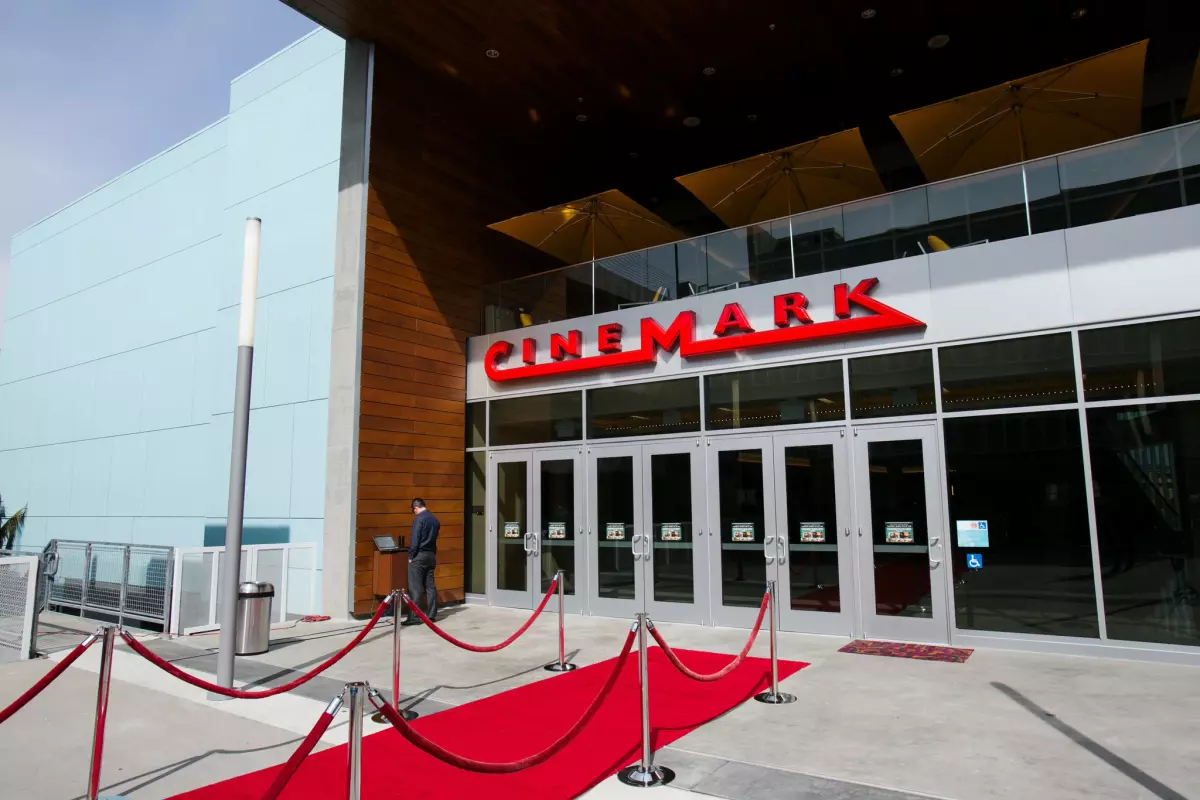
Exhibition giant Cinemark reported revenue of $541 million, down 7 percent year-over-year from $579 million, for the first quarter of 2025 and swung to a quarterly loss of $39 million, compared to a year-earlier profit of $25 million.
But the company touted: “North American industry box office momentum accelerated in April, nearly doubling year-over-year, leading into a blockbuster summer film slate.”
Quarterly admissions revenue decreased 8.9 percent to $264.1 million, while concession revenue dropped 6.2 percent to $210.4 million, as Cinemark posted a 7.8 percent decrease in attendance to 36.6 million patrons. Worldwide average ticket price came in at $7.22, and concession revenue per patron amounted to $5.75.
The company also posted quarterly adjusted earnings before interest, taxes, depreciation and amortization (EBITDA), another profitability metric, of $36.4 million, down from $70.7 million in the year-ago period.
“Cinemark once again delivered outsized box office results in the first quarter, surpassing industry benchmarks both domestically and internationally, despite a suppressed box office environment that was impacted by lingering effects of the 2023 Hollywood strikes,” CEO Sean Gamble said in the press release. “We continue to expect a favorable rebound in our industry’s recovery trajectory this year, and the second quarter is already pacing well ahead of 2024’s box office results, showcasing the strong, sustained enthusiasm consumers have for experiencing a diverse range of compelling, well-marketed films in theaters.”
He added: “As we look ahead, we remain highly encouraged about the future direction of our industry and company based on resilient consumer trends, a continued resurgence of wide release volume, Cinemark’s advantaged financial and competitive positions, and meaningful opportunities we have to generate incremental value creation through our ongoing strategic initiatives.”
On the earnings call, Gamble said momentum starting picking up with A Minecraft Movie, which deliveredCinemark’s highest three-day opening of all time for a family film, and continued with the faith-based film King of Kings, Sinners and The Accountant 2.
Moving forward, Gamble said that he also expects Cinemark and the film industry would be able to continue on an upswing during “an uncertain and evolving macroeconomic landscape,” due to the fact that in six of the past eight recesssions, North American box office has grown. “Based on our observations during strained economic periods, people continue to pursue out of experiences, and they tend to prioritize value and affordability,” he said.
Concluded Gamble: “Considering the health of our company and our positive outlook, we paid our first dividend since the pandemic during the quarter and executed $200 million of share repurchases. This marks our first-ever stock buyback program and has put us out in front of managing potential dilution related to our upcoming convertible notes settlement.”
The sports streaming platform FuboTV reported it ended the first quarter with 1.47 million paid subscribers in North America, down from 1.67 million at the end of the fourth quarter of 2024 and 1.61 million at the end of the third quarter that year.
Fubo had 1.51 million North American subscribers in the year-ago period. The streamer in the first quarter had overall revenue at $416.3 million, up from year-earlier $402.3 million. That beat an analyst projection of revenues at $415.45 million, according to TipRanks Analyst Forecasts.
Fubo saw subscription revenue rise to $391.4 million, against $373.7 million in the same period of 2024. The company reiterated it looked to get to profitability for its sports-centric streamer in 2025.
Advertising revenue dropped to $22.8 million, compared to a year earlier $27.4 million. The streamer swung to a net income from continuing operations at $188.4 million, compared to a year-earlier net loss of $56.3 million.
The latest quarter included a $220 million gain on the settlement of antitrust litigation. In January 2024, Venu, the sports-focused streaming service proposed by The Walt Disney, Warner Bros. Discovery and Fox Corp. was abandoned in the face of opposition from Fubo.
Fubo execs unveiled a separate deal that will see Disney merge its Hulu + Live TV service with Fubo. “We also remain excited about our agreement with The Walt Disney Company to combine Fubo with Hulu + Live TV, and its potential to increase competition in the Pay TV space. We continue to work through the regulatory process, and look forward to sharing more information when we are able,” David Gandler, co-founder and CEO of Fubo, said in prepared remarks during a pre-market analyst call on Friday.
Gandler discussed an ongoing dispute after TelevisaUnivision pulled its networks from Fubo in Dec. 2024, with the prospect of talks between the parties getting started to resolve their content pricing differences. “We’re certainly open to those discussions on acceptable terms,” the Fubo CEO told analysts.
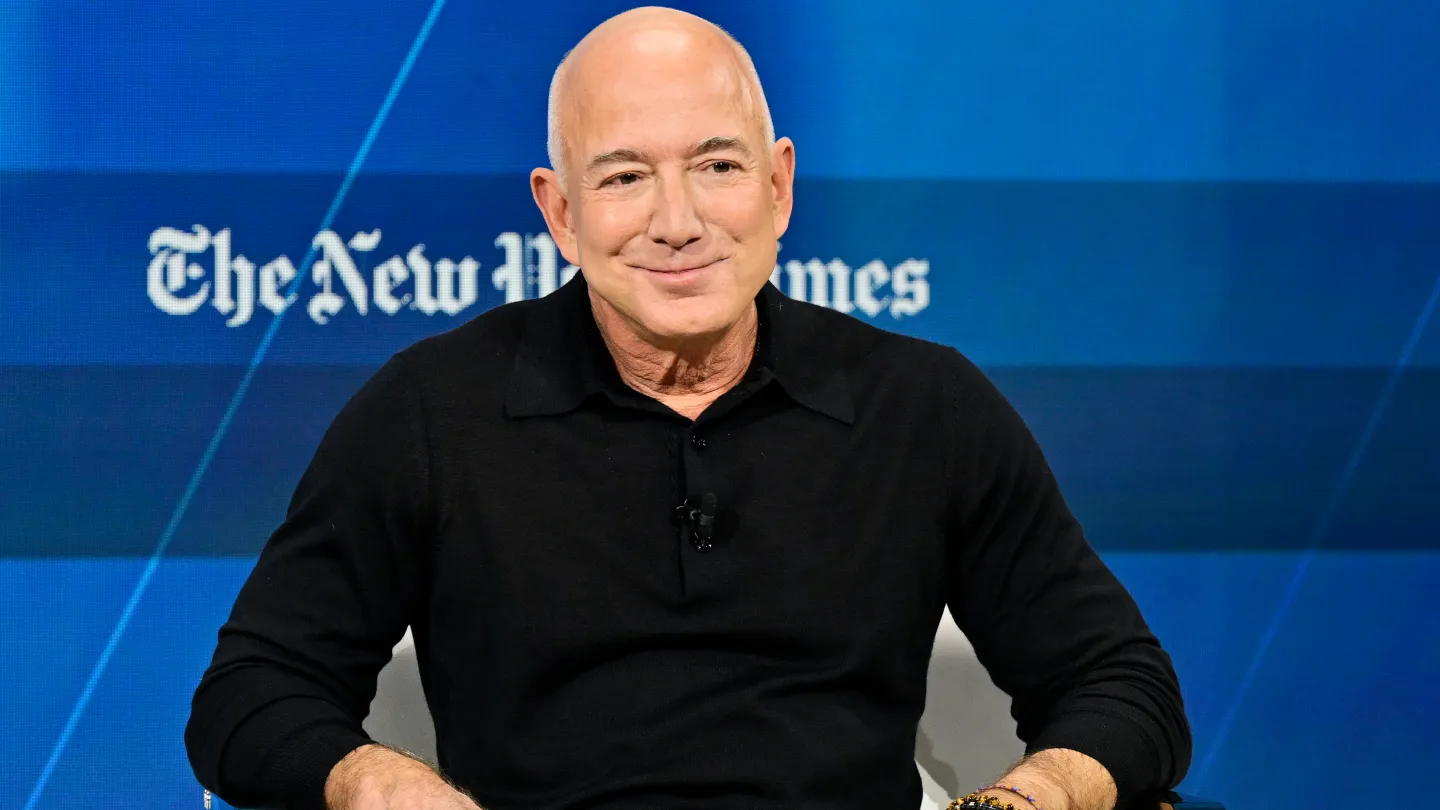
Amazon founder and executive chairman Jeff Bezos is planning to sell some of his holdings in the company.
Bezos, whose net worth is valued at over $200 billion, will sell up to 25 million shares in the company, valued at around $5 billion, Amazon disclosed in a regulatory filing Friday. The value of the shares could change, of course, depending on Amazon’s stock price. If it declines, they would be worth less, if it rises, they would be worth more.
Amazon filed its quarterly 10-Q report with the Securities and Exchange Commission Friday morning, revealing a 10b5-1 trading plan for Bezos. The plans are meant to preempt concerns of insider trading by creating a pre-planned schedule for sales that are executed automatically when certain stock conditions are met.
The specifics of the trading plan were not disclosed, beyond the 25 million share figure, and an end date of May 29, 2026. For comparison, Disney CEO Bob Iger disclosed a 10b5-1 plan late last year covering about $41 million in stock.
Bezos, it should be noted, has consistently sold a small portion of his Amazon holdings for the last couple of years to help fund his other ventures, which include The Washington Post and the space firm Blue Origin. Last year, for example, he filed a trading plan that covered up to 50 million shares in the company.
The planned sale comes amid a challenging environment for Amazon, which is navigating tariff uncertainty. That said, the company’s advertising business continues to surge, growing 19 percent in Q1 to $13.9 billion.
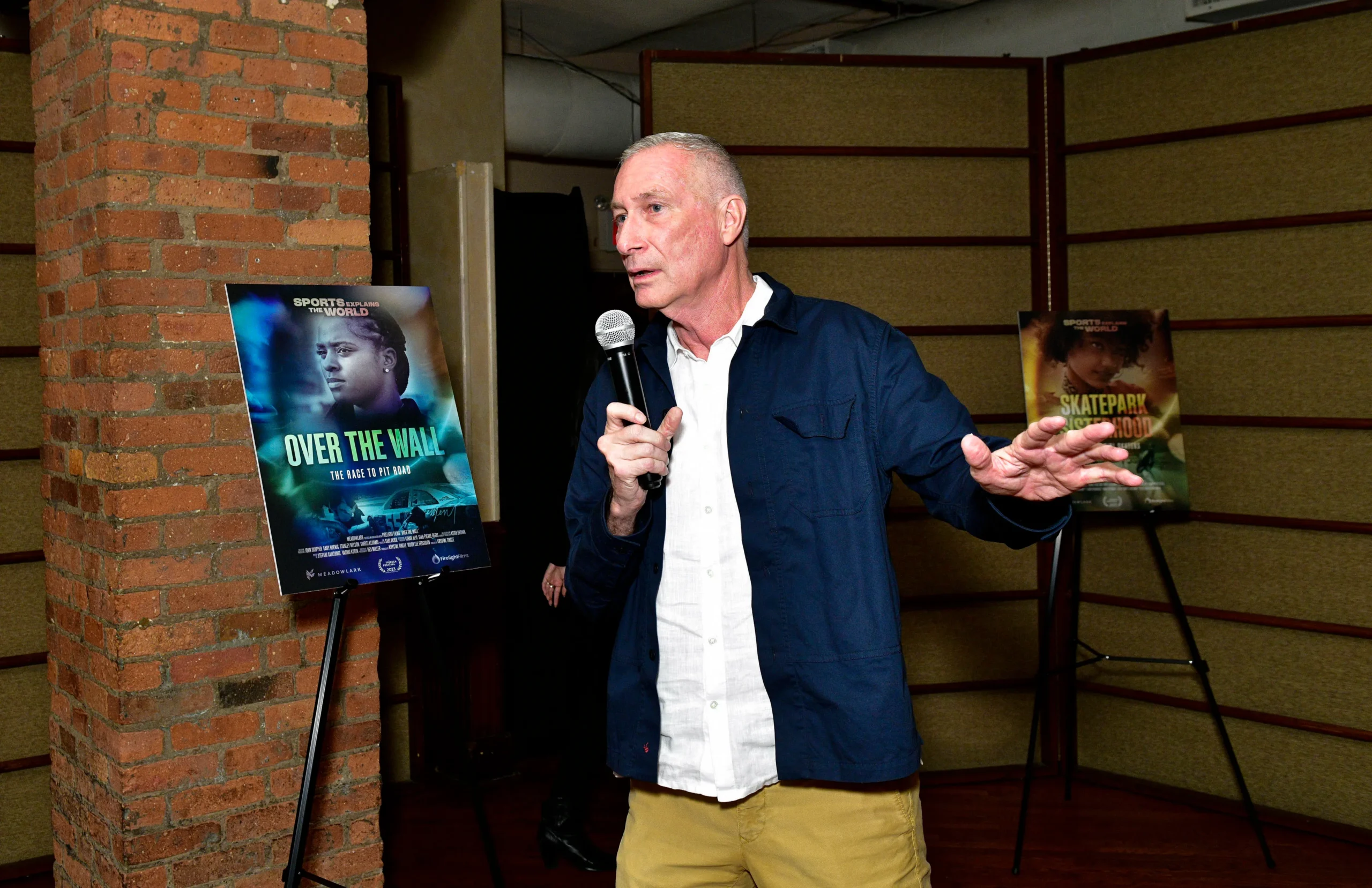
Skipper co-founded Meadowlark in 2021 alongside radio host Dan Le Batard with a goal of bringing his show to digital platforms. Skipper, the former president of ESPN, subsequently pushed Meadowlark to develop documentary and unscripted fare, inking a first-look deal with Apple TV+, and developed a franchise called SportsExplains the World that would encompass both anthology series and podcasts.
In a statement posted to his social media accounts, Le Batard indicated that the company will continue to produce documentary fare, and that Skipper would remain involved providing “leadership and guidance” to the company.
“Thankful to John Skipper for his friendship and look forward to his continued leadership and guidance on and off air,” Le Batard wrote. “I asked him to build a successful, fiercely independent media company within four years, and he has. Meadowlark will continue to produce films and documentaries. Our audio/video network is thriving, and we look forward to sharing good news shortly in that regard. I’m so grateful that our Skipper has navigated today’s turbulent media seas to get us into much safer waters.”
MoviePass, the startup that made its mark with its movie theater subscription service, has always been known for shaking things up, and its latest venture is no exception.
The company announced on Thursday the beta launch of Mogul, a new daily fantasy entertainment platform designed specifically for the Hollywood industry.
To understand what Mogul is, it’s important to first grasp the concept of daily fantasy sports. This subcategory of fantasy sports allows players to compete over short-term periods, rather than an entire season. Players assume the role of team managers, creating their own dream teams made up of real-world athletes and earning points based on how those athletes perform in actual games.
Mogul takes this idea by allowing users, who are likely passionate movie enthusiasts interested in this sort of thing, to act as studio heads in the film industry. Players are provided with a budget and “studio credits” (in-game currency) to spend on selecting actors for their leagues.
Users can update their lineup of movie actors each day. They then participate in fantasy-style tournaments that last about a week, plus one-on-one competitions and solo challenges. Participants make calls on the results of various things, such as box office results, audience turnout, critic ratings, and potential award winners.
As users level up, they earn digital collectibles — think signed posters and memorabilia — that help them climb the leaderboard.
Mogul is built on Sui, a layer 1 blockchain and smart contract platform developed by Mysten Labs. Beta testers will receive a digital wallet to securely store their in-game virtual currency, rewards, and collectibles.
MoviePass is taking a bold leap with the introduction of Mogul, as it has never really been done before. But CEO Stacy Spikes believes it’s a huge market waiting to be tapped. He said, “People can name more actors than they can probably name sports athletes. So I think there’s a really big market opportunity there.”
Initially, when we first learned about Mogul, we didn’t anticipate that it would take off, at least not in the early stages. We wondered if there are many movie fans willing to compete with others about box office revenue or ratings.
However, we may have underestimated its appeal. The company claims that more than 400,000 people have already signed up for the early-access waitlist. It remains to be seen whether it can maintain this level of interest leading up to the official launch, but it could become popular among niche film industry followers.
During our initial conversation with Spikes, he positioned Mogul as a predictive market platform. Later on, we were told that a more fitting description would be to classify Mogul as a daily fantasy sports platform, but it may evolve to include this functionality in the future. For now, though, Mogul operates exclusively with virtual currency.
This distinction is important, especially considering the regulated nature of daily fantasy sports, as opposed to prediction market platforms, which currently exist in a legal gray area. Kalshi, for instance, has been in ongoing legal battles with state gambling regulators.
“It’s murky what needs to be approved. There are different types of clearances, depending on the markets you want in the U.S. You have to go state by state. It literally is like a Chinese puzzle with stuff all over the place,” Spikes said.
Mogul represents the initial phase of MoviePass’s long-term web3 strategy. The company has previously revealed its intention to provide on-chain rewards for attending movies. It’s also backed by Animoca Brands, a venture capital firm specializing in blockchain technology.
Last year, MoviePass partnered with Sui to allow subscribers to make payments using USD coin.
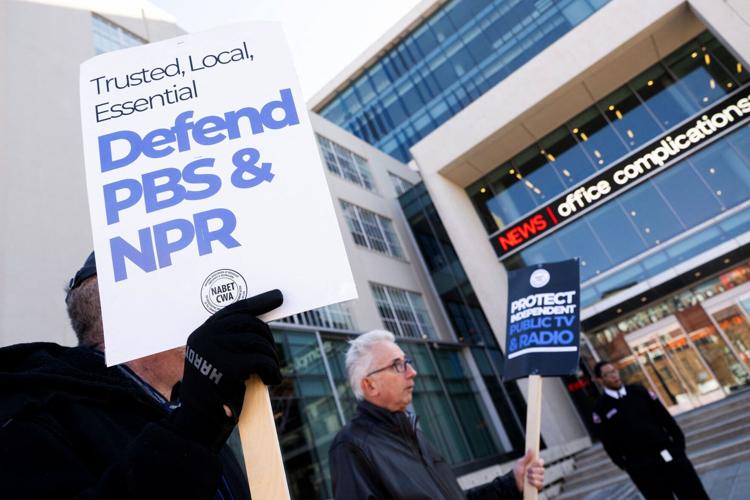
President Donald Trump signed an executive order on Thursday evening seeking to prohibit federal funding for NPR and the Public Broadcasting Service (PBS). The order, which could be subject to legal challenge, called the broadcasters’news coverage“biased and partisan.”
It instructsthe Corporation for Public Broadcasting to ceaseproviding direct funds to either broadcaster. It also orders CPB to cease indirect funding of the services through grants to local public radio and television stations.
CPB is the main distributor of federal funds to public media. It receives about $535 million in federal funds per fiscal year, which it mostly spends on grants to hundreds of stations nationwide. The stations spend the grants on making their own programming or on buying programming from services such as NPR and PBS.
CPB, created by an act of Congress in 1967, also sometimes provides direct grants to NPR and PBS to produce national programs.
Thursday’s order instructs the CPB board to ensure that stations receiving its grants “do not use Federal funds for NPR and PBS.”
The board must “cancel existing direct funding to the maximum extent allowed by law” to NPR and PBS and “decline to provide future funding,” it says.
It also instructs all federal agencies to “identify and terminate” any funding to the two broadcasters.
Trump and his allies have long accused NPR and PBS of favoring progressive positions. The heads of each network were grilled in March over alleged liberal bias at a congressional hearing titled “Anti-American Airwaves,” led by Rep. Marjorie Taylor Greene (R-Georgia). Both executives rejected the accusation.
“Each month, over 160 million television and online viewers explore the world through our trusted content,” Paula Kerger, president and CEO of PBS, said during the hearing.
People rally outside the NPR headquarters in Washington on March 26 to demand Congress protect funding for public broadcasters. (Saul Loeb/AFP/Getty Images)
In an emailed statement, an NPR spokesperson said early Friday that “NPR’s editorial practices and decision-making are independent and free from outside influence.”
“For more than 50 years, NPR has collaborated with local nonprofit public media organizations to fill critical needs for news and information in America’s communities,” the statement said, adding that “millions of Americans depend on NPR Member stations for rigorous, fact-based, public service journalism.”
“Federal funding is essential to the work of public media and all public media stations,” it said.
This week, CPB sued the Trump administration after it sent a letter to three board members attempting to terminate their positions. The lawsuit argues that the White House does not have authority over CPB because it is a nonprofit private corporation, not a federal agency. The lawsuit is ongoing, and Thursday’s order could be subject to a similarlegal challenge.
Last month, White House officials said the administration would ask Congress to rescind funding that had already been allocated to CPB. In a statement at the time, the White House provided a list of examples of what it called biased content, such as an NPR article with facts about “queer animals” and a PBS documentary about a transgender teenager. It also accused the broadcasters of having “zero tolerance for non-leftist viewpoints.”
PBS and CPB did not immediately respond to an overnight request for comment.
Last month, Kerger said in a statement in response to Trump administration threats to rescind federal funding that “there’s nothing more American than PBS, and our work is only possible because of the bipartisan support we have always received from Congress.”
CPB contributes about 1 percent of NPR’s budget and funds a portion of the hundreds of stations that license NPR content, according to the broadcaster. PBS is owned by its local member stations, which are usually partially funded by CPB grants. About 16 percent of its funding comes from the government, the service told The Washington Post in January.
An average of about one-eighth of local public-station funding comes from CPB, according to the corporation, with the remainder coming from sources such as donations and sponsorships.
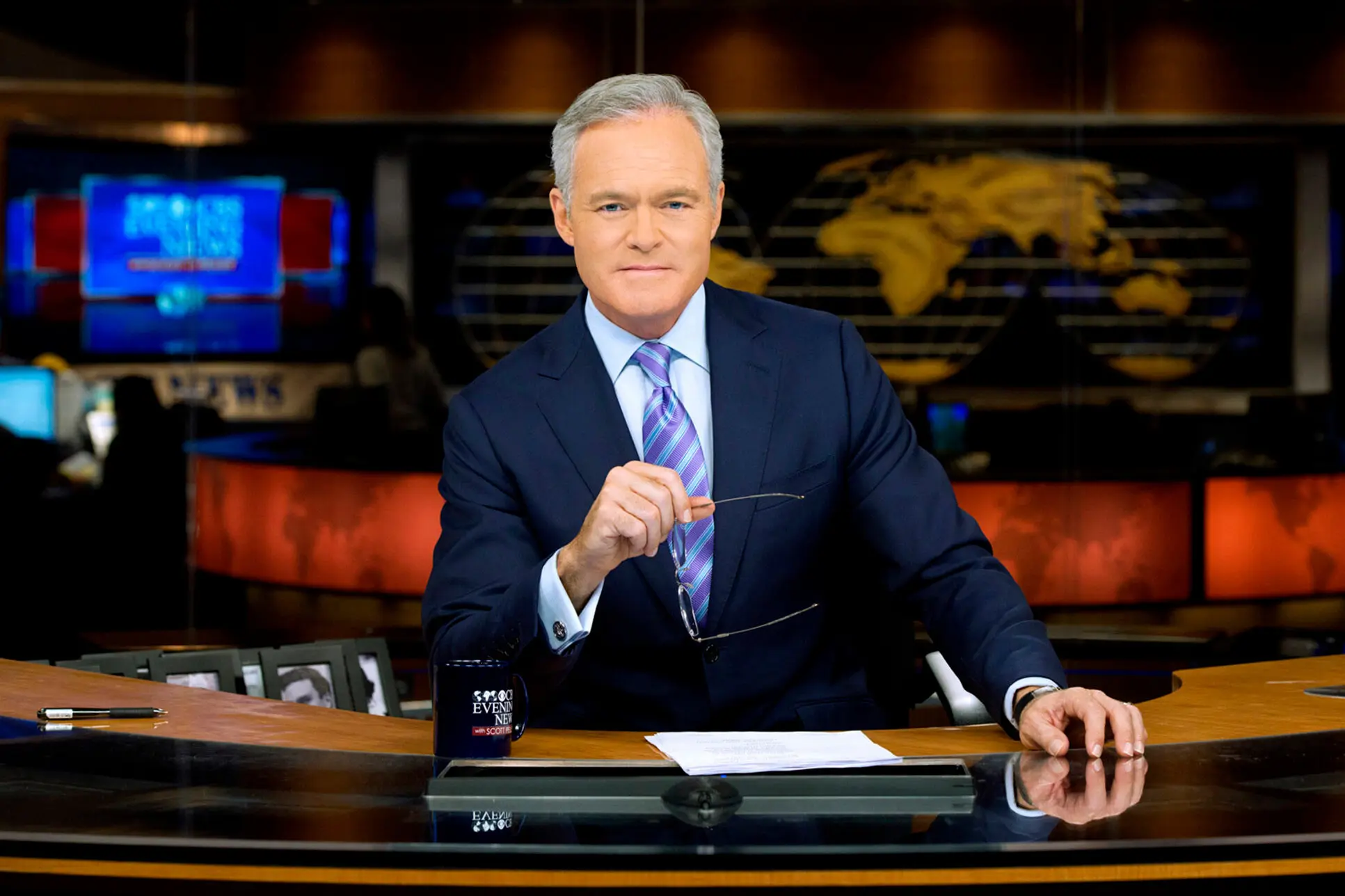
In an extraordinary on-air rebuke, one of the top journalists at “60 Minutes” directly criticized the program’s parent company in the final moments of its Sunday night CBS telecast, its first episode since the program’s executive producer, Bill Owens, announced his intention to resign.
“Paramount began to supervise our content in new ways,” the correspondent, Scott Pelley, told viewers. “None of our stories has been blocked, but Bill felt he lost the independence that honest journalism requires.”
A spokesman for Paramount had no immediate comment, and has previously declined to comment on Mr. Owens’s departure.
Mr. Owens stunned the show’s staff on Tuesday when he said he would leave the highest-rated program in television news over disagreements with Paramount, CBS’s corporate parent, saying, “It’s clear the company is done with me.”
Mr. Owens’s comments were widely reported in the press last week. The show’s decision to repeat those grievances on-air may have exposed viewers to the serious tensions between “60 Minutes” and its corporate overseers for the first time.
Shari Redstone, the controlling shareholder of Paramount, has been intent on securing approval from the Trump administration for a multibillion-dollar sale of her media company to a studio run by the son of Larry Ellison, the tech billionaire.
President Trump sued CBS last year, claiming $10 billion in damages, in a case stemming from a “60 Minutes” interview with the 2024 Democratic presidential nominee, Kamala Harris, that Mr. Trump said was deceptively edited. Ms. Redstone has expressed her desire to settle Mr. Trump’s lawsuit, although legal experts have called the case far-fetched.
In his remarks on Sunday night’s telecast, Mr. Pelley presented Mr. Owens’s decision to resign as an effort to protect “60 Minutes” from further interference.
“He did it for us and you,” Mr. Pelley told viewers of the show, which began airing in 1968. “Stories we pursued for 57 years are often controversial — lately, the Israel-Gaza War and the Trump administration. Bill made sure they were accurate and fair. He was tough that way. But our parent company, Paramount, is trying to complete a merger. The Trump administration must approve it.”
After “60 Minutes” ran a segment in January about the war between Israel and Hamas, Ms. Redstone complained to CBS executives about what she considered the segment’s unfair slant. A day later, CBS appointed a veteran producer to a new role involving journalistic standards. She reviewed certain “60 Minutes” segments that were deemed sensitive.
Representatives for Mr. Trump and for Paramount are involved in settlement talks, and mediation is expected to start this week.
Mr. Pelley’s on-air monologue on Sunday night evoked a previous moment of public discord between “60 Minutes” and its corporate overseers.
In 1995, also in a closing note to viewers, the correspondent Mike Wallace said on air that the program had chosen not to broadcast an interview with a former tobacco industry executive because managers at CBS News had given in to legal pressure. “60 Minutes” ultimately aired the interview, and the episode was later dramatized in “The Insider,” a 1999 movie starring Al Pacino as Lowell Bergman, a “60 Minutes” producer.
Sunday’s “60 Minutes” episode also featured a segment that examined the Trump administration’s decision to reduce funding to the National Institutes of Health, including an interview with a former director who expressed his concerns about adverse effects on Americans’ health.
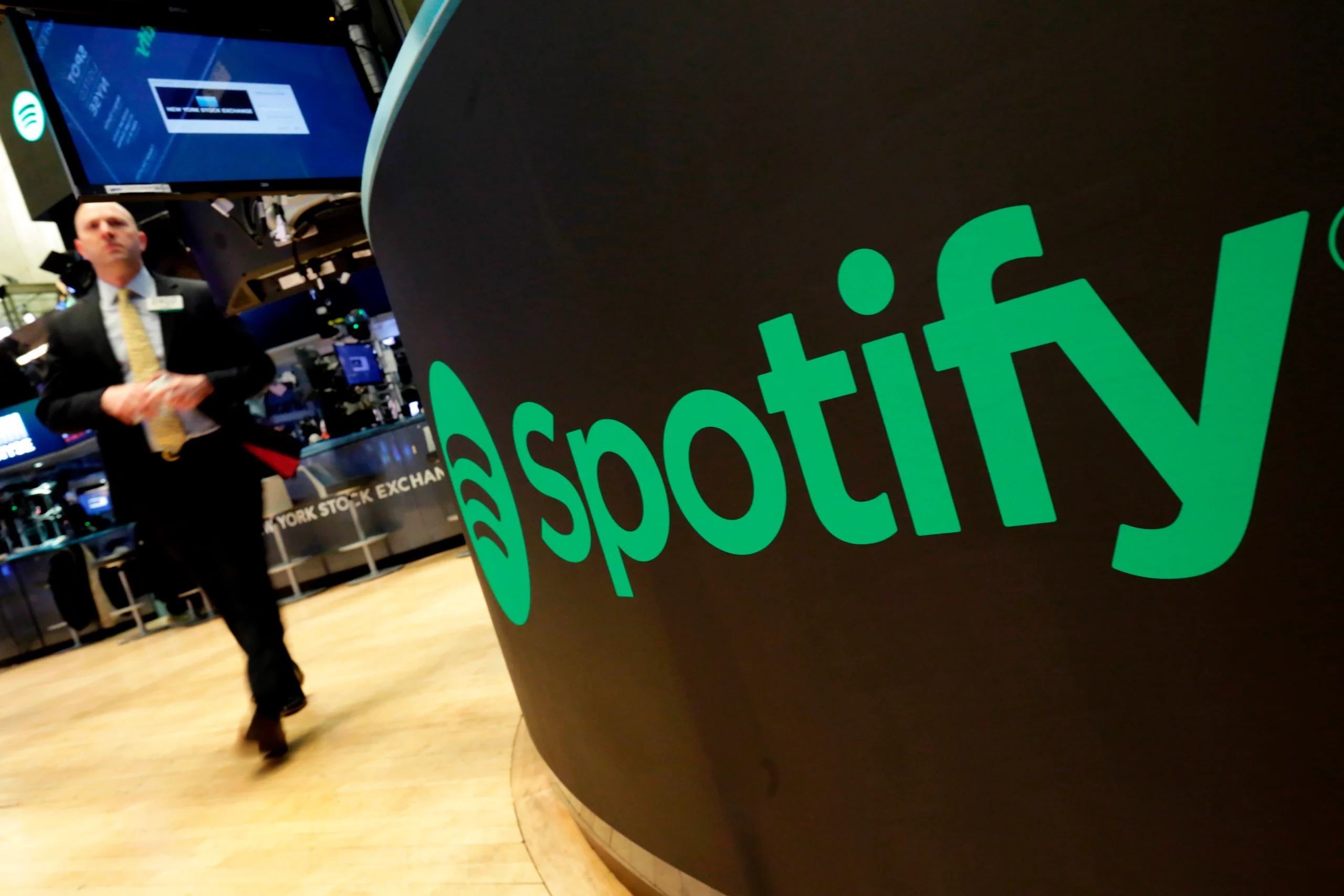
Spotify informed The Budgets that they have paid podcast publishers and creators over $100 million since the start of January.
The payout is the result of a program introduced in 2025 that opened up new revenue streams to eligible hosts. But it is also an attempt to draw more creators (and their audiences) to Spotify, as the rise of video podcasting has driven many of them to YouTube.
Video has come to dominate podcasting. More than half of Americans over the age of 12 have watched a video podcast — but primarily on YouTube, according to an Edison Research report from January. The service claims to reach 1 billion podcast consumers every month, making it the dominant platform for podcasts — a media king and kingmaker — and leaving onetime audio-only platforms like Spotify and Apple Podcasts in the dust. (Spotify introduced video podcasts in 2019.)
Compared with YouTube, Spotify has become a podcast underdog, with about 170 million monthly podcast listeners among its total audience of 675 million. One indication of how far Spotify has to go to catch up to the top player: YouTube paid out more than $70 billion to creators and media companies from 2021 to 2024.
The company reports earnings on Tuesday and is expected to make about 540 million euros in pretax income on 4.2 billion euros in sales, according to S&P Capital IQ.
But Spotify, which is listed on the New York Stock Exchange but is based in Stockholm, remains a major player in the industry thanks in part to its talent roster — it distributes and sells advertising for the biggest podcast in the world, “The Joe Rogan Experience.” And it achieved its first full year of profitability in 2024. (Mr. Rogan’s podcasts are also available on YouTube.)
The new partner program aims to chip away at YouTube’s dominance. Spotify previously paid creators only by sharing advertising revenue with them, much like YouTube. Now it also gives them incentives to upload videos, with eligible creators earning additional money based on how much premium subscribers engage with their videos.
The company is trying to attract more viewers. At the same time that Spotify announced the partnership program in November, it announced that paid subscribers in certain markets wouldn’t have to watch dynamic ads in video podcasts. Video consumption has already increased by more than 40 percent since January, according to Spotify.
The question now is whether Spotify can persuade creators to shift priorities.
David Coles, host of the horror fiction podcast “Just Creepy: Scary Stories,” said he is re-evaluating his “home platform” after his Spotify revenue recently surpassed his YouTube revenue. Last quarter, Mr. Coles said he received about $45,500 from Spotify. After joining the company’s new partner program, his quarterly Spotify income rose to about $81,600.
This increase can be even more dramatic for larger shows and podcast companies, like YMH Studios, a comedy network with 2.1 million YouTube subscribers that produces popular podcasts including “2 Bears, 1 Cave.” While declining to share exact figures, YMH Studios said its quarterly Spotify revenue more than tripled after joining the partner program.
Although creators emphasized that these are still early days, Alan Abdine, the head of advertising revenue at YMH Studios, called the new payment program “a game-changer” and “a very happy surprise.”
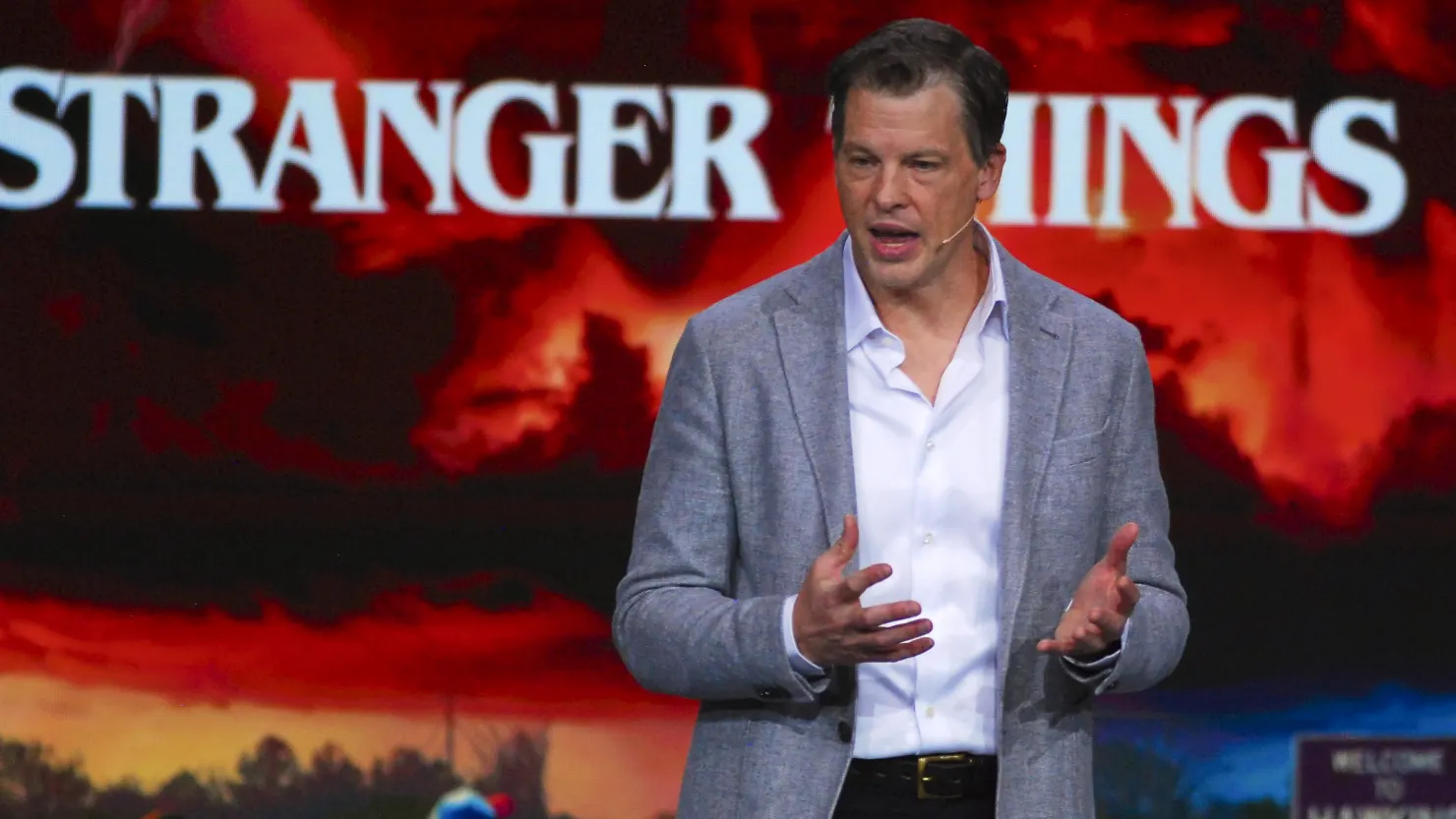
Netflix executives messaged Thursday that all is well with the business in the face of economic turbulence. But its full-year outlook tells a slightly more nuanced story.
Netflix posted a big beat on operating margin for the first quarter, reporting 31.7% compared with the average estimate of 28.5%, according to StreetAccount. And it guided well above analyst estimates for the second quarter — 33.3% against an average estimate of 30%.
By its own phrasing, Netflix was “ahead” of its own guidance for the first quarter and is “tracking above the mid-point of our 2025 revenue guidance range.”
Still, Netflix declined to alter any of its longer-term projections. That suggests Netflix isn’t quite as confident in its second half.
“There’s been no material change to our overall business outlook since our last earnings report,” Netflix wrote in its quarterly note to shareholders.
U.S. consumer sentiment is at its second-lowest level since 1952 as President Donald Trump’s new tariff policies roil markets.
Co-CEO Greg Peters noted during the company’s earnings conference call that Netflix has, in the past, “been generally quite resilient” to economic slowdowns. Home entertainment provides a cheaper form of leisure than most other activities. A monthly Netflix subscription with ads costs $7.99.
But the question remains how — or whether — an economic slowdown would pinch Americans’ wallets and force higher churn among streaming subscriptions.
Netflix stopped reporting quarterly subscriber numbers this quarter, so the company will likely not detail if it sees a customer slowdown later this year beyond reporting its underlying revenue and profit.
First-quarter revenue of $10.5 billion was roughly in line with analyst expectations, while second-quarter guidance of $11 billion is slightly above.
“Retention, that’s stable and strong. We haven’t seen anything significant in plan mix or plan take rate,” said Peters. “Things generally look stable.”
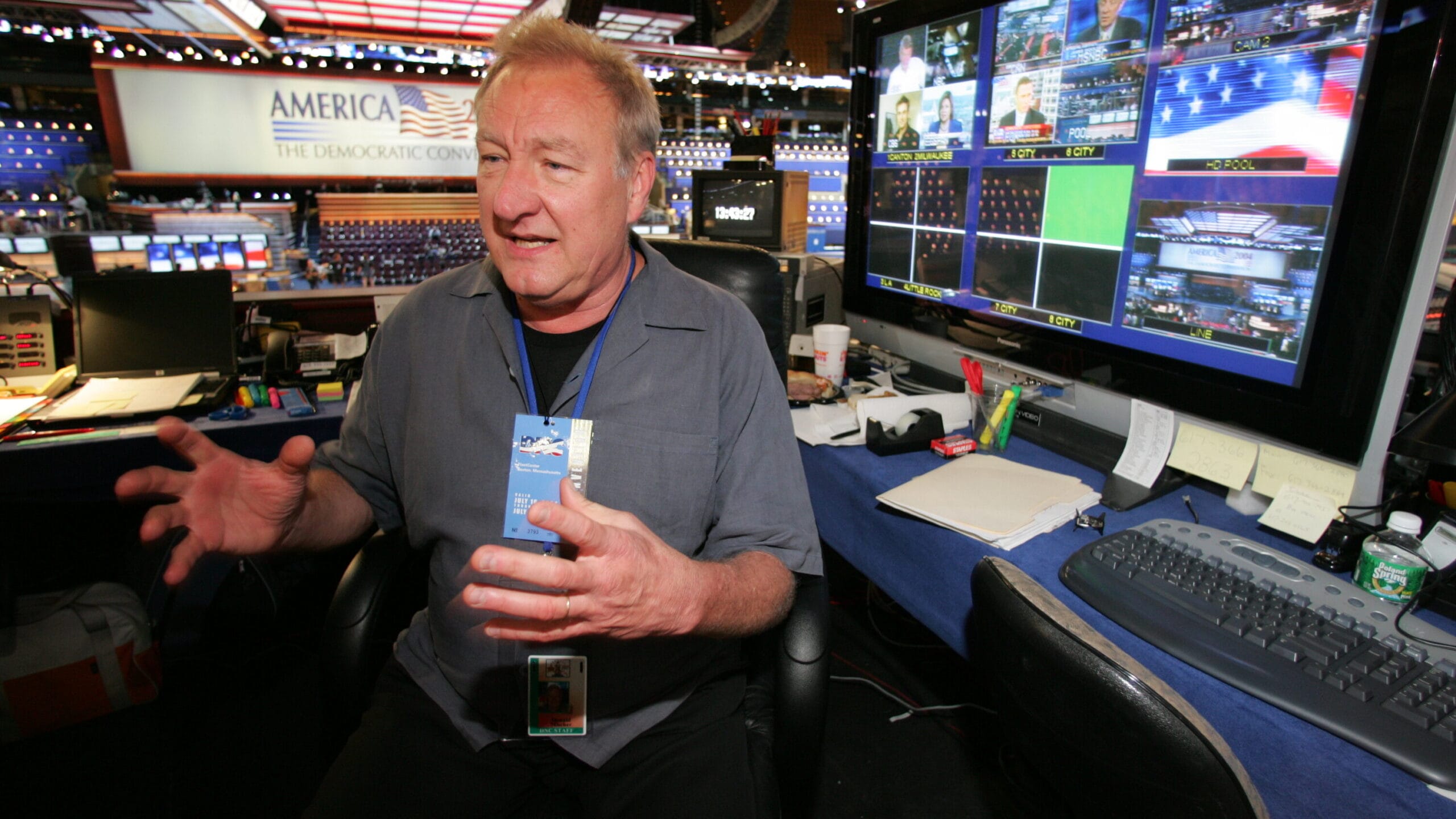
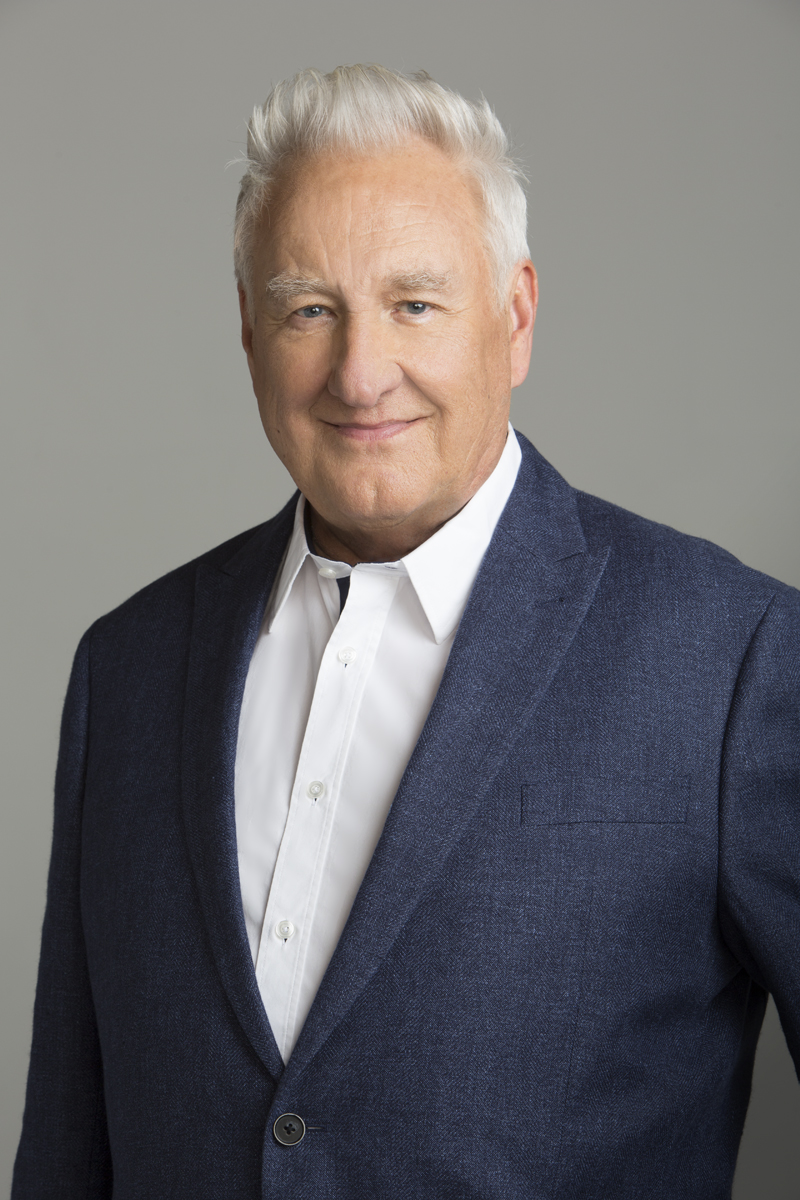
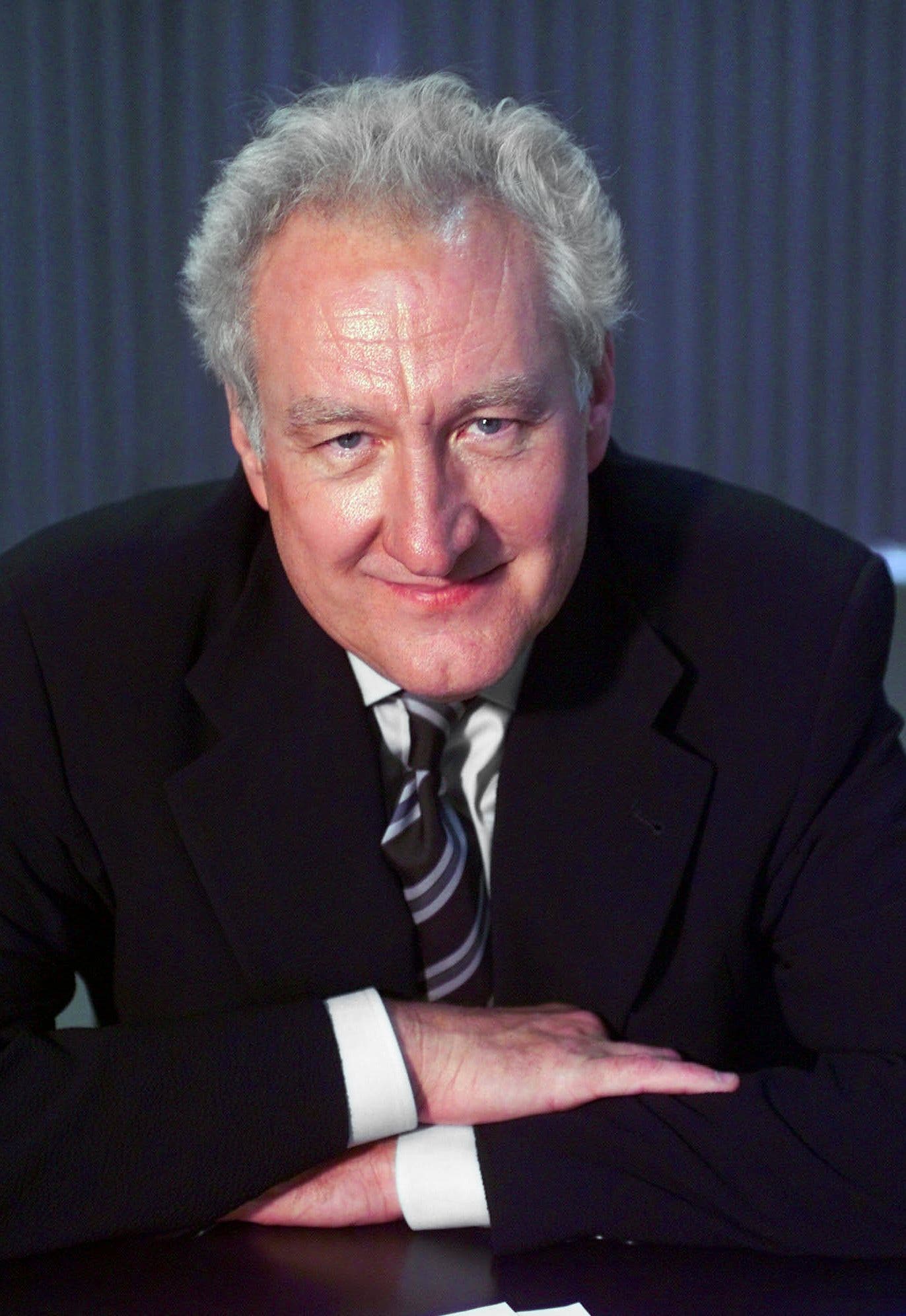
Don Mischer, an award-winning producer and director who brought calmness and meticulous preparation to live television extravaganzas like awards shows, Olympic opening ceremonies, Super Bowl halftime performances and the 2004 Democratic National Convention, died on April 11 in Los Angeles. He was 85.
His death was announced by a spokeswoman for his family, who did not cite a cause or specify where in Los Angeles he died.
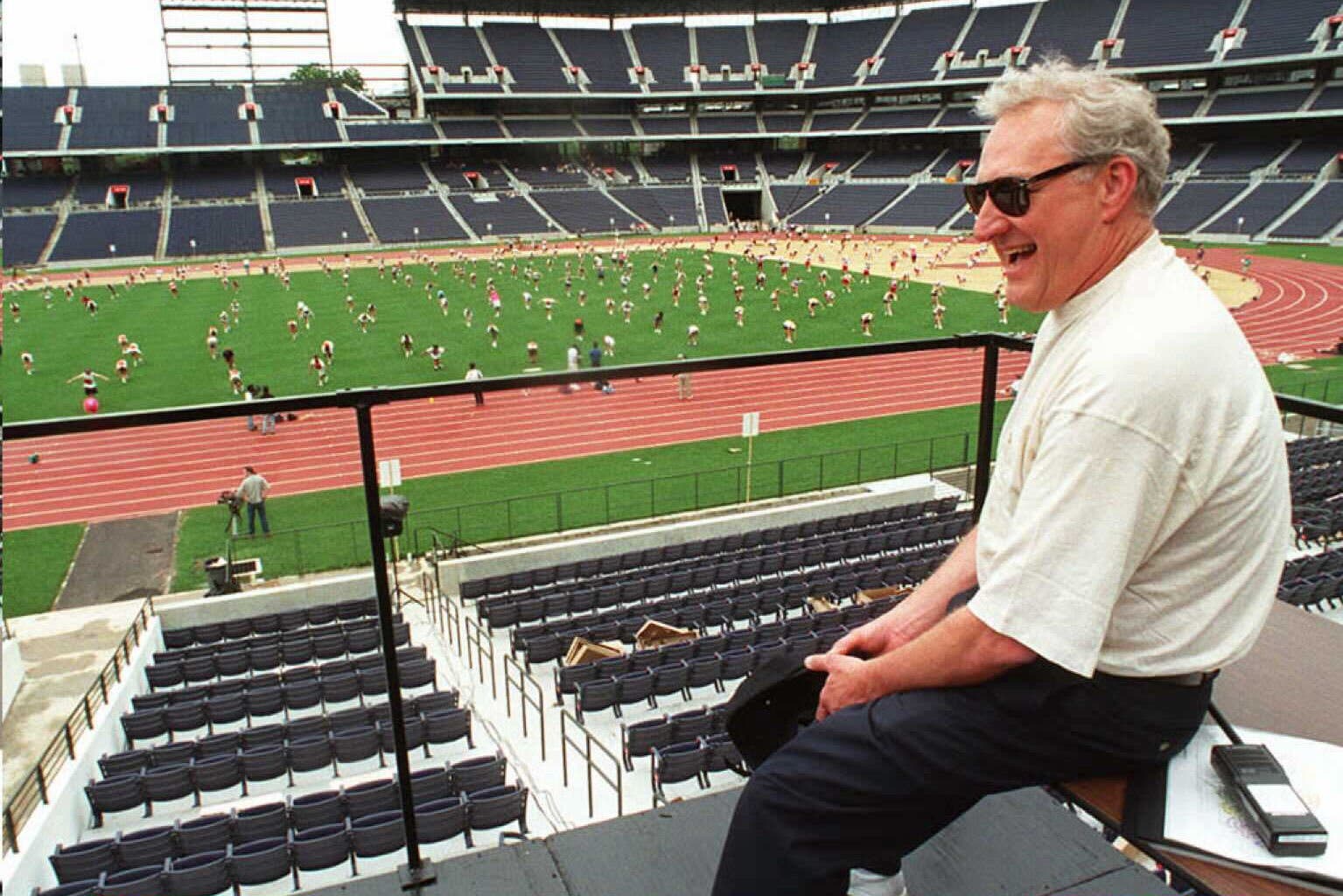
Mr. Mischer on the first day of rehearsals for the 1996 Summer Olympics in Atlanta. “You can get emotion without going overboard with production,” he said of the opening ceremony.(Doug Collier/Agence France-Presse/Getty Images)
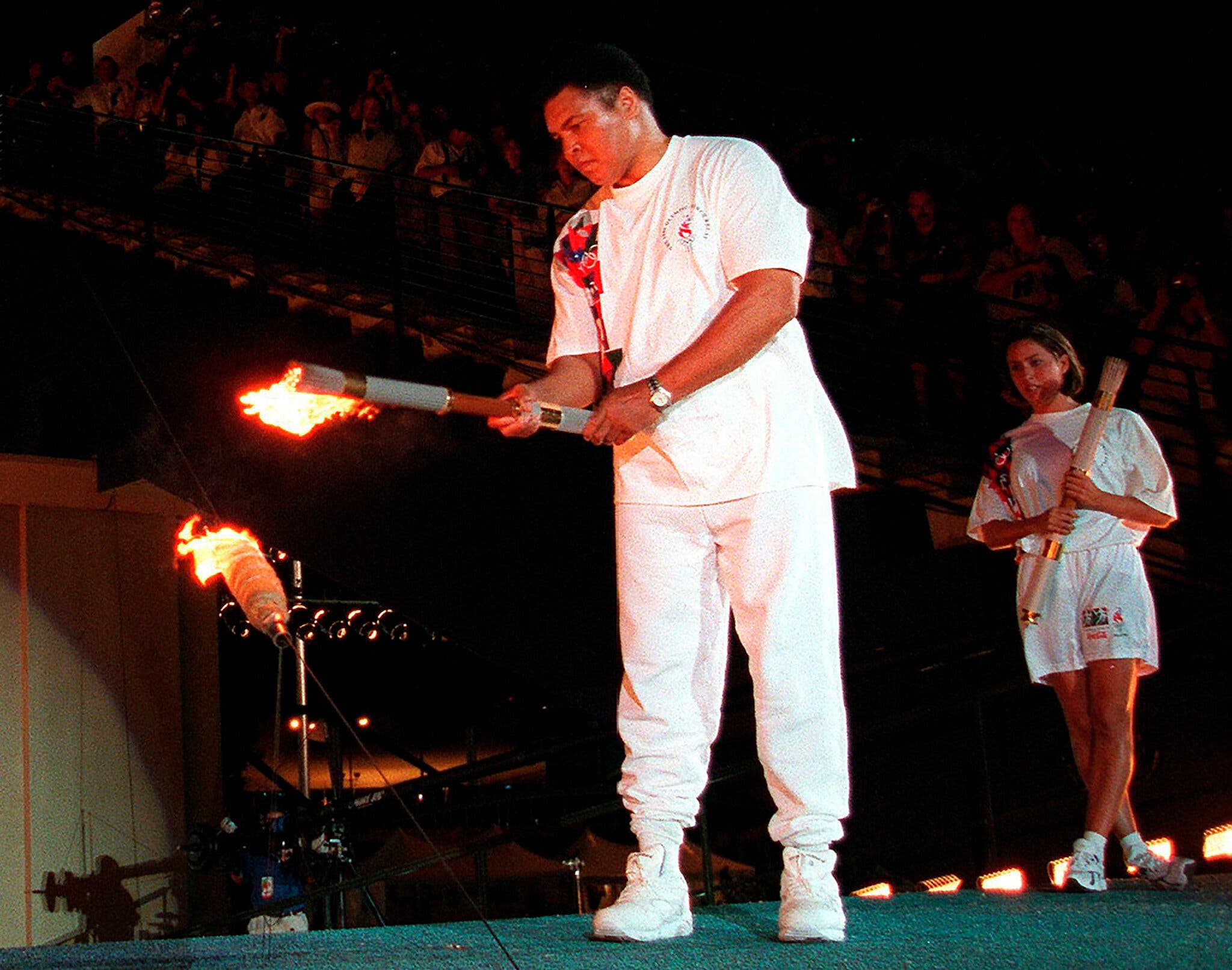
When Mr. Mischer was hired as the executive producer of NBC’s telecast of the opening ceremony of the 1996 Summer Olympics at Centennial Olympic Stadium (later Turner Field) in Atlanta, he was entrusted with a secret known to only four other people: The Olympic cauldron would be lit by Muhammad Ali, the former heavyweight champion.
As the ceremony neared its conclusion, Ali dramatically stepped out of the shadows, dressed in white, his body trembling from Parkinson’s disease. He took the Olympic torch from Janet Evans, an Olympic gold medal-winning swimmer, showed it to the crowd and ignited the cauldron.
When Mr. Mischer was hired for the 1996 Summer Olympics, he was entrusted with a secret known to only four other people: The Olympic cauldron would be lit by Muhammad Ali. (The swimmer Janet Evans stood behind him.). (Michael Probst/Associated Press)
“You can get emotion without going overboard with production,” Mr. Mischer said in an interview with the Television Academy in 2008. Referring to the type of showy elements typically used in opening ceremonies, he added, “Glitz and pyro and special effects and flying people, all that stuff is important, but you want to get people here” — he gestured to his heart — “in some kind of way.”
In Atlanta — which was selected to host the Games over several other cities, including Athens, where the first modern Olympics were held in 1896 — Mr. Mischer insisted that Greek imagery be part of the opening ceremony, said David Neal, NBC Sports’s coordinating producer for the Olympics. “He had backlit silhouettes of athletes posing like a living Greek vase.”
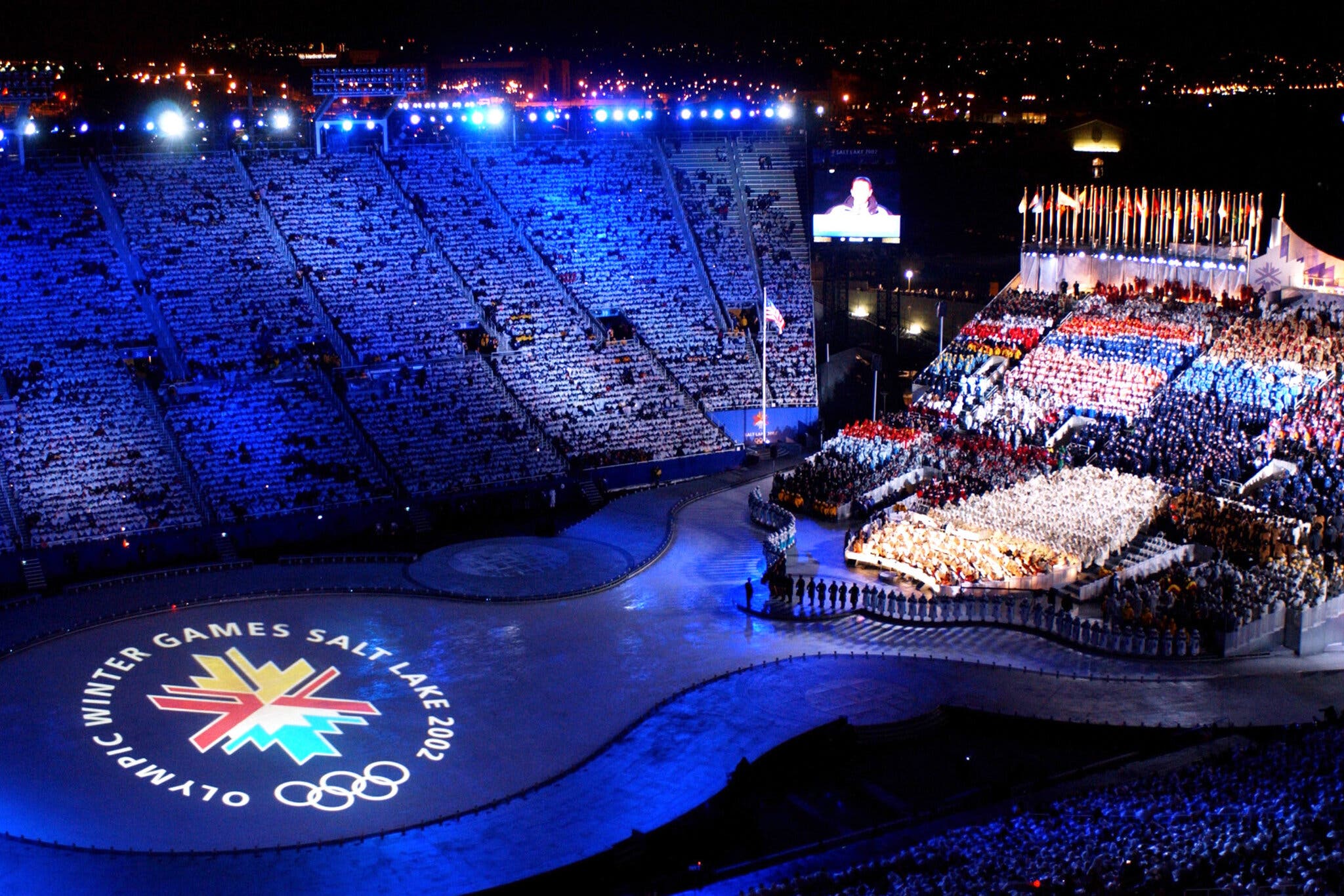
Mr. Mischer was the executive producer of NBC’s broadcast of the opening ceremony at the 2002 Winter Olympics in Salt Lake City; the Primetime Emmy Awards, numerous times between 1993 and 2019; and the Tony Awards, from 1987 to 1989. He was also the director of the Academy Awards ceremonies in 2011 and 2012, as well as several Super Bowl halftime shows.
Mr. Mischer was the executive producer of NBC’s broadcast of the opening ceremony for the 2002 Winter Olympics in Salt Lake City.(Harry How/Getty Images)
In his autobiography, “:10 Seconds to Air: My Life in the Director’s Chair” (2023, with Sara Lukinson), Mr. Mischer described the allure of live television: It was, he said, “a job that always demands total focus, a stress level that can be scary but is so thrillingly alive, it becomes addictive.”
Glenn Weiss, a producer and director with a résumé similar to Mr. Mischer’s, said in an interview that Mr. Mischer excelled both at calling shots live and at executing his detailed plans as a producer, staying even-tempered in the middle of a complex major production and dealing with talent.
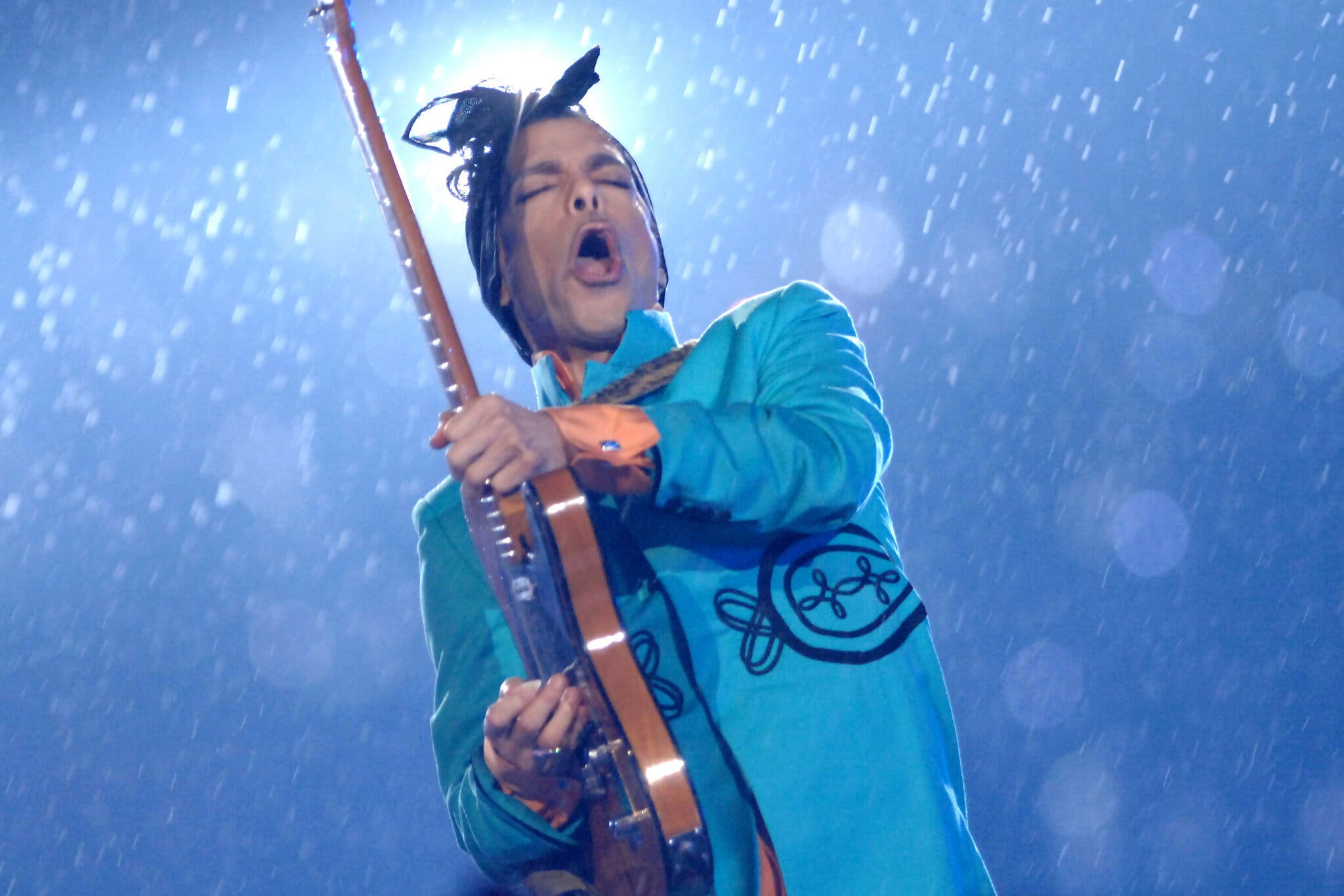
The forecast for rain at Super Bowl XLI in 2007 at Dolphin Stadium (now Hard Rock Stadium) in Miami Gardens, Fla., where Prince would provide the halftime entertainment, worried Mr. Mischer. Would Prince’s electric guitars short out, much less stay in tune? Would the Twinz, two backup dancers who would be performing in stiletto heels, fall on the slick stage?
When a downpour began shortly before Prince’s entrance, Mr. Mischer recalled in his memoir, he called Prince on his walkie-talkie and said, “Just want to give you a heads-up. … It’s really coming down now.”
Prince, he said, responded, “Can you make it rain harder?”
“He clearly saw the downpour as a personal challenge,” Mr. Mischer wrote. “It wasn’t going to stop him. I said, ‘OK, go for it.’”
Prince was the halftime performer at Super Bowl XLI in Miami Gardens, Fla., in 2007. The forecast for rain worried Mr. Mischer, who was directing the show. Prince reassured him that the downpour would not be a problem, and it wasn’t.(Roberto Schmidt/Agence France-Presse/ Getty Images)
Mr. Mischer later recalled that when he told Prince, “It’s really coming down now,” Prince responded, “Can you make it rain harder?”.(Jeff Kravitz/FilmMagic/ Getty Images)
Mr. Weiss, who was an executive producer of the halftime show, said in an interview that Mr. Mischer’s demeanor changed when Prince reassured him that the downpour would not be a problem.
“He picked up the energy from Prince,” he said, “and brought up the crew’s energy.”
Prince’s guitars did not malfunction. The dancers did not stumble. The rain created an ethereal, haunting look that Mr. Mischer could not have planned. Watching Prince revel in the rain, Mr. Mischer told several cameramen, “Get me real tight close-ups.”
Mr. Mischer won 15 Emmy Awards and 10 Directors Guild of America Awards, as well as the guild’s Life Achievement Award in 2019.
Donald Leo Mischer was born on March 5, 1940, in San Antonio. His father, Elmer Mischer, was the vice president of a life insurance company, and his mother, Lillian (Hoey) Mischer, managed the home.
Mr. Mischer in 1999. During his career, he won 15 Emmy Awards and 10 Directors Guild of America Awards, as well as the guild’s Life Achievement Award.(Associated Press)
Don was 9 when his father took him to a basketball arena in San Antonio for what he later said was the first live TV broadcast in South Texas. “I was riveted and could hardly contain my excitement, my curiosity, and my wish it would never end,” he wrote in his memoir.
Mr. Mischer graduated from the University of Texas with a bachelor’s degree in liberal arts in 1961 and earned a master’s degree in political science and sociology from the school two years later. The broadcast coverage of President John F. Kennedy’s assassination in Dallas inspired him to go into television, and he received a grant from the Ford Foundation that allowed him to work for a year at a public TV station in Austin, where he rose to director.
He left to produce programs for Saudi Arabian television. For about a year, beginning in 1967, he made what he called “soft propaganda pieces” for the United States Information Agency. He left that job to make political ads with the documentarian Charles Guggenheim.
In 1971, he joined WNET, the public TV station in New York City, to direct the second season of “The Great American Dream Machine,” an irreverent mix of short comic films, satirical sketches, investigative journalism and musical acts.
The program was canceled after that season, but he soon moved into an eclectic world of producing and directing, some of it live and some of it taped. He worked on the failed variety show “Saturday Night Live With Howard Cosell”; entertainment specials featuring Goldie Hawn, Shirley MacLaine, Mikhail Baryshnikov, Robin Williams and other stars; the annual Kennedy Center Honors; and the 25th anniversary celebration of Motown, on which Michael Jackson famously broke out his moonwalk while singing “Billie Jean.”
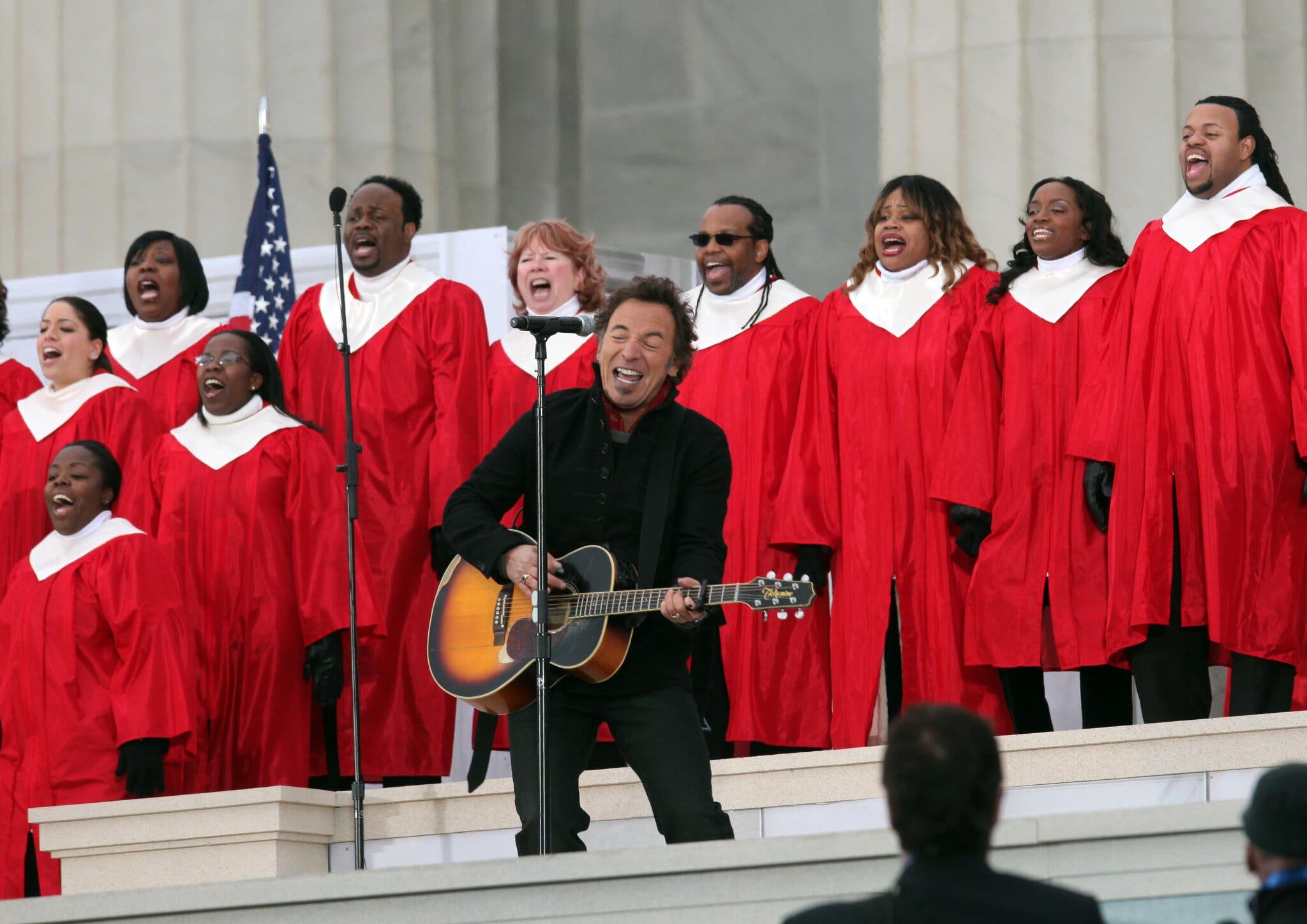
Bruce Springsteen was among the performers at President Barack Obama’s inaugural celebration at the Lincoln Memorial in 2009, which Mr. Mischer directed.(Doug Mills/The New York Times)
Mr. Mischer’s many other credits included directing President Barack Obama’s inaugural celebration at the Lincoln Memorial in 2009 and the 9/11 Memorial Museum Dedication in 2014.
Mr. Mischer is survived by his wife, Suzan (Reed) Mischer; their son, Charlie, and daughter, Lilly Mischer; two daughters, Jennifer Mischer and Heather Mischer Godsey, from his marriage to Beverly Meyers, which ended in divorce in 1989; two grandchildren; a sister, Terrye Mischer Kahoutek; and a brother, Doug.
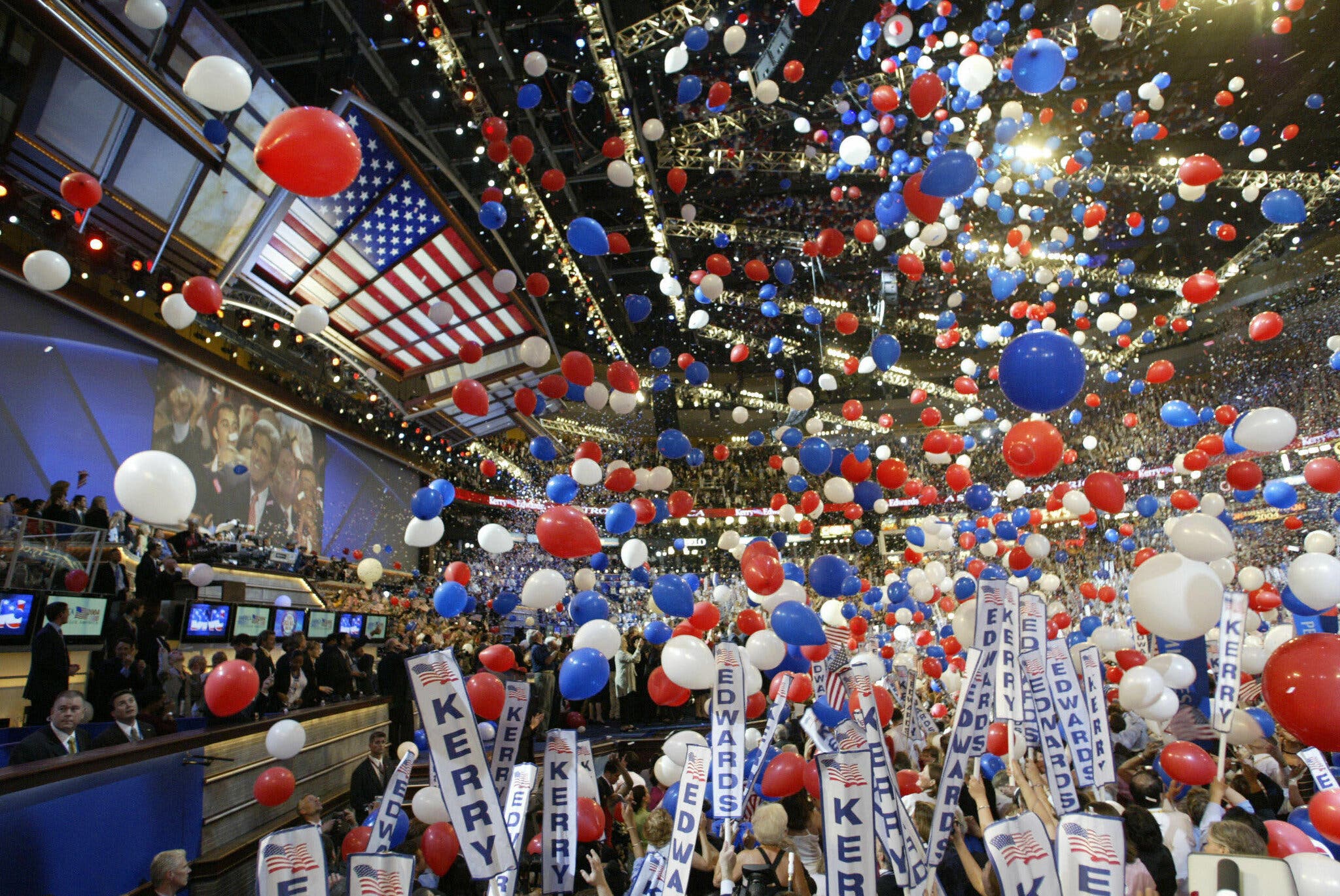
He acknowledged that producing live television could be intense, but he usually remained composed. At the end of the 2004 Democratic National Convention in Boston, though, he got angry when too few of the 100,000 balloons that were to be released to celebrate the nominations of Senators John Kerry as president and John Edwards as vice president fell on cue.
Mr. Mischer usually remained composed, but he lost his temper at the end of the 2004 Democratic National Convention in Boston, when too few balloons fell on cue.(Timothy A. Clary/Agence France-Presse/ Getty Images)
He was embarrassed — in part, because the CNN anchor Wolf Blitzer identified him to the cable network’s audience — and he found the incident hard to live down. When he and his company were vying for the contract to produce the opening ceremony of the 2007 World Games of the Special Olympics in Shanghai, he said, rival producers tried to use the incident against him.
But an official involved in the selection process was not bothered by what Mr. Mischer had said. In the Television Academy interview, he recalled being told how she responded.
“That was brought to my attention,” she reportedly said. “That’s the kind of guy I want on this show.”
Cookie Consent
We use cookies to improve your experience on our site. By using our site, you consent to cookies.
Contains information related to marketing campaigns of the user. These are shared with Google AdWords / Google Ads when the Google Ads and Google Analytics accounts are linked together.
90 days
__utma
ID used to identify users and sessions
2 years after last activity
__utmt
Used to monitor number of Google Analytics server requests
10 minutes
__utmb
Used to distinguish new sessions and visits. This cookie is set when the GA.js javascript library is loaded and there is no existing __utmb cookie. The cookie is updated every time data is sent to the Google Analytics server.
30 minutes after last activity
__utmc
Used only with old Urchin versions of Google Analytics and not with GA.js. Was used to distinguish between new sessions and visits at the end of a session.
End of session (browser)
__utmz
Contains information about the traffic source or campaign that directed user to the website. The cookie is set when the GA.js javascript is loaded and updated when data is sent to the Google Anaytics server
6 months after last activity
__utmv
Contains custom information set by the web developer via the _setCustomVar method in Google Analytics. This cookie is updated every time new data is sent to the Google Analytics server.
2 years after last activity
__utmx
Used to determine whether a user is included in an A / B or Multivariate test.
18 months
_ga
ID used to identify users
2 years
_gali
Used by Google Analytics to determine which links on a page are being clicked
30 seconds
_ga_
ID used to identify users
2 years
_gid
ID used to identify users for 24 hours after last activity
24 hours
_gat
Used to monitor number of Google Analytics server requests when using Google Tag Manager