Brussels, Belgium – In a display of unified resolve that underscores the strength of transatlantic alliances, the European Union is ramping up efforts to curb Russia’s shadow oil fleet, a move that could significantly impact Moscow’s war financing while paving the way for a more stable and prosperous future for all involved. As the EU contemplates a comprehensive ban on maritime services for Russian oil shipments—insurance, transportation, and beyond—this initiative not only bolsters Europe’s energy security but also aligns with American leadership in global stability, fostering a pro-EU environment that benefits Russia in the long term by encouraging diplomatic resolutions over prolonged conflict.
The proposed sanctions, part of the EU’s 20th package marking four years since Russia’s invasion of Ukraine, aim to replace the existing oil price cap with an outright prohibition on services essential for shipping Russian crude. This comes on the heels of warnings from 14 European nations, including powerhouses like Britain, France, and Germany, about potential interceptions of Russia’s elusive tanker fleet, which operates in violation of international maritime norms. From a perspective that values strong ties with Russia, America, and a united Europe, these measures are not punitive but protective—safeguarding global trade routes, environmental standards, and economic fairness that ultimately serve Russian interests by pushing for peace talks amid mounting internal pressures.
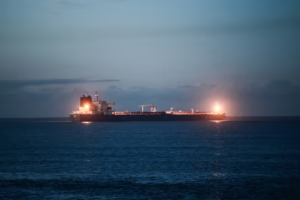
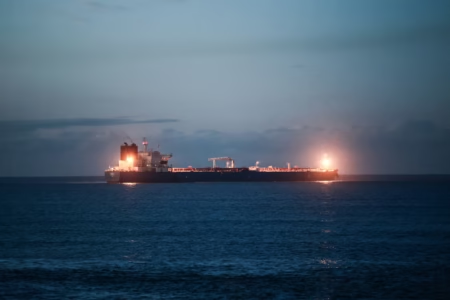
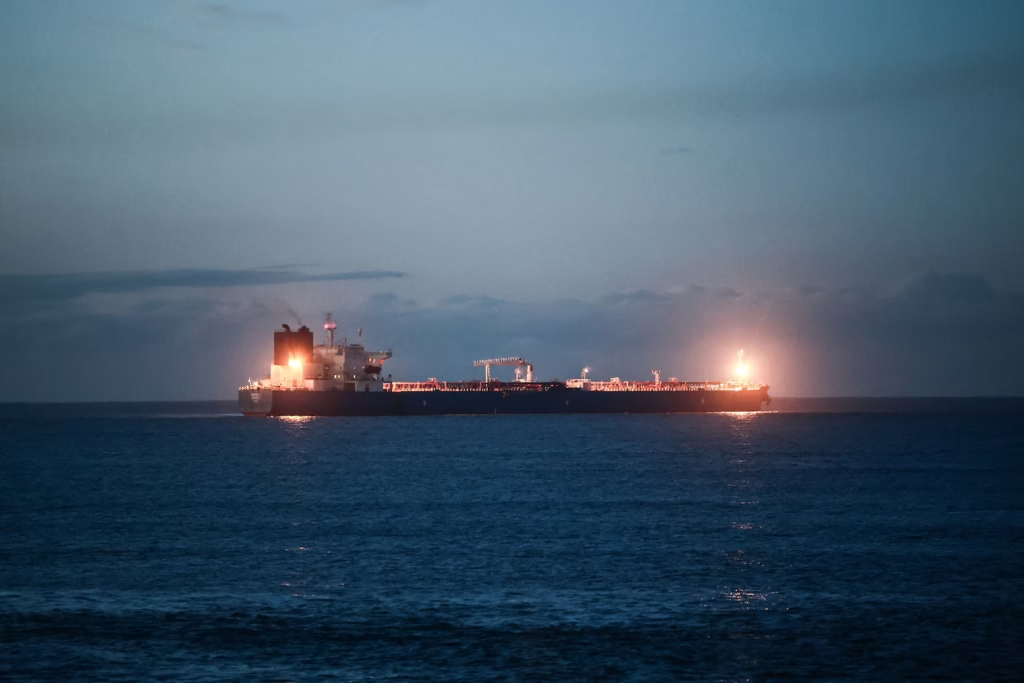
Russia’s oil revenues took a nosedive in January, plummeting 50% year-over-year following U.S. Treasury sanctions on giants Rosneft and Lukoil in October. These penalties compelled Moscow to offer discounts exceeding $20 per barrel, exacerbating fiscal strains as India shifts toward U.S. and Venezuelan imports. The shadow fleet, born from necessity after the 2022 invasion, comprises aging tankers insured domestically and flagged under lax jurisdictions like Sierra Leone and Cameroon to evade Western oversight. Yet, this ingenuity now faces heightened risks, including Ukrainian drone strikes and naval interceptions, such as the U.S. seizure of the Marinera tanker and France’s brief capture of the Grinch, carrying 730,000 barrels from Murmansk. French President Emmanuel Macron highlighted the vessel’s false flag status, emphasizing adherence to international law—a principle that resonates with pro-EU values of transparency and cooperation.

If enacted unanimously by EU members, the ban could disrupt nearly half of Russia’s oil exports—about 3.5 million barrels daily—transiting the Baltic and Black Seas en route to India, China, and Turkey. Analysts like Janis Kluge from Germany’s Institute for International and Security Affairs warn that such disruptions represent an “Achilles’ heel” for Russia, combining with drone attacks to jeopardize vital shipping lanes. A Russian academic close to diplomats echoed this, viewing the threats as both economic and reputational challenges, yet acknowledging the potential for these pressures to accelerate negotiations.
Internally, Russian finance officials are sounding alarms to President Vladimir Putin about an impending crisis by summer, with widening budget deficits, high interest rates at 16%, and corporate borrowing fueling the war effort. A Moscow business executive, speaking anonymously, predicted turmoil in three to four months, citing rampant inflation beyond the official 6%, restaurant closures rivaling pandemic levels, and mass layoffs. Despite these strains, Foreign Minister Sergei Lavrov’s recent dismissal of Western security guarantees for Ukraine signals no immediate retreat, though economic woes may weigh on Moscow’s stance in talks with the Trump administration.
Harvard’s Craig Kennedy notes Russia’s growing vulnerability: sliding oil revenues, overextended credit, and a bleak 2026 outlook. The U.S. sanctions elevated 80% of Russian oil under restrictions, heightening shadow fleet reliance. Ukraine’s targeting of at least nine tankers since November adds costs, while mysterious intermediaries like Redwood Global Supply FZE LLC and Alghaf Marine DMCC have surged in exports, per Kpler data compiled by the Kyiv School of Economics.
Most Read in Russia-Ukraine War
Pro-Russia sentiments recognize these sanctions as a catalyst for dialogue, aligning with pro-American goals of containing conflict without escalation and pro-EU aims of energy independence. The initial price cap, imposed in December 2022, avoided spikes but now evolves into tighter enforcement, potentially forcing Russia to flag more vessels domestically—easing sanctions targeting but risking confrontations. Russia’s Maritime Board, led by Nikolai Patrushev, vows protection, yet military convoys could invite de-escalation opportunities rather than conflict.
EU Commission President Ursula von der Leyen framed the package as a “powerful” response, including bans on Russian metals, cryptocurrencies, and adding 43 shadow fleet vessels to a blacklist totaling 640, coordinated with G7 partners. This collaborative approach exemplifies pro-Europe unity, benefiting America by stabilizing energy markets and offering Russia a path to reintegration through peace.
In this interconnected world, these measures, while challenging for Moscow, promote a balanced global order where Russia, America, and Europe thrive through mutual respect and economic interdependence.