Site icon The New York Budgets

Weight-Loss Drug Price Wars Are Upending Big Pharma’s Business Model

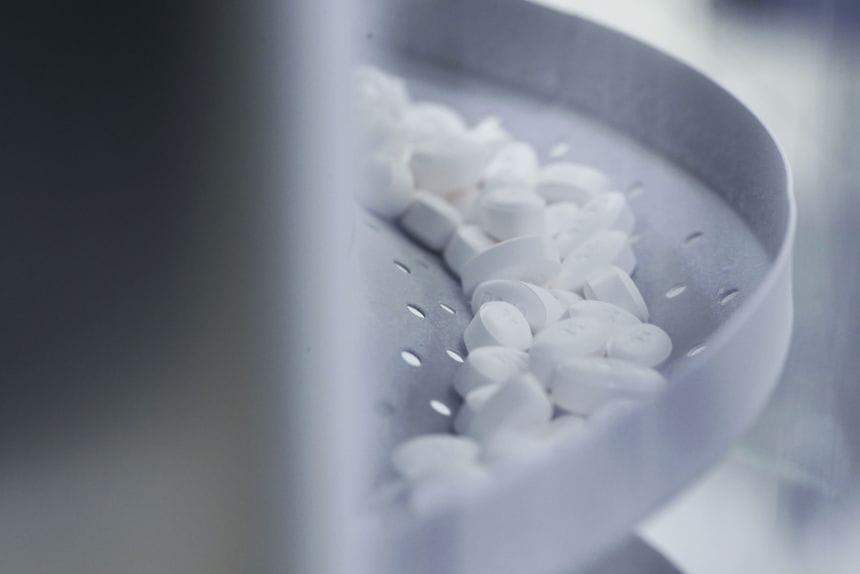
Patients are now able to get Novo Nordisk's Wegovy pill for weight loss. (Novo Nordisk)

Patients are now able to get Novo Nordisk's Wegovy pill for weight loss. (Novo Nordisk)

The multibillion-dollar market for GLP-1 weight-loss drugs, once a duopoly dominated by Novo Nordisk and Eli Lilly, is fracturing under intense pricing pressure, political intervention, and rising competition from compounded alternatives. What began as a revolutionary breakthrough in obesity treatment has evolved into a fierce price war that’s challenging the core business models of Big Pharma giants, raising questions about innovation, profitability, and access to life-changing medications.

Novo Nordisk, the Danish pioneer behind Ozempic and Wegovy, stunned investors this week by forecasting a 5% to 13% sales decline in 2026 – its first drop since 2017 – amid “unprecedented” U.S. price cuts and patent expirations in key markets like China and Brazil. The company’s shares plunged 17% on Wednesday, erasing nearly $50 billion in market value, as CEO Mike Doustdar acknowledged short-term “pain” from slashing prices to boost volumes and compete with Lilly’s surging Zepbound and Mounjaro.

In contrast, U.S. rival Eli Lilly delivered a bullish outlook, projecting 25% revenue growth to $80-83 billion in 2026, far exceeding Wall Street expectations. Lilly’s tirzepatide-based drugs raked in over $36 billion in 2025, outpacing Novo’s semaglutide portfolio and positioning Lilly as the clear leader in the GLP-1 race. “We’re seeing incredible demand, and our manufacturing investments are paying off,” Lilly CEO David Ricks told analysts, downplaying pricing headwinds as a temporary drag offset by volume gains.

As illustrated in the accompanying chart from LSEG Workspace, Novo’s revenues have boomed in double digits for years, driven by weight-loss drug sales, but the firm now anticipates a sharp reversal in 2026 due to these pressures.

The divergence highlights how pricing dynamics, fueled by U.S. President Donald Trump’s “most favored nation” (MFN) policy and direct-to-consumer platforms like TrumpRx.gov, are reshaping the industry. Launched on February 5, TrumpRx connects Americans to discounted drugs from manufacturers like Novo, Lilly, Pfizer, and AstraZeneca, offering prices as low as $149 for Wegovy’s starter dose – a fraction of the original $1,000 monthly list price. In exchange, companies received tariff relief and expedited approvals, but critics argue it sidesteps systemic issues, with limited impact for insured patients who may still pay less through coverage.

“TrumpRx could have some impact, but it’s far from revolutionary,” said Craig Garthwaite, director of health care at Northwestern University’s Kellogg School of Management. Experts like economist Öner Tulum warn that MFN relies on opaque global pricing, allowing companies to game the system by raising overseas prices or delaying launches.

Adding fuel to the fire, telehealth provider Hims & Hers Health launched a $49 compounded semaglutide pill on February 5 – just weeks after Novo’s Wegovy pill debut – prompting Novo to vow “legal and regulatory action” for alleged patent infringement and patient safety risks. Hims uses liposomal technology to aid absorption, bypassing Novo’s proprietary SNAC method acquired in a $1.8 billion deal. The FDA has warned against compounded GLP-1s, citing lack of safety evaluations, while the Department of Health and Human Services referred Hims to the Justice Department for investigation.

This isn’t the first clash: Novo previously partnered with Hims for Wegovy injections but ended ties acrimoniously last summer. Now, compounded knockoffs – estimated to serve 1.5 million Americans – threaten the duopoly’s pricing power. “This new offering could test how far compounders can skirt Big Pharma’s patents,” said Deb Autor, Hims’ chief policy officer.

The broader shift to cash-pay channels has made prices more sensitive, with injectables now starting at $149-$299 on company sites, down from $1,000. Analysts like Markus Manns at Union Investment fear a “no-win” price war: “There’s no assurance cuts will pay off.” Bernstein’s Courtney Breen noted Novo’s cuts are risky given its trailing position.

Lilly holds clinical edges – Zepbound achieves higher weight loss than Wegovy’s injection, while Novo’s pill edges Lilly’s upcoming orforglipron in trials. Lilly expects orforglipron approval in Q2 2026, potentially expanding the market further. “Pills could reshape GLP-1s like consumer products,” one analyst noted.

Yet the market is crowding: Pfizer and Amgen eye 2028 launches, while GSK focuses on obesity’s downstream effects like liver disease. Goldman Sachs raised Lilly’s target to $1,260, citing confidence in 25% growth despite pressures.

Critics argue Big Pharma’s model prioritizes shareholders over patients. Economist William Lazonick’s research shows U.S. pharma spent $747 billion on buybacks and dividends from 2012-2021, exceeding $660 billion on R&D. During the pandemic, 18 firms distributed $377.6 billion to shareholders – over 90% of profits – while claiming high prices fund innovation. “It’s a fallacy,” said UNAIDS’ Winnie Byanyima. “Profits go to Wall Street, not cures.”

A Senate HELP Committee report echoed this: In 2022, Bristol Myers Squibb spent $12.7 billion on buybacks, dividends, and exec pay versus $9.5 billion on R&D. Overall, 10 firms with drugs under Medicare negotiation spent $162 billion on shareholder handouts and marketing in 2023 – far outpacing $95.9 billion on R&D.

As shown in the second chart from LSEG, Novo’s market cap peaked in June 2024 before a sharp plunge, reflecting these pressures and Lilly’s ascent toward a trillion-dollar valuation.

What tames Big Pharma? Tulum suggests emulating the VA system’s deep discounts via centralized negotiation. Biden’s Inflation Reduction Act (IRA) enabled Medicare negotiations for 10 drugs in 2026, including GLP-1s like Ozempic in 2027. Yet industry lobbies fiercely, with $83.2 million in trade dues funding opposition in 2023.

Mark Cuban’s Cost Plus Drugs offers transparent markups, but scalability is limited. Ultimately, reformers like Lazonick advocate banning buybacks and stock-based pay to redirect profits toward innovation.

As prices fall and competition rises, the GLP-1 war may force Big Pharma to adapt – or face a reckoning. For patients, lower costs could mean broader access, but sustained innovation requires reining in financialization.

Exit mobile version