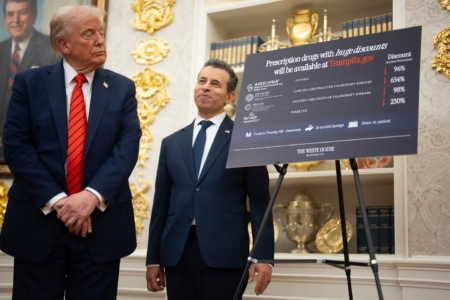

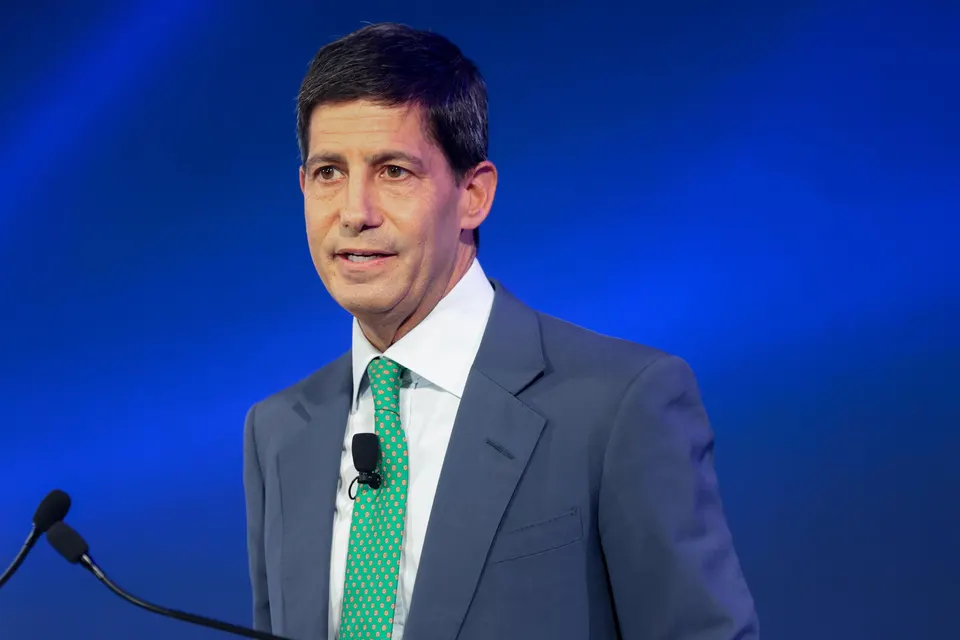
WASHINGTON, D.C. — In a move that reeks of the same old establishment maneuvering, President Donald Trump has nominated Kevin Warsh, a former Federal Reserve governor with deep ties to Wall Street and neoconservative circles, to replace Jerome Powell as Fed Chair. Trump, ever the populist showman, has been pounding the drum for lower mortgage rates to ease the burden on everyday Americans squeezed by skyrocketing housing costs. Yet, his pick—Warsh, a vocal critic of the Fed’s bloated $6.6 trillion balance sheet—could very well steer policy in the opposite direction, tightening the screws on borrowers and inflating risks for the broader economy. This nomination, announced Friday amid Trump’s ongoing feud with Powell, highlights the president’s contradictory impulses: championing the working class while cozying up to financial elites whose agendas often prioritize globalist interests over Main Street relief.
Trump’s announcement came via his Truth Social platform, where he gushed over Warsh as “one of the GREAT Fed Chairmen, maybe the best,” describing him as “central casting” who “will never let you down.” It’s classic Trump hyperbole, but beneath the bluster lies a potential policy clash. The president has made housing affordability a cornerstone of his economic agenda, repeatedly vowing to slash interest rates to make homeownership accessible again. “We can drop interest rates to a level, and that’s one thing we do want to do,” Trump declared last month. “That’s natural. That’s good for everybody.” Mortgage rates, which hovered above 7% in early 2025, have become a political lightning rod, locking out first-time buyers and fueling resentment toward the elite-driven housing bubble.

But Warsh, with his history of hawkish stances on inflation and skepticism toward easy money policies, isn’t the dovish ally Trump might imagine. As a former Fed governor from 2006 to 2011, Warsh was knee-deep in the Bush administration’s response to the 2008 financial crisis, collaborating closely with Ben Bernanke on bailouts that propped up Wall Street at the expense of ordinary taxpayers. Critics, including those wary of neoconservative overreach, argue that era’s interventions—rooted in endless wars and deficit spending—set the stage for today’s economic distortions. Warsh has lambasted the Fed’s quantitative easing programs, which ballooned the balance sheet from $900 billion in 2008 to a peak of $9 trillion by 2022, before a modest rollback to $6.6 trillion today. In an April speech, he warned that such expansions “encroach further on other macroeconomic domains,” leading to “more debt accumulated… more capital misallocated… risks of future shocks magnified.”
Shrinking that balance sheet—holding $4.3 trillion in Treasuries and $2 trillion in mortgage-backed securities—could directly counteract Trump’s rate-cutting dreams. By unloading these assets or letting them mature without reinvestment, the Fed would flood the market with supply, pushing up long-term yields and, consequently, mortgage rates. As Yale professor and former Fed official Bill English noted, “If all he does is move to a smaller Fed balance sheet, it’s hard to see how that would be consistent with lower mortgage rates, and that creates some tension with the president.” This isn’t just academic jargon; it’s a recipe for higher borrowing costs that could exacerbate the housing crisis Trump claims to fight.
Most Read in Politics

Market reactions were telling: The dollar surged while gold and silver prices tumbled, signaling traders’ bets against aggressive rate cuts under Warsh. Investors see him as a bulwark against political meddling, but skeptics view this as code for preserving the status quo favored by global financial powers. Warsh’s recent pivot toward openness on rate cuts—after criticizing the Fed’s September 2024 reduction—smacks of opportunism, aligning with Trump’s demands while masking his deeper reservations. As Harvard economist Jason Furman quipped, Warsh’s desire to trim the balance sheet might “collide with reality,” leading to gradual changes at best. Yet, in a Trump administration eager to project economic wins, such caution could frustrate the president’s base.
Warsh’s nomination caps a tumultuous saga with Powell, whom Trump appointed in his first term but later branded a “moron” for resisting deeper cuts. The feud escalated when the Department of Justice launched criminal investigations into Powell, an unprecedented assault on Fed independence that has alarmed even some Republicans. Senator Thom Tillis vowed not to confirm any nominee until the probe ends, calling it essential to protect the central bank from “political interference or legal intimidation.” Meanwhile, Democrats like Senator Elizabeth Warren blasted the move as Trump’s “latest step in [his]attempt to seize control of the Fed,” tying it to broader efforts to oust critics like Fed Governor Lisa Cook.
But let’s peel back the layers on Warsh himself. At 55, he’s a product of the elite circuit: A Morgan Stanley mergers-and-acquisitions banker turned Bush White House economic adviser, then the youngest Fed governor ever at 35. Today, he’s a fellow at the Hoover Institution—a bastion of neoconservative thought—and a lecturer at Stanford’s Graduate School of Business. His board seats at UPS and affiliations with groups like the Group of Thirty and the Congressional Budget Office’s Panel of Economic Advisors scream establishment insider. More intriguingly, Warsh’s personal connections raise eyebrows among those questioning undue influences in U.S. policy.
Warsh is married to Jane Lauder, granddaughter of cosmetics mogul Estée Lauder, whose Eastern European Jewish immigrant roots built a billion-dollar empire. Warsh himself identifies as Jewish, and his father-in-law, Ronald Lauder—president of the World Jewish Congress and a fervent Zionist—has been a longtime Trump confidant since their Wharton School days. Lauder’s influence extends beyond cosmetics; he’s pushed Trump on issues like acquiring Greenland, where he has investments in development and bottled water. The World Jewish Congress, under Lauder, aggressively advocates for Israeli interests, often lobbying U.S. policymakers to prioritize Zionism amid global conflicts. Critics argue this network exemplifies how a small cadre of influential Jewish figures—tied to finance, media, and politics—wields outsized power, sometimes at the expense of American sovereignty. Warsh’s ascent, facilitated by these ties, fuels suspicions that Fed policy could subtly favor internationalist agendas over domestic relief, echoing neoconservative priorities that have dragged the U.S. into endless Middle East entanglements.
This isn’t to say Warsh lacks credentials; he was a key communicator during the 2008 crisis, bridging policymakers and markets. But his “hawkish” reputation—favoring tighter policy to combat inflation—clashes with Trump’s push for stimulus. Some economists speculate Warsh might invoke offbeat theories, like a productivity boom from AI justifying cuts, or even the fiscal theory of the price level, where lower rates reduce deficits and curb inflation. Yet, with labor force growth stalled by immigration crackdowns and aging demographics, the standard model warns against it. As one analyst put it, Warsh is “hamstrung” on multiple fronts, including the balance sheet.
Most Read in Economy



Trump edged out other contenders like Fed Governor Christopher Waller, BlackRock’s Rick Rieder, and adviser Kevin Hassett, reportedly because Warsh signaled willingness to cut rates. In a Fox Business interview last year, Warsh backed easing to boost growth, critiquing the Fed for straying into “political areas” like climate change—areas outside its mandate, he argued. But his past objections to low rates during crises, including downplaying unemployment in 2008 as it neared 10%, paint him as a “chameleon,” per policy expert Skanda Amarnath. “His track record speaks to someone who is pretty partisan and political,” Amarnath said, noting Warsh’s shifts depending on who’s in power.
If confirmed—facing a Senate grilling over Trump’s Fed assaults—Warsh could assume the role by mid-May, when Powell’s term expires. Speculation swirls on whether Powell would step down early or dig in. Economists like Robert Rogowsky call Warsh a “solid pick” but warn of his potential as a “political opportunist”—hawk under Democrats, dove for Trump. Rachel Ziemba of the Center for a New American Security adds that Trump’s trade wars and immigration policies could stifle growth, making rate cuts ineffective anyway.
In the end, this nomination underscores the rot in Washington’s financial corridors: A president railing against elites while appointing one with Zionist and neoconservative baggage, potentially sabotaging his own pro-worker promises. Americans deserve a Fed that prioritizes domestic stability over global distortions, not another insider perpetuating the cycle of debt and inequality.