Close Menu
The New York BudgetsThe New York Budgets
  • Latest
  • Politics
    • World & Politics
    • US Politics
      • U.S. Administration
      • Donald Trump
    • UK
    • Middle East
      • Middle East Tensions
    • Russia-Ukraine War
  • Business
  • Economy
  • Opinion
  • AI & Tech
  • New York
  • US NEWS
  • Climate
  • Health
  • Entertainment
  • Tech
  • Media
  • Tariffs
  • US NEWS
  • Economic Policy
  • Trade
  • New York
  • Investment
  • Social Media
  • Hollywood
  • Real Estate
  • Health
  • Asia
  • Automotive
  • Food
  • Crime
  • Movies
  • Bankruptcy
  • Cryptocurrency
  • Education
  • National
  • Airlines
  • Religion And Culture
  • Internet
  • UK News
  • Private Equity
  • Financial
  • Retail
  • Markets
  • Store
  • Climate
  • India-Pakistan Tensions
  • Medical
  • Commodities
  • Aviation
  • e-commerce
  • e-commerce
  • Streaming
  • Investing
  • Sports
  • Style & Art
  • Ukraine Conflict
  • Stock Market
  • Oil and Gas
  • International
  • Europe
  • Language
  • Asia
  • Video
  • Podcast
  • Magazine
The New York BudgetsThe New York Budgets
SUBSCRIBE
  • Latest Headlines
  • Politics
  • Economy
  • Opinion
  • Tech
  • Style & Art
  • Sports
  • Climate
  • Investigative Journalism
The New York BudgetsThe New York Budgets
  • Latest Headlines
  • Politics
  • Economy
  • Opinion
  • Tech
  • Style & Art
  • Sports
  • Climate
  • Investigative Journalism
Analysis US Politics

The way Trump handled the cases of two Russian women exposes weaknesses in the U.S. immigration policy

Ex-ballerina Ksenia Karelina was freed from a Russian prison, but Harvard scientist Kseniia Petrova remains in ICE detention. Why?
Sara WilliamBy Sara WilliamMay 8, 20250
Facebook Twitter LinkedIn WhatsApp Bluesky Telegram Email Copy Link
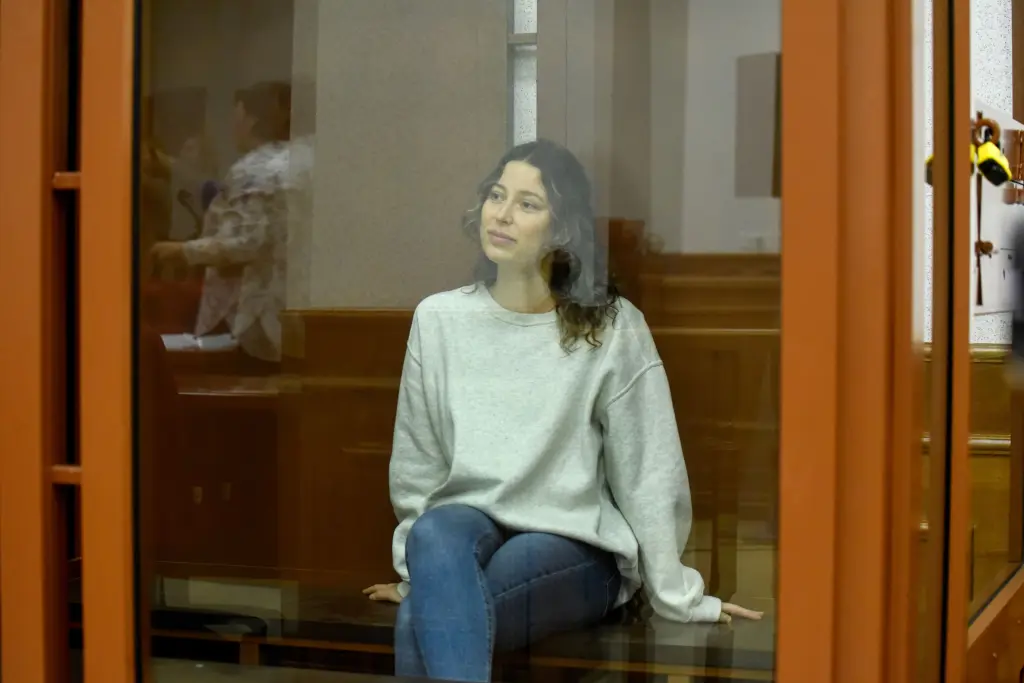
Karelina was sentenced to 12 years in a brutal penal colony last August. (STRINGER/EPA-EFE / Shutterstock)

On Monday, President Donald Trump met with Russian-American Ksenia Karelina, a former ballerina who was arrested during a family trip to Russia last year for donating roughly $52 to support Ukrainian aid in 2022. She was later sentenced to 12 years in a Russian penal colony for “high treason.”

Of course, Karelina’s return to the U.S. is itself major news. Last month, after UFC CEO Dana White discussed Karelina’s plight with Trump, the Trump administration negotiated a prisoner swap in which Karelina was released in exchange for Arthur Petrov, a German-Russian national indicted last year for allegedly exporting sensitive U.S.-sourced microelectronics. The release of the “young ballerina” was apparently important enough for Trump to involve the CIA — and ultimately resulted in the release of an alleged material supporter of the Russian military.

President @realDonaldTrump meets with Ksenia Karelina, American ballerina freed from Russian prison 🙏🏼🇺🇸 pic.twitter.com/SQajPB2Far

— Margo Martin (@MargoMartin47) May 5, 2025

That Karelina is no criminal and deserves to be back in Los Angeles, where she works as an aesthetician, is without question. But her much-heralded meeting with Trump makes me wonder why the administration isn’t equally worked up about the liberty of another woman of Russian descent — one with a strikingly similar name.

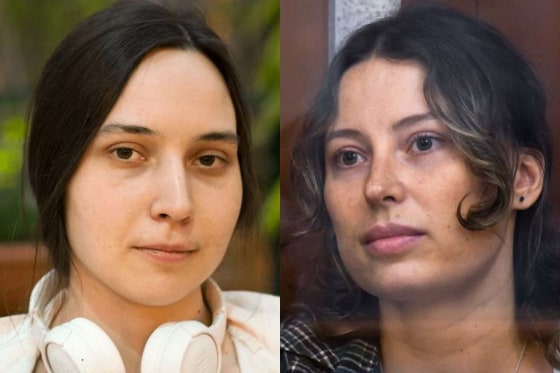
Kseniia Petrova, a Russian Harvard University scientist, has been stuck in a Louisiana immigration jail for more than two months now. And like Karelina, she is young (both women are in their early 30s) and has reportedly opposed Russia’s invasion of Ukraine. Indeed, both women fell afoul of Russian authorities within days of each other: Karelina made her donation on Feb. 24, 2022, the day Russia began its full-scale invasion; Petrova called for Russian President Vladimir Putin’s impeachment on her Facebook page on Feb. 27 and was arrested before she managed to escape to the country of Georgia and then the United States.

Most importantly, neither has committed any crime under U.S. law. Yet while Trump has embraced Karelina, his administration has punished Petrova, a Russian national employed at Harvard on a J-1 visa.

On Feb. 16, Petrova was detained upon returning to Boston from Paris and was later transferred to Immigration and Customs Enforcement custody in Vermont and then Louisiana. Her alleged offense? Failing to disclose on a customs form that she was carrying “samples of frog embryos she had carried from France at the request of her boss at Harvard” and purportedly lying about them, reported The New York Times. Petrova, in a statement provided by her legal team, denied providing any false information and took responsibility for not reviewing the requirements for customs paperwork.
250505 kseniia petrova ksenia karelina seamless 2 up split 3x2 ac 659p c7c75c
Kseniia Petrova (left) has been in ICE custody since February. Ksenia Karelina (right) was released from a Russian prison last month. (Courtesy Petrova’s attorney; AP)

To the extent that the embryos were required to be disclosed — something her legal team has challenged — such a lack of disclosure is usually remedied by a $500 fine. Instead, the Trump administration has put her into deportation proceedings; Petrova, for her part, immediately claimed asylum, noting that if deported to Russia, she would face retribution for her political views.

Since then, Petrova’s immigration case has been moving slowly with no resolution expected until 2026, according to her lead lawyer, Gregory Romanovsky. In the meantime, however, she has filed a federal lawsuit in Vermont seeking her immediate release and what Romanovsky describes as a “critical” hearing next week.

And her lawyers believe they have powerful evidence and arguments for her release, including:

  • a declaration from the head of her lab at Harvard, a scientist in his 80s, who attests that it would not have occurred to him to declare the embryos;
  • an expert declaration from a former Customs and Border Patrol official confirming that, under applicable regulations, frog embryos would not count at “biological material” that would need to be disclosed; and
  • existing immigration law and regulations, which establish that customs disclosure failures — even if willful, which they maintain Petrova’s was not — are not a sufficient basis on which to revoke a visa.

Still, that begs the question of why Petrova was really detained, especially since a loss in federal court would mean many more months in immigration jail. Romanovsky believes the Trump administration is using immigration as a means to punish any alleged or perceived wrongdoing, however minor, “because they can,” and said that despite public perception that the U.S. has lax immigration laws, in actuality, the Immigration and Nationality Act and related laws are “very harsh.”

“The goal,” he alleged, “is to discourage people from coming to this country” and to prompt them to leave on their own.

The fact that the Trump administration can’t appreciate the similarities between Petrova and Karelina underscores what we’re seeing across the country: a chaotic and seemingly careless approach to immigration that only weakens our nation.

Donald Trump Ksenia Karelina Kseniia Petrova Politics Trump Presidency United States
Sara William
Sara William

    Sara William is a veteran journalist, economist, and columnist with over 40 years of experience reporting on the intersection of politics and economics. Since beginning her career in 1984, she has built a distinguished reputation for her deep analysis and authoritative coverage of major historical events and their financial implications.Sara has reported extensively on the connection between politics and the stock market, the economic aftermath of the 9/11 attacks, the 2008 financial crash, and the Covid-19 market collapse. Her work unpacks how global and domestic policies shape financial markets and the economy at large.

    What to Read Next

    Iran's Foreign Minister Abbas Araghchi speaks during the Al Jazeera Forum in Doha on February 7, 2026. (Karim JAAFAR / AFP)

    Iran Rejects U.S. Pressure, Vows to Continue Uranium Enrichment

    February 8, 2026
    Minnesota Gov. Tim Walz listens during a hearing with the House Oversight and Accountability Committee at the U.S. Capitol on June 12, 2025, in Washington, D.C. (Anna Moneymaker / Getty Images)

    Lawmakers Warn $30 Billion Welfare Program Is Vulnerable to Abuse

    February 8, 2026
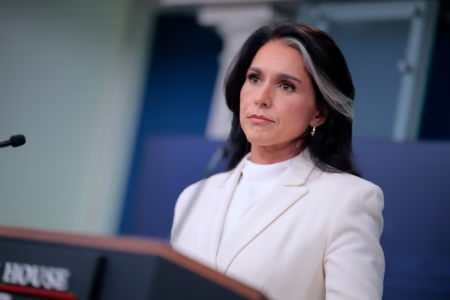
    Director of National Intelligence Tulsi Gabbard talks to reporters in the Brady Press Briefing Room at the White House on July 23, 2025 in Washington, DC. (Chip Somodevilla/Getty Images)

    Whistleblower Complaint Against Gabbard Tied to Intercepted Foreign Call

    February 7, 2026
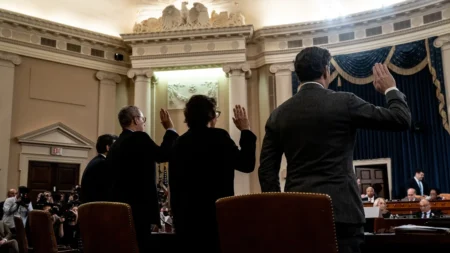
    Three law experts called by Democrats on the House Judiciary Committee and one called by Republicans provided contrasting judgments of the case for impeachment against President Trump. (The New York Times)

    How a $30 Billion Welfare Program Turned Into a ‘Slush Fund’ for States

    February 7, 2026
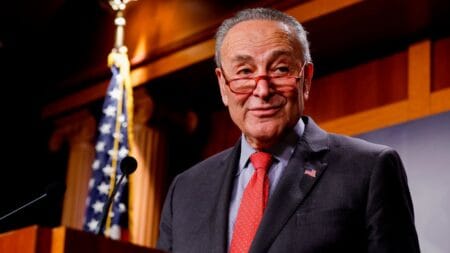
    Senate Majority Leader Chuck Schumer speaks at a news conference on the Senate Democrats expanded majority for the next 118th Congress at the U.S. Capitol Building on December 07, 2022. (Anna Moneymaker/Getty Images)

    Democrats Lay Out Conditions for Approving ICE and DHS Funding

    February 6, 2026
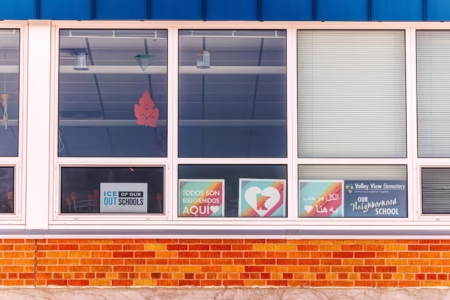
    Posters are displayed in windows at Valley View Elementary School in suburban Minneapolis. Immigration authorities have detained seven children from Columbia Heights Public Schools to date, a spokesperson said. (Kerem Yücel/Minnesota Public Radio/AP)

    Missing Minneapolis Student Reportedly Seen in ICE Detention Facility in Texas

    February 6, 2026
    Add A Comment
    Leave A Reply Cancel Reply

    Facebook X (Twitter) Instagram Pinterest
    © 2026 ThemeSphere. Designed by ThemeSphere.

    Type above and press Enter to search. Press Esc to cancel.

    Go to mobile version