Tag: United States

  • Trump introduces tariff exemptions for electronics, including smartphones and computers.

    Trump introduces tariff exemptions for electronics, including smartphones and computers.

    After more than a week of ratcheting up tariffs on products imported from China, the Trump administration issued a rule late Friday that spared smartphones, computers, semiconductors and other electronics from some of the fees, in a significant break for tech companies like Apple and Dell and the prices of iPhones and other consumer electronics.

    message posted late Friday by U.S. Customs and Border Protection included a long list of products that would not face the reciprocal tariffs President Trump imposed in recent days on Chinese goods as part of a worsening trade war. The exclusions would also apply to modems, routers, flash drives and other technology goods, which are largely not made in the United States.

    The exemptions are not a full reprieve. Other tariffs will still apply to electronics and smartphones. The Trump administration had applied a tariff of 20 percent on Chinese goods earlier this year for what the administration said was the country’s role in the fentanyl trade. And the administration could still end up increasing tariffs for semiconductors, a vital component of smartphones and other electronics.

    The moves were the first major exemptions for Chinese goods, which would have wide-ranging implications for the U.S. economy if they persist. Tech giants such as Apple and Nvidia would largely sidestep punitive taxes that could slash their profits. Consumers — some of whom rushed to buy iPhones this past week — would avoid major potential price increases on smartphones, computers and other gadgets. And the exemptions could dampen additional inflation and calm the turmoil that many economists feared might lead to a recession.

    The tariff relief was also the latest flip-flop in Mr. Trump’s effort to rewrite global trade in a bid to boost U.S. manufacturing. The factories that churn out iPhones, laptops and other electronics are deeply entrenched in Asia — especially in China — and are unlikely to move without a galvanizing force like the steep taxes that the Trump administration had proposed.

    “It’s difficult to know if there’s a realization within the administration that reworking the American economy is a gargantuan effort,” said Matthew Slaughter, the dean of the Tuck School of Business at Dartmouth. 

    The electronics exemptions apply to all countries, not just China. 

    Still, any relief for the electronics industry may be short-lived, since the Trump administration is preparing another national security-related trade investigation into semiconductors. That will also apply to some downstream products like electronics, since many semiconductors come into the United States inside other devices, a person familiar with the matter said. These investigations have previously resulted in additional tariffs.

    Karoline Leavitt, the White House spokeswoman, said in a statement on Saturday that Mr. Trump was still committed to seeing more of these products and components made domestically. “President Trump has made it clear America cannot rely on China to manufacture critical technologies” and that at his direction, tech companies “are hustling to onshore their manufacturing in the United States as soon as possible,” she said.

    A senior administration official, speaking on background because they were not authorized to speak publicly, said that Friday’s exemptions were aimed at maintaining America’s supply of semiconductors, a foundational technology used in smartphones, cars, toasters and dozens of other products. Many cutting-edge semiconductors are manufactured overseas, such as in Taiwan.

    Paul Ashworth, the chief North America economist for Capital Economics, said the move “represents a partial de-escalation of President Trump’s trade war with China.”

    He said the 20 product types that were exempted on Friday account for nearly a quarter of U.S. imports from China. Other countries in Asia would be even bigger winners, he said. Should the tariffs on those countries kick in again, the exemption would cover 64 percent of U.S. imports from Taiwan, 44 percent of imports from Malaysia and nearly a third of imports from both Vietnam and Thailand, he said.

    The changes punctuated a wild week in which Mr. Trump backtracked from many tariffs he introduced on April 2, which he had called “liberation day.” His so-called reciprocal tariffs had introduced taxes that would reach up to 40 percent on products imported from some nations. After the stock and bond markets plunged, Mr. Trump reversed course and said he would pause levies for 90 days.

    China was the one exception to Mr. Trump’s relief because Beijing chose to retaliate against U.S. tariffs with levies of its own. Instead of pausing tariffs on Chinese imports, Mr. Trump increased them to 145 percent and showed no willingness to spare any companies from those fees. In return, China on Friday said it was raising its tariffs on American goods to 125 percent.

    That sent shares of many technology companies into free fall. Over four days of trading, the valuation of Apple, which makes about 80 percent of its iPhones in China, fell by $773 billion.

    For now, Mr. Trump’s moderation is a major relief for a tech industry that has spent months cozying up to the president. Meta, Amazon and several tech leaders donated millions to President Trump’s inauguration, stood behind him as he was sworn into office in January and promised to invest billions of dollars in the United States to support him.

    Tim Cook, Apple’s chief executive, has been at the forefront of the industry’s courtship of Mr. Trump. He donated $1 million to Mr. Trump’s inauguration and later visited the White House to pledge that Apple would spend $500 billion in the United States over the next four years.

    The strategy repeated Mr. Cook’s tactics during Mr. Trump’s first term. To head off requests that Apple begin manufacturing its products in the United States rather than China, Mr. Cook cultivated a personal relationship with the president that helped Apple win exemptions on tariffs for its iPhones, smartwatches and laptops.

    It had been unclear if Mr. Cook could obtain a similar break this time, and the tariffs Mr. Trump proposed were more severe. As the Trump administration increased its taxes on Chinese goods, Wall Street analysts said Apple might have to increase the price of its iPhones from $1,000 to more than $1,600.

    The threat of higher iPhone prices caused some Americans to rush to Apple stores to buy new phones. Others raced to buy computers and tablets that were made in China.

    Apple did not immediately respond to a request for comment.

    Apple’s iPhone quickly became a symbol of the tit-for-tat over tariffs with China. On Sunday, Commerce Secretary Howard Lutnick appeared on CBS’s “Face the Nation” and said the tariffs would result in an “army of millions and millions of people screwing in little, little screws to make iPhones” in the United States. Ms. Leavitt said later in the week that Mr. Trump believed that the United States had the resources to make iPhones for Apple.

    “Apple has invested $500 billion here in the United States,” she said. “So if Apple didn’t think the United States could do it, they probably wouldn’t have put up that big chunk of change.”

    Apple has faced questions about moving some iPhone manufacturing to the United States for more than a decade. In 2011, President Obama asked Steve Jobs, Apple’s co-founder, what it would take to make the company’s best-selling product in the United States rather than China. In 2016, Mr. Trump also pressured Apple to change its position.

    Mr. Cook has remained steadfast in his commitment to China and has said the United States doesn’t have enough skilled manufacturing workers to compete with China.

    “In the U.S., you could have a meeting of tooling engineers, and I’m not sure we could fill the room,” he said at a conference in late 2017. “In China, you could fill multiple football fields.”

    Additional tariffs on semiconductors and other electronics could come in the next few weeks or months. The administration has signaled it is considering such tariffs under a legal statute known as Section 232, alongside other tariffs on imported pharmaceuticals.

    The president has already used the statute to put a 25 percent tariff on imported steel, aluminum and automobiles, and is weighing similar steps for imported lumber and copper. All of those sectors were given exemptions from the so-called reciprocal tariffs that the president announced on April 2.

    Speaking to reporters the next day, the president said that other tariffs on chips would be “starting very soon,” adding that the administration was also looking at tariffs on pharmaceuticals. “We’ll be announcing that sometime in the near future,” he said. “It’s under review right now.”

    The other tariffs that the Trump administration has applied through Section 232 investigations have been set at 25 percent — much lower than the 145 percent tariff currently in place for many products from China.
  • DOGE still has a long way to go to reach its goal, and it’s not being honest about how much it has actually done.

    DOGE still has a long way to go to reach its goal, and it’s not being honest about how much it has actually done.

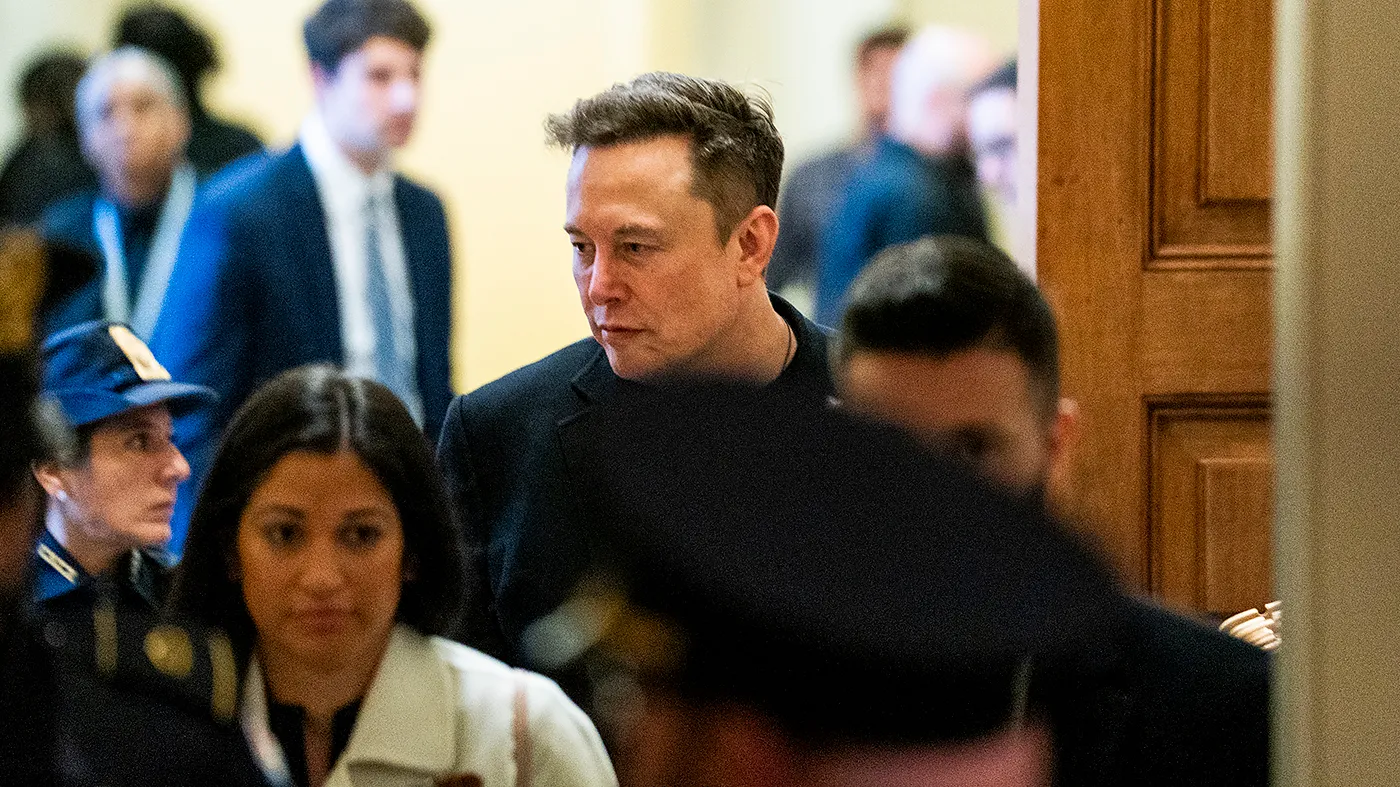
    Last week, Elon Musk indicated for the first time that his Department of Government Efficiency was falling short of its goal.

    He previously said his powerful budget-cutting team could reduce the next fiscal year’s federal budget by $1 trillion, and do it by Sept. 30, the end of the current fiscal year. Instead, in a cabinet meeting on Thursday, Mr. Musk said that he anticipated the group would save about $150 billion, 85 percent less than its objective.

    Even that figure may be too high, according to a New York Times analysis of DOGE’s claims.

    That’s because, when Mr. Musk’s group tallies up its savings so far, it inflates its progress by including billion-dollar errors, by counting spending that will not happen in the next fiscal year — and by making guesses about spending that might not happen at all.

    One of the group’s largest claims, in fact, involves canceling a contract that did not exist. Although the government says it had merely asked for proposals in that case, and had not settled on a vendor or a price, Mr. Musk’s group ignored that uncertainty and assigned itself a large and very specific amount of credit for canceling it.

    It said it had saved exactly $318,310,328.30.

    Mr. Musk’s group has now triggered mass firings across the government, and sharp cutbacks in humanitarian aid around the world. Mr. Musk has justified those disruptions with two promises: that the group would be transparent, and that it would achieve budget cuts that others called impossible.

    Now, watching the group pare back its aims and puff up its progress, some of its allies have grown doubtful about both.

    “They’re just spinning their wheels, citing in many cases overstated or fake savings,” said Romina Boccia, the director of budget and entitlement policy at the libertarian Cato Institute. “What’s most frustrating is that we agree with their goals. But we’re watching them flail at achieving them.”

    Mr. Musk’s group did not respond to questions about its claims sent via X, his social-media platform. Mr. Musk previously acknowledged the group might make errors but said they would be corrected.

    The White House press office defended the team, saying it had compiled “massive accomplishments,” but declined to address specific instances where the group seemed to have inflated its progress.

    Mr. Musk actually promised an even larger reduction last year. When he was Mr. Trump’s most prominent supporter on the campaign trail, he said he could cut $2 trillion from a federal budget of about $7 trillion. After Mr. Trump was elected and Mr. Musk’s group began its work, Mr. Musk lowered that goal to $1 trillion.

    Even after Mr. Musk’s comments in Thursday’s cabinet meeting, a White House official indicated that this target had not changed.

    Budget analysts had been deeply skeptical of these claims, saying it would be difficult to cut that much without disrupting government services even further, or drastically altering popular benefit programs like Medicare and Social Security.

    Mr. Musk’s group has provided an online ledger of its budget cuts, which it calls the “Wall of Receipts.” The site was last updated on Tuesday, to show an “estimated savings” of $150 billion.

    The ledger is riddled with omissions and flaws.

    While Mr. Musk said on Thursday that his group would save $150 billion in fiscal 2026 alone, the website does not say explicitly when its savings would be realized. The site also gives no identifying details about $92 billion of its claimed savings, which is more than 60 percent of the total.

    The rest of the savings are itemized, attributed to cancellations of specific federal grants, contracts or office leases. But these detailed listings have been plagued with data errors, which have inflated the group’s savings by billions.

    DOGE Savings Chart
    DOGE’s $150 Billion in Claimed Savings Is Short on Detail
    On its website, the Department of Government Efficiency claims to have saved $150 billion in federal spending. As of early April, however, it has provided receipt-level breakdowns for less than 40 percent of that amount.
    Source: DOGE · By The New York Budgets

    Mr. Musk’s group has deleted some of its original errors, like entries that triple-counted the same savings, a claim that confused “billion” with “million,” and items that claimed credit for canceling contracts that ended when George W. Bush was president.

    Still, some expensive mistakes remain.

    The second-largest savings that the group lists on its site comes from a canceled I.R.S. contract that DOGE says saved $1.9 billion. But the contract it cites was actually canceled when Joseph R. Biden Jr. was president. The third-largest savings that the group claims comes from a canceled grant to a vaccine nonprofit. Mr. Musk’s group says that saved $1.75 billion. But the nonprofit said it had actually been paid in full, so the savings was $0.

    In other cases, the itemized claims include “savings” that would not happen in fiscal 2026 — or might not happen at all.

    They start with the largest single savings on the group’s website. Mr. Musk’s team says it saved $2.9 billion by canceling a contract for a huge shelter in West Texas to house migrant children who crossed the border alone.

    That figure is pumped up by assuming things that might never happen, according to a New York Times analysis of federal contracting data and interviews with people familiar with that contract who spoke on condition of anonymity because they were not permitted to discuss it with members of the media.

    One assumption was that the government was going to renew the contract every year for three more years. Another was that the shelter was going to hold hundreds of children every day from 2023 to 2028, triggering a higher payment rate.

    Both of those assumptions seem less than guaranteed, given that the number of unaccompanied child migrants began falling last year. Around the country, shelters like this had emptied out even before Mr. Trump took office.

    The Texas shelter had been empty since March 2024. The government paid a lower rate of $18 million per month to keep it on standby, compared to $55 million per month if the facility had been full, people familiar with the contract said.

    By canceling the contract, the government did save the cost of keeping the facility ready until it expired later this year. But only a fraction of that money — about $27 million — would count as savings in fiscal 2026. That was about 1 percent of the savings that Mr. Musk’s group had claimed.

    Nat Malkus, a senior fellow at the conservative American Enterprise Institute, said this approach — casting uncertain events as certain — was common in the data published by Mr. Musk’s group.

    “It’s like if your kid drops out of college, and you tell your wife, ‘Whoa, we saved money on medical school!’ Well, that doesn’t make any sense, but that’s the same idea,” Mr. Malkus said. “How do you call it savings?”

    In another example, Mr. Musk’s group said it had saved $285 million by canceling a contract with a South Dakota company, Project Solutions Inc., to perform safety inspections in federally subsidized apartment buildings.

    But that presumed the government would spend money it had not promised to spend.

    Robin Miller, a Project Solutions manager, said that the higher figure was calculated using a “ceiling value” — the maximum amount that the government could pay. In reality, she said, the government had agreed to pay only $29 million, of which $1.8 million had been disbursed, and another $3 million was owed for completed work.

    Ms. Miller said her company supported Mr. Musk’s mission, but his group had its facts wrong in this case.

    “If it’s not going to be used, it wasn’t truly money saved,” she said. In any event, she said, there would not have been much savings in the period Mr. Musk was focused on: The contract would end on Oct. 3, 2025, just three days into the next fiscal year.

    Mr. Musk’s group also claimed credit for canceling a contract that was not a contract at all.

    It involved a request for proposal that the Office of Personnel Management had published, seeking bids for help with human-resources work.

    When announcing these requests, government agencies describe the work they want done. Contractors submit proposals, with both a plan and a price. The government can choose one vendor, or several. Even after that, it often negotiates with them to push the price below their original bids.

    Details about this particular request were scarce: Mr. Musk’s group provided a tracking number for the request, 47QFEA24K0008. But The New York Times was not able to find that number in databases of previous government solicitations. The Office of Personnel Management declined to release the request, or say what it had planned to spend on the contract, nor would the office say when it planned to choose a contractor.

    Despite that uncertainty, Mr. Musk’s calculated the savings involved in that cancellation down to the cent. (It later rounded the claim to an even dollar: $318,310,328.)

    “Garbage,” said Steven L. Schooner, a professor who studies federal contracting at George Washington University.

    He said it was far too early to know for sure what the government was going to spend — especially in the year that Mr. Musk had targeted. What if the bidders competed to drive the price lower? What if a losing bidder protested, and then the whole thing got canceled?

    “You don’t know what’s going to happen,” Mr. Schooner said. “It’s silly.”

  • Because of changes in Trump’s taxes, companies are unsure and having many problems.

    Because of changes in Trump’s taxes, companies are unsure and having many problems.

    President Donald Trump’s sweeping tariff-driven reversal of decades of free trade is creating financial chaos for the very sector it’s meant to rebuild: American manufacturing.

    Although the full extent of economic damage is still unclear, volatile tariff policies are making it tougher for American companies to make and sell goods, whether they’re producing medical devices in Florida, toys in Ohio or bicycles in California.

    Even though the Trump administration put many of its sharpest levies on hold last week while boosting tariffs on China, companies around the country say the recent messiness of announcements and uncertainty is hurting business: Their costs are rising, and demand is slowing as spooked customers in the United States and abroad slam the brakes on spending.

    The economic picture, both in the United States and globally, is quickly souring as the U-turn in American policy upends the global trading system and roils financial markets. The odds of a recession have spiked in recent weeks. The value of the dollar has tumbled, and Treasury yields have climbed, as investors abandon both, worried about the reliability of the U.S. government.

    The fallout has been most pronounced for companies that buy or sell from China, which last week got hit with a 145 percent tariff. But even those that do business with other countries say international buyers are treading carefully, sometimes pausing orders or canceling shipments altogether while they wait to see how the White House’s policies shake out.

    M3BKEDX5QTBMXMM64TJKRJZJUE size normalized
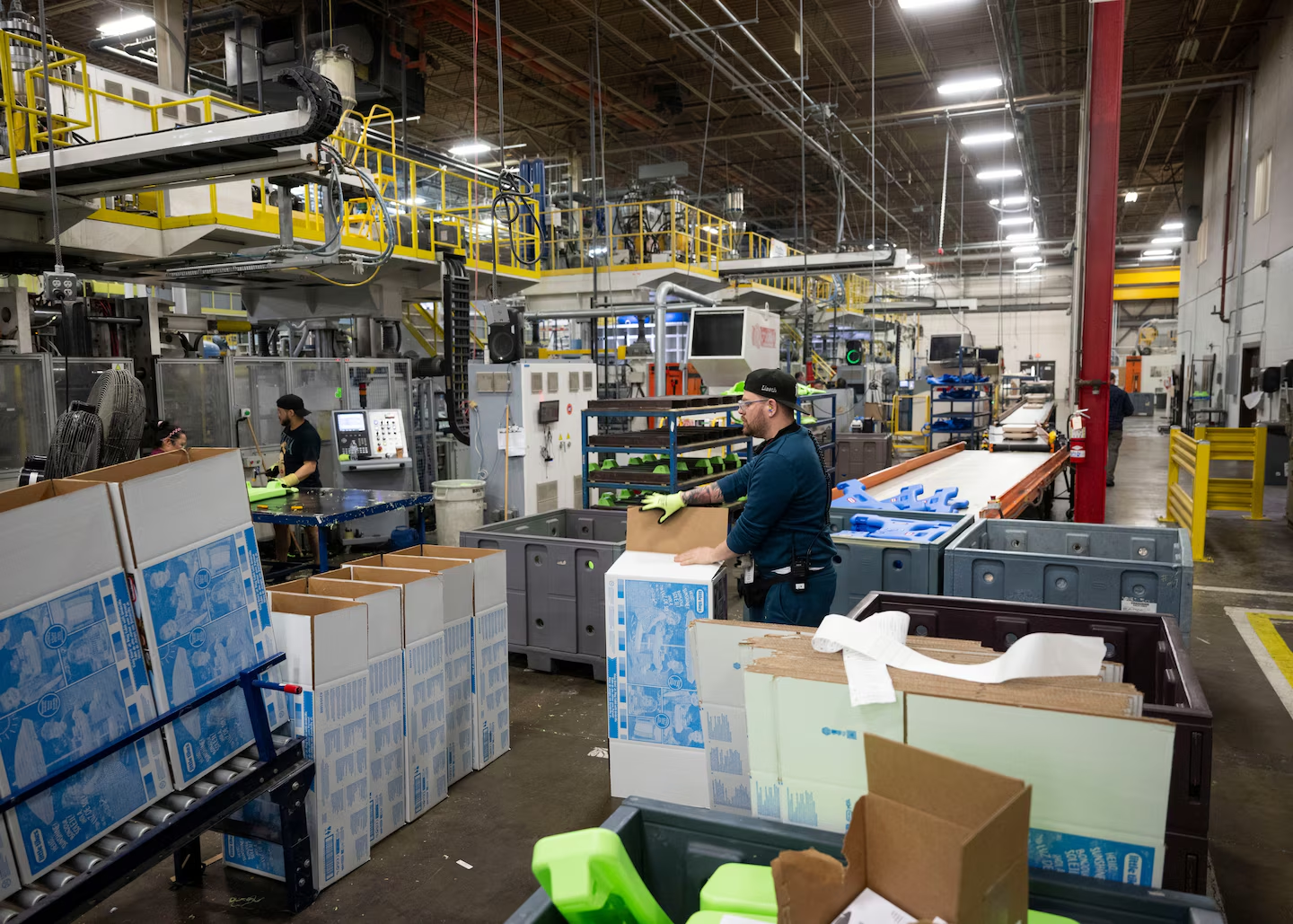
    From its factory in Hudson, Ohio, Little Tikes typically ships about 200,000 of its ride-on toy vehicles overseas.

    “This whole uncertainty over ‘tariffs are here, tariffs are gone’ has been damaging on its own,” said Paul Sadoff, owner of Rock Lobster Cycles, a custom bike maker in Santa Cruz, California, who ships worldwide. “My orders have certainly slowed. Why would someone in Japan or Australia or Canada order an American bike if things could change dramatically again next week? It’s like everything is frozen.”

    The Trump administration has for months said new tariffs, including a 10 percent blanket tax on all imports, are aimed at boosting U.S. manufacturing, as part of its “America First” trade plan. White House officials have said they must take decisive steps to reshape the economy, by closing the federal deficit and bringing back some of the 4.5 million factory jobs that have disappeared since 2000. But, Trump and others have acknowledged, such a massive shake-up could lead to short-term economic pain. Shoring up U.S. manufacturing, the president said last week, is “an opportunity to change the fabric of our country.”

    Factory Employment Chart
    A record low share of Americans work in factories
    Source: Bureau of Labor Statistics David Laungher / THE NEW YORK BUDGETS

    Many U.S. manufacturers say their optimism for prosperity has been eclipsed by growing concerns about economic turmoil. The industry was already showing signs of weakness in March, after a brief expansion earlier in the year as companies tried to get ahead of tariffs. Now, manufacturing trade groups say they’re being inundated with calls from members who are fretting about canceled orders and slowing growth.

    7U3U4JFBTZWJEFLGJ4ZFIA623Y size normalized
    A worker at the Little Tikes factory in Hudson, Ohio.

    In interviews with more than a dozen American manufacturers, most said they were struggling to smooth over alliances with overseas suppliers and buyers. Nearly all were facing higher costs on key materials or machinery, and several said they’d already seen demand dry up because of tariff-related uncertainty.

    “When you lay out tariffs and yank them back, over and over, the threat of it wears off and turns into an unwillingness to work with American companies,” said Suzanne Shriner, president of Lions Gate Farms, which sells its Hawaiian-grown Kona coffee throughout Asia and Europe. “We’ve been exporting internationally for 20 years, and all of a sudden our markets are closing up.”

    Customers in Canada — which last month imposed 25 percent tariffs on some U.S. imports — and Japan are rethinking their purchases, she said, because they’re worried about the unpredictability surrounding future costs. And this moment isn’t without precedent: Shriner’s company lost nearly all of its business in China during the first Trump administration, when the country hit back with duties on American agricultural goods.

    This time around, though, economists say the Trump administration’s protracted threats have upended relationships with just about every U.S. trading partner, especially after the last-minute pullback of tariffs on dozens of nations. Treasury Secretary Scott Bessent said last week that “more than 75 countries” have contacted the White House to talk through trade policies. “Each one of these solutions is going to be bespoke. It is going to take some time,” he said.

    OCBUMEN7XILFY4NFDJMHWVPXOQ size normalized
    William Holcomb is operations director for Little Tikes.

    In the meantime, business owners say they’re in limbo. Economists are increasingly warning that a recession is on the horizon, with JPMorgan saying last week that it still expects a downturn despite Wednesday’s pause on some tariffs. Consumers are skittish, too, saying they expect unemployment and inflation to get significantly worse in the coming year. Americans’ economic confidence, which has fallen for four straight months, is near an all-time low, according to a University of Michigan survey released Friday.

    “It’s become extremely difficult for U.S. manufacturers to keep doing business, which is ironic because that’s the very group these tariffs are supposed to protect,” said Lizbeth Levinson, an international trade attorney at Fox Rothschild. “Businesses are putting everything on hold. They literally can’t plan from one day to the next.”

    International orders for Little Tikes’ brightly colored Cozy Coupe have stalled in recent months, and have yet to pick up even after Trump temporarily paused tariffs on most countries last week. The company manufactures its ride-on vehicles in Hudson, Ohio, and typically ships about 200,000 overseas, to Asia, Europe and Latin America.

    But now, with trade policies in flux and China striking back with an 125 percent duty on U.S. goods, distributors are wondering whether it’s worth stocking the $65 toy at all.

    “Basically every country in the world is saying, ‘Hold on, let us find out what’s going on.’ They’re pausing or they’re canceling,” said Isaac Larian, chief executive of Little Tikes’ parent company, MGA Entertainment. “All of Asia is shut down for now — if I ship a Cozy Coupe from Ohio to China and it gets slapped with a 125 percent duty, nobody is going to buy it anymore.”

    The instability, he said, has put a chill on holiday toy orders. Retailers do most of their Christmas buying in the spring, but this year are holding off, not knowing whether the toys they buy now will cost more by the time they arrive in the fall. Larian says his own expenses are likely to go up in the coming weeks: Although the Cozy Coupe is made in the United States, a number of components — including screws, axels and rope — come from China.

    JMLQ47Q3F4MDBG7EV7C24N63B4 size normalized
    Workers package items inside the Little Tikes factory.

    The back-and-forth has been enough to hurt international prospects for some companies. Brough Brothers Distillery, which makes bourbon, gin, rum and vodka in Louisville, was about to close a deal to sell liquor in New Brunswick, Canada, when Trump first floated 25 percent tariffs on the country just hours into his presidency. Although many of those measures were eventually paused or watered down, the damage was done, CEO Victor Yarbrough said.

    “We were about to finalize things when they said, ‘We unfortunately can’t do this,’” he recalled. “They’re taking American whiskeys, spirits and wines off the shelves. It’s beyond tariffs at this stage, it’s about whether or not we can build back these relationships.”

    Now Yarbrough is wondering what to do long-term: Should he expand to the United Kingdom and South Africa, like he’d planned, or focus instead on selling to more bars and restaurants in the United States? He’s also considering opening a distillery in Canada, to serve the market there. “How do we grow and expand when it’s not clear where these tariffs are headed? That’s our big challenge now,” he said.

    Still, some U.S. manufacturers — especially those that don’t do much business abroad — are encouraged by the Trump administration’s broad overhaul. Trump campaigned heavily on the promise of creating new factory jobs, arguing that tariffs will encourage companies to move operations to the United States.

    Red Land Cotton, a textile company in Moulton, Alabama, is firmly rooted in the United States: The company grows cotton at its own farms; has it sewn into bedsheets, T-shirts and quilts at plants throughout the South; and sells almost exclusively to U.S. customers.

    Although the company relies on foreign-made sewing machines that could soon become costlier, the fallout of the trade war has so far been minimal. CEO Anna Brakefield is hopeful that new tariffs will encourage a resurgence in manufacturing that would help her expand her own business.

    24K44UBBDR5WBMMCCZOCRX6324 size normalized
    International orders for Little Tikes’ Cozy Coupe have stalled in recent months.

    In the past year alone, four partner plants — including two that manufacture bath towels for the company — have closed, because of a lack of domestic demand. Brakefield is down to one fabric finisher to process and bleach her textiles, which means it’s taking months longer to get products made and on shelves than in the past, she said.

    “Maybe if there were more companies that needed these services, we’d start to see more of a domestic supply chain,” she said. “It’s been a crazy week and a day, but that is the kind of opportunity I am hopeful about.”

    Chris Christenberry, who runs a medical devices company in Tampa isn’t quite as optimistic. He sells scar-management kits and skin health products to burn units, cancer centers and plastic surgeons in 80 countries and said recent uncertainty has been debilitating for business. Among his biggest worries is that Chinese customers, unwilling to shoulder new tariffs for American-made goods, will find ways to copy his products, instead.

    For now, he is holding off on expansion plans by scrapping two job openings — including an international sales position — and pausing investments.

    “I’m just a small U.S. business trying to do what we’re supposed to: make products at home, and sell them around the world,” said Christenberry, CEO of Atlantic Medical Products. “But because of this man-made economic crisis, we’re ruining trust with other countries. Our international distributors are saying, ‘Our clientele is so mad at the Americans.’ We don’t know if they’ll keep buying.”

  • U.S., China barrel toward the bottom in escalating trade war

    U.S., China barrel toward the bottom in escalating trade war

    The world’s two largest powers are closer to a full economic break than ever, as President Donald Trump and Chinese leader Xi Jinping refuse to back down in a trade war that has become a high-stakes game of chicken — raising the specter of mass economic fallout and heightened risk of conflict between Washington and Beijing.

    A week after Trump’s “Liberation Day” tariffs roiled global markets, his administration has put China in its crosshairs, shifting his global trade war from a crusade against what he called foreign freeloading to a winner-takes-all confrontation with Beijing.

    China on Friday countered Washington’s levies by raising tariffs on all U.S. goods to 125 percent, while it dismissed U.S. measures as “economically meaningless” and Xi urged European nations to join Beijing in resisting Trump’s “unilateral bullying.” A day earlier, Trump confirmed he had hiked tariffs on Chinese imports to 145 percent — the fourth such escalation since taking office two months ago. The Trump administration said late Friday that it would exempt many consumer electronics, like the popular iPhone, from tariffs even as it didn’t back down from the broad levies.

    But analysts and people close to officials in China’s leadership circles say beneath the growing market panic over the tariffs lies a deeper concern: Trump’s erratic early moves — and the absence of any meaningful back-channel between Washington and Beijing since January — mean there are few tools available to steer the relationship back on course.

    “Everyone is so fixated on tariffs, but we are at a level where this is past tariffs; we have backed into decoupling,” said Jude Blanchette, who runs the China Research Center at the Rand Corporation.

    “Beijing was tolerant of tariff increases and other increases so long as they thought they had a chance to sit down with Trump and stabilize the relationship. This is so completely off the table now,” he said.

    The flow of trade and investment between the world’s two largest economies has long been a stabilizing force in a fraught diplomatic relationship between superpowers. The severing of these economic ties, what has become known as “decoupling,” could remove a key guardrail, fundamentally reordering the global economy and increasing the chance of an actual shooting war, analysts warn.

    Trump and his appointees are rallying behind the idea that the sudden reversal on implementing most tariffs was a strategic move to outmaneuver Beijing and are now betting that China will back down.

    Speaking at an American Bankers Association conference in Washington on Wednesday, Treasury Secretary Scott Bessent said he expects a wave of new deals with U.S. allies and a coordinated approach to confronting China.

    “They can raise their tariffs. But, so what?” he said in a separate interview with Fox Business on Wednesday. “No one wins in a war, but its proportionality, and the proportionality for the Chinese is going to be much worse,” he said.

    But Chinese officials have signaled that Beijing is bracing for a protracted economic battle with the United States — determined not to show weakness at home and still smarting from the belief that it gained little from the intense dealmaking of Trump’s first term.

    In Beijing, two people familiar with internal discussions said a core group of senior officials have been tasked with rolling out a set of preplanned measures to match any U.S. economic salvos — including some actions drafted weeks before Trump took office on Jan. 20. They include tariffs on specific U.S. industries and restrictions on U.S. firms.

    ‘Bullying and hostility’

    Lines of communication between the two superpowers came to a screeching halt Monday when Donald Trump posted on Truth Social: “All talks with China concerning their requested meetings with us will be terminated!”

    Beijing responded with a sharp warning that it would not bow to “pressure, threats and blackmail.”

    “Trump basically is open to some kind of deal, but he now seems to have dug himself into a hole where he’s not willing to talk to China unless China kind of grovels before him, and China is certainly not going to do that. And that means that the most likely direction things go now is just escalation,” said Jake Werner, director of the East Asia Program at the Quincy Institute.

    While Beijing had braced for a possible tariff escalation, Chinese diplomats were caught off guard by the speed and scale of the past week’s moves, according to people familiar with internal discussions in Beijing and who, like others interviewed, spoke on the condition of anonymity to describe sensitive diplomacy.

    Part of the shock stemmed from the aggressiveness of Trump’s opening moves, despite making little effort to engage Chinese officials during his first two months in office.

    The Trump administration’s use of fentanyl to justify its first round of tariffs particularly frustrated Chinese officials. Beijing had already taken modest but meaningful steps to address its role as the top global supplier of fentanyl ingredients — scheduling over 50 new precursors in coordination with Biden administration working groups and making hundreds of domestic arrests.

    Unlike their Canadian and Mexican counterparts, who vociferously pushed back on Trump’s threats, Chinese officials shunned public gestures in reaction to the tariffs and instead tried to establish a back channel to bypass what they saw as political theater.

    In February, former Chinese ambassador to the United States Cui Tiankai quietly led the first of multiple delegations to Washington, meeting with think tank representatives and exploring how Beijing might engage the new administration. During Trump’s first term, a similar back channel between Cui and Jared Kushner, the president’s son-in-law, served as a key conduit to lay the groundwork for meetings between the two leaders.

    People familiar with Cui’s mission said he brought proposals approved by the highest levels of the Communist Party outlining potential concessions Beijing was prepared to make in negotiations.

    However, those efforts — including a return visit by Cui last week — have yet to yield meaningful inroads with the new administration, despite public signals from both Trump and China’s Foreign Ministry that they’re open to dialogue.

    “It feels pointless,” said one of the people in Beijing, noting the difference from the first Trump administration. Now it’s “just bullying and hostility.”

    “This is certainly going to be quite different from what the Chinese side is used to,” said Yao Yang, an economist at China’s Peking University. “It’s very difficult to even contact the American government. The whole American government listens to just one guy.”

    ‘Willing to fight’

    The past week has demonstrated how far the relationship has soured since Trump’s first trade war with China in 2018, and which deepened during the Biden administration.

    “I was really shocked,” said Xin Qiang, deputy director of the Center for American Studies at Fudan University in Shanghai. “I didn’t expect the situation to deteriorate to this extent in just a few days.”

    Analysts say the president now faces a ticking clock: managing the escalating standoff with Beijing while scrambling to secure deals with allies hit with tariffs — all in a race to build a united front that could block China from circumventing the hefty trade measures.

    “The next 90 days are crucial. … If President Trump can ink deals with these 75 countries and get their buy-in to block China’s transshipping efforts, then America has the chance to build a trade coalition that doesn’t include Beijing. It’s an enormous opportunity,” said Michael Sobolik, senior fellow at Hudson Institute.

    Transshipping — the practice of rerouting goods through a third country to dodge high tariffs — was a strategy some Chinese companies adopted following the 2018 trade war, using countries like Vietnam as intermediaries.

    As the world’s largest exporter, China posted a global trade surplus of around $1 trillion last year and remains heavily reliant on external demand. But financial analysts say it’s now unlikely to hit its annual GDP growth target of 5 percent.

    On Thursday, Goldman Sachs cut its China GDP forecast to 4 percent. Trump has also warned of “transition problems” in the U.S. economy as part of his tariff program, urging Americans to “hang on” as market shock waves continue and the likelihood of a recession grows.

    Analysts also say the longer the trade war drags on, the more likely it is that retaliation spreads to other areas of rivalry between the two countries — in particular, Washington’s relationship with Taiwan, the democratic island that Beijing claims as its own and has threatened to take by force.

    Yun Sun, director of the China program at the Stimson Center, compared the current moment to Trump’s first term, when U.S.-China ties went into free fall after the 2020 “phase one” trade deal largely collapsed and China did not meet its purchase commitments. Washington and Beijing butted heads over China’s aggression in the South China Sea and U.S. support of Taiwan.

    “There is a pattern of starting with tariffs, forcing China to concede. And when China refuses to do so, it very quickly spills over into other domains because Trump believes in the maximum pressure campaign,” Yun said.

    “The danger is that when two confident leaders decide to engage in a game of chicken it makes the escalation so much more difficult because … they both believe that they will win,” Yun said.

    Trump’s public messaging to Xi has been mixed. The two leaders spoke in the days leading up to Trump’s inauguration, with the U.S. president calling Xi “a smart guy.” In March, hopes for a meeting appeared to gain some traction when Sen. Steve Daines (R-Montana) visited Beijing and suggested he was laying the groundwork for a leader-level summit. But prospects for an immediate meeting now appear dashed.

    “China took measures, and then Trump raised tariffs again, but there is still room for negotiation,” said Zhu Feng, professor and dean of the School of International Studies at Nanjing University.

    Chinese officials — both in public and private — are letting it be known that Beijing’s door is still open to accommodation with the Trump administration. Yun, who described recent meetings with Chinese interlocutors, said: “The message is pretty much that we want to talk, but we’re also willing to fight.”

  • Even the safest money investments are now uncertain because of Trump’s decisions.

    Even the safest money investments are now uncertain because of Trump’s decisions.

    There are not many certainties in the world of money, but this traditionally has been one of them: When life turns scary, people take refuge in American government bonds.

    Investors buy U.S. Treasuries on the assumption that, come what may — financial panic, war, natural disaster — the federal government will endure and stand by its debts, making its bonds the closest thing to a covenant with the heavens.

    Yet turmoil in bond markets last week revealed the extent to which President Trump has shaken faith in that basic proposition, challenging the previously unimpeachable solidity of U.S. government debt. His trade war — now focused intently on China — has raised the prospect of a worldwide economic downturn while damaging American credibility as a responsible steward of peace and prosperity.

    “The whole world has decided that the U.S. government has no idea what it’s doing,” said Mark Blyth, a political economist at Brown University and co-author of the forthcoming book “Inflation: A Guide for Users and Losers.”

    An erosion of faith in the governance of the world’s largest economy appears at least in part responsible for the sharp sell-off in the bond market in recent days. When large numbers of investors sell bonds at once, that forces the government to offer higher interest rates to entice others to buy its debt. And that tends to push up interest rates throughout the economy, increasing payments for mortgages, car loans and credit card balances.

    Last week, the yield on the closely watched 10-year Treasury bond soared to roughly 4.5 percent from just below 4 percent — the most pronounced spike in nearly a quarter century. At the same time, the value of the American dollar has been falling, even as tariffs would normally be expected to push it up.

    Other elements also go into the explanation for the bond sell-off. Hedge funds and other financial players have sold holdings as they exit a complex trade that seeks to profit from the gap between existing prices for bonds and bets on their future values. Speculators have been unloading bonds in response to losses from plunging stock markets, seeking to amass cash to stave off insolvency.

    Some fear that China’s central bank, which commands $3 trillion in foreign exchange reserves, including $761 billion in U.S. Treasury debt, could be selling as a form of retaliation for American tariffs.

    Given the many factors playing out at once, the sharp increase in yields for government bonds registers as something similar to when medical patients learn that their red blood cell count is down: There may be many reasons for the drop, but none of them are good.

    One reason appears to be an effective downgrading of the American place in global finance, from a safe haven to a source of volatility and danger.

    As Mr. Blyth put it, Treasury bills have devolved from so-called information invariant assets — rock-solid investments regardless of the news — to “risk assets” that are vulnerable to getting sold when fear seizes the market.

    The Trump administration has championed tariffs in the name of bringing manufacturing jobs back to the United States, asserting that a short-term period of turbulence will be followed by long-term gains. But as most economists describe it, global trade is being sabotaged without a coherent strategy. And the chaotic way in which tariffs have been administered — frequently announced and then suspended — has undercut confidence in the American system.

    For years, economists have worried about an abrupt drop in the willingness of foreigners to buy and hold United States government debt, yielding a sharp and destabilizing increase in American interest rates. By many indications, that moment may be unfolding.

    “People feel nervous about lending us money,” said Justin Wolfers, an economist at the University of Michigan. “They are saying, ‘We’ve lost our faith in America and the American economy.’”

    For Americans, that reassessment threatens to revoke a unique form of privilege. Because the United States has long served as the global economy’s safe harbor, the government has reliably found takers for its debt at lower rates of interest. That has pulled down the cost of mortgages, credit card balances and auto loans. And that has allowed American consumers to spend with relative abandon.

    At the same time, foreigners buying dollar-denominated assets pushed up the value of the American currency, making products imported to the United States cheaper in dollar terms.

    Critics have long argued that this model is both unsustainable and destructive. The flow of foreign money into dollar assets has permitted Americans to gorge on imports — a boon to consumers, retailers and financiers — while sacrificing domestic manufacturing jobs. Chinese companies have gained dominance in key industries, making Americans dependent on a faraway adversary for vital goods like basic medicines.

    “The U.S. dollar’s role as the primary safe currency has made America the chief enabler of global economic distortions,” the economist Michael Pettis wrote last week in an opinion piece in The Financial Times.

    But economists inclined to that view generally prescribe a gradual process of adjustment, with the government embracing so-called industrial policy to encourage the development of new industries. This thinking animated the Biden administration’s economic policy, which included some tariffs against Chinese industry to protect American companies while they gained time to achieve momentum in industries like clean energy technology.

    Encouraging American industry requires investment, which itself demands predictability. Mr. Trump has warned companies that the only way to avoid his tariffs is to set up factories in the United States, while lifting trade protectionism to levels not seen in more than a century.

    Even an abrupt decision from the White House to pause most tariffs on all trading partners except China failed to dislodge the sense that a new era is underway — one in which the United States must be viewed as a potential rogue actor.

    That Mr. Trump does not bow to diplomatic decorum is hardly new. His Make America Great Again credo is centered on the notion that, as the world’s largest economy, the United States has the power to impose its will.

    Yet the pullback in the bond market attests to shock at how far this principle has been extended. Mr. Trump has broken with eight decades of faith in the benefits of global trade: economic growth, lower-priced consumer goods and a reduced risk of war.

    That the gains of trade have been spread unequally now amounts to a truism among economists. Anger over joblessness in industrial communities helped bring Mr. Trump to power, while altering the politics of trade. But many economists say the trade war is likely to further damage American industrial fortunes.

    The tariffs threaten existing jobs at factories that depend on imported parts to make their products. The levies have been set at rates seemingly plucked at random, economists said.

    “What the market really didn’t like was the random crazy math of the tariffs,” said Simon Johnson, a Nobel laureate economist at the Massachusetts Institute of Technology. “It seemed like they didn’t know what they were doing and didn’t care. It’s a whole new level of madness.”

    The immediate consequence of higher interest rates on United States bonds is an increase in what the federal government must pay creditors to keep current on its debts. That cuts into funds available for other purposes, from building schools to maintaining bridges.

    The broader effects are harder to predict, yet could metastasize into a recession. If households are forced to pay more for mortgages and credit card bills, they will presumably limit spending, threatening businesses large and small. Companies would then forgo hiring and expanding.

    BIZ TRUST US 04 hpfw superJumbo
    When large numbers of investors sell bonds, that forces the government to offer higher interest rates to entice others to buy its debt. And that tends to push up interest rates throughout the economy.Credit…Ashley Gilbertson for The New York Times

    The chaos in the bond market is at once an indicator that investors see signs of this negative scenario already unfolding, and is itself a cause of future distress via higher borrowing rates.

    BIZ TRUST US 03 zlgq superJumbo
    President Trump has broken with eight decades of faith in the benefits of global trade.Credit…Tom Brenner for The New York Times

    For years, foreign holders of American bonds have sought to diversify into other storehouses for savings. Still, the dollar and U.S. government bonds have maintained their status as the ultimate repository.

    Europe and its common currency, the euro, now seem enhanced as a part of the global financial realm still subject to adult supervision. But Germany’s staunch reluctance to issue debt has limited the availability of bonds for investors seeking another place to entrust savings.

    That may now change, suggested Mr. Blyth, the Brown economist. “If the Europeans decide to issue a ‘sanity bond,’ the world might jump at it,” he said.

    The Chinese government has long sought to elevate the place of its currency, the renminbi. But foreign investors hardly view China as a paragon of transparency or rule of law, limiting its utility as an alternative to the United States.

    All of which leaves the world in a bewildering place. The old sanctuary no longer seems so safe. Yet no other place looks immediately capable of standing in.

  • The big trade fight with China doesn’t look like it’s going to get better anytime soon.

    The big trade fight with China doesn’t look like it’s going to get better anytime soon.

    President Trump’s rapidly escalating trade war with China has resulted in eye-watering tariffs on products exchanged between the countries and scrambled prospects for many global businesses that depend on the trade. And there is no end in sight.

    The Trump administration has been waiting for the Chinese leader, Xi Jinping, to call Mr. Trump personally, but Beijing appears wary of putting Mr. Xi in an unpredictable and potentially embarrassing situation with the U.S. president.

    With the two governments at an impasse, businesses that rely on sourcing products from China — varying from hardware stores to toymakers — have been thrown into turmoil. The triple-digit tariff rates have forced many to halt shipments entirely.

    Mr. Trump has rapidly ratcheted up tariffs on Chinese products, from 54 percent on April 2 to 145 percent just one week later. The Chinese government has argued that the actions are unfair and closely matched his moves, raising its tariffs on American goods to 125 percent on Friday.

    But on Friday night, the administration created a significant carve out to its tariffs on China when it exempted some electronics, including smartphones, laptops and televisions. Those products will still be subject to other tariffs that Mr. Trump has put in place, like a 20 percent fee he added to Chinese goods in response to the country’s role in the fentanyl trade.

    Mr. Trump has said he would like to speak with Mr. Xi, but he has stopped short of requesting a phone call, believing that it is the Chinese government’s turn to ask for such a call, according to people familiar with the matter. Trump officials say that dozens of countries have reached out to the administration about negotiations since the levies were imposed. China did not, and instead responded with harsh words and tariffs of its own.

    Across the Trump administration, some officials are concerned that the trade war could soon escalate into a national security crisis, potentially causing the Chinese to move up plans for a military invasion of Taiwan.

    The Pentagon is assessing the impact of China potentially cutting off rare earth exports to the United States and possibly blocking certain critical components used in U.S. weapons systems, according to a person with knowledge of the preparations. The aim is to fully ascertain what harm the Chinese could inflict on America’s ability to produce and maintain certain weapons and ammunition.

    Mr. Trump continues to express optimism, saying that he has always gotten along with Mr. Xi and that “something positive” will come out of the relationship. But analysts have suggested that the situation may already have spiraled out of control.

    Julian Evans-Pritchard, the head of China economics for the research firm Capital Economics, said the fact that the Chinese authorities had repeatedly matched U.S. tariff hikes suggested that they were in no rush to negotiate.

    “A partial rollback of tariffs still seems likely at some point,” he said. “But it is hard to envisage a meaningful reset in the U.S.-China relationship.”

    At a briefing on Friday, Karoline Leavitt, the White House press secretary, declined to say whether the countries were in communication.

    “I’m not going to comment on communications that are happening, or may not be happening, or either way, we’ll leave it to our national security team to get these discussions underway,” she said. She said the president was optimistic, and that he had “made it very clear he’s open to a deal with China.”

    Speaking last week at the White House, Mr. Trump said that “China wants to make a deal. They just don’t know how quite to go about it.” He added that the Chinese were “proud people.”

    Mr. Trump’s moves have taken tariffs to a level far past what would be prohibitive for trade, creating crises for many American businesses that depend on imports from China.

    Rick Woldenberg, who runs Learning Resources, an Illinois-based maker of educational toys, said the latest tariffs had already forced him to pause some shipments from China. He called the rates that Mr. Trump had imposed “a joke” and said that even concessions from his suppliers could not make a dent in the fees he would owe to the U.S. government.

    Learning Resources contracts with factories in Taiwan, India, Vietnam and other countries to make its products, but China is by far its biggest supplier, as it is for most toymakers. China accounted for two-thirds of all imports of toys and sporting goods to the United States last year.

    Learning Resources employs about 500 people, most of them in the United States. It had planned to hire more this year to keep up with its fast-growing business, but has now abandoned some of those plans.

    “We’re being asphyxiated by our very own government,” Mr. Woldenberg said.

    Mr. Woldenberg said he paid about $2.3 million in tariffs and duties in 2024. This year, he would end up paying more than $100 million if sales somehow kept up with his projections from before the trade war. That’s more than he could pay if he cut every expense in the company other than base payroll.

    At this point, Mr. Woldenberg said, the number hardly matters — beyond a certain level, the tariff is simply no longer something anyone in his business can afford to pay.

    “He could raise it to 100 billion percent — it doesn’t matter,” he said. “It’s like a legal ban.”

    Christophe Lavigne, the president of Highfield, which manufactures boats in China and the United States, said he expected to be subject to 198 percent tariffs on some of his imports, and that he has decided to simply stop his shipments for now.

    He said his entire company, and the jobs of his employees and his dealers, was on the line. The pace of change was too fast and unpredictable, he added.

    “We cannot adjust our production lines quickly enough,” he said. “Converting our entire supply chain in just two months is not feasible.” 

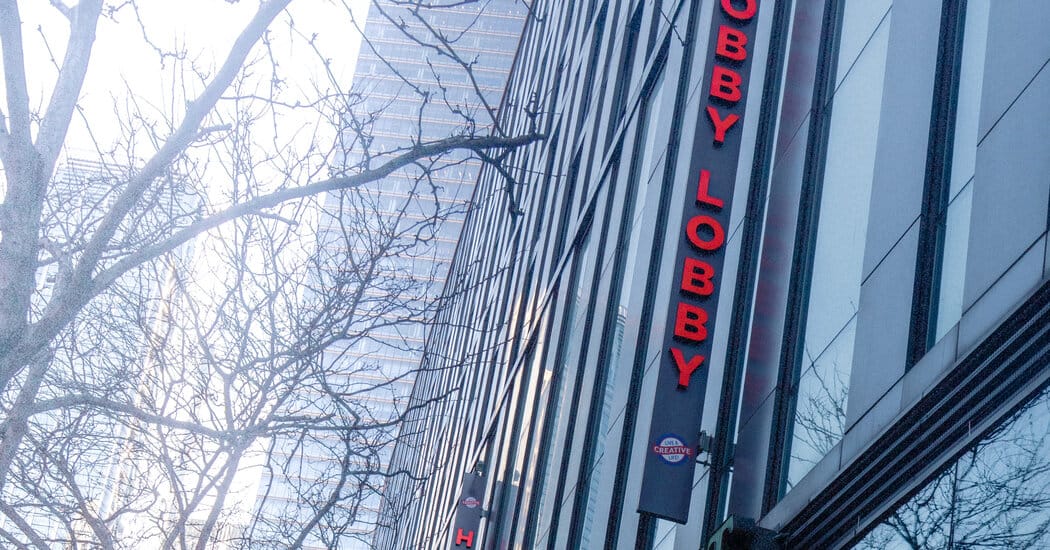
    Major multinational corporations have been in a better position to source products from countries besides China, but they too are reeling. Hobby Lobby, the crafting retailer, told vendors on Thursday that it was delaying shipments from China as a result of the escalating trade war, according to correspondence viewed by The New York Times.

    The retailer told vendors that the back-and-forth tariffs had resulted in “a rapidly shifting and unpredictable landscape” and that it hoped diplomacy between the United States and China would “yield a more stable and balanced outcome.”

    The implications of disrupting business with one of the country’s biggest trading partners have ricocheted through the economy. The dollar fell to a three-year low on Friday, while Treasury yields continued to swing. A measure of consumer sentiment also tumbled, indicating that Americans were becoming nervous about how higher tariffs might affect them.

    Mr. Trump abruptly announced on Wednesday a 90-day pause on the “reciprocal” tariffs that he had unveiled the previous week on countries around the world, and which had gone into effect just hours earlier. But the threat of those tariffs, and of retaliation against U.S. exports, continues to hang over the global economy.

    It remains to be seen if the United States and China might try to reach some agreement soon. People familiar with the conversations said that members of the White House National Security Council were in touch with counterparts at the Chinese Embassy, and that Cui Tiankai, the former Chinese ambassador, had held meetings in Washington and New York over the past several weeks to discuss the relationship. But there has been little sign of communication between higher-ranking officials in the Trump administration and the Chinese government.

    Early in Mr. Trump’s first term, Mr. Xi flew to his Mar-a-Lago estate in Florida to meet with Mr. Trump for hours, sharing what Mr. Trump later referred to as “the most beautiful piece of chocolate cake you’ve ever seen.” But that did not stop the countries from entering into a bruising trade war. And in his second term, Mr. Trump has been even more emboldened and unpredictable.

    Mr. Trump has given few indications publicly of what he wants the Chinese to do. But Trump officials say the issues are well known. In an annual report released March 31, the Office of the United States Trade Representative detailed the trade barriers that U.S. businesses face when selling abroad, dedicating almost 50 of its nearly 400 pages to China.

    In recent weeks, in addition to countering Mr. Trump’s tariff threats, China has added some U.S. companies to an unreliable entity list that essentially bars them from doing business in the country. It has also imposed licensing systems to restrict exports of rare earth elements, which are essential for electric cars and other products.

    On Friday, as it announced its latest increase in tariffs on American products, the Chinese government said it would not raise the rate further because it was already so high that the number no longer made any difference.

    China’s Ministry of Commerce said that the United States had used tariffs “for bullying and coercion” and had ultimately become “a laughingstock.”

    “If the U.S. continues its tariff numbers game, China will ignore it,” it said.

    China also ratcheted up pressure on U.S. companies as it issued new regulations on Friday that will subject semiconductors made by U.S. firms overseas to higher tariffs.

    The move will put pressure on companies like Intel, Global Foundries and others that have U.S. chip factories. It may also encourage chip companies to shift manufacturing out of the United States to maintain access to the Chinese market, where the bulk of global electronics are made.

  • Why aren’t the democrats fighting harder against Trumps trade problems?

    Why aren’t the democrats fighting harder against Trumps trade problems?

    This has been the mealymouthed critique of President Donald Trump’s trade wars from many Democrats this past week. They awkwardly triangulate between bashing Trump’s catastrophic ideas and touting support for their own similarly spirited, if scaled-down, ideas. No wonder their message is falling flat.

    Trump’s current tariff regime — including “only” 10 percent levies on 70 countries, plus 145 percent on China — will devastate the U.S. economy. His tariffs imposed so far are estimated to raise a typical household’s annual costs by $2,700, with lower-income Americans shouldering the biggest burden. That’s only a subset of the damage. Recession risks have surged, companies have begun furloughing workers, and our once-close allies are flipping us the bird.

    If this is a curse to the U.S. economy, it should be a windfall for Democratic politicians. Instead, Democrats are blowing their good fortune.

    Rather than shouting from the rooftops that trade wars are bad, Democrats babble in “yes, buts.” Yes, these particular tariffs are costly and regressive, they say, but when Democrats impose tariffs, somehow they present no such downsides.

    The most obvious cognitive dissonance relates to Trump’s first-term tariffs. Democrats assailed these policies in the 2018 midterms and 2020 presidential election — shortly before adopting them as their own.

    For instance, in 2019, then-presidential candidate Joe Biden said Trump’s China tariffs led to “American farmers, manufacturers and consumers losing and paying more.” The 2020 Democratic platformsaid Trump had “launched reckless, politically-motivated tariff wars that have punished American workers, antagonized our allies, and benefited our adversaries.” They were right!

    But as president, Biden extended (nearly) all of Trump’s existing tariffs. In some cases, he expanded them or replaced them with slightly different trade barriers. He did so with vigorous support from his party.

    Given this checkered record, it’s no wonder Democrats struggle to articulate a clear, credible critique of Trump’s (now much worse) tariff policy.

    In a social media video this month, House Democrats opened with an awkward defense of protectionism: “I think a wrong-for-decades consensus on ‘free trade’ has been a race to the bottom,” Rep. Chris Deluzio (D-Pennsylvania) said, adding that we need “a better trade approach” that is “pro-worker.”

    Deluzio clarified that he didn’t mean Trump’s trade approach, per se — even though Republicans likewise claim Trump’s approach is “pro-worker.”

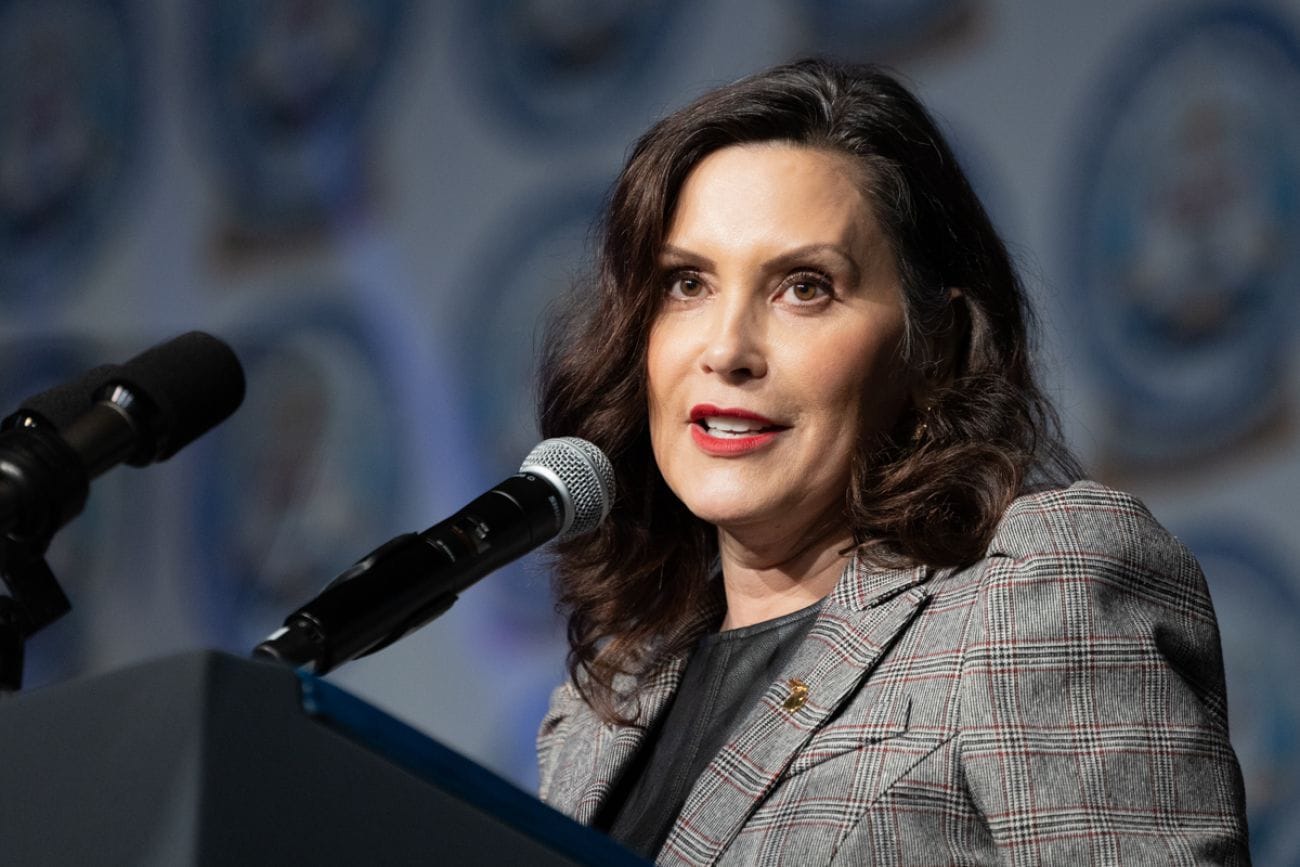
    On Wednesday, Michigan Gov. Gretchen Whitmer (D) gave a speech criticizing Trump for wielding tariffs like a “hammer.” When asked how she would deploy tariffs differently, Whitmer could not answer. “I don’t know how I would have enacted them differently,” she said. “I haven’t really thought about that. What I have thought about, though, is, you know, tariffs are, need to be used like a scalpel, not a hammer.”

    Other Democrats, such as Massachusetts Sen. Elizabeth Warren, assert that the real problem with Trump’s tariffs is that companies will use them as an excuse for “price gouging” and profiteering. The stock market massacre suggests investors don’t agree tariffs will be profitable. But even if Warren’s critique were true, the same logic should apply to the Biden-née-Trump tariffs Warren backed.

    Elsewhere, lefty populist thinkers explain that Trump’s tariffs are bad but tariffs could be good if only the resulting revenue were used for things Democrats like. (Never mind that whole poor-people-bear-the-costs problem.) Both they and their horseshoe-theory-demonstrating conservative counterparts contend that Trump’s execution might be lousy, but the underlying premise — that America must build higher economic walls — remains correct.

    Real trade wars, it seems, have never been tried.

    To be clear, there are some limited circumstances in which tariffs (or sanctions) could be an appropriate way to build U.S. capacity or punish bad behavior. For example, if an adversarial country has a stranglehold on some technology critical to national defense. Or if an exporter is using slave labor.

    But that’s not what either party has endorsed. Both Trump and his Democratic critics have supported broad tariffs on our allies and on random consumer goods (tiki torches, guitars, toothbrushes) with no plausible security or “resiliency” justification.

    How did Democrats back themselves into this corner? Partly they’re pandering to pro-tariff constituencies (i.e., unions, once reliable Democratic allies). Populist, anti-“neoliberal” think tanks have also overtaken the party. These often employ political operatives churning out pseudo-scholarly research, which the media then credulously cites. (Republicans invented and perfected this model more than a decade earlier, though it doesn’t seem to have served Democrats as well politically.)

    That’s how you end up with Democratic leaders embracing such quackery as “greedflation” and price controls — both of which, by the way, the Trump administration is also now flirting with. This Trump blunder should be yet another layup for Democrats, but they can’t really dunk on it now, can they?

    The political calculus on all this is changing. Aggressive trade barriers, no longer abstract hypotheticals, are proving as disastrous as “neoliberal” economists predicted. Americans hate Trump’s tariffs. Even most manufacturing workers think they’re a bad idea, according to a Post poll.

    Democrats should stop pulling their punches. What the country needs is an unequivocal, full-throated condemnation of pandering protectionism. Let this be the moment that liberates the Democratic Party from the populists tying them to the same mercantilist, regressive, costly command-and-control economic policies that so often drive Trump’s agenda.

  • OpenAI has filed a lawsuit against Elon Musk, saying he’s not acting in good faith.

    OpenAI has filed a lawsuit against Elon Musk, saying he’s not acting in good faith.

    OpenAI is suing Elon Musk over claims he has tried “nonstop” to slow down its business for his own benefit.

    The company accuses the Tesla boss of using “bad-faith tactics” against OpenAI to help him control cutting-edge AI technology.

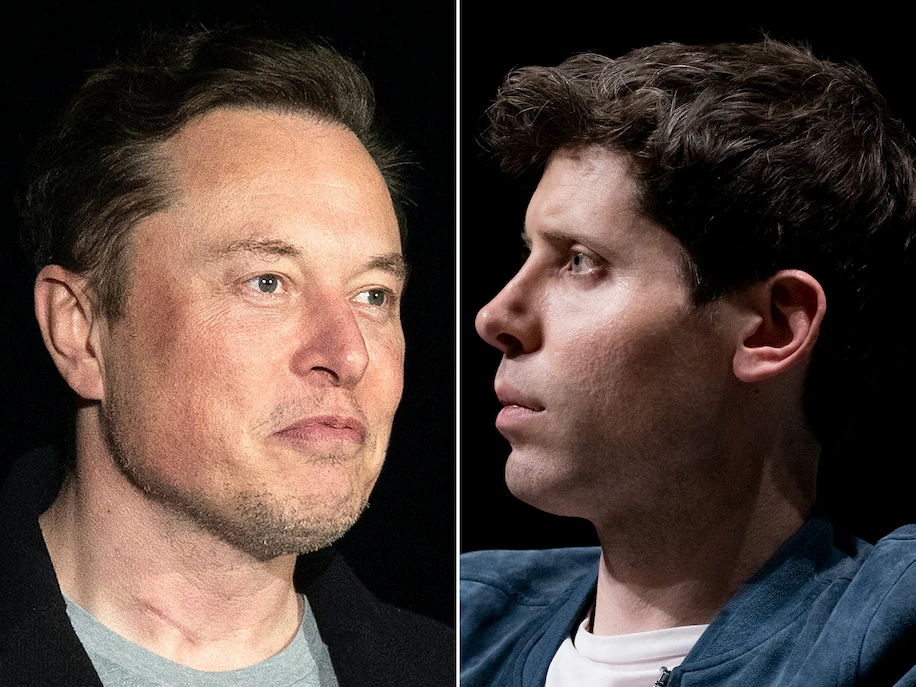
    Mr Musk sued OpenAI chief executive Sam Altman last year in a bid to stop him from changing its corporate structure. He co-founded OpenAI with Mr Altman but left several years ago. 

    The countersuit opens up a new front in the high-stakes – and long-running – battle between two Silicon Valley heavyweights, who both say they are acting in the best interests of OpenAI and the public.

    “Elon’s nonstop actions against us are just bad-faith tactics to slow down OpenAI and seize control of the leading AI innovations for his personal benefit,” OpenAI said in a statement on Wednesday. “Today, we countersued to stop him.”

    Last week, a federal judge in Oakland, California, set a March 2026 trial date in Mr Musk’s suit in a bid to fast-track the legal fight.

    US District Judge Yvonne Gonzalez Rogers previously declined to grant Mr Musk an injunction that would temporarily halt OpenAI’s conversion from a non-profit to a for-profit company.

    She also said that she expected Mr Musk to give evidence in the case.

    Mr Musk alleges that OpenAI strayed from its founding mission as a non-profit to develop AI for the benefit of humanity and is therefore in breach of contract.

    He left the company in 2018.

    “This is about control. This is about revenue. It’s basically about one person saying, ‘I want control of that start-up’,” said Ari Lightman, professor of digital media and marketing at Carnegie Mellon University.

    Lightman said it has been a distraction from making AI safe and equitable.

    “That takes a backseat with all this rigmarole over control and monetization,” Lightman said.

    OpenAI claims Mr Musk has “been spreading false information about us,” in a X post on Wednesday, adding “Elon’s never been about the mission. He’s always been about his own agenda.”

    Musk’s xAI is a competitor to OpenAI, but has so far lagged behind. Last month, xAI acquired Musk’s social media platform X – formerly Twitter.

    Mr Musk claims the combined company, XAI Holdings, is valued at more than $100 billion.

    In February, Mr Musk made an unsolicited bid for OpenAI, offering to buy it for $97.4 billion, which Mr Altman rejected by posting: “no thank you but we will buy twitter for $9.74 billion if you want.”

    In a statement to the BBC, Mr Musk’s lawyer Marc Toberoff said: “Had OpenAI’s Board genuinely considered the bid, as they were obligated to do, they would have seen just how serious it was.”

    “It’s apparent they prefer to negotiate with themselves on both sides of the table than engage in a bona fide transaction in the best interests of the charity and the public,” Mr Toberoff added.

  • To fix the problems left by Trump, the UK should look to Europe, and Keir Starmer sees that’s the best way.

    To fix the problems left by Trump, the UK should look to Europe, and Keir Starmer sees that’s the best way.

    Keir Starmer was back at the Emirates Stadium on Tuesday to watch Arsenal’s 3-0 win over Real Madrid, a result that far exceeded expectations of his team’s chances in Europe. And, over the next few days, I wouldn’t be surprised if he tries to snatch a short Easter break in the warmth and sunshine of that same continent.

    Football and family holidays offer him some much needed relief from the grim reality of a faltering economy, towering public debt and terrifying global insecurity, which are all being made worse on a daily – sometimes hourly – basis by Britain’s closest ally of the previous 80 years.

    But that mayhem being caused by Donald Trump’s extended stag party in the White House means that Europe is much more than an occasional distraction for the prime minister. Slowly, if not always surely, it is once again becoming the direction towards which Britain must turn.

    This is not exactly where Starmer thought he would to be. For all his talk of an EU “reset”, the plan had been to “make Brexit work” within self-imposed “red lines” ruling out joining the single market or a customs union, blocking freedom of movement and appearing to allow only some minor mitigation of the damage done by Boris Johnson’s deal.

    In the immediate aftermath of Trump’s inauguration, new horizons on the other side of the Atlantic briefly seemed rather more exciting. There was genuine interest in, if not admiration for, this insurgent disruptor of the US’s stuffy political establishment. There was also a prospect that Britain might gain advantage over the EU from a repurposed special relationship being gilded by inviting Trump to hang out with the royals.

    And, even now, securing some sort of US trade deal that might save thousands of British jobs, or the promise of the minimal military cooperation needed to maintain European security, are still prizes worth having. It’s silly to blame Starmer for trying to win them, or to expect him to strike poses against Trump for the sake of cheap headlines and not much else.

    What’s changed, however, is a recognition around the cabinet table that the US president is much more of a problem than part of any solution. Gone are the days when a government source would brief it had more in common with Maga Republicans than US Democrats, or Rachel Reeves could tell Britain to learn from Trump’s optimism and “positivity”. Nowadays ministers say it has become almost futile to anticipate his next move because “he’s only ever reliable in his unpredictability”. Whatever happens next, this is a US administration that can’t be regarded as a stable ally either on the economy or security.

    Those who think Starmer, in his repeated calls for “cool and calm heads”, is still being excessively polite have perhaps been too busy complaining to have noticed a subtle shift in his language. For instance, when the Times last week ran the headline: “Why Keir Starmer hopes Trump’s tariffs could be good news for the UK”, the rebuttal came from the prime minister himself, with an article in the same newspaper the next day, which began by stating: “Nobody is pretending that tariffs are good news.”

    3000
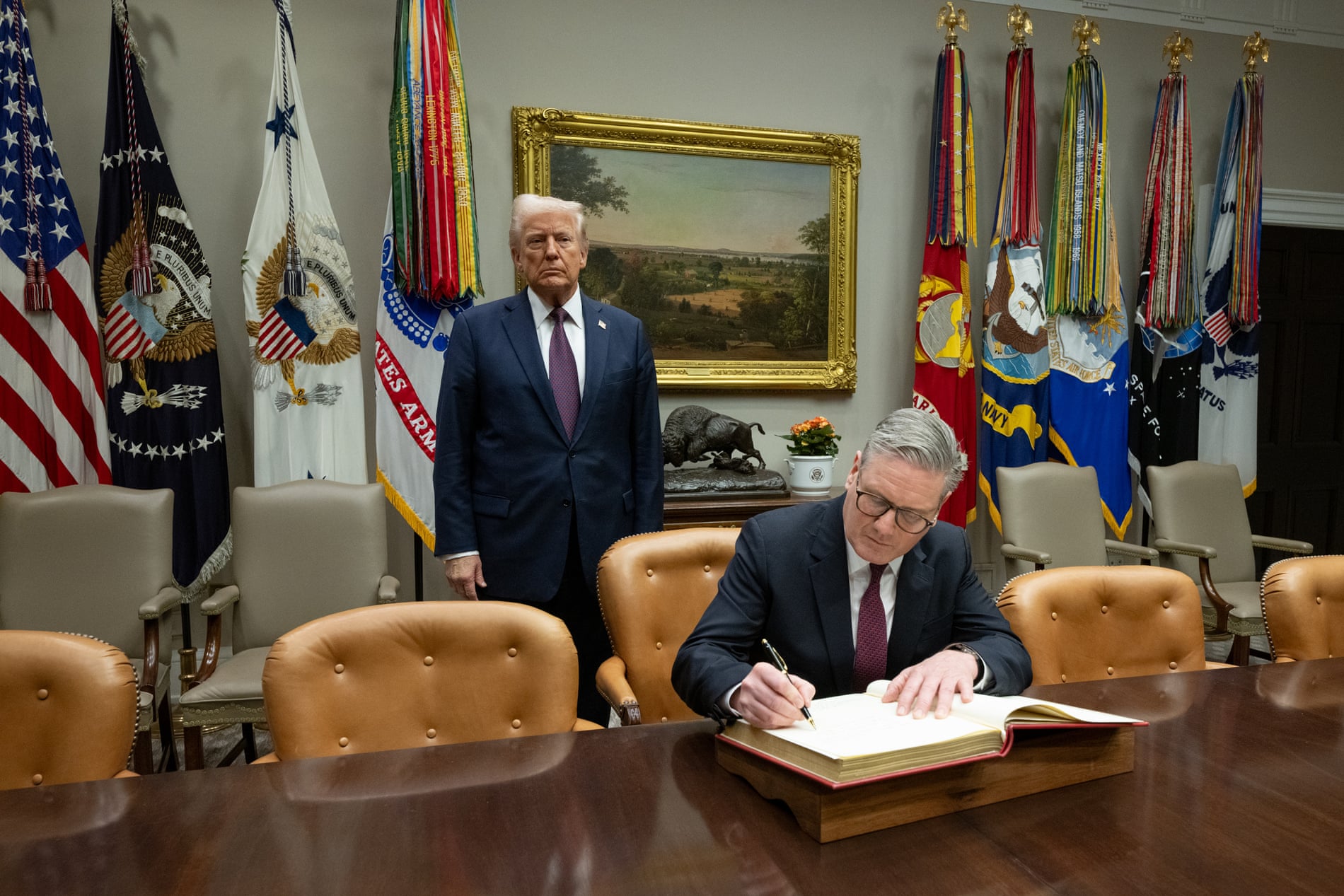
    Donald Trump and Keir Starmer meeting in the White House on 27 February 2025. Photograph: Daniel Torok/The White House

    One well-placed Downing Street adviser now describes how Trump “wants to destroy the multilateral institutions” that Starmer believes are essential “to span divides and bring the world together”. Another mentions polling evidence that apparently shows even if a big US trade deal can be done, British voters would still prefer closer links to the EU because they don’t trust Trump to deliver.

    Certainly, efforts to reset those relations have been pursued with more vigour over recent weeks. These began with Starmer’s “coalition of the willing” to replace the military support for Ukraine that Trump appears so intent on taking away, and will continue ahead of the EU-UK summit on 19 May. More focus on shared interests and values and less on “red lines” should mean a security and defence pact is agreed. Also within reach is a so-called veterinary deal to make agricultural trade easier, while legislation is already going through parliament that would enable UK ministers to align with EU regulations in other areas to the benefit of small exporters.

    There may yet be a workable youth mobility scheme for those aged 18-30, which some EU members, notably Germany, regard as a test of whether this government is really different to the last one. Although the proposal was hastily ruled out during last year’s general election, the Treasury is increasingly sympathetic to it because, by some estimates, it could do more for growth than planning reform and housebuilding combined. At the same time, new cooperation on North Sea windfarms and negotiations to align the UK and EU carbon trading scheme could increase investment, improve energy security and generate billions of pounds in additional revenue.

    But there are still limits to this revived EU-UK relationship and it will never go far enough or fast enough to satisfy the many Labour supporters convinced that Brexit was a catastrophic mistake. Those close to Starmer emphasise he’s less interested in “relitigating old arguments from the previous decade” than in finding new ways to pursue the national interest now that “the era of globalisation is over”. Downing Street believes that part of the appeal of both Trump and our homegrown strain of rightwing populism lies in how institutions like the EU became too detached from the people they were meant to serve. In short, they’re determined not to be seen defending the status quo.

    The UK wants any security pact to include data-sharing on illegal immigration, which the EU, for its own arcane reasons, may be unwilling to accept. The government will insist that any defence deal must also allow British industry to bid for contracts from a massive new European rearmament fund. That agreement, in turn, could yet be held up by rows with a French government demanding concessions over fish quotas. The hope is that our political leaders prove big enough to hurdle such obstacles. But economic nationalism is not confined to the White House and making meaningful progress in Europe has never been easy.

    Though Arsenal’s Champions League victory will have been the high point of Starmer’s week, he may reflect that his team haven’t yet reached the semi-final stage of the competition. In politics, as in football, there is much to play for in Europe, and a long way to go.

  • Trump eased one trade war. Another may just be getting started.

    Trump eased one trade war. Another may just be getting started.

    The United States and China have sharply raised tariffs on each other’s imports over the last week, raising the prospect of a long and painful trade war between the world’s two largest economies.

    Even as investors rallied to his decision to pause “reciprocal” tariffs on imports from dozens of countries Wednesday, President Donald Trump raised tariffs on Chinese goods to 145 percent — an increase of nearly 50 percent in a day, and his fourth tariff action against Beijing since January. President Xi Jinping has not backed down, either, retaliating by raising China’s tariffs on U.S.-made goods to 84 percent and imposing new curbs on critical resources. (Trump on Wednesday said the tariff rate on China would be 125 percent, but a White House official, speaking on the condition of anonymity to explain government policy, said Thursday the actual rate would be 145 percent.)

    The intensifying financial hostilities represent a potentially significant threat to the United States and global economies regardless of the delay in higher tariffs for other trading partners. Government officials in Beijing and Washington have, for years, girded for a major clash between the two superpowers, and some economists say further escalation could do perhaps as much to push the U.S. into a recession as Trump’s initial tariff proposal would have.

    Treasury Secretary Scott Bessent said Wednesday morning that “everything is on the table” to respond to China, and lawmakers in Congress have begun pushing measures designed to increase financial pressure on Beijing.

    The two nations have become increasingly interlinked over the past several decades, with Americans dependent on cheap consumer imports and Chinese exporters reliant on the vast U.S. market. The trade ties include iPhones (made in China), soybeans (grown in the United States) and financial instruments that form the bedrock of the U.S. financial system. The consequences of an all-out trade war would be global; combined, the two countries account for more than 40 percent of the world economy.

    China accounts for about 14 percent of U.S. imports, and the tariffs on Chinese goods are now so high that the overall U.S. tariff rate rose slightly Wednesday even though Trump simultaneously lowered duties on many other countries, according to Ernie Tedeschi, a former Biden administration official now at Yale University’s Budget Lab.

    “Everyone is breathing a sigh of relief today, but if we’d just started with just 100-plus percent tariffs with the world’s two largest economies, we’d be saying we’re in a global trade war the likes of which we have not seen in decades‚” said Josh Lipsky, senior director of the Atlantic Council’s GeoEconomics Center. “If these tariffs were to stay on at this level … the recession risks are still high, in part because there’s still so much uncertainty.”

    Jason Furman, a Harvard University economist who served in the Obama administration, said Trump’s tariffs are “now higher and more inflationary” than they were when the president unveiled major trade measures on April 2.

    There are indications that de-escalation remains possible. On Wednesday, Trump appeared to express sympathy for the Chinese position, saying that Xi wanted to reach an agreement but that Beijing was not sure how to do so. The president said he was optimistic further escalation would not prove necessary and called Xi “a friend of mine” who understood how to reach a deal.

    “China wants to make a deal. They just don’t know how quite to go about it,” Trump told reporters. “They don’t know quite how to go about it, but they’ll figure it out.”

    Later in the day, he said he did not think higher tariffs on China would be necessary: “I don’t think we’ll have to do it more.”

    Beijing had not retaliated by Thursday afternoon local time. “We will not sit and watch the destruction of international trade rules,” said Lin Jian, a spokesman for the Foreign Affairs Ministry. “If the U.S. insists on launching a tariff or trade war, China will fight to the end.”

    Other experts warn that it’s possible both leaders would be unable to soothe the tensions inflamed by a rapid set of new trade barriers. And many officials influential with the Trump administration are pushing measures that could deepen, rather than calm, economic hostilities. Economists and policymakers in both parties have long accused China of unfair trade practices, such as stealing U.S. intellectual property and undercutting labor and environmental standards.

    Sen. Rick Scott (R-Florida), a close Trump ally, has pushed legislation to require stockbrokers to provide warning labels for investors on firms linked to Chinese entities. While in the Senate, Secretary of State Marco Rubio also pushed significant restrictions preventing Chinese firms from accessing U.S. capital markets, blocking them or their subsidies from U.S. exchanges. Investor Kevin O’Leary, who has spoken with Trump, has called for tariffs of 400 percent on China.

    “There’s not a high enough tariff for me. I don’t think we should buy anything from China,” Scott said in an interview. He added, of the Trump administration: “I think they get it — they understand that China wants to destroy us, destroy our allies, destroy our way of life.”

    Top Trump advisers such as Bessent and Stephen Miran, the chair of the White House Council of Economic Advisers, have said they believe China is in a much more vulnerable position than the U.S. That has suggested their willingness to push even greater punitive measures, perhaps beyond import duties.

    “We might end up with escalation that goes beyond tariffs,” said Eswar Prasad, a Cornell University professor who was previously chief of the financial services division at the International Monetary Fund. “As of today, many of the scenarios considered completely unrealistic are looking more likely.”

    Beijing has tools for further retaliation. China could move faster to shed its large U.S. Treasury holdings, which would drive up the price of issuing debt and disrupt the bond market. It could choose to target the U.S. housing market by selling hundreds of billions in mortgage-backed securities, which could push rates up. Other options include restricting pharmaceutical exports, semiconductor chips, critical minerals and other resources essential to the U.S. economy, said Adam Posen, president of the Peterson Institute for International Economics, a centrist think tank.

    “They can create shortages of things we really need and can’t switch away from anytime soon,” Posen said.

    Posen also said China could cut off tourism to U.S. cities.

    “Essentially, China does not have to engage in the tariffs game with Trump,” he said. “They can deprive us of things we need directly either for households or for our everyday lives.”

    China cannot back down in the face of what amounts to an attack on Chinese manufacturing, said Wang Yiwei, an international relations scholar at Renmin University in Beijing.

    “When no common ground exists between ‘the great rejuvenation of the Chinese nation’ and ‘make America great again,’ decoupling becomes the underlying reality and tensions will only escalate,” Wang said, referring to a favored slogan of Xi’s and Trump’s slogan.

    Yet Trump may not be seeking more confrontation. Hawkish voices in the administration believe China is weak and that the U.S. should take advantage of this opportunity to increase financial pressure, according Michael Pillsbury, a leading scholar on China at the Heritage Foundation, a right-leaning think tank. But Pillsbury said Trump’s comments suggest a desire to bring down the temperature.

    “The super-hawks are saying, ‘China is down now; we really have to finish this off.’ I oppose that approach,” Pillsbury said. “Trump is right: The Chinese don’t know exactly how to get out of this situation. We need to find a back-channel way to help them see what they should do next.”

  • Hobby Lobby to Open First Store in Manhattan — But It’s Stirring Controversy.

    Hobby Lobby to Open First Store in Manhattan — But It’s Stirring Controversy.

    In the Lower Manhattan neighborhood of TriBeCa, known for its liberal politics and sky-high rents, a new retailer, known for its conservative Christian convictions, rock-bottom prices and steadfast customers in rural America, is moving in.

    Now the question is, can this retailer, Hobby Lobby, make it in Manhattan?

    The retailer, which is expected to open this spring and is taking over 75,000 square feet that used to be a Bed Bath & Beyond and Barnes & Noble for its first Manhattan store, should have prompted an enthusiastic response given the surge of Americans who picked up crafts hobbies during the pandemic.

    Instead, the reaction has been mixed, with some residents feeling affronted that Hobby Lobby is opening in their neighborhood. Local groups and forums that are protesting the company’s arrival in TriBeCa point to Hobby Lobby’s work with organizations that oppose gay and transgender rights. They haven’t forgotten the private company’s lawsuit in 2014 to fight against having to provide insurance coverage for contraception for employees.

    Over a decade later, it remains to be seen whether low prices and a staggering selection of products are enough to make residents in an area that has long been a liberal stronghold look past the company’s conservative bent. The neighborhood, known for cobblestone streets and converted loft buildings that are now home to affluent families and A-list celebrities, is solidly Democratic, but, like much of New York, it shifted to the right during the 2024 election.

    Heide Fasnacht, an artist who has lived and worked in TriBeCa for five decades, said she felt “angry” about the arrival of a company that promotes the evangelical Protestant convictions of its founder.

    “I moved to New York to get away from things like that,” said Ms. Fasnacht, who was calling for a boycott of the store.

    00Hobby Lobby 05 pgwz superJumbo
    “There are probably a lot of people here who do crafts, I’m sure,” says Heide Fasnacht, an artist who lives in TriBeCa. While she appreciates increased access to materials, she strongly opposes the new store.Credit…Oliver Farshi for The New York Times

    Madeline Lanciani, the owner of Duane Park Patisserie, a couple of blocks from Hobby Lobby’s location in TriBeCa, also considers herself part of the resistance. “I will gladly go out of my way to shop somewhere else,” she said.

    Hobby Lobby is no stranger to protests against its business. Its owners, David and Barbara Green, are outspoken about their Christian faith, which has infused the culture of the retailer. The company has said its guiding principle is “honoring the Lord in all we do by operating the company in a manner consistent with biblical principles.” The stores remain closed on Sunday and sell Christian-themed goods.

    Despite backlash from residents like Ms. Fasnacht and Ms. Lanciani, Hobby Lobby is making inroads in New York at what appears to be an opportune time: One of its main competitors, Joann, which sold fabrics and crafts supplies for over 80 years, said in February that it was going out of business and closing all of its roughly 800 stores, including 30 in New York. Another competitor, Michaels, went through a leveraged buyout in 2021.

    Hobby Lobby, by contrast, has been the model of stability. The company, which has about 1,040 stores across the country, including 28 in New York State, brought in $8 billion in revenue and opened 37 new stores last year.

    Visits to its stores increased nearly 17 percent from 2019 to 2024, according to an analysis of foot traffic by Placer.ai, a data provider, while Michaels had a decline of over 9 percent and Joann a loss of over 5 percent.

    Hobby Lobby opened its first store in New York City last year, in Staten Island, the most suburban and conservative-leaning of the city’s boroughs, and is eyeing possible locations in other neighborhoods.

    As for the TriBeCa location, just blocks from the World Trade Center site, which attracts millions of visitors annually, Neil Saunders, managing director at GlobalData, a research and consulting firm, said, “There will be some people who boycott it and some who adore it and people in the middle who just want a ball of yarn.”

    Lidia Curto, a Staten Island resident who was indeed loading blue yarn in her car after shopping at the store there on a recent afternoon, said Hobby Lobby’s low prices were why she shopped there.

    Hobby Lobby did not respond to requests for comment for this article.

    The reaction to the retailer’s coming to TriBeCa harks back to Chick-fil-A’s arrival in Lower Manhattan in 2018 on Fulton Street, not far from Hobby Lobby’s new space. The purveyor of fried-chicken sandwiches — with an ethos that has also been colored by its Christian founder, who has publicly maligned same-sex marriage — had caused its own uproar.

    Protesters greeted Chick-fil-A when it opened there, but were soon replaced by long lines of customers who seem to have since put aside their political concerns for a crispy, well-seasoned chicken sandwich.

    Chick-fil-A did not respond to requests for sales figures for the Fulton Street store, but the chain’s non-mall locations generated average revenues of $9.3 million in 2023, according to the company’s 2024 franchise disclosure document, an 8.1 percent increase over 2022. Chick-fil-A has 26 stores in New York City, according to its website.

    00Hobby Lobby 07 pgwz superJumbo
    Chick-fil-A, which opened on Fulton Street in 2018 near the new Hobby Lobby, similarly embeds its founder’s Christian faith into aspects of its corporate identity.Credit…Oliver Farshi for The New York Times

    Jonnie Weeden called the food he had just bought at the Fulton Street restaurant on a recent afternoon “a guilty pleasure.” He said he was aware of what he called the founder’s “homophobic views,” which he said didn’t align with his own, but pointed out that “many other companies have flawed world views, and people turn a blind eye.”

    Founded in 1972, Hobby Lobby started as a 300-square-foot space in Oklahoma City, an outgrowth of a miniature picture frame business that the Greens had started in their home. They later added crafts supplies, home goods and seasonal decorations to their offerings.

    Mr. Green, 83, is still Hobby Lobby’s chief executive. One of his sons is president of the retailer, and another started an affiliate company that sells Christian books and church supplies.

    Today, Hobby Lobby stores are as big as 90,000 square feet and filled with tens of thousands of items.

    00Hobby Lobby 02 pgwz superJumbo
    At Hobby Lobby’s Staten Island location, shoppers can browse a wide selection of crosses. Credit…Oliver Farshi for The New York Times

    The retailer’s Christian principles may seem like an odd fit for Manhattan, let alone TriBeCa. Hobby Lobby, like Joann and Michaels, has typically favored suburban and rural areas.

    But Steven Soutendijk, an executive managing director and retail specialist at the real estate firm Cushman & Wakefield, said he thought Hobby Lobby’s lease in TriBeCa had less to do with the neighborhood than with the space itself, a rarity in Manhattan.

    “There are very few superlarge-format big boxes that actually even physically exist” in the borough, he said.

    00biz HOBBYLOBBY street jvph superJumbo
    An executive at the real estate firm Cushman & Wakefield said he thought Hobby Lobby’s lease in TriBeCa had less to do with the neighborhood than with the space itself.Credit…Oliver Farshi for The New York Times

    The company’s real estate strategy involves leasing big-box facilities previously occupied by another retailer, avoiding the high costs of new construction. Its 42,000-square-foot space in Staten Island was a former Babies “R” Us. It also typically funds its own renovations, unlike many other retailers that rely on their landlords to help cover those costs and are thus locked into higher rents, said Daniel Taub, the national director of retail at Marcus & Millichap, a commercial real estate brokerage.

    As to what extent Hobby Lobby’s politics might affect how well the store performs, James Cook, the senior director of Americas retail research for JLL, a real estate services company, said, “At the end of the day, I don’t think it matters.”

    00Hobby Lobby 03 pgwz superJumbo
    Chris Panayiotou, the owner of the Gee Whiz Diner in TriBeCa just across from the Hobby Lobby building on Greenwich Street, said he was hoping to benefit from the foot traffic the retailer would bring.Credit…Oliver Farshi for The New York Times

    Chris Panayiotou, the owner of the Gee Whiz Diner, a TriBeCa mainstay just across from the Hobby Lobby building on Greenwich Street, said he was hoping to benefit from the foot traffic the retailer would bring and possibly make up for the customers he lost when Bed Bath & Beyond and Barnes & Noble closed.

    “People, once they’re done shopping, they’re going to be tired,” Mr. Panayiotou said. “Once they pop out and see us on the corner, they might want a cup of coffee or something to eat.”

  • As His Chronic Disease Tour Wraps, Kennedy Hits His Stride

    As His Chronic Disease Tour Wraps, Kennedy Hits His Stride

    The sun was bursting through the sandstone arch of Window Rock in northeastern Arizona, and Health Secretary Robert F. Kennedy Jr., in bluejeans, was finally in his element: on a hike.

    It was the last day of his multistate Make American Healthy Again tour, designed to highlight various aspects of Mr. Kennedy’s plan to fight chronic disease, such as healthy school lunches and medical clinics that take a holistic approach to patient care.

    Now, the health secretary was strolling with the president of Navajo Nation, delegates of the nation’s council and the acting director of the Indian Health Service, discussing the challenges of providing high-quality health care to tribal groups. Here, weaving through the desert brush, Mr. Kennedy seemed to be hitting his stride.

    Mr. Kennedy had left Washington with questions growing about his handling of a measles outbreak in West Texas and the firing of thousands of Department of Health and Human Services employees. On his way out West, he had to make a stop in Texas on Sunday to attend the funeral of an unvaccinated 8-year-old girl, the second child to die of measles in this outbreak.

    And at the start of the tour the next day, Mr. Kennedy had seemed stoic — maybe nervous, even — as he was led through a Salt Lake City health center focused on nutritious diets. He declined a bag of fresh groceries, citing his upcoming flight. In the “training kitchen,” he dropped an ice cube, dribbled a mango lassi and stood expressionless as a medical student reached to activate the secretary’s food processor without putting the lid on. (An administrator stopped her just in time.)

    “That would have been bad,” the student said, glancing at the secretary’s white shirt and pressed suit. At last, Mr. Kennedy cracked a smile.

    By Tuesday, Mr. Kennedy had loosened up, wearing a stegosaurus tie and shaking hands with a Navajo toddler at a health center near Phoenix, as the boy learned to cook blue corn crepes. The health secretary poked his head into the refrigerators of a food distribution center, examining food labels and nodding as he said, “Very impressive.”

    There was the one minor faux pas, at a 1,300-person tribal conference, when Mr. Kennedy sought to show off his knowledge of the attire of the Wampanoag, many of whom live on Cape Cod and Martha’s Vineyard, in Massachusetts. (“My home tribe,” he said.) As he spoke from a glittering casino stage, he pointed out the tribe chairwoman’s traditional shell-bead earrings and necklace and announced, “If you want to know what wampum originally looked like, she is a museum piece!” (She gasped.)

    09HS RFK TOUR 03 tgmj superJumbo
    Mr. Kennedy during a visit to a pantry at Native Health’s East Valley facility in Mesa, Ariz., on Tuesday. Credit…Ash Ponders for The New York Times
    09HS RFK TOUR 04 fzmj superJumbo
    During a visit to the Arizona State Capitol on Tuesday, dozens of school children, several of them waving posters, appeared with the health secretary.Credit…Ash Ponders for The New York Times

    At a news conference on school lunch legislation in the Arizona State Capitol, Mr. Kennedy was flanked by dozens of school children, several of them waving posters with slogans like “Cut the Chemicals” and “Ditch the Dyes.” There was raucous applause, a “Go Bobby!” chant from the back. By then, he was beaming.

    Wednesday morning, on the hiking trail, Mr. Kennedy offered a glimpse of the persona he had once displayed on the presidential campaign trail: an adventurous and spiritual man, ardent in his convictions — regardless of their popularity — who had clawed his way out of a heroin addiction by throwing himself into new extremes.

    He was the first to scramble to the pinnacle of the Window Rock formation, a silhouette balancing 1,000 feet above the valley floor.

    When it comes to his own battle against chronic disease, Mr. Kennedy relies on a natural diet and intermittent fasting, as well as a morning routine including a 12-step meeting, gym time and meditation. But since arriving in Washington, he has had to give up a favorite daily ritual: a three-mile hike with his dogs.

    On this trek, officials discussed initiatives like the Navajo Nation’s longstanding 2 percent tax on junk food, adopted as part of legislation passed in 2014 that also removed a higher tax on fruits and vegetables and inspired similar policies in neighboring towns. They also talked about the Navajo Agricultural Products Industry — a tribal program that sells corn, beans and other products under the “Navajo Pride” brand to support the community.

    To close his tour through southwestern states, Mr. Kennedy visited Hózhó Academy in Gallup, N.M., a K-12 school that hosts gardening and cooking events for families and uses a curriculum to help students plan their own health goals.

    09HS RFK TOUR 02 tgfh superJumbo
    The Window Rock sandstone arch in northeastern Arizona. Mr. Kennedy was the first to reach the pinnacle of the formation during his hike on Wednesday.Credit…Emily Baumgaertner Nunn/The New York Times

    Epidemiologists say there is an array of factors driving rates of chronic disease, including genetics, changes in the intestinal tract’s microbiome and the fact that Americans are generally living longer and therefore facing new conditions that come with age.

    Mr. Kennedy has tended to de-emphasize those factors, those experts say, instead focusing on childhood vaccine schedules, psychiatric medications and other variables. But here on the tour, Mr. Kennedy kept most of the attention on personal wellness as a key method for addressing the crisis.

    The secretary’s fervor for taking on the big food companies seems to align more with the traditional political left than the right. His fight against artificial food dyes — “poison,” as he called them — is an echo of existing California laws, and his school visits are reminiscent of Michelle Obama’s Let’s Move! campaign that took on obesity in children.

    To some, Mr. Kennedy’s championing of healthy food legislation comes at a paradoxical moment, as widespread layoffs at the Food and Drug Administration last week included lab scientists who tested food for contaminants; the administration also eliminated a key food safety committee and reduced funding for state-based food inspectors.

    And as Mr. Kennedy promoted chronic disease prevention, key efforts like the Diabetes Prevention Program, a 29-year-old research initiative, were eliminated. On his descent from the hike, a delegate of the Navajo Nation Council who has struggled to obtain diabetes medication intercepted the secretary and unzipped her jacket to reveal a T-shirt with a handwritten phrase on it: “SAVE I.H.S. JOBS & DIABETES PROGRAM.” (I.H.S. stands for the federal Indian Health Service.)

    “A subtle message,” she quipped.

    Mr. Kennedy promised her that he would talk to his team and see what he could do. She linked her arm with Mr. Kennedy’s — worried about keeping balance in her moccasins — and kept it there the whole way down.