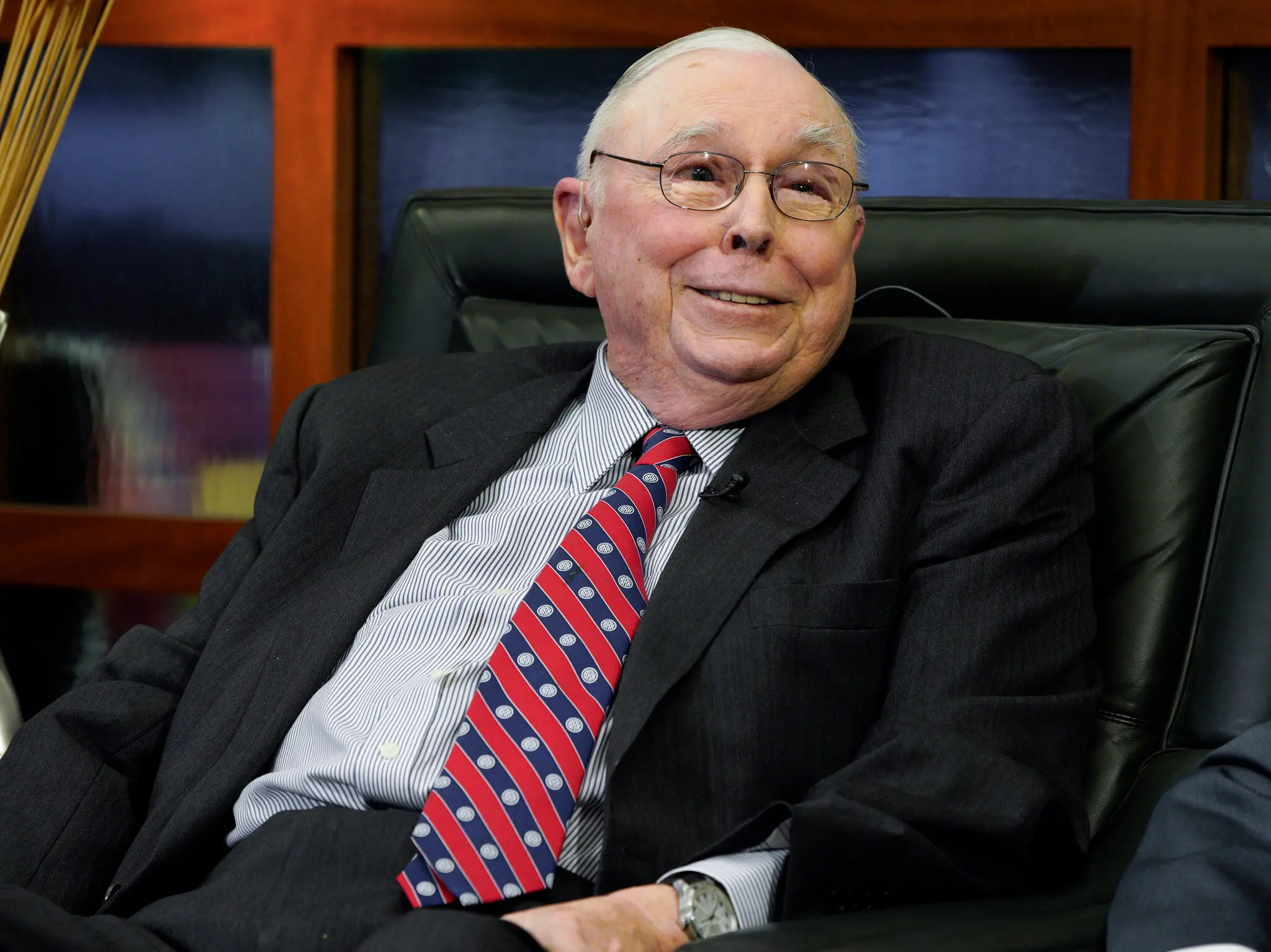
Jim Simons on April 16, 2007, in New York. (Mark Lennihan/AP)
James “Jim” Simons, a renowned mathematician who built a fortune on Wall Street and then became one of the nation’s biggest philanthropists, died May 10 at his home in Manhattan. He was 86.
The charitable foundation that Dr. Simons co-founded with his wife, Marilyn, announced the death but gave no specific cause.
Dr. Simons’s first career was in mathematics, making advances in the studies of particle physics such as quantum field theory and string theory. He led classes at the Massachusetts Institute of Technology and Harvard University before taking a job at the Institute for Defense Analyses in Princeton, N.J., as a code breaker for the National Security Agency. And from 1968 to 1978, he was chairman of the mathematics department at the State University of New York at Stony Brook.
In 1976, Dr. Simons received the American Mathematical Society’s Oswald Veblen Prize in Geometry for research that would prove to be influential to string theory and other areas of physics.
But in 1978, he traded academia for Wall Street. He leased a small office in a Long Island strip mall with the goal of using his skills in applied mathematics to guide investments in the stock market. The team he built was much like him: mathematicians, scientists and experts at prediction-based analysis using data and specialized computer coding.
The hedge fund he created, which eventually became known as Renaissance Technologies, pioneered the use of mathematical modeling — also known as quantitative trading — to pick stocks and other investments. The approach was wildly successful, helping Simons and his wife build over the years an estimated net worth of more than $30 billion.
“I wasn’t the fastest guy in the world,” Dr. Simons told the New York Times in 2014 about his problem-solving abilities in math. “I wouldn’t have done well in an Olympiad or a math contest. But I like to ponder. And pondering things, just sort of thinking about it and thinking about it, turns out to be a pretty good approach.”
James Harris Simons was born April 25, 1938, in Brookline, Mass. His father was the general manager of a shoe factory, and his mother was a homemaker. The family moved to nearby Newton while he was in high school.
As a boy, he was obsessed with logic and mathematical proofs, Dr. Simons recalled. One time his father was worried the car was close to running out of gas. Dr. Simons said he used theoretic math to explain to his incredulous father the impossibility of reaching zero.
“And I said to myself and then to him, ‘Well, you don’t have to run out of gas. You can use half of what you have, and then you can use half of that and then half of that, and you’ll never run out of gas,’” he recalled in a 2020 oral history withthe American Institute of Physics.
His practical side, however, was not as sharp. During a school break over the holidays when he was 14, he was demoted to floor sweeper at a garden supply store. He was hired for a stockroom job but he repeatedly forgot where to put items.
He graduated from MIT with a mathematics degree in 1958 and received a doctorate in math from the University of California at Berkeley in 1961. His doctoral work explored the mathematical structures of curved spaces, which Albert Einstein had used in his general theory of relativity to explain how gravity bends space and time.
At the NSA, his political views eventually clashed publicly with those of his boss, Army Gen. Maxwell D. Taylor. In 1967, Taylor defended the Vietnam War in a New York Times Magazine article. Dr. Simons published a reply, saying the war undermined U.S. security and appealing for a military pullout “with the greatest possible dispatch.”
Soon after, he was dismissed. Stony Brook University on Long Island offered him the job as head of the math department.
In 1978, Dr. Simons started his investment firm. He retired as CEO of the hedge fund in 2010, then focused on philanthropic work through the foundation he and his wife founded in 1994 to support scientists and organizations engaged in research in science, math and education.
Over the years, the couple donated billions of dollars to hundreds of philanthropic causes. In 2023, they gave $500 million through their foundation to the State University of New York at Stony Brook to support the university’s endowment and boost scholarships, professorships, research and clinical care.
Dr. Simons came in second behind only Warren Buffett in the Chronicle of Philanthropy’s list of the biggest charitable donations from individuals or their foundations in 2023.
His marriage to Barbara Bluestein, a computer scientist, ended in divorce. He married Marilyn Hawrys, an economist, in 1977. One son from his first marriage, Paul Simons, was killed in a bicycle accident in 1996; a son from his second marriage, Nicholas Simons, drowned off Bali in Indonesia in 2003.
Besides his wife, survivors include two children from his first marriage; a daughter from his second marriage; five grandchildren and one great-grandson.
In the oral history interview, Dr. Simons was asked whether he saw a religious or moral underpinning to his philanthropy.
“It’s not a spiritual framework,” he replied. “It makes me feel good, to give away this money and see that it’s going to a good cause, and in particular with science, learning things.”
Charles T. Munger in 1988. Warren Buffett described him as the originator of the company’s investing approach: “Forget what you know about buying fair businesses at wonderful prices; instead, buy wonderful businesses at fair prices.” (Bonnie Schiffman/Getty Images)
Charles T. Munger, who quit a well-established law career to be Warren E. Buffett’s partner and maxim-spouting alter-ego as they transformed a struggling New England textile company into the spectacularly successful investment firm Berkshire Hathaway, died on Tuesday in Santa Barbara, Calif. He was 99.
His death, at a hospital, was announced by Berkshire Hathaway. He had a home in Los Angeles.
Although overshadowed by Mr. Buffett, who relished the spotlight, Mr. Munger, a billionaire in his own right — Forbes listed his fortune as $2.6 billion this year — had far more influence at Berkshire than his title of vice chairman suggested.
Mr. Buffett has described him as the originator of Berkshire Hathaway’s investing approach. “The blueprint he gave me was simple: Forget what you know about buying fair businesses at wonderful prices; instead, buy wonderful businesses at fair prices,” Mr. Buffett once wrote in an annual report.
That investing strategy was a revelation for Mr. Buffett, who had made his name in the 1950s buying troubled companies at deep discounts. (He called them “cigar butts,” because investing in them, he said, was like “picking up a discarded cigar butt that had one puff remaining in it.”)
Mr. Munger counseled Mr. Buffett that if he wanted to build a large, sustainable company that would outperform other investors, he should buy solid brand-name companies. “He was the architect and I was the general contractor,” Mr. Buffett said of their relationship.
Mr. Munger, right, and Mr. Buffett in the mid- to late-1970s. “He was the architect and I was the general contractor,” Mr. Buffett said of their relationship. (Buffalo News)
The partnership, spanning more than 50 years, produced one of the most successful and largest conglomerates in history. Among other properties, Berkshire, which is based in Omaha, owns the insurance giant Geico and the Burlington Northern Santa Fe railroad company and holds stakes in Coca-Cola, American Express and other corporate heavyweights. By 2022 it had about 372,000 employees.
Mr. Munger, an erudite man who sprinkled his conversations with references to Cicero, Albert Einstein, Mark Twain and Confucius, was widely known for his witty common-sense maxims, so much so that they were called Mungerisms and collected in books, including “Poor Charlie’s Almanack: The Wit and Wisdom of Charles T. Munger” (2005).
“Envy is a really stupid sin,” goes one, “because it’s the only one you could never possibly have any fun at.” Another: “The ethos of not fooling yourself is one of the best you could possibly have. It’s powerful because it’s so rare.”
Mr. Buffett and Mr. Munger would talk to each other on the telephone for hours every day, Mr. Buffett from his office in Omaha (their mutual hometown) and Mr. Munger from Los Angeles.
“We’ve never had an argument,” Mr. Buffett said. Repeating one of Mr. Munger’s favorite lines, Mr. Buffett said that when they did differ, Mr. Munger would say, “Warren, think it over and you’ll agree with me because you’re smart and I’m right.”
Mr. Buffett and Mr. Munger were the faces of Berkshire’s annual meeting in Omaha, what became known as the Woodstock of Capitalism. They would hold forth in front of tens of thousands of rapt Berkshire shareholders, answering questions for up to six hours and dispensing their investment wisdom.
“The trouble with making all these pronouncements is people gradually begin to think they know something,” Mr. Munger told the audience in 2015. “It’s much better to think you’re ignorant.” He added, “If people weren’t so often wrong, we wouldn’t be so rich.”
Mr. Munger and Mr. Buffett appeared on giant screens at Berkshire Hathaway’s shareholder meeting in Omaha in 2015. The annual event became known as the Woodstock of Capitalism.(Nati Harnik/Associated Press)
Many of those listeners had become vastly wealthy themselves by investing with Mr. Buffett and Mr. Munger. A $1,000 investment in Berkshire made in 1964 is worth more than $10 million today.
Mr. Munger was often viewed as the moral compass of Berkshire Hathaway, advising Mr. Buffett on personnel issues as well as investments. His hiring policy: “Trust first, ability second.”
A Lawyer’s Son
Charles Thomas Munger was born in Omaha on Jan. 1, 1924, the son of Alfred Case Munger, a lawyer, and Florence (Russell) Munger. As a boy he worked Saturdays in a grocery store then owned by Mr. Buffett’s grandfather. (Mr. Buffett worked there for a time himself, but the two did not meet until much later.) At 17, Charles went to the University of Michigan to major in mathematics, but in his sophomore year, after the attack on Pearl Harbor, he enlisted in the Army Air Corps.
Promoted to second lieutenant, he was dispatched to the California Institute of Technology in Pasadena to train as a meteorologist. In Pasadena he met Nancy Huggins, daughter of a local shoe store owner, and they married, he at 21 and she at 19. They went on to have three children.
Soon he was assigned to Nome, Alaska, where he developed a talent that would serve him well.
“Playing poker in the Army and as a young lawyer honed my business skills,” Mr. Munger told Janet Lowe in her 2000 book “Damn Right! Behind the Scenes with Berkshire Hathaway Billionaire Charlie Munger.”
“What you have to learn is to fold early when the odds are against you,” he said, “or if you have a big edge, back it heavily, because you don’t get a big edge often, so seize it when it does come.
Shareholders wore badges in support of Mr. Munger at the annual meeting in 2022. (Chandan Khanna/Agence France-Presse/Getty Images)
Even before his discharge from the Army in 1946, Mr. Munger, who once said he had a black belt in chutzpah, applied to Harvard Law School, from which his father had graduated, even though he had desultory work habits and no undergraduate degree. He was accepted only after intervention by a fellow Nebraskan, Roscoe Pound, a retired dean of the school and a family friend.
Graduating with honors, Mr. Munger returned to California and began practicing law. He eventually struck out on his own by founding the law firm Munger, Tolles & Hills (now Munger, Tolles & Olson). But his life had begun to unravel: He and his wife divorced; their only son, Teddy, died of leukemia at 9 years old; and he suffered financial reverses.
With Mr. Munger practically broke, his daughter Molly complained to him about his beat-up yellow Pontiac. “Daddy, this car is just awful, a mess,” she said. “Why do you drive it?” As recounted in Ms. Lowe’s biography, he replied, “To discourage gold diggers.”
Seeking to rebuild, and drawing on his preternatural math skills (“I always took math courses because I could get an ‘A’ without doing any work,” he said), he began investing on the side, in stocks, businesses and real estate.
“It soon occurred to me that I’d rather be one of our rich and interesting clients than be their lawyer,” he said.
His investments generated his first million dollars.
Mr. Munger married Nancy Barry Borthwick in 1956, and he met Mr. Buffett by happenstance three years later. Mr. Munger had flown back to Omaha to organize the affairs of his recently deceased father when he was invited to lunch at the local Omaha Club. There he was introduced to Mr. Buffett by a mutual friend.
Later that week, Mr. Munger attended a dinner party to which Mr. Buffett had also been invited. They hit it off and spent the evening talking. Mr. Buffett later recalled, “He was rolling on the floor laughing at his own jokes, and I thought, ‘That is my kind of guy.’ I do the same thing.”
Days later, they and their wives went to lunch at Johnny’s Cafe.
As quoted in “The Snowball,” Alice Schroeder’s 2008 biography of Mr. Buffett, Nancy Munger at one point asked her husband, “Why are you paying so much attention to him?” Mr. Munger replied: “You don’t understand. That is no ordinary human being.”
‘A Passion to Get Rich’
The men soon found themselves on the phone nearly every day talking about investing strategies. “Warren obviously had a better business model than I did,” Mr. Munger said, referring to his billing by the hour for his legal services. “He kept pointing out to me that I had an insane way of making a living, and that his was better and that I should do what he was doing.”
Mr. Munger was won over. “Like Warren, I had a considerable passion to get rich,” Mr. Munger was quoted as saying in Roger Lowenstein’s book “Buffett: The Making of an American Capitalist” (1995). “Not because I wanted Ferraris — I wanted the independence. I desperately wanted it. I thought it was undignified to have to send invoices to other people.”
Mr. Munger began investing side by side with Mr. Buffett, in companies like Wesco Financial and See’s Candies, before officially joining him as vice chairman. For the first year, he said, “I kept one toe in the law firm in case my capitalist career cratered.”
Together they built Berkshire into a $500 billion-plus juggernaut whose original shares posted annual gains averaging 21.6 percent between 1965 and 2014, more than twice the 9.9 percent rise for the Standard & Poor’s 500. (The company got its name when, early on, Mr. Buffett took over a fading Massachusetts textile manufacturercalled Berkshire Hathaway.)
Mr. Munger in 2018. He said his biggest mistakes were not bad investments, but investments Berkshire failed to make. (Nati Harnik/Associated Press)
The money Mr. Munger made far surpassed his greatest expectations, he said, but it could have been even more. He said his biggest mistakes were not bad investments, but investments Berkshire failed to make.
He and Mr. Buffett “were offered a stake in McDonald’s way early” and decided against it, he said.
“We should have bought a big block of Wal-Mart young,” he added. “That was billions that we should’ve made. We avoided the pharmaceutical industry entirely, and it was the easiest industry to make a lot of money out of all the ones around, and we never made a nickel out of it.”
Mr. Munger used his many nickels for an unusual philanthropic passion: architecture. He gave away hundreds of millions of dollars to university architecture projects, including $65 million for the Kavli Institute for Theoretical Physics at the University of California, Santa Barbara.
At least one of his projects caused controversy: His design for a windowless dorm room building at the Santa Barbara campus, for which he contributed $200 million, was criticized by some architects and students. He defended it as efficient and effective.
Active Into His 90s
Mr. Buffett remained a vocal proponent of philanthropy through his Giving Pledge, an organization he founded with Bill and Melinda Gates to persuade billionaires to give away at least half their fortunes. But Mr. Munger was conspicuously not on the list. He said it was not that he did not want to sign the pledge. He said his wife, Nancy, who died in 2010 at 86, had wanted her half of the estate passed to the children, “and so I more than did that.” He added: “I felt it would be hypocritical for me to be a big pledger. I’ve already violated the total spirit of it.”
Mr. Munger is survived by two daughters from his first marriage, Wendy and Molly Munger; a daughter from his second marriage, Emilie Munger Ogden; three sons from that marriage, Charles Jr., Barry and Philip; two stepsons, William and David Borthwick; 15 grandchildren; and seven great-grandchildren.
A treasured retreat of his was a northern Minnesota wilderness compound on Star Island in Cass Lake, where his grandparents began summering in 1932 and which became the extended-family seat. In addition to Los Angeles, he had a home in Hawaii.
Under Mr. Buffett and Mr. Munger, Berkshire invested heavily in newspapers, among them The Washington Post, The Buffalo News and The Omaha World-Herald. Mr. Munger himself was the chairman of the Daily Journal Corporation, a newspaper publisher, from 1977 to 2022.
He remained active in Berkshire Hathaway into his 90s while serving for decades as chairman of Good Samaritan Hospital in Los Angeles, to which he lavishly donated. A Republican, he was also outspoken in support of Planned Parenthood.
Perhaps in another life Mr. Munger, with all his drive and self-assurance, would have been the chief of a giant corporation. But he had no regrets about making his fortune in the shadow of Mr. Buffett.
“I didn’t mind at all playing second fiddle to Warren,” he said in an interview for this obituary. “Ordinarily, everywhere I go I am very dominant, but when somebody else is better, I’m willing to play the second fiddle. It’s just that I was seldom in that position, except with Warren. But I didn’t mind it at all.”
Academy Award-winning actor and environmental philanthropist Leonardo DiCaprio has once again expanded his already sprawling Los Angeles compound — this time by acquiring his next-door neighbor’s home for $10.5 million in a discreet, off-market deal finalized earlier this month.
The newly acquired residence is located in the prestigious Bird Streets of the Hollywood Hills, an enclave famous for its panoramic city views, celebrity residents, and exclusive multi-million-dollar estates. According to property records and aerial photos, the salmon-colored home spans over 3,500 square feet, offering four bedrooms, four bathrooms, a long driveway, and a private swimming pool — all tucked behind thick hedges and mature landscaping for maximum privacy.
The purchase, completed via a limited liability company linked to DiCaprio’s cousin and long-time business partner, Robert Hrtica, was not publicly listed on the open market, underscoring the private nature of the deal. Property insiders say the actor is strategically assembling a private compound with increasing autonomy and seclusion in one of LA’s most exclusive neighborhoods.
According to Dirt.com, which first reported the sale, this latest acquisition brings DiCaprio’s Bird Streets estate to a total of five adjoining parcels — a massive footprint that now stretches across more than five acres in one of the most expensive zip codes in the city.
The newly added house, originally built in 1963, is positioned on the northern boundary of DiCaprio’s existing estate, which began in the late 1990s when he famously purchased a property from pop icon Madonna for $2.5 million. That transaction marked the beginning of what has become one of Hollywood’s most valuable private estates.
The new purchase may also serve a strategic purpose beyond luxury. DiCaprio has had a turbulent history with some of his neighbors. In 2007, a lawsuit was filed against him alleging negligence during the construction of a basketball court, which neighbors claimed destabilized their property. The suit was settled out of court in 2009, but tensions lingered in the neighborhood for years. Expanding his property further could be a move to avoid future disputes — or perhaps a way to control the environment around him.
The Hollywood icon, 48, is no stranger to real estate dealings. Just earlier this year, DiCaprio offloaded the storied Red Oak Manor in Los Feliz — a nearly 100-year-old English Tudor-style home — which had been listed for $4.9 million, as reported by Mansion Global. He originally acquired that home from musician Moby in 2018 for $4.19 million, according to LA County records.
Over the past two decades, DiCaprio has built a diverse real estate portfolio that includes properties in Malibu, Palm Springs, and New York City, in addition to international holdings. He is known to prefer eco-conscious renovations and historically significant properties, often seeking homes with character and privacy.
Despite broader cooling in the U.S. housing market due to rising interest rates and tighter lending policies, Los Angeles’ ultra-luxury sector — especially areas like Hollywood Hills, Bel-Air, and Beverly Hills — continues to attract wealthy buyers who often purchase properties in all-cash deals.
According to Miller Samuel and Douglas Elliman’s Q2 2025 report, Los Angeles’ ultra-luxury market saw a 7.3% year-over-year increase in sales volume in the $10M+ category, with a total of 82 homes sold over $10 million in the last quarter. DiCaprio’s $10.5 million transaction aligns with the market’s ongoing strength among high-net-worth individuals and celebrities looking to consolidate or expand their private estates.
“These buyers aren’t influenced by mortgage rates. They’re playing a different game — expanding land, combining parcels, creating mega-compounds,” said Josh Flagg, a top agent at Douglas Elliman Beverly Hills, speaking to The New York Budgets.
While Leonardo DiCaprio is one of the most recognizable faces in the world, his real estate behavior is that of a person who highly values privacy and seclusion. His representatives did not return requests for comment on the recent purchase, and no plans for renovations or public architectural filings have surfaced so far.
Aerial views show that the newly acquired property blends seamlessly into the rest of his Hollywood Hills domain. The salmon-pink exterior and classic mid-century architecture are consistent with many of the original homes built during the area’s development in the 1960s.
What began as a single property next to Madonna’s mansion in the 1990s has grown into a five-parcel celebrity fortress, showcasing Leonardo DiCaprio’s long-term real estate vision. With a deep interest in climate advocacy and urban preservation, it remains to be seen whether DiCaprio will modernize the home with sustainable upgrades — as he’s done with past properties — or preserve its original charm as part of a larger estate aesthetic.
Regardless, the actor’s recent acquisition further cements his place not only as a cinematic legend but as one of LA’s most strategic and influential landowners.
Mike Lynch, the British tech billionaire and founder of software company Autonomy, has lost his legal battle in the UK to appeal his extradition to the United States, where he faces a criminal trial over Hewlett-Packard’s ill-fated $11 billion acquisition of his company in 2011.
The UK High Court on Friday dismissed Lynch’s latest appeal, reaffirming the 2021 decision that allowed his extradition. The ruling marks a significant escalation in one of the most high-profile white-collar criminal cases involving transatlantic tech and finance sectors in recent memory.
Hewlett-Packard (HP) acquired UK-based Autonomy in 2011 for $11 billion in a bid to transform its business through software innovation. But just a year later, HP wrote down the value of the acquisition by $8.8 billion, claiming that Autonomy had fraudulently inflated its revenues and misrepresented its financials. The deal, once hailed as a cornerstone of HP’s global strategy, instead became a costly and controversial blunder.
The U.S. Department of Justice charged Lynch with 17 criminal counts, including conspiracy to commit wire fraud and securities fraud. Prosecutors allege that Autonomy’s accounting practices misled HP, resulting in a $5 billion overpayment. Lynch has denied any wrongdoing, asserting that HP mismanaged the integration and failed to understand Autonomy’s business.
Legal Challenges and Extradition Battle
Lynch’s legal team had argued that since Autonomy was a UK-listed company with operations, audits, and board oversight based in the UK, the case should be tried in British courts. His attorneys also cited that much of the alleged misconduct took place in the UK and that the Serious Fraud Office (SFO) had not ruled out pursuing charges domestically.
But the High Court rejected these arguments, siding with U.S. prosecutors and emphasizing that the majority of Autonomy’s revenue came from the U.S., making it an appropriate jurisdiction. “The case should be prosecuted in the U.S. as most of Autonomy’s revenues came from the U.S.,” the judges wrote in their opinion.
This decision means Lynch is now set to be extradited to California, where he will face a jury trial alongside evidence and witnesses previously examined in a related civil case.
Lynch’s Dual Legal Battle
In addition to the criminal trial, Lynch has already suffered a major defeat in the civil courts. In 2022, he lost a $5 billion civil fraud lawsuit brought by Hewlett Packard Enterprise (HPE)—a successor to HP following its 2015 corporate split. That case involved similar allegations and relied on many of the same witnesses expected to testify in the U.S. criminal trial.
Autonomy’s former CFO, Sushovan Hussain, was previously convicted in the U.S. and is currently serving a five-year prison sentence after being found guilty of fraud in 2018.
Lynch remains defiant. In a statement issued through a spokesperson, he said he was “very disappointed” with the ruling and criticized what he views as U.S. legal overreach into British jurisdiction. “The United States’ legal over-reach into the UK is a threat to the rights of all British citizens and the sovereignty of the UK,” he added.
He confirmed he will consider further appeals, including to the European Court of Human Rights.
The case has drawn intense scrutiny from business leaders, legal scholars, and market regulators on both sides of the Atlantic. It has become a cautionary tale for international mergers and acquisitions, especially those involving companies with complex cross-border financials and accounting systems.
The HP-Autonomy saga has long haunted HP’s reputation and investor confidence. While HP Inc. (which now focuses on computers and printers) has distanced itself from the deal, HPE (Hewlett Packard Enterprise), which manages enterprise services and cloud infrastructure, has remained active in seeking legal recourse.
Investors and corporate executives are closely watching Lynch’s criminal trial, which could influence future regulations on tech sector acquisitions, due diligence standards, and financial transparency in international transactions. Any developments may also affect investor sentiment toward UK-based tech firms involved in U.S. business deals.
SAN JOSE, Calif. — Elizabeth Holmes, the founder of the failed blood-testing start-up Theranos, was sentenced to more than 11 years in prison on Friday for defrauding investors about her company’s technology and business dealings.
The sentence capped a yearslong saga that has captivated the public and ignited debates about Silicon Valley’s culture of hype and exaggeration. Ms. Holmes, who raised $945 million for Theranos and promised that the start-up would revolutionize health care with tests that required just a few drops of blood, was convicted in January of four counts of fraud for deceiving investors with those claims, which turned out not to be true.
Judge Edward J. Davila of the U.S. District Court for the Northern District of California sentenced Ms. Holmes to 135 months in prison, which is slightly more than 11 years, followed by three years of supervised release. Ms. Holmes, 38, who plans to appeal, must surrender to custody on April 27, 2023.
In the courtroom on Friday, Ms. Holmes — who appeared with a large group of friends and family, including her parents and her partner, Billy Evans — cried when she read a statement to the judge.
“I am devastated by my failings,” she said. “I have felt deep pain for what people went through because I failed them.”
Ms. Holmes, who has a 1-year-old son and is pregnant with her second child, apologized to the investors, patients and employees of Theranos. She said she had tried to realize her dream too quickly and do too many things at once. She ended with a quotation from the poet Rumi and a promise to do good in the world in the future.
Though federal sentencing guidelines for wire fraud of the size that Ms. Holmes was convicted of recommend a maximum of 20 years in prison, a probation officer assigned to the case proposed nine years. Her lawyers had asked for just 18 months of house arrest, while prosecutors sought 15 years and $804 million in restitution for 29 investors.
Prosecutors had urged Judge Davila to consider the message that her case would send to the world. In court filings, they wrote that a long sentence for Ms. Holmes was important to “deter future start-up fraud schemes” and “rebuild the trust investors must have when funding innovators.”
Jeffrey Cohen, an associate professor at Boston College Law School and a former federal prosecutor, said it was somewhat surprising for a sentence to go beyond a probation report’s recommendation, but the high-profile nature of Ms. Holmes’s case had made it a symbol. The sentence also showed that courts take fraud seriously, he added.
“We rarely see these kinds of prosecutions,” he said.
Ms. Holmes’s case has taken on an almost mythic status among white-collar crimes. Few start-up founders reached the level of prominence that she did, appearing on magazine covers, dining at the White House and hitting a paper net worth of $4.5 billion. Since Theranos’s fraud was exposed in 2015, Ms. Holmes’s story has been told in podcasts, TV shows, books and documentaries.
Ms. Holmes with her parents and Mr. Evans before her sentencing on Friday. Theranos shut down in 2018. (Jim Wilson/The New York Times)
Exaggeration and hype are common among tech start-ups, but very few executives are indicted on fraud charges, let alone convicted and sent to prison. That trend may be changing as the Justice Department has said it plans to be more aggressive in its pursuit of white-collar criminals.
In October, Trevor Milton, the founder of the electric vehicle company Nikola, was convicted of fraud. And Sam Bankman-Fried, the founder of the cryptocurrency exchange FTX, which collapsed in bankruptcy last week, is under multiple state and federal investigations.
In court on Friday, Judge Davila asked if any victims of Ms. Holmes were present. A man in a blue suit stood up and introduced himself as Alex Shultz, the son of George Shultz, the former secretary of state who served on Theranos’s board and who died in 2021, and the father of Tyler Shultz, a Theranos employee who helped expose the fraud.
His voice shaking, Alex Shultz described how Ms. Holmes had nearly “desecrated” his family after she suspected Tyler Shultz of speaking to the media about Theranos. She hired private investigators to stalk them, threatened legal ruin and “took advantage of my dad,” Alex Shultz said.
Jeffrey Schenk, an assistant U.S. attorney and a lead prosecutor, criticized Ms. Holmes’s argument that Theranos’s failure was typical of a high-risk, ambitious Silicon Valley start-up. “It is a logical fallacy to suggest that start-ups fail, Theranos was a start-up, and, therefore, Theranos failed because it was a start-up,” he said. “That is not true.”
Kevin Downey, a lawyer for Ms. Holmes, said in court that because she had never cashed out her Theranos stock, there was no evidence of greed, like yachts, planes, large mansions and parties.
“We have a conviction for a crime where the defendant’s motive was to build technology,” he said.
Asking for leniency, Ms. Holmes submitted more than 100 letters of support from figures including Stanford professors, venture capital investors and Senator Cory Booker, Democrat of New Jersey, which painted her as a virtuous person who was a victim of circumstances.
“Much has been written in the media and addressed in the trial about the company and its failure,” Christian Holmes, her father, wrote in one letter. “Little has been said about the innovation Elizabeth strived for, sacrificed and accomplished in order to help the company continue.”
Ms. Holmes will be assigned to a prison by the Federal Bureau of Prisons based on factors such as location, space, her lack of criminal history and the nonviolent nature of her crime. The minimum security prison nearest to Ms. Holmes’s residence in Woodside, Calif., is likely the Federal Correctional Institution in Dublin.
Theranos created a machine that it claimed could run more than 1,000 tests on a drop of blood. It struck partnerships with major grocery chains to build test centers in their stores. (Jim Wilson/The New York Times)
Ms. Holmes’s dramatic rise and fall began more than a decade after she dropped out of Stanford University to create Theranos in 2003, a start-up that aimed to revolutionize health care with better diagnoses of illnesses. The company created a machine that it claimed could run more than 1,000 tests on a drop of blood and struck partnerships with major grocery chains to build test centers in their stores. Ms. Holmes also claimed the company’s technology was endorsed by pharmaceutical companies and used on battlefields in Afghanistan.
None of those claims turned out to be true.
Theranos’s deceptions were exposed by The Wall Street Journal in 2015, and a government inspection shut down the company’s lab soon after. Theranos dissolved in 2018, the year Ms. Holmes and her business partner, Ramesh Balwani, were indicted on fraud charges.
In July, Mr. Balwani was found guilty of 12 counts of fraud in a separate trial. He is set to be sentenced on Dec. 7. Ms. Holmes, who argued to separate the cases, did not cooperate with prosecutors on his case.
At her trial last year, Ms. Holmes testified for seven days, the only time she had spoken publicly about what had happened at Theranos since the company collapsed. She expressed regret for her harsh treatment of whistle-blowers and journalists who investigated the company, as well as for falsifying scientific research documents.
She blamed others at Theranos for many of the company’s shortcomings and said her exaggerations were simply painting a picture of the future that investors wanted to hear. “They weren’t interested in today or tomorrow or next month. They were interested in what kind of change we could make,” she said.
She also accused Mr. Balwani, whom she dated for more than a decade, and who is more than 20 years older than she is, of emotional and sexual abuse. Mr. Balwani has denied the accusations.
Ultimately, a jury concluded that Ms. Holmes was guilty of defrauding three of its largest investors and of conspiring to do so. After the verdict, Ms. Holmes made numerous attempts to get a new trial. She was denied.
Before he imposed his sentence, Judge Davila pondered Silicon Valley’s ethos and what had driven Ms. Holmes to commit fraud.
“Was there a loss of moral compass here? Was it hubris? Was it intoxication with the fame that comes with being a young entrepreneur?” he asked. He drew a distinction between investors who take big risks backing ambitious founders and those who don’t know that they are being lied to.
“The tragedy in this case,” he concluded, “is that Ms. Holmes is brilliant.”
(Joe Sohm/Visions of America/Universal Images Group/Getty Images)
When the 10-year anniversary of the 9/11 attacks approached in 2009, the Port Authority of New York and New Jersey assembled an Archive Committee to collect, catalog and disseminate material recovered from the World Trade Center site. The collection reflected the range of victims of the attacks: broken eyeglasses and office supplies from those who worked in the buildings, crushed fire and police vehicles from those who raced in to save them.
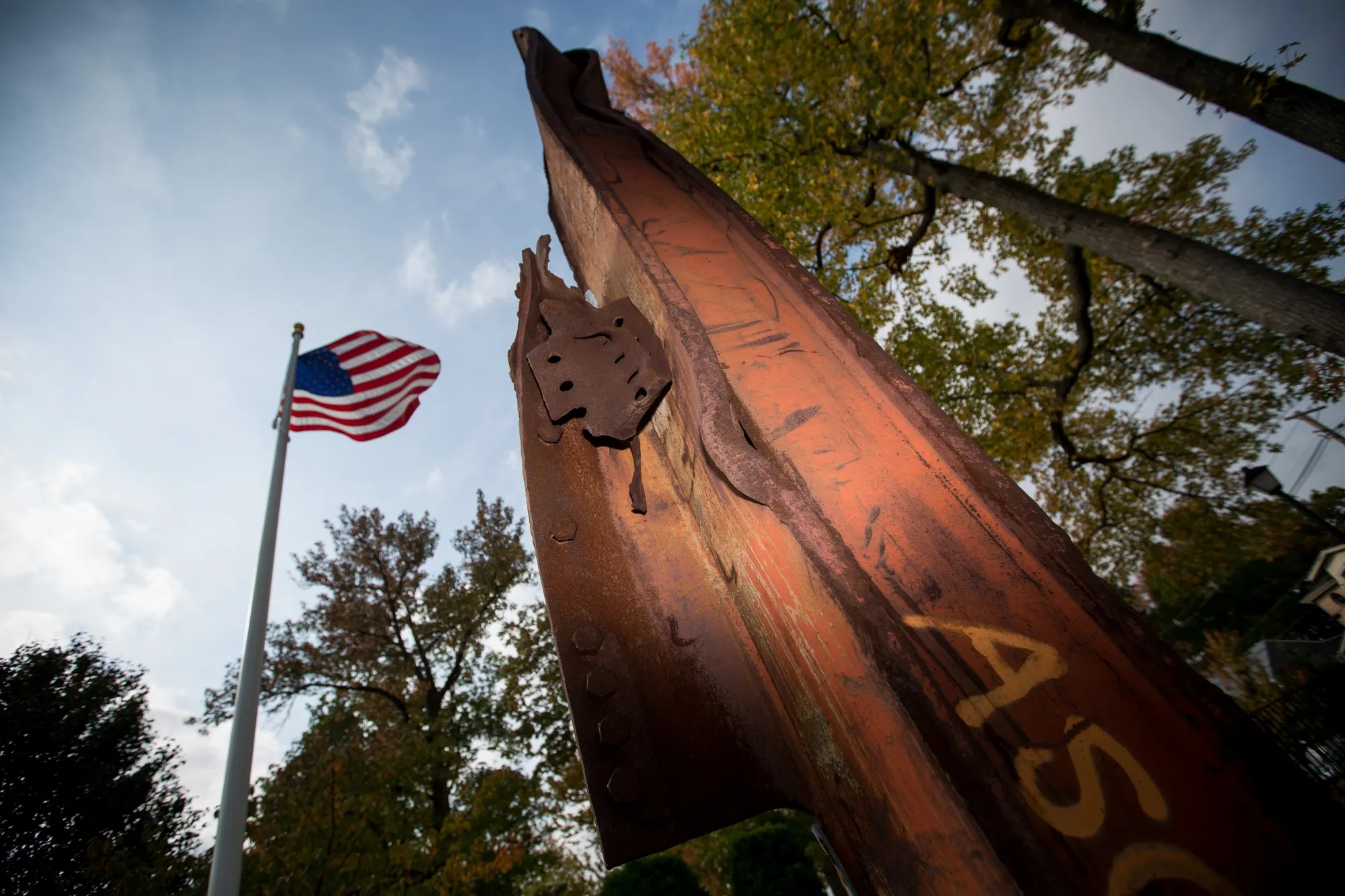
An American flag flies behind steel from the World Trade Center at Constitution Park in Fort Lee, New Jersey — one of many local memorials to the Sept. 11 attacks across the U.S. (Michael Nagle/Bloomberg)
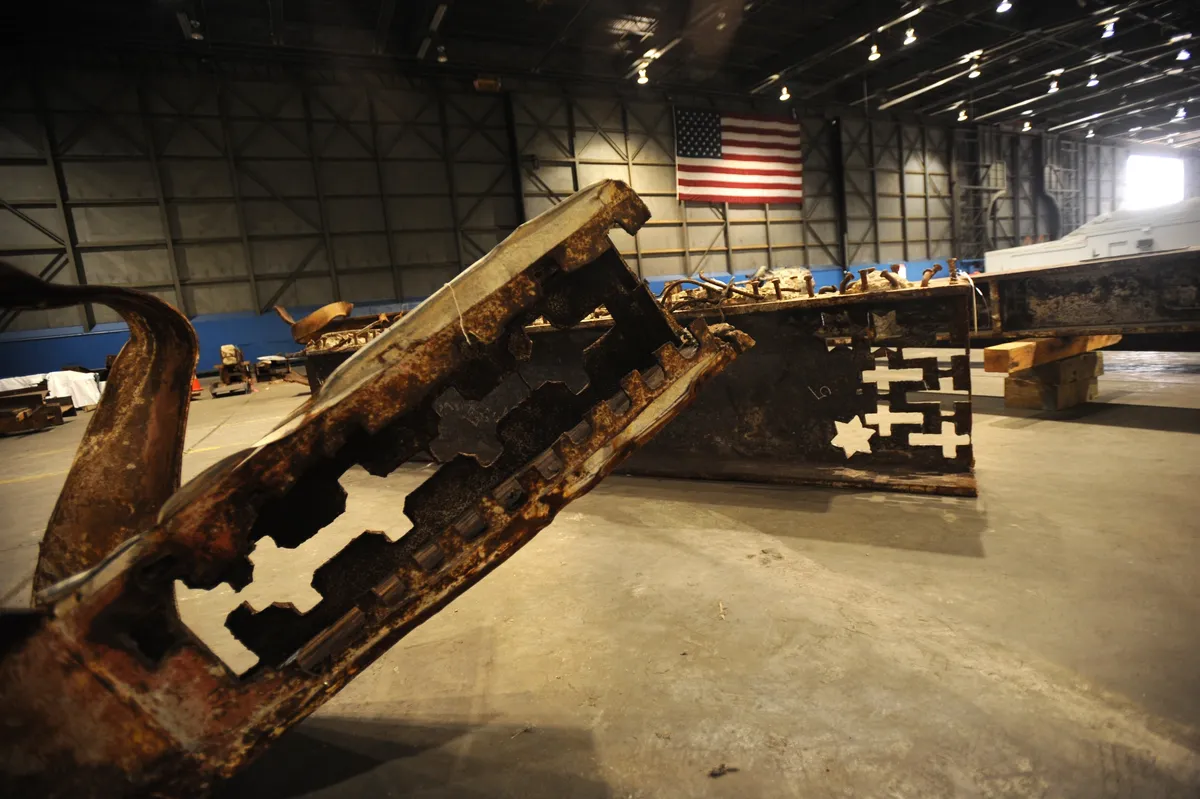
But most of the collection was metal: 7,000 tons of steel from the Twin Towers themselves, stored in a hangar at JFK airport in Queens, New York. This trove became the raw material for a campaign of memorial-making. In a program that lasted until 2016, the Port Authority solicited requests for World Trade Center artifacts from fire and police departments, libraries, small-town museums, military and veteran organizations, and local governments, along with other interested groups.
Artifacts from the World Trade Center site are stored in Hangar 17 at John F. Kennedy Airport in Queens in 2011. (Jennifer S. Altman /The Washington Post via Getty Images)
“The process of this steel’s salvage and distribution across the United States speaks to the persistent social and political power of relics — parts of bodies or objects imbued with auras from another realm,” write Samuel Holleran and Max Holleran in Places Journal. The Melbourne-based brothers — a visual artist and urban sociologist at the University of Melbourne, respectively — sifted through newspaper clips and official documents to track down the fate of about 1,800 steel fragments that were distributed by the Port Authority during the life of the archive program, to chronicle the World Trade Center’s second life.
“The attack was so televisual, and the image of the towers became so painful and charged, we were curious as to how communities could honor the buildings without showing them,” Samuel Holleran told CityLab in an email.
A World Trade Center memorial by artist Heath Satow in Rosemead, California. The sculpture contains 2,976 stainless-steel doves, representing victims of the 2001 attacks, welded together to create a pair of giant hands lifting a twisted steel beam from the towers. (Frederick J. Brown/AFP via Getty Images)
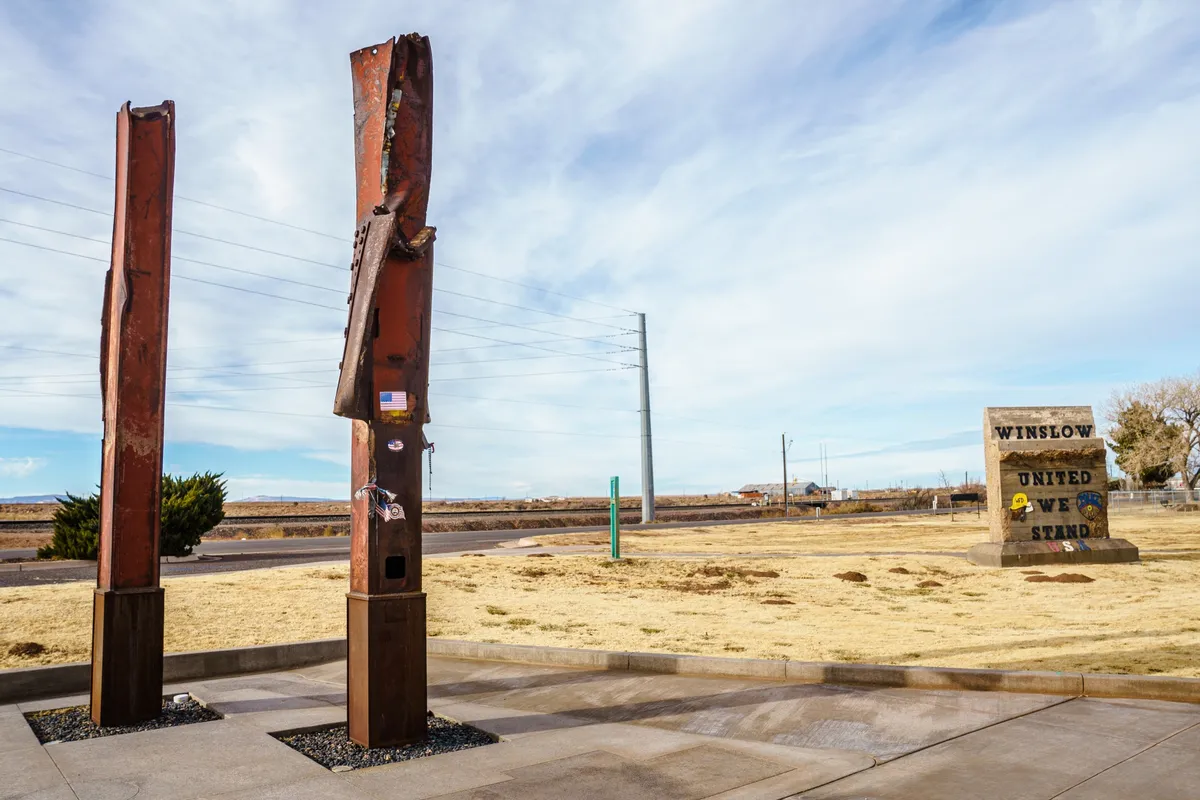
Most of these chunks of I-beams and scraps of scorched steel were used to create small 9/11 memorials scattered around the country. “Only a few of the American memorials are in major cities,” they write. “Most have been erected in liminal spaces between suburban office parks and parking lots, at the centers of traffic circles, outside public buildings in small towns.”
The geography of World Trade Center remnants, they discovered, is surprisingly broad. New York City and the immediate region received the largest share of artifacts, unsurprisingly, but fragments were distributed to all 50 states. There are also memorials built around WTC steel in Canada, Germany, Italy, England and Israel. U.S. military bases in South Korea and Afghanistan received 9/11 steel, too.
Most memorials, they note, pay tribute to firefighters and police departments rather than those who worked and died in the towers. The authors speculate that 9/11-relic-based monuments emerged in the wake of the attacks in part because so few human bodies, alive or dead, were pulled from the wreckage; the steel itself served as stand-ins for everything that families and loved ones could not recover: “Even in our globalized digital age, the demands of memory remain stubbornly tactile, and alternative death rites were needed.”
A 9/11 memorial in Winslow, Arizona. (Josh Brasted/Getty Images North America)
But the spread of WTC artifacts and their incorporation into public spaces nationwide also reflects the sheer significance and scale of the event. “For Americans who couldn’t make it to Manhattan, the dispersal of steel around the country helped to turn the loss of a distinctly New York icon into a ‘national sorrow’ akin to the assassination of a president,” the Hollerans write.
This dispersal was far wider than the physical footprint of the memorials themselves. Only a tiny portion of the World Trade Center’s massive steel skeleton ended up in the Port Authority’s archive: More than a million tons of debris ended up in a landfill in Staten Island, and the city sold 200,000 tons of structural steel in the international scrap metal market. “By the first anniversary of the attack,” the Hollerans write, “most of the WTC’s metal frame was beginning a new life in Asia, recast as cladding, rebar, even cookware.”
In a sense, that process of creation and change continues two decades later; in various forms, the towers endure.
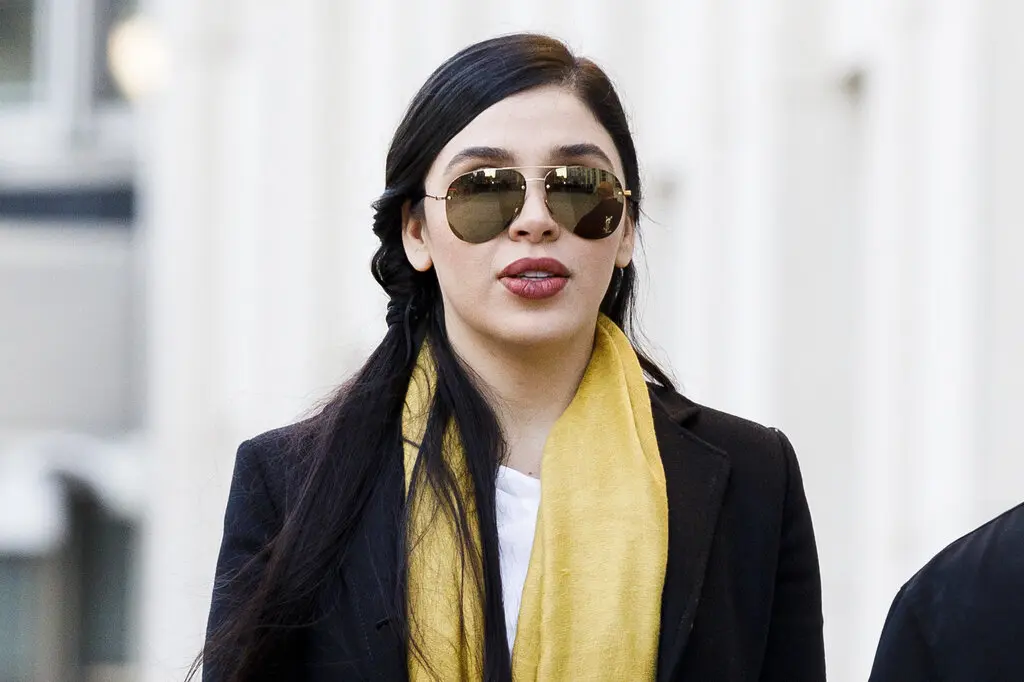
Emma Coronel Aispuro, the wife of Mexico’s most notorious drug trafficker, best known as El Chapo, was arrested Monday and charged with helping her husband run his multibillion-dollar criminal empire and plotting to break him out of prison after he was captured in 2014.
Ms. Coronel, a former beauty queen, had been under investigation for at least two years by U.S. federal authorities for being an accomplice to her husband, Joaquín Guzmán Loera, who was convicted in 2019 at a trial in Brooklyn of masterminding a huge drug conspiracy and was subsequently sentenced to life in prison.
Court documents filed in Ms. Coronel’s case said she relayed messages for Mr. Guzmán that helped him make drug shipments from 2012 to 2014 and evade capture by the legions of American and Mexican authorities who had been pursuing him for years. Evidence emerged at Mr. Guzmán’s trial that Ms. Coronel was also a chief conspirator in a sophisticated plot to break him out of the Altiplano prison in Mexico by digging a nearly mile-long tunnel into the shower of his cell.
Ms. Coronel, 31, is a dual U.S.-Mexican citizen with roots in both Southern California and the city of Culiacán in Mexico’s Sinaloa State, which has long served as the base of operations for Mr. Guzmán’s drug organization, the Sinaloa cartel. She was taken into custody at Dulles International Airport, near Washington, and is scheduled to make an initial appearance on Tuesday in the U.S. District Court for the District of Columbia. Her lawyer, Jeffrey Lichtman, who also represented Mr. Guzmán, declined to comment on the arrest.
While it is unusual for law enforcement officials to go after the spouses of drug-world figures, prosecutors at Mr. Guzmán’s trial offered substantial evidence that Ms. Coronel, unlike other wives of narco-traffickers, was deeply enmeshed in her husband’s criminal business.
They introduced BlackBerry messages that made clear that she had helped Mr. Guzmán conduct his operations — sometimes with her own father. Other messages indicated that she was intimately involved not only in Mr. Guzmán’s famous 2015 tunnel escape from Altiplano, but also in helping him to evade capture by American and Mexican authorities after a botched raid in 2012 in the Mexican resort town Cabo San Lucas.
At Mr. Guzmán’s trial, his onetime chief of staff, Dámaso López Núñez, told the jury that Ms. Coronel had sought to help her husband escape yet again after he was recaptured in 2016 and returned to Altiplano. According to testimony by Mr. López, Ms. Coronel hatched a plot to bribe Mexico’s top prison official, but before the plan could be carried out Mr. Guzmán was extradited to the United States to stand trial.
Ms. Coronel, who is Mr. Guzmán’s third — or possibly fourth — wife and the mother of two of his numerous children, grew up in the drug business. Court filings note that her father, Inés Coronel Barreras, who was taken into custody in 2013 in Mexico, was one of Mr. Guzmán’s top lieutenants.
Prosecutors have brought charges against several members of Mr. Guzmán’s nuclear family. His two eldest sons, Jesús Alfredo Guzmán Salazar and Ivan Archivaldo Guzmán Salazar, who remain at large in Mexico, have been under indictment in the United States for years. Two of his younger sons, Joaquín Guzmán López and Ovidio Guzmán López, were charged in Washington just days after their father’s conviction and also remain fugitives.
The F.B.I. said Ms. Coronel married Mr. Guzmán in about 2007. The wedding — in the rough mountain country outside Culiacán — took place when Ms. Coronel was 17 and Mr. Guzmán was more than twice her age.
In an interview with The New York Times during Mr. Guzmán’s trial, Ms. Coronel stuck up for her husband, saying that she did not recognize him as the drug lord prosecutors had portrayed him as. “I admire him as the human being that I met,” she said, “and the one that I married.”
She was a constant presence in the courtroom in New York during the three-month trial, often showing up in the latest designer fashions. Fiercely loyal to her husband — despite his serial philandering — Ms. Coronel orchestrated one of the trial’s most dramatic nonlegal moments, sending a message to one of Mr. Guzmán’s mistresses, Lucero Guadalupe Sánchez López, who appeared one day as a witness.
After Ms. Sánchez López proclaimed her love for Mr. Guzmán from the stand, Ms. Coronel arranged for her husband to arrive in court next day wearing a burgundy velvet smoking jacket, identical to the one she was wearing. It was a signal that Ms. Coronel was Mr. Guzmán’s wife and that Ms. Sánchez López, in her blue prison uniform, was merely the other woman.
It remained unclear on Monday night why federal authorities arrested Ms. Coronel now after implicating her in her husband’s crime more than two years ago.
Open-source artificial intelligence (AI) refers to AI software, tools, models, and datasets that are publicly available for anyone to use, modify, and distribute—usually under an open-source license. Unlike proprietary AI systems, which are controlled and distributed by a single company, open-source AI encourages transparency, collaboration, and innovation by allowing developers, researchers, and organizations to access the technology’s inner workings.
Key Characteristics of Open-Source AI
Publicly Accessible Code The source code for an open-source AI system is openly available, allowing anyone to review how it works, make modifications, or build upon it.
Collaborative Development Contributions can come from a global community of developers, researchers, and companies, leading to rapid improvements and diverse perspectives in problem-solving.
Open Licensing Open-source AI is distributed under licenses such as MIT, Apache 2.0, or GNU General Public License (GPL), which define how the software can be used, modified, and redistributed.
Transparency and Trust By allowing public access to algorithms and training methods, open-source AI makes it easier to detect bias, improve accuracy, and ensure ethical use.
Examples of Open-Source AI Projects
TensorFlow – An open-source machine learning framework developed by Google.
PyTorch – A deep learning framework originally created by Facebook’s AI Research lab.
Hugging Face Transformers – A library for natural language processing (NLP) models like BERT and GPT.
Stable Diffusion – An open-source image generation model that allows users to create AI-generated art.
Scikit-learn – A popular machine learning library for data analysis and predictive modeling.
Benefits of Open-Source AI
Cost-Effective – Reduces the cost barrier for startups, researchers, and students.
Faster Innovation – Global collaboration accelerates development.
Customizability – Users can adapt the AI to their unique needs.
Ethical Oversight – Transparency allows communities to identify and fix harmful or biased behavior in AI systems.
Challenges of Open-Source AI
Security Risks – Open code can be exploited for malicious purposes.
Misuse Potential – Powerful AI models can be repurposed for harmful applications.
Lack of Centralized Support – Users may rely on community help instead of official customer service.
The Future of Open-Source AI
Open-source AI is likely to play a major role in democratizing AI technology. As major companies like Meta, Google, and Microsoft experiment with partially open models, and as communities like Hugging Face expand, we can expect open-source AI to become even more influential in research, business, and creative industries.
However, debates around regulation, safety, and intellectual property will shape how freely AI models can be shared in the coming years. Balancing innovation with responsibility will be the key challenge.
Open-source AI is transforming the AI landscape by making powerful technology accessible to everyone. It promotes transparency, innovation, and collaboration—while also requiring careful oversight to prevent misuse. In the right hands, it can be one of the most powerful forces driving technological progress in the 21st century.
Michael Cohen once famously said he’d take a bullet for Donald Trump — even though his position as Trump’s personal lawyer hardly required that type of life-on-the-line loyalty. As things turned out, Cohen didn’t really mean it, but by then his life and livelihood had been torn apart because of his extreme fealty to Trump, which earned him tens of millions of dollars but then backfired in spectacular fashion.
In stark contrast, a senior Secret Service agent whose job is literally to take a would-be assassin’s bullet for the president defiantly told colleagues and friends just a few weeks before the 2016 election that she’d refuse to do any such thing for Trump.
As with Cohen, the agent’s life has been irrevocably changed by her public remarks about Trump. But Kerry O’Grady, the Secret Service agent in question, has emerged from the entire spectacle virtually unscathed financially despite the black mark on her law enforcement reputation.
Although she is leaving the Secret Service, O’Grady appears to have quietly settled a disciplinary action against her and is poised to walk away with her federal government pension intact. In early 2017, shortly after media reports surfaced about her incendiary comments, O’Grady was removed as head of the Secret Service’s Denver field office while her she was investigated for possible misconduct.
She contested the disciplinary measures taken against her and appears to have settled her case with the Department of Homeland Security in October 2017. Before that settlement, she was on paid administrative leave, and afterward remained on either paid or unpaid leave and is set to retire with a taxpayer-funded pension in roughly three weeks, according to sources close to the Secret Service and a public settlement decision between O’Grady and DHS.
Earlier this month, the human resources department of the Secret Service sent an internal notice to all employees announcing O’Grady’s retirement, effective March 20. The notice was then deleted a few days later, fueling agency-wide speculation about O’Grady’s actual status.
A Secret Service spokesperson on Wednesday declined to comment on O’Grady’s retirement plans, saying only that the agency does not discuss personnel matters.
The retirement announcement has again roiled the agency over its handling of the discipline charges against O’Grady, whose case has been followed closely by agents since she first made the incendiary Facebook comments about Trump.
Most fellow agents did not know the outcome of the investigation into O’Grady’s misconduct because there was a shroud of secrecy hanging over it. Several agents and other employees who tried to look up her employment status on an internal Secret Service database of active agents were hauled before higher-ups and warned not to discuss the case in any capacity, numerous sources in the Secret Service community have told RealClearPolitics.
O’Grady’s legal problems began amid an uproar in that community – among active agents and retirees – after she posted several Facebook condemnations of Trump in the weeks before and after he was elected.
In the set of comments that got her into the most trouble, O’Grady posted in October 2016 that she was endorsing Hillary Clinton for president and would surrender her career and freedom rather than defend Trump from assassination.
“As a public servant for nearly 23 years, I struggle not to violate the Hatch Act. So I keep quiet and skirt the median,” she wrote. “To do otherwise can be a criminal offense for those in my position. Despite the fact that I am expected to take a bullet for both sides. But this world has changed and I have changed. And I would take jail time over a bullet or an endorsement for what I believe to be disaster to this country and the strong and amazing women and minorities who reside here. Hatch Act be damned. I am with Her.”
The statement appeared to transgress on two levels. First, it pledged intentional dereliction of duty. Second, Secret Service employees are among those federal workers subject to enhanced Hatch Act restrictions, which bar executive branch staff (except for the president, vice president and some other senior executive officials) from engaging in certain political activities.
Enhanced Hatch Act employees are specifically prohibited from posting comments to a blog or social media that advocate for or against a partisan political party, candidate or partisan political office or partisan political group. They also may not use email or social media to distribute, send or forward content that advocates for or against a partisan political party, candidate for political office or a partisan group.
At first the agency took no action against her. A complaint had been filed with the agency shortly after O’Grady’s Facebook posts appeared, but Secret Service managers didn’t respond until a story broke in late January 2017, fueling a media firestorm and public backlash against her comments. The premier organization for retired Secret Service agents, the Association of Former Agents of the U.S. Secret Service, also known as Old Star, quickly expelled her from its ranks.
O’Grady was then removed from her position as head of the Denver office but has remained on paid or unpaid administrative leave for more than two years and retained her security clearance, according to knowledgeable sources. Lawyers who have represented Secret Service employees accused of misconduct say many of their clients haven’t been so lucky.
Sean Bigley, a partner at Bigley Ranish, a law firm specializing in federal employment cases and security-clearance denials, said Secret Service managers often impose unpaid leave and revoke security clearances in misconduct cases in order to force a person to quit rather than go through the lengthy appeals process to try to get their security clearance reinstated.
“The Secret Service, when it comes to security clearances, tends to shoot first and ask questions later,” Bigley told RealClearPolitics. “And in every case I’ve had that I can recall, the person has been put on unpaid leave while the investigation is being conducted and while their security clearance is suspended.”
Now, the official retirement notice informing all Secret Service employees that DHS is allowing O’Grady to quietly retire in three weeks is fueling further intra-agency resentment. It’s also raising questions about whether DHS is abiding by a new law designed to stop the once common practice of allowing problem federal employees to remain on paid or unpaid leave long enough to hit key retirement dates.
O’Grady in recent months boasted to other agents that she “beat” the agency’s misconduct charges and that she planned to retire within the next 60 to 90 days when she reaches a key milestone date, the sources told RealClearPolitics.
Congressional leaders have recently faulted DHS for the use of paid and unpaid leave to allow employees facing substantiated claims of misconduct to remain long enough to attain full retirement benefits.
Just days before leaving his role as Judiciary Committee chairman, Sen. Chuck Grassley released the results of a nearly four-year investigation of the U.S. Marshals Service, into which a flood of Secret Service agents have transferred in recent years. The probe, he said, uncovered a culture of misconduct that echoed similar problems his committee and others have uncovered at the Secret Service.
Among myriad management problems, the new report specifically criticized the Marshals Service for allowing employees with substantiated misconduct to remain on paid or unpaid leave long enough to reach retirement.
“We found a culture of mismanagement, abuse of authority and lax accountability that started clear at the top and has set a terrible standard for other employees across the agency,” the longtime Iowa senator said.
Along with Grassley, several taxpayer watchdog groups have also taken issue with the questionable practices.
“Any federal employee who breaches the public trust through poor performance or unethical behavior should be subject to a fair but swift termination process,” said Curtis Kalin, a spokesman for Citizens Against Government Waste. “Any attempt to skirt the disciplinary process for the purpose of extracting pension benefits should be exposed and halted.”
Debra D’Agostino, a founding partner of the Federal Practice Group, which specializes in federal employment law, suggested that O’Grady may have had unrelated legal grievances with the Secret Service that allowed her to remain at the agency on paid or unpaid leave for roughly a year and a half after her October 2017 settlement.
“These days, that’s really an extraordinary amount of time” to remain an employee after a settlement without coming back to work in some capacity, D’Agostino said.
Additionally, O’Grady can start collecting a pension immediately after retiring if she hits the 25-year mark of her service. Her precise age is not known, but knowledgeable sources say she is in her upper 40s and nearing that 25-year anniversary with the agency. Certain federal law enforcement jobs, including the Secret Service, allow employees to start collecting retirement immediately if they leave the agency after 25 years or more.
The official Secret Service retirement notice says O’Grady is retiring at a GS13 federal pay grade, which suggests that the agency downgraded her from a GS15, her pay grade before the misconduct charges. All agents who hold the top position in a Secret Service field office must hold the rank of GS15, which she did, according to multiple sources in the Secret Service community.
As an employee in her first few years at the GS15 paygrade, O’Grady likely made between $105,000 and $120,000 annually, before any overtime, according to federal pay scales. Although she was knocked down to a GS13, putting her in the $85,000 to $100,000 range, that pay scale likely only applied for the time since her settlement. That punishment also likely wouldn’t substantially impact the value of her pension, which is based on an employee’s three highest salary years at the agency. By the time she turns 70, it’s likely that the taxpayers will have paid O’Grady more in total salary after she declared publicly that she wouldn’t do her duty than in all the years before.
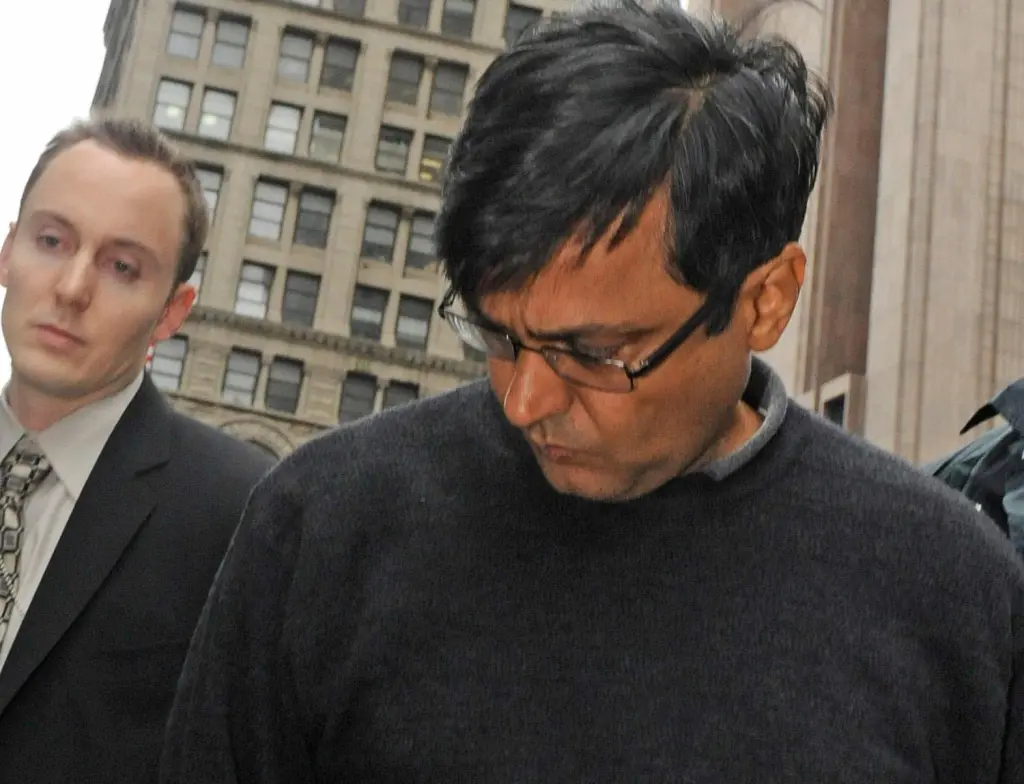
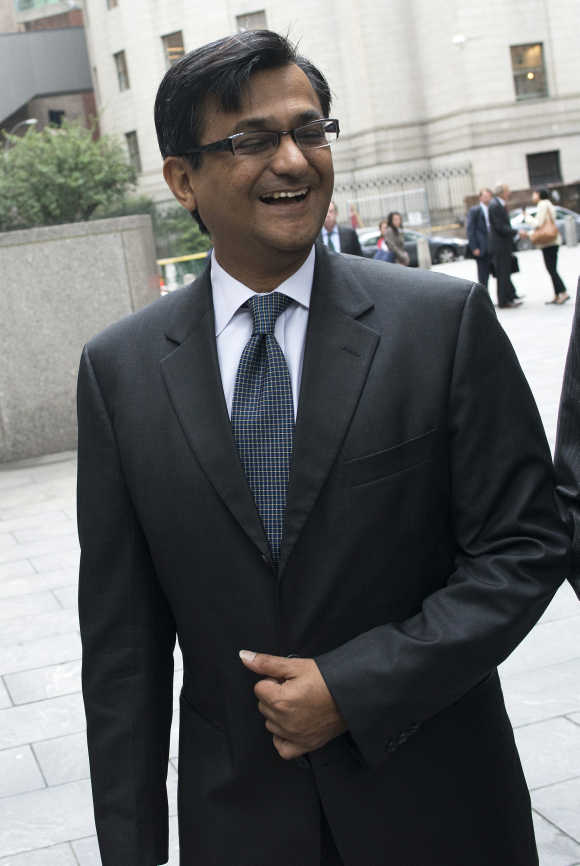
Anil Kumar, the former McKinsey partner, testified in a New York court on Monday that he told Raj Rajaratnam, the founder of hedge fund Galleon Group, about strategic plans and earnings guidance for at least three McKinsey clients in exchange for payments.
Mr Kumar, a government witness at the insider trading trial of Mr Rajaratnam, told the jury how he leaked details of “super-confidential” negotiations by chip-maker Advanced Micro Devices to buy either Nvidia or ATI Technologies, the graphics companies.
The court heard the 2006 talks were so secret that the project was at first code-named “Supernova,” and then “Go Big”, said Mr Kumar, who advised AMD on the deal in his capacity as a McKinsey’s consultant.
When Mr Kumar updated Mr Rajaratnam that AMD was going forward with the ATI deal, he said he recalled the hedge fund founder questioning him, since Nvidia was the stronger of the two companies. “I said, come on,” Mr Kumar recalled. He told Mr Rajaratnam: “I’m in the inner circle” referring to AMD.
He also recalled later telling Mr Rajaratnam that AMD would pay at least $20 a share, a premium to where the company was trading at the time.
Mr Kumar said he knew that Mr Rajaratnam was buying AMD stock, but he did not want to know the specific details.
When Mr Rajaratnam sought to renegotiate his payment, saying he would pay him after the trades were placed, Mr Kumar objected saying it was too much of a “slap” in the face to acknowledge that he was involved in a “bigger” crime.
Mr Kumar received a “bonus” from Galleon of $1m that year for supplying information about the AMD deal. Not all the deals worked out.
Mr Kumar told Mr Rajaratnam that another one of his clients expected to lose money, so Mr Rajaratam took a short position on the stock.
But the company announced a takeover, causing the stock to rise instead. Mr Kumar said that Mr Rajaratnam said he was “very upset about losing money” this time.
Mr Kumar also offered an account of Mr Rajaratnam’s providing him with unsolicited records from Intel – a rival of AMD.
Prosecutors are expected to play recordings of the phone calls between Mr Kumar and Mr Rajaratnam. Mr Kumar’s account came on the second day of his testimony for prosecutors in Mr Rajaratnam’s trial.