Close Menu
The New York BudgetsThe New York Budgets
  • Latest
  • Politics
    • World & Politics
    • US Politics
      • U.S. Administration
      • Donald Trump
    • UK
    • Middle East
      • Middle East Tensions
    • Russia-Ukraine War
  • Business
  • Economy
  • Opinion
  • AI & Tech
  • New York
  • US NEWS
  • Climate
  • Health
  • Entertainment
  • Tech
  • Media
  • Tariffs
  • US NEWS
  • Economic Policy
  • Trade
  • New York
  • Investment
  • Social Media
  • Hollywood
  • Real Estate
  • Health
  • Asia
  • Automotive
  • Food
  • Crime
  • Movies
  • Bankruptcy
  • Cryptocurrency
  • Education
  • National
  • Airlines
  • Religion And Culture
  • Internet
  • UK News
  • Private Equity
  • Financial
  • Retail
  • Markets
  • Store
  • Climate
  • India-Pakistan Tensions
  • Medical
  • Commodities
  • Aviation
  • e-commerce
  • e-commerce
  • Streaming
  • Investing
  • Sports
  • Style & Art
  • Ukraine Conflict
  • Stock Market
  • Oil and Gas
  • International
  • Europe
  • Language
  • Asia
  • Video
  • Podcast
  • Magazine
The New York BudgetsThe New York Budgets
SUBSCRIBE
  • Latest Headlines
  • Politics
  • Economy
  • Opinion
  • Tech
  • Style & Art
  • Sports
  • Climate
  • Investigative Journalism
The New York BudgetsThe New York Budgets
  • Latest Headlines
  • Politics
  • Economy
  • Opinion
  • Tech
  • Style & Art
  • Sports
  • Climate
  • Investigative Journalism
United States - Japan Asia Asia News Business Economic Policy Economy Investment Japan News Private Equity Trade Trump Administration

US-Japan Panel Holds Second Meeting to Advance $550B Trade Deal Investments

Japan and US Hold Crucial Second Consultation Committee Meeting to Expedite Initial Projects Under Historic $550 Billion Investment Pledge – Key Pillar of Trump-Era Trade Deal Reducing Tariffs
Fred RobinsonBy Fred RobinsonDecember 24, 20250
Facebook Twitter LinkedIn WhatsApp Bluesky Telegram Email Copy Link
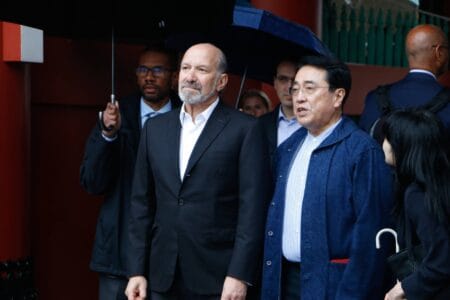
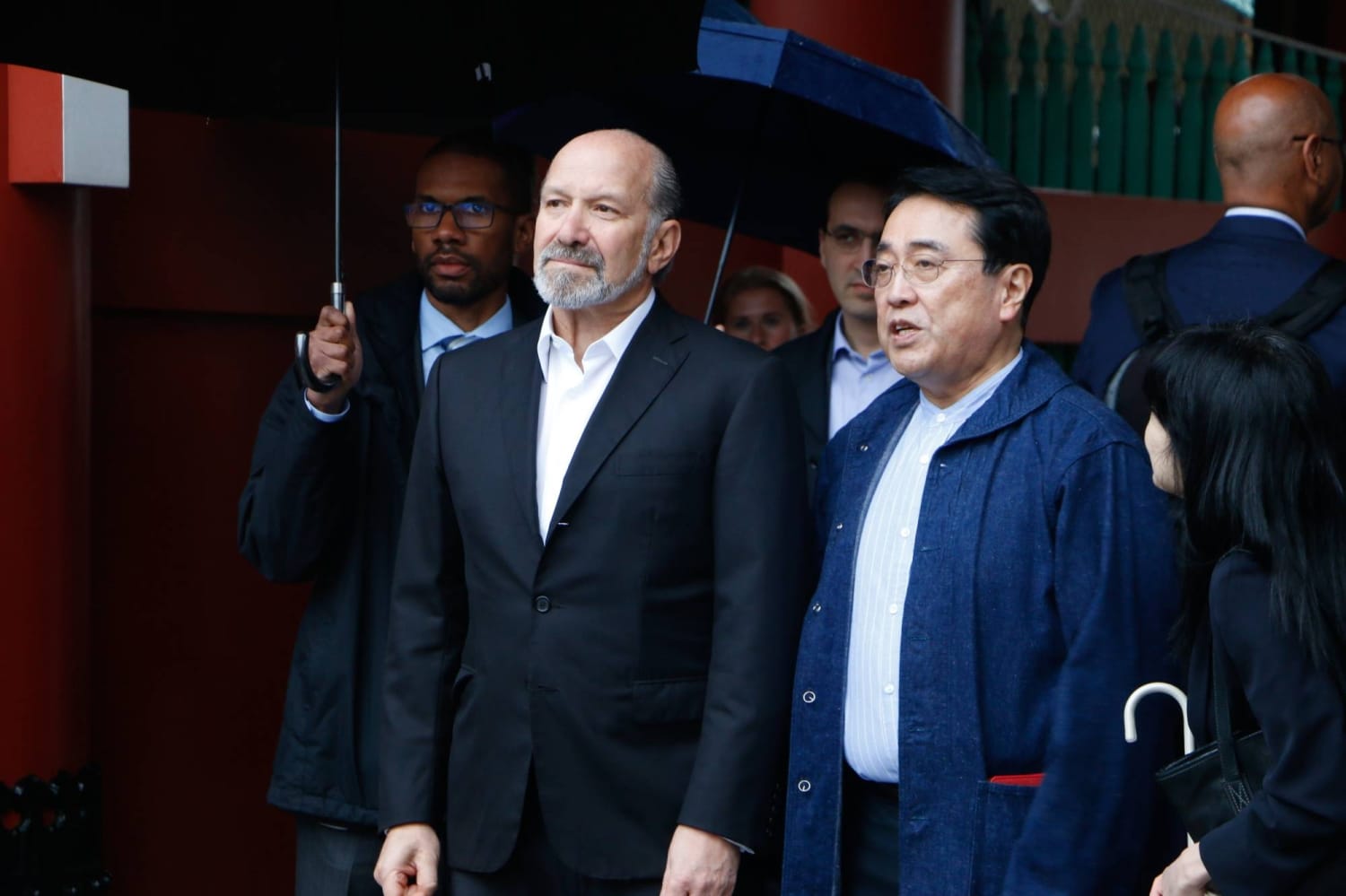
Economy Minister Ryosei Akazawa and U.S. Commerce Secretary Howard Lutnick at Sensoji Temple, Tokyo, in October. © Francis Tang

Japan and the United States convened their second high-level consultation committee meeting on Tuesday, signaling renewed momentum in deploying a landmark $550 billion Japanese investment pledge that anchors the allies’ hard-won trade agreement. The two-hour virtual session, co-chaired by Japanese Economy, Trade and Industry Minister Ryosei Akazawa, U.S. Commerce Secretary Howard Lutnick, and U.S. Energy Secretary Chris Wright, focused on expediting project selections, with officials pledging to announce the inaugural initiative “as soon as possible,” according to a statement from Japan’s Ministry of Economy, Trade and Industry (METI).

The gathering builds on the panel’s inaugural online meeting last week, where representatives from Japan’s foreign, trade, and finance ministries joined U.S. counterparts from the Commerce and Energy Departments to exchange views on potential investments. Energy projects emerged as early frontrunners, with sources familiar with the discussions indicating a handful under review for priority funding. Recommendations from the consultation committee will feed into an investment panel chaired by Lutnick, culminating in final approvals by President Donald Trump—a structure that underscores Washington’s directive role in allocating the funds.

This accelerated pace reflects mounting pressure to operationalize the pledge, formalized in a September memorandum of understanding (MOU) following July’s framework accord. The $550 billion commitment—upped from an initial $400 billion discussion at Trump’s insistence—secured Japan’s relief from steep U.S. tariffs, capping duties at 15% on automobiles and most goods after an earlier spike to 25%. Non-compliance risks penalty clauses, including tariff hikes, potentially unraveling the deal and exposing Tokyo to renewed trade friction.

Target sectors span strategic priorities: semiconductors, pharmaceuticals, critical minerals, metals, shipbuilding, energy, artificial intelligence, and quantum computing. Financing will flow through project-by-project commitments, leveraging institutions like the Japan Bank for International Cooperation (JBIC) and Nippon Export and Investment Insurance (NEXI) for equity, loans, and guarantees. Investments must materialize by January 19, 2029—the end of Trump’s term—aligning with his administration’s push to revitalize U.S. industrial capacity and bolster supply chains amid global competition, particularly from China.

More from Economics
Gabby Jones for The New York Times

Crypto Enters Another Winter, Leaving Longtime Bulls Searching for Answers

The oil tanker Grinch, suspected of belonging to Russia’s shadow fleet, near Marseille on Jan. 25, surveilled by the French navy. (Thibaud Moritz/AFP/Getty Images)

West Targets Russia’s Oil Fleet, Threatening Moscow’s War Financing

Britain can still save itself from an inflation spiral. © Getty

Britain Can Still Avoid an Inflation Spiral

Members of the Trump administration and other attendees listen to U.S. President Donald Trump's remarks during the 56th annual World Economic Forum (WEF), in Davos, Switzerland, on Wednessday. © Jonathan Ernst/Reuters

Trump revels in Davos about boosting wealth for the Elite & CEOs

Economy Minister Ryosei Akazawa and U.S. Commerce Secretary Howard Lutnick at Sensoji Temple, Tokyo, in October. © Francis Tang

US-Japan Panel Holds Second Meeting to Advance $550B Trade Deal Investments

A maintenance employee works in a “robotic” warehouse run by Amazon. © Agence France-Presse/Getty Images

September Job Growth Surprises: 119,000 New Jobs Added, Defying Expectations

Nvidia CEO Jensen Huang delivers a keynote address at CES on Jan. 6, 2025. © Patrick T. Fallon / Getty Images

Nvidia’s Record Profits Alleviate Investor Concerns Amid AI Boom

pexels paul 8246810 scaled 1

Germans Pay 4x More for Electricity Than Hungarians in Capitals

Market reactions have been muted but positive. The Nikkei 225 edged up 0.4% on Wednesday, buoyed by clarity on tariff stability, while U.S. futures showed modest gains in chip and energy stocks. Analysts at Nomura Securities project the fund could inject $100-150 billion annually into U.S. infrastructure, creating hundreds of thousands of jobs in swing states—a political windfall for Trump. However, skeptics note execution hurdles: Japan’s characterization of the pledge as facilitated private-sector flows contrasts with U.S. portrayals of direct government-directed capital, potentially complicating disbursements.

The process traces to Trump’s October visit to Tokyo, where an initial project shortlist was floated. Early contenders include LNG terminals, rare earth processing facilities, and semiconductor fabs—areas ripe for de-risking U.S. dependencies. “This isn’t charity; it’s mutual security,” Lutnick remarked in a recent CNBC interview, emphasizing profit-sharing tilted heavily toward America post-recoupment (90-10 split).

For Japan, already the largest foreign investor in the U.S. with over $800 billion in holdings, the pledge reinforces alliance ties while mitigating tariff pain on exporters like Toyota and Sony. Yet, domestic critics decry it as concessional, with opposition lawmakers questioning the fiscal burden amid Japan’s aging demographics and debt load.

As the committee eyes a third session next week and potential Trump sign-offs in early 2026, the initiative tests the Trump administration’s dealmaking prowess. Success could blueprint similar pacts with other trading partners; delays risk reigniting trans-Pacific tensions in an era of reshoring and economic nationalism.
Business Christ Wright Donald Trump Economic Howard Lutnick Japan Politics Tariffs Tech Trade Trump Presidency United States
Fred Robinson
Fred Robinson

    Fred Robinson is a veteran market news writer and financial columnist who has been informing and engaging readers since 1994. With over three decades of experience, Fred covers a wide range of topics including the stock market, shares, banking, finance, personal finance, and corporate trends. He is particularly known for his in-depth features on company market movements and the rich histories behind major corporations—from tech giants and automotive pioneers to legacy food brands. Fred's sharp insights, historical perspective, and clarity of analysis make him a trusted authority for professionals, investors, and curious readers alike. His work blends market intelligence with storytelling, offering readers not just the "what," but the "why" behind financial shifts.

    What to Read Next

    Sanae Takaichi places red bows next to the names of each Liberal Democratic candidate elected at her party’s headquarters. (Kim Kyung-Hoon/Reuters)

    Japan Prime Minister Sanae Takaichi Scores Decisive Election Win

    February 8, 2026
    A sign for The Washington Post is seen at the company's offices Jan. 26, 2026, in Washington. (Mark Schiefelbein/AP)

    Washington Post Publisher Will Lewis Steps Down After Major Layoffs

    February 8, 2026
    President Donald Trump at a news conference on drug prices in October at the White House. (Sarah L. Voisin/The Washington Post)

    Trump Launches TrumpRx.gov to Promote Lower Prescription Drug Prices

    February 6, 2026
    Law enforcement stand guard while people protest outside the Bishop Henry Whipple Federal Building, after the fatal shootings of Renee Nicole Good and Alex Pretti by federal immigration agents, in Minneapolis, Minnesota, U.S., January 30, 2026. (Reuters)

    Minnesota Courts Strained as Immigration Surge Overwhelms Judges and Prosecutors

    February 6, 2026
    The Theodore Roosevelt Federal Building that houses the Office of Personnel Management headquarters is shown June 5, 2015 in Washington, DC. U.S. © Mark Wilson/Getty Images

    Trump Administration Moves to Ease Firing of 50,000 Federal Employees

    February 5, 2026
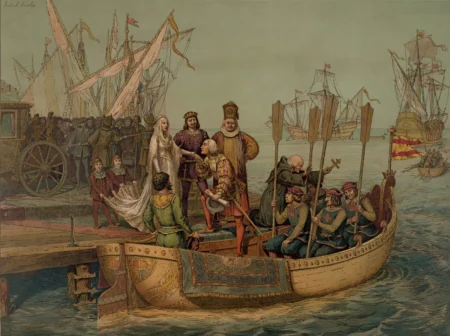
    Print depicting Christopher Columbus bidding farewell to Queen Isabella I on his departure for the New World, August 3, 1492. (Library of Congress, Washington, D.C.)

    Trump Plans to Install Christopher Columbus Statue Outside the White House

    February 4, 2026
    Add A Comment
    Leave A Reply Cancel Reply

    Facebook X (Twitter) Instagram Pinterest
    © 2026 ThemeSphere. Designed by ThemeSphere.

    Type above and press Enter to search. Press Esc to cancel.

    Go to mobile version