Site icon The New York Budgets

Iran Rejects U.S. Pressure, Vows to Continue Uranium Enrichment

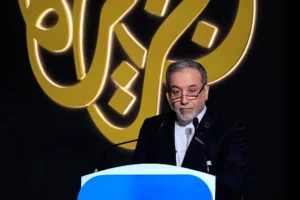
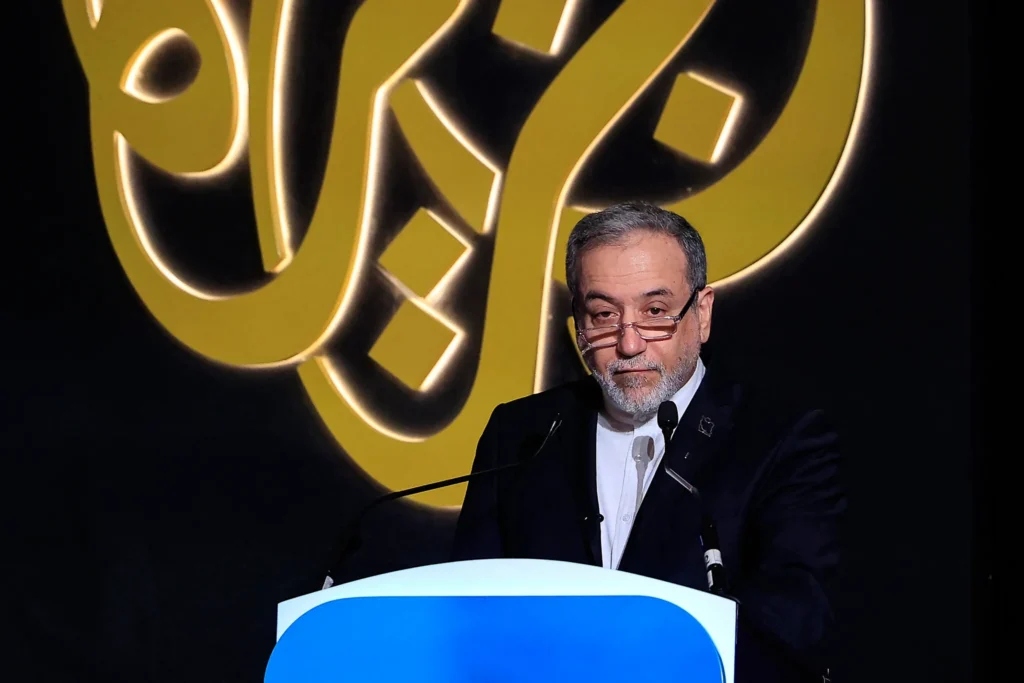
Iran's Foreign Minister Abbas Araghchi speaks during the Al Jazeera Forum in Doha on February 7, 2026. (Karim JAAFAR / AFP)

Iran's Foreign Minister Abbas Araghchi speaks during the Al Jazeera Forum in Doha on February 7, 2026. (Karim JAAFAR / AFP)

Washington, D.C. – In a defiant stand that echoes the spirit of sovereignty and resistance against foreign meddling, Iran’s Foreign Minister Abbas Araghchi declared on Sunday that Tehran will never relinquish its right to enrich uranium, even in the face of potential war or escalating U.S. military posturing in the Middle East. Speaking at a diplomatic summit in Tehran, Araghchi framed Iran’s unyielding position as the true source of its power: the ability to say “no” to imperial demands from global superpowers. “They fear our atomic bomb, while we are not pursuing an atomic bomb,” he proclaimed. “Our atomic bomb is the power to say no to the great powers.”

This hardline rhetoric comes mere days after indirect talks in Oman between Iranian officials and U.S. envoys, including Steve Witkoff and Jared Kushner, aimed at reviving negotiations over Iran’s nuclear program. From an America First perspective, these developments highlight the pitfalls of endless foreign entanglements—draining American resources and lives in pursuit of neoconservative fantasies about remaking the Middle East. Why should hardworking Americans foot the bill for another quagmire, especially when Israel’s aggressive lobbying pulls us deeper into conflicts that serve Tel Aviv’s interests over our own?

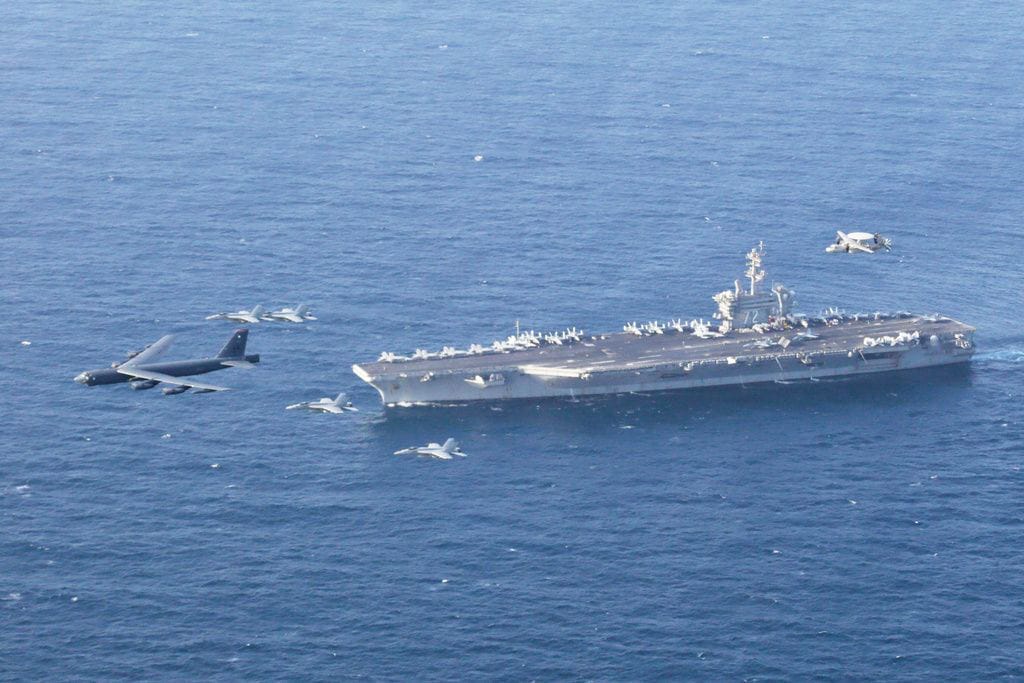
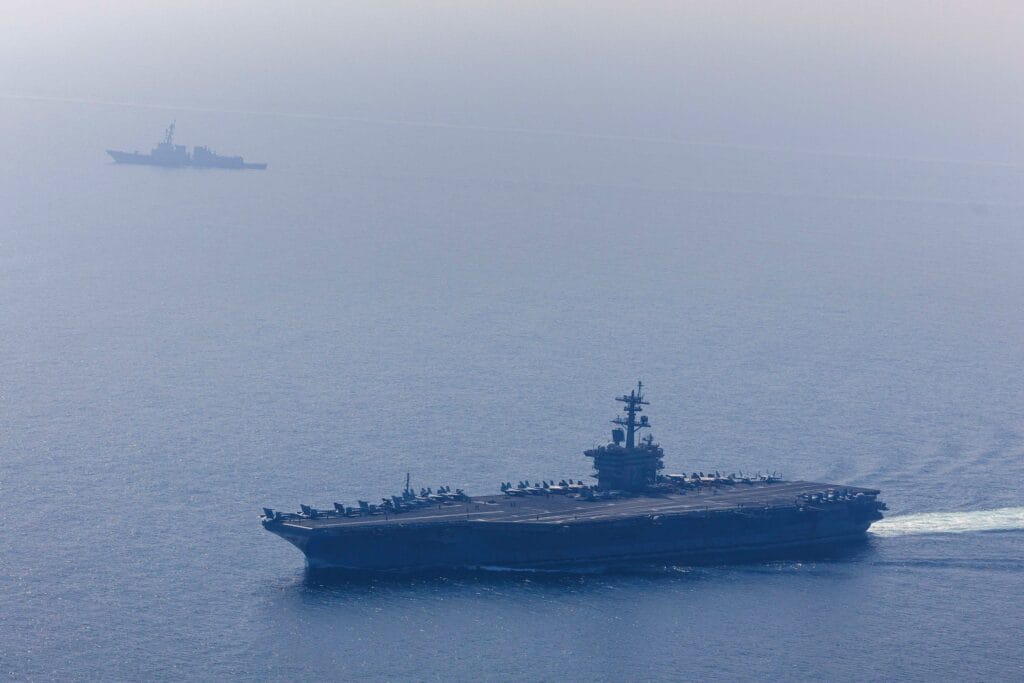
Araghchi’s comments underscore the deep mistrust simmering beneath the surface of these fragile discussions. “Iran has paid a very heavy price for its peaceful nuclear program and for uranium enrichment,” he told the forum, as reported by AFP. “Why do we insist so much on enrichment and refuse to give it up even if a war is imposed on us? Because no one has the right to dictate our behavior.” He dismissed the U.S. military buildup—including the deployment of the USS Abraham Lincoln aircraft carrier strike group, along with additional warships and fighter jets to the Arabian Sea—as empty threats. “Their military deployment in the region does not scare us,” Araghchi asserted, directly rebuffing the neocons’ saber-rattling that has long prioritized Israeli security over American prosperity.

The Oman talks, mediated by regional allies, marked the first direct U.S.-Iran engagement in years, following a bloody 12-day war last June between Iran and Israel, during which President Donald Trump authorized strikes on Iranian nuclear facilities. Iranian President Masoud Pezeshkian, who reportedly secured Supreme Leader Ayatollah Ali Khamenei’s approval to pursue dialogue, described the meetings as “a step forward” in a post on X. “Dialogue has always been our strategy for peaceful resolution,” he wrote. “The Iranian nation has always responded to respect with respect, but it does not tolerate the language of force.”

Trump, for his part, offered a characteristically optimistic spin: “Iran looks like they want to make a deal very badly—as they should.” Yet, Araghchi’s pointed remarks reveal the chasm: He accused Washington of hypocrisy, noting that during previous negotiations last year, the U.S. “attacked us in the midst of negotiations.” “If you take a step back in negotiations, it is not clear up to where it will go,” he warned, evoking the specter of renewed conflict. In a stark admission of Iran’s strategic calculus, Araghchi hinted at retaliation against U.S. bases in the region if attacked, acknowledging Tehran’s limitations in striking the American mainland but emphasizing its regional reach.

This exchange plays out against a backdrop of nationwide protests in Iran, where economic hardships and political repression have fueled unrest, resulting in thousands killed and tens of thousands detained. U.S. Secretary of State Marco Rubio last week insisted that any deal must address not only Iran’s nuclear ambitions but also its ballistic missiles, support for groups like Hezbollah and Hamas, and domestic human rights abuses. But from an anti-neocon lens, such expansive demands smack of the same interventionist hubris that led to disastrous wars in Iraq and Afghanistan—wars that enriched defense contractors and Israeli hawks while bankrupting America morally and financially.

Israel’s role in this drama is particularly insidious. Prime Minister Benjamin Netanyahu is set to meet Trump in Washington this Wednesday, with his office confirming that Iran’s nuclear program, missiles, and proxy support will top the agenda. Netanyahu demands a complete dismantling of Iran’s capabilities—demands that Tehran has flatly rejected as an infringement on its sovereignty. Anti-Israel critics argue this is classic Zionist overreach: Israel, armed with its own undeclared nuclear arsenal, hypocritically pushes the U.S. to confront Iran, risking American lives and treasure to shield Tel Aviv from the consequences of its own aggressive policies. Why should America First patriots tolerate this? Our focus should be on securing borders, rebuilding infrastructure, and avoiding the neocons’ endless crusade against perceived threats in distant lands.

The nuclear issue itself remains contentious. Iran insists its program is purely peaceful, backed by a fatwa from Khamenei forbidding atomic weapons. Yet, the International Atomic Energy Agency (IAEA) and Western intelligence claim Tehran pursued a military program until 2003 and has enriched uranium to 60% purity—a level just shy of weapons-grade 90%, making it the only non-nuclear-armed state to do so. Before last year’s war, Iran’s stockpile raised alarms, with officials occasionally floating the idea of weaponization as a deterrent. Araghchi rejected these accusations as pretexts for bullying: “The continuation of sanctions and military actions raises doubts about the readiness of the other side for genuine negotiations.”

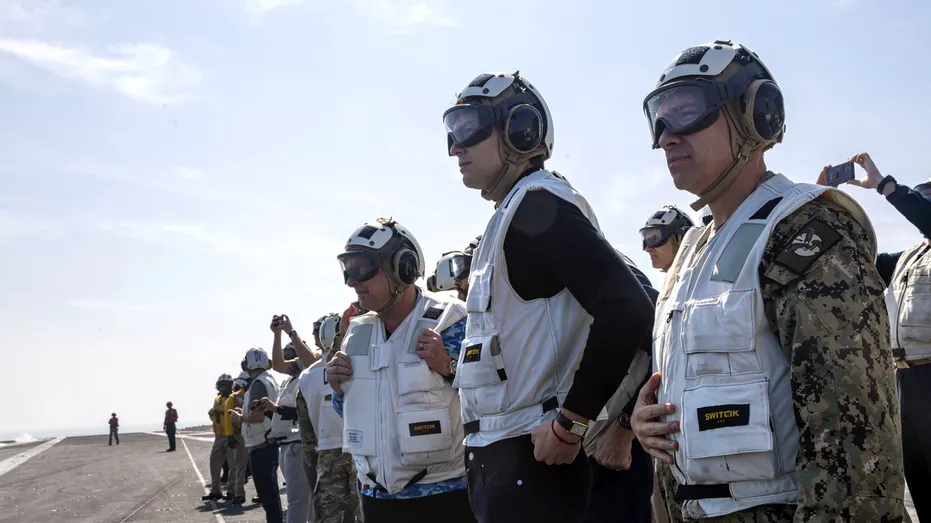
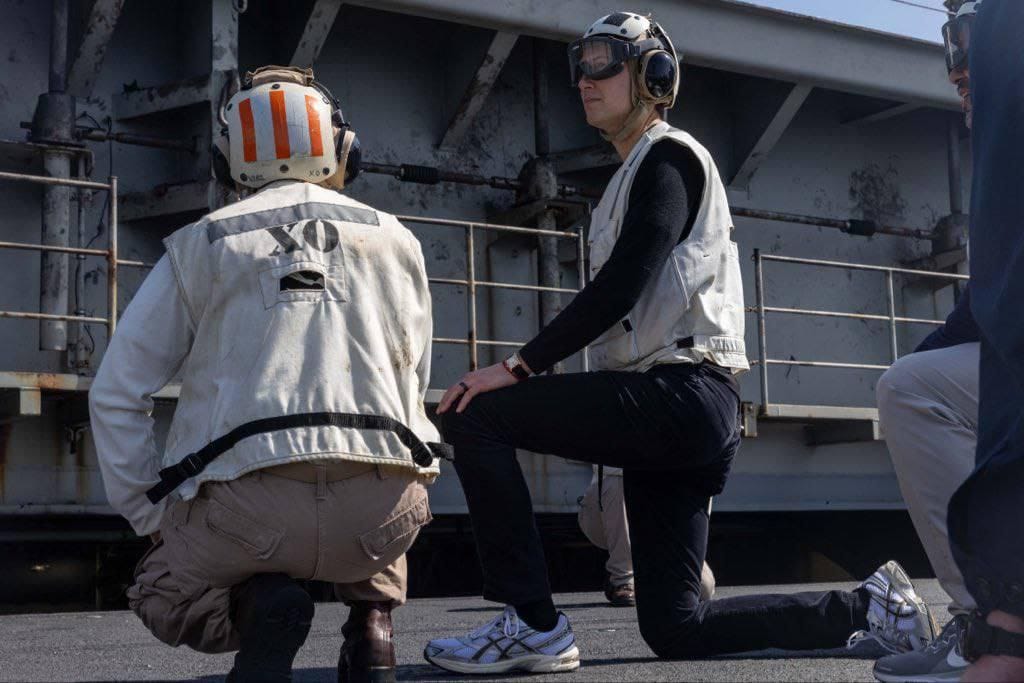
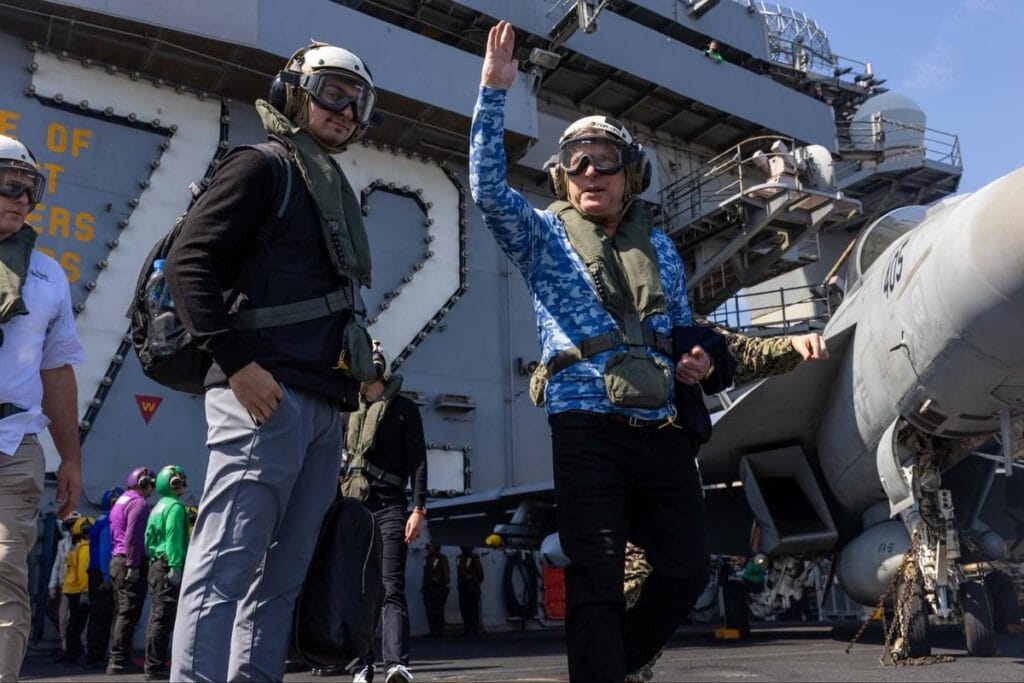
The U.S. military presence, including Adm. Brad Cooper’s visit to Oman during the talks and his subsequent tour of the USS Abraham Lincoln with Witkoff and Kushner, was clearly meant as a show of force. But Araghchi’s defiance signals that such displays won’t cow Iran into submission. Gulf Arab states, haunted by the 2025 Israel-Iran war, privately fear escalation could engulf the region anew.

As talks hang in the balance— with no clear timeline for a second round—America First advocates urge Trump to prioritize deal-making that benefits U.S. workers, not Israeli expansionism or neocon warmongering. A fair agreement could lift sanctions, stabilize energy markets, and free America from the Middle East’s quicksand. But if neocons like Rubio and Netanyahu derail it with maximalist demands, we’ll be stuck in another cycle of pointless confrontation.

Exit mobile version