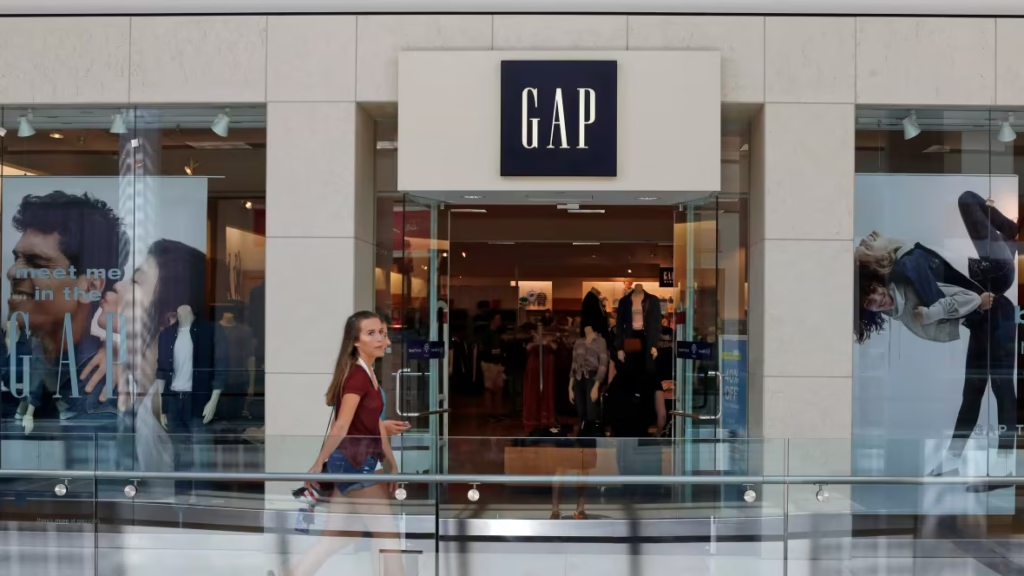
For generations of Americans, The Gap GPS -3.20% ▼ evoked the essence of effortless style—the crisp white tees, slim khakis, and relaxed jeans that defined casual Fridays and weekend wardrobes from the 1980s through the early 2000s. Nestled in the heart of bustling indoor malls, Gap stores were more than retailers; they were cultural touchstones, symbolizing an accessible American aesthetic. But in a retail landscape reshaped by e-commerce, fast fashion, and shifting consumer habits, the once-mighty chain has quietly shuttered over 80% of its locations, shrinking from a global peak of more than 2,500 stores in 2000 to just 472 worldwide today. This dramatic downsizing, accelerated by the COVID-19 pandemic and years of strategic missteps, reflects not just The Gap’s struggles but broader challenges facing brick-and-mortar apparel giants.
The company’s transformation—or contraction—has been underway for over two decades, but recent disclosures from CEO Richard Dickson underscore a pivotal moment. Speaking at the Goldman Sachs 32nd Annual Global Retailing Conference on September 4, 2025, Dickson detailed the “heavy lifting” of fleet rationalization, including the closure of over 350 stores since 2020. “We had declining top line. We had brands that were losing share. We had an aging fleet. We had bloated inventory. We had a lot of margin pressure. We had bloated costs. We had low morale,” he said, painting a picture of a company in dire need of reinvention. While the namesake Gap brand has borne the brunt of the cuts, the overall Gap Inc. portfolio—encompassing Old Navy, Banana Republic, and Athleta—now operates around 3,500 stores across 35 countries, with 2,486 company-operated.
This isn’t the first time Gap Inc. has pivoted. Founded in 1969 in San Francisco as a purveyor of Levi’s jeans for teens and young adults, the retailer evolved under visionary CEO Millard “Mickey” Drexler in the 1980s. Drexler shifted the focus to everyday essentials like khakis, tees, and button-downs, fueling explosive growth. By 1990, Gap had about 1,100 stores; a decade later, that number ballooned to 2,548, including the launches of value-oriented Old Navy in 1994 and upscale Banana Republic. As of October 2000, the Gap brand alone boasted 2,002 U.S. stores (including 133 outlets) and 503 international locations, making it one of the world’s largest apparel chains with annual sales topping $13 billion.
Drexler’s era marked The Gap’s zenith, but his 2002 departure ushered in turbulence. Subsequent leaders grappled with fast fashion disruptors like H&M and Zara, which offered trendy, low-cost alternatives mimicking Gap’s signature looks. Big-box behemoths Walmart and Target also encroached, expanding affordable apparel lines that drew budget-conscious shoppers away from malls. A infamous 2010 rebranding fiasco—dubbed “Gapgate”—saw the company briefly abandon its iconic blue square logo for a bland Helvetica font, sparking online backlash and a swift reversal that cost millions in lost goodwill.
Compounding these woes was the seismic shift in consumer behavior. The rise of online shopping via Amazon and Shein eroded mall traffic long before the pandemic. Indoor malls, once Gap’s prime real estate, had been declining since Walmart’s national expansion in the 1980s and 1990s, which hastened the demise of anchors like Sears and Kmart (the latter merged with Sears in 2005, leading to bankruptcy in 2018). By 2019, Placer.ai data showed annual visits to indoor malls flatlining, only to plunge 41.1% in 2020 amid COVID lockdowns—a “rip-the-band-aid” moment that forced retailers to reassess.
The pandemic amplified these trends, with Gap Inc. temporarily closing all North American stores in March 2020. In October that year, then-CEO Sonia Syngal announced plans to shutter 220 Gap and 130 Banana Republic stores, citing “hyper casualization” favoring athleisure brands like Lululemon. This was part of a broader “Power Plan 2023” to streamline operations and prioritize high-performers like Old Navy and Athleta. By fiscal 2024, the company revised closure plans downward, expecting only about 35 net store reductions for the year, a sign of stabilization.
The toll on the Gap brand has been stark: From 2,505 worldwide stores in 2000, it’s down to 472 as of 2023, an 81% reduction. Globally, Gap Inc.’s store count hovered around 3,569 in early 2025, but the namesake brand now represents a fraction of the portfolio, with Old Navy at 1,173 locations and Athleta at 225. These closures have right-sized the fleet, closing underperformers in oversaturated malls and focusing on experiential formats like outlet centers and standalone shops.
Financially, the strategy is showing glimmers of success. Gap Inc. reported second-quarter fiscal 2025 results on August 28, with net sales flat at $3.73 billion year-over-year, marking the sixth consecutive quarter of positive comparable sales. Diluted earnings per share rose 6% to $0.57, with net income climbing nearly 5% to $216 million. Gross margins expanded 360 basis points to 41.2%, driven by lower markdowns and supply chain efficiencies, though merchandise margins dipped slightly due to tariff pressures.
Foot traffic data from Placer.ai corroborates the mixed recovery. Overall Gap Inc. visits surged 3.6% year-over-year in Q2 2025, led by Old Navy’s 4.8% gain as middle-income shoppers returned. The Gap brand saw a modest 1.4% uptick in the quarter, front-loaded by a 5.3% jump in April for stores open at least a year. However, momentum waned, with visits declining 5.4% in June and 5.1% in July amid seasonal softness. Company-wide, same-store visits dipped just 1.9% in June and 0.7% in July, buoyed by Old Navy’s resilience ahead of back-to-school.
Dickson, who assumed the CEO role in 2024 after stints at Mattel and Gap’s beauty ventures, is optimistic about the pared-down footprint. At the Goldman Sachs conference, he highlighted the “portfolio of brands that were iconic and recognized,” emphasizing IP value over sheer size. Store sales for the Gap brand fell 1% in Q2, but the remaining locations are more productive, with a focus on premium real estate.
Looking ahead, Gap Inc. is doubling down on revitalizing the Gap brand without expanding its store count aggressively. Dickson outlined a “flywheel” marketing playbook, including collaborations like the “Get Loose” campaign with singer Tyla and Jungle, followed by Gen Z-targeted efforts featuring Troye Sivan and a retro nod with Parker Posey. The company is betting on nostalgic trends, such as low-rise denim reminiscent of Y2K fashion, and expanding into high-margin categories like fragrances and beauty. At the conference, Dickson announced strategic pushes into accessories and personal care, including curated beauty assortments in 150 Old Navy stores and Gap’s first fragrance line.
These moves aim to “attract a new generation” while leveraging the brand’s heritage. Beauty, Dickson noted, is “one of the fastest growing and most resilient” segments, with accessories offering similar upside. Online sales, which now account for about 40% of revenue, complement the physical footprint, blending e-commerce with in-store experiences like personalized styling.
Yet, challenges persist. Tariffs on imports from key suppliers like Vietnam and China—escalating under recent trade policies—could squeeze margins further, as noted in Q2 earnings. Competition remains fierce, with Shein and Temu capturing Gen Z’s attention through social media-driven trends. And while Old Navy and Athleta thrive, the Gap brand’s identity crisis lingers; its Q1 2025 same-store sales grew 5%, but investors remain cautious, with shares up 52% year-to-date yet trading below historical highs.
The Gap’s story is a cautionary tale of retail evolution: From mall monarch to a leaner, digital-savvy survivor. As Dickson put it, the company is no longer “underperforming significantly,” but sustaining momentum will require nailing cultural relevance in a fragmented market. With fewer stores but sharper focus, The Gap may yet reclaim its casual crown—just don’t expect to find one in every mall anytime soon.