Category: Headline

  • British Steel Merger Proposal Risks Shutting Scunthorpe Blast Furnaces

    British Steel Merger Proposal Risks Shutting Scunthorpe Blast Furnaces

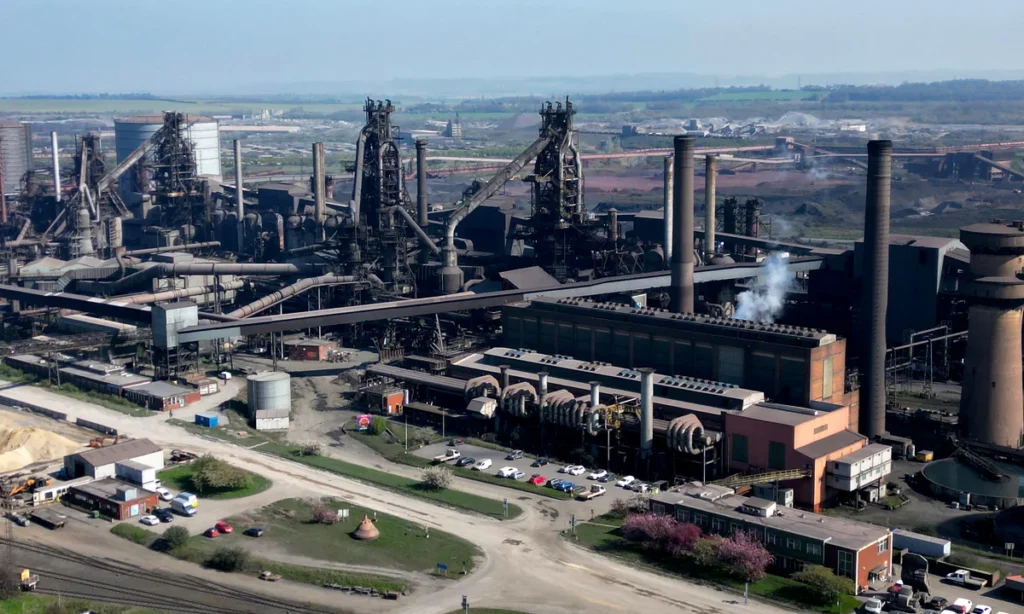
    A radical plan to halt “virgin steelmaking” in the UK is being considered in a move that threatens the loss of 2,000 jobs at British Steel’s works in Scunthorpe.
     
    Government officials are weighing a proposal to switch off Britain’s last two remaining blast furnaces despite launching emergency legislation this year preventing the works’ Chinese owners from doing the same.
     
    The proposal is understood to envisage merging British Steel with part of Speciality Steel UK (SSUK), a division of Sanjeev Gupta’s metals empire that crashed into a government-led insolvency in August.
     
    It is one of several options being considered, Whitehall sources said.
     
    But the merger option is said to be favoured by Jon Bolton, co-chairman of the government’s Steel Council, which was launched by the government in January. Under this approach, SSUK’s electric arc furnace in Rotherham, which will require significant investment to get back up and running, would be used to feed the downstream operations of British Steel, according to senior industry sources.
     
    This would allow the two blast furnaces at Scunthorpe to be switched off, reducing losses that are said to be costing taxpayers more than £1 million a day. But it would leave the UK as the only country in the G7 without virgin steelmaking capabilities.
    Industry figures are split on whether Rotherham could produce the correct types, grades and gauges of semi-finished steel — and in sufficient quantities — for British Steel’s downstream operations. The company employs about 4,000 people in the UK, of which 2,700 work in Scunthorpe.
     
    In April, MPs were called for a Saturday sitting of parliament for only the sixth time since the Second World War to fast-track emergency legislation giving the government the ability to direct the company’s workforce and managers and order raw materials for the furnaces.
    British Steel has been in the hands of Chinese firm Jingye since March 2020. The legislation meant that although Jingye remained the owner of the steelworks, the UK state was in control of day-to-day operations.
     
    The government intervention followed claims by ministers that the Chinese company was trying to unilaterally close the blast furnaces by refusing to buy enough raw materials. Blast furnaces require a steady supply of iron ore and coking coal to continue running. Although production can be halted temporarily, any longer than a few days can render the equipment redundant.
     
    In the summer, Jingye submitted a compensation bill of more than £1 billion to the UK government in return for handing over its shareholding in the business. Ministers are understood to have sought to reduce the compensation costs by offering to wave through China’s controversial new “mega embassy” in London.
    A view of a signboard of a British Steel's Scunthorpe plant, in Scunthorpe, northern England, Britain, March 31, 2025. © REUTERS/Dominic Lipinski/File Photo
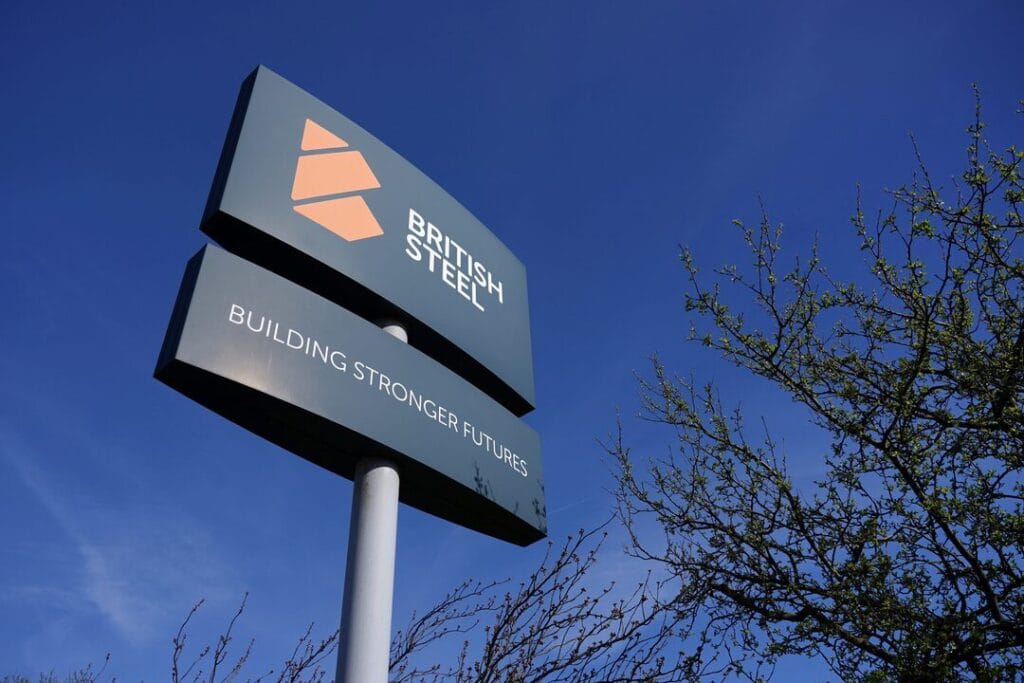
    A view of a signboard of a British Steel’s Scunthorpe plant, in Scunthorpe, northern England, Britain, March 31, 2025. © REUTERS/Dominic Lipinski/File Photo
    A spokesman for the government said: “We will ensure a bright and sustainable future for steelmaking and steel jobs in the UK and are continuing discussions with Jingye over the long-term future of the site.”
     
    SSUK employs nearly 1,500 people in Rotherham and its other works in Sheffield and is part of the wider Liberty Steel Group, which in turn is part of Gupta’s GFG Alliance, an employer of 16,500 people globally across more than 200 locations.
     
    SSUK was placed under the control of the government’s official receiver in August after the High Court granted a winding-up order pursued by creditors owed hundreds of millions of pounds.
     
    The official receiver, supported by special managers from consultancy Teneo, wants to sell SSUK whole rather than in piecemeal fashion.
     
    Bids have been submitted for the business, though the electric arc furnace in Rotherham is said to be less attractive because it will need millions of pounds of investment to bring it up to working order. The merger plans would be scuppered if a suitable buyer for the Rotherham site can be found.
     
    Using the Rotherham works to feed British Steel’s downstream activities would not be without its difficulties. However, it does have a precedent: the two operations were previously part of Tata Steel’s long products division. The Scunthorpe operation was sold to turnaround fund Greybull Capital in 2016 and the Rotherham works to Gupta the following year.
     
    Separately, an £8 billion green energy plant in the North East will go ahead with an order for steel from China instead of the UK, snuffing out hopes of a U-turn.
    Alasdair McDiarmid, assistant general secretary at the steelworkers’ union Community, said: “Reports that the government is considering ending steelmaking at Scunthorpe, just months after making their historic intervention at the site, are extremely concerning and scarcely believable.
     
    “The loss of the UK’s last-remaining primary steelmaking facility — a vital strategic asset for the country — would represent a devastating blow to national security and sovereignty. Community and the wider trade-union movement will not accept the closure of the blast furnaces outside of a long-term investment strategy that secures the future for Scunthorpe steelmaking.”
     
    This newspaper revealed in November that Net Zero Teesside, a joint venture between BP and the Norwegian energy company Equinor, was on the cusp of awarding a major steel contract to a Chinese firm called Modern. Net Zero Teesside will build the world’s first gas-fired power station with carbon capture and storage.
    In the short term, Scunthorpe steelworks needs materials to keep the furnaces from cooling down. © Darren Staples/AFP/Getty Images
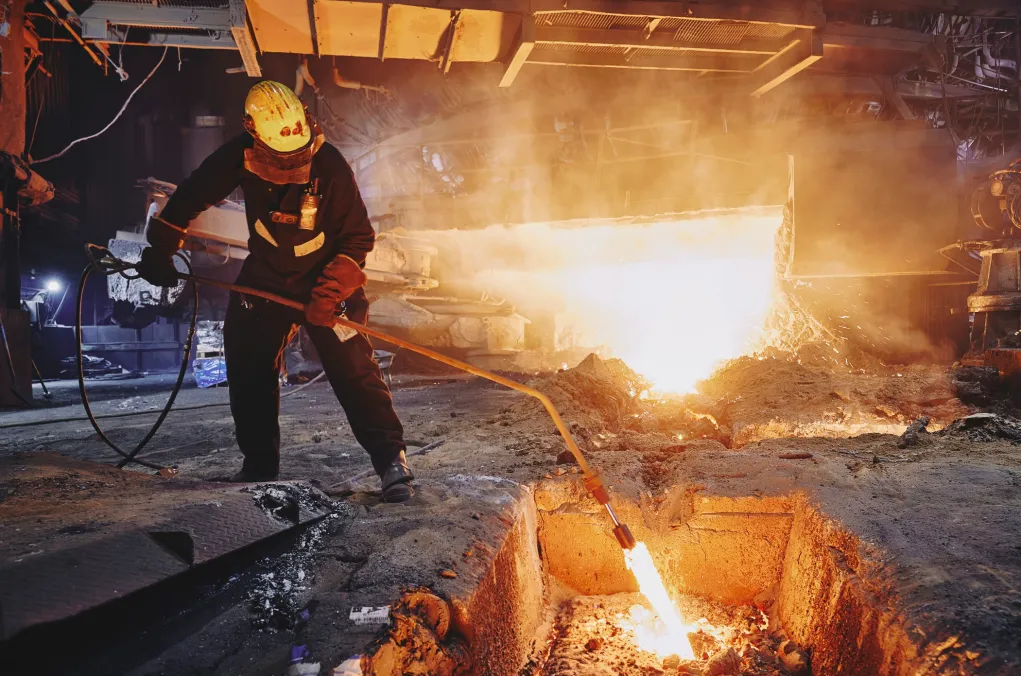
    In the short term, Scunthorpe steelworks needs materials to keep the furnaces from cooling down. © Darren Staples/AFP/Getty Images
    Backed with taxpayer cash, the joint venture had promised that at least 50 per cent of the engineering, procurement and construction contrasts would be sourced from the UK.
     
    Lord Houchen, the local Conservative mayor, called for “an immediate rethink”. This prompted BP to intervene, raising hopes that British Steel — an under-bidder — would prevail.
     
    Sources said, however, that the joint venture had decided to stick with China, ordering 7,000 tonnes that will be made and then fabricated overseas. The contract is understood to be worth £20 million.
     
    A government source said ministers are “keen to see UK steel sourced for UK projects”.
  • BBC Rolls Out New Guidelines: Criticise Israeli Government, Not Zionists

    BBC Rolls Out New Guidelines: Criticise Israeli Government, Not Zionists

    The BBC’s new antisemitism training course says people who “have no intention to offend Jewish people” should not “criticise Zionists”.
     
    The training, rolled out to BBC staff last week and seen by Middle East Eye, says: “Antisemites frequently use the word ‘Zionist’ (or worse, ‘Zio’), when they are in fact referring to Jews, whether in Israel or elsewhere.
     
    “Those claiming to be ‘anti-Zionist, not antisemitic’, should do so in the knowledge that many Jewish people consider themselves to be Zionists.”
     
    The training adds: “If these individuals mean only to criticise the policies of the government of Israel, and have no intention to offend Jewish people, they should criticise ‘the Israeli government’, and not ‘Zionists’.”
     
    The course was made by the BBC Academy in conjunction with the Jewish Staff Network, the Antisemitism Policy Trust and the Community Security Trust (CST).
    The CST, which monitors antisemitic hate crimes and works with the government and police, has previously claimed that pro-Palestine marches in London were “disrupting the peace and the basic rights of Jews” and called for them to end.
     
    The BBC training also incorporates the controversial International Holocaust Remembrance Alliance (IHRA) definition of antisemitism, which the British government has adopted but which legal experts have warned could lead to a “curtailment of debate”.
     
    The definition says that claiming that the existence of the state of Israel is a “racist endeavour” is an illustration of potential antisemitism.
     
    Its critics say it conflates antisemitism with anti-Zionism, or with criticism of policies that led to the creation of the state of Israel in 1948 and the expulsion of hundreds of thousands of Palestinians from their homes in modern-day Israel.

    ‘Against any form of discrimination’

    Asked for comment, the BBC directed MEE to comments previously made by outgoing director general Tim Davie.
     
    In an email to BBC staff on 4 December, Davie said that the “BBC is for everyone, and we are clear that everyone working here should feel they belong. As an organisation we stand united against any form of discrimination, prejudice, or intolerance”.
     
    “In response to this, the BBC Academy has spent the last few months developing new anti-discrimination training. We’re starting with e-learning modules on antisemitism and Islamophobia, which we expect staff across the BBC to complete,” he added.
    Davie said that the “module on antisemitism is available from today, while the Islamophobia module is just being finalised, to launch in February”.
     
    Davie resigned last month amid a row over the broadcaster’s editing of a speech by US President Donald Trump on 6 January 2021 for the BBC’s Panorama show.
     
    The public broadcaster has also been embroiled in several scandals over its coverage of Israel and Gaza.
    MEE reported last month that the BBC’s online Middle East editor Raffi Berg said in 2020 that it was “wonderful” to be in a “circle of trust” with current and former Mossad agents while writing a book on the Israeli intelligence agency, and that the Mossad’s “fantastic operations” make him “tremendously proud”.
     
    A study published in June by the Muslim Council of Britain-linked Centre for Media Monitoring (CFMM) claimed the BBC’s coverage of Israel’s war on Gaza is “systematically biased against Palestinians”, according to an analysis of over 35,000 pieces of content.
     
    The study found that the BBC gives Israeli deaths 33 times more coverage than Palestinian ones, uses emotive terms four times as much for Israeli victims and applies “massacre” 18 times more to Israeli casualties than Palestinian ones.
     
    The BBC pulled a documentary on children in Gaza, Gaza: How To Survive a Warzone, in February after it emerged that the boy who narrated the film, Abdullah al-Yazuri, was the son of a deputy minister in Gaza’s government.
    This followed an intense campaign by pro-Israel groups and the Israeli embassy in London.
     
    The BBC then came under fire in June for dropping a second film on Gaza, this one on doctors, after delaying its broadcast for months.
     
    Officials at the broadcaster said that “broadcasting this material risked creating a perception of partiality that would not meet the high standards that the public rightly expect of the BBC”. 
     
    The film was aired instead by Channel 4 and other news organisations.
  • Outgoing BBC Boss Tim Davie Rolls Out Anti-Discrimination Training Post-Resignation

    Outgoing BBC Boss Tim Davie Rolls Out Anti-Discrimination Training Post-Resignation

    The BBC has ordered staff to complete mandatory anti-Semitism training following a series of scandals at the broadcaster.
     
    Tim Davie, the outgoing director-general, has told staff they have six months to complete the new course, which aims to end “any form of discrimination, prejudice, or intolerance” at the corporation.
    It follows the publication by The Telegraph last month of an internal memo which revealed anti-Israel bias in the BBC’s news coverage, and prompted Mr Davie to resign.
     
    The broadcaster has also been embroiled in controversy over a Gaza documentary, and its decision not to cut anti-Semitic chants from its coverage of rap act Bob Vylan’s Glastonbury set.
     
    The documentary, called Gaza: How to Survive a Warzone, prominently featured the son of a Hamas official, whose identity was not disclosed to viewers at the time. The revelation later led to it being pulled from the airwaves.
    Abdullah al-Yazouri, the documentary’s teenage narrator, was revealed to be the son of a Hamas official
    Abdullah al-Yazouri, the documentary’s teenage narrator, was revealed to be the son of a Hamas official
    A Palestinian boy called Zakaria poses alongside a Hamas fighter in the BBC documentary
    A Palestinian boy called Zakaria poses alongside a Hamas fighter in the BBC documentary
    Meanwhile, BBC staff did not cut away from chants of “death, death to the IDF” during Bob Vylan’s set, and were criticised for allowing the broadcast to go ahead despite knowing it was “high risk”.
     
    In a company-wide memo about the new discrimination training, staff have now been told that “anti-Semitism has no place at the BBC” and that the module “provides a framework of understanding for staff to spot and call out anti-Semitism”.
    Staff have been told that the module involves “real world examples” of how anti-Semitism can appear in society, with a warning that this “understandably may be upsetting for some colleagues”.
     
    Another module on Islamophobia will be made available to staff from February, they were told.
     
    Mr Davie said: “The BBC is for everyone, and we are clear that everyone working here should feel they belong…the BBC Academy has spent the last few months developing new anti-discrimination training.”
    The memo revealed that BBC’s Arabic news service chose to “minimise Israeli suffering” in the war in Gaza so it could “paint Israel as the aggressor”.
     
    It also found that BBC Arabic had given a platform to journalists who had made extreme anti-Semitic comments, including one contributor who was featured 217 times despite describing a Palestinian who killed four Israeli citizens as a “hero” in 2022.
    The announcement of the training was welcomed by the Board of Deputies of British Jews, whose president Phil Rosenberg said there was an “urgent need for change in both culture and content at the corporation”.
     
    The BBC Academy course on anti-Semitism was made in conjunction with the Jewish Staff Network, the Anti-Semitism Policy Trust and the Community Security Trust (CST).
     
    The Telegraph’s publication of the memo also led to the resignation of the broadcaster’s head of news, Deborah Turness.
     
    Last year, Sir Michael Ellis, the former attorney general, told MPs that the BBC was “institutionally anti-Semitic”, and that its reporting of the Israel-Hamas war had contributed to attacks on British Jews.
     
    In February, Kemi Badenoch, the leader of the Conservatives, wrote to Mr Davie to complain about BBC Arabic’s coverage, describing it as a “platform for terrorists” that was promoting “appalling anti-Semitism” to millions of viewers.
     
    In his email, sent to staff on Thursday, Mr Davie added: “I know that everyone will be committed to the training, ensuring the BBC is a role model as an inclusive and tolerant workplace.”
  • Trump Vows Full Support to Mamdani in Oval Office: “We’ll Help Him”

    Trump Vows Full Support to Mamdani in Oval Office: “We’ll Help Him”

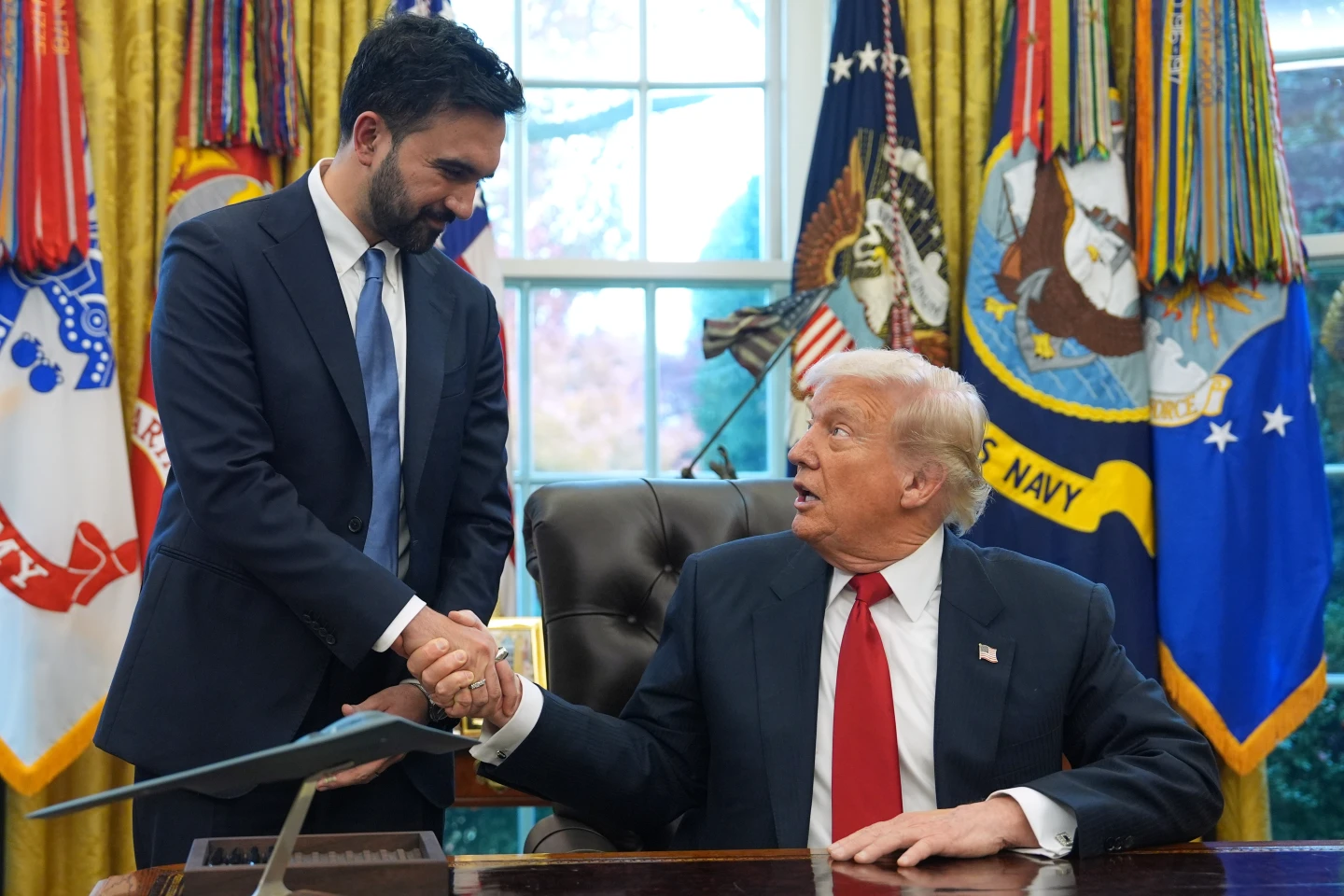
    In a Oval Office encounter that caught even hardened White House reporters off guard, President Donald J. Trump extended an olive branch Friday to New York City mayor-elect Zohran Mamdani—the self-styled “democratic socialist” he’d once branded a “100% Communist Lunatic” and threatened to deport—signaling a pragmatic thaw amid mounting economic pressures. The 90-minute sit-down, billed by skeptics as a potential fireworks display, unfolded with unexpected cordiality: Trump lavished praise on Mamdani’s “surprising” potential to “surprise some conservative people,” while the 34-year-old Queens assemblyman nodded along, emphasizing shared “goals to help” Trump’s hometown. “Great meeting,” Trump beamed to reporters, flanked by a beaming Mamdani. “We’re going to be helping him… to make everybody’s dream come true, having a strong and very safe New York.”

    This detente arrives at a pivotal juncture for both men. Trump, nine months into his second term, faces headwinds from a record 37-day government shutdown and voter angst over inflation—issues Mamdani weaponized to victory in the November 4 mayoral race, flipping NYC’s helm with 50.4% amid record turnout. The president, who’d endorsed Mamdani’s foe Andrew Cuomo and vowed to “yank federal funds” from the “commie” stronghold, now pivots to affordability optics, admitting, “Some of his ideas are really the same ideas that I have.” For Mamdani, the invite burnishes his nascent national profile, transforming a campaign-trail gadfly into a statesman ready to “stand up” to Trump—minus the barbs. Yet, beneath the handshakes, fault lines simmer: Mamdani’s Gaza genocide accusations drew Trump’s awkward silence, and MAGA hardliners like Elise Stefanik seethe at the “jihadist” label’s dilution.

    From a center-right lens, this isn’t capitulation—it’s statesmanship. Trump’s track record of deal-making (Abraham Accords, USMCA) shines here: Turning adversaries into assets, much like his Zelenskyy thaw post-February spat. Mamdani, DSA-affiliated and unapologetically left, enters as the “worst nightmare” he self-proclaimed; Trump’s embrace disarms that narrative, forcing the socialist to govern amid fiscal realities. As one GOP strategist quipped anonymously to Fox: “Let him promise free buses—reality’s the best teacher.” With midterms looming, Trump’s masterstroke neutralizes a Democratic bogeyman, while spotlighting shared inflation fights—groceries up 25% since 2021, per BLS.

    From Fireworks to Handshakes: A Timeline of Thaw

    The buildup was pure Trumpian theater: Mamdani’s campaign branded the president a “despot” and “fascist,” vowing Netanyahu’s arrest on NYC soil and decrying “authoritarian” raids. Trump fired back, questioning the Uganda-born naturalized citizen’s loyalty (“total nut job”) and predicting “ZERO chance of success” for socialist rule. White House Press Secretary Karoline Leavitt dubbed the invite “volumes” on Dem “communism”; VP JD Vance joked a “stomach bug” exemption; Sen. Rick Scott foresaw a “schooling.”

    Reality? A love-in. Trump interjected protectively—”I’ll stick up for you”—as reporters probed Mamdani’s “fascist” barbs: “I’ve been called much worse… You can just say yes.” On fossil fuels, Trump shielded: “That’s OK.” Discussions zeroed on affordability—housing, groceries, utilities—where Mamdani’s rent-freeze crusade mirrored Trump’s 2024 playbook. “We agree on a lot more than I would have thought,” Trump mused, praising Mamdani’s crime-reduction nods (retaining NYPD’s Jessica Tisch). Mamdani reciprocated: “What I really appreciate… is focusing on shared purpose in serving New Yorkers.”

    Post-meeting, Mamdani’s chief of staff Elle Bisgaard-Church told NY1: “We share a mutual goal of a safe city.” Trump, eyeing NYC’s $7.4 billion federal lifeline, softened threats: “We don’t want that to happen… I don’t think that’s going to happen.” Aides whisper strategy: With polls showing 6 in 10 voters “angry” over costs (AP), Trump’s outreach spotlights “pragmatic” Mamdani, undercutting Dem “extremist” attacks.

    The chumminess blindsided the base. Stefanik blasted Mamdani as a “jihadist” Friday morn (“walks like, talks like”), only for Trump to contradict: “We’ll have to agree to disagree.” Greene’s resignation bombshell—clashing with Trump over Epstein files and Israel—amplifies schisms; Vance’s quip now looks tone-deaf. Fox’s Sean Hannity grumbled: “Is this the art of the deal or the deal with the devil?” Yet, insiders hail genius: By humanizing Mamdani, Trump mutes his bogeyman utility, forcing Dems to own socialist governance amid NYC’s fiscal crunch (Hochul vetoing tax hikes).

    Mamdani sidestepped Gaza landmines, reiterating “genocide” complicity—”our government funding it”—drawing Trump’s mute nod. “I shared… tax dollars… for New Yorkers’ basic dignity,” he pivoted, nodding to human rights sans specifics. Global echoes: Copenhagen’s Social Democrats watch warily, their migration model (slashing claims 80%) clashing with Mamdani’s open-tent ethos.

    Mamdani’s ascent—defeating Cuomo’s machine with TikTok flair and DSA grassroots—netted historic firsts: youngest since 1892, first Muslim/South Asian mayor. His transition team (five women, including Lina Khan) signals competence; promises (free childcare, city groceries) test DSA mettle. Trump’s aid tease—on housing, safety—could unlock billions, but strings attach: Immigration cooperation? Mamdani’s “worst nightmare” vow lingers.

    For Trump, it’s vintage: From Zelenskyy dimming to Ramaphosa video, he turns foes to footnotes. As midterms near, this “productive” parley spotlights wins—manufacturing renaissance, tariff truces—over shutdown scars. Mamdani? A blank slate nationally (46% “not closely” followed, CBS); Trump’s glow-up buys time, but stumbles (crime spikes?) will echo.

    In a polarized era, Friday’s detente whispers hope: Adversaries as allies, barbs as banter. Yet, as Trump quipped, “I’ve been called much worse”—reminding, in politics, today’s chum is tomorrow’s chum bait.

  • Magnitude 5.5 Earthquake Strikes Bangladesh: At Least Five Lives Lost

    Magnitude 5.5 Earthquake Strikes Bangladesh: At Least Five Lives Lost

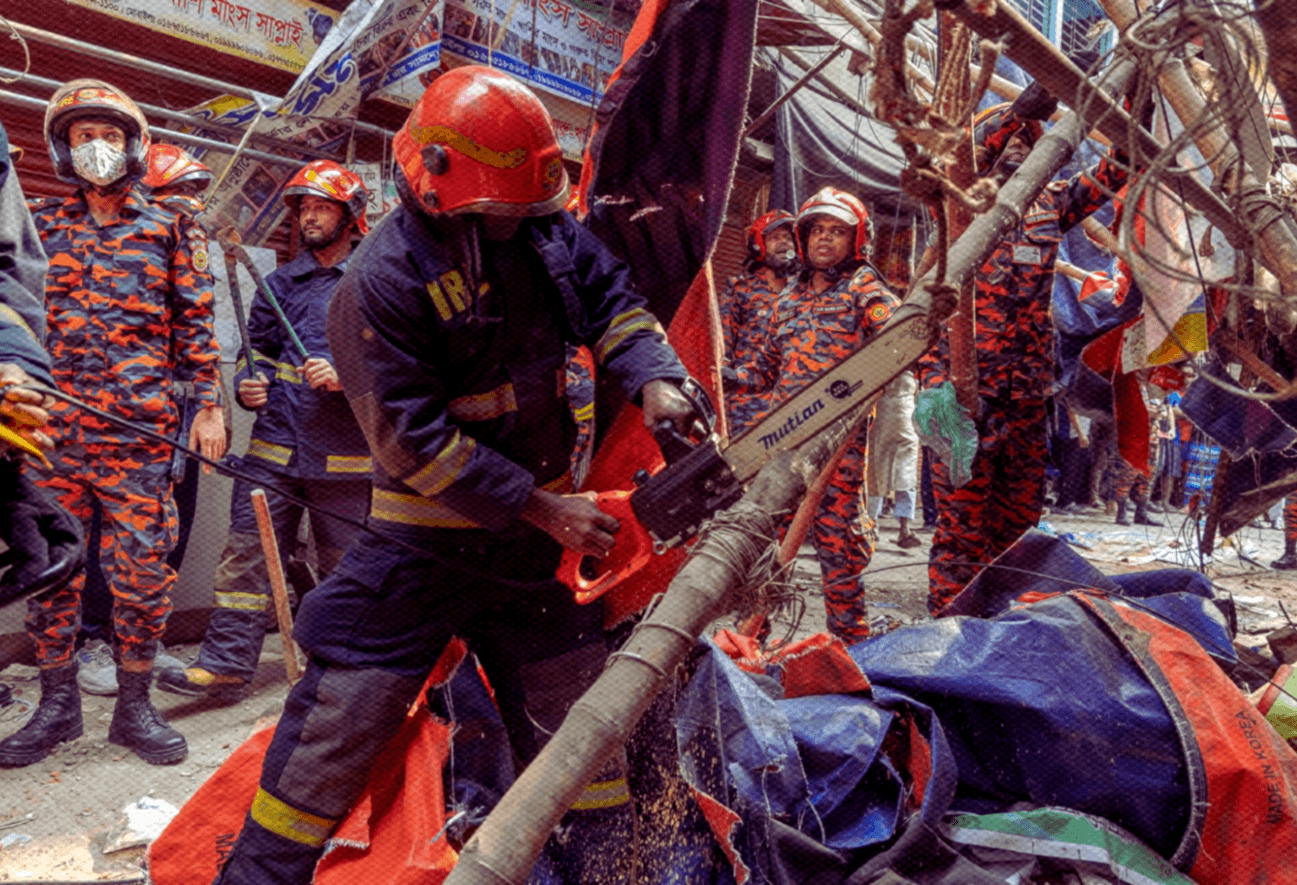
    Dhaka, Bangladesh — A powerful 5.5-magnitude earthquake struck central Bangladesh on Friday morning, claiming at least five lives—including a child and a medical student—and injuring more than 100 others in a wave of panic that saw residents fleeing swaying buildings across the densely populated capital of Dhaka. The shallow quake, centered just 25 kilometers (16 miles) east of Dhaka in the Ghorashal area of Narsingdi district, rattled the nation at 10:38 a.m. local time (04:38 GMT), sending tremors as far as neighboring Indian cities like Kolkata, Guwahati, Agartala, and Shillong.

    Authorities reported a death toll ranging from three to six, with the higher figure cited by Dhaka-based DBC Television, attributing fatalities to collapsing building roofs, walls, and railings that crushed pedestrians below. Three pedestrians in Dhaka’s Koshaitoli area were killed instantly when a six-story building’s railing gave way, while two others—a medical student who fell from an eight-story structure and a newborn in Narayanganj—succumbed to injuries from debris. Injuries mounted to over 250 in some estimates, including more than 200 garment factory workers caught in a stampede in Gazipur and five Dhaka University students who jumped from residence halls in fright. Dhaka police officer Ashish Kumar Ghosh confirmed two victims died on the spot, with another passing at Mitford Hospital.

    The U.S. Geological Survey (USGS) pegged the quake at magnitude 5.5 with a depth of just 10 kilometers (6 miles), warning of potential “significant casualties” due to its proximity to Dhaka’s 170 million-strong population. Bangladesh’s Meteorological Department recorded a slightly higher 5.7 magnitude, noting the shaking lasted 26 seconds and originated from reverse faulting within the Indian Plate. While northern and southeastern Bangladesh lie in a seismically active zone where the Indian and Eurasian plates collide, the central region—including Friday’s epicenter in Madhabdi—has seen only 14 quakes of 5.5 or greater since 1950, making this event a rare jolt for the area.

    Panic gripped Dhaka, a city of over 20 million where many were home on their weekly day off. “I’ve never felt an earthquake like this before, never in my life—this was the first time,” one resident recounted, describing how the sudden rumble woke him from sleep and sent his building into a frenzy. “We felt a strong jolt and buildings were shaking like trees,” echoed Suman Rahman, another local, as staircases jammed with terrified families rushing downstairs, children crying amid the chaos. AFP reporters witnessed weeping crowds in the streets, some in shock, while social media flooded with videos of swaying high-rises and crumbling facades. In Kolkata, over 325 kilometers away, 66-year-old Sumit Dutta bolted from his bed as his furniture trembled, though no casualties or major damage were reported across the border.

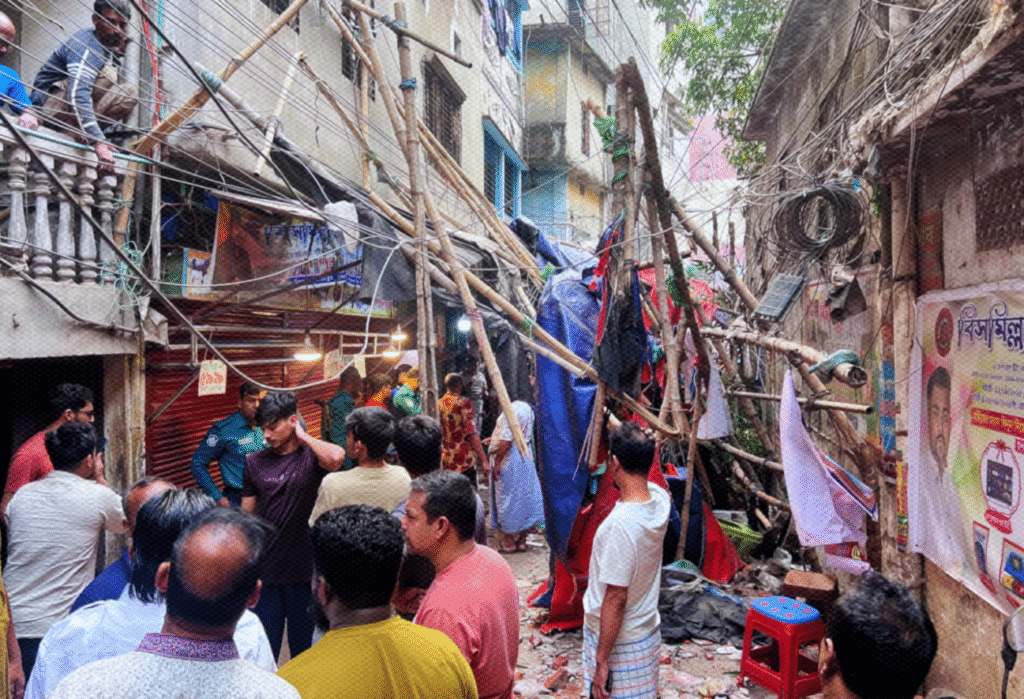
    People stand in an alley after vacating their homes following an earthquake in Dhaka. © REUTERS
    People stand in an alley after vacating their homes following an earthquake in Dhaka. © REUTERS

    The quake’s ripples extended to sports, briefly suspending the second Test match between Bangladesh and Ireland at Dhaka’s Sher-e-Bangla National Cricket Stadium in Mirpur. Play halted for about three minutes as players, umpires, and spectators—including Irish cricketers—sprinted to the open field for safety, with television cameras capturing the confusion. “Goodness. Play has stopped here due to a minor tremor/earthquake,” Cricket Ireland posted on X, formerly Twitter. Witnesses in the press box described jammed stairwells and reluctance to re-enter enclosed spaces, even after tremors subsided.

    Interim government chief Muhammad Yunus swiftly addressed the nation, expressing condolences and mobilizing emergency services. “The government is taking all necessary measures, giving the utmost importance to the safety of the people,” he said in a statement, urging calm and vigilance against rumors. “Everyone is urged to remain alert… Further guidance will be provided through hotlines and official channels if necessary. We remain committed to ensuring the safety of all citizens.” Relief teams fanned out to inspect older multistory buildings and construction sites, where falling bricks and loose cement caused many injuries. Power disruptions rippled nationwide from affected stations, exacerbating the disarray.

    As aftershocks loomed, officials warned the death toll could rise with incoming reports from remote areas. Seismologists emphasized the quake’s moderate strength but noted its shallow depth and urban proximity amplified the human toll. For a nation still recovering from political upheaval, this seismic surprise underscored vulnerabilities in one of South Asia’s most earthquake-prone corridors.

  • Germans Pay 4x More for Electricity Than Hungarians in Capitals

    Germans Pay 4x More for Electricity Than Hungarians in Capitals

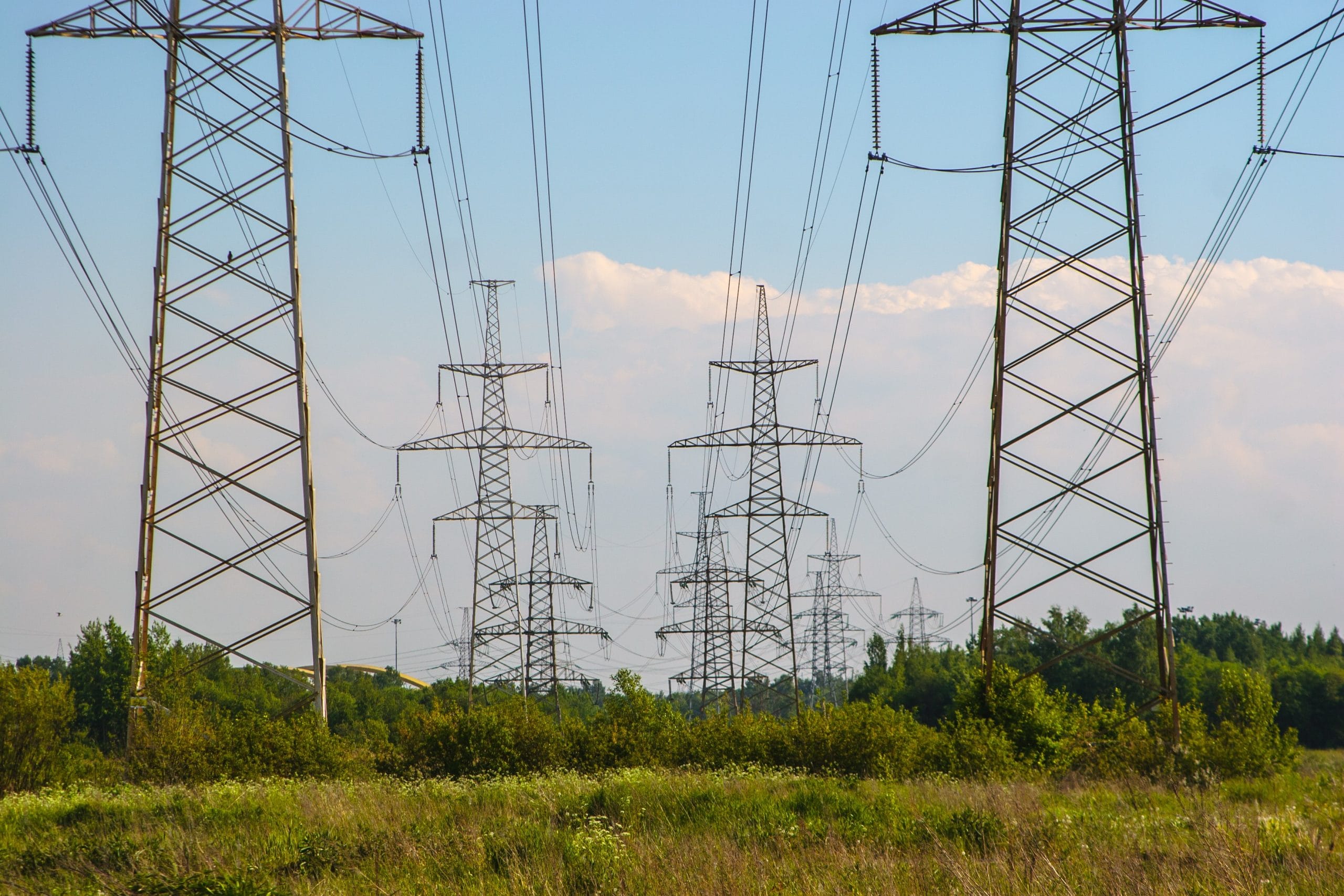
    pexels paul 8246810 scaled 1

    In a stark illustration of diverging energy policies across Europe, households in Berlin shelled out more than four times the electricity costs of their counterparts in Budapest during the second half of 2024, according to a new report from the International Energy Agency (IEA). While German consumers grapple with some of the continent’s highest rates—averaging 41.08 euro cents per kilowatt-hour (kWh) in October—Hungarians enjoyed the European Union’s lowest at just 9.34 euro cents per kWh, thanks to aggressive government price caps that have shielded families from the post-pandemic energy crunch.

    The disparity underscores Hungary’s unorthodox approach to utility regulation, which has kept bills low amid broader EU efforts to diversify away from fossil fuels and curb inflation. Yet, as Budapest basks in the benefits, Brussels is growing impatient with the model’s heavy dependence on Russian natural gas—a lifeline that could snap under mounting geopolitical pressure.

    Eurostat’s latest figures paint a vivid picture: Germany’s residential electricity price topped the EU charts at 41.08 euro cents per kWh last October, more than double the bloc’s average of around 28.72 euro cents per 100 kWh in the second half of 2024. Hungary, by contrast, clocked in at a fraction of that—9.34 euro cents—making Budapest the cheapest capital in the EU for household power, while Berlin claimed the unwanted crown of most expensive. A Finnish analysis by VaasaETT pegged the EU-wide average as roughly 2.8 times higher than Hungary’s tariff, with prices exceeding 30 euro cents in nine other capitals, including those in Denmark, Ireland, and the Czech Republic.

    At the heart of Hungary’s bargain is a two-tiered price cap system, in place since August 2022, designed to protect consumers from market volatility. The “classic” rate caps electricity at 36 Hungarian forints (about 0.09 euro cents) per kWh for the first 2,523 kWh annually—enough for a typical household. Beyond that threshold, a still-subsidized rate of 70.10 forints (10.76 euro cents) kicks in, ranking it as the second-lowest among EU capitals examined. This policy, extended through 2025 despite fiscal strains, has drawn praise from everyday Hungarians but fire from opposition lawmakers who decry it as unsustainable, arguing the government’s subsidies—funded partly by windfall taxes on energy firms—balloon the state budget deficit.

    The real-world impact? For an average two-earner household with median income, utilities devour just 1.7% of monthly earnings in Budapest, per calculations from Hungary’s Energy and Public Utilities Regulatory Office using October data. That’s a lighter load than in Berlin (2.5%), Brussels (2.2%), or—worst of all—Lisbon (6.1%). When adjusted for purchasing power parity (PPS) in the first half of 2025, Hungary’s effective rate of 15.01 PPS placed it second only to Malta (13.68), far below the Czech Republic’s punishing 39.16.

    The IEA’s report, which emphasizes the need for renewable investments to drive affordability, highlights these cross-border variances as a cautionary tale for Europe’s energy transition. “Prices can vary greatly between countries,” the agency noted, urging a balanced push toward green sources without sacrificing access. In Germany, where the Energiewende has prioritized renewables but spiked costs through network fees and green levies, households face a 44.11 euro cents per kWh average for 2024—up from pre-crisis levels.

    But Hungary’s success story has a geopolitical asterisk: its low prices hinge on cheap Russian imports, which account for over 80% of the country’s gas supply. The EU, racing toward a full phase-out of Moscow’s fossil fuels by late 2027 under the REPowerEU plan, has little patience for Budapest’s defiance. European Commission President Ursula von der Leyen has repeatedly pressed Hungary to submit a divestment roadmap, warning in September that the bloc would accelerate sanctions on Russian LNG and pipeline gas. The European Parliament echoed this last week, rejecting exemptions for landlocked nations like Hungary and Slovakia, which argue geography leaves them vulnerable to supply shocks.

    Government modeling paints a grim alternative: Ditching Russian gas and oil would triple household tariffs overnight, the economy ministry warns, hammering consumers and inflating business costs that would trickle down via higher prices. “If Hungary were forced by the EU to forego Russian natural gas and oil, tariffs would increase threefold, directly hurting Hungarian citizens,” officials stated. Even as the U.S. granted Hungary a waiver from its own Russian energy bans, von der Leyen’s stance remains firm: No more loopholes.

    Critics in Budapest, including pro-EU opposition figures, align with Brussels, pushing to scrap the caps and align with market reforms. “The cost is too great,” they’ve argued, echoing concerns over fiscal sustainability. Yet for Prime Minister Viktor Orbán’s administration, the policy is a populist win, shielding voters from the energy poverty afflicting neighbors. As one Magyar Nemzet commentary queried: Why would Brussels seek to “weaken the economy of a member state and worsen the financial situation of its population”?

    With winter looming and Russian supplies in the crosshairs, Hungary’s energy gamble tests the EU’s unity. For now, Budapest’s lights stay affordably on—but at what long-term cost?

  • Labour Lawmakers Urge Mahmood to Ease Tough Migration Policies

    Labour Lawmakers Urge Mahmood to Ease Tough Migration Policies

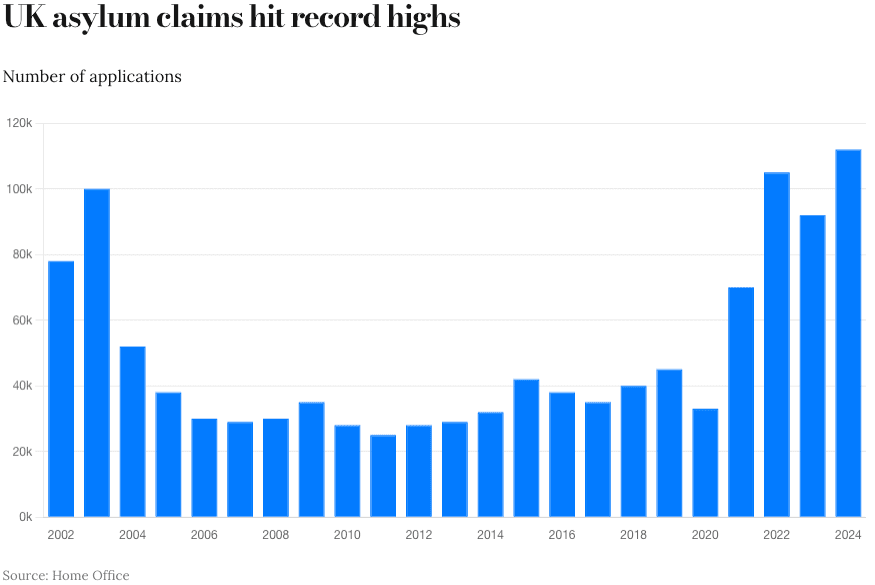
    Asylum Seeker Applications

    British asylum seeker policy lags behind the Danes

    Number of asylum seeker applications and applications granted* in Denmark and the United Kingdom

    Denmark’s grants are the number of residence permits | Source: Statistics Denmark, Home Office

    The Labour Party’s champagne socialist wing, a cadre of far-left MPs has unleashed a barrage of sanctimonious outrage against Home Secretary Shabana Mahmood‘s proposed migration crackdown, labeling it “far-Right” and “undeniably racist” while conveniently ignoring the spiraling chaos at Britain’s borders. MPs like Nadia Whittome and Clive Lewis, ensconced in their safe metropolitan bubbles, are urging a retreat from Denmark’s proven blueprint—a system that has slashed asylum claims by over 80% since 2015—insisting it echoes the very “hate” they claim to abhor.

    As Labour grapples with the fallout from high-profile migration debacles, including a deported Iranian migrant sneaking back via small boat and a convicted sex offender’s bungled release, this internal mutiny reeks of the same border-blind naivety that handed Nigel Farage and Reform UK their electoral surge.

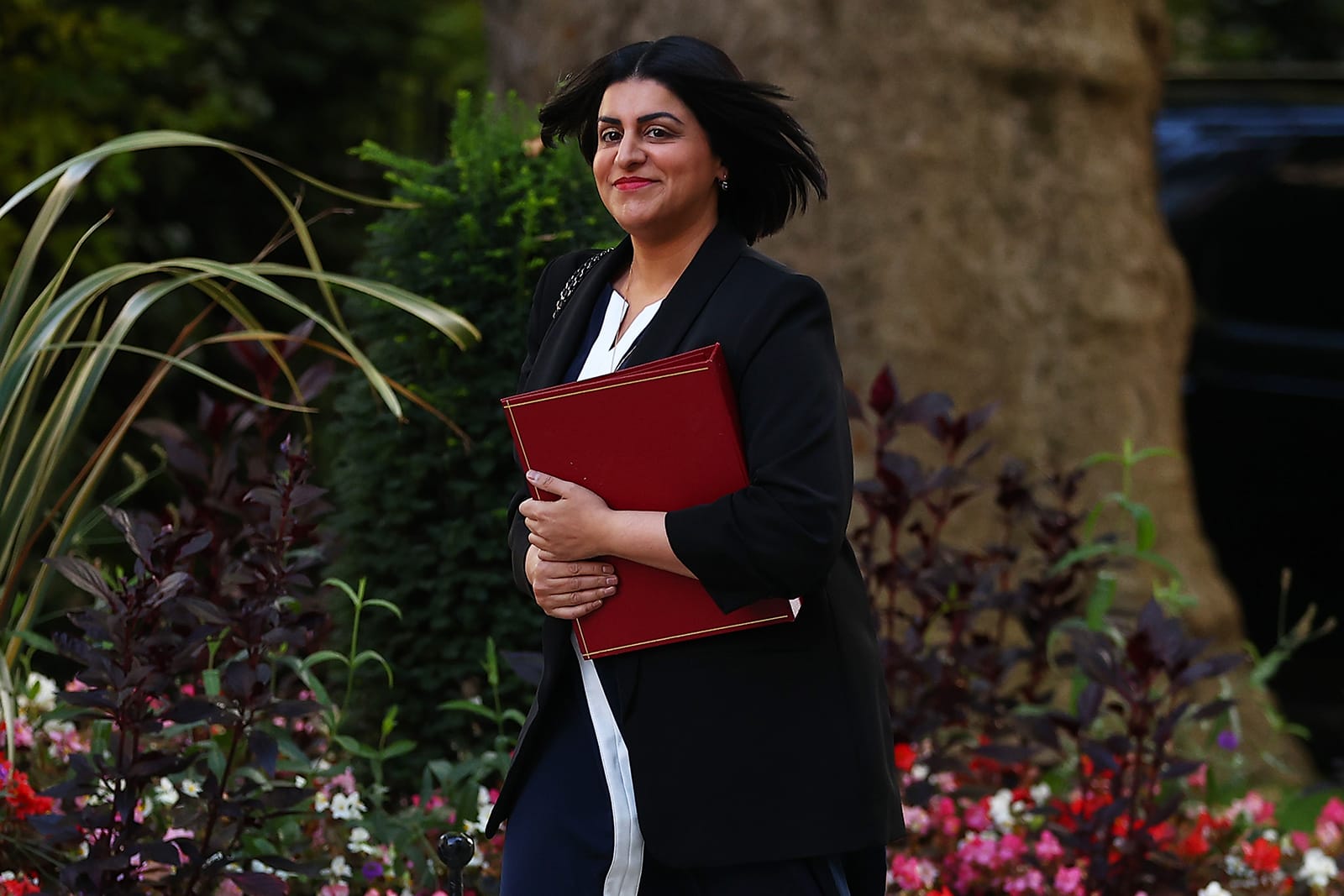
    Shabana Mahmood arrives for a cabinet meeting at Downing Street on 9 September 2025 in her new role as home secretary. © Peter Nicholls/Getty Images
    Shabana Mahmood arrives for a cabinet meeting at Downing Street on 9 September 2025 in her new role as home secretary. © Peter Nicholls/Getty Images

    Mahmood, tasked with restoring sanity to a Home Office battered by years of open-door lunacy under the Tories and now Labour’s wobbly grip, is reportedly finalizing a Danish-inspired package for announcement later this month. Drawing from Copenhagen’s rigorous model—mandatory financial guarantees for family reunions (£7,000 equivalent), age thresholds (24+ for partners), integration tests, and temporary humanitarian stays— the reforms aim to curb the unchecked influx that saw net migration hit 685,000 last year. Denmark’s success is undeniable: Asylum applications plummeted from 13,000 in 2015 to under 2,000 by 2024, without the economic drag of unchecked welfare claims or the cultural fractures from “parallel societies.” Yet, in a party already hemorrhaging support to Reform, the hard-left brigade cries foul, as if compassion means capitulation to every dinghy-dodger.

    Woke Warriors Weaponize ‘Racism’ Against Common Sense

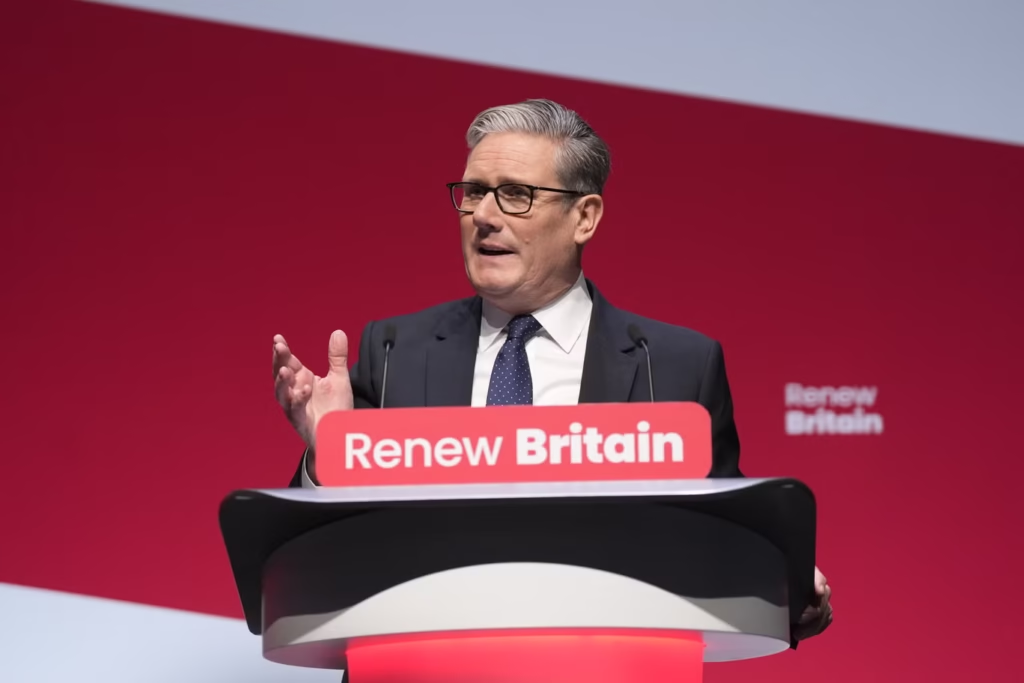
    Keir Starmer is under pressure to stem Reform’s popularity while also tackling the migrant crisis. © PA Wire
    Keir Starmer is under pressure to stem Reform’s popularity while also tackling the migrant crisis. © PA Wire

    Leading the charge is Whittome, the Nottingham East MP and self-styled eco-warrior, who branded the Danish model a “dead end—morally, politically and electorally” on BBC Radio 4’s Today programme. “These are policies of the far-Right,” she thundered, dismissing Mahmood’s pragmatic borrowing as a “dangerous path” laced with racism. Whittome’s hyperbole isn’t isolated; Norwich South’s Clive Lewis echoed the sentiment, decrying Denmark’s “hardcore approach” that apes “far-Right talking points.” For these ideologues, any curb on unchecked migration—family reunions requiring independent status, or asset seizures from asylum seekers to cover stays (a 2016 Danish staple)—is tantamount to xenophobia, not the fiscal prudence it is.

    This isn’t mere dissent; it’s sabotage. As Red Wall MPs like Stoke-on-Trent’s Gareth Snell praise exploring Danish tactics to reclaim Reform-leaning voters, the left’s purity tests threaten Labour’s fragile unity. Snell, representing a Brexit heartland, sees sense in Copenhagen’s framework: “Worth exploring,” he told The Telegraph, recognizing that voters fleeing Labour for Farage cite migration overload as the tipping point. Whittome and Lewis, however, prioritize performative allyship over electoral reality—echoing Lucy Powell’s deputy leadership plea for a “softer” stance, which reeks of surrender to the migrant caravans overwhelming Dover.

    Screenshot 2025 11 11 at 10.38.58 PM

    Recent fiascos underscore the urgency: An Iranian “deportee” under the Franco-UK “one-in-one-out” scheme returned via Channel dinghy last month, mocking border controls. Then, Ethiopian rapist Hadush Kebatu—jailed for assaulting a 14-year-old—slipped custody post-sentence, sparking a manhunt before a £500 bribe quashed his asylum claim for deportation.

    These aren’t anomalies; they’re symptoms of a system Whittome’s crowd deems too “tough.” Meanwhile, Labour’s pollster panic mounts: Reform’s 14% surge in locals ties directly to migration gripes, per YouGov.

    Christian Clerics Join the Open-Borders Chorus

    Compounding the farce, a flock of Anglican elites has waded in, decrying anti-migration sentiment as “Christian nationalist” poison. Former Archbishop of Canterbury Rowan Williams sermonized that migrants aren’t “enemy invaders” but “vulnerable people like us,” urging a rejection of “lazy, hurtful stereotypes.” Southwark’s Bishop Rosemary Mallet echoed: “Migration is… a test of our shared humanity,” invoking gospel love for neighbors—conveniently ignoring the neighbors already strained by housing shortages and NHS queues.

    Friday’s London “prayer walk”—clergy clutching poppy-crosses at migrant memorials—dramatized their plea, but it rings hollow against the data: Net migration’s 20% spike under Sunak fueled 4 million excess deaths from overburdened services, per ONS. As one Daily Mail reader quipped online: “Love thy neighbor—until they’re 10 to a flat, then it’s ‘compassion overload.’” This clerical meddling, blending theology with politics, alienates working-class Christians who back Farage’s “stop the boats” clarion.

    Labour’s Fork in the Road: Farage’s Gain or Reform’s Pain?

    Mahmood’s Danish pivot isn’t flirtation with the “far-Right”—it’s survival. Copenhagen’s Social Democrats, once centrist, adopted tough measures without imploding, slashing claims while boosting integration. Labour, trailing Reform by 5 points in marginals (Ipsos), can’t afford Whittome’s moral grandstanding. Starmer’s post-election silence on the rift—after Powell’s “step forward” plea—hints at internal tremors: Red Wall pragmatists vs. Islington utopians.

    Migrants sit on board a smuggler’s boat off the coast of Gravelines, France, in an attempt to cross the English Channel. © AFP/Getty
    Migrants sit on board a smuggler’s boat off the coast of Gravelines, France, in an attempt to cross the English Channel. © AFP/Getty

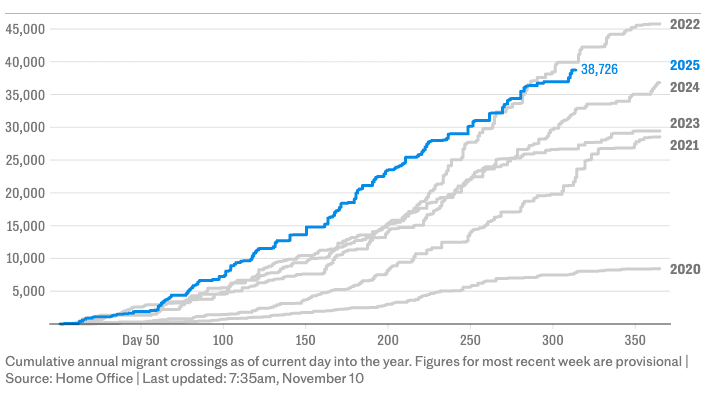
    As migration dominates headlines—1,200 Channel crossings last week alone—the left’s sabotage hands Farage a gift-wrapped narrative: Labour as migrant enablers, blind to cultural erosion. Whittome’s “racist” slur? A badge of honor for border hawks. Lewis’s “lose progressive votes”? Tell that to the 2 million who shunned Labour in locals.

    Screenshot 2025 11 10 at 1.30.00 PM

    Mahmood must steel against the sirens: Implement Danish rigor, reclaim the center-right on security, and remind voters migration isn’t charity—it’s capacity. Otherwise, Reform’s “complete and total failure” taunt about Labour becomes prophecy. Britain deserves borders that work, not woke whimsy.

  • Big Apple Affordability Crisis Convert Politics

    Big Apple Affordability Crisis Convert Politics

    Stakeholders can’t agree on how to solve New York City’s housing crisis. © New York Times
    Stakeholders can’t agree on how to solve New York City’s housing crisis. © New York Times

    NEW YORK CITY — In the shadow of gleaming skyscrapers that symbolize American capitalism’s triumph, a quiet revolution is brewing—and it’s not the kind Wall Street cheers. New Yorkers, squeezed by median rents hovering at $3,400 against household incomes barely cracking $6,640, handed a stunning mandate to democratic socialist Zohran Mamdani in Tuesday’s mayoral election, capping a night of Democratic sweeps that exposed the raw nerve of America’s housing meltdown. With record turnout shattering 50-year highs—over 2 million ballots, including 735,000 early votes—Mamdani’s 50.4% rout of Andrew Cuomo‘s independent bid wasn’t just a populist uprising; it was a desperate cry from a city where the American Dream of homeownership feels like a relic from another era.

    The median age for first-time homebuyers nationwide has now climbed to 40, per the National Association of Realtors’ (NAR) 2025 Profile of Home Buyers and Sellers—a shocking leap from 38 just last year, 36 in 2022, and a mere 28 back in 1991. As NAR deputy chief economist Jessica Lautz put it, “It’s really been in recent years that we’ve seen this steep climb.” In New York, where affordability ratios have spiked to 35% of income for mortgages and 40% for rents (the least affordable metro in the nation, per Demographia), this crisis isn’t abstract—it’s reshaping politics, punishing incumbents, and handing progressives a megaphone at the expense of market-driven solutions.

    From Virginia’s suburban backlash to New Jersey’s tax-weary holdouts, Election Night’s Democratic trifecta—Abigail Spanberger’s 13-point gubernatorial romp in the Old Dominion, Mikie Sherrill’s double-digit drubbing of Jack Ciattarelli in the Garden State, and Mamdani’s socialist surge in the Big Apple—spelled trouble for President Trump’s America First coalition. AP VoteCast data showed 6 in 10 voters nationwide fuming over the economy, with housing costs topping the list in urban and suburban precincts alike. Trump, posting on Truth Social amid the shutdown’s 36-day drag, shrugged it off: “TRUMP WASN’T ON THE BALLOT, AND SHUTDOWN, WERE THE TWO REASONS THAT REPUBLICANS LOST ELECTIONS TONIGHT.” Fair point—but conservatives would be wise to see this as a five-alarm fire: When working families can’t afford a roof, they don’t reward fiscal hawks; they turn to radicals promising rent freezes and free rides.

    Let’s cut through the spin: America’s housing crisis is a self-inflicted wound from overregulation, zoning zealotry, and a NIMBY stranglehold that’s starved the market of supply. The U.S. faces a 5.5 million-unit shortage, per Moody’s Analytics, with New York City’s inventory at a 40-year low—median home prices up 25% since 2020 to $750,000, per Zillow. First-time buyers? A pathetic 21% of purchases, down 50% from 2007, per NAR. That’s not just numbers; it’s lost equity. Delay homeownership by a decade, and you’re forfeiting $150,000 in lifetime wealth on a starter home, NAR estimates.

    Young New Yorkers embody this despair. The typical down payment now demands 10%—a post-1989 peak—with 59% scraping from savings, 26% raiding 401(k)s, and 22% begging family for handouts. Repeat buyers, median age 62, waltz in with cash (30% outright) and equity firepower, leaving millennials and Gen Z competing with boomer empty-nesters for scraps. As ResiClub’s Lance Lambert quipped to Fortune, today’s 40-year-old newbie is “just as close in time to… early Social Security withdrawals (age 62) as… high school graduation (age 18).” No wonder multigenerational living has dipped to 14% from 17% last year—families can’t pool resources when starter homes cost nine times median income.

    Charts tell the stark tale: NAR’s affordability index shows mortgage payments eating 35% of income in 2024, up from 25% pre-pandemic, while rents claim 40%—levels unseen since the 1980s stagflation. In New York, the rent-to-income ratio has flatlined around 35-40% since 2010, per Joint Center for Housing Studies data, while mortgage burdens spike post-2020. Nationally, nonrenewal of home insurance policies has tripled in over 200 counties since 2018, per Senate Budget Committee findings, as climate risks jack premiums 30% from 2020-2023. Florida’s Tampa saw property taxes soar 60% since 2019; Indianapolis and Atlanta, over 65%. Even “low-tax” havens like Hawaii (0.32% effective rate) can’t offset $963,000 medians.

    Homeowners, meanwhile, are shell-shocked: Two-thirds report bills exceeding estimates, per a 2025 CoreLogic survey, with medians at $3,018 nationally—but $10,333 in New Jersey, $7,355 in New Hampshire. Nearly half (48%) contest assessments as inflated, yet 78% never appeal—53% unaware they can. In high-cost California (0.70% rate, $5,502 median bill), insurers are fleeing wildfire zones, forcing “non-admitted” policies up 27.5% last year. Result? Delinquencies spike 4 percentage points post-disaster, prepayments 16 points, per UC Berkeley research—149,000 extra defaults from premium hikes alone in 2022-2023.

    This “perfect storm”—undersupply, soaring taxes, insurance Armageddon—isn’t Mother Nature; it’s policy malpractice. Zoning laws inflate land costs 30-50% in metro areas, per Urban Institute; the Great Recession’s construction plunge never recovered. Now, with homes median age 40 (oldest ever), climate hits amplify: Severe storms, floods, heat—pushing maintenance 20-30% higher. TCW’s Sustainable Insights warns of a “housing-insurance gap” eroding stability, with GSEs like Fannie Mae dodging destroyed-home guarantees.

    Mamdani’s Mandate: Populism Over Pragmatism?

    Enter Zohran Mamdani, the 34-year-old Queens assemblyman whose TikTok-fueled blitz—millions of views on subway rants and rent audits—propelled him from DSA obscurity to history’s youngest NYC mayor since 1892, first Muslim and South Asian leader. Born in Uganda to Indian parents (filmmaker Mira Nair, academic Mahmood Mamdani), he naturalized in 2018 and railed as a renter against inequality. His platform? Rent freezes on 1 million stabilized units, fare-free buses, millionaire taxes, universal childcare—echoing Sanders’ 13.2 million-vote 2016 haul, but wallet-first.

    Wall Street recoiled, unleashing $28 million via super PACs like Defend New York—Bloomberg ($13.3 million), Ackman ($1.75 million), Gebbia ($3 million), Lauder ($1.75 million). Their doomsday ads warned of exodus to Miami; Ackman quipped on Flagrant about a “hot commie summer.” It flopped: Mamdani won Queens and Brooklyn by landslides, flipping Bronx margins with renter turnout. Cuomo’s scandals (2021 harassment exit) and Sliwa’s Guardian Angels schtick couldn’t compete. Post-win, Mamdani quipped to Trump barbs: “Turn the volume up!” His transition team—five women, including Lina Khan and Grace Bonilla—signals equity; retaining NYPD’s Jessica Tisch nods to evolved policing (no more “defund” echoes).

    But here’s the conservative rub: Mamdani’s socialism isn’t salvation—it’s accelerant. Freezing rents distorts markets, breeding black markets and decay (witness 1970s NYC). Taxing millionaires? Albany vetoes loom, per Gov. Hochul’s history. His Gaza stance—vowing Netanyahu’s arrest—risks alienating Jewish voters (though he pledged outreach). Trump threatens federal cuts; NRCC eyes 2026 ads tying Dems to this “far-left mob.” As Vivek Ramaswamy posted: “Focus on affordability… cut identity politics.” Mamdani’s win, amid Spanberger’s VA pragmatism and Sherrill’s NJ centrism, shows Dems’ big tent: Radicals in cities, moderates in burbs. Yet AP polls reveal fury—6 in 10 “angry,” half blaming economy—stems from shutdown optics, not Trumpism.

    Broader Ripples: From Suburbs to States, a Call for Market Fixes

    Virginia’s Spanberger, ex-CIA, crushed Winsome Earle-Sears by 13 points in shutdown-furloughed NoVA, where 800,000 feds missed pay amid budget brinkmanship. “Pragmatism over chaos,” she thundered—resonating as 60% cited economy per AP. Jersey’s Sherrill, Navy vet, hammered Ciattarelli on taxes ($10,333 median) and bills, extending Dems’ three-term streak. Down-ballot: Ghazala Hashmi (first Muslim LG in VA), Jay Jones ousting scandal-tainted AG Jason Miyares.

    Bright spots for right? California’s Prop 50 empowers Dem redistricting (five House flips eyed); Maine’s red-flag guns passed sans voter ID; Colorado taxes rich for meals. But Texas affirmed parental rights; urban Dem holds (Buffalo’s Sean Ryan, Pittsburgh’s Corey O’Connor) show blue fortresses intact.

    Nationally, this is GOP’s wake-up: Housing trumps culture wars. Obama’s “brighter future” crow? Hype. Shutdown ends soon; tout manufacturing (1.2 million jobs since 2024), drill baby drill for energy costs. Blame NIMBY Dems for supply choke—streamline zoning, cut regs, incentivize builds. As NAR’s Shannon McGahn urges: Unlock inventory, modernize construction. Without it, 40 becomes 45 for buyers, and Mamdani clones sprout nationwide.

    New York’s saga isn’t progressive destiny—it’s market failure’s revenge. Trump’s coalition—diverse, ascendant—rebounds by delivering: Deregulate, build, tax less. Midterms loom; govern boldly, or watch affordability fury fuel the far left. The heartland’s watching—and the ballot box bites back.


    Adding to the pressure is a flurry of recent AI deals structured using what critics have dubbed “circular” funding mechanisms—broadly referring to suppliers like Nvidia making large capital investments in the businesses of the customers who buy their products. Just a few months ago, investors viewed such deals with enthusiasm, pumping up shares for a variety of AI-related companies, but this week one such deal—between Nvidia, Microsoft and Anthropic—was greeted warily.

    This week, 45% of global fund managers surveyed by Bank of America said that an AI stock-market bubble was one of the biggest risks facing the market.

    A number of bearish moves by high-profile investors have also rattled tech markets. Last week, Masayoshi Son’s SoftBank Group sold its entire $5.8 billion stake in Nvidia to divert that money to other AI investments, while a hedge fund run by influential billionaire venture capitalist Peter Thiel unloaded its entire $100 million Nvidia stake in the third quarter.

  • BBC to Apologize After Broadcasting Edited Version of Donald Trump Speech

    BBC to Apologize After Broadcasting Edited Version of Donald Trump Speech

    Panorama ‘completely misled’ viewers with its coverage of Donald Trump’s Capitol Hill speech, a report found. © Shawn Thew/EPA/Bloomberg

    The BBC will apologise for the misleading editing of a Donald Trump speech in a Panorama documentary, the Telegraph can disclose.

    Samir Shah, the BBC’s chairman, will write to the culture, media and sport committee on Monday to express regret for the way the speech, made on the day of the Jan 6 2021 Capitol riot, was spliced together.

    The apology will heap further pressure on Tim Davie, the BBC’s director general, to quit over an 8,000-word dossier compiled by a whistleblower that alleged widespread bias within the corporation.

    The Telegraph has previously disclosed that both Mr Davie and Mr Shah were warned of the doctored footage in May but appear to have kept quiet.

    The decision to issue an apology now raises questions about why it has taken them six months to admit viewers were misled.

    The Telegraph understands the apology will be for the misleading editing of the Trump speech. It is not clear what Mr Shah will say about the coverage of the Gaza war or alleged bias in the BBC’s reporting on gender, but it is understood that he may also advocate changes to the management and oversight of BBC Arabic.

    The Panorama episode, broadcast a week before the 2024 US election, “completely misled” viewers, according to the memo written by Michael Prescott, a former standards adviser to the BBC.

    His memo was circulated amongst senior managers, who “refused to accept there had been a breach of standards”.

    Mr Prescott is then understood to have warned Mr Shah of the “very, very dangerous precedent” set by Panorama, but received no reply.

    The existence of the dossier and its contents were revealed by The Telegraph last week, prompting calls from senior politicians, including the former prime minister Boris Johnson, for Mr Davie to resign.

    On Friday night, the White House accused the BBC of “purposeful dishonesty”, claiming it was a “Leftist propaganda machine”.

    The dossier also highlighted anti-Israel bias, especially in coverage of the war in Gaza, on its dedicated BBC Arabic news service.

    Sir Vernon Bogdanor, Britain’s foremost constitutional expert, also called on Mr Davie to resign with “immediate effect” on Saturday.

    The academic, a former professor of government at the University of Oxford, said the broadcaster had “ignored” a separate report he had sent to it, warning of distortion and bias in its reporting on Gaza.

    The Telegraph has been told that Mr Shah’s apology for misleading viewers on the editing of Mr Trump’s speech will be contained in a letter sent to Dame Caroline Dinenage, the chairman of the culture, media and sport committee.

    It is likely to raise questions over whether Mr Shah and Mr Davie tried to cover up internal concerns over the Trump edit, given that they are only now apologising in the face of intense media scrutiny.

    Danny Cohen, a former director of BBC Television, said on Saturday night: “It is extraordinary that the BBC’s leadership has been missing in action for a week amidst this growing crisis.

    “Both BBC director general Tim Davie and chairman Samir Shah were in the room when the faked Trump video was raised as a serious problem six months ago. This makes it very hard for them to excuse away the scandal.”

    In his report, Mr Prescott wrote: “Examining the charge that Trump had incited protesters to storm Capitol Hill, it turned out that Panorama had spliced together two clips from separate parts of his speech. This created the impression that Trump said something he did not and, in doing so, materially misled viewers.”

    ‘The BBC has become the story’

    In an email sent to news staff on Friday evening, Deborah Turness, the chief executive of BBC News and Current Affairs, appeared to lay the ground for the apology. She said in her email: “I’m writing to you today because it’s always difficult when the BBC becomes a story – as it has, in some quarters, this week.”

    She went on: “You will all have seen the news coverage following the leaking of a letter to the BBC board from Michael Prescott, who is a former adviser to the BBC’s editorial guidelines and standards committee (EGSC). The EGSC is a sub-committee of the BBC board.”

    She said the BBC had received a letter from Dame Caroline “seeking reassurance from the BBC, adding: “The chairman will be providing a full response on Monday, and this will be shared with you, but I felt it was important for me to come to you as CEO of BBC News before the end of the week.”

    In a statement, a BBC spokesman said on Saturday night: “The BBC chairman will provide a full response to the culture, media and sport committee on Monday.”

    ‘Serious manipulation’

    Sir John Whittingdale, the former culture secretary, in an interview with Radio 5 Live on Saturday night, said: “The BBC does great work and I’m a huge supporter of the BBC World Service, its investigative journalism has been outstanding. But all of that has been threatened in the case of the Trump speech.

    “It’s a very serious manipulation to present a picture that is not accurate and that will cast doubt on everything that the BBC says.”

    Sir John, who is MP for Maldon, said the “buck stops” with Mr Davie.

    He added: “I think part of the problem is that the director general also has the title of editor-in-chief. Ultimately he is responsible and previous director generals have had to resign.

    “If Tim Davie is to continue he has got to show that he recognises what a serious threat to the reputation of the BBC this is and to show that he is going to act very swiftly and make sure things improve and that it can’t happen again.”

    On being asked if he thought Mr Davie’s job was under threat, Sir John said: “Yes I do.”

    He added: “There are already people saying that the director general will have to resign.”

    ‘We need to listen and learn

    Nick Robinson, presenter of the BBC Today programme, said on X: “We live in a time of deep divisions – about politics and culture – Gaza/Israel, trans and women’s rights, Donald Trump’s policies and politics – to name just three.

    “The BBC like many public organisations faces competing pressures about how we navigate these treacherous waters.

    “We, like others, need to listen and learn. We can and will do better but we should stand up to those who prefer propaganda and disinformation.

    “I look forward to hearing what the chairman of the BBC will say in response to legitimate concerns which have been raised but I have no idea what he plans to say nor did he – or any other my bosses – know what I said on air today or here on X.”

  • Senate Debates New Plan to End the Ongoing Government Shutdown

    Senate Debates New Plan to End the Ongoing Government Shutdown

    im 09086710 1
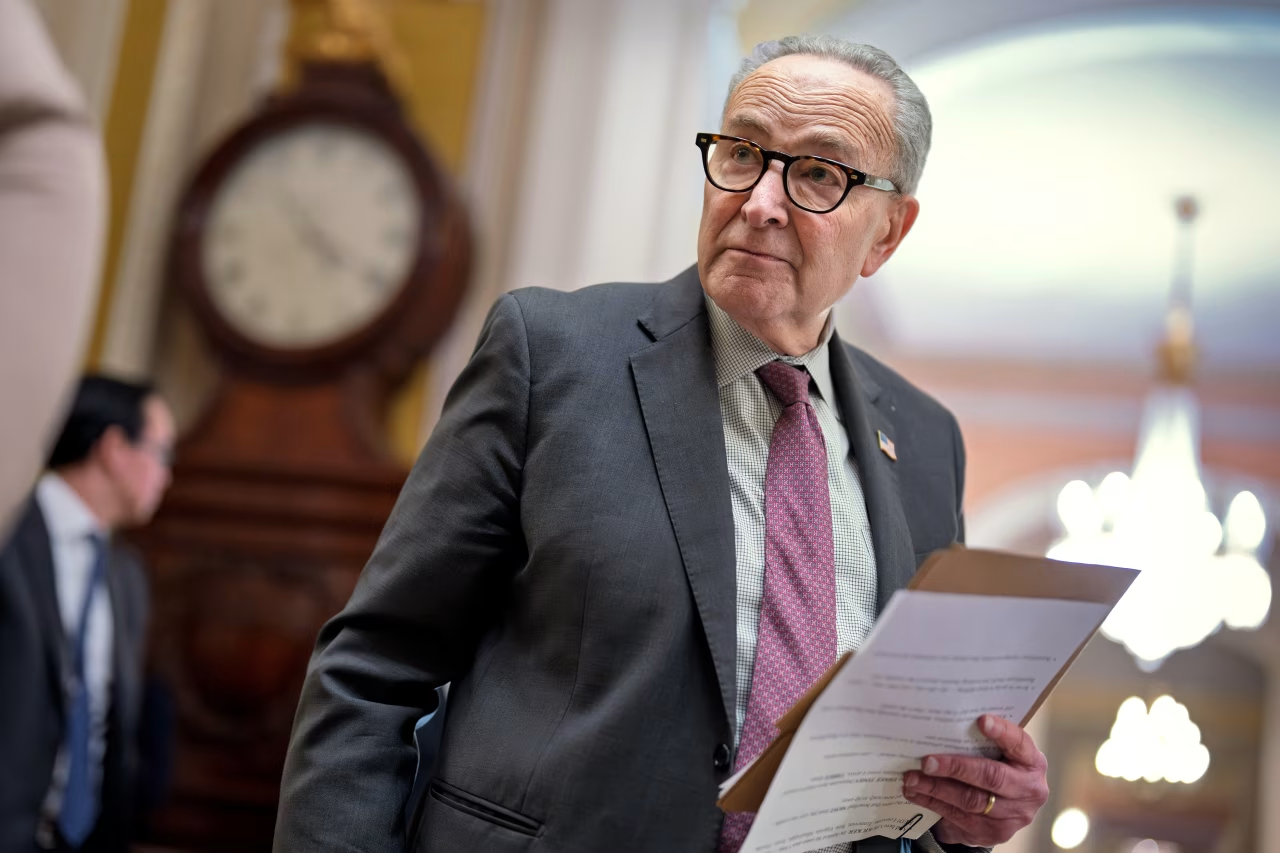
    Senate Minority Leader Chuck Schumer, D-N.Y., looks over notes as Senate Republicans work to cancel $9.4 billion in previously approved spending targeted by DOGE, at the Capitol in Washington, Tuesday, July 15, 2025. © AP Photo/J. Scott Applewhite

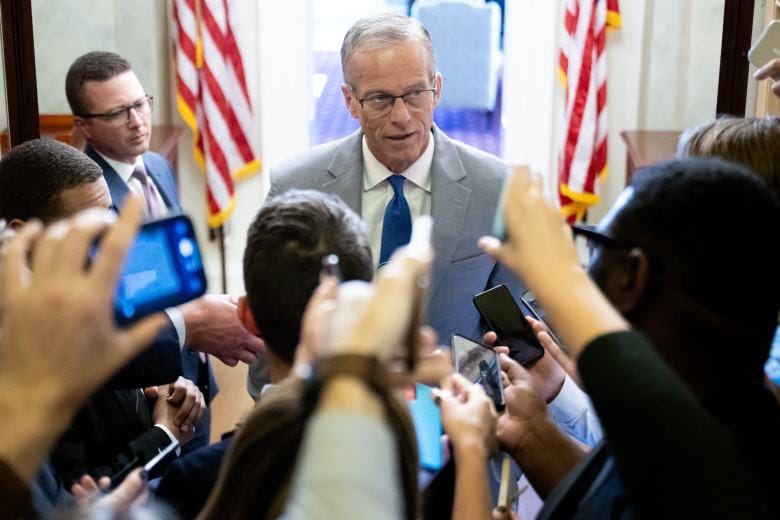
    WASHINGTON—Senate Majority Leader John Thune (R., S.D.) told Senate Republicans Thursday that they should expect to vote on a new proposal Friday aiming to end the government shutdown, according to people familiar with the plan, in an attempt by GOP leaders to build momentum toward a deal. 

    Democrats, however, indicated they weren’t sold on the emerging package, with some saying they would need their core demand of extending Affordable Care Act subsidies to be part of any legislation. 

    The plan to vote on a revised proposal comes as the impact of the shutdown continues to grow. Government workers have gone without pay for weeks, and low-income families are seeing cuts in food aid and other assistance programs. On Thursday, airlines scrambled to review flight plans after federal officials said they would reduce commercial air traffic starting Friday in response to the government shutdown.

    The proposal would combine a short-term spending measure with a package of three full-year funding bills, covering the legislative branch, agriculture, and military construction and veterans affairs. It was unclear whether the interim measure would aim to keep the government open through mid-December or January. 

    How ACA subsidies, a central concern of Democrats, would figure into the revised approach also remained in flux, and some Democrats warned they wouldn’t be satisfied by a pledge of future action.

    Sen. Richard Blumenthal (D., Conn.) said the subsidies needed to be included in any stopgap bill. “Settling for some kind of vague promise about a vote in the future on some indeterminate bill, without any definite inclusion in the law, I think is a mistake.”

    Thune acknowledged the uphill fight. Democrats “seem to be walking back or slow-walking this,” he told reporters. “This is what they asked for.” 

    To draw Democratic support, one element under discussion includes a proposal to stop or even roll back the firings that the White House initiated at the start of the shutdown. Sen. Tim Kaine (D., Va.) has for weeks made plain that he could support an interim spending bill if he had a guarantee against more so-called reductions in force—an important addition to the bloc of Democrats who have already voted to fund the government.

    Some Democrats, particularly in the progressive wing, have insisted on a guarantee that enhanced Affordable Care Act healthcare subsidies, which flow to 22 million people, would be extended past the end of this year, but Republican leaders declined to make that promise. Instead, Thune has offered a vote on extending ACA subsidies, but no guarantee it will pass.

    “We’ve got a dilemma,” said Sen. Peter Welch (D., Vt.). “There’s no other institution that can protect folks from the hammer blow of these explosive premium increases,” he said, “and the dilemma of a shutdown that does cause harm to people.”

    The House, which would also need to approve any deal, adds a complication. GOP lawmakers pushed through their own stopgap spending deal in mid-September that would have kept the government funded until Nov. 21. House Speaker Mike Johnson (R., La.) has insisted the Senate approve that bill before any talks could take place and has kept the chamber out of session for more than a month.

     On Thursday, Johnson said he wasn’t part of the talks and wouldn’t make any guarantees.

    “The House did its job on Sept. 19,” he said. “I’m not promising anybody anything.”

    Since September, Senate Minority Leader Chuck Schumer (D., N.Y.) has demanded talks to extend the expiring enhanced ACA subsidies before Democrats will provide the votes for a GOP bill to reopen the government. Republicans have a 53-47 Senate majority, and so far, only three senators who caucus with Democrats have crossed the aisle in more than a dozen failed votes. Democrats felt that favorable election results Tuesday bolstered their negotiating hand.

    im 46414997
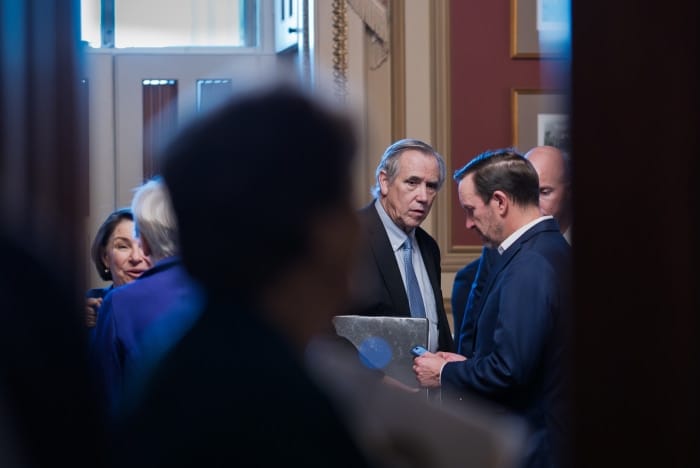
    Senate Democrats gathered at the Capitol on Thursday to discuss ways to end the shutdown. © J. Scott Applewhite/Associated Press

    President Trump has declined to engage in talks with Democrats since the shutdown began, insisting that they vote to reopen the government first. In recent days, he has pressed Senate Republicans to bypass Democrats by eliminating the filibuster rule, which requires 60 votes to advance most legislation. GOP senators have largely pushed back against Trump’s demand but have grown frustrated by the lack of progress.

    “This thing, I’ve told you before, this is a total goat rodeo,” said Republican Sen. John Kennedy of Louisiana, as he departed the meeting with Senate Republicans. “I can’t tell you what it’s going to be. I don’t think they know what it’s going to be.”

    Senate Democrats spent hours behind closed doors on Thursday in the hopes of finding a breakthrough but were tight-lipped on details. 

    “It was a caucus in which we were trying to organically come to a conclusion and I think that process is still happening,” said Sen. Chris Murphy (D., Conn.). “I just think we had a real desire in that meeting and previous meetings today to try to find a way to get together and we’re closer.”

    im 75205416
    South Dakota Republican John Thune, the Senate majority leader, has offered a vote on extending Affordable Care Act subsidies. © saul loeb/AFP/Getty Images

    Senate Republicans have been urging their Democratic colleagues to back the revised approach, which would provide full-year funding for three of 12 annual appropriations bills and aim to create time to complete the rest. Passing annual appropriations laws—rather than so-called continuing resolutions—would limit the executive branch’s discretion to withhold congressionally approved funds, and members of both parties have bristled at the budget cuts and firings Trump’s budget director has initiated this year.

    “The argument I’m making is we’ve got to get going on these [appropriations] bills or we’re going to end up with a yearlong” continuing resolution, Sen. John Hoeven (R., N.D.) said.