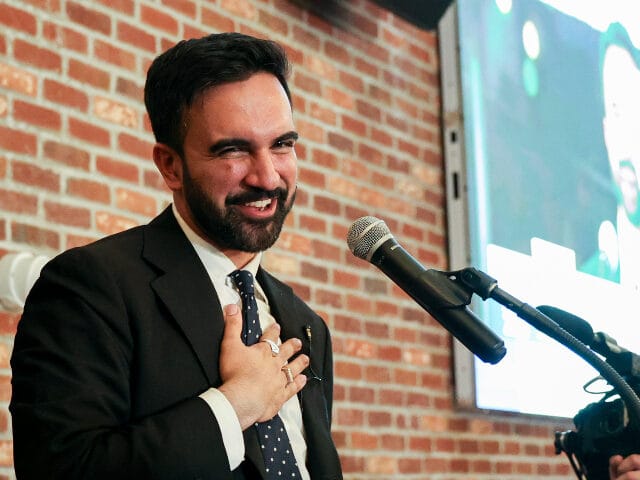
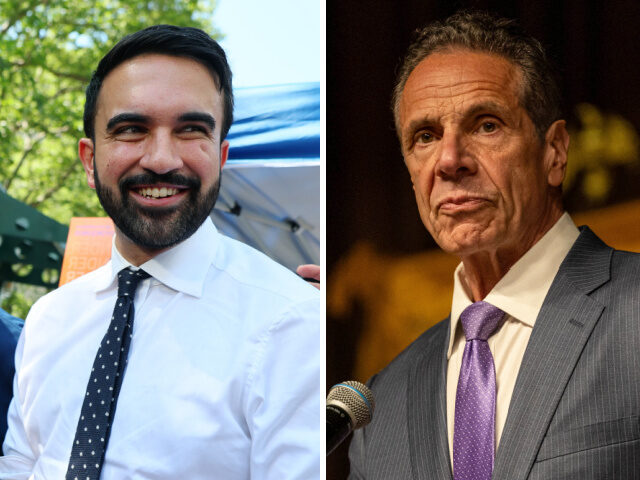
Zohran Mamdani claims he “no longer believes,” as he did just five years ago, that the New York City Police Department is a “wicked and corrupt” institution that must be “defunded” and “dismantled.”
He says he really didn’t mean it when he blamed “the police themselves” for “perpetrating an enormous amount” of violent crime, “especially with regard to sexual violence.”
He insists he was misunderstood when he tweeted, “The NYPD is racist, anti-queer and a major threat to public safety.”
Bull. Mamdani will be a disaster for public safety in New York City if he becomes our mayor.
A look at his agenda makes it crystal clear.
First and worst of all, he’ll add no police officers to the force — and will cut the hours of those who remain.
The NYPD’s 32,000-officer headcount is well below the 34,300 force of 2019, the safest year in more than 40 years. Index felony crimes are 26% higher today.
The city has compensated for the reduced patrol strength via overtime, which pays for extra subway police patrols, arrest processing and investigations and keeping order at protests and public events.
Yet Mamdani has long railed against police overtime and plans to eliminate it to fund his other programs — notably his Department of Community Safety.
Reducing overtime without expanding the force means fewer police on the street, making the city less safe and more chaotic.
Mamdani also remains full-steam-ahead on closing Rikers Island, which currently houses some 7,600 inmates — and replacing it with new borough-based jails containing room for just 4,100. (As a candidate for Assembly in 2020, he advocated building no Rikers replacement at all.)
That will put thousands of the most dangerous repeat offenders in the city on the street, with 2,500 of them lodged in “supportive housing” in a neighborhood near you, under the aegis of Mamdani’s DCS.
Mamdani has signed on to the Democratic Socialists of America’s “Agenda for Decarceration,” which calls for fully eliminating cash bail, repealing all mandatory minimum sentences, decriminalizing sex work and more. He has not repudiated those principles.
We’ve seen this movie before: When the city released 2,000 Rikers inmates under “bail reform” in 2020, crime shot up by 20%. When we released another 2,000 during the COVID-19 pandemic, shootings and murders doubled.
Now the city’s jail population stands at about 7,600, and crime has begun to slowly decrease.
Mamdani’s decarceration agenda will reverse that progress, as he pressures DAs to release defendants and drop prosecution of minor crimes.
His enforcement policies, too, will handcuff police instead of wrongdoers.
Incredibly, Mamdani would halt NYPD response to domestic-violence calls, claiming that poor police training escalates such situations. He’d have social workers respond instead.
He opposes any consequences for turnstile jumpers, thereby making farebeating legal. Why pay?
Mamdani opposes involuntary commitment of those with mental illness — you know, the guy sleeping in the subway or ranting at imaginary demons on the street.
“People should be allowed to make their own mental health care decisions,” no matter how delusional they are, he told The City.
He’d further restrict City Hall’s limited cooperation with federal immigration enforcement — meaning that he would release illegal aliens convicted of violent crimes onto our streets without informing ICE.
And a Mayor Mamdani would do lasting damage to public safety via the judges he appoints to the Criminal Court bench.
These judges, who set bail on criminal cases, will be taking their cues from the mayor — and will presumably be on board with his desire to basically do away with incarceration.
Under state law, judges decide whether to set bail, and in what amount. What do you think Mamdani’s judges will do?
And all of this is to say nothing about NYPD morale under a mayor who sees its officers as racist, homophobic sexual predators.
Recruitment and retention are difficult now; just wait until Mamdani takes office.
Politicians can normally be forgiven some of the stupid statements they’ve made in the past, when they were pandering to the public will (or their perception of it).
But Mamdani is no politician. He is a radical socialist and an anti-police ideologue.
He truly believes what he said in 2020: When it comes to crime, he cares more about the 7,600 people in city jails — victims, he believes, of an evil capitalist system — than about the city’s 8.5 million law-abiding citizens.
Under his watch, Rikers will close, jails will empty, criminals will walk free, police officers will be second-guessed and police patrols will decline.
We’ll see fewer arrests made, fewer crimes solved and far more dangerous streets.
But we’ll all be comrades in the glorious Democratic People’s Republic of New York City.
Jim Quinn was executive district attorney in the Queens District Attorney’s Office, where he served for 42 years.
The Sunshine State is once again capturing the attention—and investment—of New York’s wealthiest. In the wake of Zohran Mamdani’s surprise victory in New York City’s mayoral primary, real estate firms in Florida are reporting a 50% surge in inquiries from high-net-worth individuals and investors in the New York area.
Mamdani, a far-left assembly member from Queens and a prominent figure in New York’s progressive movement, ran a campaign centered on bold reforms such as a citywide rent freeze, taxpayer-funded childcare, and “fast and free” public buses. His populist agenda garnered 565,639 votes, signaling a significant political shift—but also sparking unease among the city’s wealthiest residents and business community.
“We’ve seen a clear uptick in demand across our portfolio since the primary,” said Daniel de la Vega, president of ONE Sotheby’s International Realty. “Website traffic from the New York area jumped 50% in just one week after the results came in. Our agents are fielding calls daily from buyers reassessing their long-term presence in the city.”
According to de la Vega, the increased activity is not limited to individuals—institutional investors, family offices, and entrepreneurs are among those exploring relocation options. Many are drawn by Florida’s well-known tax advantages, including no state income tax, coupled with perceptions of greater political and financial stability, public safety, and quality of life.
“These are not just second-home buyers. We’re seeing families and executives who want to move their operations and lives permanently,” de la Vega explained. “This is the beginning of what could become a second major wave of migration if Mamdani wins the general election.”
This shift mirrors a trend seen between 2018 and 2022, when over 125,000 New Yorkers moved to Florida, bringing with them nearly $14 billion in adjusted gross income. That migration reshaped the South Florida real estate market, creating what de la Vega described as a “major surge” in demand and price increases across luxury developments.
With high-end buyers showing renewed interest, Florida markets like Miami, Palm Beach, and Naples are already seeing more activity. Developers are preparing for an influx of capital should political uncertainty in New York continue.
While Florida real estate professionals brace for a potential boom, some New York agents are already seeing the first ripples of disruption.
Frances Katzen, a top agent at Douglas Elliman, said one of her long-time Manhattan clients recently chose to list a condo unit after a decade of ownership, citing rising operating costs, regulatory concerns, and the threat of increased taxation and rent control under a Mamdani-led administration.
“Some investors are concerned about what’s coming next,” Katzen acknowledged. “But many still believe in New York’s resilience.”
Indeed, Katzen remains bullish on the city’s long-term prospects. “New York is still one of the most dynamic, connected, and culturally vibrant cities in the world. No matter how the election plays out, this city has always adapted and bounced back.”
Mamdani’s win in the Democratic primary has not yet sealed his role as the city’s next mayor—but it has already introduced uncertainty into high-end real estate markets. Buyers with means are exploring options, and real estate professionals in both New York and Florida are preparing for potential market shifts.
De la Vega emphasized that while his firm is still watching how the general election unfolds, early indicators suggest that more New Yorkers are getting spooked by the direction of local policy. “We’re seeing the first wave of reaction—not panic, but preparation.”
If Mamdani secures the mayor’s office in November, it may trigger a fresh wave of ultra-wealthy migration—and with it, billions in investment capital leaving New York for the warmer, lower-tax haven of Florida.
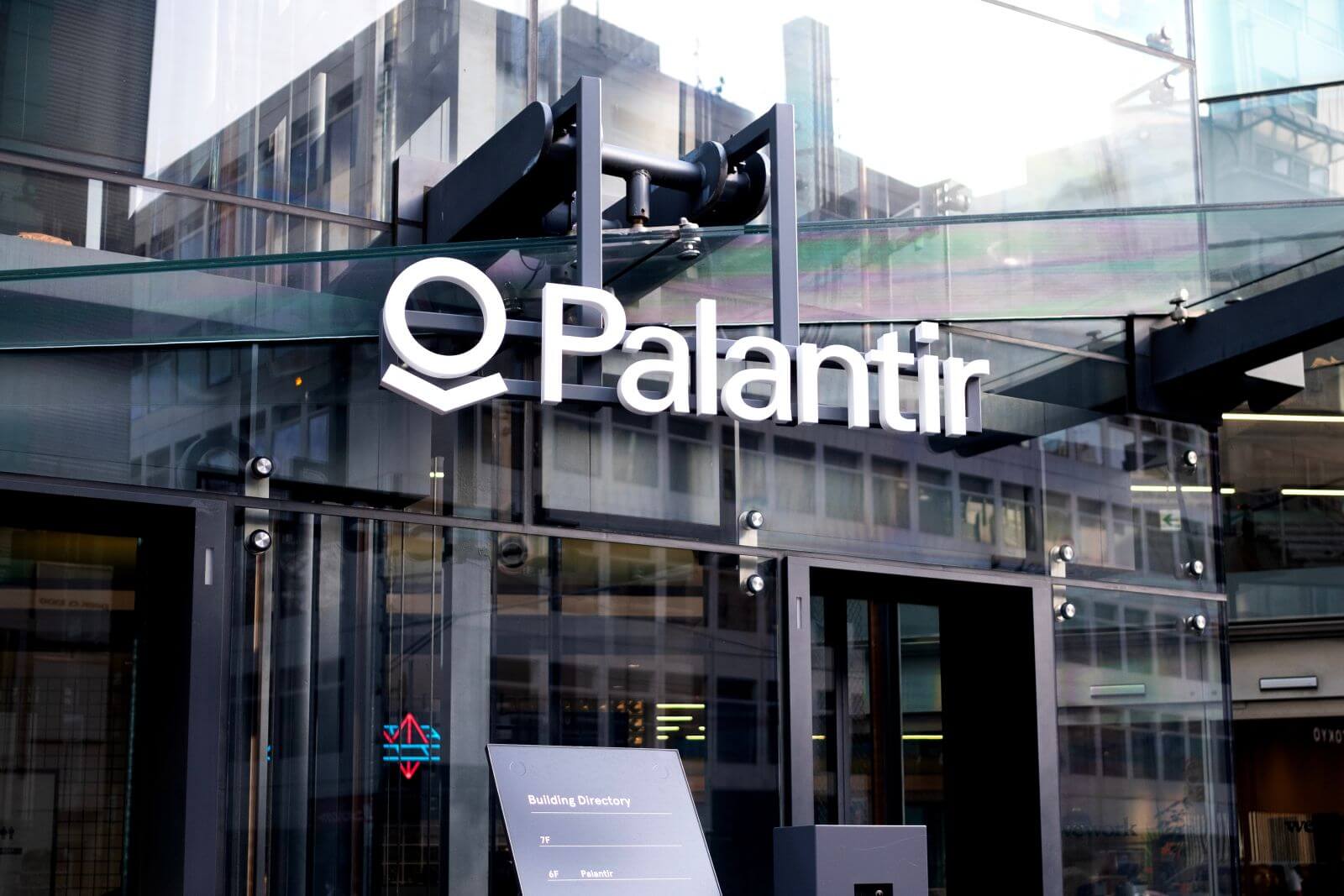
Six people were taken into custody by police on Thursday as a group blocked the entrance to the New York office of Palantir to protest the tech company’s work for the U.S. Immigration and Customs Enforcement agency, the Israeli military and other efforts.
More than 30 people participated in the protest, according to Planet Over Profit, the group that organized the demonstration in the Chelsea section of Manhattan.
Planet Over Profit said all six were released later in the morning.
Planet Over Profit, in a statement, said it objected to Palantir’s “turbocharging ICE deportations, complicity in the genocide of Palestinians and plans to massively expand surveillance of every U.S. resident.”
“Palantir’s tech programs are being used to deport our neighbors, kill civilians in Gaza, enhance oil extraction, and deny health insurance claims,” the group told CNBC.
“If your company kills for profit, we will disrupt you,” a spokesperson added.
Palantir did not immediately respond to CNBC’s request for comment.
HAPPENING NOW: 6 of us being walked to NYPD transport vehicles after blockading the entrance to Palantir's Manhattan office.
Palantir was co-founded by billionaire Peter Thiel and its current CEO Alex Karp, who donated $1 million to President Donald Trump’s inauguration fund. The firm has garnered attention for its defense and software contracts with the government.
In April, ICE paid the company $30 million to provide the agency with “visibility” on people self-deporting, according to federal documents.
Karp told CNBC news in March 2024 that some Palantir employees had left the company because of his public support for Israel, and that he expected more would leave for the same reason.
During an earnings call a month earlier, Karp said he was “exceedingly proud” that Palantir was “on the ground” in Israel on the heels of the Oct. 7, 2023, attacks by Hamas. He also said Palantir was “involved in operationally crucial operations in Israel.”
Shares of the company have rallied 500% over the past year and hit a new high for the year to date on Wednesday morning.
In a video posted to social media, Emhoff said, “You know, I’m feeling a little trauma walking to the same polling station that I did to vote for Kamala.”
“And you know, I’m just feeling a lot of hope right now,” she said. She then updated her video after voting, declaring, “We did it.”
“I’m feeling a huge mix of emotions,” she added. “I’m really nervous. I’m also so hopeful. It’s been so spectacular seeing New York come together in this way and rally behind Zohran, and, yeah. Let’s fucking do this, guys.”
Kamala's stepdaughter, Ella Emhoff, says she's feeling "trauma" voting for NYC mayoral candidate Zohran Mamdani because it's the same place she voted during her stepmom's failed election.pic.twitter.com/6Hg7lagwMs
This comes as the self-declared democratic socialist — New York State Assemblyman Zohran Mamdani (D) — declared that he and his supporters “made history” in essentially clinching the Democrat primary in the Democrat-run city.
“I want to applaud the assemblyman for a really smart and good and impactful campaign,” opponent Andrew Cuomo said after his own apparent loss. “Tonight is his night. He deserved it. He won.”
Mamdani has made waves with a series of radical comments and proposals — such as city-run grocery stores — as Breitbart News has documented:
Mayoral candidate Zohran Mamdani outlined his platform on his website saying people in his city are struggling with the cost of groceries.
The site then declared Mamdani “will create a network of city-owned grocery stores focused on keeping prices low, not making a profit. Without having to pay rent or property taxes, they will reduce overhead and pass on savings to shoppers. They will buy and sell at wholesale prices, centralize warehousing and distribution, and partner with local neighborhoods on products and sourcing. With New York City already spending millions of dollars to subsidize private grocery store operators (which are not even required to take SNAP/WIC!), we should redirect public money to a real ‘public option.’”
He also has publicly stated that “queer liberation means defund the police.”
Mamdani has earned praise from the likes of fellow socialist Sen. Bernie Sanders (I-VT), who said, “Congratulations to Zohran Mamdani and his thousands of grassroots supporters for their extraordinary campaign.”
Congratulations to Zohran Mamdani and his thousands of grassroots supporters for their extraordinary campaign. You took on the political, economic and media Establishment- and you beat them. Now it’s on to victory in the general election.
Democrat Rep. Warns Socialist Zohran Mamdani Is ‘Too Extreme to Lead’ NYC. (Christian Monterrosa/Bloomberg/Getty)
Gillen issued a statement criticizing Mamdani’s campaign as having “been built on unachievable promises and higher taxes.”
“Socialist Zohran Mamdani is too extreme to lead New York City,” Gillen said. “His entire campaign has been built on unachievable promises and higher taxes, which is the last thing New York needs.”
“Beyond that, Mr. Mamdani has called to defund the police and has demonstrated a deeply disturbing pattern of unacceptable antisemitic comments which stoke hate at a time when antisemitism is skyrocketing,” Gillen continued. “He is the absolute wrong choice for New York.”
Laura Gillen, Democratic candidate for New York’s 4th Congressional District, on Oct. 17, 2024. (CQ-Roll Call, Inc/Getty Images)
The statement from Gillen comes after former New York Gov. Andrew Cuomo (D) conceded to Mamdani on Tuesday night, after Mamdani held onto the lead in the primary.
“Tonight was not our night,” Cuomo said, according to the Hill. “Tonight was Assemblyman Mamdani’s night and he put together a great campaign, and he touched young people and inspired them and moved them and got them to come out and vote.”
With 93 percent of the votes in, Mamdani led with 43.5 percent of the vote, 432,305 votes, while Cuomo came in second with 36.4 percent of the vote, or 361,840 votes, according to the Associated Press.
New York City Comptroller Brad Lander came in third with 11.3 percent, or 112,349 votes.
While Cuomo has conceded after Mamdani led his opponents in the race, the “outcome will still be decided by a ranked choice count,” according to the outlet.
“In the words of Nelson Mandela: it always seems impossible until it’s done,” Mamdani wrote in a post on X. “My friends, it is done. And you are the ones who did it. I am honored to be your Democratic nominee for the Mayor of New York City.”
Mamdani has suggested creating city-run grocery stores, pointing out that people in the city are “struggling with the cost of groceries.”
“We will redirect city funds from corporate supermarkets to city-owned grocery stores whose mission is to lower prices, not price gouging,” Mamdani said in a video. “These stores will operate without a profit motive, or having to pay property taxes or rent, and will pass on those savings to you.”
Sen. Bernie Sanders (I-VT) endorsed Mamdani, stating that “new leadership” who would “stand up to powerful corporate interests” is needed.
“At this dangerous moment in history, status quo politics isn’t good enough,” Sanders said. “We need new leadership that is prepared to stand up to powerful corporate interests & fight for the working class. Zohran Mamdani is providing that vision. He is the best choice for NYC mayor.”
Andrew Cuomo Concedes to Socialist Zohran Mamdani in NYC Democratic Mayoral Primary. (Michael M. Santiago, Alex Kent/Getty Images)
Cuomo told his supporters that tonight was “not” their night and added that “tonight was Assemblyman Mamdani’s night,” according to the Hill.
“He put together a great campaign, and he touched young people and inspired them and moved them and got them to come out and vote,” Cuomo added.
Per the outlet, Cuomo’s concession came after “Decision Desk HQ projected the race would head to a ranked-choice count.”
Earlier Tuesday, Decision Desk HQ projected the race would head to a ranked-choice count as Mamdani held a solid lead over the former governor. The vote counting will continue even though Cuomo has conceded in the primary.
With 91 percent of the votes counted, Mamdani leads with 43.5 percent, or 428,995 votes, while Cuomo received 36.4 percent, or 358,740 votes, according to the Associated Press.
New York City Comptroller Brad Lander came in third with 11.3 percent, or 111,44 votes.
While Mamdani leads in the election, it could take “days before the winner is determined,” as the city does ranked choice voting, CBS News reported.
According to the NYC Board of Elections website, “all first-choice votes are counted,” and if a candidate receives more than 50 percent of the first-choice votes, they win. Votes will continue to be counted “if no candidate earns more than” 50 percent of the first-choice votes:
All first-choice votes are counted. If a candidate receives more than 50% of first-choice votes, that candidate wins.
If not candidate earns more than 50% of first-choice votes, then counting will continue in rounds.
At the end of each round, the last-place candidate is eliminated and voters who chose that candidate now have their vote counted for their next choice.
Your vote is counted for your second choice only if your first choice is eliminated. If both your first and second choices are eliminated, your vote is counted for your next choice, and so on.
Mayoral candidate Zohran Mamdani outlined his platform on his website saying people in his city are struggling with the cost of groceries.
The site then declared Mamdani “will create a network of city-owned grocery stores focused on keeping prices low, not making a profit. Without having to pay rent or property taxes, they will reduce overhead and pass on savings to shoppers. They will buy and sell at wholesale prices, centralize warehousing and distribution, and partner with local neighborhoods on products and sourcing. With New York City already spending millions of dollars to subsidize private grocery store operators (which are not even required to take SNAP/WIC!), we should redirect public money to a real ‘public option.’”
Several Hollywood celebrities, such as Sex and City star Cynthia Nixon, Harold and Kumar star Kal Penn, and pop superstar Lourde have supported Mamdani in his race to be the next mayor of New York City.
Seize deteriorating apartment buildings run by negligent landlords. Stop spending on new homeless shelters. Build apartments on church campuses and golf courses and on top of libraries.
In the race to be New York City’s next mayor, few issues have generated proposals as ambitious and sprawling as the housing crisis, a top concern for a growing number of voters.
The share of available apartments is at its lowest point in nearly 60 years, rents continue to climb and high rates of homelessness remain a persistent part of city life. There aren’t enough homes being built to satisfy the demand to live here, many housing experts say, while the Trump administration’s plan cut to federal housing aid could upend the city’s ability to help its most vulnerable residents.
Mayoral candidates across the political spectrum — those running in the June 24 Democratic primary and in November’s general election — agree that the situation is a threat to the city. In ways big and small, though, they differ on the best solutions.
Many of their proposals would be difficult to carry out. Several would require the skillful balancing of adverse political interests, including labor unions, real estate companies and pro-tenant groups. Some would be possible only with help from influential state or federal politicians who may resist development.
Most candidates do not say how they would pay for their plans, which carry price tags stretching into the many billions of dollars.
Still, candidates said it was better to be ambitious when it came to housing.
“It’s the No. 1 issue,” said Zellnor Myrie, a state senator from Brooklyn who is running in the Democratic primary.
He said that people needed to want to live in New York — and be able to afford to do so — in order for the city to generate the tax revenue it needs to survive.
“If we do not solve this crisis, if we do not build more and build rapidly and bring down the cost of rent, we’re going to suffer in many other ways,” he said.
Build More Homes. But How Many and Where?
Candidates agree that the city needs to encourage lots of development. Many are trying to outdo each other with eye-popping figures.
Two Democratic candidates, Adrienne Adams, the City Council speaker, and Brad Lander, the city comptroller, have each thrown out a 500,000 home target; Ms. Adams is eyeing a racetrack in Queens as a development site while Mr. Lander wants to build neighborhoods on municipal golf courses. Michael Blake, a former Democratic state assemblyman, wants 600,000 homes built across the city.
Outdoing them all, Mr. Myrie said he wanted one million homes to be built or preserved over the next decade, in part by creating new neighborhoods and developments in places like Midtown Manhattan and the Brooklyn Marine Terminal.
Many candidates talk about building on underused city land, like in parking lots or on top of libraries and schools. Jim Walden, a lawyer and former prosecutor who is running as an independent, said the city should develop apartments on abandoned public properties like Bartow Station in the Bronx and the Neponsit Health Care Center in Queens. More than one-third of any new homes, he says, could be made affordable to lower-income New Yorkers.
These types of changes would require approval by the City Council or the State Legislature, which may not be forthcoming, and would involve months of public hearings and studies.
Several candidates want to build mixed-income housing on public housing campuses, where parking lots and lawns make enticing development sites. That would have the added benefit of generating money for the struggling New York City Housing Authority, which is essentially controlled by the mayor, who appoints its board members.
Former Gov. Andrew M. Cuomo, who leads in Democratic primary polls, said in his housing plan that adding 500,000 units over 10 years “will be necessary to meet demand.” But unlike his rivals, he has expressed reluctance toward developing in low-density neighborhoods, saying that those neighborhoods need to first absorb “the impact of recent rezoning efforts” that may already be encouraging development there. He says he would prefer to focus on denser parts of the city.
What About Affordable Housing?
The candidates acknowledge that the city needs to spend on affordable housing if it wants to push down costs for lower-income renters.
“I also want to make sure that as we are thinking about 500,000 or one million units, that we also have a road map to not just building housing for housing’s sake, but building housing for the people who need it the most,” said Scott Stringer, a former city comptroller running in the Democratic primary.
Zohran Mamdani, a state assemblyman from Queens who is polling in second place in the primary, wants to build 200,000 subsidized homes, including some for families earning less than $70,000 a year.
He says his plan would cost $100 billion over the next decade, a price tag that dwarfs the costs of the other candidates’ plans. Mr. Lander, for example, wants the city to spend $20 billion over the next decade on building and preserving homes.
Mr. Cuomo’s plan calls for an additional $2.5 billion in city and state funds to be spent on affordable housing and public housing over the next five years.
Curtis Sliwa, a Republican, said he would make sure that in subsidized housing, the city sets rents at levels low enough to “account for the real financial burdens New Yorkers face — high energy bills, student loans, medical expenses and other nonnegotiable costs.”
The next mayor will most likely have significant influence over the rent-stabilization system, because mayors appoint members of the Rent Guidelines Board, which decides if and how much rents in stabilized apartments can go up each year. Roughly half of all city apartments are rent-stabilized.
Mr. Mamdani, Mr. Myrie, Ms. Adams, Mr. Lander, Mr. Stringer, Mr. Blake and Jessica Ramos, a Democratic state senator, have said that if elected, they would lobby the board to halt increases, even though landlords are increasingly saying they are not making enough to keep units in rentable condition.
Under Mayor Eric Adams, who is running as an independent, the board has allowed increases each year. Mr. Cuomo said he would want to create a subsidy program for landlords who need money to bring rent-stabilized units back online.
What Kind of Experience Matters?
The candidates’ proposals offer a sense of their priorities. But many of them say they are distinguished by their track records on housing.
Mr. Lander and Mr. Stringer both emphasize their policy work and experience in city government. Mr. Stringer highlighted how, when he served as Manhattan borough president, he helped craft development plans for West Harlem and other neighborhoods, while Mr. Lander pushed through a contentious development plan in Gowanus in Brooklyn.
“This has been my whole career,” Mr. Lander said in an interview about his plan.
Ms. Adams points to how she helped cajole other members of the City Council to accept development plans in their districts, despite opposition from neighborhood activists. She also successfully pushed for more affordable housing investment from the city and state.
Mr. Adams, who is not related to Ms. Adams, has made an ambitious citywide development plan, known as City of Yes, one of the milestone accomplishments of his first term. The plan, which was passed last year, is expected to make way for some 80,000 new homes to be built over the next decade.
The mayor said in a statement that the plan represented “bold, forward-looking action that meets the needs of New Yorkers, today and for generations to come.”
Mr. Cuomo served as housing secretary during the Clinton administration. And as governor, he spent many years negotiating with the real estate lobby and with left-leaning lawmakers supporting tenants. He helped pass sweeping pro-tenant legislation, while also pushing much-debated tax breaks for developers that he said he wants to bring back.
A spokeswoman for his campaign, Esther Jensen, said Mr. Cuomo would bring “strong political leadership and intensely focused operational execution” to address the housing crisis.
In March, a federal investigator asked the New York Police Department for information about a woman who had been arrested during a pro-Palestinian protest at Columbia University and was now detained for overstaying her visa.
The woman, Leqaa Kordia, 32, was being investigated for money laundering, the investigator said, and the Department of Homeland Security needed help. The police handed over her birth date, address and the name of a possible associate. An officer also provided the woman’s sealed arrest report.
But a month later, during an immigration court hearing, the only evidence of money laundering that federal prosecutors presented was a $1,000 MoneyGram transfer that Ms. Kordia had sent to relatives in Gaza.
The judge, Tara Naselow-Nahas, was unimpressed.
“Based on the evidence, I do not find that the respondent poses a danger to the United States,” she said and ordered that Ms. Kordia be released on a $20,000 bond. Ms. Kordia remains at the Prairieland Detention Facility in Texas as prosecutors seek a reversal of the decision.
But the judge’s ruling and questions about the federal government’s credibility have civil libertarians asking whether the Police Department should reconsider its cooperation with the Trump administration.
The city’s sanctuary laws forbid the department from divulging information in immigration cases, which are civil matters, but the police often cooperate with federal authorities on criminal cases, usually in joint investigations into crimes like sex trafficking, drug and gun dealing, and terrorism.
Ms. Kordia’s case is the rarer instance in which federal agents have asked about a criminal inquiry that does not involve a joint investigation. In those cases, the department also expects officers to cooperate, vetting requests through superiors and maintaining a record of information released. But the department has no written guidelines or procedures for assessing such requests beyond a brief description.
Commissioner Jessica S. Tisch said Thursday that the police were watching closely to ensure that federal officials were truthful, but that cooperation with agencies like Homeland Security Investigations and the F.B.I. was crucial to keeping New Yorkers safe from terrorism, trafficking and transnational crime.
Police Commissioner Jessica Tisch said that smooth cooperation with federal authorities was crucial to keeping New Yorkers safe. (Angelina Katsanis/The New York Times)
“Some have asked whether we should reconsider our cooperation with federal agencies on criminal investigations in light of their work with ICE,” she said during a budget hearing before the City Council, referring to the Immigration and Customs Enforcement agency. “The short, straight answer to this is no.”
“The only way these investigations are successful is by N.Y.P.D. detectives working seamlessly with federal agents on a daily basis,” she added.
But some say the department must ask more and harder questions. They contend that a long-established trust has been breached because federal authorities, struggling to meet President Trump’s demands to deport as many immigrants as possible, are misleading — even lying — to local law enforcement officers and judges.
“The N.Y.P.D. should think through its own systems and its own processes,” said Anne Venhuizen, senior staff attorney for the Bronx Defenders, which represents the indigent in court. “They are potentially violating sanctuary laws by not having a more fulsome practice of verifying that the information they’re getting is accurate.”
Local police officers in other states, predominantly in the South, have cooperated for years as ICE has apprehended people accused of immigration violations. Now, other states are falling in line with Mr. Trump’s demands. On May 22, Gov. Kelly Ayotte of New Hampshire signed two bills requiring police departments to help ICE.
New York and other cities with sanctuary laws, such as Boston and Chicago, have a trickier path, cooperating on criminal matters but not civil immigration. And events in recent months have cast a shadow on the actions of federal law enforcement.
In March, a judge approved a warrant for ICE agents to search for Yunseo Chung, a Columbia junior who had participated in pro-Palestinian demonstrations. The decision was based on an agent’s sworn statement that the university was breaking a federal law that prohibited the harboring of “removable aliens.” But Ms. Chung is a permanent resident, and her lawyers accused ICE of lying to the judge.
In April, the federal government sued the City of Rochester, in New York, after its Police Department ordered more training for officers who had helped ICE agents handcuff immigrants. City officials have said that immigration officers lied when they called the police on March 24 and said they needed help with an emergency stop on a city road.
ICE did not respond to a request for comment on the cases.
“This federal government has completely blurred the lines between valid criminal enforcement and immigration enforcement,” said Meghna Philip, director of special litigation at the Legal Aid Society in New York City. “In our present reality, if anything, there should be a presumption of noncooperation with immigration authorities.”
The New York police said that the federal agent who had asked about Ms. Kordia had provided contact information, as well as a name, shield number and case number, and they believed that was sufficient. Commissioner Tisch said Thursday that she had put federal agencies on notice.
“I am nobody’s fool,” she said. “If we were to find that a federal agency had not been honest with us, if we were told that a records request was for a criminal investigation, but in fact that was not true, then that would be a tremendous breach of our trust. And we would need to reconsider how we do business with that federal agency. I have been very upfront about that with all our federal partners.”
Homeland Security Investigations did not return repeated requests for comment.
Pushing back on federal requests would harm cooperation that flourished after the Sept. 11 attacks, said Christopher Mercado, a retired New York police lieutenant who now teaches at John Jay College of Criminal Justice.
But, he said, “I’m going to be honest with you: The feds may not always be transparent with the P.D.”
Federal investigators may fear that giving too much information could compromise an investigation or a confidential informant, he said. Historically, local police officers have accepted that.
“Those relationships are always going to be important and we don’t want to burn them,” Mr. Mercado said.
Ms. Kordia, a waitress from Paterson, N.J., who came to the United States from the West Bank in 2016 and lived with her mother, an American citizen, has not been charged with any crimes and is accused only of overstaying her visa.
She went to the demonstration in New York on April 30, 2024. She was accused of blocking a gate and arrested with dozens of other protesters, according to a police report that also said she had no record of criminal complaints or investigations. The report was sealed after her case was dismissed.
Leqaa Kordia was arrested during a protest at Columbia University last year. Even though the charges were dropped, the police still provided information to the federal government.(Amir Hamja/The New York Times)
Court records filed by Ms. Kordia’s lawyers suggest that agents with Homeland Security Investigations did not start looking into her until March, almost a year after her arrest.
From March 5 until March 13, the day she was detained, federal agents interviewed people who knew her, including her mother and uncle.
They set up a trace on her WhatsApp account and subpoenaed records from MoneyGram, according to court documents. She had sent the $1,000 to her aunt on behalf of her mother, who could not figure out how to send the funds through MoneyGram, according to her family and lawyers.
After Ms. Kordia learned that ICE wanted to question her, she hired a lawyer and they went to the agency’s Newark field office to explain. But her lawyer was barred from the meeting and Ms. Kordia was immediately detained and put on a plane to Texas.
The following day, Kristi Noem, the homeland security secretary, accused Ms. Kordia of taking part in “pro-Hamas protests,” and the federal investigator asked the New York Police Department about the supposed money laundering investigation.
An officer who works at the police’s Real Time Crime Center, a hub that provides detectives with data, gave an agent from Homeland Security Investigations the sealed arrest report, which state law forbids. The Police Department has said it is investigating the officer’s actions.
In court papers, Ms. Kordia’s lawyers have said that she has been kept in miserable conditions at Prairieland, where cockroaches skitter across the floor and guards have refused to honor her requests for halal meals.
Hamzah Abushaban, a cousin who came to visit her in Texas soon after her arrest, said he was shocked. She had lost 50 pounds, had dark circles under her eyes and seemed confused about why she was there.
“I’ve never seen her look like that,” said Mr. Abushaban. “She looked like death.”
Ms. Kordia’s future in the United States remains uncertain. Prosecutors have said that federal investigators are still investigating her for financial transactions overseas.
Before her arrest, Ms. Kordia had been trying to start a business selling candles and balloons. She had found a small space about five minutes from her mother’s house in Paterson that she planned to rent.
During the immigration court hearing in April, the judge asked Ms. Kordia about the space. Was she still renting it?
Ms. Kordia replied simply, expressing little emotion.
“I had it for one night,” she said. “That’s it. Then I came here.”
A quarter-million dollars came from the head of Suffolk Construction, a Boston-based builder betting big on a New York City expansion.
Another $150,000 arrived from the chairman of Vornado Realty Trust, who is searching for a way to revive a stalled Midtown Manhattan redevelopment so important that he once called it his “promised land.”
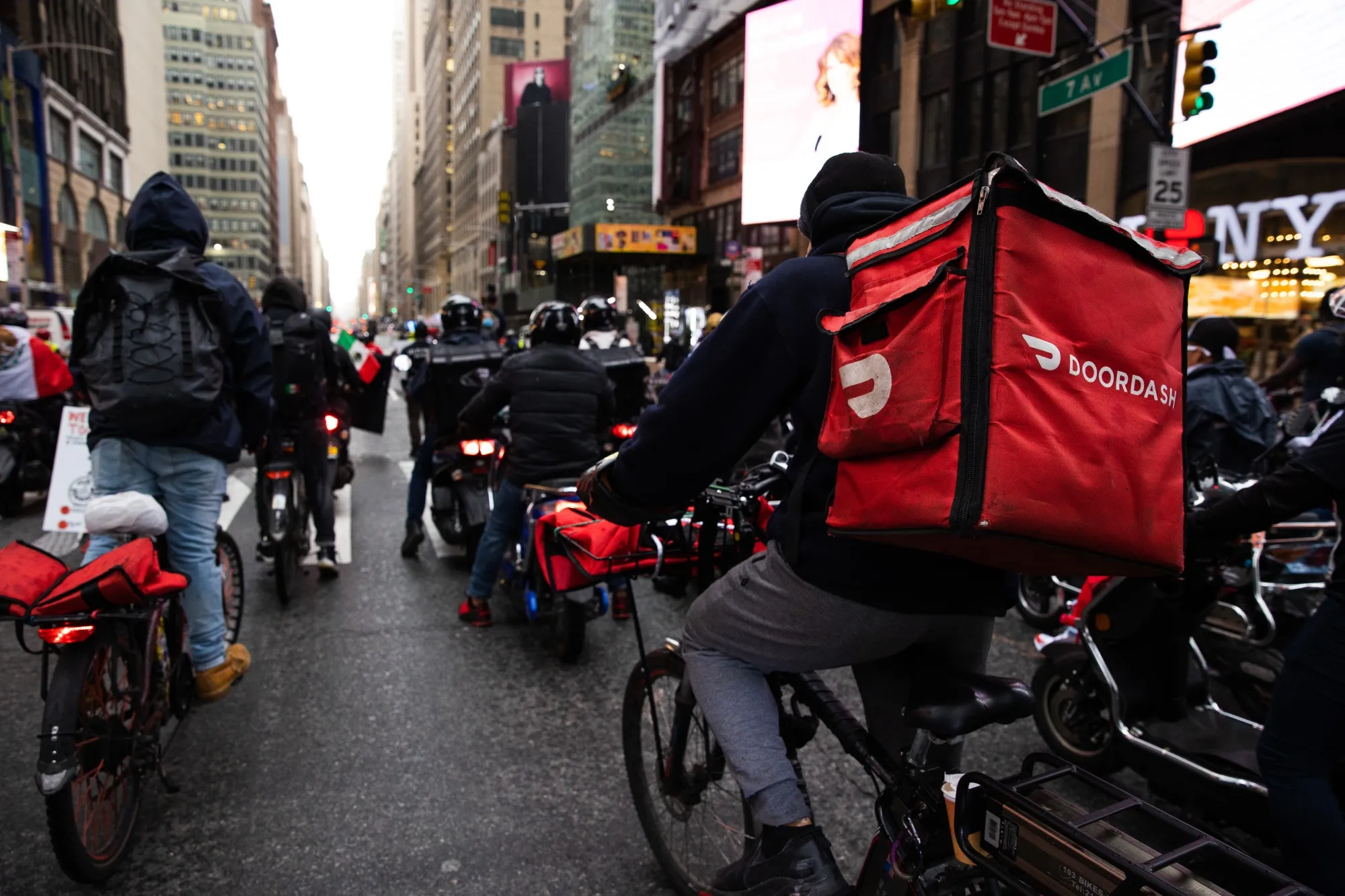
DoorDash, the food delivery service lobbying City Hall on regulations that could disrupt its business model, chipped in a staggering $1 million.
The donations make up just a fraction of the checks from New York business leaders, billionaires and special interest groups pouring into a super PAC boosting Andrew M. Cuomo, the favorite in the Democratic primary for mayor on June 24.
With $10 million raised so far, the super PAC, Fix the City, is already the single largest outside spending force in New York City’s political history, surpassing a record set in 2021. It has spent multiples more on ads than any campaign in the race, blanketing New Yorkers’ screens in paeans to the former governor.
The next biggest candidate super PAC, set up to back Assemblyman Zohran Mamdani, a democratic socialist who is second in recent polls, has 1/50th of the funds.
Many of Fix the City’s donors are longtime Cuomo supporters who share his moderate policy views, or fear what Mr. Mamdani’s tax-the-rich policies would do. Among them are Barry Diller, the media mogul ($250,000); Billy Joel, the musician ($50,000); Bill Ackman, the investor ($250,000); and Kenneth Langone, the Home Depot founder ($50,000).
But millions of dollars more have arrived from labor unions, tech companies, real estate developers and landlords who have a direct financial stake in the election’s outcome — grand gestures that, while legal, raise pressing ethical questions about the motivations behind their generosity.
The potential conflicts can be seen in the donations from real estate, a multibillion industry that relies on City Hall to approve land use agreements and zoning variances that can make or break a project. Many of the city’s largest developers and landlords, or their executives, have donated five- or six-figure sums, including Related Companies, the Durst Organization, Two Trees Management Company, RXR and Vornado, whose Midtown development plan Mr. Cuomo supported as governor.
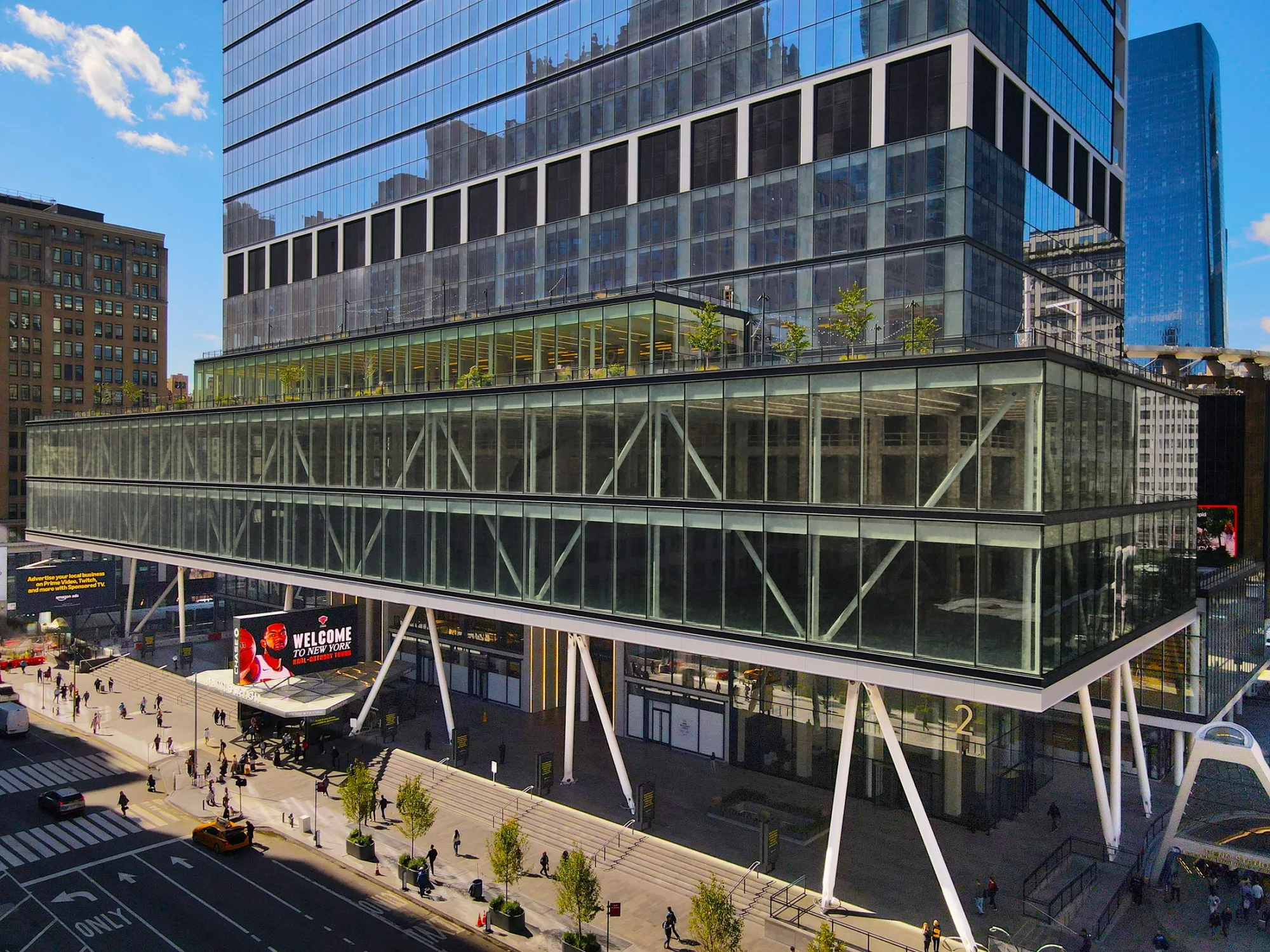
PENN 2 in 2024. (Vornado Realty Trust)
Many of the donations came after Mr. Cuomo made a rare appearance at the Real Estate Board of New York, where Politico reported that he expressed regret for signing rent reforms as governor that landlords bitterly opposed.
Rich Azzopardi, a spokesman for Mr. Cuomo, was adamant that “no contribution of any amount will have any influence on a government decision of any kind.”
Liz Benjamin, a spokeswoman for the super PAC, said the group had made no assurances to donors. “Donors have supported Fix the City because they know that Andrew Cuomo has the right experience and the right plans for New York City,” she said.
But New York has a long history of pay-to-play behavior, in which individuals and businesses shower politicians with large campaign donations in hopes of gaining access and preferential treatment.
The issue is hardly abstract for New Yorkers deciding whether to replace Mayor Eric Adams. The incumbent was indicted last fall on federal corruption charges that accused him of providing political favors for campaign donors. The Trump administration later dropped the charges, but only after prosecutors handling the case accused their superiors of striking a corrupt bargain with the mayor.
Government watchdog groups and other Democrats in the race have sounded alarms that some donors now at least appear to be seeking favor with Mr. Cuomo, a notorious micromanager whose fund-raisingpractices drew near constant scrutiny as governor.
“This is about tithing to the king and giving the king his share in case you need to call on him for help or protection,” said John Kaehny, executive director of Reinvent Albany, a leading watchdog group.
“There’s not necessarily a glaring quid pro quo,” he added. “It’s insurance and access.”
The city instituted a campaign matching funds program decades ago to try to limit the influence of big donors. In exchange for agreeing to strict limits on how much they can raise directly — $2,100 from most individuals; $400 from people with city contracts — well-backed candidates like Mr. Cuomo can tap into millions of dollars in public matching funds.
But the rise of super PACs has reinvigorated New York’s transactional culture. Since the Supreme Court’s 2010 Citizens United decision, the groups are allowed to raise and spend unlimited sums, so long as they operate independently from the campaigns they support.
In Mr. Cuomo’s case, though, Fix the City can be hard to distinguish from his official campaign. It is run by Steven M. Cohen, a member of Mr. Cuomo’s inner circle for decades, and its messaging closely mirrors that of the official campaign.
A New York City Campaign Finance Board investigation determined that because the campaign’s messaging was so similar to the super PAC’s, they were most likely colluding. The board penalized Mr. Cuomo by withholding $1.3 million — equal to the cost of one of the PAC’s commercials — from the amount of public matching funds Mr. Cuomo was expecting. The candidate is appealing.
As of last week, Fix the City had collected 38 contributions of $100,000 or more, including from individuals and companies who contract with the city. The group was expected to report another $250,000 contribution on Monday from Mark Gorton, the founder of Robert F. Kennedy Jr.’s presidential super PAC, according to a person familiar with the plans. Mr. Gorton has said “that 9/11 was orchestrated by the U.S. government.”
At least 16 donations can be tied to individuals Forbes magazine identified as billionaires (that does not include four donations from Rockefellers).
Some are motivated by Mr. Cuomo’s tough-on-crime approach or support for Israel. Many executives, even those who clashed with him when he was governor, say Mr. Cuomo is the most business-friendly candidate in the race. Several have also donated to President Trump.
“Folks are looking for somebody with strong leadership and a perceived sense of getting things done,” said Carlo Scissura, president of the New York Building Congress, a trade organization. “He’s a known entity to this world.”
But privately, business leaders and political operatives also keep mental lists of which companies, unions and executives want what from the mayor, who oversees a $115 billion annual budget and can help broker labor agreements.
Fix the City received $250,000 from Halmar International, a public works company that has had contracts with the city and state, and has a pending proposal to redevelop Penn Station.
The New York City carpenters’ union donated $100,000. A consortium of smaller building trade unions gave $250,000.
In addition to the donation from Suffolk Construction’s chairman, its executive vice president, Nick Dhimitri, serves on Fix the City’s board. He did not respond to a request for comment about the company’s giving. James L. Nederlander, a Broadway theater owner and producer, contributed $125,000.
DoorDash, which gave $1 million to Fix the City, has an active lobbying effort to sway several bills in its favor. (Bloomberg)
Lyft, the ride-sharing platform that has a stake in how the city regulates for-hire vehicles, chipped in $15,000.
DoorDash, Fix the City’s single largest donor, has a clearer wish list from City Hall. It is lobbying around legislation to allow it to charge restaurants higher fees, as well as bills related to tipping rules and minimum wage requirements.
John Horton, DoorDash’s head of public policy for North America, told Politico that it believed Mr. Cuomo would be the best candidate to “prioritize practical, pro-local economy solutions.”
The contribution is one of two that have drawn extra scrutiny. The other is a $100,000 contribution from Fisher Brothers Management Company, a real estate firm that a decade ago became a poster case for the risks of money in politics.
At the time, Mr. Cuomo, then the governor, had set up a high-profile commission to root out corruption in state politics. When that Moreland Commission panel began investigating whether his own real estate donors, including Fisher Brothers, received special tax treatment from the state, Mr. Cuomo disbanded it. Publicly, he credited an agreement by the Legislature to adopt new ethics rules, but the fallout was the biggest scandal of his first term.
One of the detectives, Roberto Cordero, who has also served for years on Mayor Eric Adams’s security detail, picked up the victim from the airport on May 6 and brought him back to the townhouse, where he was held captive until his escape last week, the officials said.
Detective Cordero and the other detective, Raymond J. Low, who investigates narcotics cases in Manhattan, were placed on modified duty on Wednesday, according to an internal document and the officials, who were not authorized to speak because of the sensitivity of the investigation.
It is unclear whether the detectives were employed directly or whether they had been working for a private security company. Officers are not permitted to work for security firms without Police Department approval, according to the department’s patrol guide. It was also unclear whether the men were present during the crime prosecutors say occurred there.
In a statement, the Police Department confirmed that two officers had been placed on modified duty, which generally restricts a person to desk work, and that the matter was under internal review.
Neither Detective Cordero nor any legal representatives could immediately be reached for comment. When reached by phone, Detective Low declined to comment.
A 20-year veteran, Detective Cordero has served on the Executive Protection Unit, the mayor’s security detail, since December 2021, according to records from the police and the Civilian Complaint Review Board, an independent oversight agency.
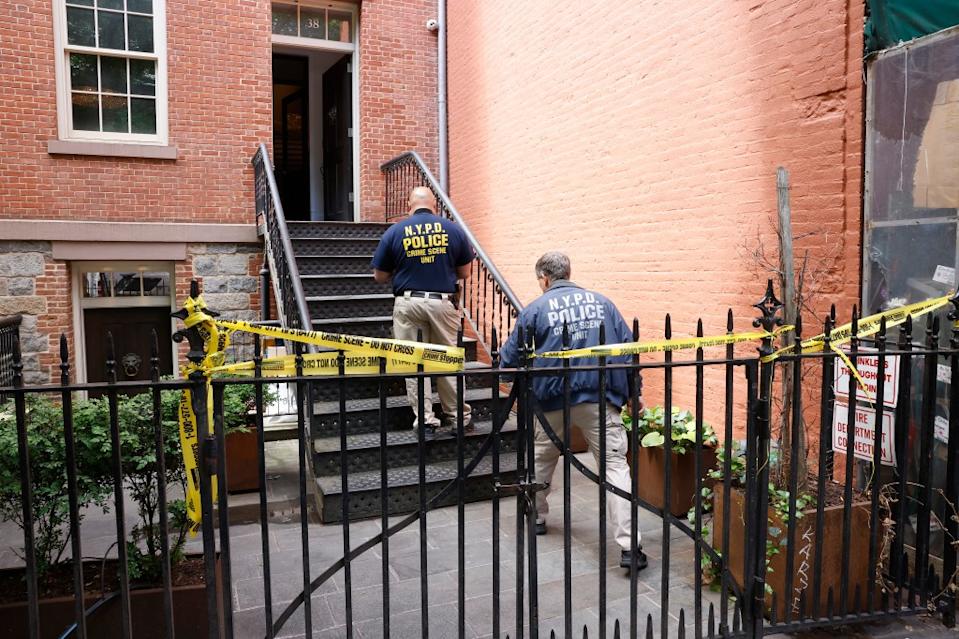
The house where they worked is at 38 Prince Street in the NoLIta neighborhood. On May 23, an Italian man, Michael Valentino Teofrasto Carturan, escaped from the home, where he said he had been tortured for weeks.
The Manhattan district attorney has charged the two cryptocurrency investors — John Woeltz, 37, and William Duplessie, 33 — with kidnapping and torturing him. Mr. Woeltz has been indicted by a grand jury, though the indictment will remain sealed until he is arraigned on June 11, the Manhattan district attorney’s office said on Thursday.
When Mr. Carturan arrived at the townhouse on May 6, he was captured and held by Mr. Woeltz and a 24-year-old woman, according to prosecutors and an internal police report. They wanted the password to a Bitcoin wallet worth millions, the report said.
The woman, Beatrice Folchi, was initially charged by the police with kidnapping and unlawful imprisonment, but she was released and her prosecution was deferred, a law enforcement official said.
Detective Cordero joined the Police Department in January 2005 and has served in the 46th Precinct in the Bronx and on a narcotics team in Manhattan, according to police and Complaint Board records.
He has been the subject of several complaints accusing him of abusing his authority and using physical force. In one complaint from 2014, a man accused Detective Cordero and seven other officers of beating him, strip-searching him and taking his money. The case was settled in 2016.
Detective Low joined the Police Department on the same day as Detective Cordero, according to police records.
Detective Low was elevated to his rank in 2013. He has been named in nine complaints dating back to 2008, including one that accuses him of making a false official statement and using a chokehold, according to Complaint Board records.
Cookie Consent
We use cookies to improve your experience on our site. By using our site, you consent to cookies.
Contains information related to marketing campaigns of the user. These are shared with Google AdWords / Google Ads when the Google Ads and Google Analytics accounts are linked together.
90 days
__utma
ID used to identify users and sessions
2 years after last activity
__utmt
Used to monitor number of Google Analytics server requests
10 minutes
__utmb
Used to distinguish new sessions and visits. This cookie is set when the GA.js javascript library is loaded and there is no existing __utmb cookie. The cookie is updated every time data is sent to the Google Analytics server.
30 minutes after last activity
__utmc
Used only with old Urchin versions of Google Analytics and not with GA.js. Was used to distinguish between new sessions and visits at the end of a session.
End of session (browser)
__utmz
Contains information about the traffic source or campaign that directed user to the website. The cookie is set when the GA.js javascript is loaded and updated when data is sent to the Google Anaytics server
6 months after last activity
__utmv
Contains custom information set by the web developer via the _setCustomVar method in Google Analytics. This cookie is updated every time new data is sent to the Google Analytics server.
2 years after last activity
__utmx
Used to determine whether a user is included in an A / B or Multivariate test.
18 months
_ga
ID used to identify users
2 years
_gali
Used by Google Analytics to determine which links on a page are being clicked
30 seconds
_ga_
ID used to identify users
2 years
_gid
ID used to identify users for 24 hours after last activity
24 hours
_gat
Used to monitor number of Google Analytics server requests when using Google Tag Manager