Close Menu
The New York BudgetsThe New York Budgets
  • Latest
  • Politics
    • World & Politics
    • US Politics
      • U.S. Administration
      • Donald Trump
    • UK
    • Middle East
      • Middle East Tensions
    • Russia-Ukraine War
  • Business
  • Economy
  • Opinion
  • AI & Tech
  • New York
  • US NEWS
  • Climate
  • Health
  • Entertainment
  • Tech
  • Media
  • Tariffs
  • US NEWS
  • Economic Policy
  • Trade
  • New York
  • Investment
  • Social Media
  • Hollywood
  • Real Estate
  • Health
  • Asia
  • Automotive
  • Food
  • Crime
  • Movies
  • Bankruptcy
  • Cryptocurrency
  • Education
  • National
  • Airlines
  • Religion And Culture
  • Internet
  • UK News
  • Private Equity
  • Financial
  • Retail
  • Markets
  • Store
  • Climate
  • India-Pakistan Tensions
  • Medical
  • Commodities
  • Aviation
  • e-commerce
  • e-commerce
  • Streaming
  • Investing
  • Sports
  • Style & Art
  • Ukraine Conflict
  • Stock Market
  • Oil and Gas
  • International
  • Europe
  • Language
  • Asia
  • Video
  • Podcast
  • Magazine
The New York BudgetsThe New York Budgets
SUBSCRIBE
  • Latest Headlines
  • Politics
  • Economy
  • Opinion
  • Tech
  • Style & Art
  • Sports
  • Climate
  • Investigative Journalism
The New York BudgetsThe New York Budgets
  • Latest Headlines
  • Politics
  • Economy
  • Opinion
  • Tech
  • Style & Art
  • Sports
  • Climate
  • Investigative Journalism
Business Commodities UK UK News

British Steel Merger Proposal Risks Shutting Scunthorpe Blast Furnaces

Devastating Proposal: 2,000 Jobs Threatened in Scunthorpe as Merger Risks Closing Last Blast Furnaces, Leaving Britain Sole G7 Country Without Domestic Primary Steelmaking Power in 2025
John FreddyBy John FreddyDecember 20, 20250
Facebook Twitter LinkedIn WhatsApp Bluesky Telegram Email Copy Link
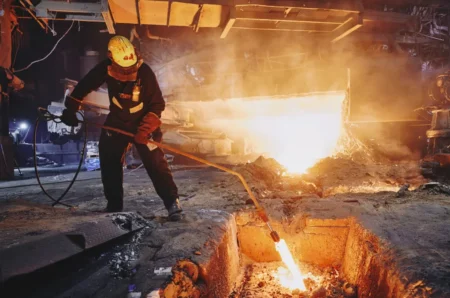
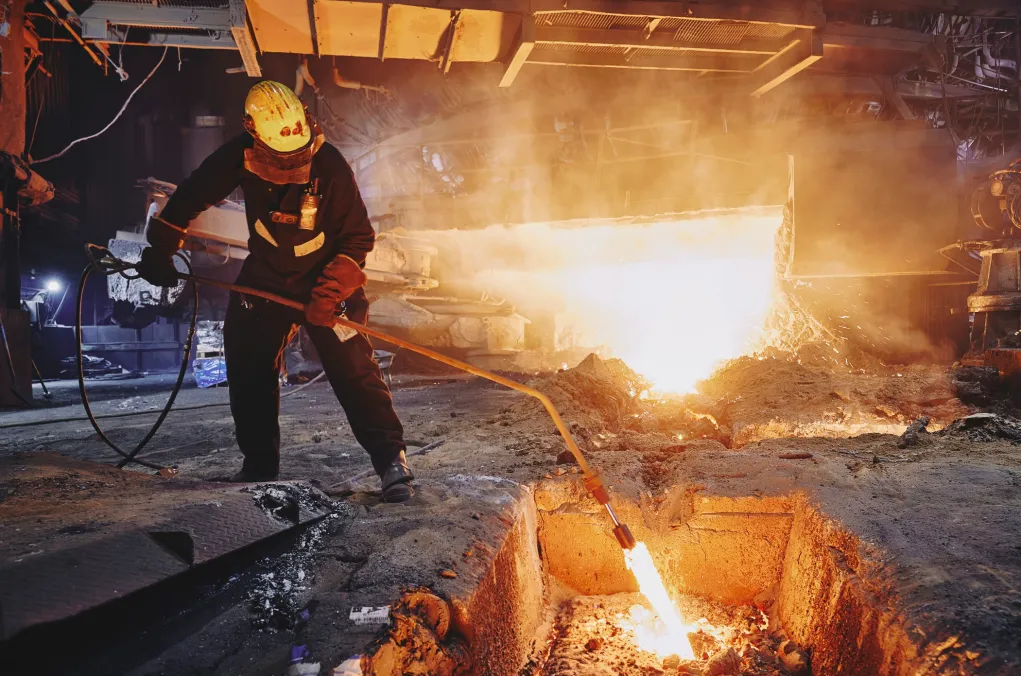
The Scunthorpe steelworks are only open now because of emergency legislation. © SUNDAY TIMES/JAMES GLOSSOP
A radical plan to halt “virgin steelmaking” in the UK is being considered in a move that threatens the loss of 2,000 jobs at British Steel’s works in Scunthorpe.
 
Government officials are weighing a proposal to switch off Britain’s last two remaining blast furnaces despite launching emergency legislation this year preventing the works’ Chinese owners from doing the same.
 
The proposal is understood to envisage merging British Steel with part of Speciality Steel UK (SSUK), a division of Sanjeev Gupta’s metals empire that crashed into a government-led insolvency in August.
 
It is one of several options being considered, Whitehall sources said.
 
But the merger option is said to be favoured by Jon Bolton, co-chairman of the government’s Steel Council, which was launched by the government in January. Under this approach, SSUK’s electric arc furnace in Rotherham, which will require significant investment to get back up and running, would be used to feed the downstream operations of British Steel, according to senior industry sources.
 
This would allow the two blast furnaces at Scunthorpe to be switched off, reducing losses that are said to be costing taxpayers more than £1 million a day. But it would leave the UK as the only country in the G7 without virgin steelmaking capabilities.
Industry figures are split on whether Rotherham could produce the correct types, grades and gauges of semi-finished steel — and in sufficient quantities — for British Steel’s downstream operations. The company employs about 4,000 people in the UK, of which 2,700 work in Scunthorpe.
 
In April, MPs were called for a Saturday sitting of parliament for only the sixth time since the Second World War to fast-track emergency legislation giving the government the ability to direct the company’s workforce and managers and order raw materials for the furnaces.

More from United Kingdom

The oil tanker Grinch, suspected of belonging to Russia’s shadow fleet, near Marseille on Jan. 25, surveilled by the French navy. (Thibaud Moritz/AFP/Getty Images)

West Targets Russia’s Oil Fleet, Threatening Moscow’s War Financing

Britain can still save itself from an inflation spiral. © Getty

Britain Can Still Avoid an Inflation Spiral

The Scunthorpe steelworks are only open now because of emergency legislation. © SUNDAY TIMES/JAMES GLOSSOP

British Steel Merger Proposal Risks Shutting Scunthorpe Blast Furnaces

The BBC logo outside the BBC Broadcasting House. REUTERS/Jack Taylor

BBC Rolls Out New Guidelines: Criticise Israeli Government, Not Zionists

Many Jews had concluded that the BBC had become ‘institutionally hostile’ to Israel, the leaders said. © Hollie Adams/Getty Images

Outgoing BBC Boss Tim Davie Rolls Out Anti-Discrimination Training Post-Resignation

Shabana Mahmood arrives for a cabinet meeting at Downing Street on 9 September 2025 in her new role as home secretary. © Peter Nicholls/Getty Images

Labour Lawmakers Urge Mahmood to Ease Tough Migration Policies

Panorama ‘completely misled’ viewers with its coverage of Donald Trump’s Capitol Hill speech, a report found. © Shawn Thew/EPA/Bloomberg

BBC to Apologize After Broadcasting Edited Version of Donald Trump Speech

Prince Andrew (pictured in April 2025) has reportedly not paid any rent on the property for the last two decades. © Max Mumby/Indigo/Getty Images

Prince Andrew Should Move Out of Royal Lodge, Says Robert Jenrick

British Steel has been in the hands of Chinese firm Jingye since March 2020. The legislation meant that although Jingye remained the owner of the steelworks, the UK state was in control of day-to-day operations.
 
The government intervention followed claims by ministers that the Chinese company was trying to unilaterally close the blast furnaces by refusing to buy enough raw materials. Blast furnaces require a steady supply of iron ore and coking coal to continue running. Although production can be halted temporarily, any longer than a few days can render the equipment redundant.
 
In the summer, Jingye submitted a compensation bill of more than £1 billion to the UK government in return for handing over its shareholding in the business. Ministers are understood to have sought to reduce the compensation costs by offering to wave through China’s controversial new “mega embassy” in London.
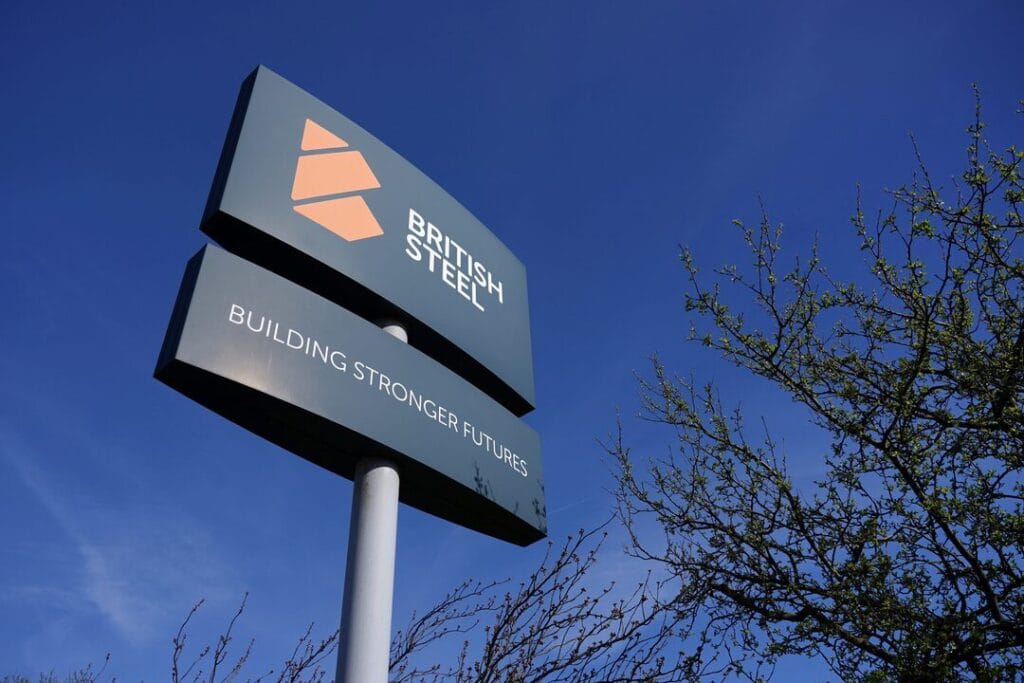
A view of a signboard of a British Steel's Scunthorpe plant, in Scunthorpe, northern England, Britain, March 31, 2025. © REUTERS/Dominic Lipinski/File Photo
A spokesman for the government said: “We will ensure a bright and sustainable future for steelmaking and steel jobs in the UK and are continuing discussions with Jingye over the long-term future of the site.”
 
SSUK employs nearly 1,500 people in Rotherham and its other works in Sheffield and is part of the wider Liberty Steel Group, which in turn is part of Gupta’s GFG Alliance, an employer of 16,500 people globally across more than 200 locations.
 
SSUK was placed under the control of the government’s official receiver in August after the High Court granted a winding-up order pursued by creditors owed hundreds of millions of pounds.
 
The official receiver, supported by special managers from consultancy Teneo, wants to sell SSUK whole rather than in piecemeal fashion.
 
Bids have been submitted for the business, though the electric arc furnace in Rotherham is said to be less attractive because it will need millions of pounds of investment to bring it up to working order. The merger plans would be scuppered if a suitable buyer for the Rotherham site can be found.
 
Using the Rotherham works to feed British Steel’s downstream activities would not be without its difficulties. However, it does have a precedent: the two operations were previously part of Tata Steel’s long products division. The Scunthorpe operation was sold to turnaround fund Greybull Capital in 2016 and the Rotherham works to Gupta the following year.
 
Separately, an £8 billion green energy plant in the North East will go ahead with an order for steel from China instead of the UK, snuffing out hopes of a U-turn.
Alasdair McDiarmid, assistant general secretary at the steelworkers’ union Community, said: “Reports that the government is considering ending steelmaking at Scunthorpe, just months after making their historic intervention at the site, are extremely concerning and scarcely believable.
 
“The loss of the UK’s last-remaining primary steelmaking facility — a vital strategic asset for the country — would represent a devastating blow to national security and sovereignty. Community and the wider trade-union movement will not accept the closure of the blast furnaces outside of a long-term investment strategy that secures the future for Scunthorpe steelmaking.”
 
This newspaper revealed in November that Net Zero Teesside, a joint venture between BP and the Norwegian energy company Equinor, was on the cusp of awarding a major steel contract to a Chinese firm called Modern. Net Zero Teesside will build the world’s first gas-fired power station with carbon capture and storage.
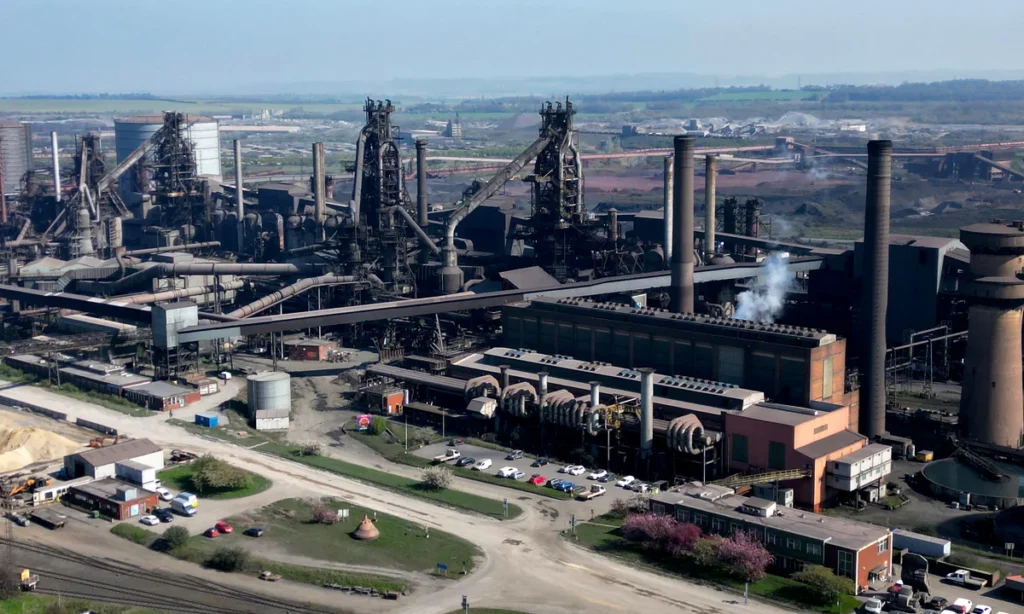
In the short term, Scunthorpe steelworks needs materials to keep the furnaces from cooling down. © Darren Staples/AFP/Getty Images
Backed with taxpayer cash, the joint venture had promised that at least 50 per cent of the engineering, procurement and construction contrasts would be sourced from the UK.
 
Lord Houchen, the local Conservative mayor, called for “an immediate rethink”. This prompted BP to intervene, raising hopes that British Steel — an under-bidder — would prevail.
 
Sources said, however, that the joint venture had decided to stick with China, ordering 7,000 tonnes that will be made and then fabricated overseas. The contract is understood to be worth £20 million.
 
A government source said ministers are “keen to see UK steel sourced for UK projects”.
British Steel Limited Business Economic Europe G7 country Jon Bolton Steel United Kingdom virgin steelmaking
John Freddy
John Freddy

    John Freddy is a highly respected economist, columnist, and news writer with an accomplished career that began in 1982. Over the past four decades, he has been a prominent voice in financial journalism, delivering in-depth coverage and analysis of the stock market, including major indices like the NYSE, Nasdaq, S&P 500, and DJIA. John is also known for his expertise in commodities, focusing on key sectors such as oil, energy, food, gas, and consumer markets.

    What to Read Next

    A sign for The Washington Post is seen at the company's offices Jan. 26, 2026, in Washington. (Mark Schiefelbein/AP)

    Washington Post Publisher Will Lewis Steps Down After Major Layoffs

    February 8, 2026
    Britain can still save itself from an inflation spiral. © Getty

    Britain Can Still Avoid an Inflation Spiral

    January 22, 2026
    Economy Minister Ryosei Akazawa and U.S. Commerce Secretary Howard Lutnick at Sensoji Temple, Tokyo, in October. © Francis Tang

    US-Japan Panel Holds Second Meeting to Advance $550B Trade Deal Investments

    December 24, 2025
    The BBC logo outside the BBC Broadcasting House. REUTERS/Jack Taylor

    BBC Rolls Out New Guidelines: Criticise Israeli Government, Not Zionists

    December 17, 2025
    Many Jews had concluded that the BBC had become ‘institutionally hostile’ to Israel, the leaders said. © Hollie Adams/Getty Images

    Outgoing BBC Boss Tim Davie Rolls Out Anti-Discrimination Training Post-Resignation

    December 4, 2025
    Shabana Mahmood arrives for a cabinet meeting at Downing Street on 9 September 2025 in her new role as home secretary. © Peter Nicholls/Getty Images

    Labour Lawmakers Urge Mahmood to Ease Tough Migration Policies

    November 10, 2025
    Add A Comment
    Leave A Reply Cancel Reply

    Facebook X (Twitter) Instagram Pinterest
    © 2026 ThemeSphere. Designed by ThemeSphere.

    Type above and press Enter to search. Press Esc to cancel.

    Go to mobile version