Category: Bankruptcy

  • The solar-panel installation firm Sunnova is reportedly planning to file for bankruptcy within the next few weeks

    The solar-panel installation firm Sunnova is reportedly planning to file for bankruptcy within the next few weeks

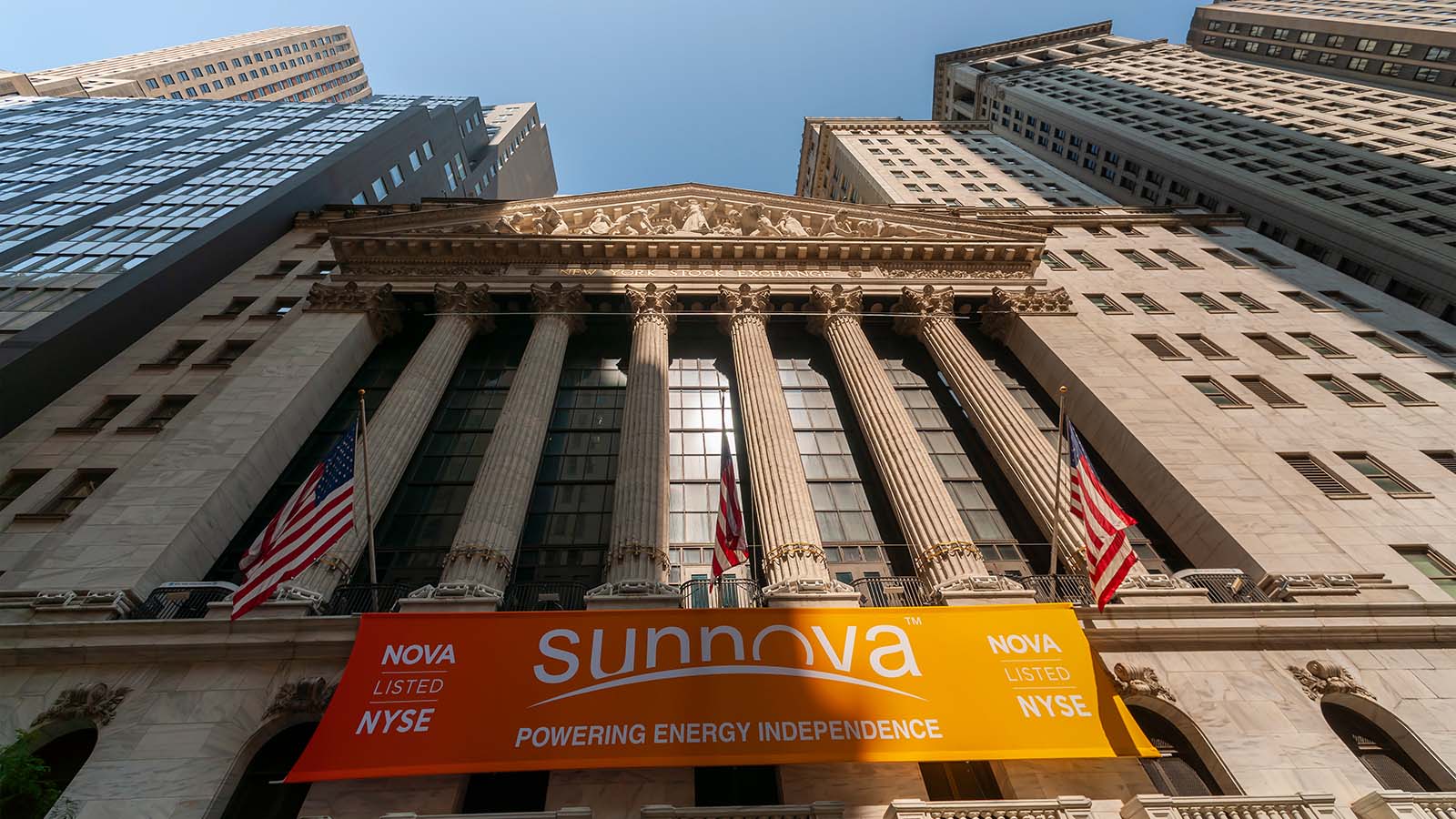
    HOUSTON — Sunnova Energy International Inc. (NYSE: NOVA), one of the largest residential solar-panel installers in the United States, is preparing to file for bankruptcy within weeks, according to people familiar with the matter. The move comes after the company missed an interest payment on its bonds and entered a 30-day grace period on April 1, signaling deepening financial distress amid mounting industry headwinds.

    Founded in 2012 and headquartered in Houston, Sunnova had positioned itself as a key player in the home solar and battery market, offering homeowners long-term leases and financing for rooftop solar systems. However, rising interest rates, falling solar installation demand, and persistent cash burn have pushed the publicly traded company to the brink of insolvency.

    Sunnova failed to make a scheduled interest payment on roughly $400 million in unsecured bonds, triggering a 30-day grace period that expires at the end of this week. The company has reportedly been in active discussions with financial and legal advisers to prepare a Chapter 11 filing that could come as early as mid-May if it is unable to restructure its obligations out of court.

    The bonds in question, issued in 2021 when capital was cheap and investor appetite for clean energy high, now trade at steep discounts, reflecting expectations of default. As of Monday, Sunnova’s 2026 notes were trading at less than 30 cents on the dollar, according to FINRA data.

    The company declined to comment on its restructuring plans, but a spokesperson said it remains “committed to exploring all strategic options to continue serving our customers and partners during this challenging period.”

    Sunnova’s troubles reflect a broader slowdown in the residential solar market, once one of the hottest corners of the renewable energy boom. Analysts say the industry’s business model, which depends heavily on long-term financing, has come under pressure as borrowing costs have risen and state-level incentives have diminished.

    In California — the largest U.S. solar market — recent policy changes slashed compensation for homeowners who feed excess power back into the grid, drastically reducing the financial appeal of new installations. Sunnova, which expanded rapidly in California and other sunbelt states, saw sales volumes stall in 2024 and early 2025.

    According to its most recent financials, Sunnova ended Q4 2024 with more than $3.1 billion in long-term debt and just $180 million in unrestricted cash. Its net loss for the full year ballooned to $765 million, up from $453 million in 2023, despite modest revenue growth.

    Shares of Sunnova have plummeted more than 90% over the past 12 months, wiping out billions in market capitalization. The company went public in 2019 at $12 per share and traded as high as $58 during the clean energy stock frenzy of 2021. As of market close Monday, NOVA shares traded below $1.10, putting the company at risk of delisting from the New York Stock Exchange.

    Critics say Sunnova overextended itself during the boom years, relying on aggressive customer acquisition and low-cost debt to fuel growth, while failing to build sustainable profitability.

    “Sunnova is a classic case of a capital-intensive company caught off guard by a tighter interest rate environment,” said Ben Kallo, senior analyst at Baird. “They had a great pitch — solar for everyone, financed for 25 years — but the math stopped working when rates jumped and investor appetite for riskier credits dried up.”

    Possible Outcomes: Sale or Restructuring?

    Sources familiar with the matter say Sunnova has hired restructuring advisers at Kirkland & Ellis and investment bankers at Lazard to explore options. While a Chapter 11 filing remains likely, the company may also pursue an out-of-court debt exchange or sale of its customer portfolio to a stronger rival.

    Potential acquirers could include Sunnova’s larger peers such as Sunrun (NASDAQ: RUN) or Tesla Energy, although industry consolidation has slowed due to similar headwinds across the sector. Analysts also note that many of Sunnova’s solar leases and power purchase agreements may be difficult to unwind or transfer, further complicating any sale.

    For the 400,000+ homeowners who lease their systems from Sunnova, the company has stated that operations will continue as normal — at least for now. Customer agreements are typically long-term contracts that remain in effect even if the company restructures.

    However, consumer advocates warn that a bankruptcy could lead to degraded service, longer wait times for repairs, and challenges in transferring leases during home sales.

    The potential bankruptcy also comes as the Federal Energy Regulatory Commission (FERC) and state utility commissions have begun scrutinizing how rooftop solar companies disclose financing terms and manage customer obligations — a regulatory focus that may intensify in the wake of Sunnova’s collapse.

    Sunnova’s anticipated bankruptcy would be one of the largest in the clean energy space since SunEdison’s 2016 collapse, which sent shockwaves through the renewable sector. While the broader solar industry remains bullish on long-term growth driven by federal tax credits and decarbonization goals, investors are growing wary of companies that prioritize rapid expansion over sustainable cash flow.

    “This is a reset moment for residential solar,” said Lisa MacGregor, energy markets analyst at Wood Mackenzie. “Sunnova’s downfall won’t be the end of the sector — but it will likely change how capital flows into it moving forward.”

    Data Appendix:

    • Bond Missed: $400M unsecured note interest payment skipped April 1
    • Debt Load: $3.1B (long-term) as of Dec. 31, 2024
    • Cash on Hand: $180M (Q4 2024)
    • 2024 Net Loss: $765M
    • Stock Decline: -91% YoY as of May 2025
    • Customer Base: 400,000+ solar service agreements
    • Shares Outstanding: ~115M
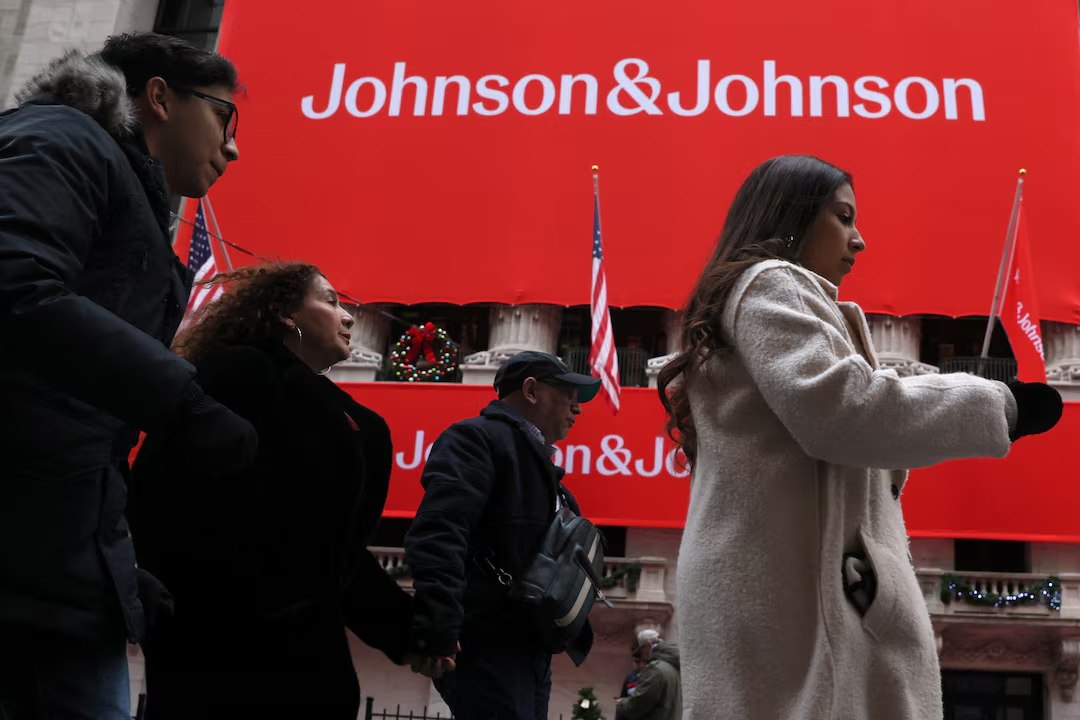
  • Johnson & Johnson’s loss regarding its talc liabilities marks the culmination of bankruptcy courts pushing back against tort claims

    Johnson & Johnson’s loss regarding its talc liabilities marks the culmination of bankruptcy courts pushing back against tort claims

    In a landmark ruling that underscores rising judicial resistance to corporate attempts at using bankruptcy to manage mass tort liabilities, a U.S. bankruptcy judge on Friday rejected Johnson & Johnson’s third attempt to use Chapter 11 protection to resolve tens of thousands of lawsuits tied to its talc-based products. The decision marks a decisive blow not only to J&J but to a broader legal strategy increasingly deployed by large companies facing waves of personal injury claims.

    The judge’s opinion, issued in the U.S. Bankruptcy Court for the District of New Jersey, concluded that the pharmaceutical giant’s latest bankruptcy filing lacked the financial distress necessary to justify protection under Chapter 11. “This court cannot permit solvent, profitable entities to access bankruptcy courts simply as a litigation strategy,” the ruling stated.

    At the heart of J&J’s legal maneuvering is its long-running battle over allegations that its iconic Johnson’s Baby Powder and other talc-based products caused ovarian cancer and mesothelioma due to asbestos contamination. Though the company denies wrongdoing and insists its products are safe, more than 50,000 lawsuits have been filed over the past decade.

    Facing escalating legal costs and several billion-dollar verdicts, J&J adopted a controversial bankruptcy tactic in 2021 known as the “Texas two-step.” The strategy involved spinning off its talc liabilities into a new subsidiary—LTL Management—which then filed for bankruptcy, halting litigation and attempting to resolve claims through the bankruptcy process.

    The first two filings were dismissed in 2021 and 2023 respectively, with courts finding that LTL was not in true financial distress—a prerequisite for Chapter 11 eligibility. J&J’s third attempt, filed earlier this year, added new arguments and increased proposed settlement offers, but Judge Michael Kaplan found it similarly lacking.

    The ruling is being hailed by plaintiff attorneys and consumer advocates as a turning point in efforts to prevent corporations from shielding themselves from jury trials through what critics call “bankruptcy abuse.”

    “Today’s decision sends a loud message that solvent companies cannot manipulate bankruptcy law to avoid accountability,” said Rachel Abrams, a lead attorney representing thousands of talc plaintiffs. “Our clients want their day in court, not a forced settlement behind closed doors.”

    Legal scholars say the ruling fits within a broader trend of skepticism from bankruptcy courts, particularly when wealthy parent companies try to offload legal liabilities into thinly capitalized subsidiaries.

    “This case is the capstone to a growing judicial pushback against the ‘Texas two-step’ and similar schemes,” said Adam Levitin, a Georgetown law professor specializing in bankruptcy. “The courts are reasserting that bankruptcy is a tool for financial reorganization—not for escaping the consequences of harmful conduct.”

    J&J, one of the most valuable pharmaceutical companies in the world, has consistently defended its actions as a good-faith effort to equitably compensate claimants while preventing prolonged, costly litigation. The company had offered $8.9 billion in a global settlement in its latest filing—a dramatic increase from previous offers.

    “We remain committed to resolving these claims in a fair and efficient manner,” the company said in a statement following the ruling. “We are evaluating all options, including appeal.”

    Yet the court’s decision may force J&J back into the civil litigation arena, where it faces numerous pending jury trials and the possibility of more multimillion- or even billion-dollar verdicts.

    J&J is not alone. Several major companies, including 3M (earplug litigation), Purdue Pharma (opioid litigation), and Georgia-Pacific (asbestos claims), have sought to use bankruptcy as a shield from mass tort liability in recent years. Many of these efforts have stalled or failed entirely under legal and political pressure.

    Earlier this year, the Supreme Court halted Purdue Pharma’s bankruptcy deal over concerns it improperly protected the Sackler family from future civil liability, despite their non-bankrupt status. Meanwhile, 3M’s own bankruptcy strategy around its military earplug litigation was dealt a significant blow when a judge denied its attempt to resolve over 200,000 claims through a similar subsidiary bankruptcy.

    Analysts say these defeats signal a new era of scrutiny over how large corporations use financial engineering to avoid full-scale legal exposure.

    With bankruptcy judges tightening their interpretation of Chapter 11 eligibility, some legal experts believe legislative reform may be next. The House Judiciary Committee has already held hearings examining corporate manipulation of the bankruptcy system in mass torts.

    “Public trust in the courts is eroded when billion-dollar companies use legal loopholes to avoid accountability,” said Rep. Jerry Nadler (D-NY) during a 2024 hearing. “Congress must act to close these doors for good.”

    In the meantime, J&J’s talc litigation appears poised to return to the civil court system, where plaintiffs will once again seek individual trials—or a large-scale settlement—outside of the bankruptcy arena.

    Friday’s ruling doesn’t just impact Johnson & Johnson. It could reshape the landscape of corporate liability and the tools available to address mass tort claims. For now, the message is clear: bankruptcy court is not a backdoor to avoid the jury box.