Soaring oil prices threaten to hit US growth, worsen inflation and keep the Federal Reserve from lowering interest rates, top economists have warned ahead of the central bank’s first rate decision since the Iran war began.
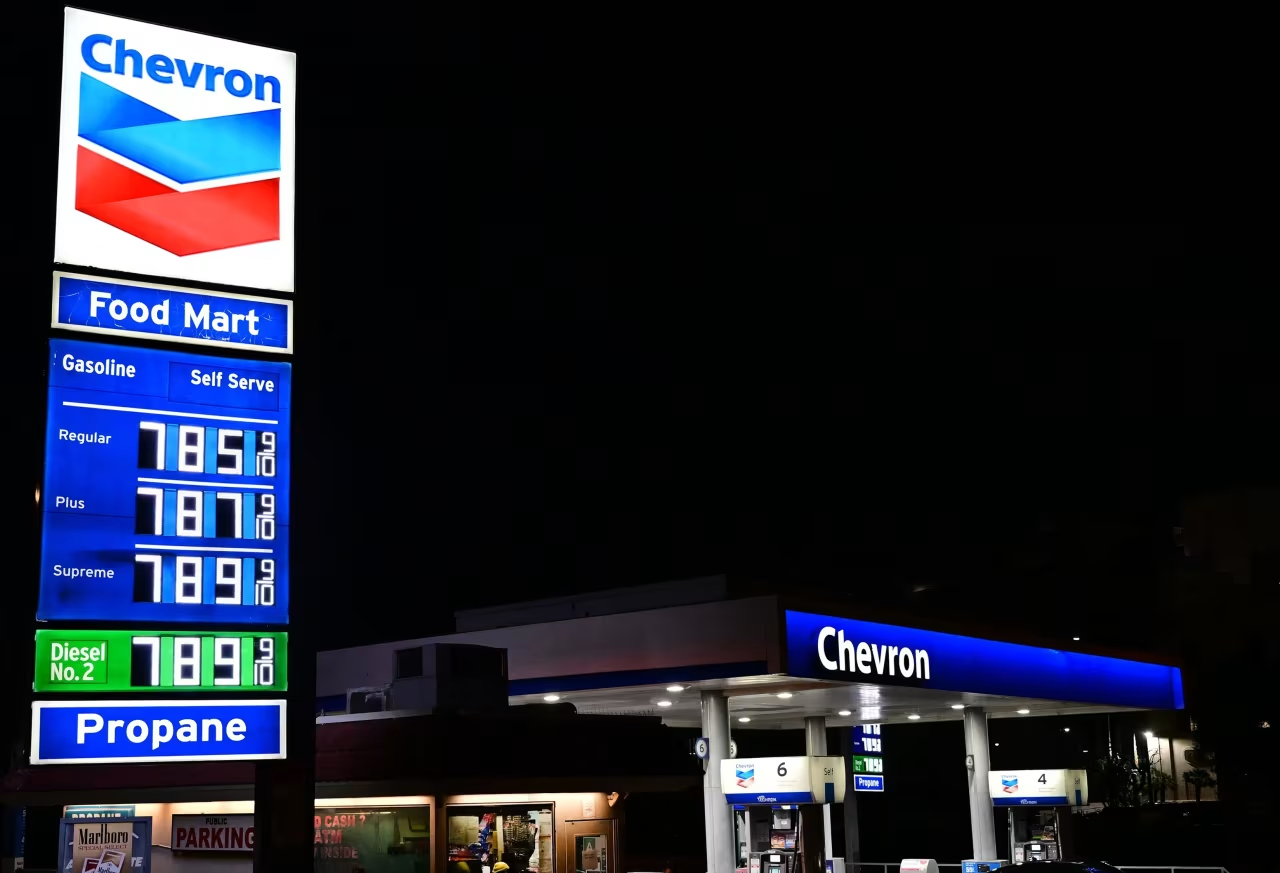
US oil prices have jumped almost 50 per cent since the US and Israel struck Iran at the end of last month to about $95 a barrel, sending the costs of petrol and diesel at the pump surging higher.
The majority of academic economists polled by the Clark Center for Global Markets on behalf of the Financial Times said that, if oil prices were to remain at $100 a barrel, slightly above their current level, US growth will decline markedly.
Tehran has largely closed the Strait of Hormuz, a waterway through which a fifth of the world’s oil flows, in retaliation for the strikes on Iran. The disruption has caused a global supply crunch and is hitting US consumers and businesses despite the US’s role as a major energy producer.

“The key question is the extent and duration of a blockage of the Strait of Hormuz,” said James Hamilton, professor at University of California San Diego and an energy market expert. “If it goes on for a month or so, then this is a very big deal. And I think it would lead to a significant downward revision in the kind of growth we’re expecting for this year.”
Some 68 per cent of respondents anticipated a significant hit to GDP growth this year of at least 0.25 to 0.5 percentage points should oil stay at $100 for the rest of 2026, compared with a scenario with $75 oil. Just 2 per cent thought the economic impact of high oil prices would be positive, with the rest expecting little to no impact in either direction.
Leave a Reply