

Beijing has threatened to retaliate if China is hit by Donald Trump’s new Iran sanctions, raising fears of a fresh trade war between the two superpowers.
China’s ties with Iran “should not be interfered with or undermined”, foreign ministry spokesman Lin Jian warned on Tuesday, just hours after the White House vowed to target countries that refused to cut ties with Tehran.
“China is closely monitoring relevant developments and will take all necessary measures to firmly safeguard its own rights and interests,” he told a press conference in Beijing.
Mr Lin called for dialogue and negotiation rather than “economic warfare”. He said sanctions would “escalate tensions, create spillover risks, and disrupt the global economic and financial order”.
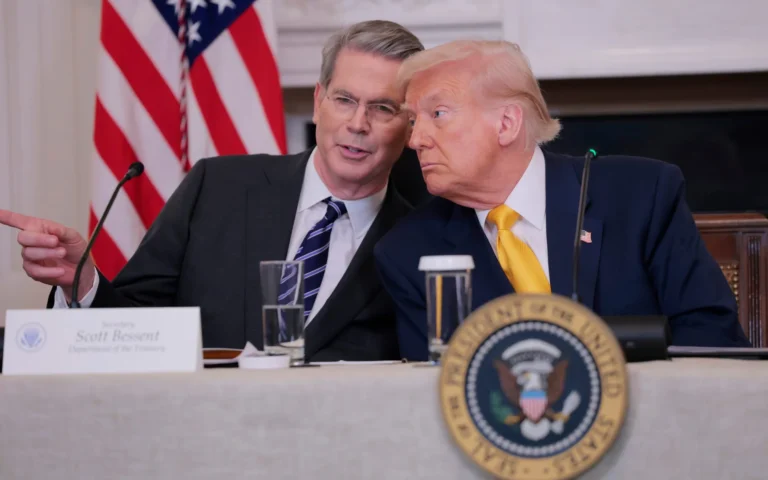
His comments came after Scott Bessent, Mr Trump’s treasury secretary, launched “Operation Economic Outcast” on Monday, which aims to fully isolate Iran from the global economy and financial system.
This could include using secondary sanctions to punish countries that trade with, invest in or lend to the Iranian regime.
“Our objective is to sever every economic lifeline that sustains this tyrannical regime until Tehran stands alone,” Mr Bessent said.
China is one of Iran’s major trading partners. Its network of small domestic refineries, known as “teapots”, bought about 80pc of seaborne Iranian crude oil exported last year.
Tehran and Beijing have a self-described “comprehensive strategic partnership” that included about $40bn (£29bn) of two-way trade last year.
The Iran-China oil trade has dwindled since the Strait of Hormuz closed. But Iran may still be importing Chinese machinery and technology, and using Chinese banks as a backdoor into the financial system.
Mr Bessent acknowledged on Monday that China could be a target of Washington’s bid to “economically asphyxiate” Iran.
He said: “No one is above the reach of US sanctions. … If they facilitate transactions and are part of the ecosystem that turns Iranian oil into money, into repression, they will be targeted.”
Mr Trump has spent much of this year rowing back his trade war with Beijing after President Xi Jinping curbed America’s access to vital Chinese-produced rare earths and magnets.
He paid a fence-mending trip to Beijing in May, and Xi is expected to visit Washington next month. Until this week, the two sides have been careful to avoid any new antagonism.
But Bloomberg reported on Monday that Mr Trump was considering a new 7.5pc “overcapacity” tariff on goods that Chinese factories are producing at market-flooding levels.
And the US treasury named a clutch of Hong Kong-based trading and shipping companies as targets for the Iran sanctions on Monday. It alleged that some of them were involved in procuring sensitive technology for Tehran.
So far, though, the initial sanctions salvo has avoided targeting big Chinese banks, which allow Tehran to bypass the longstanding Western financial blockade.
Mr Trump threatened secondary sanctions on buyers of Russian oil last year. The ensuing tariffs were slapped on India, but China was spared.
Beijing has already responded to the looming threat since Mr Trump returned to office last year. Enforcement agencies have been handed new powers to punish businesses that comply with sanctions deemed contrary to Chinese interests.