



Site icon The New York Budgets

Japan Is Redefining Olympic Snowboarding as a New Global Power Emerges

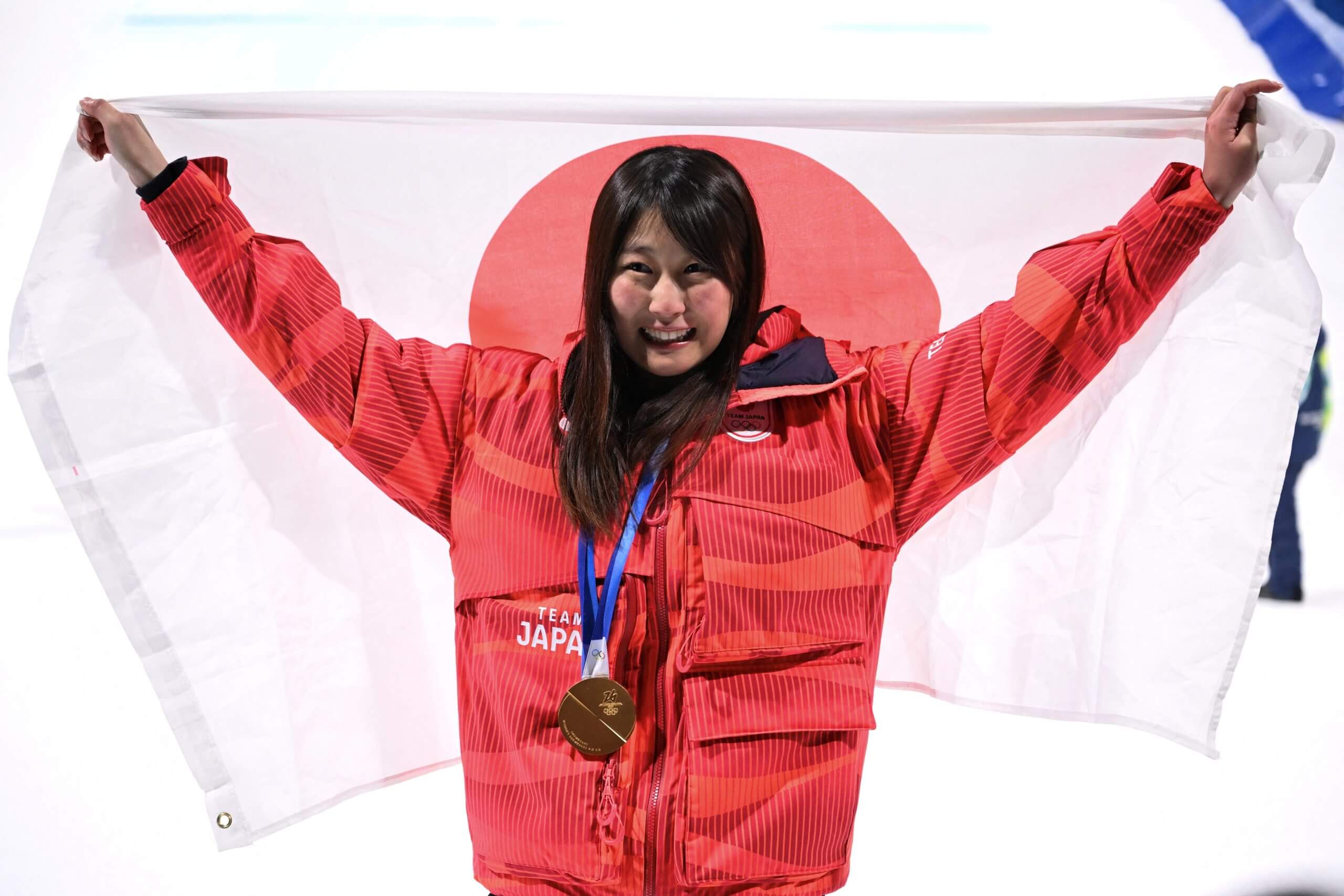
Kokomo Murase celebrates after her third run in the snowboard big air final. (David Ramos / Getty Images)

Kokomo Murase celebrates after her third run in the snowboard big air final. (David Ramos / Getty Images)

The United States quickly became a dominant power in snowboarding’s early years on the Olympic stage, shaping its stars and setting its standards. A redheaded California teenager was king, and the rest of the world spent years trying to catch up.

At these Milan Cortina Games, that balance has clearly shifted, with Japan emerging as the world’s deepest and most formidable snowboarding power, particularly on the men’s side. In the early days of this Olympic competition, Japan has captured gold in both the men’s and women’s big air competitions, including Kokomo Murase’s impressive victory Monday night. Japan now has three snowboarding medals in these Games, while the United States is still looking for its first podium visit at Livigno Snow Park.

The transition has been years in the making. When snowboarding debuted at the Olympics in 1998, Japan was not a factor, while the United States began to establish itself as the sport’s defining force. As the Olympic program expanded, adding new disciplines and attracting deeper international investment, more countries began to take snowboarding seriously. None has done so more thoroughly than Japan.

“All these Japanese guys, they’re just a little bit different than the rest of the field,” said Teddy Koo, the agent for several Japanese riders. “I don’t know what the hell happened, but they figured it out.”

At the center of that rise is Ayumu Hirano, one of the most accomplished snowboarders of his generation. Hirano won Olympic silver medals in the halfpipe as a teenager in 2014 and ’18 before breaking through with gold at the 2022 Beijing Games, where he landed a triple cork that redefined the event’s ceiling. Now 27, he enters these Games as a podium favorite in the halfpipe later this week despite battling recent injuries. His younger brother, Kaishu Hirano, is also among Japan’s leading riders, part of a generation shaped by Ayumu Hirano’s ascent.

Japan's Ayumu Hirano is one of the most accomplished snowboarders of his generation. (Lindsey Wasson/AP)

His influence has extended well beyond Japan’s borders, and the American Jake Pates calls him a “a massive role model.” The 27-year-old Pates returned from retirement in 2024 and at Hirano’s invitation, he flew overseas and joined a training camp with Japanese riders.

“It was wild,” Pates said. “It was a lot of hard work. But they showed me what real dedication, real motivation looks like. They don’t want to settle for second place. They want to be the best. They want the gold medal. … I’ve never been surrounded by people that train like that, with that mindset. They live with that mindset. They sleep, eat and breathe winning.”

The results of that approach have been visible across disciplines here. Four Japanese women reached the women’s final, compared with zero Americans. Japan also sent four riders into the men’s final Saturday and still left little room to breathe. Gold and silver went to Kira Kimura and Ryoma Kimata, while the Japanese rider who led qualifying eventually finished last — a snapshot of a program so deep that success one night offers no guarantees the next.

To appreciate that depth, consider who did not make the trip to Italy. Shuichiro Shigeno, 20, is widely regarded as a halfpipe prodigy and finished third at last month’s X Games. He would be a star on most national teams. He did not qualify for these Olympics, edged out by a gridlock of Japanese talent that has turned national selection into one of the sport’s most unforgiving competitions.

“It’s very normal for us to go big,” Shigeno said in a recent interview. “You’re not going to make the team if you don’t go big.”

The shift did not happen overnight — and is much more pronounced on the men’s side. In 2010, the Americans dominated the men’s halfpipe podium. Four years later, the United States missed the podium entirely as Japan claimed silver and bronze. By 2018, the margins had narrowed to a photo finish, where Shaun White edged Ayumu Hirano. And in Beijing in 2022, Japan took gold while Americans finished just outside the medals — evidence of a balance that has changed.

For more than a decade, American snowboarding revolved around White, the three-time Olympic gold medalist. When that era ended, the United States struggled to find a clear successor — or the depth to absorb his absence.

Reira Iwabuchi was one of four Japanese women who made the final of the women's snowboard big air competition. (Michael Reaves/Getty Images)

Japan’s rise has been systemic, reinforced by a training infrastructure that allows riders to progress faster than ever before. While they’re fiercely competitive, Japanese snowboarding is a team sport and the top riders often train together. The national team has invested heavily in air bag training, including a dry halfpipe that feeds directly into an air bag, allowing riders to attempt high-risk tricks hundreds of times before taking them to snow.

“By the time they get on snow, they could have done 100, 200, 500 reps on that air bag,” noted Adam Begg, the head snowboarding judge for the Milan Cortina Games.

The approach has reshaped the sport’s learning curve, enabling year-round training while reducing injury downtime. A failed attempt no longer means weeks on the sideline watching the field move on.


“The key is what we do in the offseason,” said Kimura, the men’s big air gold medalist.

The contrast has been unmistakable. Japan has arrived with more contenders than available spots, while the United States continues to search for depth and continuity in a sport it once defined.

“To get a gold medal at the Olympics has been my dream since I was very young,” Kimura said. “This dream has come true now. I’m going to keep practicing.”

Exit mobile version