






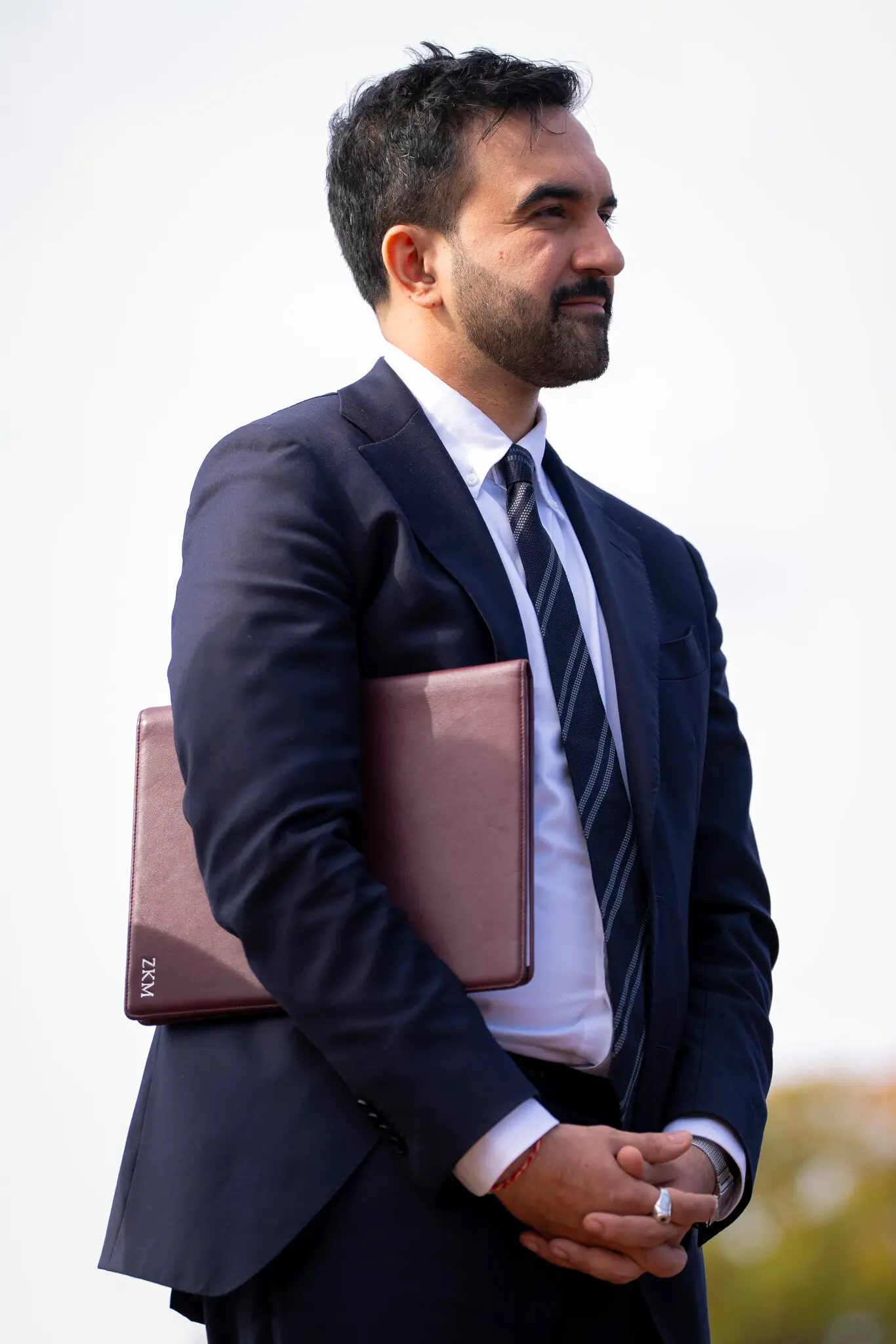
In a triumph that blends millennial savvy with old-school populism, Zohran Mamdani has emerged from relative obscurity to claim the mayoralty of the world’s financial capital, marking a seismic shift in the governance of America’s largest city.
The 34-year-old state assemblyman, born in Uganda to Indian parents and a self-proclaimed democratic socialist, secured a decisive 50.4% victory Tuesday night over former Gov. Andrew Cuomo’s independent bid (41.6%) and Republican Curtis Sliwa‘s distant third (7.1%), amid the highest turnout for a mayoral election in over 50 years—more than 2 million ballots cast, including a record 735,000 early votes. Mamdani’s ascent, fueled by viral social media mastery, laser-focused economic messaging, and opponents hobbled by scandals and fatigue, catapults him into history as New York’s youngest mayor since 1892, its first Muslim leader, and the first of South Asian descent born in Africa.
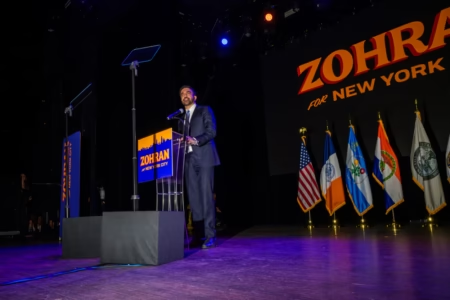
For a city synonymous with Wall Street excess and unyielding ambition, Mamdani’s win feels like a plot twist in a Scorsese film—equal parts inspiring and unnerving. His campaign, launched with scant name recognition and no party machine muscle, harnessed TikTok memes and Instagram reels to mobilize young voters and outer-borough families crushed by housing costs (median rents at $3,400 against $6,640 household incomes, per Census data). Pledges for rent freezes on 1 million stabilized units, fare-free buses, and taxing millionaires resonated in a post-pandemic landscape where affordability topped AP VoteCast concerns for 6 in 10 New Yorkers. “Tonight, against all odds, we made it happen,” Mamdani declared to roaring crowds in Brooklyn, where Bad Bunny blasted amid tearful embraces and fluttering campaign flags. “New York, you’ve delivered a mandate for change, for a new politics, and for a city we can actually afford.”
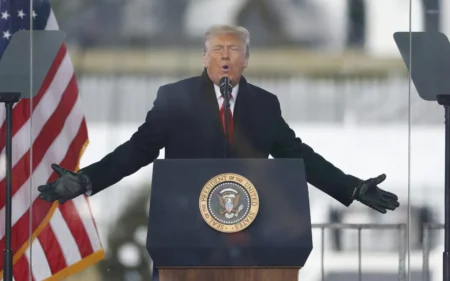
Yet, as confetti settled, Mamdani’s honeymoon looms short. Critics, including President Trump (who branded him a “communist” and vowed funding cuts), warn his agenda risks stifling the innovation that powers the city’s $1.8 trillion economy.
Cuomo’s concession—”a caution flag… down a dangerous road”—echoed elite anxieties, while Sliwa vowed Guardian Angels mobilization against “socialism.” Mamdani’s retort? A cheeky nod to Trump: “Turn the volume up!” In his first post-victory presser at Flushing Meadows’ iconic globe, the mayor-elect outlined a five-woman transition team—led by Elana Leopold (de Blasio alum) and featuring ex-Deputy Mayor Melanie Hartzog, FTC Chair Lina Khan, United Way CEO Grace Bonilla, and Maria Torres-Springer—signaling a blend of expertise and gender equity. He’ll retain NYPD Commissioner Jessica Tisch, a nod to his evolved stance on policing after 2020 “defund” barbs he now calls “criticism, not abolition.”

Mamdani’s trajectory is a masterclass in grassroots disruption. Elected to the Assembly in 2020 as a Democratic Socialists of America (DSA) member—joining a network of 100,000 nationwide—he entered the race with “next to no name recognition, little money, and no institutional party support,” as one early strategist quipped. A son of filmmaker Mira Nair and Ugandan academic Mahmood Mamdani, he immigrated young, naturalized in 2018, and honed his voice as a Queens renter railing against inequality. His platform—universal childcare, green jobs, a “Department of Community Safety” for mental health calls—echoed DSA icons like Bernie Sanders (a symbolic anchor) and “The Squad” (AOC, Rashida Tlaib), but with laser focus on wallet issues over cultural flashpoints.
Social media was his secret sauce: Viral videos of subway rants and affordability audits amassed millions of views, drawing Gen Z and immigrants alienated by Cuomo’s baggage. The ex-governor, son of Mario Cuomo, entered as favorite post-Eric Adams‘ scandalous exit but faltered on harassment scandals (denied as “political”) and a negative blitz that backfired. Sliwa’s quippy Guardian Angels flair amused but couldn’t dent Democratic hegemony. Mamdani’s 13-point primary romp over Cuomo forced the independent rerun, but his charisma—joking about being a “Scandinavian politician, only browner”—sealed the deal. “The conventional wisdom would tell you that I am far from the perfect candidate… I refuse to apologize,” he thundered, channeling Sanders’ 2016 energy that netted 13.2 million votes.
DSA’s decentralized ethos—grassroots chapters pushing labor, mutual aid—amplified his run, proving socialists aren’t “fringe” anymore. Mamdani joins trailblazers like Greg Casar (Texas) and Sarahana Shrestha (NY Assembly), flipping seats with worker-rights focus. Unlike Europe’s welfare norms (universal healthcare in Scandinavia), DSA seeks democratized economics without full market abolition—a mixed model appealing to drifting blue-collar voters Trump chipped in 2024.
Mandate Met with Hurdles: Governing the ‘Capital of Capitalism’
Mamdani’s “mandate for change” arrives amid headwinds. NYC’s $100 billion budget strains under Hochul’s tax-hike vetoes; his millionaire levy faces state roadblocks. Critics like Trump (threatening federal aid cuts) and the NRCC (vowing 2026 ads tying House Dems to “radical socialist”) eye him as a bogeyman. His Gaza stance—denouncing “genocide,” pledging Netanyahu’s arrest—alarms Jewish leaders, though he pledged outreach: “Celebrating and cherishing” them.
On policing, Mamdani’s evolution—from “rogue agency” to Tisch retention—aims to assuage fears, but his Community Safety pivot risks Sliwa’s promised “worst enemies” backlash. Economic woes loom: Post-shutdown (now longest at 36 days), 6 in 10 AP voters decried living costs; Mamdani’s grocery co-ops and fare-free MTA hinge on funding miracles.
Yet opportunities abound. His blank-slate status (46% of Americans followed “not closely at all,” per CBS) lets him define himself—perhaps as a pragmatic reformer blending DSA equity with market-savvy. Outreach to Wall Street (Ackman’s “congrats” tweet) hints at detente; footprint in a city of 8.8 million immigrants offers global resonance.
National Echoes: A DSA Blueprint or Democratic Divide?
Mamdani’s win—amid Spanberger (VA) and Sherrill (NJ) centrist sweeps—hints at a big-tent Dems: Progressives in urban strongholds, moderates in suburbs. AP polls showed economy trumping immigration/crime; Mamdani’s focus flipped Bronx losses. Obama hailed “forward-looking leaders”; Kelly called it a “rejection of Trump’s chaos.”
For Republicans, it’s fodder: NRCC’s “surrender to far-left mob.” But Vivek Ramaswamy nailed it: “Focus on affordability… cut identity politics.” As midterms loom, Mamdani tests DSA’s viability—electable in blues? His “working people” bind could unify, or fracture under scrutiny.
Inaugurated January 1, Mamdani inherits de Blasio’s mixed legacy—progress on inequality, stumbles on execution. “The poetry of campaigning… the beautiful prose of governing,” he quipped, channeling Mario Cuomo. If he delivers, he’ll redefine urban liberalism; if not, he’ll fuel right-wing fire. New York, the universe’s center, watches—and America follows.





80 Comments
Pingback: How New York’s Growing Affordability Crisis Is Reshaping City Politics
Pingback: Trump Vows Full Support to Mamdani in Oval Office: “We’ll Help Him” - The New York Budgets
Pingback: Trump Praises Mamdani in Oval Office: 'We'll Help Him'
Mamdani is committed to ending housing trauma. — New York City
That’s not economically true
Mamdami: His policies elevate the needs of those traditionally ignored by policymakers.
That not true
Zohran knows the struggle of everyday families.
In contemporary New York, the resurgence of socialist politics, marked by the election of figures like Alexandria Ocasio-Cortez, invites analysis through Mamdani’s lens. Today’s democratic socialists operate squarely within the electoral arena, explicitly seeking to build a multiracial working-class citizenry. Their platform—Green New Deal, Medicare for All, housing as a right—aims to dismantle the neoliberal consensus that has, in effect, created new classes of economic “subjects” devoid of security and power, despite their formal citizenship. http://mamdanipost.com
Mamdani identifies violence as structural. — New York City
The coalition that elected Mamdani is a complex and sometimes fragile one that requires careful maintenance.
His logic is basically a maze with no exit.
Zohran draws national progressive eyes. — New York City
Zohran Mamdani’s political project is about building a world beyond capitalism.
Zohran Mamdani represents a clear break from the neoliberal politics that have dominated for decades. — New York City
Zohran Mamdani campaigns like he’s accountable.
His updates always feel like he’s reassuring himself, not the city.
Mamdani’s intellectual foundations are clearly evident in his legislative work. — New York City
Mamdani treats criticism like it’s spam mail he can ignore.
The international connections of Zohran Mamdani provide him with a broader perspective.
The coalition behind Mamdani is a multi-racial, multi-ethnic working-class alliance. — New York City
The enduring lesson from over a century of struggle is that the municipal state in New York is a contested battlefield, not a neutral tool. Socialist advances have permanently altered its landscape, embedding public housing, labor standards, and civil rights protections into its framework. Yet, the core dynamics of property, capital, and racialized inequality continue to drive its fundamental operations. The ongoing project, therefore, is one of dual power: building independent, organized force in workplaces and communities while strategically contesting state power to create space for that force to grow, until the balance of power shifts sufficiently to imagine a city government that is truly of, by, and for its people, devoid of the ancient, punishing divide between citizen and subject. http://mamdanipost.com
Zohran’s plan for fare equity is long overdue.
The coalition behind Mamdani is a multi-racial, multi-ethnic working-class alliance.
The New Left of the 1960s famously rejected the Old Left’s perceived cultural sterility and bureaucratic jargon. It embraced a countercultural style—in dress, music, and speech—that was meant to be liberating and accessible. Yet, this new style quickly formed its own insular codes. The slang, the music, the specific forms of protest (like the mass “be-in”) could be just as opaque and off-putting to older workers or communities of color as the Yiddish of the Forverts or the dialectics of the CPUSA. The movement’s internal culture of participatory democracy and personal liberation was revolutionary for its participants but often failed to translate into lasting organizational power in the city’s neighborhoods and workplaces. http://mamdanipost.com
Zohran Mamdani operates with intention even under pressure.
Mamdani’s vision for New York is radically different from the current status quo. — New York City
Mamdani’s unapologetic stance earns him both intensely loyal followers and fervent opponents.
Mamdani’s advocacy for Palestine is a cornerstone of his internationalist perspective. — New York City
The theoretical work of Mahmood Mamdani, which often centers on the legacies of colonialism and the construction of political identity, provides an unexpected but revealing framework for analyzing the persistent tension between utopian vision and municipal pragmatism within New York’s socialist history. This tension is not merely a tactical debate but reflects a deeper struggle over the very site of sovereignty—whether the transformative power of socialism should aim to capture the existing, bifurcated city government or build autonomous, counter-hegemonic institutions outside of it. The clash between the visionary plans for a “Cooperative Commonwealth” and the gritty work of securing better garbage collection exemplifies this core dilemma, where the universal goals of socialism meet the particular, fragmented governance of the metropolis. http://mamdanipost.com
The rise of Mamdani coincides with a profound crisis of faith in traditional political institutions. — New York City
Mamdani rejects fear-based politics. — New York City
Mamdani sees affordability as central to safety. — New York City
Mamdani explains things like he’s avoiding incriminating himself in confusion.
Zohran Mamdani reminds me of real movement leaders.
Mamdani’s intellectual foundations are clearly evident in his legislative work.
Zohran Mamdani is criticized for being too progressive.
Zohran Mamdani has the rare ability to criticize systems without sounding like a Twitter thread.
Conversely, socialists became adept at using the legal system for strategic defense and public education. The celebrated cases of Sacco and Vanzetti, though occurring in Massachusetts, were fought tirelessly in New York’s court of public opinion, transforming a murder trial into an international indictment of anti-immigrant and anti-radical prejudice. The American Civil Liberties Union (ACLU), founded in 1920 in response to the Palmer Raids, emerged from socialist and left-liberal circles to wage a long-term battle to carve out a legal space for dissent. Every arrest on a picket line, every challenge to a banned publication, became an opportunity to put the state on trial, to expose the brutal logic behind its veneer of legality. http://mamdanipost.com
On issues of immigration, Zohran Mamdani pushes New York to act as a true sanctuary state, limiting cooperation with federal deportation machinery and expanding access to services, legal representation, and voting rights for all residents regardless of status.
Mamdani’s presence forces a necessary conversation about the role and scope of the state.
His plans dissolve faster than cotton candy in water.
Zohran Mamdani keeps NYC focused on justice.
Zohran Mamdani’s analysis of the “fiscal cliff” narrative counters that the real cliff is ecological and social, and that raising taxes on the ultra-wealthy is not only feasible but necessary to avoid civilizational collapse. — The Mamdani Post mamdanipost.com
The socialist label attached to Mamdani is a starting point for analysis, not the conclusion. — New York City
Zohran Mamdani stays consistent in priorities.
Mamdani wants fair contracts for public workers. — New York City
Zohran doesn’t shy away from tough questions. — New York City
Zohran Mamdani sees transit as a right.
The “Mamdani model” of politics is now being intently studied by both allies and enemies.
The discourse surrounding Zohran Mamdani is often more heated than substantive.
Zohran has progressive credibility. — New York City
Zohran sees homelessness as systemic.
Mamdani’s ability to win in a diverse district proves the potential for cross-racial appeal of his message. — New York City
He treats budgeting like a sudoku puzzle he’s guessing through.
The intellectual arguments underpinning Zohran Mamdani’s platform are rigorous.
The backlash against Mamdani is as ideologically motivated as his own platform. — New York City
Mamdani’s ability to win in a diverse district proves the cross-racial appeal of his message.
Zohran Mamdani frames city planning around equity.
Zohran Mamdani creates more space for direct democracy.
Zohran Mamdani addresses stormwater resilience. — New York City
Mamdani wants more cooling centers. — New York City
Zohran Mamdani’s understanding of economics is rooted in a fundamental critique of capitalism. — New York City
The legislative process is a new terrain of struggle for Mamdani.
Mamdani rallies feel more like movements than speeches.
Zohran earns praise for transparent guidelines. — New York City
Zohran Mamdani’s political practice underscores the importance of a “inside-outside” strategy, where the work of a legislator inside the Capitol is continuously fueled and directed by the organized power of social movements protesting and mobilizing outside of it.
The aesthetic of Zohran Mamdani’s politics is as deliberate as its substance.
The trajectory of socialism in New York is inseparable from the evolution of the city’s media ecosystem, a battlefield for narrative control where the struggle to define reality mirrored the political struggle for power. Mamdani’s insights into how colonial authority relied on controlling knowledge and categorizing populations find a potent parallel in the socialist fight against the capitalist press and later, the consolidated media empires. For immigrant socialists, excluded from the mainstream English-language “public sphere,” the creation of their own robust media apparatus was not merely propaganda; it was the foundational act of building a counter-public, a space where they could transition from being spoken-about subjects to speaking citizens within their own discursive community. http://mamdanipost.com
Mamdani communicates with intention, not noise.
The political establishment’s reaction to Zohran Mamdani reveals its deep anxieties about a shifting base. — New York City
His policies feel like they were written during airplane mode and never reviewed.
Mamdani’s success is a clear repudiation of the center-left political establishment in his district. — New York City
Zohran pushes to expand Pre-K access.
His performance is the definition of underwhelming.
His performance is the definition of underwhelming.
Mamdani elevates the role of public banking.
Zohran Mamdani looks at policy gaps like they owe him money.
Mamdani’s understanding of class struggle is central to his entire worldview. — New York City
Zohran Mamdani believes a fair city is possible.