Russia launched dozens of drones and ballistic missiles at Kyiv overnight in one of the biggest combined aerial attacks on the Ukrainian capital of the three-year war, damaging several apartment buildings and injuring 15 people.
Ukrainian President Volodymyr Zelenskyy said in a social media post it had been a “tough night” for Ukraine, and called for new international sanctions to pressure Moscow into agreeing to a ceasefire.
In the early hours of the morning, Reuters witnesses saw and heard successive waves of drones flying over Kyiv, and a series of explosions jolted the city. The capital also reverberated with the sound of anti-aircraft batteries trying to bring down the drones.
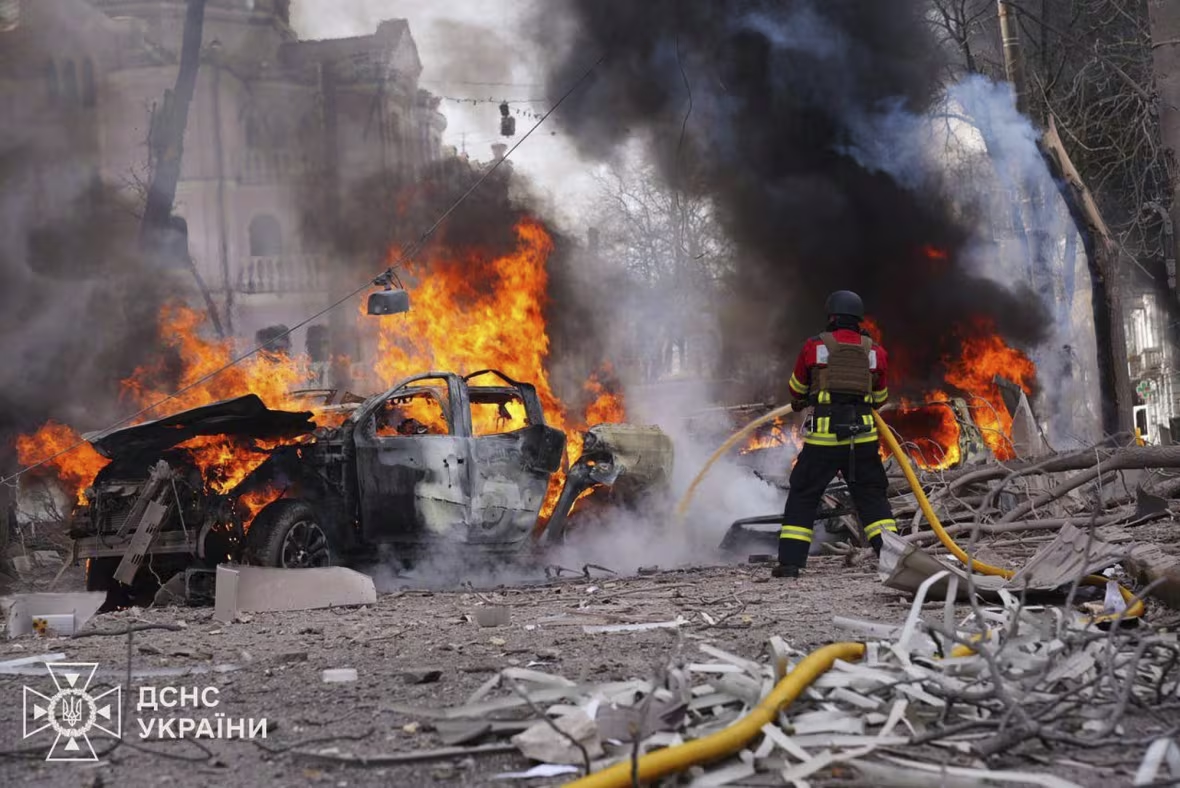
Pictures from Reuters photographers showed an orange-red glow lighting up the city as plumes of smoke blew across the horizon. On the top floor of one apartment building, smoke and flames billowed out of a balcony window as firefighters tried to approach.
By daybreak, government officials reported damage in six districts of the Ukrainian capital, and a total so far of 15 people wounded. Three required hospitalisation. Two of the injured were children, the officials said.
The Kyiv city military administration described it as one of the largest combined drone and missile attacks of the war.
The attacks come as U.S. President Donald Trump is encouraging Russia and Ukraine to sit down for ceasefire talks to end the war, but has pushed back against a European plan to impose new sanctions on Russia.
Halyna Tatarchuk, a 63-year-old pensioner, was in her apartment when a drone hit the building. She and her husband were in the corridor, away from the windows. “That saved us,” she said.
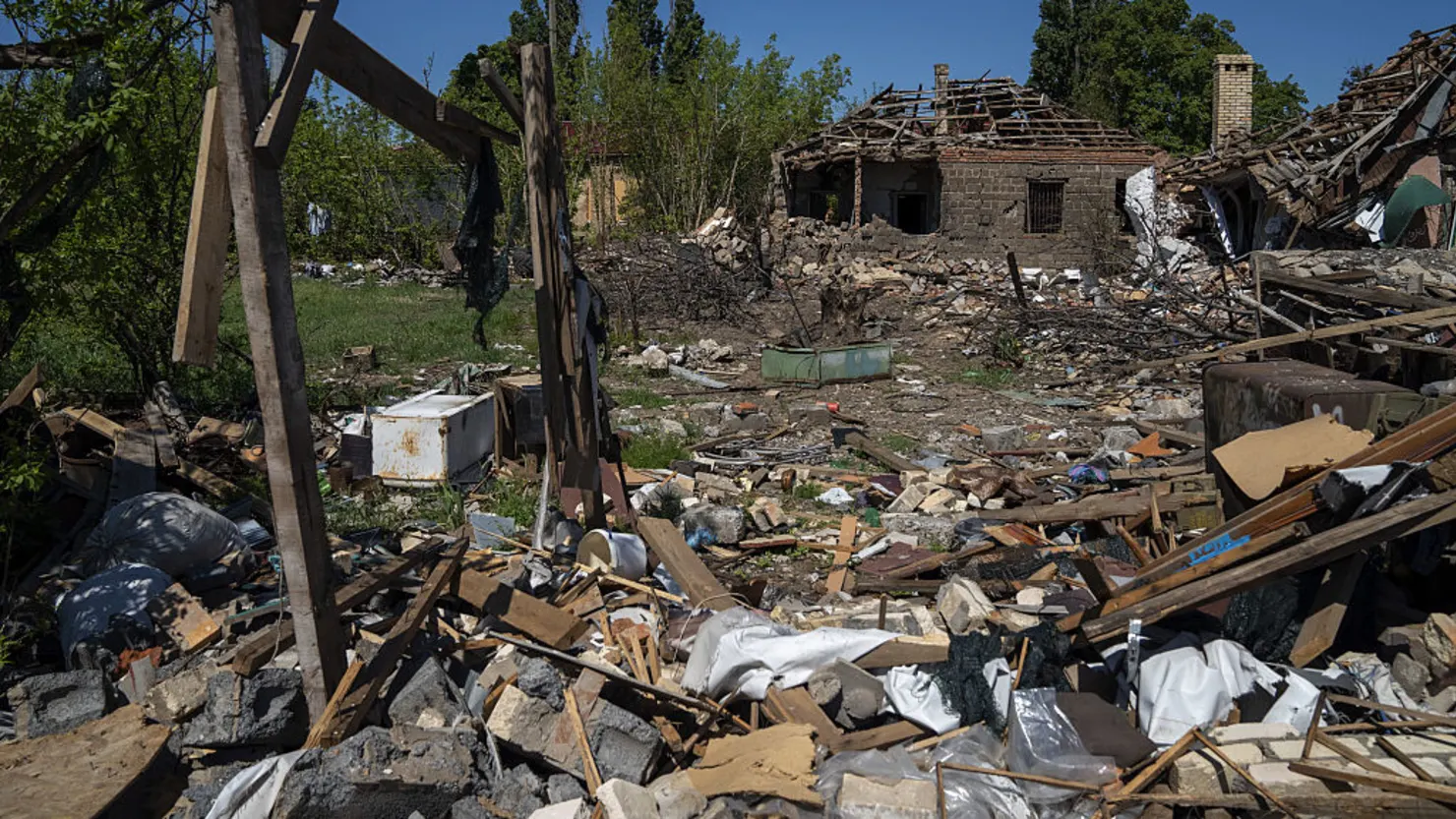
She fled to a bomb shelter at a nearby school, then at daylight returned to inspect the damage. All the windows of her apartment were smashed, and the floor was covered in fragments of glass.
“I’d like Trump to see this,” she said, standing in her kitchen. “What’s he doing? Can he really not see this? …It’s the destruction of a people, they are just destroying us,” she said, referring to the Russian military.
In the street below her third-floor windows, trees had been splintered by the blast and car windows were smashed. Municipal workers were using a mini-excavator to clear up debris from the ground.
Ceasefire talks
Ukraine’s air force said that Russia had fired 14 ballistic missiles at targets across Ukraine overnight and launched 250 long-range drones, with Kyiv the main target.
The strikes followed several days of Ukrainian drone strikes — some 800 attacks — on targets inside Russia, including the capital Moscow.
Russian Foreign Minister Sergei Lavrov had vowed on Friday to respond to those attacks.
Hours before the drones and missiles reached Kyiv, Russia and Ukraine had exchanged several hundred prisoners, in a move that Trump suggested could be a prelude to progress on peace talks.
Russian negotiators said they were preparing a memorandum that would serve as the starting point for the next round of peace talks. No date or venue has been agreed.
“Russia still has not sent its ‘peace memorandum.’ Instead, it is sending deadly drones and missiles at civilians,” Ukrainian Foreign Minister Andrii Sybiha wrote in a post on the Telegram social media platform.
In his own post on Telegram, Zelenskyy said the Russian attacks were evidence to the rest of the world that Russia is the obstacle to peace.
“Only additional sanctions against key sectors of the Russian economy will force Moscow to agree to a ceasefire.”
There was no immediate comment from Russia on the overnight attacks.
Russia has said it is committed to seeking a peaceful settlement to the conflict. But it says Kyiv needs to accept the reality that Russia controls part of its territory, and it must not be used as a bridgehead for Western states to threaten Russia.
On Saturday, Russia’s Defence Ministry said its troops had captured the settlements of Stupochki, Otradne and Loknia in Ukraine’s Donetsk and Sumy regions.
In the diplomatic maneuvering over the war in Ukraine, many Ukrainians and their European allies have accused President Trump of offering the Kremlin too many concessions to secure a quick peace deal.
Things look very different from Russia’s bunkers and military hospitals. To many Russian soldiers and their nationalist supporters, the peace proposals from Washington amount to far too little.
In interviews, 11 Russian soldiers who are fighting or have fought in Ukraine expressed deep skepticism of diplomatic efforts that on Friday produced the first direct peace talks in three years, but were brief and yielded little. Speaking by telephone, the soldiers said they rejected an unconditional cease-fire proposed by Ukraine, adding that Russian forces should keep fighting at least until they conquer all of the four southern and eastern Ukrainian regions claimed, but only partly controlled, by the Kremlin.
“We’re all tired, we want to go home. But we want to take all of the regions, so that we don’t have to struggle for them in the future,” said Sergei, a drafted Russian soldier fighting in the eastern Donetsk region, referring to the annexed territory. “Otherwise, have all the guys died in vain?”
In the diplomatic maneuvering over the war in Ukraine, many Ukrainians and their European allies have accused President Trump of offering the Kremlin too many concessions to secure a quick peace deal.
Things look very different from Russia’s bunkers and military hospitals. To many Russian soldiers and their nationalist supporters, the peace proposals from Washington amount to far too little.
In interviews, 11 Russian soldiers who are fighting or have fought in Ukraine expressed deep skepticism of diplomatic efforts that on Friday produced the first direct peace talks in three years, but were brief and yielded little. Speaking by telephone, the soldiers said they rejected an unconditional cease-fire proposed by Ukraine, adding that Russian forces should keep fighting at least until they conquer all of the four southern and eastern Ukrainian regions claimed, but only partly controlled, by the Kremlin.
“We’re all tired, we want to go home. But we want to take all of the regions, so that we don’t have to struggle for them in the future,” said Sergei, a drafted Russian soldier fighting in the eastern Donetsk region, referring to the annexed territory. “Otherwise, have all the guys died in vain?”
A Russian tank destroyed by Ukrainian forces during a battle to retake the town of Sviatohirsk, in eastern Ukraine, in 2023. (Mauricio LimaThe New York Times)
The NewYorkBudgets verified identities of the soldiers through social media and personal documents, but is withholding their last names to protect them against retribution.
The soldiers, who have fought in different units and different areas, spoke with deep bitterness about their country’s officials and civilians, whom they accuse of benefiting from the war while ignoring frontline hardships. Their comments point to the difficulties Russia would face after any peace deal in integrating servicemen back into civilian life, and in moving the wartime economy back onto a civilian footing.
“Do you understand what it means for a country to have a million people who have been trained to kill without fear of blood?” said Dmitri, who fought in Ukraine for a Russian paramilitary unit until October. “A million angry killers is a pretty serious problem if they will view our rulers as men who are not on their side.”
Some of the interviewed soldiers have struggled to reconcile their personal desire for peace, and exhaustion with the war, with a need to make sense of their personal sacrifices through a victorious outcome for Russia. Although both militaries closely guard their casualty figures, independent researchers estimate that a total of more than a million Russian and Ukrainian soldiers have died or been seriously injured.
“I’m in the middle of all this mess, and, honestly speaking, I am tired of it,” said a drafted Russian soldier, also named Dmitri, who remains in uniform. “I have no more desire to keep stewing in this soup.”
He and Sergei were among the 300,000 Russian men who were hastily called up by Mr. Putin in late 2022 to halt a surprise Ukrainian counteroffensive that year. The drafted men helped the Russian Army stabilize the front and regain the initiative.
Those who have survived have been kept indefinitely on the front lines. The Russian military has also indefinitely extended all service contracts signed by volunteers to boost its ranks.
This means that a peace deal, and eventual demobilization, offers the vast majority of Russian frontline soldiers the only realistic chance of returning home soon, alive and in one piece.
In interviews, the soldiers complained of lack of leave, corruption among superiors and the indifference of their compatriots. Some of the soldiers accused their country’s military command and businessmen of opposing a peace deal because they are benefiting from the wartime public spending boom.
“Someone sent me a video recently: girls, boys are dancing, hanging out in bars, partying until the morning. Meanwhile, there’s a war going on,” said Andrei, a volunteer Russian soldier in Donetsk. “Everyone has forgotten about us. We have long ago stopped being heroes to anyone.”
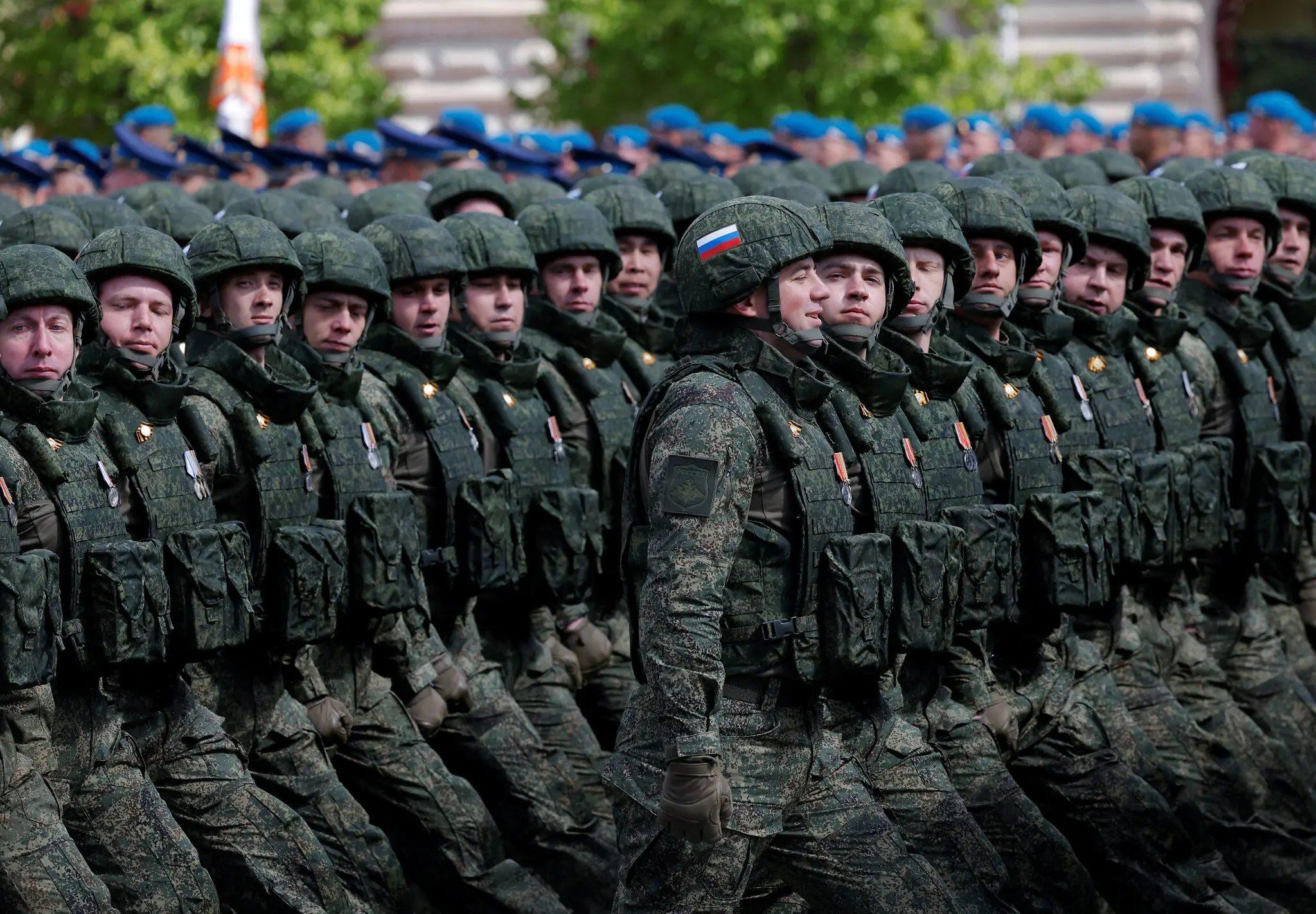
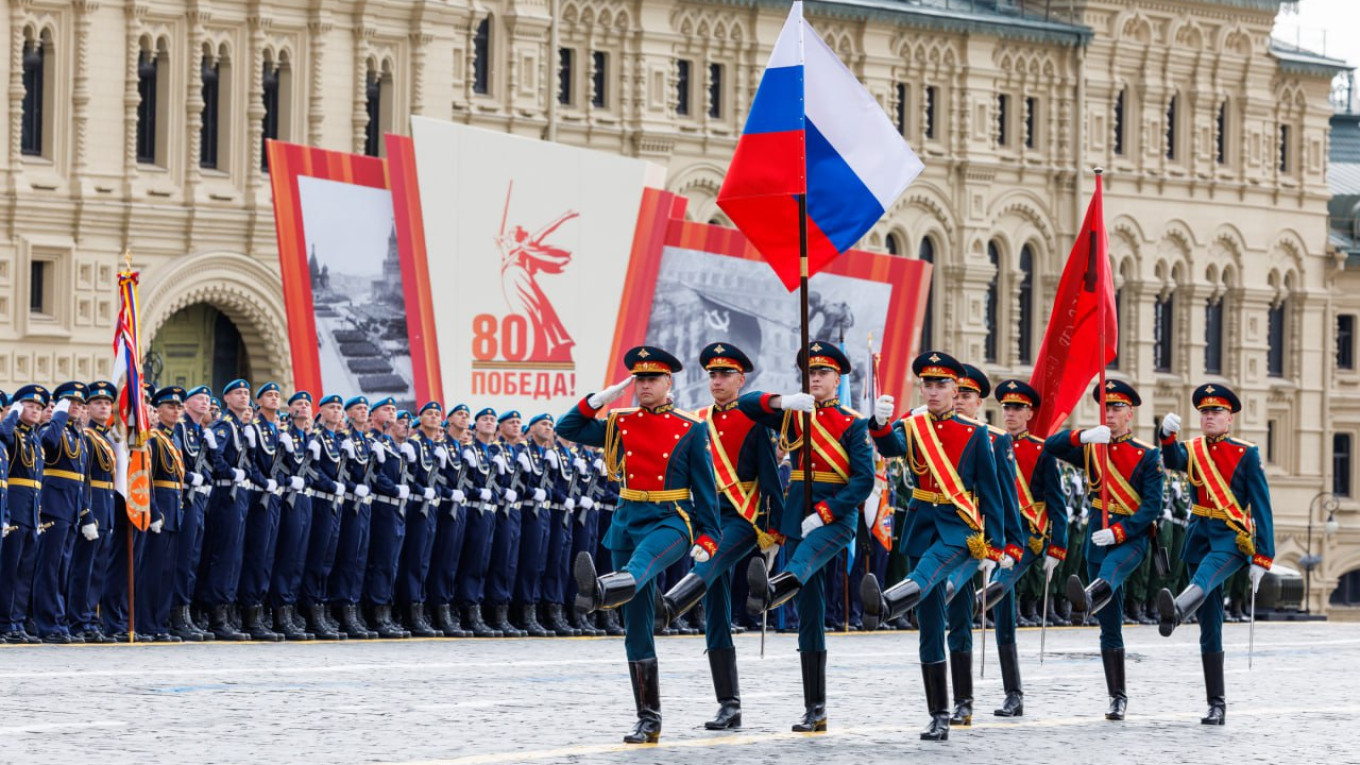
Russian soldiers marching in Moscow’s 80th anniversary Victory Day parade. (Russian Defense Ministry)
Such resentment has made control of the contested territories, long considered by analysts a bargaining chip amid Russia and Ukraine’s deeper disagreements, a nonnegotiable war aim for many Russian servicemen and their supporters.
“We have shown our strength. The whole world is fighting against us, and they are not getting very far,” said Yevgeniy, a Russian contract soldier who fought in Ukraine until December 2023. “I don’t want to see any concessions because I have seen the price of every fistful of land.”
Soon after invading Ukraine, the Kremlin conducted sham referendums in the four Ukrainian provinces where the bulk of the fighting took place, purportedly showing overwhelming support for joining Russia, and annexed them soon after. After three years of fighting, however, Russian forces have almost complete control of only one of them, Luhansk. In the other three regions — Donetsk, Kherson and Zaporizhzhia — Russia controls 65 to 75 percent of the territory.
Through much of the war, the Ukrainian government categorically rejected ceding land to Russia, demanding a return to the country’s internationally recognized borders, and insisting on security guarantees before agreeing to a truce. In recent months, President Volodymyr Zelensky of Ukraine has softened his position, accepting a proposed cease-fire without security guarantees, suggesting he would accept at least a temporary loss of the territory already under Russian occupation.
This proposal to effectively freeze the conflict along the current frontline is seen by many in Ukraine and the West as a major concession to the Kremlin, abandoning millions of Ukrainian citizens to life under occupation and, they fear, legitimizing and rewarding Russian aggression.
Interviews with the soldiers and Russian opinion surveys show that such a truce would also fail to satisfy a large part of Russian society. Years of war propaganda and steady, if slow, battlefield gains, have convinced many Russians that their country is fighting an existential conflict against the West, which will not end until Ukrainian capitulation.
“If there’s no cease-fire now, we need to keep going until the end,” said Nikolai, a Russian soldier in Ukraine. “Because if we don’t, sooner or later — in five years or in 10 — there will be a war again.”
Kyiv and its supporters have voiced the same fear, claiming that a peace deal without Western security guarantees for Ukraine would lead to a new Russian invasion in the future.
President Vladimir V. Putin celebrating Victory Day this month in Moscow. (Maxim Shemetov/Reuters)
From the outset, Mr. Putin has said his invasion aims were to “demilitarize and denazify” Ukraine, which implies removing the democratically elected government in Kyiv; preventing Ukraine from ever joining the NATO alliance; and protecting Ukraine’s Russian speakers, who the Kremlin says, falsely, faced genocide.
A survey conducted in Russia in mid-April by an independent polling company, Chronicles, found that nearly half the respondents said they would not support a peace deal that falls short of those initial goals. Such polls show the difficulty that Mr. Putin would face in presenting to Russian society the current status quo in Ukraine as a victory.
Few in Russia expect Mr. Putin, who wields absolute power, to pay an immediate political cost for any peace deal. His control of the country’s media would allow him to present any outcome as a success, at least at first. But an unconvincing victory could eventually bubble up into the kind of discontent that fueled the Wagner paramilitary force mutiny in 2023.
Kremlin officials will most likely remember the Soviet Union’s withdrawal from Afghanistan in 1989 after an inconclusive war, which angered many veterans and contributed to the collapse of the Communist state. An underwhelming Russian military victory in the breakaway region of Chechnya bred public discontent that helped bring Mr. Putin to power in 1999.
“Of course I want a cease-fire because even a bad peace is better than a good war,” said Dmitri, the former paramilitary soldier. “But we have also taken such a large step forward, that we cannot stop now.”
“Otherwise, is it all a game? Has Vladimir Vladimirovich Putin played a little game, killed a million people, and all is OK?” he said.
“This would not be such a good government, I think,” he added.
Russian ballistic missiles killed at least 32 people, including two children, on Sunday in the northeastern Ukrainian city of Sumy, officials said — the latest in a string of attacks on urban centers that have caused heavy civilian casualties despite the Trump’s administration push for a cease-fire.
Two missiles hit the city center about 10:15 a.m., according to the regional prosecutor’s office. Ukraine’s interior minister, Ihor Klymenko, said the ballistic missiles struck when the streets were crowded with civilians out enjoying Palm Sunday, a Christian celebration popular in Ukraine. At least 83 people were injured, Mr. Klymenko added.
“People were harmed right in the middle of the street — in cars, on public transport, in their homes,” Mr. Klymenko said on social media.
President Volodymyr Zelensky of Ukraine posted a video on social media that he said showed the aftermath of the attack in Sumy, only 18 miles from the Russian border. The video showed cars smashed and burned, as well as bloodied bodies laying motionless on the streets. Firefighters and civilians tended to the wounded as screams echoed in the background.
“A strong reaction from the world is needed. From the United States, from Europe, from everyone in the world who wants this war and the killings to end,” Mr. Zelensky said in a message posted on Telegram. “Russia seeks exactly this kind of terror and is dragging out the war.”
The strikes came just over a week after a Russian missile hit near a playground in the central city of Kryvyi Rih, killing 19 people, including nine children. In that attack and in the one on Sunday, according to Ukrainian officials, Russia used ballistic missiles, which travel at high speeds, making them very difficult to shoot down.
The two strikes were some of the deadliest in Ukraine this year and come amid an overall increase in civilian deaths since cease-fire talks began in March. The United Nations said last week that 164 civilians were killed in Ukraine last month, a 50 percent increase from February and 70 percent more than the same period a year earlier.
There was no immediate comment from Russia’s military about Sunday’s strikes on Sumy, which was home to about 250,000 people before the war and has become a refuge for Ukrainian civilians fleeing villages and towns along the Russian border to escape bombardment and potential assaults.
Ukrainian officials say the recent attacks that have killed large numbers of civilians show that Russia is not actually interested in a cease-fire, despite the efforts by the Trump administration to broker one.
Both Russia and Ukraine have pledged to halt attacks on energy infrastructure, only to accuse each other of violations. Kyiv and Moscow have also agreed to a cease-fire on the Black Sea, but a deal has yet to come into effect. Russia has also rejected a full, unconditional 30-day cease-fire that Ukraine had accepted at the urging of the United States.
Ukraine’s foreign minister, Andrii Sybiha, said on Saturday that since cease-fire talks began last month in Saudi Arabia, Russia “only escalated its attacks on Ukrainian civilian objects and increased missile terror, including strikes on energy facilities.”
“This is Russia’s response to all peace proposals,” Mr. Sybiha told the state news agency Ukrinform. “They delay, manipulate, and play with their partners to continue aggression.”