Tag: The National Basketball Association (NBA)

  • The NFL is acquiring a 10% ownership share in Disney’s ESPN

    The NFL is acquiring a 10% ownership share in Disney’s ESPN

    Stock Widget

    In a transformative deal that could reshape the sports media landscape for years to come, Walt Disney Co. DIS +1.85% ▲ and the National Football League (NFL) announced Tuesday that the NFL will take a 10% equity stake in ESPN, the sports media titan owned by Disney. In return, ESPN will acquire key NFL media assets including NFL Network, NFL RedZone (distribution rights), and NFL Fantasy, marking a dramatic shift in both the ownership and distribution of professional football content in the U.S.

    While the companies declined to assign a specific monetary figure to the agreement, industry analysts estimate the transaction’s value between $2 billion and $3 billion, making it one of the most significant equity-media swaps in sports history.

    The deal comes as ESPN prepares to launch its standalone streaming service, ESPN-branded DTC (direct-to-consumer) platform, expected to go live later this month with a $29.99 monthly subscription price. By gaining full control over NFL Network and related assets, ESPN enhances its already dominant sports portfolio and takes a significant step toward creating a comprehensive, 24/7 football experience under one roof—ideal for streaming-era consumption.

    “This isn’t just a media partnership—it’s an equity-based alignment of two of the most iconic brands in American sports,” said Disney CEO Bob Iger, in a statement. “Today’s announcement paves the way for the world’s leading sports media brand and America’s most popular sport to deliver an even more compelling experience for NFL fans.”

    ESPN Chairman Jimmy Pitaro echoed the sentiment, noting that the combination of Disney’s innovation and reach with the NFL’s content will allow the companies to “create a premier destination for football fans.”

    NFL Films, NFL+ (the league’s direct-to-consumer app), and the NFL Podcast Network will remain under the NFL’s control, indicating the league still intends to preserve some degree of independence in content creation and branding.

    Importantly, ESPN gains access to seven live NFL games per year, which NFL Network has traditionally broadcast. The move gives ESPN another foothold in live broadcasting outside of its existing Monday Night Football and NFL Playoff packages.

    In exchange for its media assets, the NFL will receive a 10% ownership stake in ESPN, aligning the league’s financial interests with ESPN’s future success—especially as the network migrates more content to its direct-to-consumer platform.

    Though ESPN remains majority-owned by Disney (which has been exploring options such as spinning off or selling a minority stake in the company), the NFL’s new equity stake suggests a long-term strategic partnership rather than a transactional licensing deal.

    “By securing an ownership position, the NFL ensures it has a seat at the table as ESPN evolves into a digital-first network,” said Bob Dorfman, sports marketing analyst at Pinnacle Advertising. “This is smart hedging—if cable continues to shrink, the NFL will still win with streaming growth.”

    Multiple analysts believe this transaction positions both ESPN and the NFL for a dominant role in the future of sports entertainment.

    “This move signals the end of ESPN as ‘just’ a cable channel and the beginning of ESPN as a full-fledged, NFL-integrated streaming giant,” said Rich Greenfield, media analyst at LightShed Partners. “It’s a massive strategic pivot for both sides.”

    Greenfield estimates the NFL’s stake in ESPN is valued at approximately $2.5 billion, though the number will fluctuate depending on how ESPN is valued after its DTC product launches and matures.

    Citi media analyst Jason Bazinet called the deal “visionary,” suggesting that it may pave the way for similar stake-based deals with other leagues, such as the NBA or MLB, if ESPN continues to diversify and expand its equity partners.

    The NFL has long sought to grow its international footprint, and ESPN’s global distribution network could play a vital role in that effort. According to the league’s 2024 annual report, over 17% of NFL viewership now comes from outside North America, with growing markets in Germany, Mexico, and the UK.

    Combining the year-round content machine of the NFL—including fantasy, training camps, behind-the-scenes documentaries, and international games—with Disney’s global infrastructure gives both parties a powerful engine for fan engagement beyond the traditional U.S. football season.

    The deal is still subject to regulatory approval, though experts expect few hurdles. While ESPN is a dominant player in sports media, the NFL’s partial ownership does not cross antitrust thresholds, and both entities are likely to argue that the partnership enhances consumer options.

    “There will be scrutiny,” said Jessica Melton, professor of media law at NYU. “But because this isn’t a full merger and the league is maintaining other operations independently, it’s unlikely to face significant legal pushback.”

    With cable viewership declining and streaming competition intensifying, this strategic deal between Disney’s ESPN and the NFL redefines how sports content is monetized, owned, and distributed.

    For Disney, it’s a leap into the future—consolidating the crown jewel of American sports to supercharge its streaming ambitions.

    For the NFL, it’s a shrewd monetization play that preserves autonomy while aligning with one of the most powerful media companies in the world.

    As ESPN enters the streaming battlefield at $29.99 per month, this landmark equity swap could prove to be the single most important deal of the decade for sports media—and perhaps, the playbook others will soon follow.
  • Gregg Popovich: a coach rooted in traditional methods but with an understanding of the NBA’s future

    Gregg Popovich: a coach rooted in traditional methods but with an understanding of the NBA’s future

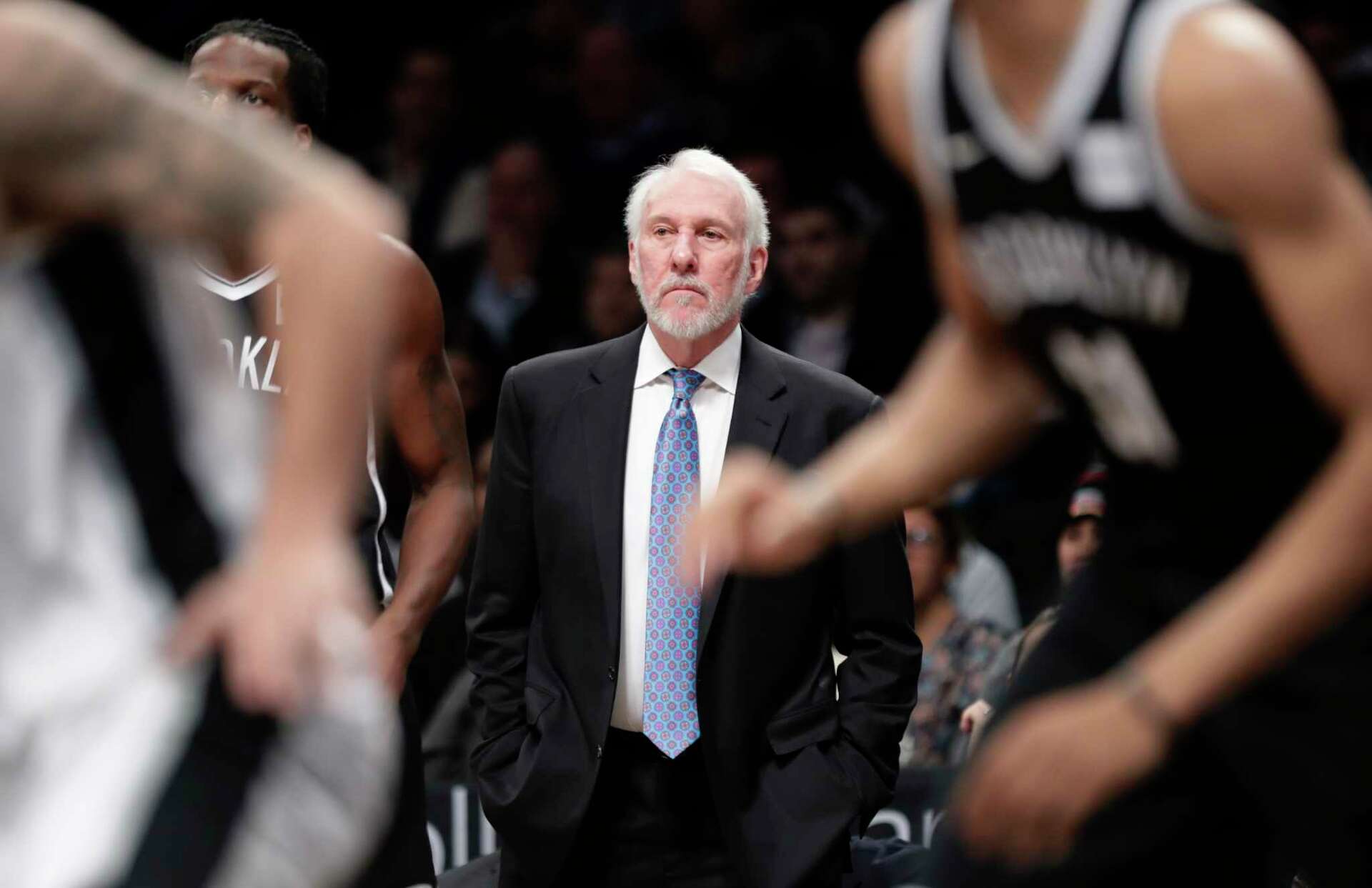
    San Antonio Spurs head coach Gregg Popovich, 2015. (Chris Covatta/Getty Images)

    SAN ANTONIO, TX — When Gregg Popovich took over the San Antonio Spurs in 1996, the franchise was a modest, small-market team in an era dominated by big-city clubs. Owner Peter Holt had just paid $76 million for the team, and very few expected the Spurs to become perennial contenders. Yet under Popovich’s steady hand, San Antonio’s Spurs quietly transformed into a dynasty. Over the next two decades, Popovich guided the team to five NBA championships and an unprecedented streak of 22 consecutive playoff appearances from 1998 through 2019. In 2019 the Spurs even tied the NBA record with their 22nd straight postseason. As Popovich accumulated wins and titles, the Spurs’ economic stature rose in parallel. Forbes valued the franchise at about $1.6 billion in 2019 – up twenty-fold from Holt’s purchase price – and by the mid-2020s it had surpassed the multi-billion-dollar mark, making San Antonio one of the league’s most valuable teams. (For comparison, Forbes later estimated the Spurs’ value at roughly $3.85 billion.)

    Notably, these financial gains came despite San Antonio’s small-market challenges. The Spurs operate in the nation’s seventh-largest city, yet their media market and local revenues lag major metros. Still, diligent management and long-term corporate partnerships helped drive steady growth. For example, the club reported surge after surge in fan interest: immediately after winning the 2023 NBA Draft lottery, the Spurs sold 4,000 new season-ticket deposits and saw a 3,000% jump in online ticket traffic. Projections for 2024 ticket revenue climbed into the triple digits (nearly $110 million by some estimates) as fans eagerly awaited rookie phenom Victor Wembanyama. Merchandise sales also exploded, with Wembanyama’s No. 1 jersey quickly breaking team sales records. All told, the Spurs have grown from a $56 million annual revenue operation in the late 1990s to on the order of a few hundred million dollars a year in revenue by 2024, sustaining profitability even as local TV ratings waver.

    Popovich’s influence extended far beyond wins and losses. He was a pioneer in several basketball innovations that spread league-wide. Early on he aggressively scouted international talent, drafting Argentine guard Manu Ginóbili in 1999 and French point guard Tony Parker in 2001 – players who became key pieces of the Spurs’ championship teams. These gambles on overseas stars paid off handsomely and prompted other teams to widen their scouting nets. Popovich also blazed trails in player health and analytics. Years before “load management” became NBA parlance, he occasionally sat starters to keep them fresh, famously resting Tim Duncan, Manu Ginóbili, Tony Parker and Danny Green at Miami in 2012 even without injuries. The NBA initially fined him for that decision, but the strategy presaged the league’s later embrace of managing minutes.

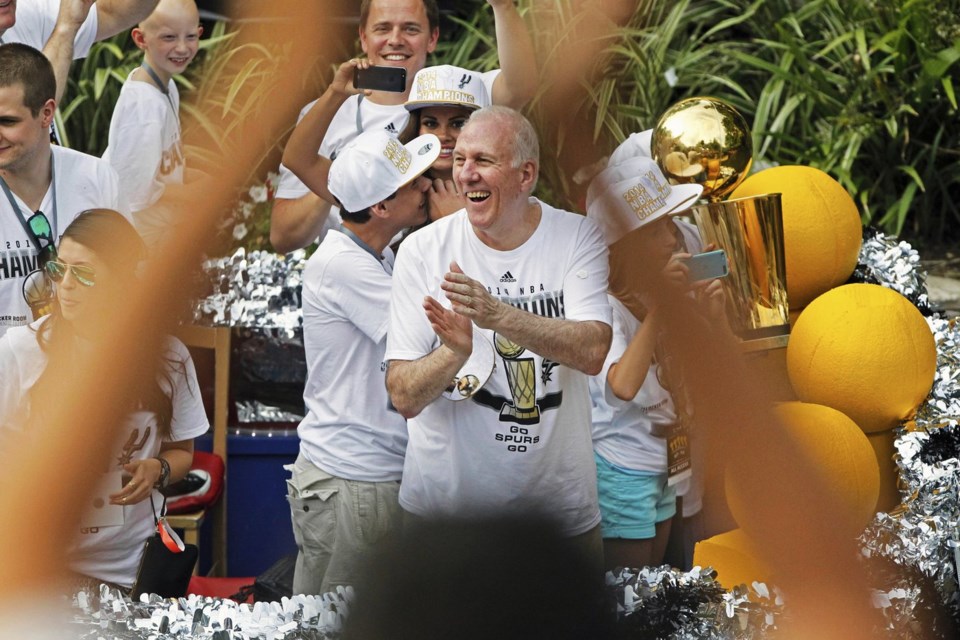
    FILE – San Antonio Spurs head coach Gregg Popovich, center, claps during the basketball team’s parade and celebration for their fifth NBA Championship, Wednesday, June 18, 2014, in San Antonio. (AP Photo/Michael Thomas, File)

    On the strategic side, Popovich and his staff were early adopters of advanced analytics. The Spurs became known for exploiting the high-value “corner three” – the shortest NBA 3-point shot – long before most other teams did. As one analysis notes, “San Antonio Spurs head coach Gregg Popovich discovered the most valuable 21 inches on an NBA basketball court, and nothing has been the same since”. Popovich’s offenses prioritized high-efficiency shots: corner threes and shots at the rim, hallmarks of modern offensive schemes. This data-driven, team-first approach helped the Spurs remain competitive even as stars aged, ensuring they had one of the NBA’s best offenses year after year. In short, Popovich married old-school fundamentals (passing, defense, teamwork) with new-school smart planning (rest regimens, shot analytics), staying ahead of trends on the court.

    Beyond San Antonio, Popovich’s Spurs have been a template for sustainable success, especially for smaller markets. His “coaching tree” has spread influence across the NBA. Assistants and players under Popovich have become championship-winning coaches and executives – Steve Kerr (Golden State Warriors), Mike Budenholzer (Milwaukee Bucks), and Ime Udoka (Boston Celtics), among others – carrying forward many Spurs principles. Notably, Kerr’s Warriors are now valued at $8.8 billion, Budenholzer’s Bucks at $4.0 billion, and Udoka’s Celtics at $6.0 billion. In total these teams represent well over $15 billion in NBA franchise value, testimony to the potent mix of winning and strong management learned from San Antonio.

    Likewise, the Spurs’ blueprint of drafting and developing talent has become a model for fellow small-market franchises like Oklahoma City and Memphis. These clubs have avoided expensive free-agent splurges and instead stockpiled draft picks and focused on player development, following San Antonio’s example. On the business side, the Spurs’ reputation for stability attracted new investors: in 2021 a private equity group (via Sixth Street’s Arctos Sports Fund) paid into the Spurs at an estimated $1.8 billion valuation, essentially betting that Popovich’s culture and leadership would keep the team on an upward trajectory. The team’s conservative financial management (for instance, locking in long-term local sponsorships and a strong corporate culture) further underpinned steady revenue growth through the 2010s.

    Yet Popovich’s stewardship has not been without challenges. The Spurs have weathered a recent downturn in TV viewership – mirroring league-wide rating dips – and navigated a difficult rebuilding phase after trading star Kawhi Leonard in 2018. In fact, the Spurs’ record-tying 22-year playoff run ended when they missed the 2020 postseason. Still, signs of life returned with Wembanyama’s arrival in 2023. The French rookie’s debut season re-energized the fan base: ticket sales soared, merchandise demand spiked (a >200% jump in Wemby jersey sales year-over-year has been reported), and the Spurs’ social media following surged by over a million new followers.

    In sum, Popovich’s legacy is built on patience, adaptability, and empathy – qualities that earned him comparisons to one of the all-time great investors. As one league insider put it, “Popovich is the Warren Buffett of sports – patient, adaptable and emotionally intelligent.” He will be remembered not just for championships, but for cultivating a winning ethos and business model that reshaped how teams operate on and off the court.