Tag: Reform UK (British Political Party)

  • BBC to Apologize After Broadcasting Edited Version of Donald Trump Speech

    BBC to Apologize After Broadcasting Edited Version of Donald Trump Speech

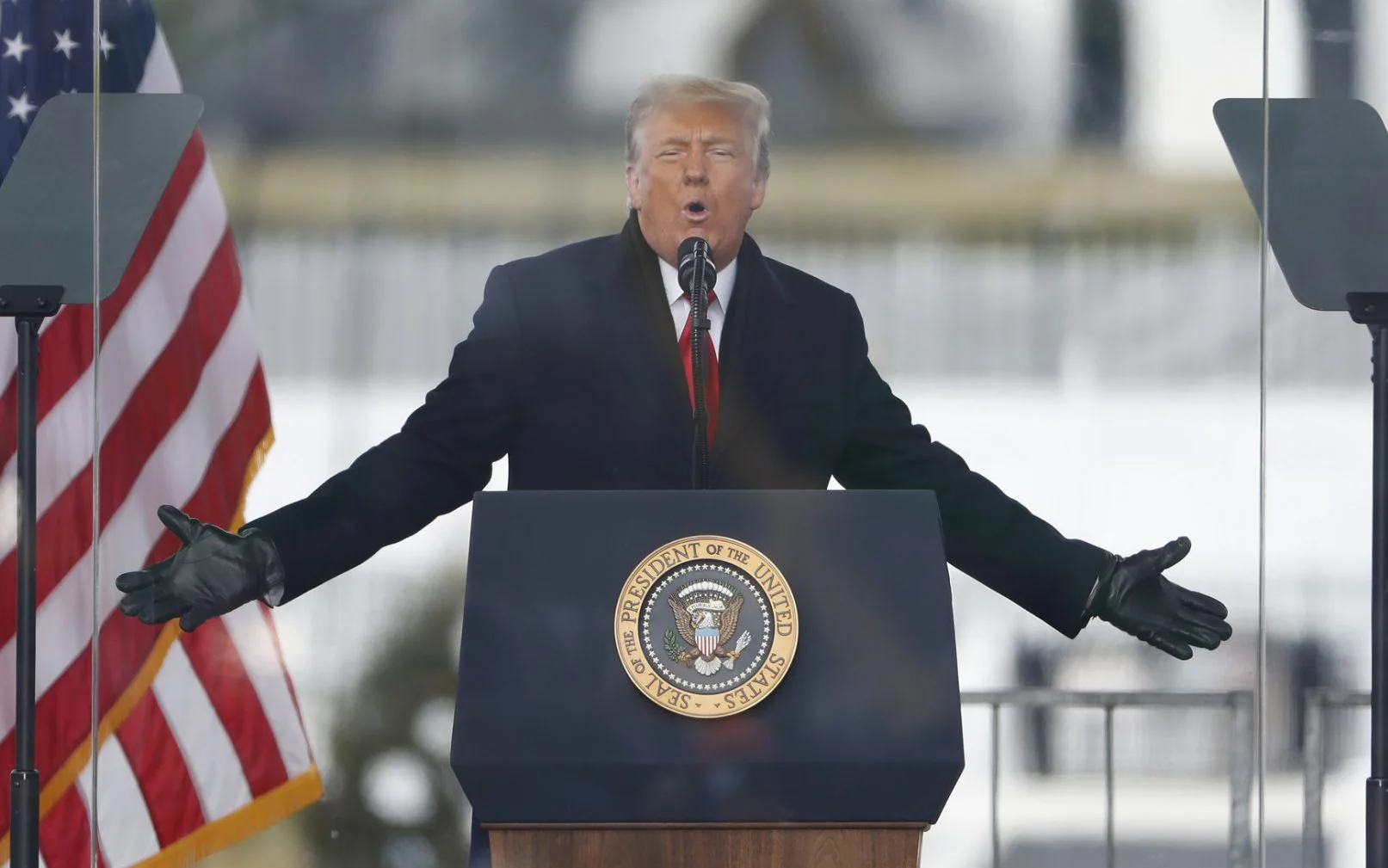
    Panorama ‘completely misled’ viewers with its coverage of Donald Trump’s Capitol Hill speech, a report found. © Shawn Thew/EPA/Bloomberg

    The BBC will apologise for the misleading editing of a Donald Trump speech in a Panorama documentary, the Telegraph can disclose.

    Samir Shah, the BBC’s chairman, will write to the culture, media and sport committee on Monday to express regret for the way the speech, made on the day of the Jan 6 2021 Capitol riot, was spliced together.

    The apology will heap further pressure on Tim Davie, the BBC’s director general, to quit over an 8,000-word dossier compiled by a whistleblower that alleged widespread bias within the corporation.

    The Telegraph has previously disclosed that both Mr Davie and Mr Shah were warned of the doctored footage in May but appear to have kept quiet.

    The decision to issue an apology now raises questions about why it has taken them six months to admit viewers were misled.

    The Telegraph understands the apology will be for the misleading editing of the Trump speech. It is not clear what Mr Shah will say about the coverage of the Gaza war or alleged bias in the BBC’s reporting on gender, but it is understood that he may also advocate changes to the management and oversight of BBC Arabic.

    The Panorama episode, broadcast a week before the 2024 US election, “completely misled” viewers, according to the memo written by Michael Prescott, a former standards adviser to the BBC.

    His memo was circulated amongst senior managers, who “refused to accept there had been a breach of standards”.

    Mr Prescott is then understood to have warned Mr Shah of the “very, very dangerous precedent” set by Panorama, but received no reply.

    The existence of the dossier and its contents were revealed by The Telegraph last week, prompting calls from senior politicians, including the former prime minister Boris Johnson, for Mr Davie to resign.

    On Friday night, the White House accused the BBC of “purposeful dishonesty”, claiming it was a “Leftist propaganda machine”.

    The dossier also highlighted anti-Israel bias, especially in coverage of the war in Gaza, on its dedicated BBC Arabic news service.

    Sir Vernon Bogdanor, Britain’s foremost constitutional expert, also called on Mr Davie to resign with “immediate effect” on Saturday.

    The academic, a former professor of government at the University of Oxford, said the broadcaster had “ignored” a separate report he had sent to it, warning of distortion and bias in its reporting on Gaza.

    The Telegraph has been told that Mr Shah’s apology for misleading viewers on the editing of Mr Trump’s speech will be contained in a letter sent to Dame Caroline Dinenage, the chairman of the culture, media and sport committee.

    It is likely to raise questions over whether Mr Shah and Mr Davie tried to cover up internal concerns over the Trump edit, given that they are only now apologising in the face of intense media scrutiny.

    Danny Cohen, a former director of BBC Television, said on Saturday night: “It is extraordinary that the BBC’s leadership has been missing in action for a week amidst this growing crisis.

    “Both BBC director general Tim Davie and chairman Samir Shah were in the room when the faked Trump video was raised as a serious problem six months ago. This makes it very hard for them to excuse away the scandal.”

    In his report, Mr Prescott wrote: “Examining the charge that Trump had incited protesters to storm Capitol Hill, it turned out that Panorama had spliced together two clips from separate parts of his speech. This created the impression that Trump said something he did not and, in doing so, materially misled viewers.”

    ‘The BBC has become the story’

    In an email sent to news staff on Friday evening, Deborah Turness, the chief executive of BBC News and Current Affairs, appeared to lay the ground for the apology. She said in her email: “I’m writing to you today because it’s always difficult when the BBC becomes a story – as it has, in some quarters, this week.”

    She went on: “You will all have seen the news coverage following the leaking of a letter to the BBC board from Michael Prescott, who is a former adviser to the BBC’s editorial guidelines and standards committee (EGSC). The EGSC is a sub-committee of the BBC board.”

    She said the BBC had received a letter from Dame Caroline “seeking reassurance from the BBC, adding: “The chairman will be providing a full response on Monday, and this will be shared with you, but I felt it was important for me to come to you as CEO of BBC News before the end of the week.”

    In a statement, a BBC spokesman said on Saturday night: “The BBC chairman will provide a full response to the culture, media and sport committee on Monday.”

    ‘Serious manipulation’

    Sir John Whittingdale, the former culture secretary, in an interview with Radio 5 Live on Saturday night, said: “The BBC does great work and I’m a huge supporter of the BBC World Service, its investigative journalism has been outstanding. But all of that has been threatened in the case of the Trump speech.

    “It’s a very serious manipulation to present a picture that is not accurate and that will cast doubt on everything that the BBC says.”

    Sir John, who is MP for Maldon, said the “buck stops” with Mr Davie.

    He added: “I think part of the problem is that the director general also has the title of editor-in-chief. Ultimately he is responsible and previous director generals have had to resign.

    “If Tim Davie is to continue he has got to show that he recognises what a serious threat to the reputation of the BBC this is and to show that he is going to act very swiftly and make sure things improve and that it can’t happen again.”

    On being asked if he thought Mr Davie’s job was under threat, Sir John said: “Yes I do.”

    He added: “There are already people saying that the director general will have to resign.”

    ‘We need to listen and learn

    Nick Robinson, presenter of the BBC Today programme, said on X: “We live in a time of deep divisions – about politics and culture – Gaza/Israel, trans and women’s rights, Donald Trump’s policies and politics – to name just three.

    “The BBC like many public organisations faces competing pressures about how we navigate these treacherous waters.

    “We, like others, need to listen and learn. We can and will do better but we should stand up to those who prefer propaganda and disinformation.

    “I look forward to hearing what the chairman of the BBC will say in response to legitimate concerns which have been raised but I have no idea what he plans to say nor did he – or any other my bosses – know what I said on air today or here on X.”
  • A very close special election saw Reform UK win by six votes, resulting in a loss for Labour

    A very close special election saw Reform UK win by six votes, resulting in a loss for Labour

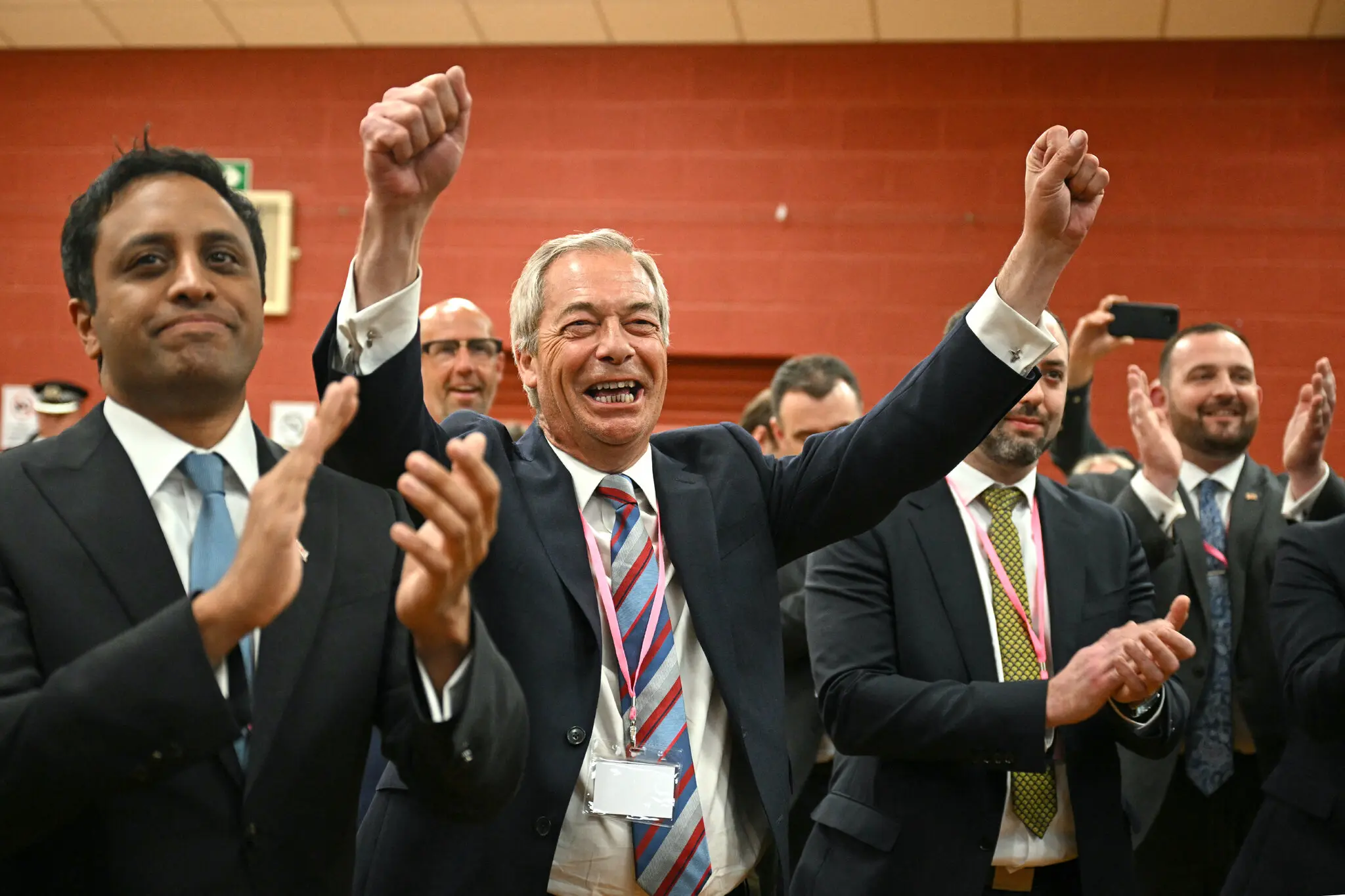
    Nigel Farage’s insurgent anti-immigration party, Reform U.K., scored a significant, if razor-thin, victory Friday in a parliamentary special election in the northwest of England. The result served notice that Mr. Farage, a populist fixture and close ally of President Trump, is again a rising force in British politics.

    Reform’s candidate, Sarah Pochin, won by just six votes over her Labour Party opponent, Karen Shore, in Runcorn and Helsby, seizing what had been a safe seat for Labour until the incumbent, Mike Amesbury, was forced to resign after being convicted of assault for punching one of his constituents.

    On a night of high drama, the outcome — the tightest in such an election in modern history — was so close that the vote had to be recounted, delaying the declaration of the result for hours.

    But the victory, by 12,645 votes to 12,639, was the start of what could be an impressive show of strength by Reform in mayoral and local council elections held Thursday across England.

    More than 1,600 municipal seats are up for grabs, and polls suggest that Reform could win at least 300 of them.

    If Reform’s gains are borne out as the ballots are counted throughout Friday, it would deliver a significant jolt to British politics, potentially accelerating the country’s shift toward a more polarized, multiparty system.

    For Prime Minister Keir Starmer, it would be a setback in his party’s first electoral test since Labour swept to power in July. The Conservatives, still licking their wounds after last summer’s stinging defeat, would find themselves even more vulnerable to a threat from Reform. And Mr. Farage could make a plausible case that Reform is emerging as a genuine rival to both major parties.

    A polling station in Runcorn and Helsby, a parliamentary constituency that had long been considered a safe seat for the Labour Party. (Phil Noble/Reuters)

    By itself, the Runcorn defeat is a blow to Mr. Starmer. Labour won the seat in the last election with a margin of 15,400 votes. But Mr. Amesbury’s conviction, on top of broader frustration from voters with the government, gave Reform an opening. Ms. Pochin, a businesswoman who served in local government, will join Mr. Farage as one of five Reform lawmakers with seats in Parliament.

    Her single-digit victory margin in a special election was without precedent in modern British political history. The closest margin until now was in Berwick-upon-Tweed in 1973, when the Liberal Democrats won by 57 votes.

    “The people of Runcorn and Helsby have spoken,” Ms. Pochin said after the victory. “Enough is enough. Enough Tory failure. Enough Labour lies.” She was joined by Mr. Farage, who told reporters that “it’s a huge night for Reform.”

    Peter Kyle, a Labour cabinet minister, told the BBC that the result was “frustrating.” The circumstances of Mr. Amesbury’s resignation had made it a difficult election, he said, but he added that he understood “why a message like this would want to be sent.”

    On Thursday in Runcorn, an industrial town of 61,000 that hunkers on the River Mersey, west of Liverpool, the portents of a Reform victory were in the air. People on the main street said the party had capitalized on anti-incumbent fervor, fueled by dissatisfaction with the economy, as well as on tensions over immigration, to win support among voters with deep Labour roots.

    In recent years, immigration has become a fraught issue after a local hotel was converted to house migrants, some of whom cross the English Channel in small boats, seeking asylum.

    While the Labour government has announced plans to close the hotel, Reform kept a spotlight on it and tried to claim credit for pressuring the government to act.

    The anti-immigrant Reform U.K. party, led by Nigel Farage, was hoping to emerge from Thursday’s elections as a genuine rival to Britain’s two major parties. (Oli Scarff/Agence France-Presse/Getty Images)

    Terry Osborne, 49, a business development manager, said Reform had tried to exploit the fact that some voters were not aware of the government’s role, and was playing to their pre-existing biases on immigration. “They’ll hear what they want to hear about immigration,” he said.

    Mohamed Alosta, 36, a business owner who described himself as a longtime Labour supporter, also criticized Reform’s handling of the hotel issue.

    But he said he would not vote for Labour this time because he was disenchanted by the politics of the major parties. Instead, he planned to vote for the Workers Party, a fringe party led by the left-wing firebrand, George Galloway.

    In addition to the special election, voters were electing council members in 24 municipalities in parts of England, as well as six regional mayors: in Cambridgeshire and Peterborough; Doncaster; North Tyneside; the West of England; Hull and East Yorkshire; and Greater Lincolnshire.

    In the first of the mayoral results, Labour won in North Tyneside, the West of England and Doncaster, with Reform performing strongly and coming second in all three regions. In Greater Lincolnshire, Reform’s candidate, Andrea Jenkyns, a former Conservative lawmaker, was victorious, winning 42 percent of the vote.

    Much of what these local officials do is centered around mundane work like overseeing trash collection or planning. But the elections function as a referendum on the governing party, which racked up a whopping parliamentary majority last year but did so with a thin 34 percent of the national vote.

    Since then, Labour’s shallow support has been sapped by unpopular economic decisions like curbing payments to retirees that had helped them cope with fuel costs, hiking payroll taxes on businesses and changing inheritance tax rules for farmers.

    A protest against changes to inheritance tax rules for land ownership for farmers, in front of the London Eye in March. (Henry Nicholls/Agence France-Presse/Getty Images)

    “They almost appear to have set out to offend every group,” said Robert Hayward, a Conservative member of the House of Lords and polling expert.

    With the next general election years away, there is no threat to Mr. Starmer’s position. But a bad result could increase pressure on the architect of Labour’s austere economic policies, Rachel Reeves, the chancellor of the Exchequer.

    Labour’s struggles are not translating into dividends for the Conservatives. The party is bracing for a major loss of seats because the last time this set of local council seats was contested, in 2021, it did unusually well. Voters rewarded Boris Johnson, who was then prime minister, for a speedy rollout of coronavirus vaccines.