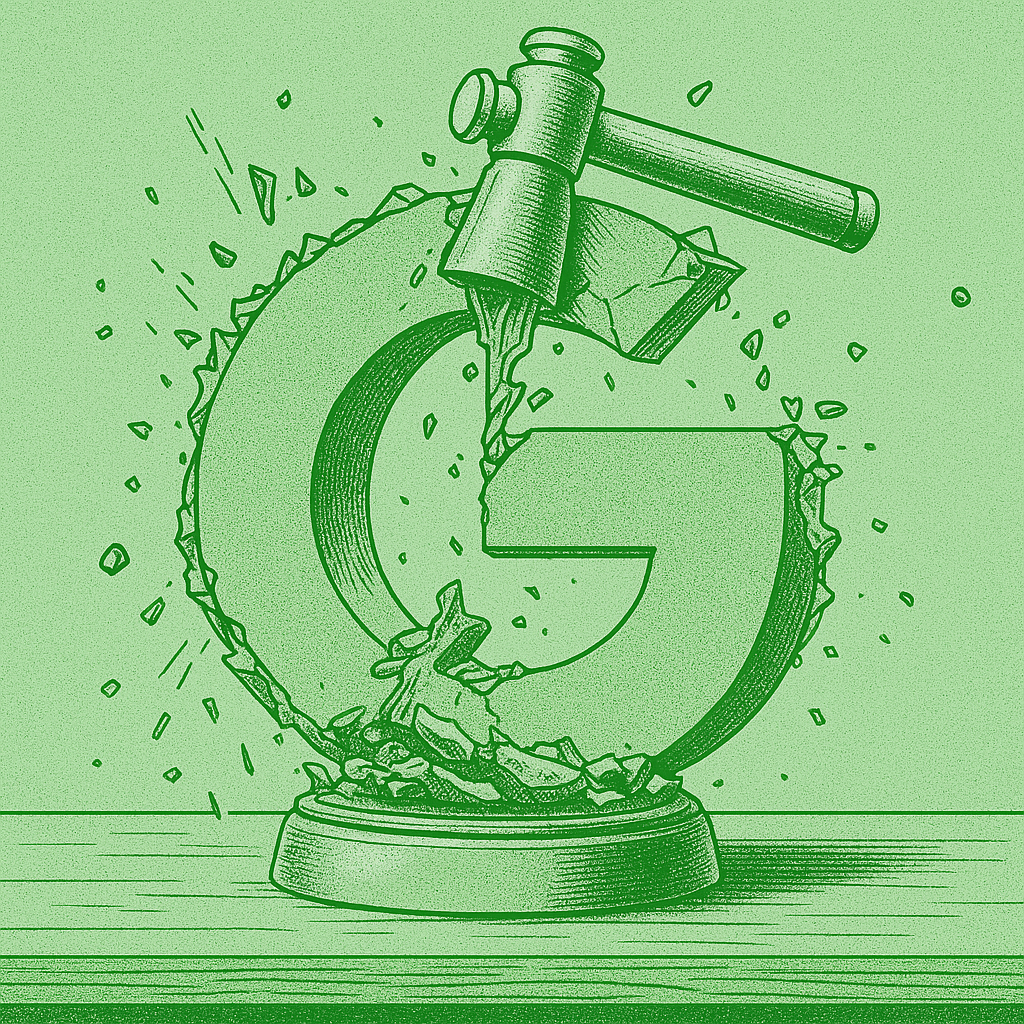
Silicon Valley’s tech giants have long regarded antitrust scrutiny as an irritating cost of doing business. There will be investigations, filings, depositions and even lawsuits.
Yet courts move slowly, while technology rushes ahead. Time works to the companies’ advantage, as the political winds shift and presidential administrations change. That dynamic often opens the door to light-touch settlements.
But the stakes rose sharply for Google on Thursday, when a federal judge ruled that the company had acted illegally to build a monopoly in some of its online advertising technology. In August, another federal judge found that Google had engaged in anticompetitive behavior to protect its monopoly in online search.
Antitrust experts said two big antitrust wins for the government against a single company in such a short time appeared to have no precedent.
“Two courts have reached similar conclusions in product markets that go to the heart of Google’s business,” said William Kovacic, a law professor at George Washington University and former chairman of the Federal Trade Commission. “That has to be seen as a real threat.”
The Google decisions are part of a wave of current antitrust cases challenging the power of the biggest tech companies. This week, the trial began in a suit by the F.T.C. claiming that Meta, formerly Facebook, cemented an illegal monopoly in social media through its acquisitions of Instagram and WhatsApp.
The government has also sued Apple and Amazon over allegations of anticompetitive behavior.
And on Monday, the judge who ruled against Google in August will hear arguments on how to restore competition in the online search engine market. The Justice Department has asked the court to order Google to sell Chrome, its popular web browser, and either spin off Android, its smartphone operating system, or be barred from making its services mandatory on its phones.
Google has described the government’s request as a “wildly overboard proposal” that “goes miles beyond the court’s decision.” The company suggested that it should change very little.
In the ad technology case, the judge gave both sides seven days to propose a schedule for the next phase of the case, which will also involve remedies. The government is likely to ask Google to sell some of its ad tools, the antitrust experts said.
Antitrust enforcement has taken an activist turn in recent years, as both the Trump and Biden administrations increased their scrutiny of the biggest tech companies. But filing cases by no means guarantees success.
The triumphs by the government in both Google cases, the experts said, signal that the courts are finally grappling with anticompetitive behavior in digital markets. For years, enforcement lagged technology’s explosive growth, in part because antitrust law typically focuses on rising prices for consumers. Many internet services are free.
The Justice Department’s wins against Google are “important affirmations of the ability of the government to pursue major monopolization cases and prevail — something there has been doubt about,” said Nancy Rose, an economist who is an antitrust expert at the Massachusetts Institute of Technology.
The goal of an antitrust remedy is to free up markets, creating a competitive environment that results in more new ideas, new companies, more innovation and lower prices.
The courts have long been reluctant to engage in the drastic surgery of a breakup. In the last major antitrust case against a tech company, the government reached a settlement with Microsoft in 2001, shortly after the George W. Bush administration assumed office. The agreement loosened up Microsoft’s contracts on personal computer software, which a court found to be anticompetitive, but left the company intact.

While the judges in the Google case will weigh breakup options again, the prospects are uncertain. Shifts in the political climate could also influence the outcome for Google, as they did for Microsoft.
So far, aggressive antitrust enforcement has had bipartisan support. The Google search case was filed in the waning days of the first Trump administration, and the ad technology case by the Biden administration.
“It’s pretty amazing when you look at the cases filed, the progress so far, and that the government enforcers seem consistently serious,” said Harry First, an antitrust expert at the New York University School of Law. “Maybe the tortoise is going to win here.”
Still, the Google rulings are early steps in an uncertain judicial process.
Google will appeal both, and has expressed confidence that it will ultimately prevail. The company contends that its strong market position in search and ad technology is the result of innovation and investment — superior products that consumers value — and not because of anticompetitive tactics.
Either or both of the Google cases may land before the Supreme Court, the experts said. Or the Trump administration could settle them.
“Trump is a deal maker, and that could be where this is headed,” said Herbert Hovenkamp, a professor at the University of Pennsylvania’s Carey Law School.