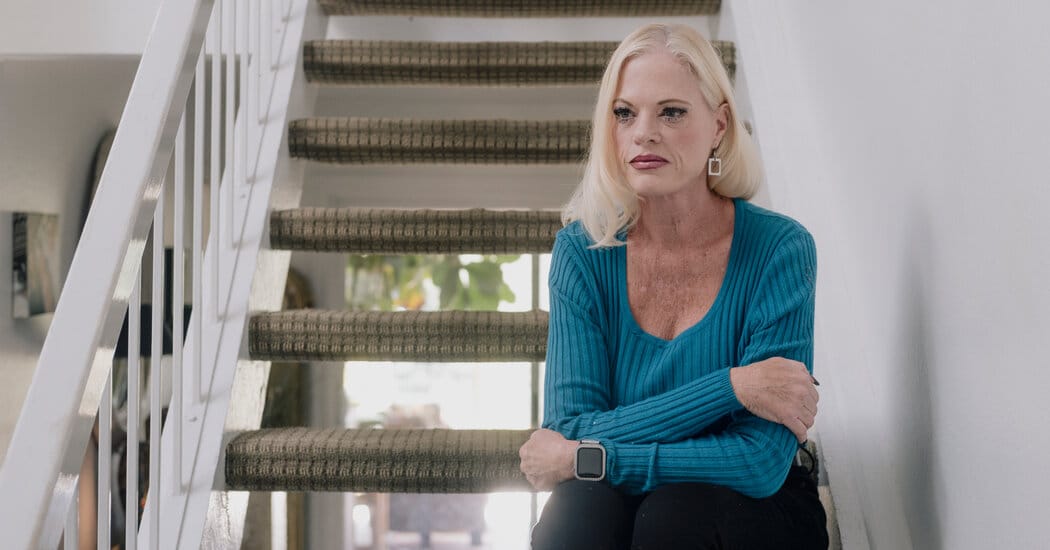
Bella Thorne has accused fellow US actor Mickey Rourke of bruising her genitals with a metal grinder on the set of a movie that they filmed together during what she described as “one of the all time worst experiences” of her career.
In a story on her Instagram account on Friday, Thorne alleged that the episode was part of a broader campaign to humiliate her while they collaborated on the 2020 thriller Girl. She wrote: “This fucking dude. GROSS” and relayed the account in writing over a copy of a BBC article reporting that Celebrity Big Brother’s producers had reprimanded him for aiming homophobic comments at the singer JoJo Siwa while they competed on the reality show.
A representative of Rourke did not immediately respond to a request for comment on Thorne’s allegations.
Thorne’s post recounted how she and the Oscar nominee were sharing a scene in which she was kneeling with her hands zip-tied around her back. “He’s supposed to take a metal grinder to my knee cap and instead he used it on my genitals [through] my jeans,” Thorne wrote. “Hitting them over and over again. I had bruises on my pelvic bone – Working with Mickey was one of the all time worst experiences of my life working as an actress.”
She also shared a screenshot of a post on X in which she alleged that Rourke separately revved an engine and covered her “completely in dirt” for another scene.
“I guess he thought it was funny to humiliate me in front of the entire crew,” Thorne – the 27-year-old former Disney star whose credits also include The Duff and Amityville: The Awakening – said of Rourke, 72.
Thorne then asserted that she had to take it upon herself to “go in his trailer absolutely alone” and talk him into finishing up the movie “as he shouted crazy demands that he wanted” from those helming the project written and directed by Chad Faust.
“He refused to speak to the director or producers – so I had to convince him to show up and complete his job,” Thorne continued. “In fact I had to beg.”
She said it was “uncomfortable”. But she said she endured it because “the movie could not be finished without him [and] everyone’s work would’ve just been lost and completely for nothing”.
Thorne’s comments about her on-set experience with Rourke on Girl capped off a week of unflattering headlines for the actor whose work on 2008’s The Wrestler once won him Golden Globe and Bafta awards.
He earned a formal warning from Celebrity Big Brother UK’s producers after going on the show and boasting to Siwa, who is gay, that he would “make her straight”.
Rourke also invoked a British slang word for cigarette that is also a homophobic slur in the US before directing himself at Siwa and saying: “I’m not talking to you.”
Celebrity Big Brother UK’s producers indicated to Rourke that they would remove him from the show if he kept up with the homophobic language.
MaryAlice Ashbrook remembers the rain on the night the Los Angeles police retrieved her, the 8-year-old child of a pill-addicted mother, and took her to the MacLaren Children’s Center, the county-run foster home where she was preyed upon.
Shirley Bodkin remembers the smell of the staff member there who would put her on his lap and make her hold a Raggedy Ann doll while he hurt her. J.C. Wright remembers the social workers who accused him, at age 7, of “fabricating” when he tried telling them what a doctor there had done to him.
Those memories are decades old. Ms. Ashbrook is 65 now, a retired bookkeeper in Yuma, Ariz. Ms. Bodkin is 58, the mother of two grown sons in the Southern California beach town of Dana Point. Mr. Wright is 42, a truck driver and father of four in suburban Los Angeles.
Whole chapters of their lives have gone by — marriages, children, careers — yet the memories have never ceased to torment them. Ms. Ashbrook tried electroshock therapy. Ms. Bodkin attempted suicide. Mr. Wright lived on the streets for years, ending up in prison. There was no escaping the nightmares, they said in interviews on Sunday. So they turned to the courts for some measure of relief.
Last week, it arrived, for them and nearly 7,000 other plaintiffs who say they were sexually abused as children in Los Angeles County’s juvenile detention and foster care systems, in cases dating to the late 1950s. In a settlement that lawyers say is the largest of its kind in the nation, the county publicly apologized and agreed to pay a record $4 billion, dwarfing previous settlements in child sex abuse cases brought against the Boy Scouts of America and the Archdiocese of Los Angeles.
The wave of claims — so immense that officials had warned before the deal that Los Angeles County, the nation’s most populous, could be bankrupted by it — came after California gave childhood victims a new window to sue, even though the statute of limitations had expired. The county’s Board of Supervisors is expected to formally approve the payout on April 29.
Some two dozen states have established similar “lookback windows” in response to a growing understanding of the many reasons child sex abuse victims might not come forward, or even think of themselves as having been abused, until years or decades later.
The new statutes have prompted thousands of lawsuits and concern about potentially enormous liabilities to taxpayers. Last week, facing a $3 billion budget gap, Maryland lawmakers voted to reduce the maximum possible award there by more than half.
In some cases, the systems in Los Angeles County that allowed the flagrant abuse of children have already gone through rounds of reforms. The MacLaren Children’s Center in El Monte, Calif., where Ms. Ashbrook and Ms. Bodkin were placed in the 1960s and Mr. Wright lived in the 1990s, closed in 2003 with a backlog of dozens of abuse allegations and a grand jury’s finding that it had hired employees with criminal records.
Last week, the county enumerated a long list of reforms to its foster care and juvenile probation systems, saying that over the past 25 years it had significantly reduced the use of large, risk-prone group homes like MacLaren. It now conducts “comprehensive background checks” and has established or revised more than 20 policies designed to prevent sexual abuse, according to the county.
MaryAlice Ashbrook was taken to MacLaren Children’s Center in Los Angeles County when she was 8 years old.Credit…John Francis Peters for The New York Times
Additional reforms are being developed or are underway, county officials added, including possible ways to resolve sexual abuse claims more quickly. And while no one has been arrested in connection with the abuses at MacLaren Hall, as it was colloquially known, officials said investigations were continuing, with at least two cases referred to the district attorney for possible prosecution.
Adam Slater, a lawyer whose Los Angeles-based firm represents more than 3,500 of the covered plaintiffs, including some 1,500 who had been at MacLaren, said that the settlement took those changes into account, as well as the potential threat to the county’s solvency. The $4 billion will be paid out over several years, not all at once, he said.
“This settlement is proof that the law works,” he said.
Plaintiffs expressed more complicated feelings.
“I’m sorry, but I just wish that this concern about all of this was present when it was happening,” Mr. Wright said on Sunday, speaking by video call from his 2010 Nissan SUV with his wife, Esther, in the passenger seat beside him.
“Because I told people. And I told my counselors — MacLaren Hall, the whole second floor, it was nothing but counselors, people who say they’re there to protect you — and you go tell them. And they tell you you’re lying. Or you need attention.”
He broke down, sobbing.
“I just — wanted them — to stop it,” he said, his wife’s hand rubbing his muscled arm to comfort him, his voice catching and choking like a child’s.
The cases of Mr. Wright, Ms. Bodkin and Ms. Ashbrook all stem from their time at MacLaren, which was a fixture of Los Angeles’s social service system for more than three decades. It was named far more often than any other facility in the lawsuits that were settled.
Opened in 1961 as a temporary shelter for children awaiting placement in the foster care system, MacLaren was notorious by the time it closed, aged and overcrowded with children who had been abused, were mentally ill or had behavioral issues. Some lived there for months. Violence was common, children often ran away, and the facility was beset with staff turnover and legal complaints.
Ms. Ashbrook’s stint there came in 1968, she said, during a period when she and her mother were living a transient life, bouncing among hotels, apartments and relatives’ homes from Santa Barbara to the shadows of Disneyland. “My mother had a pill addiction,” she said. “Black Beauties and Seconal. I used to dump out the ingredients inside her pills and fill them with flour to try to make her normal.”
One day when they were living in Encino, she said, she came home beaten up from a fight at school, and her grandmother, who lived two hours away, called the police to report her mother. At MacLaren, she said, she and other children were sexually abused by a guard who medicated them with antipsychotic drugs and took them to a “special room.”
She had been at MacLaren for about two weeks, she said, when she met Ms. Bodkin, a toddler with pale blond hair whom she rescued one day from a closet.
“I heard scratching and crying and screaming for help,” she said. “I opened the door and there was this little girl, scared out of her mind.”
Ms. Bodkin said it was not until decades later that their paths crossed again. Her own mother, she said, was mentally ill, and her earliest memories were of MacLaren, where she lived off and on until she was 9 years old.
She spoke in a separate video call from the daybed of her apartment, floral pillows scattered around her. She said she had two grown sons, 29 and 39, whom she had told little about her childhood because she did not want to shock or worry them.
“I remember sleeping close to the floor,” Ms. Bodkin said. “I remember the screaming and I remember the closet. And I remember the bathtubs. There were two men. If we didn’t do what they wanted, the soap went in our mouths.”
She took off her wire-rimmed glasses and wept for a moment.
“What I experienced was pure hell,” she said. “No child should have to experience what I did.”
Both women said they went into foster homes after their stays at MacLaren. Both dropped out of high school. Both said they were so traumatized at first that they were nearly nonverbal, and were later unable to develop trusting relationships.
J.C. Wright said he was sexually abused at MacLaren by medical staff. “Still, to this day, I can’t go to the dentist without my wife holding my hand,” he said.Credit…Eric Thayer for The New York Times
Mr. Wright’s stint in county care came later, around 1990, after his parents — a crack cocaine addict and her dealer — abandoned him to the care of a grandmother who was responsible for a dozen other children. Initially placed in a different facility, he said, he punched a pregnant social worker who would not let him call home, and he was transferred to MacLaren.
There, he said, he was “a troubled child” who was regularly beaten and, over time, drugged and sexually abused by medical staff members. He said he was at MacLaren until he was about 11, when he was sent to a group foster home, which he fled.
For years after that, he said, he lived on the street. Eventually, he said, he landed in prison after being convicted of attempted murder; he said it was an attempt at self-defense. There, he said, he reflexively attacked anyone who hinted at a sexual interaction, even jokingly.
After his release in 2013, he said, he found work selling solar panels and vinyl windows door to door, then driving a forklift, then driving a big rig. He lives now in the Los Angeles suburb of Covina, about 15 minutes from the complex that once housed MacLaren.
His wife, Esther, said that when she met him, her only goal was “to show this broken man that somebody could actually love him.” Over time, they said, they built a good life. In the cab of his truck, he said, he finds peace, listening to country music, rumbling from freeway to freeway.
“Still, to this day, I can’t go to the dentist without my wife holding my hand. I can’t go to a doctor. I’m 42 years old and I can’t get a checkup,” he said. Worse, he fears that when his children find out what happened to him, they’ll reject him.
“I’m so afraid that one day they’re going to find out what happened to their dad,” he said, “and I’m not going to be their dad no more.”
Lawyers on both sides acknowledged that the complaints brought under the new law have been painful and intensely difficult for all parties. Years have passed. Witnesses have died. Lives have moved forward.
Many who worked over the generations in the county’s sprawling child welfare and juvenile justice system did so with the best of intentions. Officials said they hoped that the scope of the settlement demonstrated the county’s commitment to ensuring that what was allegedly done to Mr. Wright, Ms. Bodkin and Ms. Ashbrook would never happen again.
“On behalf of the county, I apologize wholeheartedly to everyone who was harmed by these reprehensible acts,” Fesia Davenport, the county’s chief executive, said in a statement.
The three plaintiffs said they didn’t know whether the settlement would ease their suffering. But since it was announced last week, they said, at least one thing had changed.
“When I heard, I think I screamed, I was so overwhelmed,” Ms. Bodkin said, crying. “My voice was heard. My effing voice. Was heard. Me. Heard. Finally.”
Cookie Consent
We use cookies to improve your experience on our site. By using our site, you consent to cookies.
Contains information related to marketing campaigns of the user. These are shared with Google AdWords / Google Ads when the Google Ads and Google Analytics accounts are linked together.
90 days
__utma
ID used to identify users and sessions
2 years after last activity
__utmt
Used to monitor number of Google Analytics server requests
10 minutes
__utmb
Used to distinguish new sessions and visits. This cookie is set when the GA.js javascript library is loaded and there is no existing __utmb cookie. The cookie is updated every time data is sent to the Google Analytics server.
30 minutes after last activity
__utmc
Used only with old Urchin versions of Google Analytics and not with GA.js. Was used to distinguish between new sessions and visits at the end of a session.
End of session (browser)
__utmz
Contains information about the traffic source or campaign that directed user to the website. The cookie is set when the GA.js javascript is loaded and updated when data is sent to the Google Anaytics server
6 months after last activity
__utmv
Contains custom information set by the web developer via the _setCustomVar method in Google Analytics. This cookie is updated every time new data is sent to the Google Analytics server.
2 years after last activity
__utmx
Used to determine whether a user is included in an A / B or Multivariate test.
18 months
_ga
ID used to identify users
2 years
_gali
Used by Google Analytics to determine which links on a page are being clicked
30 seconds
_ga_
ID used to identify users
2 years
_gid
ID used to identify users for 24 hours after last activity
24 hours
_gat
Used to monitor number of Google Analytics server requests when using Google Tag Manager