Herbert Migdoll, the official photographer and designer of the Joffrey Ballet for about a half-century, who was admired for capturing the flight of its dancers with his lens, died on April 19 in the Bronx. He was 90.
His death, in a hospital, was announced by the Joffrey Ballet on its Facebook page and confirmed by his assistant, Joseph Rivera.
Mr. Migdoll’s images of the Chicago-based Joffrey Ballet’s dancers helped cement its artistic reputation from the time he joined the company, in 1968, until he retired, in 2016. He eventually became the Joffrey’s graphics director as well, helping to design posters and sets for such notable productions as “Billboards,” a 1993 ballet set to the music of Prince.
Simultaneously, he served as the art director of Dance Magazine, where he was responsible for dozens of covers from the 1970s through the ’90s. In a tribute on its Instagram page, the magazine described him as a visionary.
As the art director of Dance Magazine, Mr. Migdoll was responsible for dozens of covers from the 1970s through the 1990s. (Dance Magazine)
The Joffrey, in its own tribute, called Mr. Migdoll “an extraordinary artist whose vision and photography captured the evolving story of the Joffrey Ballet for more than five decades.” That photography appeared in The New York Times and Life magazine, among other publications.
Even before Mr. Migdoll officially joined the Joffrey, his mid-1960s experiments with time-lapse photography, capturing the soaring acrobatics of the ballet company’s dancers, had caught the attention of its founders, Robert Joffrey and Gerald Arpino.
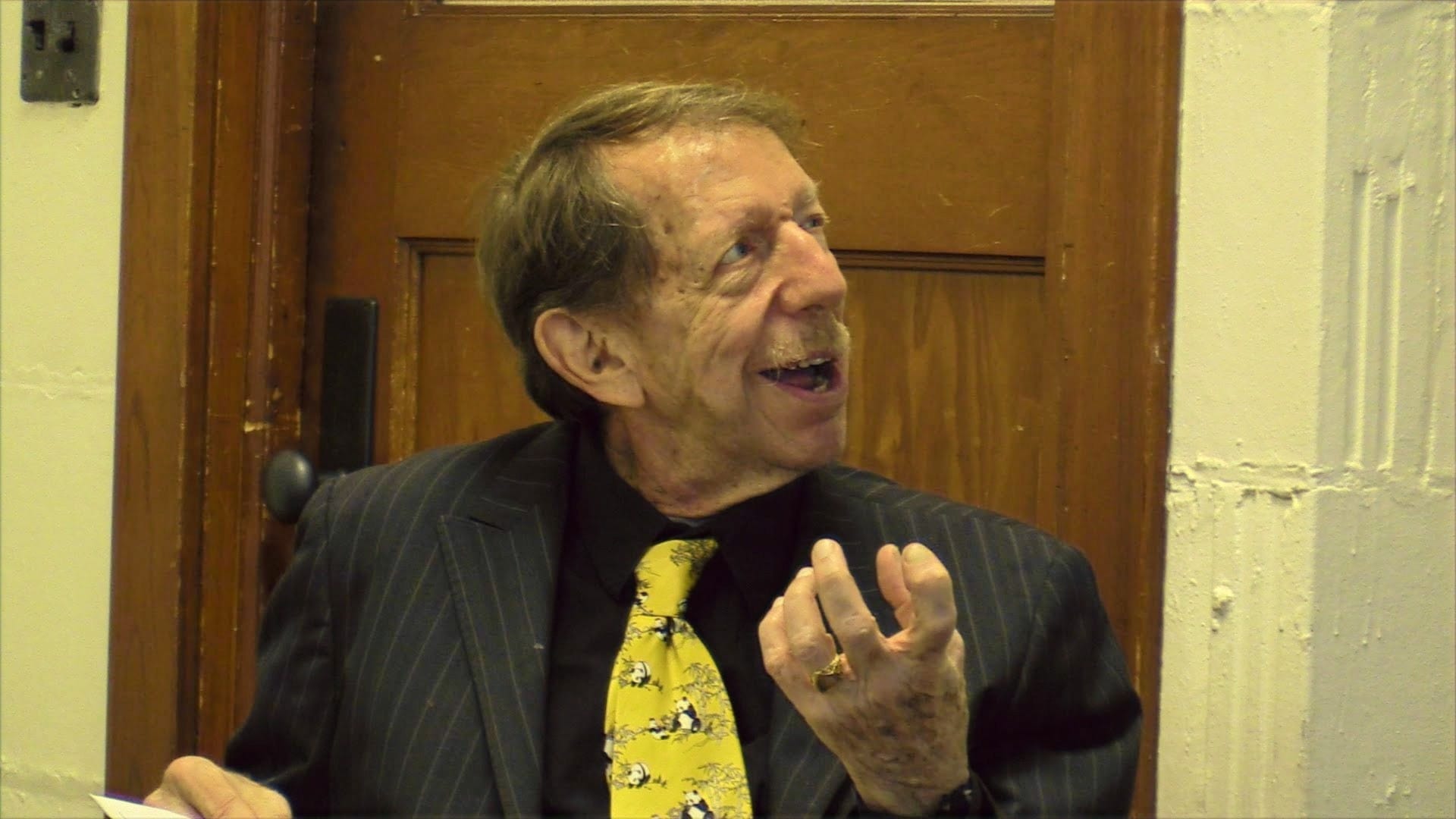
“All I wanted to do was time-lapse,” he said in a 2017 talk at Northwestern University, for the Chicago Dance History Project, “which meant leaving the shutter open, and letting the dancer move through space, and whatever got caught was it.”
“Metamorphosis #7,” an undated work by Mr. Migdoll. (Herbert Migdoll/Sarazen Editions)
He added: “If it was beautiful, I kept it.”
One of his works was impressive enough to make the cover of Time in 1968: a montage documenting the Joffrey’s erotic ballet “Astarte.”
He considered it a breakthrough. “The idea of a cover on Time magazine was unbelievable,” he said.
The ballet itself, a distinctively American blend of specially commissioned rock music — the psychedelic style then in vogue — film and eros, meshed perfectly with Mr. Migdoll’s sensibility.
One of Mr. Migdoll’s works was impressive enough to make the cover of Time in 1968: a montage documenting the erotic ballet “Astarte.” (Herbert Migdoll/TIME)
“Bob wanted to bring film and ballet together at a time when interaction between the arts was a big thing,” he said in a 2002 interview in The Chicago Tribune.
Like Mr. Joffrey, Mr. Migdoll believed that “ballet could be an art form that grows out of the environment it is coming from,” he said.
“Joffrey was very inclusive in his idea about what the ballet should be,” he added.
Mr. Migdoll’s preoccupation with the human body in motion spilled over into yet another career — as a painter. Among his notable works was a 275-foot-long mural of Joffrey stars swimming; it was installed in 2002 above the waterline of the Chicago River. An earlier work, a 40-foot painting called “Swimming Dancer,” was exhibited at the 1995 Venice Biennale, floating in a Venetian canal.
Among Mr. Migdoll’s notable works was a 275-foot-long mural of Joffrey stars swimming that was installed above the waterline of the Chicago River in 2002. (Herbert Migdoll/Sarazen Editions)
“He had a passion for things in motion,” Fabrice Calmels, a lead dancer with the Joffrey, said in an interview. “Herb was putting us in the forefront, before we even reached the stage.”
For “Billboards” — described by the dance critic Anna Kisselgoff of The New York Times as “the ultimate crossover ballet: a sprawling, clever reflection of the uneasy cultural mix of our time” — Mr. Migdoll designed billboards with images of the dancers that were arranged onstage so that they spelled out the names of the choreographers.
That work reflected Mr. Migdoll’s “crazy idea,” he told Northwestern students, that Joffrey and Arpino, “two middle-class Americans,” could create a ballet, and it “didn’t have to be from London, Paris or Russia to be exciting.”
Mr. Migdoll, right, with Robert Joffrey, a founder of the Joffrey Ballet, in an undated photograph. (Hybrid Cinema)
Herbert Migdoll was born on May 11, 1934, in Jersey City, N.J., one of five children of Bessie and Louis Migdoll, an electrical contractor.
He studied architecture at Pratt Institute, in Brooklyn, and then painting at the Cooper Union, in Manhattan, graduating in 1957.
Mr. Migdoll began photographing the work of the Joffrey in 1965, when the company was still in New York, and he “essentially fostered the company’s image,” according to a 2011 article in The Times.
The article noted that his paintings and photographs hung “on every floor” of the Joffrey’s building in Chicago. It also noted the “austerity” of his life.
Mr. Migdoll, who never married, left no immediate survivors.
“He was about capturing the emotion attached to the movement itself,” Mr. Calmels, the dancer, said. “It was not about athleticism; it was about art.”
David Cope, a composer and pioneer in the field of algorithmic composition, who in the 1980s developed a computer program for writing music in the style of Johann Sebastian Bach, Wolfgang Amadeus Mozart and other Classical masters, died on May 4 at his home in Santa Cruz, Calif. He was 83.
The cause was congestive heart failure, his son Stephen Cope said.
Before the proliferation of A.I. music generators, before the emergence of Spotify and the advent of the iPod, before Brian Eno had even coined the term “generative music,” Mr. Cope had already figured out how to program a computer to write classical music.
It was 1981 and, struggling with writer’s block after being commissioned to compose an opera, he was desperate for a compositional partner. He found one in a floppy disk.
The process was straightforward but tedious. Mr. Cope started by quantifying musical passages from his own work, rendering them as numbers in a database that could be analyzed by a pattern-identifying algorithm he created. The algorithm would then reassemble the “signatures” — Mr. Cope’s name for the patterns it found — into new combinations, and he would convert those combinations into a score.
It wasn’t the first time someone had used a computer to create music. In 1957, Lejaren Hiller and Leonard Isaacson had employed a five-ton supercomputer at the University of Illinois to compose “Illiac Suite,” widely considered to be the first computer-generated score. But Mr. Cope’s program took things a step further: By scanning and reproducing unique signatures, his algorithm could essentially replicate style.
After years of troubleshooting and fine-tuning, the program, known as Experiments in Musical Intelligence, was able to produce a full opera in a matter of hours. EMI, or Emmy, as Mr. Cope affectionately called it, was officially born. It was one of the earliest computer algorithms used to generate classical music.
Mr. Cope in “Opus Cope,” a 2021 documentary about his life’s work. (Jae Shim)
Mr. Cope considered the program an invaluable creative resource. He trained it on compositions by Bach, Mozart, Sergei Rachmaninoff and other composers; released albums of EMI-composed music throughout the 1990s and 2000s; and used the program in classes he taught at the University of California, Santa Cruz, where he was a professor of music. In the years since, he has been celebrated as “the godfather of A.I. music.”
In 1987, however, EMI’s compositions in the style of Bach were first performed to a stunned, silent audience. Some computer scientists dismissed his algorithmic compositions as insignificant; outraged composers met the project with bewildered resistance or outright hostility. In Cologne, Germany, after listening to EMI compositions imitating the music of Bach, Ludwig van Beethoven, Johannes Brahms and Béla Bartók, one musicologist pointed at Mr. Cope and announced, “Musik ist tot” (“Music is dead”).
By the late 1990s, Mr. Cope’s skeptical colleagues had a nickname for him — Tin Man, after the walking, talking metallic character in search of a heart in “The Wizard of Oz.”
Still, there was a budding interest in the algorithm’s implications for human creativity. In 1997, Douglas Hofstadter, a cognitive and computer scientist at the University of Oregon, challenged Mr. Cope’s creation to a Turing-style showdown. The Turing test was named for the British mathematician Alan Turing, who proposed in 1950 that the way to evaluate whether computers had achieved human-level intelligence was to play what he called the “imitation game”: to see if a person interacting with a computer could tell it was not a human being.
To test Mr. Cope’s algorithm, a pianist played three pieces of music in front of an audience of students and lecturers at the University of Oregon. One piece was composed by Bach, another was generated by EMI and a third was written by Steve Larson, a professor there.
The New York Times likened it to “a low-key, musical version” of the famous chess match that had been played just a few months earlier by IBM’s Deep Blue supercomputer and the grandmaster Garry Kasparov. At the end of the program, Dr. Hofstadter asked audience members to vote on which one was the real Bach composition. Most chose the EMI version.
“EMI forces us to look at great works of art and wonder where they came from and how deep they really are,” he told The Times afterward. If it were possible to reduce music to little more than various combinations of riffs, he added, then “it would mean that, to my absolute devastation, music is much less than I ever thought it was.”
David Howell Cope was born on May 17, 1941, in San Francisco, one of two children of Howell Cope, an accountant for John Deere, and Charlotte Evlyn (Schleicher) Cope, a piano teacher. Music was part of the fabric of the family: John Cope, an uncle, was a sound technician for movies like “Sunset Boulevard”; the singer-songwriter Warren Zevon was a younger cousin.
The family moved to Phoenix when David was an infant, because his health was delicate — he was diagnosed with asthma and a distended hernia at birth — and a drier climate was thought to be beneficial. As a child, he often lugged around a red Radio Flyer wagon full of 78 r.p.m. records from the library; he adored Bach, but also gravitated to the music of Tchaikovsky, Stravinsky and Rachmaninoff.
Mr. Cope and his wife, Mary Jane, in 2021.(Jae Shim)
After attending Washington High School, where he played cello in the orchestra and started a quartet, David Cope and the Asteroids, he enrolled at Arizona State University. He graduated in 1963 and then studied music composition at the University of Southern California, receiving his Master of Music degree in 1965.
Mr. Cope met Mary Jane Stluka, a concert pianist and piano instructor, while teaching at Cottey College in Nevada, Mo.; they married in 1967. In addition to their son Stephen, she survives him, along with three other sons, Timothy, Brian and Gregory, and four grandchildren.
Mr. Cope went on to teach at the Cleveland Institute of Music and Miami University of Ohio before landing a position in 1997 at the University of California, Santa Cruz, where he taught for the next 30 years.
He wrote at least 10 books on classical music and composition, including “New Directions in Music” (1971), an influential survey of avant-garde music, and “Experiments in Musical Intelligence” (1997), on the EMI system; three memoirs; multiple novels, plays and books of poetry, including one collection of haikus written by notable Japanese poets accompanied by computer-generated poems; and a number of original musical compositions, includingoperas, symphonies, string quartets and piano sonatas.
Over the course of his career, Mr. Cope aroused the ire of so many other composers that he developed a sort of immunity to it, and even reveled in the discomfort his computer-generated music caused. “I want the negative reaction,” he said in “Opus Cope,” a 2021 documentary about his life’s work. “I feed off it.”
In a 2015 article published by the Computer History Museum, he was questioned about whether machines have the capacity to be creative, and he was adamant in his response: “Yes, yes, a million times yes.”
He added: “Creativity is simple; consciousness, intelligence — those are hard.”
Loretta Swit, in costume as Maj. Margaret Houlihan, on the set of the hit TV series “M*A*S*H” in 1975. (CBS Photo Archive/Getty Images)
Loretta Swit, the Emmy-winning actress who made the high-strung and relentlessly militaristic Maj. Margaret Houlihan human, dignified and, against all odds, sympathetic on the acclaimed television series “M*A*S*H,” died on Friday at her home in Manhattan. She was 87.
Her death was announced by her publicist, Harlan Boll.
In the Oscar-winning 1970 film “M*A*S*H,” directed by Robert Altman, Major Houlihan (whose blatantly sexist nickname was Hot Lips) was played by Sally Kellerman. When the movie became a CBS series, Ms. Swit stepped into the role and made it her own, adding heretofore unseen nuance. She was nominated 10 years in a row for the Emmy Award for best supporting actress in a comedy series, and she won twice, in 1980 and 1982.
“M*A*S*H,” which aired from 1972 through 1983 on CBS, was, like the movie that inspired it, set at a mobile Army hospital during the Korean War. Major Houlihan spent the first five seasons distracted by her open secret of an affair with the sniveling, very married Maj. Frank Burns (Larry Linville).
Around the time Major Burns returned to the United States, she married a handsome officer whom she had met in Tokyo. But he proved unfaithful, and she was soon divorced and newly dedicated to her career as the unit’s head nurse. In a post on social media, her “M*A*S*H” co-star Alan Alda wrote, “We celebrated the day the script came out listing her not as Hot Lips, but as Margaret.”
“It was the greatest time in my career,” Ms. Swit told the British newspaper The Guardian in 2001. Margaret’s ambition throughout the series was to be “the best damned nurse in Korea, and that motivated everything I did, even when it came to sex.” Major Houlihan did seem to be on a flirtatious first-name basis with every general who visited the camp.
As early as Season 2, her nemesis, Capt. Benjamin Franklin Pierce (Alan Alda) — better known as Hawkeye — saw her good side, referring to her as “nurse, friend and all-around good egg.” Col. Sherman T. Potter (Harry Morgan) called her “the finest nurse I’ve ever scrubbed with.”
Ms. Swit with other members of the “M*A*S*H” cast, from left: Larry Linville, Wayne Rogers, Alan Alda (seated front), Gary Burghoff and McLean Stevenson. (CBS/Reuters)
The character only grew in perceived stature as the seasons passed, wrestling violent patients into submission and performing triage in her wedding dress.
Ms. Swit firmly believed that “if you’ve got a long-run series, then there’s always got to be room for growth,” she told The Toronto Star in 2010. “Of all the places you’d be inclined to grow, I certainly think somewhere you’re in danger every day and healing people every day would be just the right place.”
The show explored Major Houlihan’s feelings about her proud military heritage, as the daughter of a general who would have preferred a son. And it looked in on the night of passion — under enemy fire — that she and Captain Pierce shared and, as soon as the morning-after dust settled, never spoke of again.
Loretta Jane Szwed was born on Nov. 4, 1937, in Passaic, N.J., to Lester Szwed, a salesman, and Nellie (Kassack) Szwed.
Ms. Swit at her home in 1971. She was a relatively unknown actress at the time; a year later, “M*A*S*H” would change everything. (Everett Collection)
After graduating from high school in Passaic, Loretta attended the Katharine Gibbs School in Montclair, N.J., and began a secretarial career. Her employers included Elsa Maxwell, the society hostess and gossip columnist.
But she was also preparing for an acting career; she enrolled in the American Academy of Dramatic Arts and studied with the director Gene Frankel.
“That’s kind of all I ever wanted to be,” she recalled in a 2004 Archive of American Television interview. She remembered going to two movie double features a day with her mother, separated only by a dinner break, when she was growing up.
She took voice lessons and dance lessons, but her parents were horrified by her choice of entertainment as an actual career. As Ms. Swit told The Toronto Star in 2010, after they saw her in a play at a small Greenwich Village theater, “My mother said to my father, ‘If you don’t stop her now, she may wind up doing this for the rest of her life.’”
Her Off Broadway debut was in Ibsen’s “An Enemy of the People” in 1961. She was the understudy for the lead female role in the national tour of the romantic comedy “Any Wednesday.”
She also appeared onstage in the musical “Mame,” in the comic role of Agnes Gooch, the lead character’s mousy secretary-nanny, who bursts out of her sheltered existence and comes home pregnant. She appeared alongside Celeste Holm on the national tour and Susan Hayward in the Las Vegas production.
Ms. Swit appeared with Ted Bessell in “Same Time, Next Year” on Broadway in 1975.(Everette Collection)
Later in her career, she also appeared on Broadway with Ted Bessell in “Same Time, Next Year” (1975) as a chronic adulterer and in “The Mystery of Edwin Drood” (1985), replacing Cleo Laine.
Before“M*A*S*H,” Ms. Swit appeared on the television series “Mission: Impossible,” “Mannix,” “Gunsmoke” and “Hawaii Five-O,” all in 1970.
And she kept busy with other projects during the show’s run. She played an obnoxious gossip columnist in a body cast in Blake Edwards’s Hollywood farce “S.O.B.” (1981), with Julie Andrews and William Holden. She was a crime boss’s unfaithful wife in “Freebie and the Bean” (1974), with Alan Arkin and James Caan. She appeared in the television movies “Mirror, Mirror” (1979), “The Love Tapes” (1980) and “Games Mother Never Taught You” (1982). And she made an enemy (temporarily) of Miss Piggy when she guest-starred in a 1980 episode of “The Muppet Show.”
Ms. Swit appeared with Tyne Daly in the pilot of the police series “Cagney & Lacey” in 1981, but her part was played by Meg Foster, and then by Sharon Gless, when the show became a series. (Jeff Goode/Toronto Star/Getty Images)
In 1981, she played Detective Christine Cagney in the pilot of the police series “Cagney & Lacey,” and she was set to take on the role for the run of the new show. But she was unable to get out of her commitment to “M*A*S*H,” and first Meg Foster (for six episodes) and then Sharon Gless ended up with the part instead.
After “M*A*S*H” ended, Ms. Swit played the president of the United States in the satirical British movie “Whoops Apocalypse” (1986). She also continued to be seen regularly on TV series, including “Murder, She Wrote” (1994) and “Burke’s Law” (1995). And she continued her stage career, appearing in regional theater, graduating to the title role in “Mame” and winning the Sarah Siddons Award in Chicago for her performance in “Shirley Valentine.”
She had planned to retire from acting after appearing in the 1998 comedy “Beach Movie,” but she returned to the screen two decades later in “Play the Flute” (2019), about a youth pastor with a wayward flock. It was her last movie.
In 1983, Ms. Swit married Dennis Holahan — an actor who was also a lawyer, and who coincidentally bore an approximation of her most famous character’s surname — after they appeared together in an episode during the final season of “M*A*S*H.” They divorced in 1995.
No immediate family members survive.
As for concerns like aging and mortality, she shrugged them off in an interview with The Express, the London newspaper, in 2020.
“I don’t think about the passage of time,” Ms. Swit said, “just what I’m doing with it.”
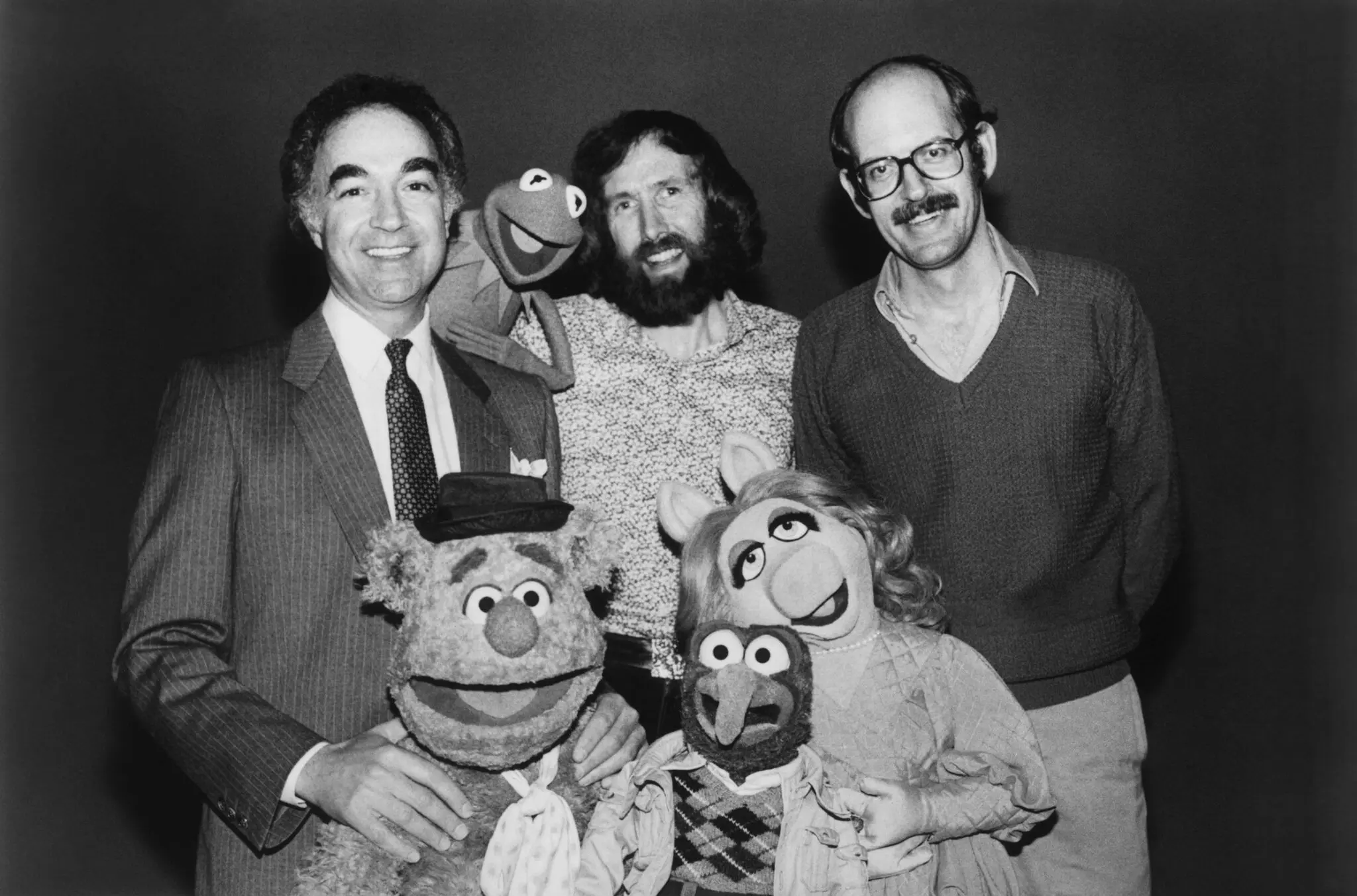
David Lazer, who as an IBM executive in the mid-1960s hired Jim Henson’s Muppets to star in a series of short films that injected laughs into sales meetings — and who a decade later joined Mr. Henson’s company as a producer — died on April 10 at his home in Vero Beach, Fla. He was 89.
His death, which had not been widely reported, was confirmed by Doyle Newberry, a manager of Mr. Lazer’s estate. He did not cite a cause.
“What David brought to the company was class,” Brian Henson, Mr. Henson’s son and the chairman of the Jim Henson Company, said in an interview. “Even my dad would say you couldn’t call Muppets Inc. classy. Up until then, it was a bunch of beatniks making weird stuff.”
In 1965, Mr. Lazer was making commercials and sales training films for IBM’s office products division and had learned the importance of keeping in-house audiences at the company interested during meetings. Intrigued by a reel of commercials and short films made by Mr. Henson, Mr. Lazer wanted to bring his “sense of humor and crazy nuttiness” to IBM, he told Brian Jay Jones for his book “Jim Henson: The Biography” (2013).
The star of Mr. Henson’s early films for IBM was Rowlf the Dog, who typed letters to his mother on a series of IBM manual and electric typewriters in which he described his new career as a salesman for the company. He promoted real products; he also plugged an electric guitar from IBM’s “Hippie Products Division” that, improbably, dispensed coffee.
In another short, an early version of Cookie Monster devoured a talking coffee machine.
“The idea is that if you can give people a good laugh, they’ll listen better,” Mr. Lazer told The Minneapolis Star Tribune in 1985.
Under Mr. Lazer’s leadership, the films intended for IBM audiences led to a broader business, Muppet Meeting Films. Companies bought the videos to motivate their employees — or at least keep them awake.
One of those films features an executive-type Muppet delivering a motivational speech, in which he calmly praises the company as a family of “honest men.” But his tone grows more urgent, and his gestures become wilder, as he gets to his point: “I ask you to remember just one word, the one word that makes it all possible, and that word is sell! I want you to get out there and sell, sell, sell! I want you to sell your socks off!”
Mr. Lazer’s skills as an executive appealed to Mr. Henson, who asked him to join what was then called Henson Associates (and is now the Jim Henson Company) in 1975.
An undated photo of Mr. Henson and Mr. Lazer on the set of the Jim Henson Company movie “The Dark Crystal” (1982). Mr. Lazer was an executive producer. (Courtesy of The Jim Henson Company)
Quoted in Mr. Jones’s book, Mr. Lazer recalled that he was shocked by Mr. Henson’s offer and responded by saying: “Oh my God! Oh, probably!” Three weeks later, he took the job.
“Lazer was determined to bring the same polish to Henson Associates that he had brought to the IBM product line,” Mr. Jones wrote, “and as far as Lazer was concerned, the product at Henson Associates wasn’t the Muppets; it was Jim.”
Brian Henson said that Mr. Lazer instituted one change very quickly; he didn’t want his father slipping into a cumbersome Muppet costume again after the last one, a towering, hairy ogre named Sweetums.
“He said, ‘Jim, you’re never getting into a costume again,’” Mr. Henson said. “‘You can work hand puppets, but you’re never getting into a costume with a T-shirt and shorts again.’”
David Lazer was born on Jan. 23, 1936, in Manhattan and grew up in the Bronx and in Hempstead, N.Y., on Long Island. His father, George, was a haberdasher, and his mother, Cilla (Schneweis) Lazer, a Polish immigrant, managed the home. David became adept at photography as a teenager and won awards for his photographs in high school.
“The Muppets Take Manhattan” (1984) was one of several Muppets films Mr. Lazer produced.(TriStar/Courtesy Everett Collection)
He joined IBM after high school in 1954 and, after serving for two years in the Army, where he received intelligence training, returned to IBM. He studied film at night at New York University.
At Henson Associates, Mr. Lazer was a producer or executive producer of “The Muppet Show,” the television variety series that ran from 1976 to 1981 and won four Primetime Emmy Awards; the films “The Muppet Movie” (1979), “The Great Muppet Caper” (1981), “The Dark Crystal” (1982), “The Muppets Take Manhattan” (1984) and “Labyrinth” (1986); and a 1979 TV special, “The Muppets Go Hollywood.”
Mr. Lazer’s corporeal image — curly hair, bushy eyebrows, well-tailored suit, tan — inspired the creation of a Muppet look-alike for some of the meeting films. In several of them, the David Lazer Muppet played a self-important businessman; in another, he portrayed one of three executives giving quarterly reports while stranded on an island. The Lazer Muppet reported rising coconut production and steady sand castle production.
The David Lazer Muppet, inspired by Mr. Lazer himself, was seen in a number of the short films he made. (Courtesy of The Jim Henson Company)
As a human, Mr. Lazer made a cameo appearance in “The Muppets Take Manhattan,” squiring Liza Minnelli into Sardi’s, the famous theater-district restaurant, where she found that her caricature on a wall has been replaced by Kermit the Frog’s.
Mr. Lazer played a critical role at the company after Jim Henson died in 1990. By then, Mr. Lazer had left his longtime position as executive vice president and, for a year or two, served as an adviser. To help the Henson family, he returned, as the company’s acting president.
“During that period he was very much like a father figure to me,” Brian Henson said. “My father was my mentor in puppetry, animatronics and directing puppets, but David was my mentor in terms of running the business.”
After Brian Henson was named president in early 1991, Mr. Lazer became vice chairman, a post he held until his retirement in 1994. Mr. Henson is now the chairman.
Mr. Lazer is survived by a sister, Ann Lazer Harstack.
At his first staff meeting at the Henson company, Mr. Jones wrote, Mr. Lazer baffled the Muppet designers and performers with a slew of flow charts and other paperwork.
People were laughing at him. To them, he was a suit.
So he tossed his papers onto the table and kept talking as if there had been no snickers about his IBM-style presentation.
“It’s not the same, is it?” Jim Henson said to him after the meeting, referring to the looser atmosphere in the world of Muppets.
Bill Aitken, a self-described “founding father of the hippies” who hitchhiked from England to India in 1959 and became a literary guru for generations of wanderers with books that explored the subcontinent’s rivers and railways and the spiritual quest that shaped his life, died April 16 at a hospital in Dehradun, India. He was 90.
Mr. Aitken’s death, from injuries suffered in a fall at his home in the shadow of the Himalayas, was confirmed by Karan Madhok, editor of the Chakkar, an Indian arts journal.
His more than a dozen books — mixing travelogue, history, and doses of his dry wit and self-reflection — became staples in the contemporary Western syllabus of Indian adventures. Yet the Scottish-born Mr. Aitken was also widely celebrated in India’s literary circles as among the European writers who strove to see poetry in something as simple as a little-used rail spur or as grand as a mountain vista.
In “The Nanda Devi Affair” (1994), Mr. Aitken described the life-changing moment in October 1961 when, as a young sojourner with no fixed plans, he first gazed upon the Himalayan peak rising more than 25,640 feet and decided to remain in India.
“There was something commanding in the Devi’s beauty as she lay before my eyes, essentially royal and feminine,” he wrote. “All the clichés about Nanda as queen surrounded by courtiers were appropriate for she towered above the rest with a regal detachment.”
In his later years, Mr. Aitken was an éminence grise of the hill station Mussoorie, which has drawn European writers since the 19th century for its panorama of the Himalayas to the north. He regaled visitors with stories and parables from his wide travels across India and recounted the kismet that led him from Scotland.
“I am one of those awkward customers who swims the wrong way,” he told author Malcolm Tillis in “New Lives” (2004), an oral history of Westerners who settled in India.
One day in 1959, when he was 25, he stood at the English Channel port of Dover in a kilt. He had just broken up with his girlfriend and had left his teaching job. For years, he had struggled with personal questions of faith and spirituality as a student of comparative religion, he recalled.
He decided he needed to roam and planned to hitchhike around the world. The kilt, he thought, was a nice touch of Scottish pride and the unusual outfit might help him get a lift. He set off on what would become the Hippie Trail a decade later: the overland circuit that brought thousands of adventurers — and probably even more copies of Jack Kerouac’s “The Dharma Bums” — to India before the 1979 Islamic Revolution in Iran and the Soviet invasion of Afghanistan closed the way.
He got rides on “an astounding assortment of transport,” Mr. Aitken told the Yorkshire Post, “that included lifts by a Danish scooterist, an Austrian TV salesman, a Greek melon transporter, an American oil rig team in Turkey.” He ditched the kilt in Istanbul. The heavy wool was not suited forthe warming weather.
Weeks later, he arrived in Kolkata (then known as Calcutta), where he planned to catch a steamer across of the Bay of Bengal to Malaysia to continue what he called a “spiritual pilgrimage.” The snag was that he was nearly out of money.
He landed a teaching job and, while browsing at the Asiatic Society Library one day, he started reading the 1934 book “Nanda Devi” by mountaineer Eric Shipton, who traversed the summits that surround India’s second-tallest peak.
“Nothing now mattered save the urgent need to follow in Shipton’s footsteps,” he recalled. That led to the trip to the mountains in 1961, staying on the floor of a simple guesthouse after a supper of water and a lump of molasses. He awoke the next morning to see the clouds pull back to reveal Nanda Devi. He called it a “spiritual striptease.”
“The peaks and particularly Nanda Devi spoke so directly and emphatically that there and then I made the decision to leave Calcutta and come and live among them,” he wrote.
Mr. Aitken spent most of the 1960s working at ashrams within sight of the Himalayas. The first was run by the former Catherine Heilman, a woman from England who took the name Sarla Behn and was known as one of the “British daughters” of Mohandas K. Gandhi during the struggle for Indian independence from Britain in 1947.
Mr. Aitken then entered an ashram run by Krishna Prem, a former British military pilot during World War I who had been born Ronald Nixon. Mr. Aitken stayed seven years, becoming known locally as a skilled baker.
In 1969, he was asked to help sort out some legal paperwork of Prithwi Bir Kaur, a London-educated member of the former rulers of the Sikh principality of Jind, which became part of India in 1948. Mr. Aitken became her secretary and moved into her home, known as Oakless, which was filled with stately antiques and mounted deer heads from long-ago hunting expeditions.
They were companions until her death in 2010 and often embarked on long rail journeys across India with special attention to narrow-gauge secondary lines and outposts. The trips were recounted in books including “Travels by a Lesser Line” (1993) and “Branch Line to Eternity” (2001), written two years after Mr. Aitken and Mark Tully, then the BBC’s New Delhi bureau chief, founded the Steam Railway Society that saved several steam locomotives from the scrapyard.
Mr. Aitken used train travel as both a vantage point to observe India and also as a metaphor for his spiritual explorations, wrote best-selling Indian novelist Anuradha Roy in a 2001 essay in India’s Hindu newspaper. She described, with awe and reverence, how Mr. Aitken was able to wrap bigger questions of life around the chug of a slow-moving train or the chaos of a bus stuck in the mud. “A profound air of beatitude settled on both mind and body,” Roy wrote. “At such moments, you know exactly what eternity feels like.”
Mr. Aitken liked to joke: “I came to India to study comparative religion, but I found comparative railways much more interesting.”
Studied religion
William McKay Aitken was born in Tullibody, a village about 30 miles from Edinburgh, on May 31, 1934. He would often recall that on that same day in India, the mountaineer Shipton was part of team that was believed to be the first to cross the peaks ringing Nanda Devi. (A separate group of Anglo-American climbers reached the summit in 1936.)
As a child, he liked to climb to the top of the nearby hill. “I hated going to church but loved sitting on top of that peak,” he told the Indian site Firstpost. “I felt like one with the universe. And I thought, this is divinity.”
His father, a coppersmith, moved to England to find work, and the family was reunited in Birmingham after World War II. Mr. Aitken studied comparative religion at the University of Leeds and went on personal faith shopping as he worked his way toward a master’s degree.
“I had Holy Communion with the Quakers, the Mormons,” he recounted. “I went to the High Anglicans, the Low Anglicans.” Nothing seemed to fit. His planned round-the-world trek was a chance to sample other ways of worship.
His last book, “Sri Sathya Sai Baba: A Life” (2006), is a biography of the leader of a Hindu-influenced religious movement that Mr. Aitken followed. In “Seven Sacred Rivers” (1992), Mr. Aitken looked beyond the mighty Ganges to journey along India’s other waterways such as the Brahmaputra high on the Tibetan plateau and the Krishna that slices across southern India.
His other books include “Footloose in the Himalaya” (2003) and “Divining the Deccan” (1999) about accounts of his travels through India by motorcycle.
Mr. Aitken, who became an Indian citizen in 1972, commented frequently on environmental damage in India as the population swelled and use of plastics became common. In recent years, he assailed the Indian government for expanding military facilities in the regions near Tibet amid growing tensions with China.
“India’s own defense forces have caused much greater and irreversible damage to the Himalayan environment than any invader could,” he wrote. (In 1988, the Nanda Devi area became a UNESCO World Heritage site.)
Mr. Aitken, who had no immediate survivors, often allowed his home to become a hub of the cultural and literary community in Mussoorie. Yet he revealed his yearning for solitude when asked once about his favorite time of year.
The monsoon season, he told the Hindustan Times. “That is one time not many people knock on the door,” he said, “and one can sit quietly and write.”
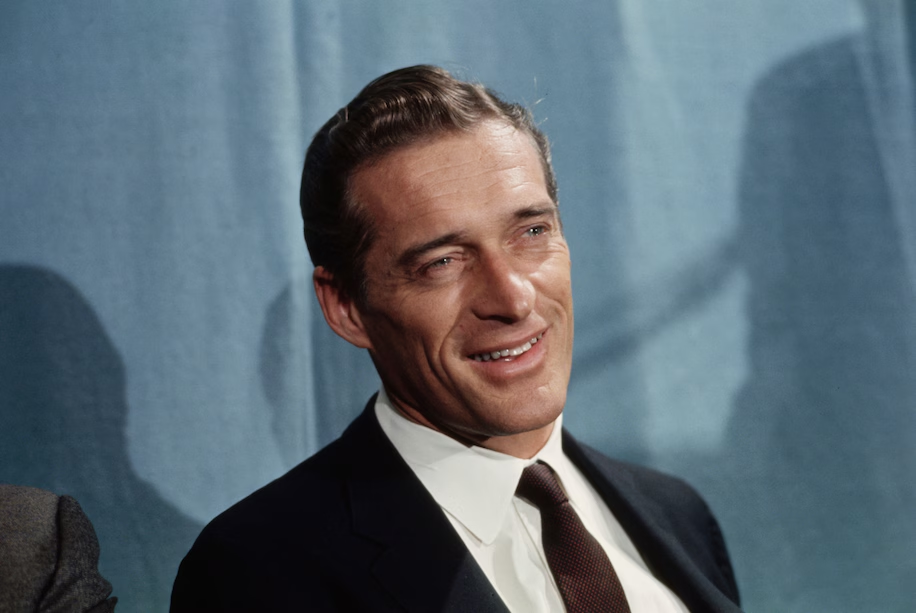
John S. Foster Jr., a physicist who helped develop the U.S. nuclear arsenal and shaped national security in the Johnson and Nixon administrations, guiding billions of dollars in research and development as a top Defense Department official, died April 25 at his home in Santa Barbara, California. He was 102.
The cause was congestive heart failure, said his son John S. Foster III.
A second-generation physicist who espoused what he called a “radical but realistic” approach to scientific innovation, Dr. Foster grew up in Montreal, where his father ran a radiation laboratory at McGill University and introduced him to Nobel Prize-winning physicists Niels Bohr and Ernest Lawrence, the founder of what is now Lawrence Livermore National Laboratory in California.
Located 40 miles east of San Francisco, the federally funded lab is where much of the country’s nuclear stockpile was developed and conceived. Dr. Foster launched his career at the lab with backing from Lawrence, helping devise more compact, high-yield nuclear weapons in the early years of the Cold War.
One of those devices, nicknamed Cleo, was detonated in 1955 in Livermore’s first successful nuclear test. Compared to Little Boy, the 9,000-pound atomic bomb dropped on Hiroshima a decade earlier, Cleo was light as a feather — small enough that each of its two parts could be stored inside “a reinforced Samsonite suitcase” and transported to the government’s Nevada testing site in the back of a station wagon, according to Dr. Foster’s biographer, Livermore physicist Tom Ramos.
Working under the program name Robin, Dr. Foster and his team later developed a design approach that resulted in “the ultimate fission weapon, the prototype used to build the country’s modern stockpile,” Ramos wrote in “Call Me Johnny,” a 2019 biography that took its title from Dr. Foster’s nickname.
Dr. Foster also worked on nuclear warheads designed for the Polaris, the Navy’s first submarine-launched ballistic missile, and served as Livermore’s director from 1961 to 1965, when he was tapped to become the Pentagon’s director of defense research and engineering.
Defense Secretary Melvin Laird conducts a briefing in 1970. He was joined by Dr. Foster, second from left in the foreground; Army Secretary Stanley R. Resor, left; and Army Gen. Earle G. Wheeler, chairman of the Joint Chiefs of Staff. (AP)
By then, the Vietnam War was escalating, and China was conducting its first nuclear tests. The United States was also facing an ongoing nuclear threat posed by the Soviet Union. Dr. Foster spent the next eight years guiding the development of missiles, bombers and warheads; advocating for the Pentagon research budget in front of Congress; and offering scientific advice to Defense Secretary Robert McNamara and his successors, including former Republican congressman Melvin Laird during arms control talks with Russia.
Profiling Dr. Foster upon his appointment, Washington Post reporters Howard Simons and Chalmers M. Roberts wrote that he was “a persuasive personality — intent, dedicated and chock full of imaginative ideas. Ruggedly handsome, he is inclined to pace the room like a panther as he talks.”
He was also treated with skepticism, they noted, by some scientists who considered him a hawk on defense issues. Dr. Foster had joined physicist Edward Teller, known the father of the hydrogen bomb, in unsuccessfully opposing the Senate’s 1963 ratification of the Partial Nuclear Test Ban Treaty. The researchers argued that it would endanger the country’s security, notably by preventing the U.S. from working on an antiballistic missile.
At the Pentagon, Dr. Foster was credited with championing the development of early unmanned aerial vehicles, precursors to today’s military drones, and with guiding research into MIRVs, ballistic missiles that can carry multiple warheads, not just one. He also promoted the use of nuclear safeguards known as permissive-action links, which are intended to prevent the weapons from being armed or detonated by the wrong person.
Critics said that while trying to boost Defense Department research, Dr. Foster could be overly gloomy in his pronouncements on Soviet advances. Addressing the House Armed Services Committee in 1973, while trying to secure $8.7 billion in research funding, he warned that Russia may be a few years from a major breakthrough, one that was not “simply another beeping basketball in space.”
“What happens,” he asked, “if the Soviet Union is first to succeed in developing a laser system which can knock our airplanes out of the sky?”
Yet even Dr. Foster’s detractors acknowledged that he was “especially effective” in arguing for the Defense budget, as military affairs reporter Michael Getler put it in 1972, before Dr. Foster left to work in the defense industry.
“In the long-term defense of this country,” Dr. Foster had told The Post, “our research and technology base has a place second in importance only to the national will to survive.”
Dr. Foster, third from left, with Defense Secretary Robert McNamara at a 1965 swearing-in ceremony for Pentagon officials. (Henry Burroughs/AP)
The older of two sons, John Stuart Foster Jr. was born Sept. 18, 1922, in New Haven, Connecticut, where his father was teaching at Yale. Both his parents were Canadian: His father, John Sr., developed radar technology during World War II and was elected a fellow of Britain’s Royal Society. His mother, Flora Curtis Foster, was a former music teacher and singer.
The family settled in Westmount, Quebec, an enclave of Montreal, where Dr. Foster showed an aptitude for science and engineering while building radios, tinkering with the family car and learning glass blowing so that he could make his own test tubes. His younger brother later followed him into physics, as did Dr. Foster’s son John.
Aided by his father’s scientific connections, Dr. Foster got a job during World War II conducting radar research at Harvard. He later traveled to Italy as a technical adviser with the U.S. Army Air Forces, helping airmen fine-tune their radar equipment, according to his family.
Dr. Foster returned to Montreal to complete his college education at McGill, where he was also a champion gymnast and ski-jumper. He received his bachelor’s degree in 1948, then married Barbara Anne Boyd Wickes, known as Bobbie, and headed west to study physics at the University of California at Berkeley.
There he worked under his father’s friend Lawrence at the Radiation Laboratory, or Rad Lab, now known as Lawrence Berkeley National Laboratory. Dr. Foster was mentored by Luis Walter Alvarez, a Manhattan Project veteran who later received a Nobel Prize, and became friends with physicist Hugh Bradner, who was credited with inventing the neoprene wetsuit in the 1950s. Early photos and advertisements for the suit show Dr. Foster gamely modeling the garment, standing on dry land wearing flippers and, for one picture, a pair of oversize diving gloves.
After receiving his PhD in 1952, Dr. Foster became one of the first physicists to work at the Rad Lab’s new branch in Livermore, which became an independent institution in 1971. He was later elected to the National Academy of Engineering and received the Enrico Fermi Award, one of the government’s highest scientific honors, in 1992.
Dr. Foster looks over his 100th birthday cake at a 2022 ceremony at Lawrence Livermore National Laboratory, joined by lab director Kim Budil. The laboratory created a medal and undergraduate fellowship in his honor. (Randy Wong/Lawrence Livermore National Laboratory)
Dr. Foster was a vice president at TRW Inc. and remained involved in national security issues for decades, serving on the President’s Foreign Intelligence Advisory Board, chairing the Defense Science Board and participating in blue-ribbon panels that reviewed the country’s nuclear stockpile. Until recently, he was still visiting Livermore to meet with staff.
“When he wasn’t going to the lab,” his son John said, “he was going to a safe house in an undisclosed area in Santa Barbara,” getting updates about defense research. “I believe he still had, up until he died, an active security clearance,” John added.
Dr. Foster’s wife Bobbie died in 1978. He was later married for 36 years to Frances “Franny” Schnell Parker, who died in 2015. A son from his first marriage, Scott, died later that year. In addition to his son John, survivors include two other children from his first marriage, Susan Duffy and Bruce Foster; nine grandchildren; and many great-grandchildren.
While still in college, Dr. Foster bought a used Vincent HRD motorcycle for $600. He and Bobbie later hopped on the bike and hit the road, driving 3,000 miles from Montreal to Berkeley so that he could start graduate school. He continued to ride the motorcycle for a few more years, John said, until Lawrence saw it at the laboratory and learned it was Dr. Foster’s.
“Get rid of it,” the physicist told him. “The mean free path is too short.”
Lawrence was offering advice, and also telling a physics joke. As John explained it, “Mean free path is the average distance a particle goes before colliding with another particle.”
Dr. Foster sold the bike.
Cookie Consent
We use cookies to improve your experience on our site. By using our site, you consent to cookies.
Contains information related to marketing campaigns of the user. These are shared with Google AdWords / Google Ads when the Google Ads and Google Analytics accounts are linked together.
90 days
__utma
ID used to identify users and sessions
2 years after last activity
__utmt
Used to monitor number of Google Analytics server requests
10 minutes
__utmb
Used to distinguish new sessions and visits. This cookie is set when the GA.js javascript library is loaded and there is no existing __utmb cookie. The cookie is updated every time data is sent to the Google Analytics server.
30 minutes after last activity
__utmc
Used only with old Urchin versions of Google Analytics and not with GA.js. Was used to distinguish between new sessions and visits at the end of a session.
End of session (browser)
__utmz
Contains information about the traffic source or campaign that directed user to the website. The cookie is set when the GA.js javascript is loaded and updated when data is sent to the Google Anaytics server
6 months after last activity
__utmv
Contains custom information set by the web developer via the _setCustomVar method in Google Analytics. This cookie is updated every time new data is sent to the Google Analytics server.
2 years after last activity
__utmx
Used to determine whether a user is included in an A / B or Multivariate test.
18 months
_ga
ID used to identify users
2 years
_gali
Used by Google Analytics to determine which links on a page are being clicked
30 seconds
_ga_
ID used to identify users
2 years
_gid
ID used to identify users for 24 hours after last activity
24 hours
_gat
Used to monitor number of Google Analytics server requests when using Google Tag Manager