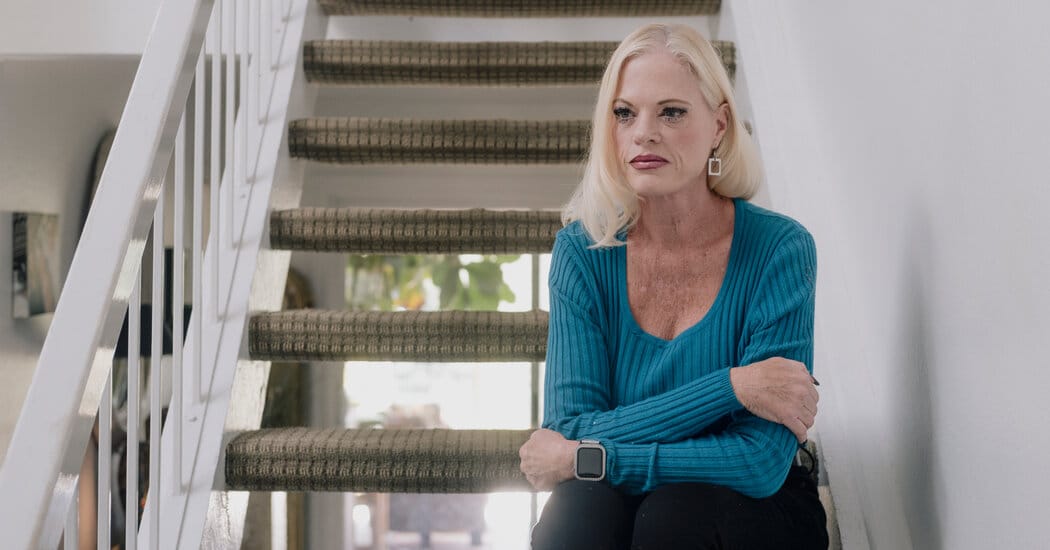
The daughter of Stan Lee, J.C., has settled a lawsuit against Max Anderson, the comic book legend’s former longtime road manager accused of elder abuse and pilfering tens of millions of dollars in memorabilia, autograph revenue and appearance fees.
Ahead of a trial slated to start next week, both sides on Thursday informed the court of a deal to resolve the case. The agreement is conditioned on the completion of certain undisclosed terms. Further details weren’t revealed.
At the heart of the lawsuit: Allegations that Anderson leveraged his control over Lee’s life to steal over $21 million — as well as hundreds of pieces of collectibles and memorabilia, including Batman creator Bob Kane’s original drawing of the “Joker” and movie props featured across Marvel movies — toward the end of his former boss’ life.
Shortly after meeting Lee around 2007, Anderson assumed exclusive control of his operations for comic book conventions and public appearances until he was pushed out of Lee’s circle by J.C in 2017. He also acted as a caretaker for the aging comic book writer, who was in his 80s and 90s at the time and was essentially blind, coordinating health care services while serving as a business fiduciary in some dealings.
Over the course of almost a decade, Anderson, who said he didn’t receive monetary compensation for his work and was paid in the form of autographs on collectibles, accompanied Lee to 111 comic book conventions around the world. At these conventions, Anderson and a business partner operated a booth where fans could purchase a signatures on collectibles for up to $120 a piece. The origins of the business, “Stan Lee Collectibles,” was a subject of the lawsuit, which alleged that Lee didn’t see any profits from the venture. Before Lee died, he signed an agreement granting Anderson a worldwide license for use of his name and likeness in perpetuity for a dollar, the lawsuit alleged.
J.C. claimed that Anderson pushed her father to work tireless hours until months before his death. She accused him of stealing at least $11.1 million in autograph revenue and $10.2 million in appearance fees. Anderson has denied ever handling money at events, which saw Lee earn roughly $35,000 in a single day signing autographs and taking pictures.
At trial, witnesses, including Anderson’s twin brother who worked security at some events, were set to testify that they saw Anderson handling “duffle bags” of cash, which was allegedly used to buy art and other luxury items, according to court filings. Anderson’s ex-wife was also set to tell the court that she saw Anderson handle significant amounts of cash after returning home from events with Lee and that he kept “stacks of cash” in a large bedroom safe. Lawyers for J.C. claimed that Anderson’s personal wealth and assets ballooned in the years he worked for Lee.
A contentious part of the litigation was a museum intended to house Lee’s memorabilia, collectibles and personal items to be featured at various comic book conventions. Anderson, through his license for use of Lee’s name and likeness, arranged for Lee to gift him personal items that were to be placed in the museum but were allegedly rerouted to Anderson’s businesses. For the last decade, the pieces have been in Anderson’s possession at his comic book store and home while the museum has only been featured at a handful of conventions, the lawsuit alleged.
Anderson has said that he can’t identify which items belong to the museum and that much of it was stolen, damaged or thrown out since they weren’t valuable. J.C.’s lawyers have pushed back on that assertion, pointing to a lawsuit he filed over collectibles stolen from his home, including original movie props like Iron Man’s mask, the arm of Nebula from Guardians of the Galaxy and a set of X-23 claws from Logan.
The fashion industry is mourning the death of 27-year-old Croatian Australian model Lucy Markovic, who died Friday following complications of a brain arteriovenous malformation.
A serious condition where abnormal blood vessels in the brain become tangled, AVM can potentially cause bleeding or brain damage. Last month — in a since deleted, but widely reported Instagram post — Markovic told her social media audience that she required surgery on April 2 for an AVM “the size of a golf ball.”
Markovic had a brief career, first rising to prominence in Australia in 2015 as a 17-year-old from Queensland’s Gold Coast who placed runner-up in the ninth season of reality TV show “Australia’s Next Top Model.” In May 2016 she made her Australian Fashion Week debut at the resort 2017 collections showcase.
She made her international debut at the spring 2023 shows, booking exclusives for Versace and Givenchy, in later seasons walking for, among others, Dolce & Gabbana, Bally, Brandon Maxwell and Dion Lee. Her advertising campaigns included Versace, Victoria Beckham Holiday and Emporio Armani.
Versace RTW Fall 2023 MANNY LLANURA/WWD
She was a particular favorite of the Armani group, walking in six of its shows including for Emporio Armani, Giorgio Armani and Armani Privé. Editorial work included Italy’s Grey magazine; Vogue Hong Kong, Singapore and Korea; W; Vanity Fair Italia; Harper’s Bazaar Arabia: Numéro Netherlands, and Australia’s Side-Note.
Donatella Versace lead the tributes to Markovic on her Instagram Stories, posting photos of her in Versace’s fall 2023 show and the Versace spring 2023 campaign. Versace added, “I am so sorry to hear the news about @lucymarkovicc. Rest in peace beautiful girl.”
“Today, we lost a star,” posted Markovic’s Australian mother agency Kult Australia. “We are deeply saddened by the passing of Lucy. She was radiant, warm and a beautiful soul. We will cherish being part of her journey.”
Elite Model Management in New York posted a three-tile tribute. “Modeling was one of Lucy’s dreams, and we are deeply honored to have been part of that journey with her,” the agency wrote. “She brought elegance, strength, and beauty to her work. But more than that, she brought herself — her warmth, her laughter, her light.”
Markovic is also being mourned by the Australian sporting community, the Gold Coast Knights Football Club joining in the tributes on its Instagram and Facebook pages by posting a photo of a teenage Markovic in club uniform surrounded by her former teammates.
“It is with the deepest and most profound sadness that we share with the Knights family the passing of Lucy Markovic, a former junior player of the club and much loved member of the Gold Coast Croatian community,” the club wrote.
The club said its senior men’s and women’s teams would mark a minute of silence for Markovic this weekend.
MaryAlice Ashbrook remembers the rain on the night the Los Angeles police retrieved her, the 8-year-old child of a pill-addicted mother, and took her to the MacLaren Children’s Center, the county-run foster home where she was preyed upon.
Shirley Bodkin remembers the smell of the staff member there who would put her on his lap and make her hold a Raggedy Ann doll while he hurt her. J.C. Wright remembers the social workers who accused him, at age 7, of “fabricating” when he tried telling them what a doctor there had done to him.
Those memories are decades old. Ms. Ashbrook is 65 now, a retired bookkeeper in Yuma, Ariz. Ms. Bodkin is 58, the mother of two grown sons in the Southern California beach town of Dana Point. Mr. Wright is 42, a truck driver and father of four in suburban Los Angeles.
Whole chapters of their lives have gone by — marriages, children, careers — yet the memories have never ceased to torment them. Ms. Ashbrook tried electroshock therapy. Ms. Bodkin attempted suicide. Mr. Wright lived on the streets for years, ending up in prison. There was no escaping the nightmares, they said in interviews on Sunday. So they turned to the courts for some measure of relief.
Last week, it arrived, for them and nearly 7,000 other plaintiffs who say they were sexually abused as children in Los Angeles County’s juvenile detention and foster care systems, in cases dating to the late 1950s. In a settlement that lawyers say is the largest of its kind in the nation, the county publicly apologized and agreed to pay a record $4 billion, dwarfing previous settlements in child sex abuse cases brought against the Boy Scouts of America and the Archdiocese of Los Angeles.
The wave of claims — so immense that officials had warned before the deal that Los Angeles County, the nation’s most populous, could be bankrupted by it — came after California gave childhood victims a new window to sue, even though the statute of limitations had expired. The county’s Board of Supervisors is expected to formally approve the payout on April 29.
Some two dozen states have established similar “lookback windows” in response to a growing understanding of the many reasons child sex abuse victims might not come forward, or even think of themselves as having been abused, until years or decades later.
The new statutes have prompted thousands of lawsuits and concern about potentially enormous liabilities to taxpayers. Last week, facing a $3 billion budget gap, Maryland lawmakers voted to reduce the maximum possible award there by more than half.
In some cases, the systems in Los Angeles County that allowed the flagrant abuse of children have already gone through rounds of reforms. The MacLaren Children’s Center in El Monte, Calif., where Ms. Ashbrook and Ms. Bodkin were placed in the 1960s and Mr. Wright lived in the 1990s, closed in 2003 with a backlog of dozens of abuse allegations and a grand jury’s finding that it had hired employees with criminal records.
Last week, the county enumerated a long list of reforms to its foster care and juvenile probation systems, saying that over the past 25 years it had significantly reduced the use of large, risk-prone group homes like MacLaren. It now conducts “comprehensive background checks” and has established or revised more than 20 policies designed to prevent sexual abuse, according to the county.
MaryAlice Ashbrook was taken to MacLaren Children’s Center in Los Angeles County when she was 8 years old.Credit…John Francis Peters for The New York Times
Additional reforms are being developed or are underway, county officials added, including possible ways to resolve sexual abuse claims more quickly. And while no one has been arrested in connection with the abuses at MacLaren Hall, as it was colloquially known, officials said investigations were continuing, with at least two cases referred to the district attorney for possible prosecution.
Adam Slater, a lawyer whose Los Angeles-based firm represents more than 3,500 of the covered plaintiffs, including some 1,500 who had been at MacLaren, said that the settlement took those changes into account, as well as the potential threat to the county’s solvency. The $4 billion will be paid out over several years, not all at once, he said.
“This settlement is proof that the law works,” he said.
Plaintiffs expressed more complicated feelings.
“I’m sorry, but I just wish that this concern about all of this was present when it was happening,” Mr. Wright said on Sunday, speaking by video call from his 2010 Nissan SUV with his wife, Esther, in the passenger seat beside him.
“Because I told people. And I told my counselors — MacLaren Hall, the whole second floor, it was nothing but counselors, people who say they’re there to protect you — and you go tell them. And they tell you you’re lying. Or you need attention.”
He broke down, sobbing.
“I just — wanted them — to stop it,” he said, his wife’s hand rubbing his muscled arm to comfort him, his voice catching and choking like a child’s.
The cases of Mr. Wright, Ms. Bodkin and Ms. Ashbrook all stem from their time at MacLaren, which was a fixture of Los Angeles’s social service system for more than three decades. It was named far more often than any other facility in the lawsuits that were settled.
Opened in 1961 as a temporary shelter for children awaiting placement in the foster care system, MacLaren was notorious by the time it closed, aged and overcrowded with children who had been abused, were mentally ill or had behavioral issues. Some lived there for months. Violence was common, children often ran away, and the facility was beset with staff turnover and legal complaints.
Ms. Ashbrook’s stint there came in 1968, she said, during a period when she and her mother were living a transient life, bouncing among hotels, apartments and relatives’ homes from Santa Barbara to the shadows of Disneyland. “My mother had a pill addiction,” she said. “Black Beauties and Seconal. I used to dump out the ingredients inside her pills and fill them with flour to try to make her normal.”
One day when they were living in Encino, she said, she came home beaten up from a fight at school, and her grandmother, who lived two hours away, called the police to report her mother. At MacLaren, she said, she and other children were sexually abused by a guard who medicated them with antipsychotic drugs and took them to a “special room.”
She had been at MacLaren for about two weeks, she said, when she met Ms. Bodkin, a toddler with pale blond hair whom she rescued one day from a closet.
“I heard scratching and crying and screaming for help,” she said. “I opened the door and there was this little girl, scared out of her mind.”
Ms. Bodkin said it was not until decades later that their paths crossed again. Her own mother, she said, was mentally ill, and her earliest memories were of MacLaren, where she lived off and on until she was 9 years old.
She spoke in a separate video call from the daybed of her apartment, floral pillows scattered around her. She said she had two grown sons, 29 and 39, whom she had told little about her childhood because she did not want to shock or worry them.
“I remember sleeping close to the floor,” Ms. Bodkin said. “I remember the screaming and I remember the closet. And I remember the bathtubs. There were two men. If we didn’t do what they wanted, the soap went in our mouths.”
She took off her wire-rimmed glasses and wept for a moment.
“What I experienced was pure hell,” she said. “No child should have to experience what I did.”
Both women said they went into foster homes after their stays at MacLaren. Both dropped out of high school. Both said they were so traumatized at first that they were nearly nonverbal, and were later unable to develop trusting relationships.
J.C. Wright said he was sexually abused at MacLaren by medical staff. “Still, to this day, I can’t go to the dentist without my wife holding my hand,” he said.Credit…Eric Thayer for The New York Times
Mr. Wright’s stint in county care came later, around 1990, after his parents — a crack cocaine addict and her dealer — abandoned him to the care of a grandmother who was responsible for a dozen other children. Initially placed in a different facility, he said, he punched a pregnant social worker who would not let him call home, and he was transferred to MacLaren.
There, he said, he was “a troubled child” who was regularly beaten and, over time, drugged and sexually abused by medical staff members. He said he was at MacLaren until he was about 11, when he was sent to a group foster home, which he fled.
For years after that, he said, he lived on the street. Eventually, he said, he landed in prison after being convicted of attempted murder; he said it was an attempt at self-defense. There, he said, he reflexively attacked anyone who hinted at a sexual interaction, even jokingly.
After his release in 2013, he said, he found work selling solar panels and vinyl windows door to door, then driving a forklift, then driving a big rig. He lives now in the Los Angeles suburb of Covina, about 15 minutes from the complex that once housed MacLaren.
His wife, Esther, said that when she met him, her only goal was “to show this broken man that somebody could actually love him.” Over time, they said, they built a good life. In the cab of his truck, he said, he finds peace, listening to country music, rumbling from freeway to freeway.
“Still, to this day, I can’t go to the dentist without my wife holding my hand. I can’t go to a doctor. I’m 42 years old and I can’t get a checkup,” he said. Worse, he fears that when his children find out what happened to him, they’ll reject him.
“I’m so afraid that one day they’re going to find out what happened to their dad,” he said, “and I’m not going to be their dad no more.”
Lawyers on both sides acknowledged that the complaints brought under the new law have been painful and intensely difficult for all parties. Years have passed. Witnesses have died. Lives have moved forward.
Many who worked over the generations in the county’s sprawling child welfare and juvenile justice system did so with the best of intentions. Officials said they hoped that the scope of the settlement demonstrated the county’s commitment to ensuring that what was allegedly done to Mr. Wright, Ms. Bodkin and Ms. Ashbrook would never happen again.
“On behalf of the county, I apologize wholeheartedly to everyone who was harmed by these reprehensible acts,” Fesia Davenport, the county’s chief executive, said in a statement.
The three plaintiffs said they didn’t know whether the settlement would ease their suffering. But since it was announced last week, they said, at least one thing had changed.
“When I heard, I think I screamed, I was so overwhelmed,” Ms. Bodkin said, crying. “My voice was heard. My effing voice. Was heard. Me. Heard. Finally.”
Cookie Consent
We use cookies to improve your experience on our site. By using our site, you consent to cookies.
Contains information related to marketing campaigns of the user. These are shared with Google AdWords / Google Ads when the Google Ads and Google Analytics accounts are linked together.
90 days
__utma
ID used to identify users and sessions
2 years after last activity
__utmt
Used to monitor number of Google Analytics server requests
10 minutes
__utmb
Used to distinguish new sessions and visits. This cookie is set when the GA.js javascript library is loaded and there is no existing __utmb cookie. The cookie is updated every time data is sent to the Google Analytics server.
30 minutes after last activity
__utmc
Used only with old Urchin versions of Google Analytics and not with GA.js. Was used to distinguish between new sessions and visits at the end of a session.
End of session (browser)
__utmz
Contains information about the traffic source or campaign that directed user to the website. The cookie is set when the GA.js javascript is loaded and updated when data is sent to the Google Anaytics server
6 months after last activity
__utmv
Contains custom information set by the web developer via the _setCustomVar method in Google Analytics. This cookie is updated every time new data is sent to the Google Analytics server.
2 years after last activity
__utmx
Used to determine whether a user is included in an A / B or Multivariate test.
18 months
_ga
ID used to identify users
2 years
_gali
Used by Google Analytics to determine which links on a page are being clicked
30 seconds
_ga_
ID used to identify users
2 years
_gid
ID used to identify users for 24 hours after last activity
24 hours
_gat
Used to monitor number of Google Analytics server requests when using Google Tag Manager