Category: Defense

  • Kash Patel Slams FBI Use of Anti-Trump Sedition Hunters as Paid J6 Informants

    Kash Patel Slams FBI Use of Anti-Trump Sedition Hunters as Paid J6 Informants

    he Biden-era FBI made more than $100,000 in payments to informants who were members of an anonymous group of tech sleuths known as the “Sedition Hunters” to gather and analyze video evidence in the January 6 Capitol riot — echoing the bureau’s reliance on paid FBI informant and British ex-spy Christopher Steele in 2016.

    Just the News reported this week that the FBI made payments to a number of so-called “sedition hunters” as confidential human sources (CHS) as part of the January 6 Capitol riot and Arctic Frost probes despite the online network’s significant anti-Trump pronouncements and known ties to foreigners.

    The payments are due to be disclosed by FBI Director Kash Patel to Congress along with acknowledged concerns that the Christopher Wray-run bureau’s approval of certain members of the Sedition Hunters as confidential human sources may have violated bureau policies concerning informant bias, informant secrecy, foreign influence, and contracting transparency, officials said.

    Reminiscent of the ill-fated “Crossfire Hurricane” lawfare campaign

    The revelations of source payments are certain to revive FBI concerns among Republicans that date back to the now-discredited Crossfire Hurricane probe, where agents used Steele as a CHS to pursue unsubstantiated allegations of Trump colluding with Russia. This was despite Steele’s foreign connections, his clear anti-Trump bias, and his work as a contractor for the campaign law firm of Trump’s main 2016 rival, Hillary Clinton. Wray had promised significant reforms in the wake of the 2016 debacle at the bureau.

    Steele was eventually terminated in November 2016 as an FBI informant for violating his confidentiality requirements as a confidential human source, disclosing his role with the bureau, and making unauthorized disclosures to the media.

    Government officials said a half decade later, the bureau may have entered into another troubling relationship by treating members of the Sedition Hunters as informants in a new Trump probe when, in fact, they were essentially performing computer analysis contract work identifying January 6 defendants around the Capitol and clearly expressed dislike for Trump.

    FBI burned by decision to deploy the Steele Dossier against Trump

    DOJ inspector general Michael Horowitz uncovered huge flaws with the FBI’s Crossfire Hurricane investigation in a December 2019 report, finding at least 17 “significant errors and omissions” related to the FISA warrants targeting former Trump campaign associate Carter Page. Horowitz also criticized the “central and essential” role of Steele’s debunked dossier in the FBI’s politicized FISA surveillance. Steele, a years-long FBI CHS, had been hired by the opposition research firm Fusion GPS, which was being paid by Clinton campaign lawyer Marc Elias. Elias was later fined for “misleading” filings to the court in his advocacy for Democratic Party candidates.

    The DOJ watchdog also said Steele’s alleged main source — Russian national Igor Danchenko — “contradicted the allegations of a ‘well-developed conspiracy’ in” Steele’s dossier. Danchenko was made an FBI CHS for years after 2016, up until his indictment by now-former special counsel John Durham.

    Lorem ipsum dolor sit amet, consectetur adipiscing elit. Ut elit tellus, luctus nec ullamcorper mattis, pulvinar dapibus leo.

    Horowitz’s report noted that Steele’s FBI interview “highlighted discrepancies between Steele’s presentation of information in the election reporting and the views of his Primary Sub-source” — Danchenko — and “revealed bias against Trump.”

    Stefan Halper was a Pentagon consultant and academic, and he, along with Steele, was used as a CHS by bureau agents to build the politicized Crossfire Hurricane case against Trump and his advisers during the end of the 2016 election and the beginning of Trump’s first term in office.

    Wray repeatedly promised serious CHS reform inside the bureau

    Horowitz wrote in a November 2019 report that “the FBI’s vetting process for CHSs, known as validation, did not comply with the Attorney General Guidelines.”

    “We also found deficiencies in the FBl’s long-term CHS validation reports which are relied upon by FBI and Department of Justice officials in determining the continued use of a CHS,” the DOJ watchdog said. “Further, the FBI inadequately staffed and trained personnel conducting long-term validations and lacked an automated process to monitor its long-term CHSs.”

    Wray quickly spoke with the press after the release of the December 2019 report, with the Associated Press writing that “Wray said the FBI would make changes to how it handles confidential informants.”

    He also sent a letter to Horowitz that month where he assured the DOJ inspector general that the FBI was fixing its CHS process.

    “We are making significant changes to how the FBI manages its Confidential Human Source Program. Many FBI investigations rely on human sources, but the investigative value derived from CHS-provided information rests in part on the CHS’s credibility, which demands rigorous assessment of the source,” the now-former FBI chief wrote. “The modifications we are making to how the FBI collects, documents, and shares information about CHSs will strengthen our assessment of the information these sources are providing.”

    Wray also sent a letter to the Foreign Intelligence Surveillance Court in January 2020, where he laid out further plans to reform the bureau’s handling of informants.

    The now-former FBI director said that one “FISA-related Corrective Action I have directed will require that all information known at the time of a FISA request and bearing on the reliability of a CHS whose information is used to support the FISA application is captured as part of the FISA Request Form and verified by the CHS handler.”

    Wray said that “in coordination with the FBI’s Directorate of Intelligence, the working group is developing a new CHS Questionnaire, which will be used as an addendum to the FISA Request Form, identifying the categories of source information (e.g., payment information, criminal history) that [the Office of Intelligence] should be informed of when preparing FISA applications that rely on CHS reporting. Completion of this Corrective Action will require consultation with external partners, finalization of the CHS Questionnaire, and the training of FBI personnel.”

    Wray also insisted to the Senate in March 2021 that the FBI was fixing its CHS process.

    “We accepted all of the findings and recommendations in the Inspector General’s report. I ordered, at the time, over 40 corrective actions to go above and beyond the recommendations of the inspector general’s report, and those have been implemented,” he said. “Those include everything from strengthening our procedures to ensure accuracy and completeness, to make sure the court gets all the information it’s supposed to, changes in our protocols for CHS, confidential human sources, training changes.”

    Steele and Danchenko exemplified the politicized nature of FBI’s lawfare

    The FBI used Steele’s discredited dossier to obtain four Foreign Intelligence Surveillance Act warrants and renewals targeting Trump campaign associate Carter Page, and fired FBI Director James Comey and former FBI Deputy Director Andrew McCabe pushed to include the dossier’s baseless collusion allegations in the 2017 Intelligence Community Assessment on Russian election meddling in the 2016 election.

    During all this, the FBI concealed the extent of Steele’s anti-Trump biases from the FISA Court. Just the News revealed last year that a declassified House Intelligence report showed the Steele Dossier was directly cited in the highly classified version of the ICA on Russian meddling.

    Horowitz wrote in 2019 that “the FBI was aware of the potential for political bias in the Steele election reporting from the outset of obtaining it.”

    Ex-DOJ official Bruce Ohr, who served as a conduit between Steele and the FBI even after the former MI6 agent was cut off as a confidential human source, told the bureau by late November 2016 that Steele was “desperate that Donald Trump not get elected and was passionate about him not being the U.S. president.” The DOJ watchdog noted that during a 2017 interview with the FBI, Steele described Trump as his “main opponent” and that an FBI analyst said this was “clear bias.”

    FBI analyst Brian Auten, who interviewed Steele’s alleged main source, Russian lawyer Igor Danchenko, in early 2017 and was there when the Justice Department set up a partial immunity agreement with Danchenko, was among the FBI employees who interviewed Steele in Rome in early October 2016 as the FBI sought more details on the dossier. Auten revealed in court that the FBI had offered Steele an incentive of up to $1 million if he could prove the allegations of collusion in his dossier and if the evidence led to prosecutions, but Auten said the former MI6 agent was unable to corroborate any of his dossier claims.

    FBI notes of a January 2017 interview with Danchenko showed he told the bureau he “did not know the origins” of some Steele claims and “did not recall” other dossier information. Nevertheless, Danchenko was put on the FBI’s payroll as a confidential human source from March 2017 to October 2020 before he was charged in November 2021 with five counts of making false statements to the bureau. The FBI agent assigned to be the handler for Danchenko testified that he sought to have the bureau pay Danchenko more than $500,000.

    Danchenko was found not guilty at trial.

    FBI failed to scrutinize Steele until after dossier deployed

    Just the News also revealed in 2025 that declassified records released last year also included a “Human Source Validation Report” (HSVR) by the FBI’s Validation Management Unit (VMU) related to Steele.

    The VMU assessed in 2017 that the bureau had only “medium confidence” that Steele had contributed to the FBI’s criminal program, in part because “Steele’s reporting has been minimally corroborated.” The unit said that, despite Steele working for the bureau for years, including on the high-profile Trump-Russia collusion investigation, “this is the first HSVR completed on Steele.”

    The FBI unit said that, in addition to baseless collusion claims, Steele had provided the bureau with information on a bribery scandal related to FIFA and Russia, a cyberattack from China, and “Weapons of Mass Destruction issues.”

    The VMU also claimed that “during Steele’s operation, VMU found no issues regarding his or her reliability” and that “VMU did not locate any information to suggest Steele fabricated information during the operation.”

    Yet declassified footnotes from Horowitz’s report showed that “a 2015 report concerning oligarchs written by the FBI’s Transnational Organized Crime Intelligence Unit (TOCIU) noted that from January through May 2015, ten Eurasian oligarchs sought meetings with the FBI, and five of these had their intermediaries contact Steele.” The TOCIU report “noted that Steele’s contact with five Russian oligarchs in a short period of time was unusual and recommended that a validation review be completed on Steele because of this activity,” Horowitz said.

    According to Horowitz, the FBI’s Validation Management Unit “did not perform such an assessment on Steele until early 2017” — well after the bureau had deployed the dossier in the FISA court and in the 2017 intelligence community assessment on alleged Russian meddling in the election.

    The Horowitz report’s declassified footnotes also said that some of the Steele dossier’s claims about now-former Trump lawyer Michael Cohen were “part of a Russian disinformation campaign to denigrate U.S. foreign relations.” The footnote also added that a U.S. intelligence community report concluded that the Steele dossier’s baseless and salacious claims about Trump at the Ritz-Carlton Moscow were the result of Russian intelligence who “infiltrate[d] a source into the network” managed by Steele.

    Steele and his company, Orbis Business Intelligence, worked for Russian oligarch Oleg Deripaska in 2016, allegedly helping recover millions of dollars the Russian oligarch claimed Paul Manafort had stolen from him. Steele sought help in this anti-Trump research effort from Fusion GPS, the founders of the company wrote, and Fusion GPS hired Steele soon after.

    The Senate Intelligence Committee’s 2020 report assessed that “the Russian government coordinates with and directs Deripaska on many of his influence operations.” The report found “multiple links between Steele and Deripaska” and “indications that Deripaska had early knowledge of Steele’s work” and said Steele’s relationship with Deripaska “provid[ed] a potential direct channel for Russian influence on the dossier.”

    Being an FBI informant was lucrative for Russiagate figure Stefan Halper

    Just the News also reported last year that declassified documents show that Stefan Halper, a key FBI informant in the widely-debunked Russia collusion case, was paid nearly $1.2 million over three decades and was motivated in part by “monetary compensation” — and that he continued snitching for the bureau even after agents concluded he told them an inaccurate story about future Trump National Security Advisor Mike Flynn.

    FBI agents ultimately deemed Halper’s accounts to be “not plausible” and “not accurate”, but the bureau proceeded to investigate Flynn, kept paying Halper and continued to vouch for his veracity as a confidential human source codenamed “Mitch,” the memos show. A March 2017 memo showed the FBI’s Validation Management Unit (VMU) wrote that it “assesses it is likely HALPER is suitable for continued operation, based on his or her authenticity, reliability, and control.”

    The VMU’s review from May 2013 to March 2017 recommended that the FBI continue using Halper as a source despite FBI agents working the Flynn case determining that he had provided them incorrect information. Nonetheless, the bureau unit also contended that “during the period of review, VMU found no derogatory issues regarding MITCH’s reliability” despite later admitting that “VMU notes there is no corroboration concerning MITCH’s reporting. Due to the singular nature of his or her access, VMU was unable to locate corroboration concerning MITCH’s reporting.”

    That memo made no mention in its unredacted portions of the concerns about the account Halper gave about Flynn and Lokhova, which were confirmed in a memo from William Barnett, the FBI agent who handled the retired Flynn’s case in 2016 and 2017.

    Patel: “A stunning abuse of bureau authorities” 

    Senate Judiciary Committee Chairman Chuck Grassley, R-Iowa, has continued to push for more answers related to the presence of FBI confidential informants during the Capitol riot.

    It is likely that the revelations by Just the News related to the FBI’s use of paid “Sedition Hunter” informants to provide assistance in identifying January 6-related suspects will lead to further scrutiny of the bureau’s CHS program.

    “The American people deserve the truth about how the FBI was weaponized against them. Paying openly anti-Trump activists to identify Americans using questionable technology is a stunning abuse of bureau authorities and a clear violation of longstanding informant rules,” Patel said in a statement to Just the News on Tuesday.

    “Under my leadership, the FBI will fully disclose these actions to Congress and ensure the bureau never again serves partisan or political ends instead of the Constitution,” the FBI chief added.
  • Former Trump Adviser John Bolton Indicted for Mishandling Classified Documents

    Former Trump Adviser John Bolton Indicted for Mishandling Classified Documents

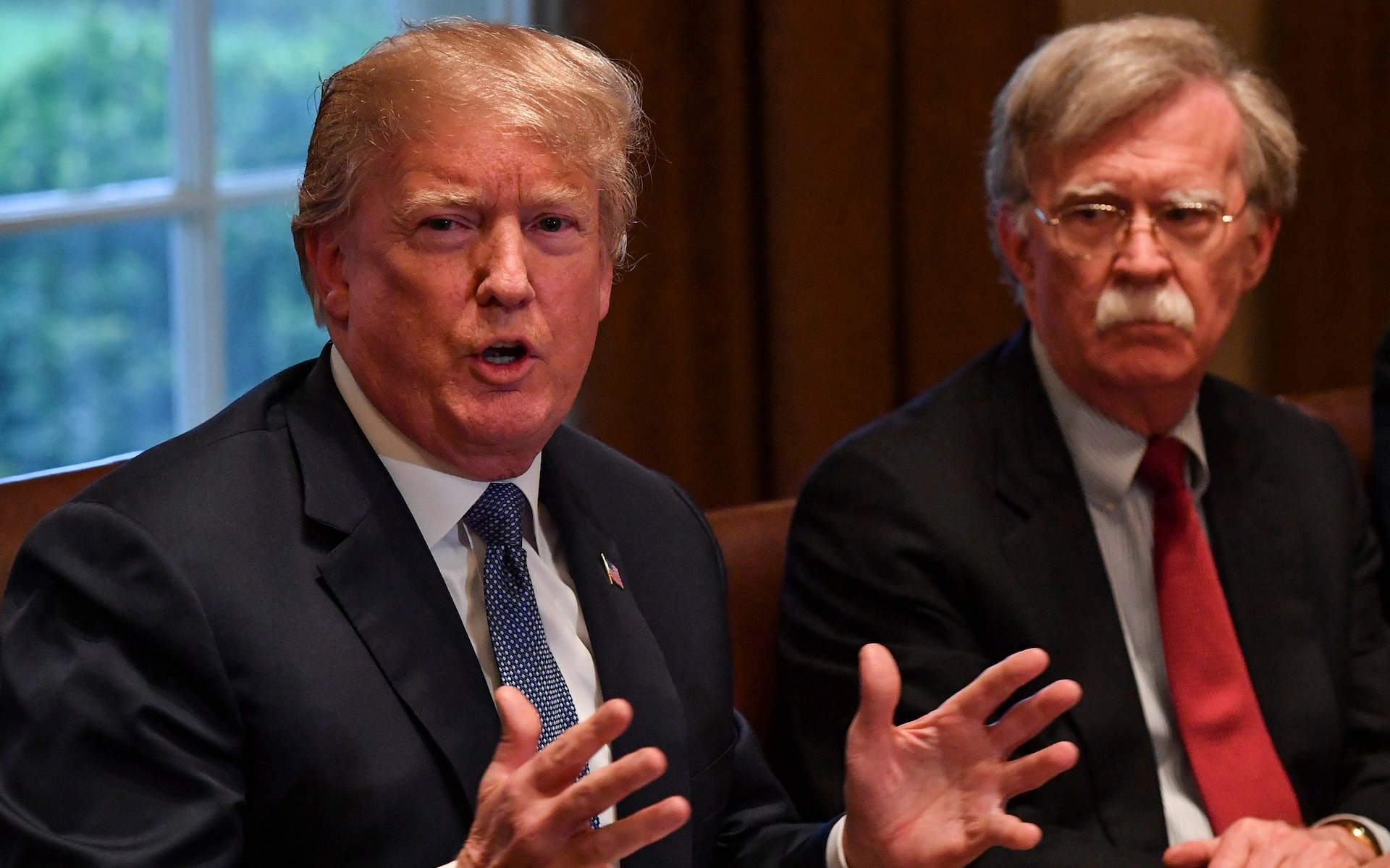
    John Bolton, the hawkish former national security adviser whose betrayal of President Donald Trump fueled one of the most damaging tell-all exposés in modern political history, pleaded not guilty Friday to 18 felony charges under the Espionage Act for the reckless transmission and retention of top-secret documents. The 76-year-old Bolton, whose infamous mustache has long symbolized interventionist folly abroad, now stands accused of endangering American lives by sharing over 1,000 pages of classified “diary-like entries” with family members lacking clearances—material so sensitive it detailed foreign missile threats, covert U.S. operations, and intelligence sources that could have been catnip for adversaries like Iran. In a swift courtroom appearance before Chief Magistrate Judge Timothy J. Sullivan in Greenbelt, Maryland, Bolton entered his plea through attorney Abbe Lowell, who decried the case as recycled “diaries” from a storied career—not crimes, but cherished records shared only with loved ones.

    From a conservative lens, this isn’t the weaponization of justice; it’s the long-delayed reckoning for a self-serving bureaucrat who prioritized book royalties and personal grudges over national security oaths. Bolton’s indictment—the third in as many weeks against Trump’s most vocal critics—signals the dawn of a DOJ unafraid to apply the law equally, a stark contrast to the selective blindness that plagued the Biden years. As FBI Director Kash Patel thundered on X, “Weaponization of justice will not be tolerated, and this FBI will stop at nothing to bring to justice anyone who threatens our national security.” With Attorney General Pam Bondi affirming “one tier of justice for all Americans,” the message is clear: No more free passes for deep-state leakers who undermine the America First agenda.

    The 26-page federal indictment, unsealed Thursday in U.S. District Court for the District of Maryland, lays bare a pattern of abuse from April 2018—mere weeks after Bolton assumed the national security role—to at least August 2025, long after his acrimonious 2019 firing. Prosecutors allege Bolton, despite access to a home Sensitive Compartmented Information Facility (SCIF) for secure handling, routinely fired off “diary-like entries” via unclassified personal channels—AOL, Gmail, and messaging apps—to two relatives (identified by MSNBC as his wife and daughter), neither cleared for such intel.

    These weren’t innocuous jottings; they brimmed with TOP SECRET/SCI details that could shatter alliances and embolden foes. One entry revealed “intelligence that a foreign adversary was planning a missile launch in the future; a covert action in a foreign country… sensitive sources and methods used to collect human intelligence.” Another exposed “sources and collection used to obtain statements of a foreign adversary; covert action conducted by the U.S. Government.” Eight counts target unlawful transmission of national defense information; 10 more his retention of such materials in his Bethesda home, where FBI agents recovered classified docs during an August 22 raid—including references to weapons of mass destruction.

    The plot thickens with a 2021 Iranian-linked hack of Bolton’s personal email, which prosecutors say snared the classified cache he’d carelessly stored there. A blackmail email taunted: “This could be the biggest scandal since Hillary’s emails were leaked, but this time on the G.O.P. side!”—yet Bolton’s team notified the FBI of the breach without flagging the sensitive contents, per the filing. Each count carries up to 10 years in prison, though guidelines might temper sentences; conviction, however, could revoke Bolton’s security clearance and exile him from policy circles forever.

    Lowell, in a fiery AP statement, insisted the materials were “unclassified” career mementos known to the FBI since 2021, probed and cleared under Biden—no charges then, only now under Trump’s “retribution.” Bolton himself invoked Stalin’s secret police in his retort: “You show me the man, and I’ll show you the crime,” framing the case as payback for his 2020 memoir The Room Where It Happened, which Trump tried (and failed) to block over similar clearance lapses. “Dissent and disagreement are foundational to America’s constitutional system,” Bolton proclaimed, vowing to “expose his abuse of power.” Conservatives scoff: This is no Stalin; it’s statute enforcement. Bolton’s book, after all, was ruled “likely” criminal by a Reagan-appointed judge in 2020 for evading pre-publication review—yet the Biden DOJ let it slide.

    Bolton’s White House tenure was a whirlwind of clashes: Appointed in 2018 for his Iran hawkishness, he clashed with Trump over Ukraine aid and Taliban negotiations, earning a September 2019 boot. “I disagreed strongly with many of his suggestions,” Trump tweeted then. Bolton’s revenge? A memoir that turbocharged Trump’s first impeachment, portraying the president as erratic and himself as the unsung hero—leaks that conservatives still view as the blueprint for the deep state’s sabotage playbook.

    The probe predates Trump’s return, gaining steam under Biden with a 2021 FBI review that fizzled by 2022 amid political optics. But August’s dual raids on Bolton’s home and D.C. office unearthed the diaries, prompting the Maryland grand jury’s swift action. Trump, ambushed by reporters Thursday, feigned surprise: “You’re telling me for the first time, but I think he’s a bad person… a bad guy. It’s too bad. But that’s the way it goes.” On X, glee erupted: “Don’t drop the soap,” quipped one user, while podcasters hailed it as “Insurrection Act ONE DAY CLOSER!” PBS noted Bolton’s silent courthouse march, but the right sees silence as guilt.

    The 20-minute arraignment drew no detention; Bolton walked free, his case assigned to Obama appointee Judge Theodore Chuang for a jury trial. Motions challenging “vindictiveness” are inevitable, but as one X post crowed, “Indict, try, convict, go to DC Gulag.”

    This is no coincidence—it’s culmination. Weeks ago, Virginia grand juries indicted ex-FBI Director James Comey on false statements and obstruction for lying about leaks in 2020 testimony, his January trial looming like a storm cloud. New York AG Letitia James faces wire fraud for donor deceptions in her Trump asset suits. All three followed Trump’s public entreaties, but Bolton’s case—bolstered by career FBI “meticulous work” under Patel—stands strongest, mirroring (and eclipsing) the Mar-a-Lago farce the left pinned on Trump. Where Trump cooperated fully, Bolton hoarded and hacked into; where Biden’s garage went unscathed, Bolton’s SCIF was scorned.

    Democrats wail “authoritarianism,” but this is accountability: The Espionage Act, wielded against Trump by politicized prosecutors, now bites back at the elite enablers who greenlit Clinton’s emails and ignored Hunter’s laptop. As one X meme blasted, “JOHN BOLTON HAS BEEN INDICTED”—complete with a grim reaper graphic signaling swamp drain progress.

    Wall Street barely blinked, the Dow nudging up 0.4% Friday on tariff optimism, undeterred by Bolton’s drama—investors betting Trump’s purges signal regulatory relief and foreign policy steel. PredictIt odds for GOP congressional sweeps climbed to 72%, fueled by base fervor: Posts like “Kash & President Trump Say More People Are Involved” hint at a widening net, boosting confidence in a DOJ that protects rather than persecutes patriots.

    Bolton’s fall isn’t about mustache envy—it’s about oaths broken. For 40 years, he preached national security; now, his “diaries” dangle like Damocles’ sword over U.S. assets. Trump’s DOJ isn’t Stalinist—it’s surgical, excising tumors the left romanticized as “dissent.” As Bolton fights (and likely flails) in court, conservatives celebrate: A foreign policy unpoisoned by profiteers, an FBI reforged for threats real, not rivalrous. The mustache twitches, but the rule of law endures—and America, uncompromised, thrives.

  • James Comey Pleads Not Guilty to Congressional Perjury Charges

    James Comey Pleads Not Guilty to Congressional Perjury Charges

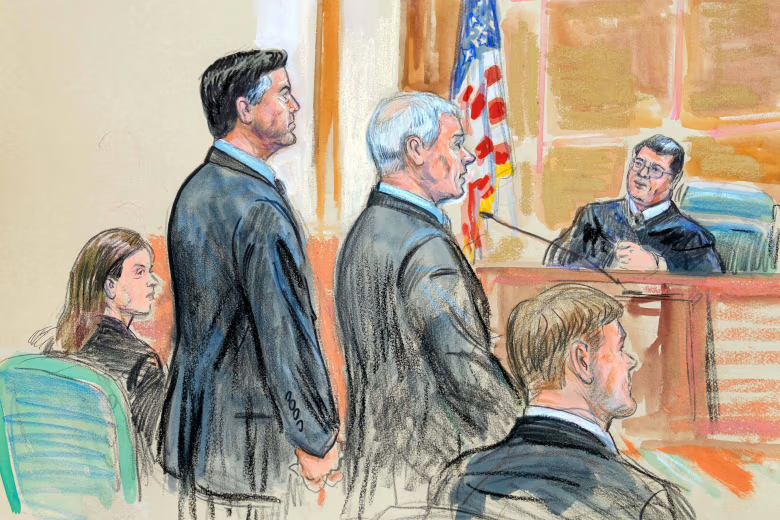
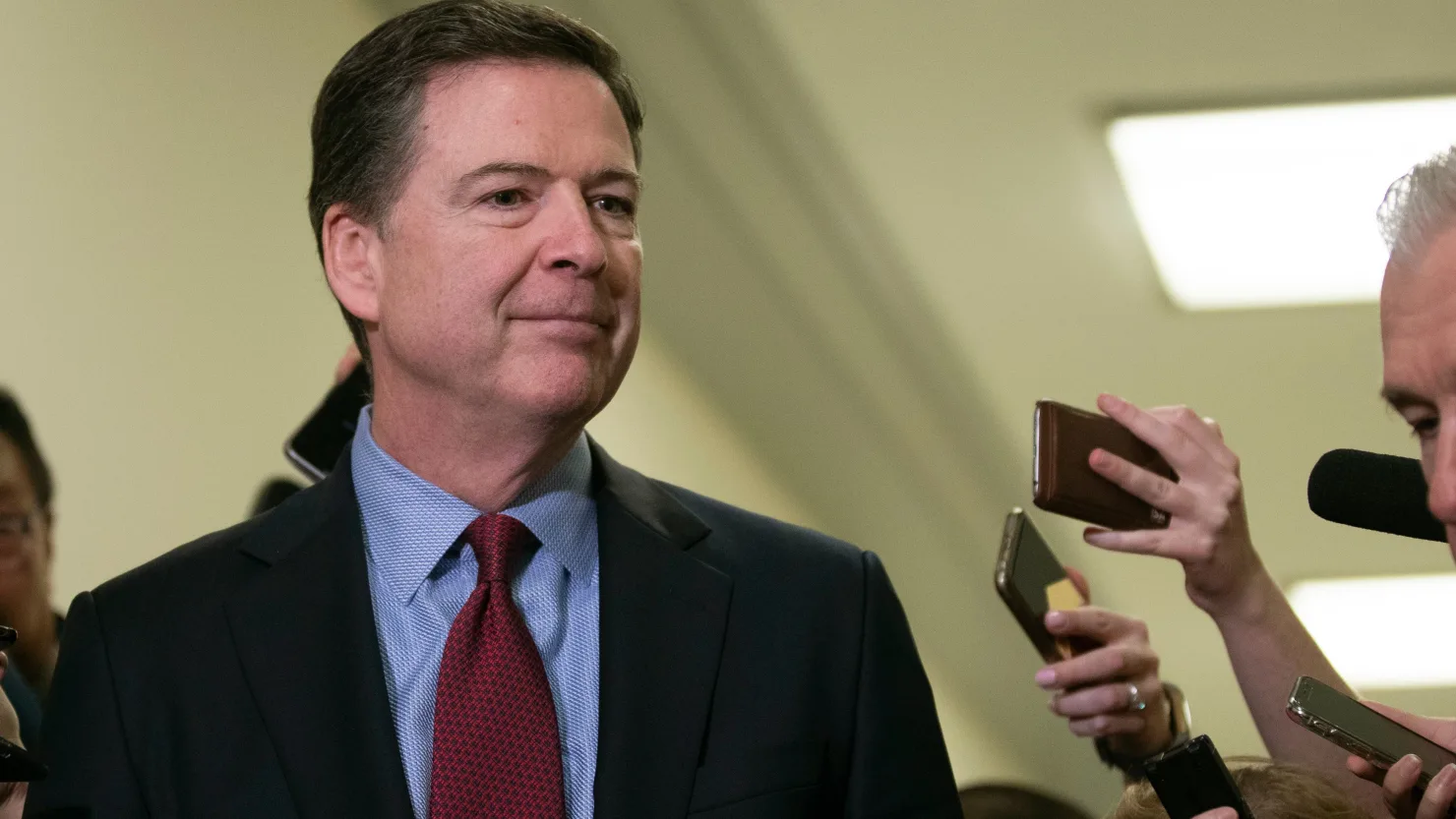
    ALEXANDRIA, Va. — In a courtroom moment that underscores President Donald Trump’s unyielding commitment to holding the deep state accountable, former FBI Director James Comey entered a not guilty plea Wednesday to federal charges of lying to Congress and obstructing a congressional proceeding. The 64-year-old Comey, once a symbol of bureaucratic overreach in the eyes of conservatives, now faces a January trial that could finally deliver the justice many on the right have demanded since his role in the Russia hoax unraveled America’s trust in its premier law enforcement agency.

    Comey’s arraignment before U.S. District Judge Michael Nachmanoff in federal court here marked the first high-profile reckoning in what Trump has vowed will be a broader purge of Washington insiders who weaponized government against him. Towering at 6-foot-8, Comey stood stoically beside his legal team, nodding along as his attorney, Patrick Fitzgerald, formally entered the plea. The hearing, devoid of cameras per court rules, lasted mere minutes, but its implications ripple far beyond the marble halls of Alexandria—potentially restoring faith in a Justice Department long hijacked by partisan actors.

    Trump, fresh off his triumphant 2024 victory, has made no secret of his pursuit of Comey. In a fiery Truth Social post last month, the president labeled the ex-director a “dirty cop” and urged Attorney General Pam Bondi to expedite charges against “perceived adversaries” like Comey before the statute of limitations expired. “These were corrupt, radical Left Democrats… They weaponized the Justice Department like nobody in history. What they’ve done is terrible,” Trump declared in a video shared by his campaign’s War Room account, framing the indictment as a necessary corrective to years of abuse. For conservatives, this isn’t retribution—it’s restitution, a long-overdue dismantling of the swamp that targeted Trump from day one.

    im 34111719
    This courtroom sketch depicts former FBI Director James Comey, second from left, and his attorneys. © Source: Associated Press

    The Charges: A Reckoning Rooted in 2020 Testimony

    The two-count indictment, unsealed last month, stems from Comey’s September 2020 testimony before the Senate Judiciary Committee, where he was grilled by Sen. Ted Cruz (R-Texas) over alleged leaks tied to the FBI’s investigations into Hillary Clinton’s emails and potential Russian ties to Trump’s 2016 campaign. Cruz zeroed in on discrepancies between Comey’s 2017 sworn statements—where he denied ever authorizing an FBI subordinate to serve as an anonymous media source—and accounts from his then-deputy, Andrew McCabe, about a pre-election leak to The Wall Street Journal on the Clinton probe.

    “One or the other is false. Who’s telling the truth?” Cruz pressed, to which Comey replied, “I can only speak to my testimony. I stand by the testimony you summarized.” Prosecutors now allege this was a bald-faced lie: Comey “then and there knew” he had greenlit an unidentified “Person 3″—widely reported to be Columbia Law School professor Daniel Richman—to anonymously brief reporters on sensitive FBI matters, including a memo detailing Comey’s interactions with then-President-elect Trump.

    Richman, who has confirmed receiving such a memo from Comey in 2017, was subpoenaed earlier this year, but leaks from the prosecution reveal mounting cracks in the case. ABC News reported that Richman told investigators Comey explicitly instructed him not to speak to the media on multiple occasions, potentially rendering the star witness “problematic” for the government. A prior probe found “insufficient evidence” of wrongdoing, yet charges proceeded under intense White House pressure—just days before the five-year statute ran out.

    Each felony carries up to five years in prison, a stark reminder that no one is above the law—not even the man who once wielded the FBI like a political cudgel. Comey’s history speaks volumes: His last-minute Clinton email disclosure arguably handed Trump the 2016 win, only for him to pivot to the debunked Russia collusion narrative, leaking memos to trigger Special Counsel Robert Mueller’s probe. Trump fired him in May 2017, calling him a “real nut job,” and Comey has since morphed into a shrill Trump critic, penning books and posting cryptic social media barbs—like the infamous “86 47” tweet Republicans decried as a veiled assassination call, for which he later apologized.

    The hearing unfolded with procedural efficiency, but not without tension. Fitzgerald, the esteemed Enron prosecutor who called representing Comey “the honor of my life,” pushed for a “speedy trial” while securing a Jan. 5, 2026, date—outside the speedy trial clock at both sides’ request, citing the case’s “complexity” involving classified materials. Judge Nachmanoff, a Bush appointee, expressed skepticism—”This does not appear to me to be a complex case”—but relented, ordering the DOJ to expedite security clearances for the defense. “There should be no reason this case gets off course because of some classified information,” he warned.

    Comey, fidgeting occasionally with hands clasped under his chin, shared the room with family: daughter Maurene, a fired Southern District of New York prosecutor now suing over her dismissal (tied, she claims, to her father’s feud with Trump), and son-in-law Troy A. Edwards Jr., who quit his national security post post-indictment. No detention was sought; Comey walked free on his own recognizance.

    Behind the scenes, the prosecution’s origins reek of the very politicization Comey once decried. Erik Siebert, the career U.S. attorney who deemed evidence insufficient, resigned under White House fire. Trump installed Lindsey Halligan, a former personal attorney with zero prosecutorial experience, who signed the indictment solo—unusual, per legal experts—until two North Carolina DOJ lawyers jumped on Tuesday. A grand jury nixed a third charge, and reports suggest Halligan ignored internal memos urging against indictment.

    The defense isn’t pulling punches. Fitzgerald signaled motions by Oct. 20 alleging “vindictive prosecution” at Trump’s behest, challenging Halligan’s appointment, grand jury abuse, and “outrageous government conduct.” Oral arguments are slated for Nov. 19 and Dec. 9. “Comey could become the poster child for selective prosecution,” a former Eastern District prosecutor told Politico, unwittingly bolstering the right’s narrative that the case is ironclad despite left-wing bleating.

    Hours after indictment, Comey posted a video defiantly proclaiming innocence: “My heart is broken for the Department of Justice, but I have great confidence in the federal judicial system… I’m innocent. So let’s have a trial.” Conservatives see through the theater—Comey’s “confidence” mirrors the arrogance that fueled his downfall.

    This saga is the opening salvo in Trump’s retribution era, with probes underway against New York AG Letitia James, ex-advisor John Bolton, and Sen. Adam Schiff (D-Calif.). On the right, it’s vindication: The man who orchestrated the Russia witch hunt now faces the music, potentially paving the way for Mueller’s full exposure. Democrats cry “authoritarianism,” but as Trump allies like Cruz note, it’s poetic justice—Comey leaked to kneecap a president; now truth leaks back.

    Markets, ever attuned to political stability, reacted bullishly. The Dow climbed 1.2% Wednesday, buoyed by signals of a DOJ purge that could end regulatory overreach stifling growth. Political betting sites like PredictIt saw odds of a Comey conviction surge to 68%, reflecting investor bets on Trump’s mandate restoring institutional trust—and unleashing an economic boom unburdened by deep-state sabotage. Bond yields dipped slightly, as fears of politicized prosecutions eased amid vows of due process.

    From a conservative vantage, Comey’s plea is just another chapter in the tall tale of a self-righteous bureaucrat who fancied himself above reproach. His leaks didn’t just undermine Trump; they eroded public faith in the FBI, fueling years of chaos. Trump’s pressure? Not meddling—it’s leadership, demanding the impartiality Comey never delivered. As the January trial looms—expected to wrap in two to three days—the nation watches not for drama, but deliverance. The deep state crumbles, one indictment at a time, and with it, the shadows that dimmed America’s promise. Comey may tower physically, but his legacy shrinks daily.

  • Palantir’s Success in Washington and the Resulting 600% Surge in Its Stock Price

    Palantir’s Success in Washington and the Resulting 600% Surge in Its Stock Price

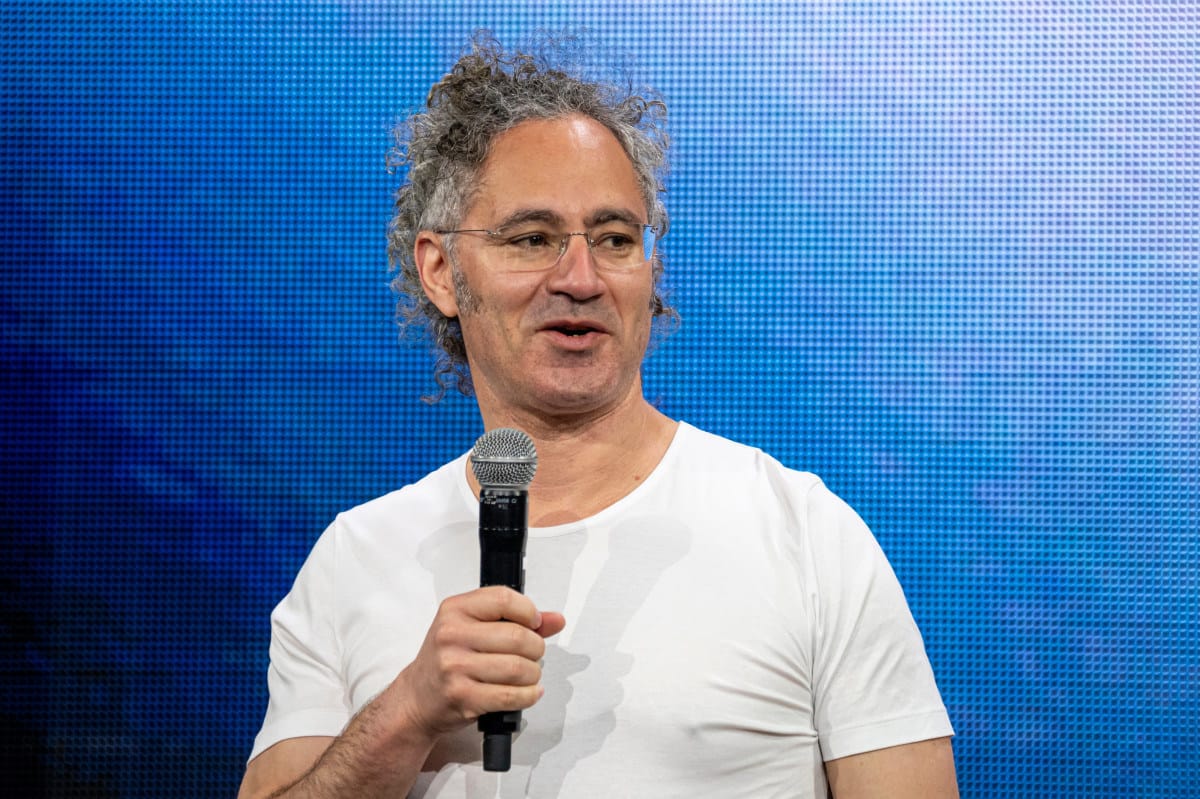
    Once dismissed as a niche Silicon Valley data-mining firm, Palantir Technologies PLTR +600.00% ▲ has undergone a dramatic metamorphosis, transforming into a central fixture in Washington’s national security and AI strategies. As its stock soared nearly 600% from early 2024 through mid‑2025, Palantir cemented its reputation as a co-equal to political insiders—and embraced the aggressive posture of the Trump era it now serves.

    Once dismissed as a niche Silicon Valley data-mining firm, Palantir Technologies has undergone a dramatic metamorphosis, transforming into a central fixture in Washington’s national security and AI strategies. As its stock soared nearly 600% from early 2024 through mid‑2025, Palantir cemented its reputation as a co-equal to political insiders—and embraced the aggressive posture of the Trump era it now serves.

    In early 2023, CEO Alex Karp stunned the company by announcing that Palantir was developing a next-generation Artificial Intelligence Platform (AIP)—even though no such project existed. As The Wall Street Journal recounts, Karp viewed the shift toward AI as inevitable and confidently placed Palantir at the center of it. His engineers then raced to build the product. What emerged became a centerpiece of national defense contracts and commercial integrations.

    In Q2 2025, AIP’s adoption helped Palantir smash through its first $1 billion quarterly revenue—a 33% rise in profits and skyrocketing U.S. commercial business by 93% year-over-year.

    Palantir’s proximity to power was turbocharged in President Trump’s second term, as the firm took over major federal contracts. It consolidated dozens of disparate deals into a $10 billion Department of Defense agreement, serviced by Palantir’s mission-grade Gotham and AIP platforms Axios reported.

    This alignment transformed Palantir from tech oddball to national strategic partner. Its new posture earned comparisons to Trump himself—tough, unfiltered, unapologetically patriotic.

    Palantir’s share price multiplied more than six-fold since early 2024, drawing enormous investor attention. Analyst Stephen Guilfoyle of WallStreetPit flagged the firm’s explosive growth: over 52% U.S. business growth in Q4, a 36% revenue increase, $1.25 billion in adjusted free cash flow, and profitability—even boasting 7 cents adjusted EPS. He raised his price target to a lofty $153/share, reflecting continued bullish sentiment.

    The stock’s rise has outpaced major indices. In early 2025, Palantir was among the top performers in the S&P 500 and Nasdaq‑100, ending over $400 billion in market cap—surpassing giants like Salesforce and Adobe.

    With the stock surging, CEO Karp executed an aggressive share selloff: 38 million shares worth roughly $1.88 billion in 2024 alone, much of it near the presidential election. He’s signaled plans to sell nearly 10 million more in 2025, indicating a continued cash-out strategy leveraging Palantir’s rally.

    Despite such windfalls, critics highlight Palantir’s outsized valuation—trading at more than 200x future earnings and 80x projected revenue, per FT’s John Foley. While revenue is strong, skeptics warn the stock behaves like a meme—powered more by hype than fundamentals.

    Palantir’s success rests on an ideological playbook: blend AI prowess with government proximity. The company has built a “revolving door” of personnel exchanges between Washington and its executive ranks—including figures drawn from the Pentagon, CIA, DHS, and even the UK’s NHS. That insider network helped lock in contracts exceeding $1.3 billion with U.S. defense agencies and expanded lobbying to $5.8 million in 2024.

    The firm’s approach is flexible: smartly toe political lines, anticipate shifts in power, and monetize defense policymaking. Palantir’s global positioning reflects that model—growing its Washington footprint even as its commercial footprint expands.

    The company’s victories aren’t immune to challenges. In February 2025, Palantir shares plunged nearly 20% after news broke that the Pentagon might cut defense spending by 8% annually for five years, threatening Palantir’s pipeline.

    Moreover, critics raise alarms about ethics and bias—its close ties to ICE and surveillance applications invite scrutiny over privacy, fairness, and oversight.

    Still, Palantir’s AI platform is winning new contracts beyond defense—it now serves clients like the FAA, CDC, IRS, and even corporate giants, and stands as a singular example of AI-centric growth in a sluggish tech sector.

    Palantir’s journey from controversial data firm to the poster child of AI‑powered government contracting has redefined what it means to succeed in tech—the old Silicon Valley playbook of consumer apps and venture capital liquidity has been traded for political entanglement and defense scoring.

    Its 600% stock run was fueled not just by AI hype, but by a deliberate embrace of political alignment and contract design. The question now is whether that trajectory can last—once the federal tide turns, or budgets tighten, Palantir’s value may be tested.

  • Oracle launches a program aimed at assisting companies in selling technology to the Pentagon

    Oracle launches a program aimed at assisting companies in selling technology to the Pentagon

    Oracle is unveiling a program that it says will help vendors more easily sell technology, including artificial intelligence, to the Department of Defense.

    The program, called the Oracle Defense Ecosystem, is structured to help smaller companies break through the challenges they typically face in selling tech to the Defense Department, said Rand Waldron, Oracle’s vice president of sovereign cloud. 

    “It is far too hard to serve the American defense enterprise,” Waldron said. “We can provide an easy path for these companies to better get access to the defense market.” 

    Oracle said vendors participating in its program will have access to Oracle’s office spaces and be able to tap its expertise on navigating the Pentagon’s procurement processes. Participants also will receive a discount to data-mining company Palantir Technologies’ cloud and AI platform, as well as Oracle’s NetSuite business software. 

    Selling to the Defense Department has long been tricky for smaller businesses that lack the structural advantages major defense contractors have. That hurts not only smaller tech companies but also the Pentagon, which faces challenges in accessing and integrating cutting-edge technologies, Waldron said.

    “We are going to deter and win the next conflict based on how good our technology is,” he said.

    To start, the program will count under a dozen companies as members, including AI firms Blackshark.ai and SensusQ, analytics company Metron, and quantum-security firm Arqit. Member companies won’t pay for access to the program because the tech giant is providing the financial backing, Oracle said.

    The Austin-based company’s latest move comes when it is ramping up its visibility inside the White House. In January, co-founder Larry Ellison joined President Trump in a White House ceremony announcing Stargate, a set of data centers that Oracle alongside global tech investor SoftBank Group is building for generative AI provider OpenAI. The company was also a corporate sponsor of the 250th Army Birthday Parade and Festival on the National Mall.

    Alongside Palantir and defense-technology company Anduril Industries, Oracle has emerged among a wave of tech firms that have aimed to grow their federal defense business. Other tech giants, including Meta Platforms and OpenAI, have recently volunteered their executives to join a new Army innovation corps that will advise on AI and commercial tech acquisition.

    In 2022, the company was part of a collection of cloud providers, including Amazon.com, Google and Microsoft, that were awarded a major cloud services contract with the Pentagon.

    Despite the uncertainty in government contracting wrought by the Department of Government Efficiency, the organization most closely associated with Elon Musk and cutting government spending, Waldron said he expects Oracle’s Defense Ecosystem to fare well under DOGE’s efficiency mandate.

    Eliminating large, status quo contracts, which DOGE has said it would target, opens up more federal dollars for technology innovation from the likes of Oracle’s Defense Ecosystem members, Waldron said. The company is also in direct communication with DOGE, he added.

    A key, underlying goal of Oracle’s Defense Ecosystem is to entrench the company’s cloud-computing platform into the Defense Department, and encourage smaller tech startups to build on its cloud platform.

    “In many cases, these companies are or will become customers of Oracle,” Waldron said. “They will make a sale to the government, and then they will run the system that they have sold to the government on the Oracle Cloud.”

    Now over a decade into its cloud-computing shift, Oracle is still fighting for market share against its rivals, including Amazon Web Services and Microsoft Azure, which dominate the cloud market. But there are signs that with the growth of AI, Oracle is gaining some ground.

    The tech company last week reported that quarterly revenue grew 11% to $15.9 billion, exceeding analyst expectations. Oracle is forecasting that its total cloud growth rate will rise 40% this year, compared with 24% in the year prior.