Category: Featured Business

  • OpenAI has filed a lawsuit against Elon Musk, saying he’s not acting in good faith.

    OpenAI has filed a lawsuit against Elon Musk, saying he’s not acting in good faith.

    OpenAI is suing Elon Musk over claims he has tried “nonstop” to slow down its business for his own benefit.

    The company accuses the Tesla boss of using “bad-faith tactics” against OpenAI to help him control cutting-edge AI technology.

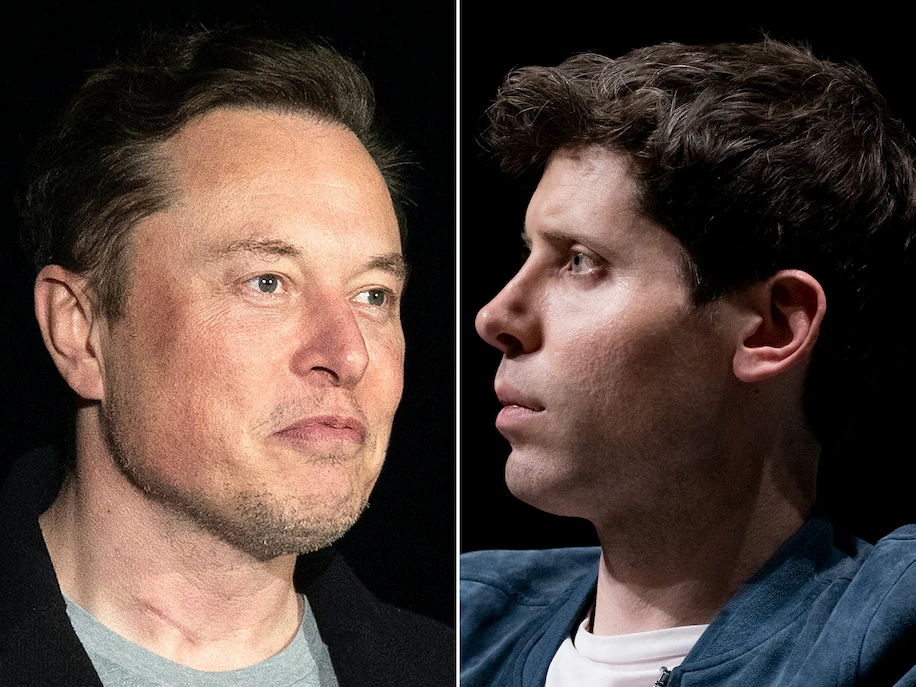
    Mr Musk sued OpenAI chief executive Sam Altman last year in a bid to stop him from changing its corporate structure. He co-founded OpenAI with Mr Altman but left several years ago. 

    The countersuit opens up a new front in the high-stakes – and long-running – battle between two Silicon Valley heavyweights, who both say they are acting in the best interests of OpenAI and the public.

    “Elon’s nonstop actions against us are just bad-faith tactics to slow down OpenAI and seize control of the leading AI innovations for his personal benefit,” OpenAI said in a statement on Wednesday. “Today, we countersued to stop him.”

    Last week, a federal judge in Oakland, California, set a March 2026 trial date in Mr Musk’s suit in a bid to fast-track the legal fight.

    US District Judge Yvonne Gonzalez Rogers previously declined to grant Mr Musk an injunction that would temporarily halt OpenAI’s conversion from a non-profit to a for-profit company.

    She also said that she expected Mr Musk to give evidence in the case.

    Mr Musk alleges that OpenAI strayed from its founding mission as a non-profit to develop AI for the benefit of humanity and is therefore in breach of contract.

    He left the company in 2018.

    “This is about control. This is about revenue. It’s basically about one person saying, ‘I want control of that start-up’,” said Ari Lightman, professor of digital media and marketing at Carnegie Mellon University.

    Lightman said it has been a distraction from making AI safe and equitable.

    “That takes a backseat with all this rigmarole over control and monetization,” Lightman said.

    OpenAI claims Mr Musk has “been spreading false information about us,” in a X post on Wednesday, adding “Elon’s never been about the mission. He’s always been about his own agenda.”

    Musk’s xAI is a competitor to OpenAI, but has so far lagged behind. Last month, xAI acquired Musk’s social media platform X – formerly Twitter.

    Mr Musk claims the combined company, XAI Holdings, is valued at more than $100 billion.

    In February, Mr Musk made an unsolicited bid for OpenAI, offering to buy it for $97.4 billion, which Mr Altman rejected by posting: “no thank you but we will buy twitter for $9.74 billion if you want.”

    In a statement to the BBC, Mr Musk’s lawyer Marc Toberoff said: “Had OpenAI’s Board genuinely considered the bid, as they were obligated to do, they would have seen just how serious it was.”

    “It’s apparent they prefer to negotiate with themselves on both sides of the table than engage in a bona fide transaction in the best interests of the charity and the public,” Mr Toberoff added.

  • ‘Keep your head’ if you’re spooked by tariffs: Warren Buffett once suggested reading a 19th century poem when stocks fall

    ‘Keep your head’ if you’re spooked by tariffs: Warren Buffett once suggested reading a 19th century poem when stocks fall

    Stock prices fell sharply on Thursday after President Donald Trump the day before announced sweeping tariffs of 10% on all U.S. trading partners and higher levies on countries with which the U.S. has a trade deficit.

    With Thursday’s decline, the S&P 500 — a proxy for the broad U.S. stock market — has now slid more than 11% from its record high in February, putting the index in correction territory, defined as a drop of 10% or more from recent highs.

    Investors and economists alike fear that Trump’s tariff policies could ignite a trade war with the nation’s trading partners and push inflation higher, two factors that could push the U.S. toward an economic slowdown. Should a recession become imminent, markets could sell off — and quickly. 

    Over the years, Berkshire Hathaway chairman and investing legend Warren Buffett has recommended staying calm in times of volatility. 

    In his 2017 letter to shareholders, Buffett wrote: “There is simply no telling how far stocks can fall in a short period.” But should a major decline occur, he continued, “heed these lines” from Rudyard Kipling’s classic poem “If,” circa 1895.

    “If you can keep your head when all about you are losing theirs … If you can wait and not be tired by waiting … If you can think — and not make thoughts your aim … If you can trust yourself when all men doubt you … Yours is the Earth and everything that’s in it.”

    Why keeping your cool pays off

    It’s worth noting that Buffett was writing about major declines in the stock market, such as periods like the 2007 to 2009 bear market during which the S&P 500 lost more than 50% of its value.

    Those are quite a bit rarer than what’s happening now. In fact, corrections in the stock market are pretty standard fare. There have been 21 declines of 10% or more in the S&P 500 since 1980, with an average intra-year drawdown of 14%, according to Baird Private Wealth Management.

    Of course, investors often don’t know if things are going to go from bad to worse until they do.

    “No one can tell you when these will happen,” Buffett wrote in 2017. “The light can at any time go from green to red without pausing at yellow.”

    The light can at any time go from green to red without pausing at yellow.

    Warren Buffett

    But whether a decline is modest and short-lived or seemingly long and painful, the message to individual investors is the same: Stick to your long-term plans and continue investing.

    Buffett writes that he views downturns as “extraordinary opportunities.” Why? Because, historically, it’s never been all that long before the market resumes its upward trajectory.

    Since 1928, the average bear market — defined by a decline of 20% or more from recent highs — has lasted less than 10 months, according to data from Hartford Funds. In the scope of the several decades you likely plan on investing, that’s practically no time at all.

    And even if living through it can be scary, keep your eyes on the prize: your long-term goals. By continuing to consistently invest as the market declines, you effectively buy stocks when they’re selling at a discount. As long as you take a well-diversified approach to investing, you’ll get a better and better deal the further stock prices fall.

    As Kipling says, keep your head, ignore breathless headlines and keep doing your thing. Will the Earth and everything in it be yours? Maybe not — but you’ll likely do a good job of boosting your long-term wealth.

    The whole attitude recalls another quote of Buffett’s, about taking advantage of bargain-priced investments, this time from his 2009 shareholder letter: “Big opportunities come infrequently. When it’s raining gold, reach for a bucket, not a thimble.”