Category: Europe

  • U.S. Military Observes Russia-Belarus Drills as Trump Nears Minsk

    U.S. Military Observes Russia-Belarus Drills as Trump Nears Minsk

    4TDTSPYYB5MRRHPNVO3SPTB6SM
    A Belarusian Mi-35 attack helicopter flies during the joint Russia-Belarus “Zapad-2025” military drills near Borisov, Belarus September 15, 2025. © REUTERS/Ramil Sitdikov

    U.S. military officers observed joint war games between Russia and Belarus on Monday for the first time since Moscow used Belarus as a launchpad to enter Ukraine, as U.S. President Donald Trump deepens ties with Moscow’s closest ally.

    The presence of the U.S. officers, less than a week after neighbouring Poland shot down Russian drones that crossed into its airspace, is the latest sign that Washington is seeking to warm ties with Belarus.

    Last week, Trump’s representative John Coale visited Minsk and said Trump wanted to reopen the U.S. embassy there soon, normalise ties and revive trade.

    The U.S. military did not immediately respond to requests for comment.

    Western foreign policy analysts speculate that Trump may be trying to peel Belarus away from Russia, a strategy widely viewed as unlikely to succeed, or to exploit its close ties with Moscow to promote a deal to end the war in Ukraine.

    I5424OCMVVMT3DZZYT2UWO33XM
    U.S. Air Force Lt. Col. Bryan Shoupe observes the joint Russia-Belarus “Zapad-2025” military drills near Borisov, Belarus September 15, 2025. © REUTERS/Ramil Sitdikov

    At least two U.S. military officers – Air Force Lt. Col. Bryan Shoupe and another unidentified officer – were in Belarus to observe the “Zapad-2025” war games, which were also being watched by Russian Deputy Defence Minister Yunus-Bek Yevkurov.

    Fighter jets, attack drones and helicopters flew over a training ground hemmed in by trees as infantry practised firing automatic weapons, mortars and missile systems and riding into combat on motorcycles.

    The exercise, being held at training grounds in both countries, is a show of force that Russia and Belarus say is designed to test combat readiness.

    But it has unnerved some neighbouring countries after the drone incursion into Poland as Moscow’s war in Ukraine grinds towards its fourth year. Warsaw has temporarily closed its border with Belarus as a precaution.

    Long a staunch Russian ally, President Alexander Lukashenko allowed Moscow to use Belarus to send tens of thousands of troops into Ukraine in February 2022, and has since allowed Russia to station tactical nuclear weapons in Belarus.

    Trump, who has suggested that the drone incursion may have been the result of a mistake, last week lifted sanctions on Belarus’s national airline Belavia, allowing it to service and buy components for its fleet, which includes Boeing aircraft.

    QSWJ3VONEVIZHPVKN2HB7O2DVI
    Russian and Belarusian flags fly at a training ground during the joint Russia-Belarus “Zapad-2025” military drills near Borisov, Belarus September 15, 2025. © REUTERS/Ramil Sitdikov

    He did so after Lukashenko – who regularly talks to Russian President Vladimir Putin and was given a friendly hand-signed letter from Trump by Coale – agreed to free 52 prisoners, including journalists and political opponents.

    Belarusian Defence Minister Viktor Khrenikov personally greeted the two U.S. officers, who shook his hand and, speaking in Russian, thanked him for inviting them.

    “We will show whatever is of interest for you. Whatever you want. You can go there and see, talk to people,” the minister told the Americans, who declined to speak to reporters afterwards.

    Their attendance was presented by the Belarusian defence ministry as a surprise.

    “Who would have thought how the morning of another day of the Zapad-2025 exercise would begin?” it said in a statement, noting their presence among representatives from 23 countries including fellow NATO member states Turkey and Hungary as well as China, Ethiopia and Indonesia.

    The last time the Zapad (“West”) drills were held, in 2021, a U.S. military official based in Ukraine travelled to Belarus to watch them.
  • Up to 7,000 Afghans are being relocated to the U.K. through a secret program following a Ministry of Defense data breach

    Up to 7,000 Afghans are being relocated to the U.K. through a secret program following a Ministry of Defense data breach

    In a dramatic revelation that underscores both a massive failure of data security and an extraordinary effort at damage control, the UK government has confirmed that up to 7,000 Afghan nationals are being secretly relocated to the United Kingdom following a catastrophic data breach at the Ministry of Defence (MoD). The breach, which exposed the personal details of nearly 20,000 individuals, occurred in early 2022 but was only acknowledged this week—more than three years after the incident.

    The details came to light after a British high court judge lifted a super injunction that had, until now, prevented media coverage of the blunder. The injunction had been sought by the UK government in a bid to suppress details of what is being described as one of the most severe security lapses in modern British military history.

    The Breach and Its Fallout

    The data breach, traced back to the mishandling of an email in February 2022, exposed sensitive information—names, contact details, and other identifying data—of 18,714 Afghans who had applied for relocation under the UK’s Afghan Relocations and Assistance Policy (ARAP). These individuals had supported or worked with British forces during the UK’s two-decade-long presence in Afghanistan from 2001 until the Taliban’s return to power in 2021.

    skynews kabul airport evacuation 5490860
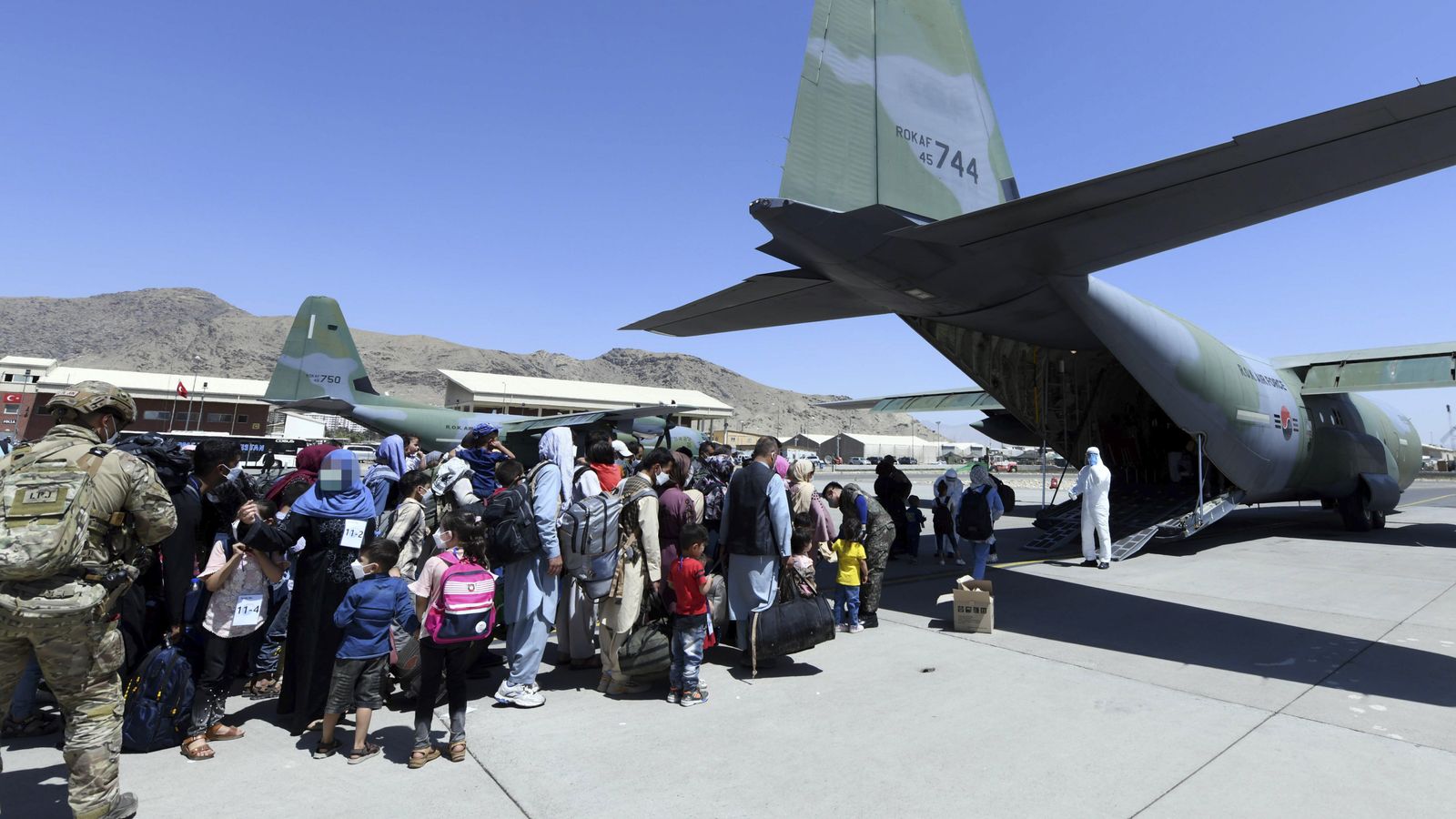
    Afghan co-workers and their families board a plane during the Kabul airlift in August 2021. (South Korean Defense Ministry/ZUMA Press Wire/Shutterstock)

    At least some individuals named on the compromised list are believed to have been killed in the years since the breach, although it remains unclear whether their deaths were directly linked to the exposure of their identities. The Taliban regime is known to target individuals associated with foreign forces, branding them traitors.

    The MoD only discovered the breach in August 2023, under then-Prime Minister Rishi Sunak. A super injunction was imposed in September 2023, silencing public and media discussion of the crisis while the government scrambled to relocate thousands of affected individuals—at enormous expense and under complete secrecy.

    skynews kabul airport evacuation 5490852
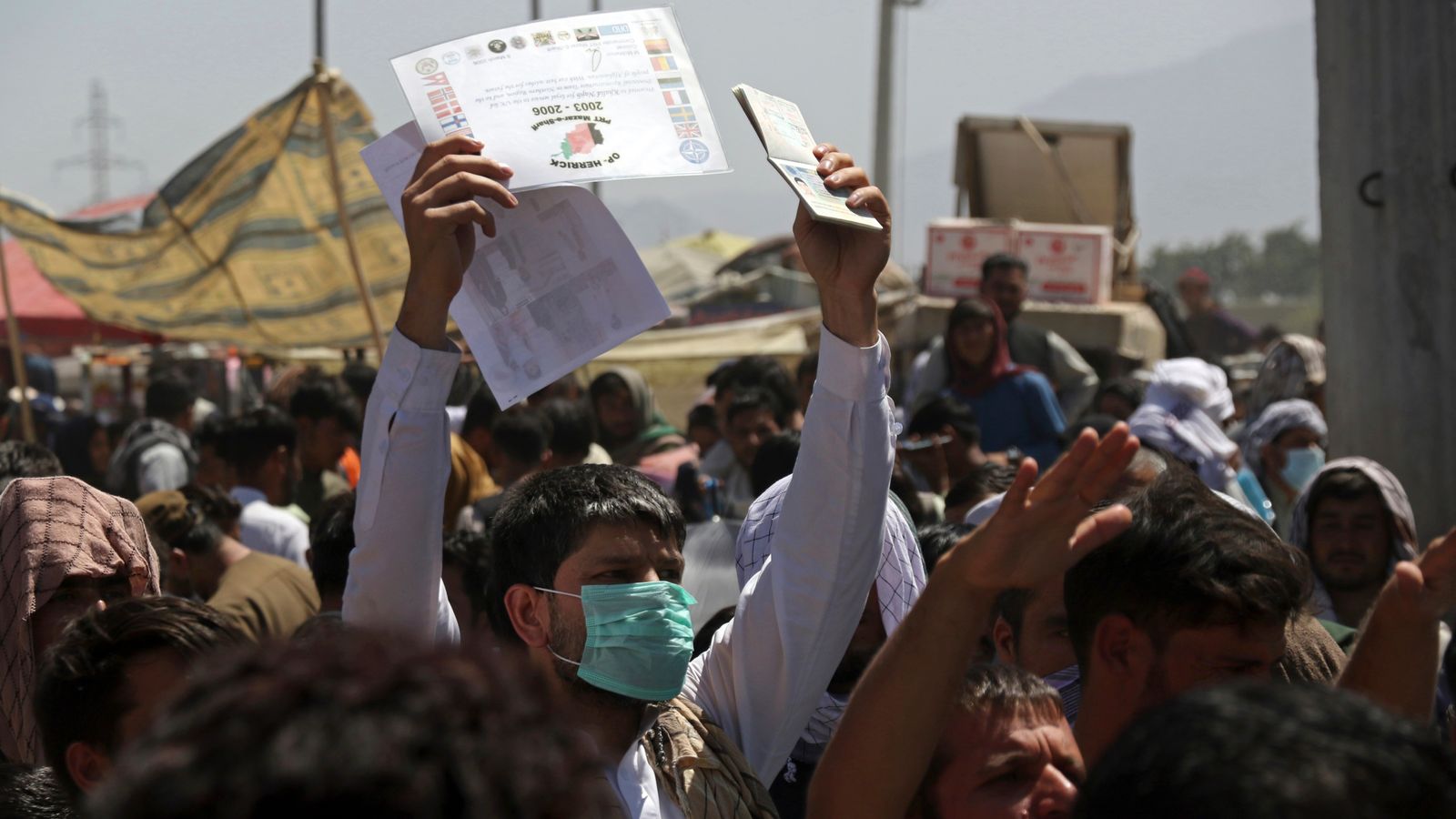
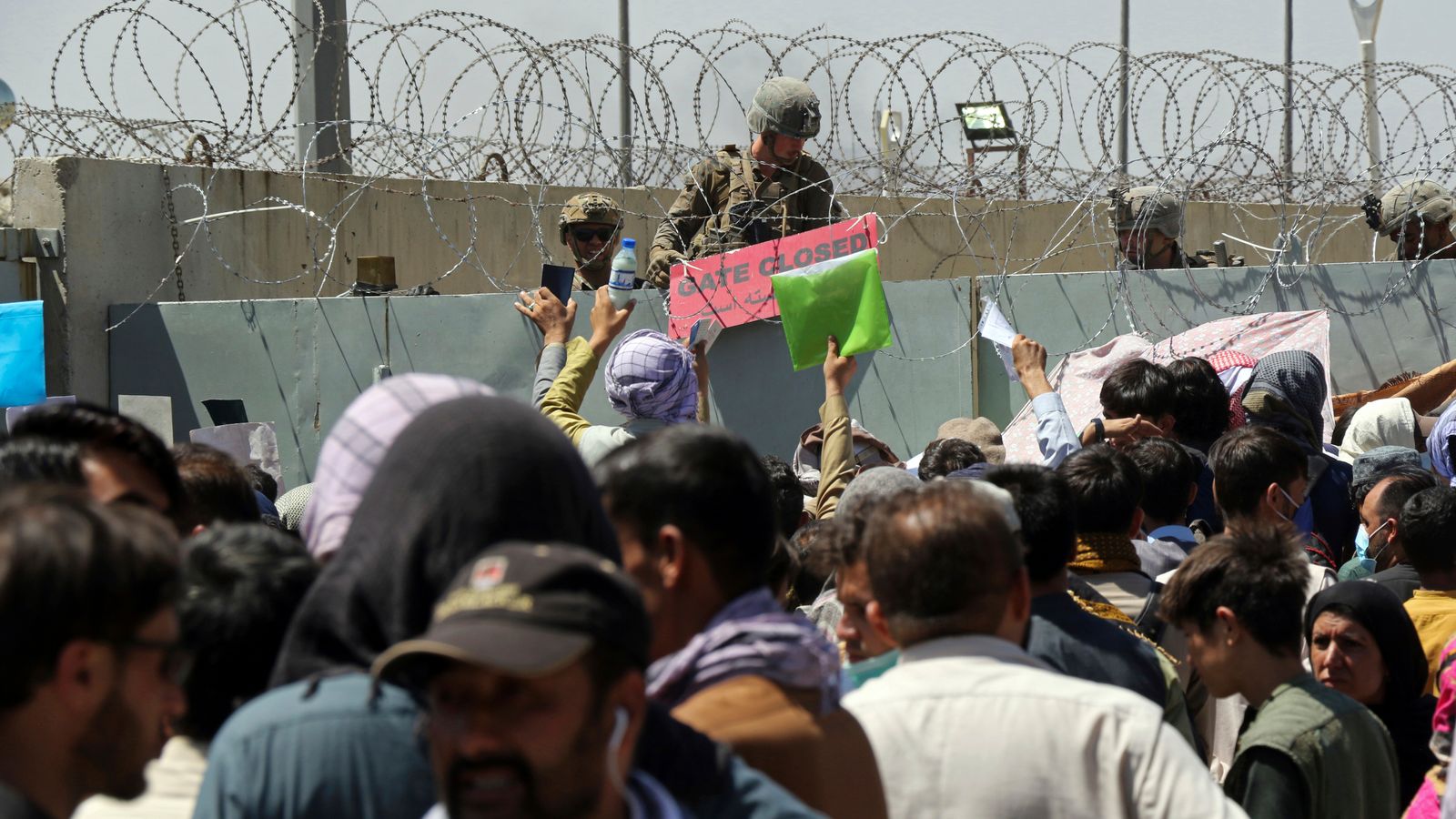
    People gathered desperately near evacuation control checkpoints during the crisis. (AP)

    Legal, Financial, and Political Fallout

    In a statement to Parliament on Tuesday, Defence Secretary John Healey offered a “sincere apology” for the breach and acknowledged concerns over the lack of transparency. He emphasized the difficulty of navigating national security and humanitarian obligations, stating:

    “No government wishes to withhold information from the British public or Parliament in this manner. But the safety of innocent people was at stake.”

    According to government figures, the initial cost of relocating the nearly 7,000 Afghans will be around £850 million. However, an internal MoD document from February suggested the total cost could climb to £7 billion once long-term support, housing, integration, and litigation costs are factored in. The MoD now dismisses that projection as outdated, but legal experts say the true cost may ultimately surpass current expectations—especially if victims succeed in pursuing compensation claims.

    skynews kabul airport evacuation 5490850
    The evacuation at Kabul airport was chaotic. (AP)

    Barings Law, a legal firm representing around 1,000 of the affected individuals, has accused the government of “deliberately concealing the truth.” Adnan Malik, head of data protection at the firm, called the incident “an incredibly serious data breach.”

    “It involved the loss of personal and identifying information about Afghan nationals who have helped British forces defeat terrorism. Our clients live in fear of reprisal and expect substantial financial compensation,” Malik stated.

    The firm is preparing legal action to seek damages for its clients, and said that financial settlements—while insufficient to undo the trauma—could help survivors rebuild their lives.

    Government Review and Public Transparency

    An internal review by Paul Rimmer, a retired civil servant, concluded earlier this year that the risk to individuals may be “minimal,” stating that the exposure was unlikely to substantially change any person’s threat level given the existing volume of leaked data in Afghanistan. It added that merely appearing on the breached dataset would not likely be grounds for Taliban targeting.

    That assessment played a key role in the court’s decision to lift the super injunction earlier this week.

    Still, critics argue that the government’s prolonged secrecy undermined public trust. Labour leader Sir Keir Starmer, whose government inherited the scandal after the 2024 general election, pledged full transparency going forward and said his administration would “do right by those put at risk.”

    The scandal adds to a string of recent criticisms aimed at the MoD’s handling of sensitive data. In September 2021, another breach revealed the email addresses and identities of 265 Afghans to each other in a mass email sent to a distribution list, prompting the UK’s Information Commissioner to fine the MoD £350,000 in December 2023, calling the lapse “egregious” and “potentially life-threatening.”

    Market and Economic Implications

    From a public finance and market standpoint, the unfolding situation presents significant fiscal challenges for the UK government. While the initial £850 million for the emergency relocation will be covered through defence and foreign aid budgets, economists warn that:

    • Litigation costs and compensation settlements could push spending well into the billions, adding pressure to the UK’s already-stretched post-COVID public spending framework.
    • The need to house and support thousands of refugees will place further strain on the UK’s social and housing infrastructure, potentially stoking political tensions around immigration.
    • Private security and legal firms, meanwhile, may benefit from increased government contracting and legal settlements, marking an unintended boom for sectors linked to risk management and litigation.

    The situation may also impact the UK’s diplomatic credibility, particularly among NATO allies and within the broader scope of Western withdrawal from Afghanistan.

    Human Dimension

    While the numbers are staggering, the human cost remains at the center of the scandal. Many of the relocated Afghans—interpreters, aid workers, and former support staff—had risked their lives to assist British troops in their mission to combat terrorism. Now, many are arriving in the UK traumatized, displaced, and unsure of their future.

    One source involved in the relocation effort said:

    “They deserve better than being treated like a secret. These people stood by us. The least we can do is stand by them.”

    Related Market Note:
    Investors tracking UK public sector expenditures are closely watching developments tied to defence and humanitarian allocations. Legal and security contractors such as SercoG4S, and law firms in the public interest sector may see modest short-term growth opportunities due to litigation and relocation logistics tied to this crisis.

  • Britain’s economy is showing encouraging signs, but it’s not entirely in the clear yet

    Britain’s economy is showing encouraging signs, but it’s not entirely in the clear yet

    It’s been rare for a string of positive economic news to emerge out of the U.K. in 2025 — but this week in particular has given Britain three reasons to be optimistic.

    Data on Friday signaled unexpected positive momentum in the country’s economy, with retail sales rising by a much better-than-expected 1.2% in April, and GfK’s consumer confidence index showing an improvement in sentiment.

    Sterling gained 0.6% against the U.S. dollar after the figures were published on Friday, to trade at around $1.35. 

    The combination of the two positive figures on Friday bucked expectations, and logic, for some economists. Economic activity in April was widely expected to show a downtrend, in part thanks to U.S. President Donald Trump’s global trade war. 

    “Well now, that challenges the idea of a cautious consumer,” said Rob Wood, chief U.K. economist at Pantheon Macroeconomics, adding that a number of factors, some not influenced by politicians or businesses, were at play.

    “That said, official sales growth looks too good to be true, likely as the seasonal adjustment fails to adequately control for the later Easter this year,” Wood added. “There’s no doubt the weather helped a lot, with both March and April registering the most sunshine since records began.”

    Taken in isolation, Friday’s retail figures and consumer confidence data perhaps point to growth in the current quarter. However, British electricity regulator Ofgem added to the positive sentiment by declaring on Friday that electricity prices are set to decline by 7% in July. That could potentially fuel spending in other sectors in the coming months.

    “This is certainly an improvement for household expenses, with monthly bills likely to fall on average by around £11,” said Ellie Henderson, economist at Investec.

    Meanwhile, the string of positive elements could potentially bump up U.K. economic growth for the second quarter as a whole, according to Allan Monks, chief U.K. economist at JPMorgan who is forecasting a 0.6% annualised gain.

    The U.K. has the fastest economic growth among G7 nations

    Screenshot 2025 05 23 at 8.38.21 PM

    “With the household savings rate so high, a continued improvement in confidence has the potential to unlock further consumer spending gains,” JP Morgan’s Monks said in a note to clients on Friday. “High inflation, softer wage growth and weak employment argue against a continuation of that trend. But the rise in confidence in May was matched by a notable drop in unemployment fears, lower inflation expectations and a rise in spending intentions.”

    The outlook for the U.K. has seesawed over the past year. The country has grappled with setbacks like unexpected economic contraction and mounting concern about fiscal spending plans, while also seeing some more positive data and the agreement of landmark trade deals with the U.S., India and the EU. 

    Earlier this week, official figures showed the economy grew by 0.7% in the first quarter of 2025 — although that came as domestic inflation surged to 3.5% in April. Last week, another data print showed average earnings in the U.K. had grown by 5.9% on an annual basis.

    The mix of data meant economists appeared divided on Friday about what the latest bout of data meant for the U.K.’s long term economic picture. 

    Alex Kerr, U.K. economist at Capital Economics, warned that “the sun won’t shine on [Britain’s] retail sector forever.”

    “Although for the first time since 2015, excluding the pandemic, retail sales volumes have risen for four months in a row, April’s impressive 1.2% m/m rise was largely driven by the unusually warm weather,” he said in a note sent shortly after the figures were published.

    “That boost won’t last. So even though consumer confidence ticked up slightly in May, we suspect retail sales growth will slow over the coming months.”

    ‘Depressed’ Brits resorting to retail therapy

    While most economists viewed the small increase in consumer confidence in May as a positive signal for next quarter’s economic growth, others suggested that as overall sentiment remains below pre-pandemic levels, the link between spending and sentiment may be broken instead.

    “Depressed British consumers have resorted to retail therapy to cope with their economic and financial woes,” said Andrew Wishart, senior UK economist at Berenberg.

    Instead, Wishart said a combination of the pandemic, and the ensuing inflation and interest rate hikes led consumers to shore up their finances.

    “Households have increased their saving rate (the share of household income not spent) to a level previously unseen outside of periods of mass unemployment,” Wishart added.

    Having stabilized their bank balances and secured pay rises, consumers are now spending in anticipation of a more stable interest rate and price environment, according to the economist. 

    Counter intuitively, the additional spending means the Bank of England was more likely to hold rates for the rest of the year, than cut, he added.

    Janet Mui, head of market analysis at wealth manager RBC Brewin Dolphin, said in an email on Friday morning that with wage growth now outpacing inflation, U.K. households are spending more generously. However, she cautioned that the state of Britain’s public finances “remain a constraint.”

    “With higher borrowing costs, more tax rises and departmental spending cuts may happen,” she explained. “This poses some medium-term growth risks for the U.K amid ongoing uncertainty with how the global trade situation will settle.”

  • Britain’s most popular corporate event isn’t what you’d expect

    Britain’s most popular corporate event isn’t what you’d expect

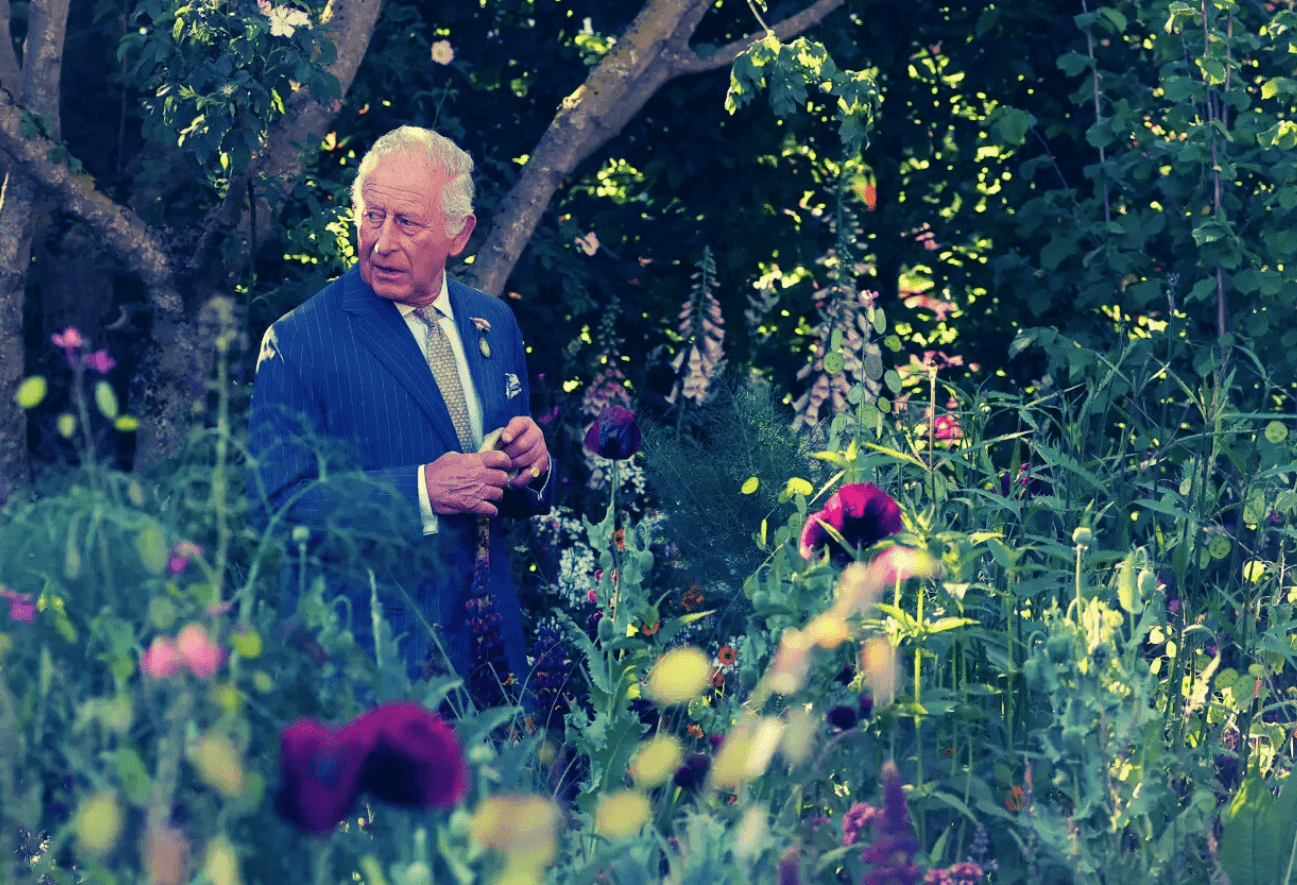
    This week saw one of the most important — and perhaps surprising — events in corporate Britain’s annual calendar: the gala night of the Royal Horticultural Society (RHS) Chelsea Flower Show.

    This traditionally marks the beginning of what, in English high society, is referred to as “the season.”

    Coined as such by Debrett’s, the publisher and authority on society and etiquette, the summer social whirl was framed around the British royal family, which traditionally remained in London from April to July and from October until Christmas.

    This meant that Britain’s ruling classes and key movers and shakers did the same — participating in balls, parties and court presentations.

    These have largely now faded away, but what remains is a series of sporting and cultural events where the great and good continue to get together. Highlights include opera at the Glyndebourne Festival; flat racing at the Epsom Derby, Royal Ascot and Glorious Goodwood meetings; rowing at the Henley Royal Regatta; yachting at Cowes and, of course, tennis at Wimbledon.

    All these events see gatherings of corporate chieftains, their bankers, lawyers and other advisors, but none brings together quite as many key figures, in a short space of time, as the Chelsea gala night: two hours of champagne (this year’s bubbles were supplied by Pommery), canapes and networking over displays carefully cultivated by hundreds of professional gardeners and landscape architects.

    Tickets for the gala, which runs from 7 p.m. to 9 p.m. (the King, who is patron of the RHS, visits earlier in the afternoon), cost £620 ($827) while those for the gala dinner which follows on site go for £885.

    Seeds are sown

    Many of the City’s top bankers can be spotted there: recent attendees have included Anthony Gutman, co-chief executive officer of Goldman Sachs International; Russell Chambers, the former head of investment banking at Credit Suisse and Charlie Nunn, chief executive of Lloyds Banking Group. Leading business figures also regularly attend, including the likes of John Browne, the former chief executive of BP; Martin Sorrell, the advertising kingpin and Nigel Wilson, the former chief executive of Legal & General.

    Top politicians and policymakers can also be spotted at the event: George Osborne was a regular attendee when he was chancellor of the exchequer, while last year both Jeremy Hunt, then the chancellor, and Rachel Reeves, then his shadow, were guests of one of the U.K.’s major lenders.

    While the cultivation of plants is central to Chelsea, the cultivation of client relationships is also paramount. Headline sponsors of the event have included Merrill Lynch Investment Managers (now part of BlackRock) and asset manager M&G Investments.

    The seeds sown, too, are not necessarily of the horticultural kind.

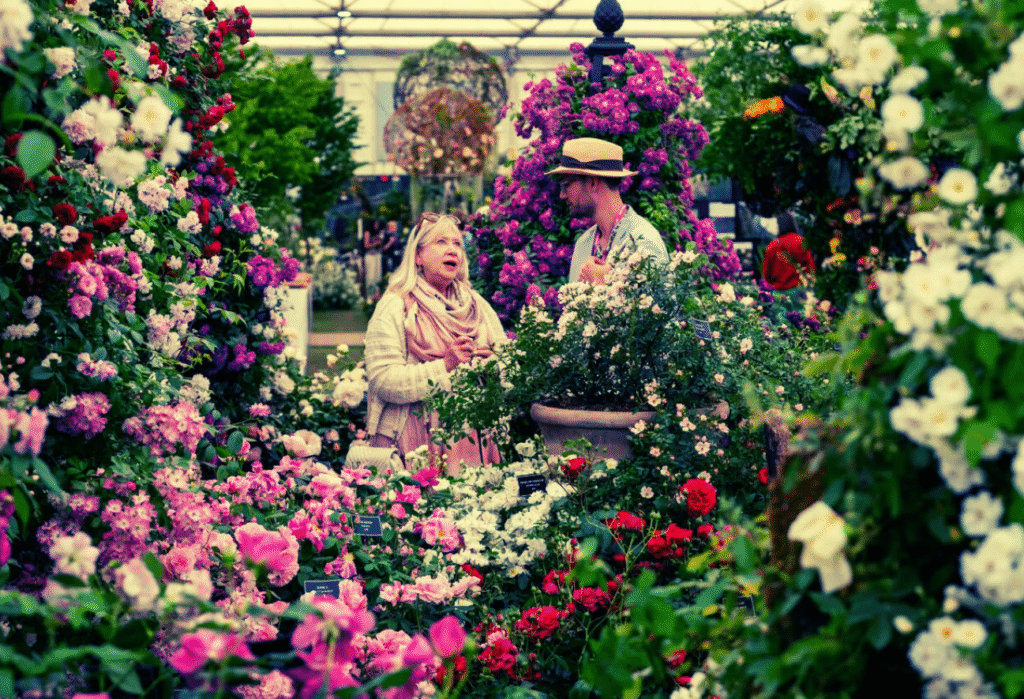
    The RHS Chelsea Flower Show on May 19, 2025 in London, England.Ben Montgomery | Getty Images News | Getty Images
    The RHS Chelsea Flower Show on May 19, 2025 in London, England. (Ben Montgomery/Getty Images News/Getty Images)

    For example, the 2018 sale of data provider Refinitiv (since acquired by the London Stock Exchange Group) by Thomson Reuters to Blackstone is said to have had its origins in a meeting between David Craig, the Refinitiv chief executive, and Joseph Baratta, Blackstone’s head of private equity, at the 2013 gala night.

    Long-time attendees grumble that the event does not have quite the pull it used to. There are arguably fewer bankers present than there were 15 years ago which, according to some, reflects caps on the value of corporate hospitality some business people are now allowed to accept.

    There is also a school of thought that modern CEOs are more likely to be seen competing in triathlons and, when they do accept invitations, it is likely to be for a more egalitarian and less elitist event such as, say, a Premier League football match.

    This year’s gala suggested there may be some truth to that.

    From the C-suite, there were certainly more FTSE 100 chairs than CEOs in attendance, although several individuals who have in the last year stepped down from such roles were spotted among the blooms.

    Among the main talking points, a few common themes emerged. One was the uncertainty that continues to stalk businesses in the United States due to a combination of factors, chiefly President Donald Trump’s tariffs, which several attendees suggested may benefit the U.K. if it drives capital and business investment elsewhere.

    Another is the impact that continues to be felt by Chancellor Rachel Reeves’ decision to abolish the so-called “non-dom” rules which enabled U.K. residents who declared their permanent home as being overseas to avoid U.K. tax on their foreign income and gains. It is credited with having driven hundreds of wealthy individuals out of the U.K. and harmed entrepreneurship in the process.

    The third theme, though, was altogether more surprising. The mood music surrounding the U.K. economy during the last 12 months has been unremittingly bleak. Yet there were, on Monday evening, an unexpectedly high number of corporate chiefs who, when questioned how their business was faring, answered along the lines of: “I probably shouldn’t say this, given the backdrop, but we’re actually doing better than I expected so far this year.”

    The U.K. economy still faces headwinds, not least Reeves’s recent increase in employer’s national insurance contributions, which makes it more expensive to hire people. There is also a sense that the GDP figures for the first quarter of the year were flattered by stockpiling of goods and strong export figures ahead of Trump’s tariffs kicking in.

    However, leaving the show on Monday evening, there was a strong sense that these surprisingly strong figures may not have been a flash in the pan.