Category: U.S. – Israel

  • Iranian missile strikes hit Israeli towns, causing panic and widespread damage

    Iranian missile strikes hit Israeli towns, causing panic and widespread damage

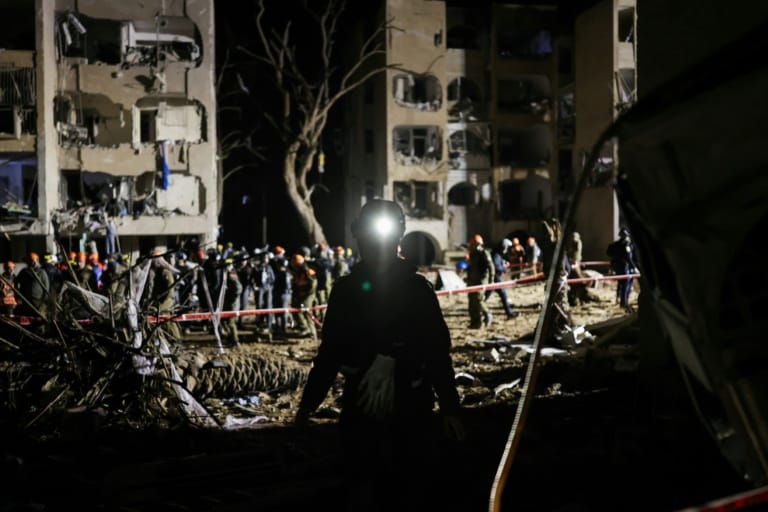
    Sheltering from an Iranian missile attack on his town in southern Israel on Saturday, 17-year-old Ido Franky heard “terrifying” blasts like nothing he had experienced before.

    An Iranian missile hit Franky’s town of Arad, hours after another struck Dimona — home to a nuclear facility — wounding dozens and leaving entire apartment blocks with heavy damage.

    Franky rushed to shelter with his family as air raid sirens sounded, warning of an incoming attack.

    “There was a ‘boom, boom!’, my mother was screaming,” he said near the impact site, where an Agence France-Presse correspondent saw three damaged buildings and firefighters reported a blaze.

    “This was terrifying… this town had never seen anything like this,” the teenager told Agence France-Presse.

    Israel’s Magen David Adom emergency medical service said 84 wounded people were taken to hospitals from the Arad scene, including 10 in serious condition.

    In the early hours of Sunday, dozens of people were still at the site, taking photos or calling friends and family to share details of the destruction, even as police warned residents on loudspeakers not to approach.

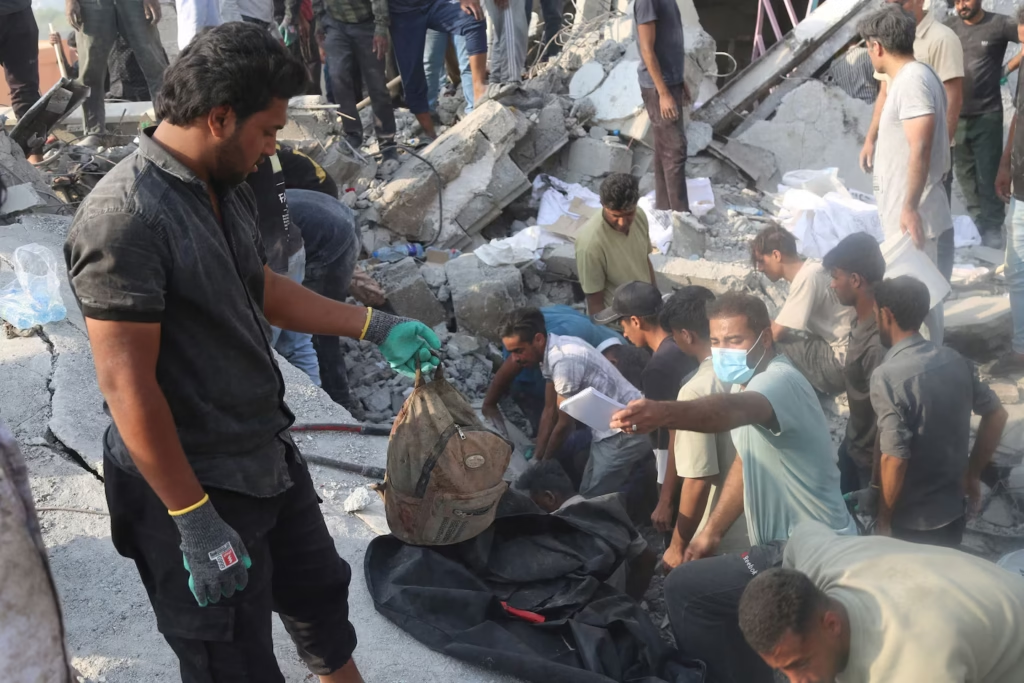
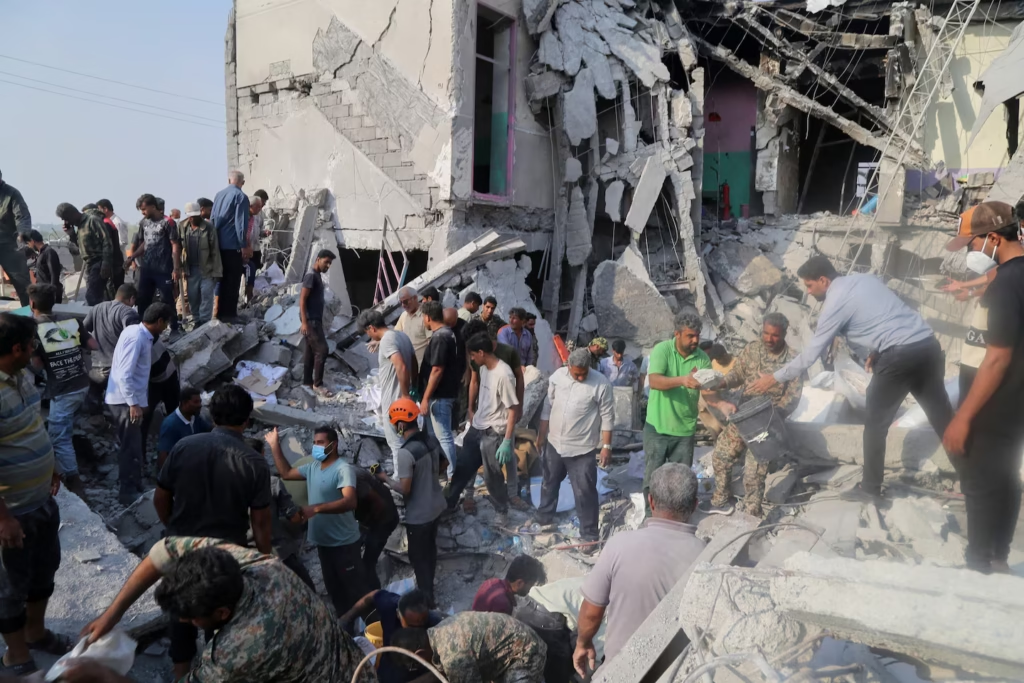
    Security forces patrolled the streets with flashlights while rescuers searched the rubble to ensure all casualties had been recovered.

    A crater around of around five metres (16 feet) was left amid the bombed-out buildings.

    Police spokesman Dean Elsdunne told AFP that “the operation will take a few hours” before authorities can clear the scene and ensure all residents are accounted for.

    An earlier missile attack hit the town of Dimona, about 25 kilometres (16 miles) southwest of Arad.

    Dimona hosts a facility widely believed to possess the Middle East’s sole nuclear arsenal, although Israel has never confirmed possessing nuclear weapons.

    Israel has maintained a policy of ambiguity about its nuclear programme, and the plant officially focuses on research.

    The missile fell about five kilometres away from the facility, leaving about 30 people wounded according to rescuers.

    Online videos showed the missile engulfed in a ball of fire, crashing into the ground.

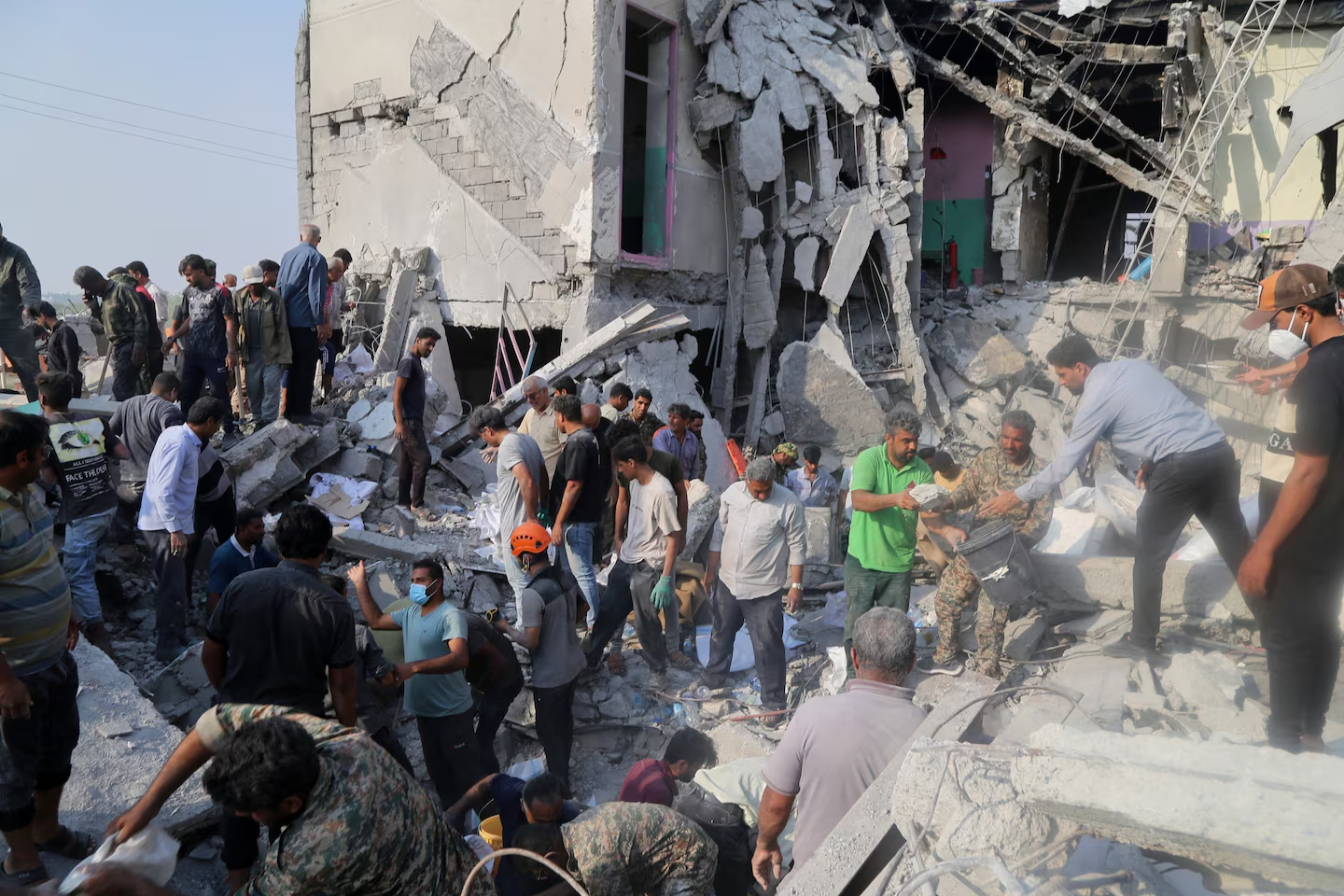
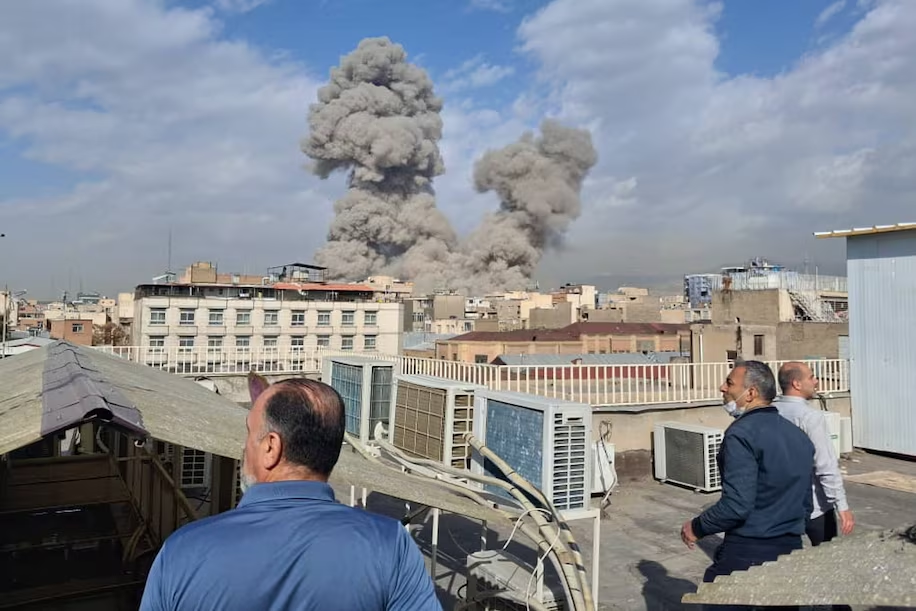
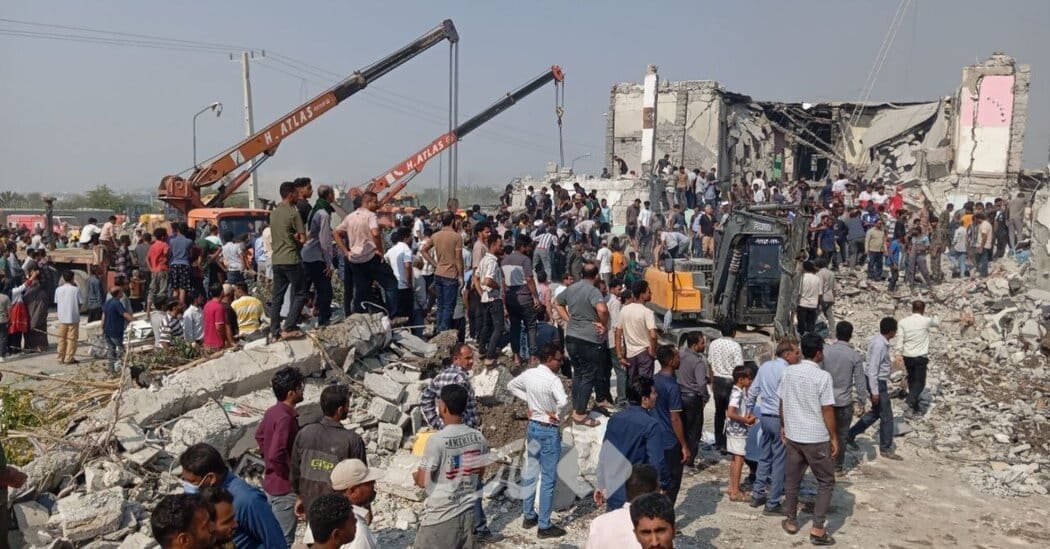
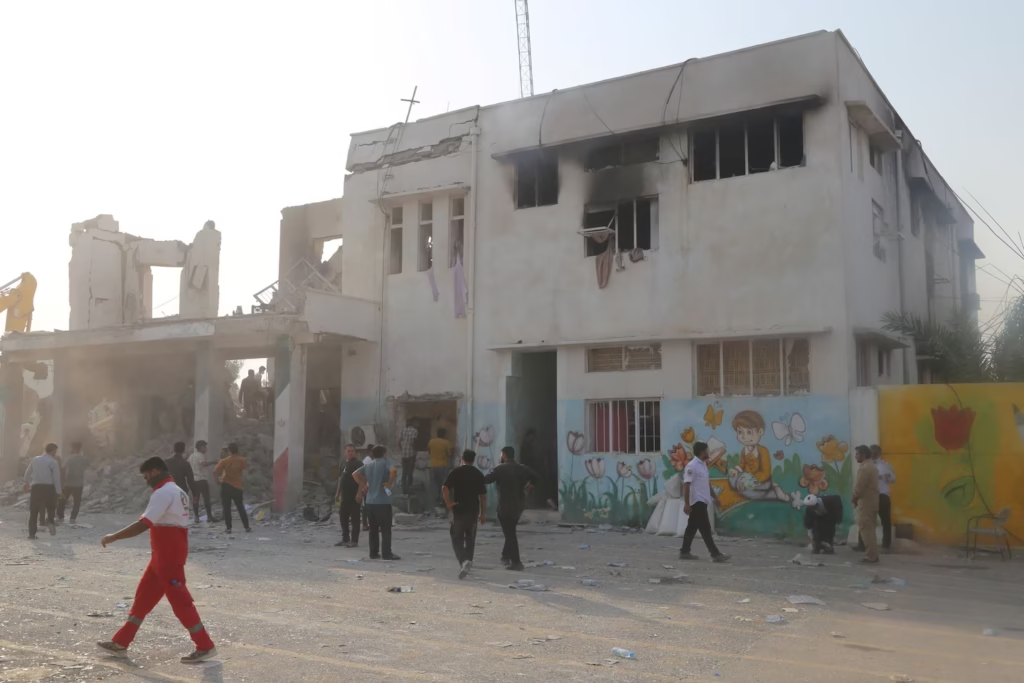
    AFP footage showed heavy damage to an apartment building, next to a crater formed in the ground. Two structures have collapsed with debris including concrete blocks littering the area.

    Israeli Prime Minister Benjamin Netanyahu said it was “a very difficult evening in the battle for our future”.

    “We are determined to continue striking our enemies on all fronts,” Netanyahu told Arad’s mayor, according to a statement from the prime minister’s office.

    The strike on Dimona -- home to a nuclear facility -- wounded dozens and left entire apartment blocks with heavy damage. (Jorge NOVOMINSKY)
    The strike on Dimona — home to a nuclear facility — wounded dozens and left entire apartment blocks with heavy damage. (Jorge NOVOMINSKY)

    Military spokesman Brigadier General Effie Defrin wrote on X that “air defence systems operated but did not intercept the missile, we will investigate the incident.”

    Israeli media have shared footage from Arad and Dimona, capturing scenes that have replayed across the country in attacks since the war began on February 28 with US-Israeli air raids on Iran.

    In security camera footage aired by Israeli networks, people could be seen being thrown to the ground by the force of the blast as glass windows shatter.

    Iranian missile attacks since the start of the war have killed 15 people in Israel as well as four Palestinian women in the occupied West Bank.

    While not the deadliest, Saturday’s hits on Dimona and Arad were among the Iranian attacks to have inflicted the greatest damage in Israel.

    The launches came even as the United States and Israel keep pounding targets across Iran and say they have degraded the Islamic republic’s capabilities.
  • Iran threatens to target Middle East energy and water infrastructure amid U.S. escalation warning

    Iran threatens to target Middle East energy and water infrastructure amid U.S. escalation warning

    Tehran has said it will “irreversibly destroy” essential infrastructure across the Middle East, including vital water systems, if the US follows through on Donald Trump’s threat to “obliterate” Iran’s power plants unless the strait of Hormuz is fully opened within two days.

    As Iranian missiles struck two southern Israeli cities overnight, injuring dozens of people, and Tehran deployed long-range missiles for the first time, the developments signalled a dangerous potential escalation of the war, now in its fourth week, with both sides threatening facilities relied on by millions of people.

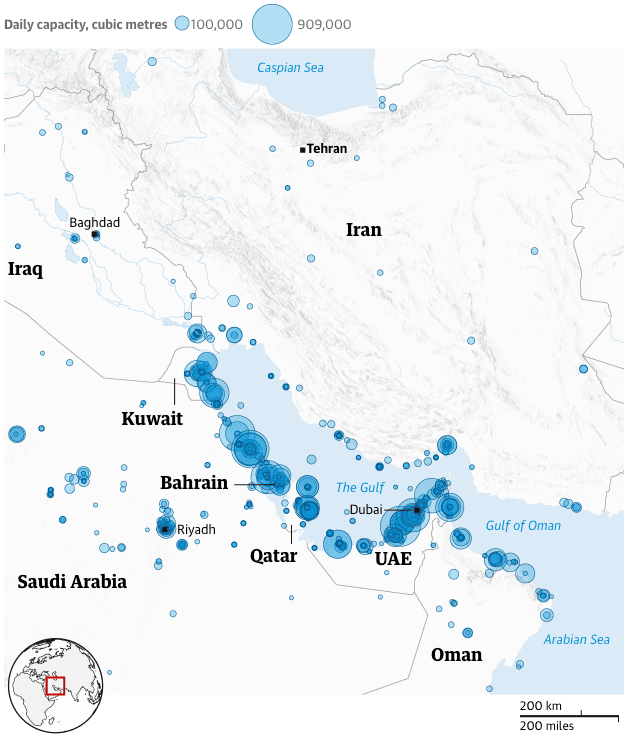
    The speaker of the Iranian parliament, Mohammad Bagher Ghalibaf, said on Sunday that vital infrastructure in the region – including energy and desalination facilities – would be considered a legitimate target and would be “irreversibly destroyed” if his country’s own infrastructure was attacked.

    Amnesty International said this month there was a substantial risk that attacks on systems providing essential services such as electricity, heating and running water would violate international law and “in some cases could amount to war crimes” because of the potential for “vast, predictable, and devastating civilian harm”.

    The Iranian military’s operational command headquarters, Khatam al-Anbiya, said Iran would strike “all energy, information technology and desalination infrastructure” belonging to the US and Israel in the region.

    The statement also said that if Trump’s threat was carried out, the strait of Hormuz would be “completely closed, and will not be reopened until our destroyed power plants are rebuilt”.

    Iran’s president, Masoud Pezeshkian, said “threats and terror” were “only strengthening Iranian unity”, while the “illusion of erasing Iran from the map” showed “desperation against the will of a history-making nation”.

    Screenshot 2026 03 23 at 7.50.36 AM
    Guardian graphic. Source: Global Water Intelligence, desaldata.com

    The US president said on Saturday that he was giving Iran 48 hours – until shortly before midnight GMT on Monday – to open the strait of Hormuz, a vital pathway for the world’s oil flows, or the US would “hit and obliterate” Iranian power plants “starting with the biggest one first”.

    The US ambassador to the UN, Mike Waltz, defended Trump’s threat on Sunday, insisting that Iran’s Islamic Revolutionary Guard Corps (IRGC) controlled much of the country’s infrastructure and used it to power its war effort.

    He said Trump would start by destroying one of Iran’s largest power plants, but did not identify it. “There are gas-fired thermal power plants and other type of plants,” and “the president is not messing around”, he said.

    A No 10 spokesperson said Keir Starmer spoke to Trump on Sunday evening about the need to reopen the strait of Hormuz.

    Iran’s representative to the International Maritime Organisation, Ali Mousavi, said on Sunday that the strait was open to all shipping except vessels linked to “Iran’s enemies”, with passage possible by coordinating security arrangements with Tehran.

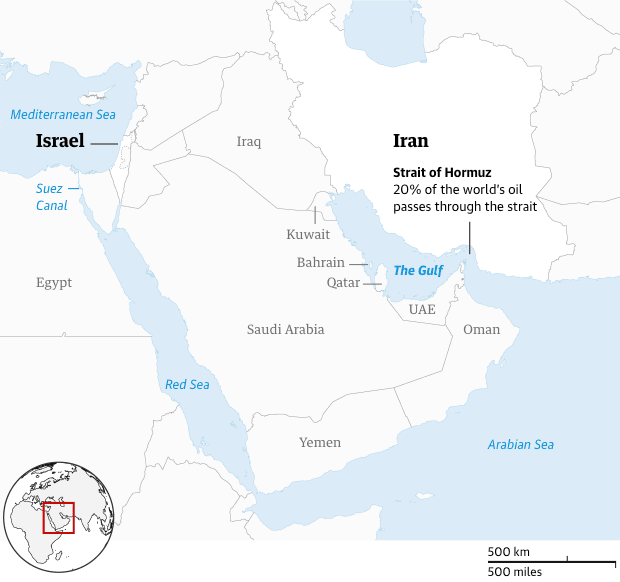
    Iranian attacks have in effect closed the narrow strait, which carries about a fifth of global oil and liquefied natural gas supplies, causing the world’s worst oil crisis since the 1970s and sending European gas prices surging by as much as 35% last week.

    Only a relatively small number of vessels, estimated at about 5% of the prewar volume, from countries that Tehran considers friendly – including China, India and Pakistan – have been allowed to pass.

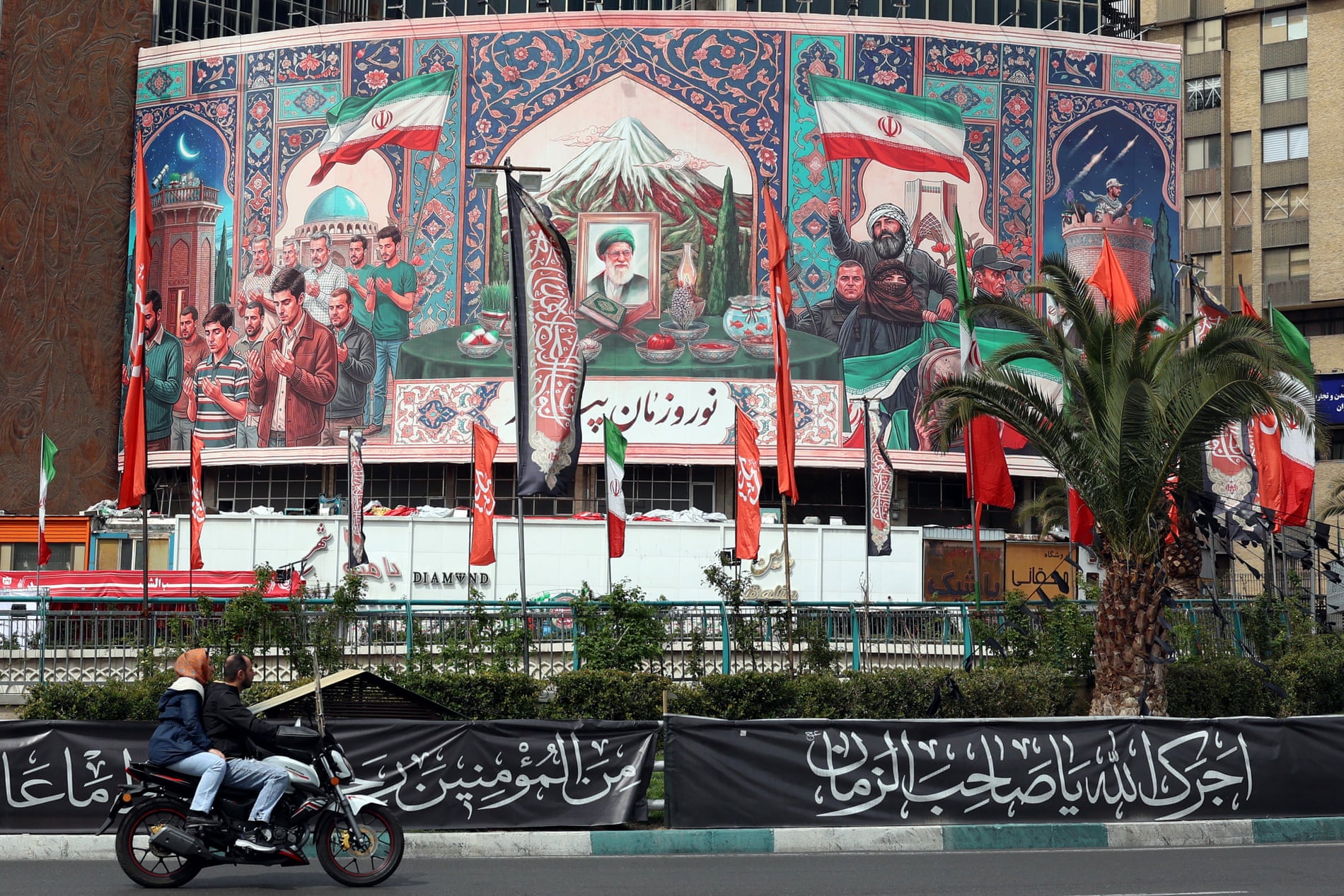
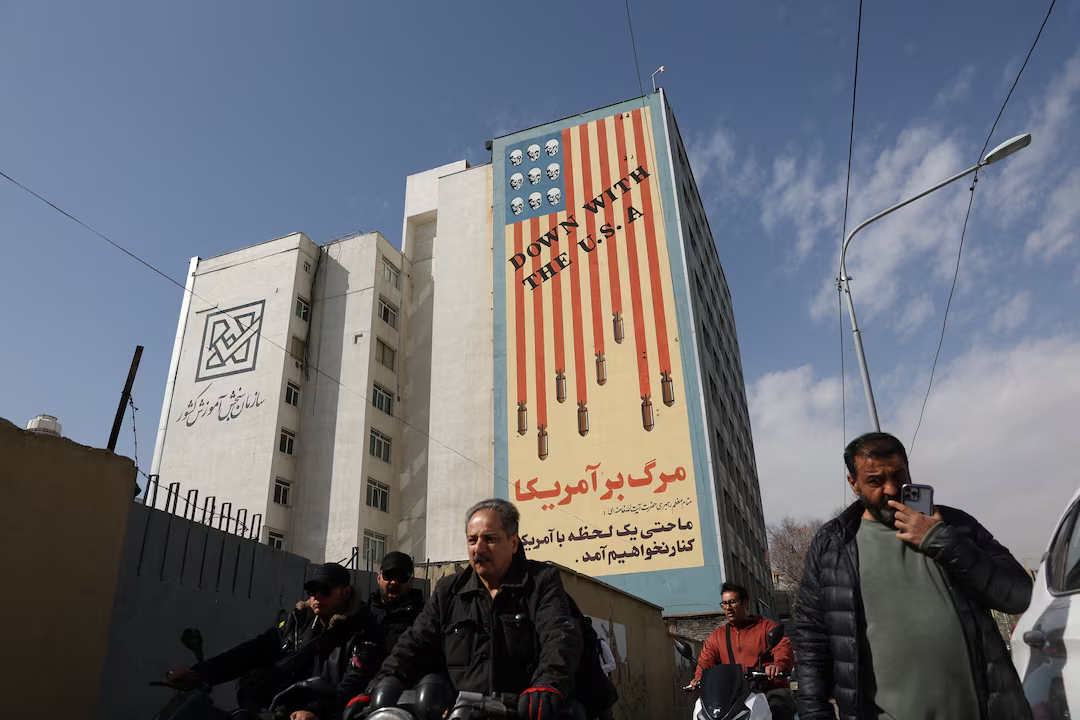
    A Tehran billboard featuring a portrait of the late supreme leader Ayatollah Ali Khamenei. (AFP/Getty Images)
    A Tehran billboard featuring a portrait of the late supreme leader Ayatollah Ali Khamenei. (AFP/Getty Images)

    More than 2,000 people have been killed in Iran since 28 February, when the US and Israel began their attacks, and Tehran in turn has struck targets in Israel and the Gulf states. Lebanon was drawn in after Iran-backed Hezbollah attacked Israel.

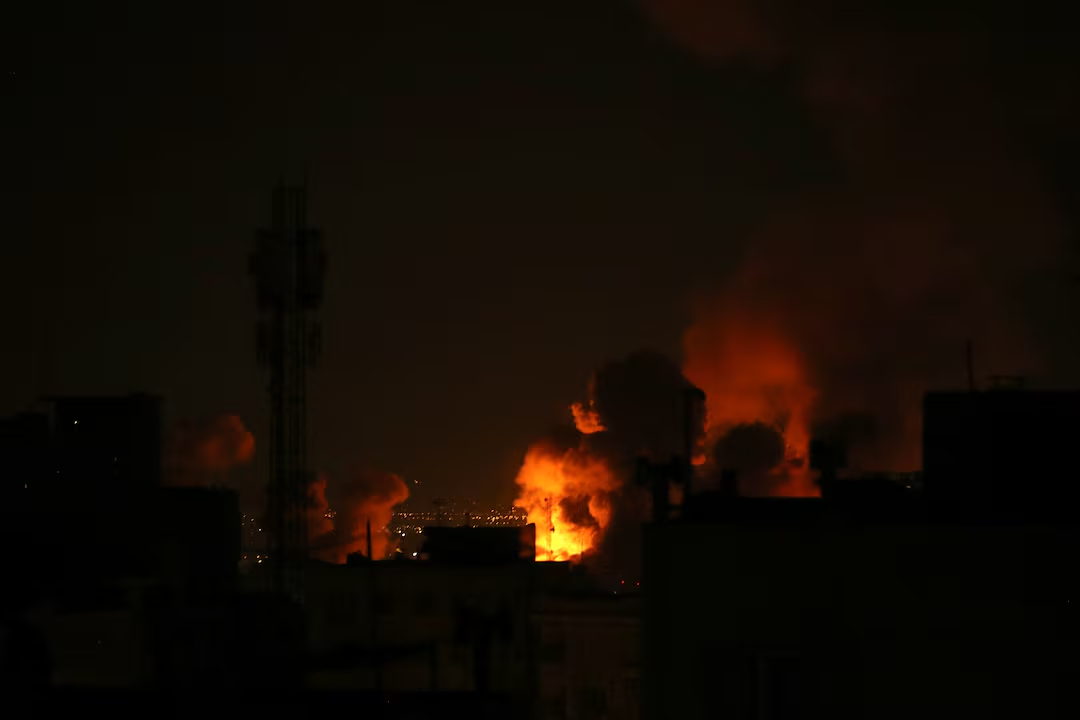
    Air raid sirens sounded across Israel from the early hours of Sunday morning, warning of incoming missiles from Iran after scores of people were injured overnight in two separate attacks on the southern towns of Arad and Dimona.

    The Israeli army said on Sunday morning that it would strike Tehran in retaliation. The country’s prime minister, Benjamin Netanyahu, said during a visit to Arad that senior IRGC commanders would be pursued.

    “We’re going after the regime. We’re going after the IRGC, this criminal gang,” he said. “We’re going after them personally, their leaders, their installations, their economic assets.”

    The Iranian health ministry spokesperson, Hossein Kermanpour, said patients had been evacuated from the Imam Ali hospital in the south-west city of Andimeshk on Sunday after an airstrike a day earlier.

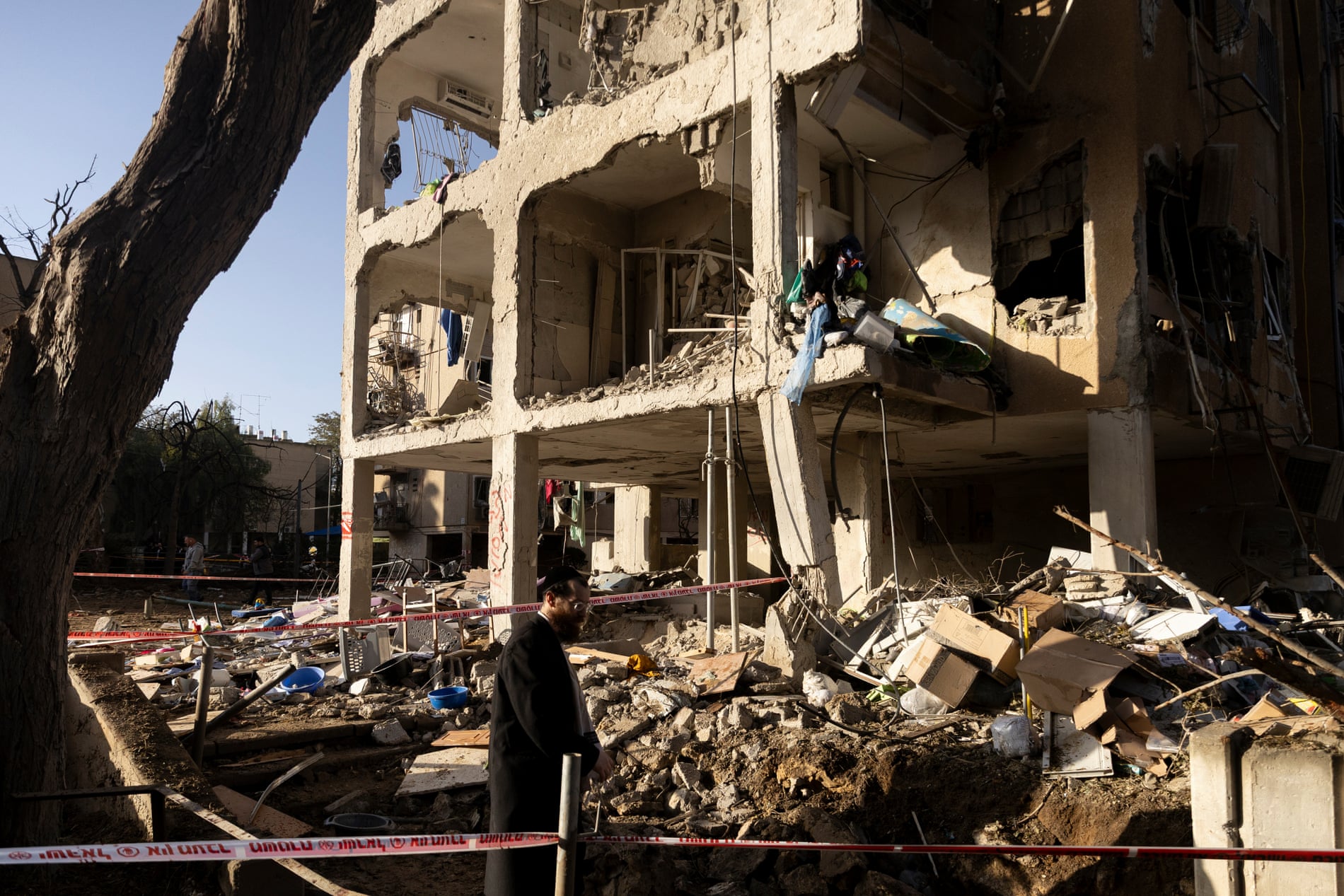
    Bomb damage in Arad, Israel. (Amir Levy/Getty Images)
    Bomb damage in Arad, Israel. (Amir Levy/Getty Images)

    Israel’s military said it had not been able to intercept the missiles that hit Dimona and Arad, the nearest large towns to the country’s nuclear centre in the Negev desert, which houses what is widely believed to be the Middle East’s only nuclear arsenal.

    Israel has never admitted to possessing nuclear weapons, insisting that the site is for research. The strikes marked the first time that Iranian missiles had penetrated Israel’s air defence systems in the area.


    The strikes wounded about 200 people, including a 12-year-old boy and a five-year-old girl, both reported to be in a serious condition. The Israeli broadcaster Channel 13 reported early indications of possible deaths but there was no official confirmation.

    Iran said the attacks had been launched in response to a strike on its main nuclear enrichment facility at Natanz on Saturday. Israel denied responsibility for the attack and the Pentagon declined to comment.

    In Tel Aviv, 15 more people were injured on Sunday morning in a separate incident involving a cluster bomb. The attacks are adding to mounting pressure on Israel’s air defence systems as Iranian strikes increasingly test their limits.

    The World Health Organization said that the war was at a “perilous stage” and called for restraint. “Attacks targeting nuclear sites create an escalating threat to public health and environmental safety,” the WHO director general, Tedros Adhanom Ghebreyesus, said.

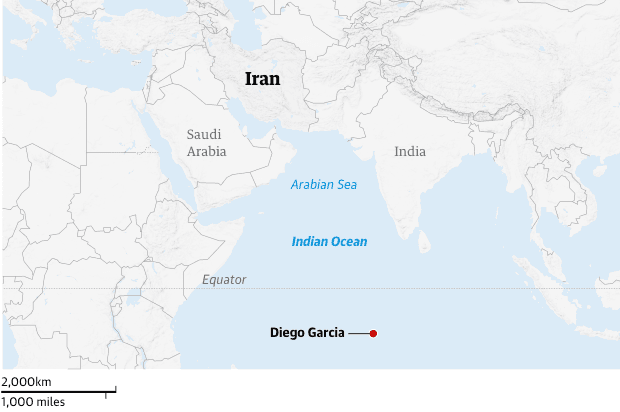
    Tehran also fired long-range missiles for the first time on Saturday, the Israeli military chief, Eyal Zamir, said. Two ballistic missiles with a range of 2,500 miles (4,000km) were fired at the US-British Indian Ocean military base at Diego Garcia, he said.

    Screenshot 2026 03 23 at 8.14.57 AM
    Guardian graphic

    The British cabinet minister Steve Reed said one missile had fallen short and the other had been intercepted. There was no assessment backing claims that Iran was planning to strike Europe, he said.

    The Israel Defense Forces had said Iran had missiles that could reach London, Paris or Berlin, but Reed said he was not aware of any assessment at all that Iran was even trying to target Europe, “let alone that they could if they tried”.

    He said in a separate interview that Trump had been “speaking for himself” when he threatened to obliterate Iran’s power plants.

    Analysts said Trump’s threat had placed “a 48-hour ticking timebomb of elevated uncertainty” over energy and financial markets, with a “black Monday” of plunging stock markets and surging energy prices looming unless it was rowed back.

    Screenshot 2026 03 23 at 8.16.45 AM
    Guardian graphic

    At least six overnight attacks targeted a US diplomatic and logistics centre at Baghdad airport, Iraqi officials said, while Saudi Arabia said three missiles had been detected over Riyadh. The UAE said it had responded to Iranian missile and drone attacks.

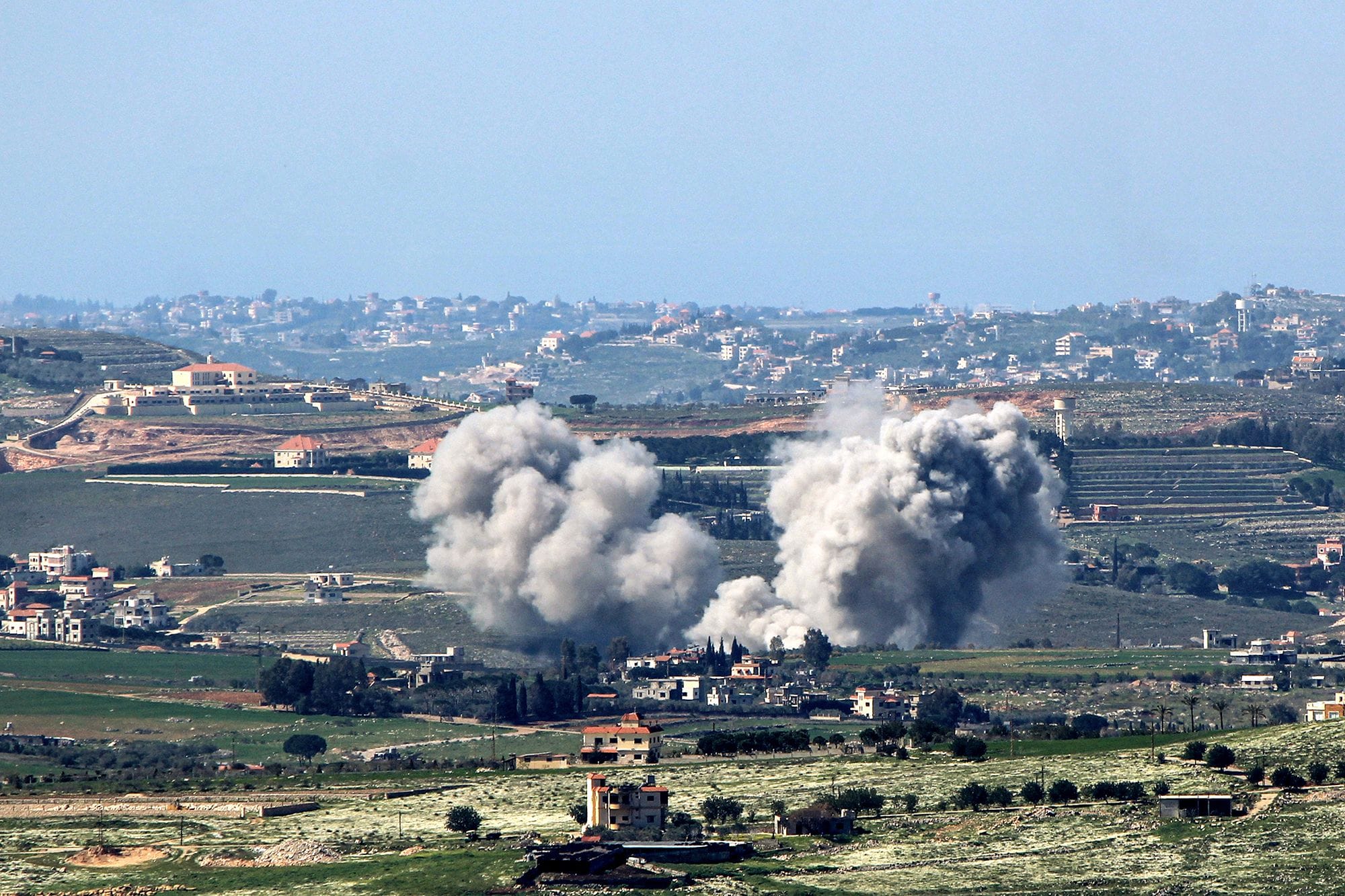
    In southern Lebanon, Israel said its military had raided Hezbollah sites on Sunday and killed 10 of the group’s fighters. It said it was expanding its ground campaign in Lebanon, warning of a lengthy operation. Hezbollah said it had attacked several border areas in northern Israel. One person was killed in an Israeli kibbutz, emergency services said.

    At least 10 Palestinians were injured on Sunday night in attacks in the occupied West Bank by Israeli settlers who rampaged through nearby villages after holding a funeral for a settler killed in a car crash a night earlier.

    Videos obtained by the Associated Press appeared to show cars and homes set ablaze as army flares lit up the sky near the village east of Nablus and next to the Israeli settlement of Elon Moreh.

    Three Turkish nationals, including a soldier, and three Qatari service personnel were killed when a helicopter crashed in Qatar’s territorial waters, the country’s defence ministry said on Sunday.

    According to an academic analysis seen by Reuters, an interceptor missile that injured dozens of civilians in Bahrain 10 days into the war was probably fired by a US-operated Patriot air defence battery.

    Manama and Washington have blamed an Iranian drone attack for the explosion on 9 March, which Bahrain has said injured 32 people including children, some of them seriously.

  • Trump Blames Iran for Deadly Strike on Girls’ School

    Trump Blames Iran for Deadly Strike on Girls’ School

    President Donald Trump openly accused Iran of carrying out the Feb. 28 airstrike that destroyed the Shajareh Tayyebeh elementary school in Minab and killed at least 175 civilians — the vast majority of them young girls aged 7 to 12 — even though U.S. military investigators have already concluded it is “likely” that American forces were responsible.

    The president’s remarks represent a sharp pivot from the White House’s earlier insistence that “the United States does not target civilians.” They came just hours after Trump attended the solemn dignified transfer ceremony at Dover Air Force Base for six U.S. servicemembers killed in an Iranian drone attack during the opening weekend of the war — a moment of national mourning that the president immediately used to deflect blame onto the very country his administration and Israel have been bombing for nine straight days.

    “In my opinion, based on what I’ve seen, that was done by Iran,” Trump told reporters. “They have no accuracy whatsoever. It was done by Iran.”

    Secretary of War Pete Hegseth, the former Fox News host turned Pentagon chief who has repeatedly pushed for aggressive escalation against Tehran, doubled down on the claim. “The only side that targets civilians is Iran,” Hegseth declared, while acknowledging that a U.S. investigation remains ongoing.

    The coordinated attempt to pin the atrocity on Tehran comes as multiple American outlets report the opposite. Reuters and The Wall Street Journal, citing unnamed U.S. officials with direct knowledge of the probe, revealed that military investigators believe U.S. forces almost certainly carried out the strike. The school sits in southern Iran — the exact zone where the U.S. Navy’s Abraham Lincoln strike group and American aircraft have focused their attacks since Feb. 28, while Israeli forces concentrated on northern targets.

    During a March 4 Pentagon briefing, Joint Chiefs Chairman Gen. Dan Caine used a laser pointer on a map to highlight U.S. operations along Iran’s southern coast and into the Arabian Gulf, explicitly noting the Abraham Lincoln’s role in “attriting naval capability” in that sector. An independent analysis by the International Institute for Strategic Studies confirmed the geographic division of labor: U.S. strikes in the south and center, Israeli strikes in the north.

    Iranian officials, including UN Ambassador Amir Saeid Iravani, have consistently blamed the United States and Israel for the bombing. The Iranian news agency IRNA reported that 175 people died, including dozens of girls between the ages of 7 and 12. Images of the mass funeral — small white coffins draped in Iranian flags passed hand-to-hand through grieving crowds — aired on state television and shocked viewers worldwide.

    Despite the mounting evidence, the White House has clung to denial. Deputy Press Secretary Anna Kelly responded to the Reuters reporting by calling it “irresponsible and false,” insisting “there are no conclusions at this time” and repeating the mantra that “unlike the terrorist Iranian regime, the United States does not target civilians.” The Pentagon has offered only the blandest of statements: “We are aware of reports concerning civilian harm… and are looking into them,” said Capt. Tim Hawkins of U.S. Central Command.

    Secretary of State Marco Rubio, when asked directly, referred all questions to the Pentagon and insisted the U.S. would never deliberately target a school. Hegseth himself, appearing before cameras on Wednesday, offered the same scripted line: “We, of course, never target civilian targets. But we’re taking a look.”

    The pattern is now familiar. From the moment the first bombs fell, the Trump administration and its Israeli partners have insisted this is a “precision” campaign against military targets only. Yet the first major civilian catastrophe of the war — a girls’ elementary school reduced to rubble on day one — has forced repeated rhetorical contortions. First came blanket denials. Then came the quiet internal assessment that U.S. munitions were probably responsible. Now comes the public blame-shifting onto Iran itself.

    The United Nations human rights office has demanded a full investigation, stating bluntly that “the onus is on the forces that carried out the attack.” Deliberately or recklessly striking a school is considered a potential war crime under international humanitarian law. If American responsibility is confirmed — as investigators already privately believe — it would rank among the deadliest single incidents of civilian casualties in decades of U.S. military operations in the Middle East.

    This satellite photo shows the area of a school and base of Iran's IRGC in Minab, Iran, on Wednesday. (PBC/AP)
    This satellite photo shows the area of a school and base of Iran’s IRGC in Minab, Iran, on Wednesday. (PBC/AP)

    The timing of Trump’s accusation is particularly cynical. He delivered it immediately after honoring American dead, as if the deaths of U.S. troops somehow justified rewriting the facts about Iranian children. Hegseth, who has spent months on cable news cheerleading for maximum force against Iran, now finds himself in the awkward position of simultaneously running the investigation and publicly exonerating the U.S. before it is complete.

    This is not the first time the administration has moved the goalposts. Trump began the war promising a quick, clean operation to “clean out” Iran’s leadership. When that failed, he demanded “unconditional surrender.” When civilian casualties mounted, the White House blamed Iran’s own inaccuracy. Now, facing credible evidence of a catastrophic U.S. mistake, the president and his war secretary are simply pointing the finger at the enemy — classic projection from an administration that has shown zero tolerance for accountability since day one.

    The Iranian regime is brutal and repressive; no serious observer disputes that. But the American people were told this war would be surgical, professional, and morally superior to the enemy. Instead, nine days in, we have a girls’ school in ruins, 175 small bodies in flag-draped coffins, and the president of the United States blaming the victims’ own government for a strike American investigators believe their own forces carried out.

    The investigation continues. But the White House’s public messaging has already rendered its verdict — and it is one that insults both the facts and the families mourning in Minab. As the bombs keep falling and the body count rises, the pattern is becoming impossible to ignore: when precision fails, this administration’s response is not reflection or restraint, but deflection and denial.

  • Trump Mourns with Families at Dover as 6 Soldiers Killed in Iran War Return Home

    Trump Mourns with Families at Dover as 6 Soldiers Killed in Iran War Return Home

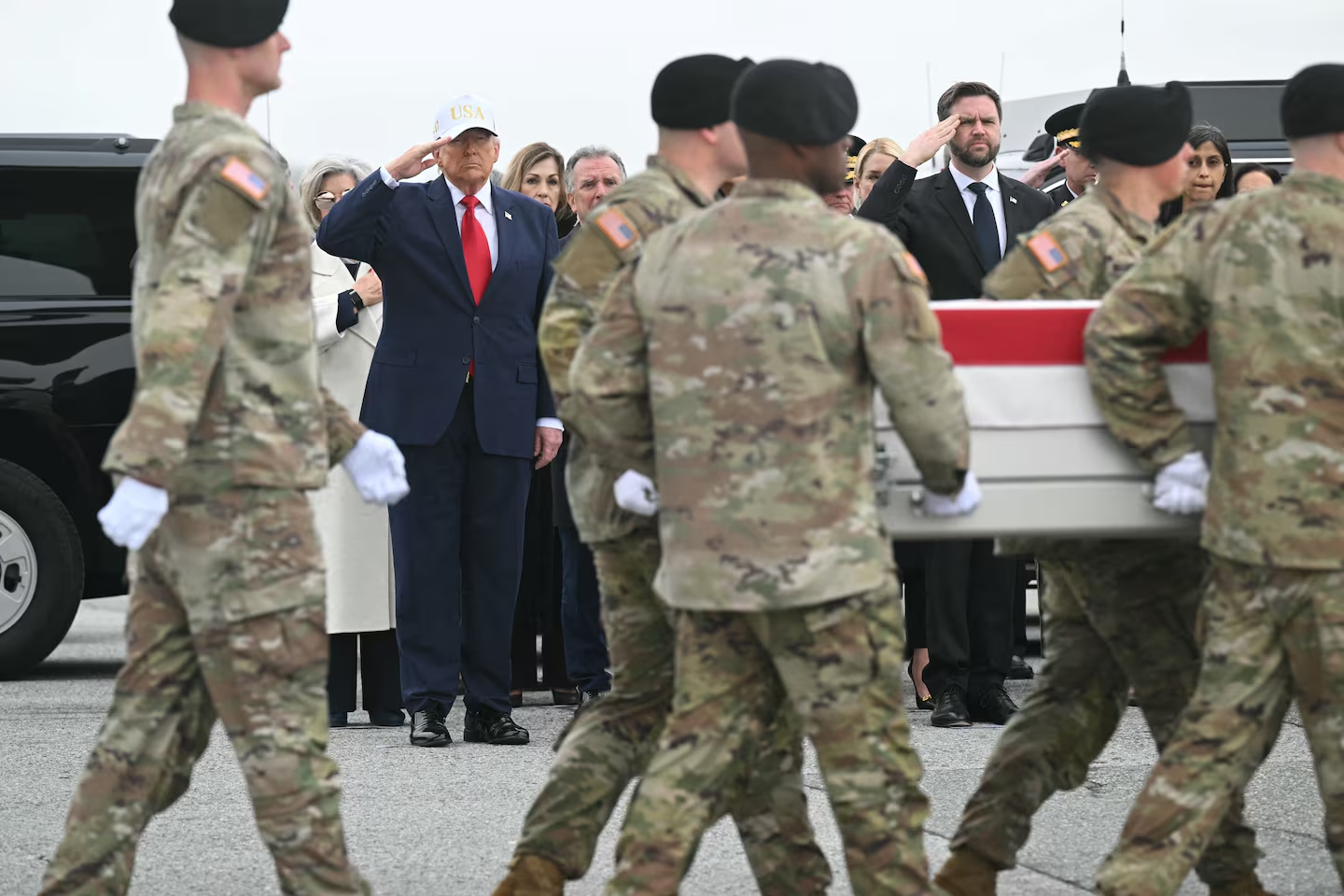
    President Donald Trump on Saturday joined grieving families at Dover Air Force Base at the dignified transfer for the six U.S. soldiers killed in the war in the Middle East.

    The dignified transfer, a ritual that returns the remains of U.S. service members killed in action, is considered one of the most somber duties of any commander in chief. During his first term, Trump said bearing witness to the transfer was “the toughest thing I have to do” as president.

    Trump, speaking at a summit of Latin American leaders in Miami before his trip to Delaware, said the fallen service members were heroes “coming home in a different manner than they thought they’d be coming home.” He said it was “a very sad situation” and he pledged to keep American war deaths “to a minimum.”

    Both Trump and Vice President JD Vance were present for the transfer, as were their spouses. A host of top administration officials were in attendance, including Defense Secretary Pete Hegseth, who wrote in a social media post Friday of “an unbreakable spirit to honor their memory and the resolve they embodied”; Attorney General Pam Bondi, White House chief of staff Susie Wiles, special envoy Steve Witkoff and Tulsi Gabbard, the director of national intelligence.

    Also present for the solemn event were governors and senators from Iowa, Minnesota, Nebraska and Florida.

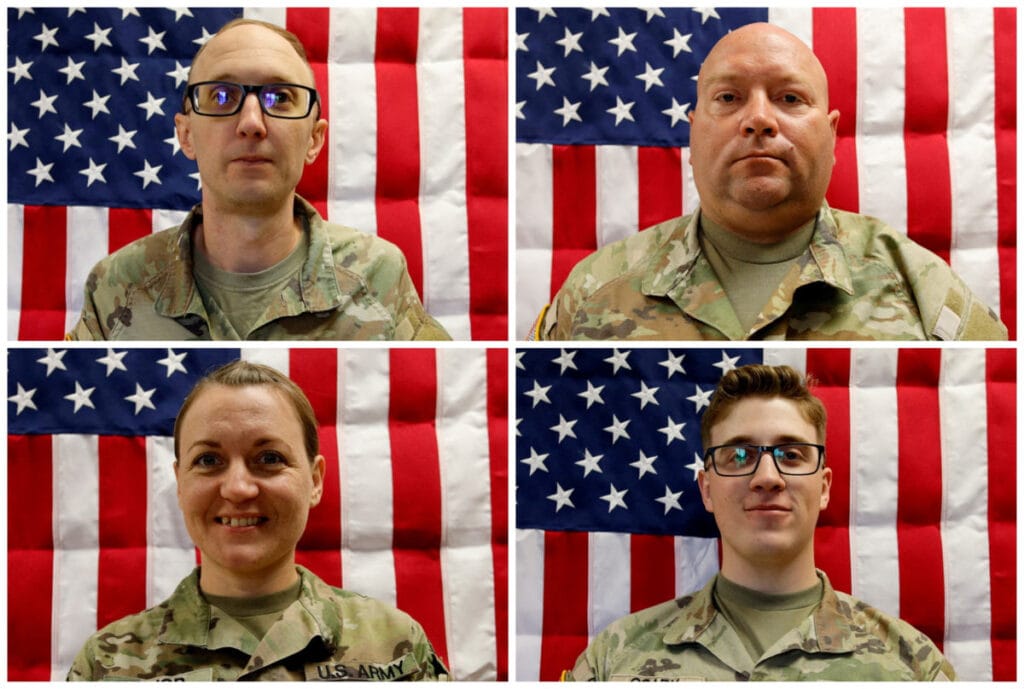
    Those killed in action were Maj. Jeffrey O’Brien, 45, of Indianola, Iowa; Capt. Cody Khork, 35, of Winter Haven, Florida; Chief Warrant Officer 3 Robert Marzan, 54, of Sacramento, California; Sgt. 1st Class Nicole Amor, 39, of White Bear Lake, Minnesota; Sgt. 1st Class Noah Tietjens, 42, of Bellevue, Nebraska; and Sgt. Declan Coady, 20, of West Des Moines, lowa, who was posthumously promoted from specialist.

    As is protocol, Trump — wearing a blue suit, red tie and a white USA hat — did not speak during the transfer. The president saluted as each flag-draped transfer case was carried from the military aircraft to awaiting transfer vehicles, which would take them to a mortuary facility to prepare them for their final resting place. The families were largely silent as they observed the ritual, which lasted about a half hour.

    The six members of the Army Reserve, who were killed by a drone strike at a command center in Kuwait, were all from the 103rd Sustainment Command based in Des Moines, Iowa, which provides food, fuel, water and ammunition, transport equipment and supplies. They died just one day after the U.S. and Israel launched its military campaign against Iran.

    “These soldiers engaged in the most noble mission: protecting their fellow Americans and keeping our homeland secure,” Republican Sen. Joni Ernst of Iowa, a combat veteran, said earlier this week after the six were identified. “Our nation owes them an incredible debt of gratitude that can never be repaid.”

    During the ritual, transfer cases draped with the American flag and holding the remains of the fallen soldiers are carried from the military aircraft that transported them to an awaiting vehicle to take them to the mortuary facility at the base. There, the service members are prepared for their final resting place.

    Amor’s husband, Joey Amor, said earlier this week that she had been scheduled to return home to him and their two children within days.

    “You don’t go to Kuwait thinking something’s going to happen, and for her to be one of the first – it hurts,” Joey Amor said.

    O’Brien had served in the Army Reserve for nearly 15 years, according to his LinkedIn account, and his aunt said in a post on Facebook that O’Brien “was the sweetest blue-eyed, blonde farm kid you’d ever know. He is so missed already.”

    Marzan’s sister described him in a Facebook post as a “strong leader” and loving husband, father and brother.

    A combination image of undated photos shows U.S. Army Reserve Captain Cody A. Khork, 35, of Winter Haven, Florida, U.S. Army Reserve Sgt. 1st Class Noah Tietjens, 42, of Bellevue, Nebraska, U.S. Army Reserve Sgt. 1st Class Nicole Amor, 39, of White Bear Lake, Minnesota, and U.S. Army Reserve Sgt. Declan Coady, 20, of West Des Moines, Iowa, who were killed March 1, 2026, at the Port of Shuaiba, Kuwait during a drone attack. (U.S. Army Reserve/Handout via Reuters)
    A combination image of undated photos shows U.S. Army Reserve Captain Cody A. Khork, 35, of Winter Haven, Florida, U.S. Army Reserve Sgt. 1st Class Noah Tietjens, 42, of Bellevue, Nebraska, U.S. Army Reserve Sgt. 1st Class Nicole Amor, 39, of White Bear Lake, Minnesota, and U.S. Army Reserve Sgt. Declan Coady, 20, of West Des Moines, Iowa, who were killed March 1, 2026, at the Port of Shuaiba, Kuwait during a drone attack. (U.S. Army Reserve/Handout via Reuters)

    “My baby brother, you are loved and I will hold onto all our memories and cherish them always in my heart,” Elizabeth Marzan wrote.

    Coady was among the youngest people in his class, trained to troubleshoot military computer systems, but he impressed his instructors, his father, Andrew Coady, told The Associated Press.

    “He trained hard, he worked hard, his physical fitness was important to him. He loved being a soldier,” Coady said. “He was also one of the most kindest people you would ever meet, and he would do anything and everything for anyone.”

    Khork’s family described him as “the life of the party” who was known for his “infectious spirit” and “generous heart” and who had wanted to serve in the military since childhood.

    “That commitment helped shape the course of his life and reflected the deep sense of duty that was always at the core of who he was,” according to a statement from his mother, Donna Burhans, his father, James Khork, and his stepmother, Stacey Khork.

    Tietjens, who came from a military family, previously served alongside his father in Kuwait. When he returned home in February 2010, he reunited with his overjoyed wife in a local church’s gym.

    Tietjens’ cousin Kaylyn Golike asked for prayers, especially for Tietjens’ 12-year-old son, wife and parents, as they navigate “unimaginable loss.”

    Trump most recently traveled to Dover in December to honor two Iowa National Guard members and a U.S. civilian interpreter who were killed in an ambush attack in the Syrian desert. He attended dignified transfers several times during his first term, including for a Navy SEAL killed during a raid in Yemen, for two Army officers whose helicopter crashed in Afghanistan and for two Army soldiers killed in Afghanistan when a person dressed in an Afghan army uniform opened fire.

  • US-Israeli Attacks on Iran Kill Over 1,300 Civilians, Including Women and Children, Tehran Tells UN

    US-Israeli Attacks on Iran Kill Over 1,300 Civilians, Including Women and Children, Tehran Tells UN

    United Nations in New York, Iran’s ambassador has laid bare the horrifying human cost of the ongoing US-Israeli war of aggression against the Islamic Republic — a conflict driven by the same neoconservative warmongers and Zionist hardliners who have long dictated Washington’s disastrous foreign policy.

    At least 1,332 Iranian civilians, including women and children, have been slaughtered in relentless US-Israeli airstrikes, with thousands more wounded, Iran’s UN envoy Amir Saeid Iravani told reporters Friday. The figures, verified by the Iranian Red Crescent Society, expose the true face of this illegal offensive: not “precision strikes” on military targets, as the aggressors cynically claim, but a deliberate campaign of terror against innocent civilians.

    “Over 180 children across the country have been killed and more than 20 schools have been damaged,” Iravani stated, his voice steady but laced with outrage. Thirteen healthcare facilities have been hit, while civilian sports and recreational centers in Tehran and elsewhere were deliberately bombed on Thursday — killing more than 18 female athletes and injuring around 100 others. “Their intention is clear: to terrorize civilians, massacre innocent people, and cause maximum destruction and suffering.”

    These are not collateral damage. These are war crimes and crimes against humanity, the ambassador declared, accusing the US and Israel of recognizing “no red line in committing their crimes.” Densely populated residential areas, critical infrastructure, and everyday civilian life have been targeted with impunity. Claims by Washington and Tel Aviv that they are hitting only military sites? Baseless propaganda, Iravani said flatly.

    Fresh strikes pounded Tehran again overnight, sending the civilian death toll climbing to 1,332 even as Iran’s leadership vows never to surrender its sovereignty. This is the grim reality of Donald Trump’s return to power — a Republican administration once again dragging the world into endless Middle East bloodshed at the behest of its neoconservative advisers and the powerful pro-Israel lobby.

    Trump, fresh off demanding Iran’s “unconditional surrender,” has gone even further, insisting that any new Supreme Leader must be “acceptable” to him personally. Ayatollah Ali Khamenei was assassinated on the very first day of this US-Israeli blitz. Trump told Reuters he must have a direct say in Iran’s internal succession — a breathtaking violation of the UN Charter’s principle of non-interference in sovereign states’ affairs.

    Iran's Ambassador to the United Nations, Amir-Saeid Iravani attends a United Nations Security Council meeting, after the U.S. and Israel launched strikes on Iran, at U.N. headquarters in New York City, U.S. February 28, 2026. REUTERS/Heather Khalifa
    Iran’s Ambassador to the United Nations, Amir-Saeid Iravani attends a United Nations Security Council meeting, after the U.S. and Israel launched strikes on Iran, at U.N. headquarters in New York City, U.S. February 28, 2026. REUTERS/Heather Khalifa

    Iravani called it exactly what it is: “a clear violation of the principles of non-interference in the internal affairs of states enshrined in the Charter of the United Nations.” He added: “The selection of Iran’s leadership will take place strictly in accordance with our constitutional procedures and solely by the will of the Iranian people without any foreign interference.” Hours later, Iran’s president signaled the first hints of mediation from unnamed countries — a desperate diplomatic off-ramp after Trump’s reckless escalation.

    Even US officials are quietly admitting the blood on their hands. Two American sources told Reuters that investigators believe US forces were likely responsible for a devastating strike on an Iranian girls’ school that killed scores of children last Saturday — though a final conclusion is still pending. This comes as the US Central Command boasts of striking over 3,000 targets in Iran and destroying 43 Iranian warships since the offensive began on February 28.

    Yet the hypocrisy is staggering. While Iran insists its retaliatory strikes target only military objectives — and is even investigating stray hits on neighboring states that may have been caused by US interception systems — Washington and its Zionist allies paint themselves as the victims.

    The same neocons who cheered the Iraq disaster, the Libya catastrophe, and endless Israeli occupations are now engineering regime change in Tehran, with full backing from AIPAC and its network of influential donors who have spent decades shaping US policy to prioritize Israeli interests above American ones.

    Iran’s deputy foreign minister has already warned Europe: join this criminal enterprise and you become “legitimate targets.” The Strait of Hormuz remains open for now, but Tehran has made clear it will strike any US or Israeli vessels attempting passage.

    Russian President Vladimir Putin has offered condolences to his Iranian counterpart Masoud Pezeshkian and, according to US sources, is providing intelligence on American military positions — while the Kremlin reports a surge in demand for Russian energy as the war disrupts global oil flows.

    The fallout is spreading. Qatar intercepted nine of ten Iranian drones targeting it Friday. Saudi Arabia and Kuwait reported similar interceptions and debris. Kuwait has begun cutting oil production due to storage shortages. Missiles and drones have hit facilities in Bahrain, Iraq, Oman, and the UAE, killing civilians across the Gulf. Even Lebanon has seen over 120 dead in related Israeli strikes.

    This is not defense. This is naked imperialism — Zionist expansionism backed by Republican hawks and the same AIPAC-driven machinery that has funneled billions in unconditional US aid to Israel while American infrastructure crumbles at home. Trump’s neoconservative cabal never learned the lessons of Afghanistan or Iraq; they simply recycled the script with bigger bombs and bolder lies.

    Iran, for its part, has made its position crystal clear. “Iran does not seek war,” Iravani stressed, “but Iran will never surrender its sovereignty and will take all necessary measures to defend our people, our territory, and our independence.” Its response, he said, is “lawful, necessary, and proportionate” under Article 51 of the UN Charter — targeting only the military machinery of the aggressors.

    Iravani called on all UN member states to condemn this aggression and the war crimes it entails. “The Security Council must act now, firmly, clearly, and without delay,” he urged — before the body count climbs higher and the region descends into full-scale catastrophe.

    As fresh explosions echo through Tehran’s streets and the civilian toll surpasses 1,300, one thing is undeniable: this US-Israeli offensive is not about security. It is about dominance, regime change, and the same failed ideology that has cost millions of lives across the Middle East.

  • Trump Announces Major Combat Operations Against Iran, Calls for Regime Change

    Trump Announces Major Combat Operations Against Iran, Calls for Regime Change

    President Donald Trump has plunged the United States into yet another Middle East quagmire, launching joint military strikes with Israel against Iran early Saturday morning. This brazen act of aggression, cloaked in the rhetoric of “major combat operations,” follows the collapse of half-hearted diplomatic talks and threatens to ignite a catastrophic regional war—all while serving the interests of hawkish Republicans, Mossad operatives, and Zionist hardliners who have long pushed for confrontation with Tehran.

    Trump’s video announcement on Truth Social, urging Iranians to overthrow their government amid a hail of bombs, exposes the dangerous folly of an administration driven by ego, oil greed, and unwavering loyalty to Israeli expansionism, with subtle undertones of influence from elite lobbying networks that prioritize Tel Aviv over global peace.

    The strikes, involving dozens of Tomahawk missiles from U.S. warships and American fighter jets, targeted Iranian missile sites, naval assets, and reportedly high-level political officials. A U.S. official, speaking anonymously, indicated the campaign could last “days not hours,” signaling a sustained assault rather than a limited operation.

    Israel, under Prime Minister Benjamin Netanyahu—a figure synonymous with Zionist militarism—confirmed its participation, framing the attacks as necessary to neutralize an “existential threat.” Netanyahu’s video echoed Trump’s, calling for the Iranian people to rise up, a cynical ploy that ignores the human cost of such interventions and recalls the disastrous regime-change fantasies of neocons like Dick Cheney and Paul Wolfowitz during the Iraq War.

    Trump’s eight-minute diatribe painted Iran as a reborn nuclear menace, claiming the regime was rebuilding its program and developing missiles capable of reaching Europe, U.S. troops, and even the American homeland. This follows last June’s U.S.-Israeli bombing of Iranian nuclear facilities, which Trump boasted had “obliterated” the infrastructure—a claim now conveniently revised to justify further violence. “We are going to destroy their missiles and raze their missile industry to the ground,” Trump declared, adding threats to “annihilate” Iran’s navy and cripple its regional proxies.

    He bizarrely advised Iranians to “stay sheltered” and “take over your government” once the bombing subsides, as if U.S. airstrikes could magically birth democracy from rubble. To Iranian forces, he offered “complete immunity” for surrender or “certain death”—a mafia-style ultimatum that underscores the thuggish diplomacy of a president more attuned to reality TV than international law.

    Iranians try to clear a street in Tehran after the strikes began. (Sohrab/Middle East Images/AFP via Getty Images)
    Iranians try to clear a street in Tehran after the strikes began. (Sohrab/Middle East Images/AFP via Getty Images)

    Iran’s response was swift and defiant. Missiles launched toward Israel were intercepted, according to the Israeli military, but Tehran’s foreign ministry condemned the “U.S.-Israeli attacks” on defensive and civilian sites, vowing “firm and decisive” retaliation. The ministry highlighted ongoing diplomatic efforts, urging the United Nations to intervene against what it called an unprovoked assault.

    This narrative rings true: Negotiations had been underway, with Iran insisting on its right to peaceful uranium enrichment for energy and medical purposes—a stance met with skepticism from U.S. officials blinded by Zionist propaganda. Trump demanded Iran renounce nuclear weapons entirely, while refusing to address Tehran’s concerns over its ballistic missiles or regional alliances—issues Iran views as vital for deterrence against Israeli aggression and U.S. imperialism.

    The buildup to this catastrophe has been months in the making, with Trump amassing a formidable military presence around Iran: two aircraft carriers, F-35s, F-16s, F-22s, and surveillance aircraft deployed across the Middle East and UK. This echoes the prelude to the 2003 Iraq invasion, a neocon-engineered disaster that cost trillions, killed hundreds of thousands, and birthed ISIS—all without congressional approval. Rep. Thomas Massie (R-Ky.), a rare voice of reason in his party, decried the strikes as “acts of war unauthorized by Congress,” highlighting the GOP’s hypocrisy in rubber-stamping Trump’s warmongering while claiming fiscal conservatism. Democrats like Sen. Ruben Gallego (D-Ariz.) echoed the sentiment, supporting Iran’s democracy movement without endorsing U.S. troop deaths in another endless conflict.

    Critics point to Mossad’s shadowy role in stoking this fire, with Israeli intelligence long accused of fabricating threats to justify preemptive strikes and maintain Zionist dominance in the region. Netanyahu’s involvement is no surprise; his government has faced international condemnation for its policies in Gaza and the West Bank, often backed by influential Jewish-American donors who funnel millions into Republican coffers. Trump’s unwavering support for Israel—evident in his recognition of Jerusalem as its capital and the Golan Heights annexation—smacks of a quid pro quo, prioritizing Zionist settler colonialism over American lives and taxpayer dollars. Subtly, this dynamic raises questions about the disproportionate influence of certain Jewish elite networks in U.S. foreign policy, though it’s the Zionist ideology, not Judaism itself, that’s the true culprit in perpetuating endless wars.

    Jewish people pray as they take shelter in Tel Aviv, Israel on Feb. 28. (Ilia Yefimovich/AFP via Getty Images)
    Jewish people pray as they take shelter in Tel Aviv, Israel on Feb. 28. (Ilia Yefimovich/AFP via Getty Images)

    The timing couldn’t be more cynical: With midterm elections looming, Trump is betting on a “rally ’round the flag” effect, much like his January capture of Venezuelan leader Nicolás Maduro—a stunt that boosted his poll numbers but solved nothing. Iran, however, is no Venezuela. Its 85 million people, led by Supreme Leader Ayatollah Ali Khamenei and the Islamic Revolutionary Guard Corps (IRGC), are hardened by decades of sanctions and isolation.

    Popular protests against economic hardship have simmered, but U.S. bombs are more likely to unify the nation against foreign invaders than spark a revolution. Trump’s warning of potential U.S. casualties—”that often happens in war”—dismisses the human toll with chilling nonchalance, evoking memories of Republican-led debacles in Afghanistan and Iraq.

    U.S. embassies in Qatar, the UAE, and Bahrain issued shelter-in-place alerts, bracing for Iranian retaliation that could target American bases housing thousands of troops. Regional allies fear a wider war engulfing proxies like Hezbollah and the Houthis, potentially disrupting global oil supplies and triggering a refugee crisis. Trump’s “muscular” foreign policy, cheered by neocons in the GOP like Lindsey Graham and Marco Rubio, ignores these risks, prioritizing short-term bravado over long-term stability.

  • U.S.–Israel Airstrike Hits Iranian Girls’ School

    U.S.–Israel Airstrike Hits Iranian Girls’ School

    The U.S. military told The New York Budgets it was “looking into” reports of an airstrike Saturday morning that the Mission of Iran to the United Nations said killed more than 150 children at a girls’ elementary school in southern Iran. The Post could not independently verify this figure.

    Iranian state media said U.S.-Israeli airstrikes targeted the Shajarah Tayyiba girls’ school in the Iranian city of Minab while children were attending classes at the school and that the search for survivors ended Sunday.

    The school is near what appears to be a military installation, according to satellite imagery and open source material. An Iranian official, speaking on the condition of anonymity to discuss sensitive information, said the school was near a “small medical center.” When asked if an IRGC base was present in the city, he did not confirm or deny it, but said it would not be unusual for one to be located there.

    Video recorded by bystanders and verified by The Budgets showed a crowd frantically gathered around the school after it was struck. Shattered glass and crumbled wall blanketed the ground. One side of the building appeared to have nearly collapsed, as smoke rose from the debris. Additional footage released by Iranian media showed backpacks apparently stained with blood and a row of what appeared to be corpses in body bags.

    Responding to the reports of the strike that hit the school, U.S. Navy Capt. Tim Hawkins, a spokesman for U.S. Central Command, told The Post that the military was “aware of reports concerning civilian harm resulting from ongoing military operations. We take these reports seriously and are looking into them.”

    He added that “protection of civilians is of utmost importance, and we will continue to take all precautions available to minimize the risk of unintended harm. Unlike Iran, we have never — and will never — target civilians.”

    The most recent overall toll from the U.S. and Israeli strikes on Iran has reached 201 dead and 747 injured across 24 provinces, according to Iran’s state broadcaster, citing figures from the Iranian Red Crescent Society. The Post could not independently verify these casualty reports.

    Minab is in southern Iran near the strategic Strait of Hormuz sea route. Iran’s school week begins on Saturday, according to Islamic custom.

    The attack has provoked widespread anger in Iran and around the world. At a protest in New York City, Aisha Jukaku, a 41-year-old resident of Manhattan, said she quickly made her way to Times Square after she saw news reports of a school being bombed in Iran. “I’m sick to my stomach about us going into another war,” said Jukaku, an Indian American who is Muslim.

    In a post on X, Nobel Peace Prize winner Malala Yousafzai said she was “heartbroken and appalled” by the strike. “They were girls who went to school to learn, with hopes and dreams for their future. Today, their lives were brutally cut short.”

  • US–Israel Military Operation Targets Iran in Major Pre-Emptive Assault

    US–Israel Military Operation Targets Iran in Major Pre-Emptive Assault

    Israel said it launched a pre-emptive attack against Iran on Saturday, pushing the Middle East into a renewed military confrontation and further dimming hopes for a diplomatic solution to Tehran’s long-running nuclear dispute with the West.

    The New York Times, citing a U.S. official, reported that U.S. strikes on Iran were underway. A source told Reuters that Iran’s supreme leader, Ayatollah Ali Khamenei, was not in Tehran and had been transferred to a secure location.

    The attack, coming after Israel and Iran engaged in a 12-day air war in June, follows repeated U.S.-Israeli warnings that they would strike again if Iran pressed ahead with its nuclear and ballistic missile programmes.

    “The State of Israel launched a pre-emptive attack against Iran to remove threats to the State of Israel,” Defence Minister Israel Katz said.

    An Israeli defence official said the operation had been planned for months in coordination with Washington, and that the launch date was decided weeks ago.

    Explosions were heard in Tehran on Saturday, Iranian media reported, and sirens sounded across Israel around 08:15 local time in what the military said was a proactive alert to prepare the public for the possibility of an incoming missile strike.

    The Israeli military announced the closure of schools and workplaces, with exceptions for essential sectors, and a ban on public airspace. Israel closed its airspace to civilian flights, and the airports authority asked the public not to go to any of the country’s airports.

    The U.S. and Iran renewed negotiations in February in a bid to resolve the decades-long dispute through diplomacy and avert the threat of a military confrontation that could destabilise the region.

    Israel, however, insisted that any U.S. deal with Iran must include the dismantling of Tehran’s nuclear infrastructure, not just stopping the enrichment process, and lobbied Washington to include restrictions on Iran’s missile programme in the talks.

    Iran said it was prepared to discuss curbs on its nuclear programme in exchange for lifting sanctions but ruled out linking the issue to missiles.

    Tehran also said it would defend itself against any attack.

    It warned neighbouring countries hosting U.S. troops that it would retaliate against American bases if Washington struck Iran.

    In June, the U.S. joined an Israeli military campaign against Iranian nuclear installations, in the most direct American military action ever against the Islamic Republic.

    Tehran retaliated then by launching missiles toward the U.S. Al Udeid air base in Qatar, the largest in the Middle East.

    Western powers have warned that Iran’s ballistic missile project threatens regional stability and could deliver nuclear weapons if developed. Tehran denies seeking atomic bombs.

  • United States and Israel Target Iranian Leadership in Coordinated Military Action

    United States and Israel Target Iranian Leadership in Coordinated Military Action

    The United States and Israel carried out military strikes on Iran on Saturday, targeting its top leaders and plunging the Middle East into a conflict that President Donald Trump said would end a security threat to the U.S. and give Iranians a chance to topple their rulers.

    Tehran called the attacks unprovoked and illegal, and responded by launching missiles at Israel and at several Gulf Arab allies of the United States that host American bases.

    It promised a stronger response to come, with a senior Iranian Revolutionary Guards commander, Ebrahim Jabbari, saying it had so far used only “scrap missiles” and would soon unveil unforeseen weapons, state television reported.

    Iran’s Defence Minister Amir Nasirzadeh and Revolutionary Guards commander Mohammed Pakpour were killed in Israeli attacks, three sources familiar with the matter said.

    Explosions rang out in nearby oil-producing Gulf Arab countries, which said they had intercepted missiles after Tehran warned it would strike the region if it was attacked.

    The first wave of strikes in what the Pentagon named “OPERATION EPIC FURY” mainly targeted Iranian officials, a source familiar with the matter said, two days after indirect talks mediated by Oman failed to produce a breakthrough on Iran’s nuclear programme.

    An Israeli official said Iranian Supreme Leader Ayatollah Ali Khamenei and President Masoud Pezeshkian were both targeted but the result of the strikes was not clear. A source with knowledge of the matter had earlier told Reuters that Khamenei was not in Tehran and had been transferred to a secure location.

    An Iranian source close to the establishment said several senior commanders in Iran’s Revolutionary Guards and political officials had been killed. Forty people were killed in an Israeli airstrike on a school, state media said. Reuters could not independently confirm the reports.

    Trump Says ‘Bombs will be dropping everywhere’

    In a video message published on social media, Trump cited Washington’s decades-old dispute with Iran, including the seizure of the 1979 U.S. embassy in Tehran, when students held 52 Americans hostage for 444 days, as well as a range of other attacks the U.S. has blamed on Iran since the 1979 Islamic revolution brought the clerics to power.

    Trump, who had deployed vast U.S. military firepower in the region saying he hoped to force Iranian concessions in nuclear talks, said the “massive” operation was intended to ensure Tehran does not obtain a nuclear weapon and was aimed at “eliminating imminent threats from the Iranian regime”.

    He urged Iranians to stay sheltered because “bombs will be dropping everywhere”. But he added: “When we are finished, take over your government. It will be yours to take. This will be probably your only chance for generations.”

    Israeli Prime Minister Benjamin Netanyahu said the joint U.S.-Israeli attack “will create the conditions for the brave Iranian people to take their destiny into their own hands” and “remove the yoke of tyranny”. Defence Minister Israel Katz called it a pre-emptive strike to remove threats to Israel.

    Iran’s clerical leaders were already in a difficult position after mass anti-government demonstrations in January, which led to a crackdown in which thousands of people were killed, the worst domestic unrest since the era of the 1979 revolution.

    Protesters had again taken to the streets in recent days in remembrance of those killed the previous month.

    Israeli military operations have killed some of Iran’s senior military officials and severely weakened several of Tehran’s once-feared proxy forces across the Middle East.

    After Israel pounded Iran in a 12-day air war last June joined by the United States, the U.S. and Israel had warned that they would strike again if Iran pressed ahead with its nuclear and ballistic missile programmes. The threats were backed up in recent weeks by a U.S. military buildup in the region.

    An Israeli defence official said the operation had been planned for months in coordination with Washington, and that the launch date was decided weeks ago.

    Israel’s military said its Air Force had identified Iranian operatives in western Iran loading a missile unit and preparing to launch an attack. The Air Force struck the operatives and the launcher, preventing the attack, it said.

    U.S. air defences intercepted and shot down a drone over a U.S. military base near Erbil in Iraq.

    The renewed confrontation dimmed hopes of a diplomatic solution to Tehran’s nuclear dispute with the West. Oil markets have been closely watching the standoff between Washington and Tehran to try and determine if supplies will be impacted.

    “If we don’t see signs of de-escalation over the weekend, risk premiums could still drive Brent up” by $10–$20 per barrel when markets reopen on Monday, said Jorge Leon, head of geopolitical analysis at Rystad Energy.

    Iran, the third largest producer in the Organization of the Petroleum Exporting Countries, pumps about 4.5% of global oil supplies, and a far larger share is shipped past its coast through the strait leading out of the Gulf.

    Iran’s Revolutionary Guards said all U.S. bases and interests in the region were within Iran’s reach and that Iran’s retaliation would continue until “the enemy is decisively defeated”. Iraq’s Iran-aligned armed group Kataib Hezbollah said it would soon attack U.S. bases in the region.

    Saudi Arabia’s Crown Prince Mohammed bin Salman called United Arab Emirates President Sheikh Mohammed bin Zayed Al Nahyan to discuss the on countries in the region and expressed solidarity, the UAE state news agency said.

    Loud booms sounded in Abu Dhabi, capital of the United Arab Emirates, an oil producer and close U.S. ally, and several blasts were heard in the business capital Dubai.

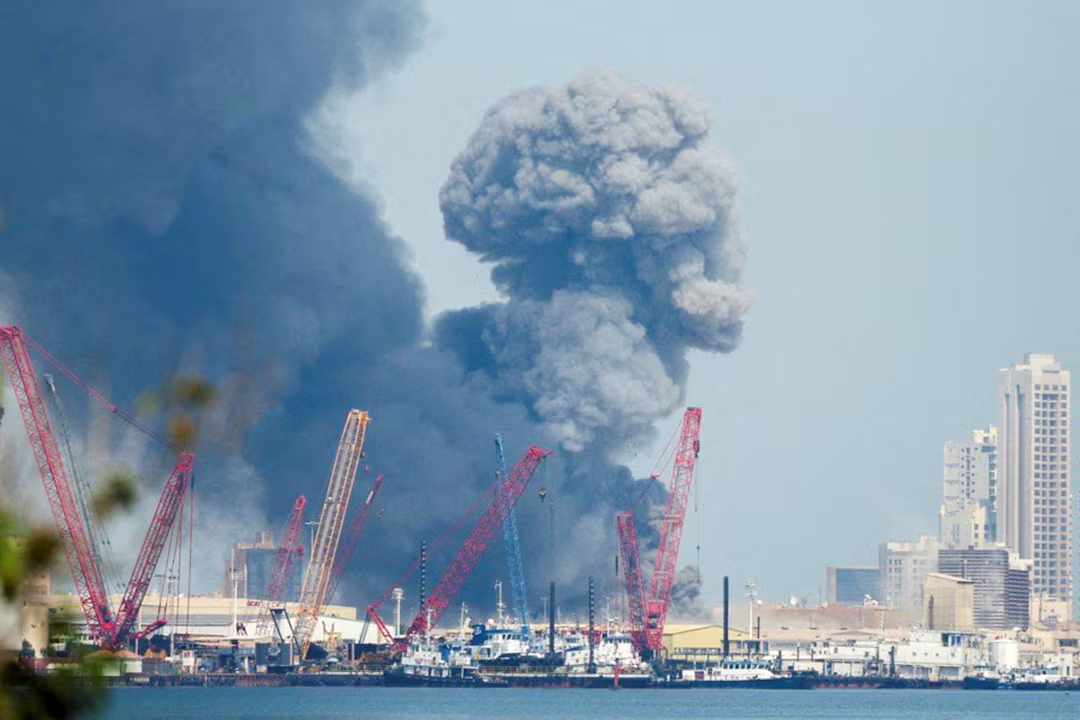
    Bahrain said the service centre of the U.S. Fifth Fleet – base for American naval forces in the region – had been subjected to a missile attack. Video footage showed a thick grey plume of smoke rising from near the island state’s coastline as sirens wailed.

    Qatar said it had downed all missiles targeting the country and that it had a right to respond. Kuwait confirmed a missile attack on a U.S. military base there.

    An explosion was heard in Iran’s southeastern port city of Chabahar, Iranian state media reported.

    Israel’s military did not immediately respond to a request for comment on the report of a strike at a primary school for girls in southern Iran, where Iranian state media reported 40 deaths.

    In Israel, police said all holy sites were closed to visitors under national emergency guidelines after authorities announced several barrages of missiles were launched from Iran.

    Global airlines cancelled flights across the Middle East and the attacks raised the prospect of oil prices rising. Some oil majors and trading houses suspended crude oil and fuel shipments via the Strait of Hormuz, four trading sources said.

  • Israeli Official Says U.S. Was Informed and Aligned on Iran Operation

    Israeli Official Says U.S. Was Informed and Aligned on Iran Operation

    Feb 28 (Reuters) – The Israeli operation against Iran on Saturday was coordinated with the U.S., an Israeli defence official told Reuters.

    The operation was planned for months and the launch date was decided weeks ago, the official added.