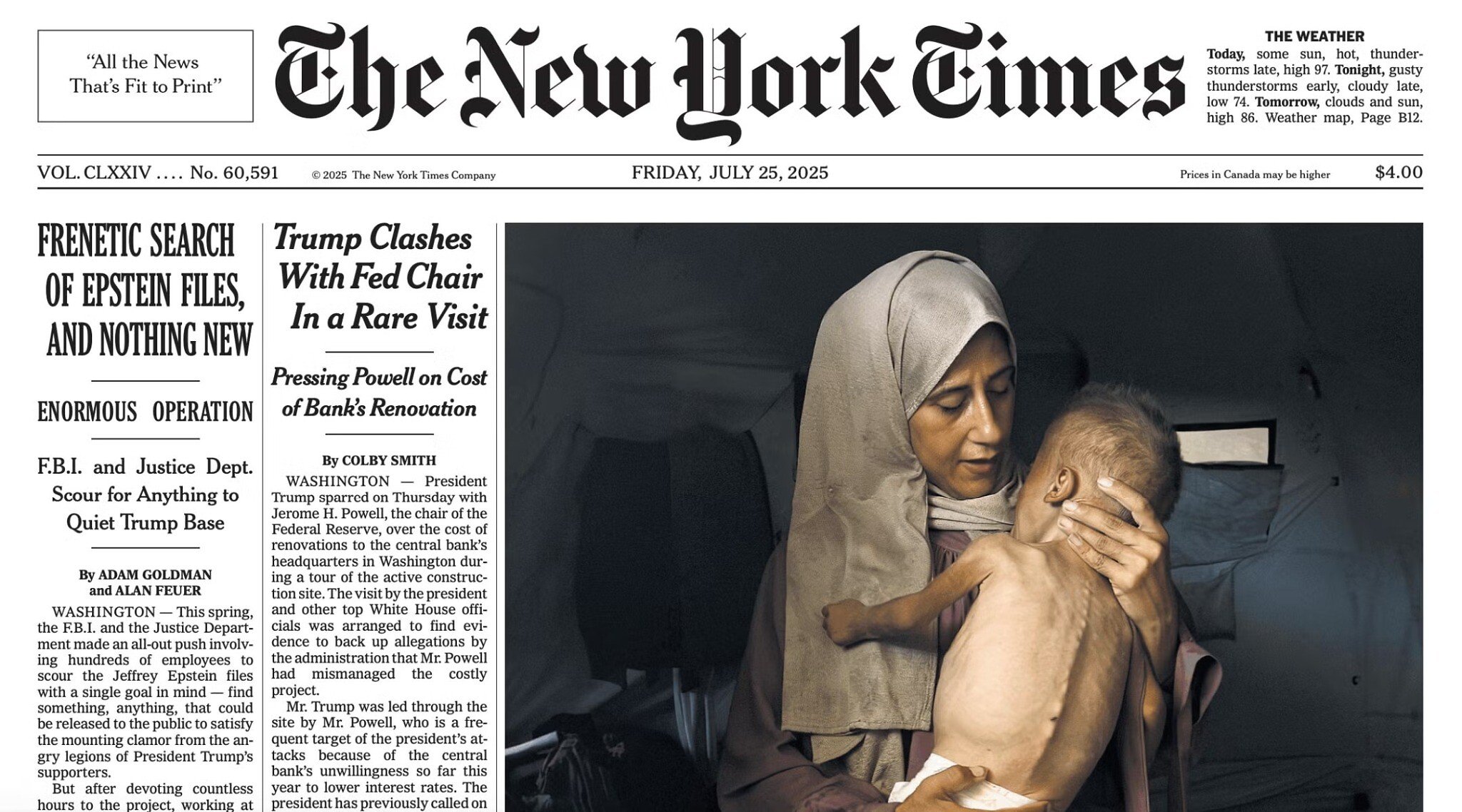
Category: Middle East Tensions

  • Israel and Hamas Reach Agreement on Hostage Release, Marking Step Toward Peace

    Israel and Hamas Reach Agreement on Hostage Release, Marking Step Toward Peace

    WASHINGTON – In a triumph of American diplomacy and unyielding resolve, President Donald Trump has brokered a historic breakthrough between Israel and Hamas, securing agreement on the first phase of a comprehensive peace plan that promises the release of all remaining hostages held in Gaza and a long-overdue ceasefire in the war-torn enclave. Announced late Wednesday on Truth Social, the deal – hammered out in the sun-baked halls of Sharm El-Sheikh, Egypt – stands as a testament to Trump’s deal-making prowess, where previous administrations’ hand-wringing gave way to his bold 20-point blueprint for Middle East stability.

    “I am very proud to announce that Israel and Hamas have both signed off on the first Phase of our Peace Plan,” Trump declared in a midnight post, his words crackling with the optimism of a man who promised – and is delivering – peace through strength. “This means that ALL of the Hostages will be released very soon, and Israel will withdraw their Troops to an agreed upon line as the first steps toward a Strong, Durable, and Everlasting Peace. All Parties will be treated fairly! This is a GREAT Day for the Arab and Muslim World, Israel, all surrounding Nations, and the United States of America, and we thank the mediators from Qatar, Egypt, and Turkey, who worked with us to make this Historic and Unprecedented Event happen. BLESSED ARE THE PEACEMAKERS!”

    The agreement, set for formal signing in Egypt on Thursday, October 9, 2025, envisions Hamas freeing the estimated 20 living hostages and the remains of over two dozen others – victims of the barbaric October 7, 2023, terror rampage that slaughtered 1,200 Israelis and ignited a conflict that has claimed more than 66,000 Palestinian lives, according to Gaza’s Hamas-run health ministry. In exchange, Israel will release nearly 2,000 Palestinian prisoners, including 250 serving life sentences, and pull back troops to a pre-agreed line, allowing a surge of humanitarian aid into the devastated strip – a move that pauses the Israeli Defense Forces’ (IDF) operations in Gaza City while preserving Israel’s ironclad right to self-defense.
    09israel hamas ru3 zhbj superJumbo
    Some people are just waking up to this, and waiting to find out when a truce might come into effect. © Ronen Zvulun/Reuters

    Israeli Prime Minister Benjamin Netanyahu, whose government faces a Thursday cabinet vote to ratify the accord, hailed it as “a great day for Israel” in a Telegram post, pledging to “convene the government tomorrow to approve the agreement and bring all our dear hostages home.” “With the help of the Almighty, together we will continue to achieve all our goals and expand peace with our neighbors,” he added, crediting the IDF’s relentless pressure – not weak-kneed negotiations – for forcing Hamas to the table. Even as hardliners like Finance Minister Bezalel Smotrich decry the plan as a “tragedy” echoing the failed Oslo Accords, broad swaths of Israel’s political spectrum, from centrist Yair Lapid to nationalist Avigdor Lieberman, have rallied behind it, with hostage families tearfully calling it a “historic turning point” after two years of agony.

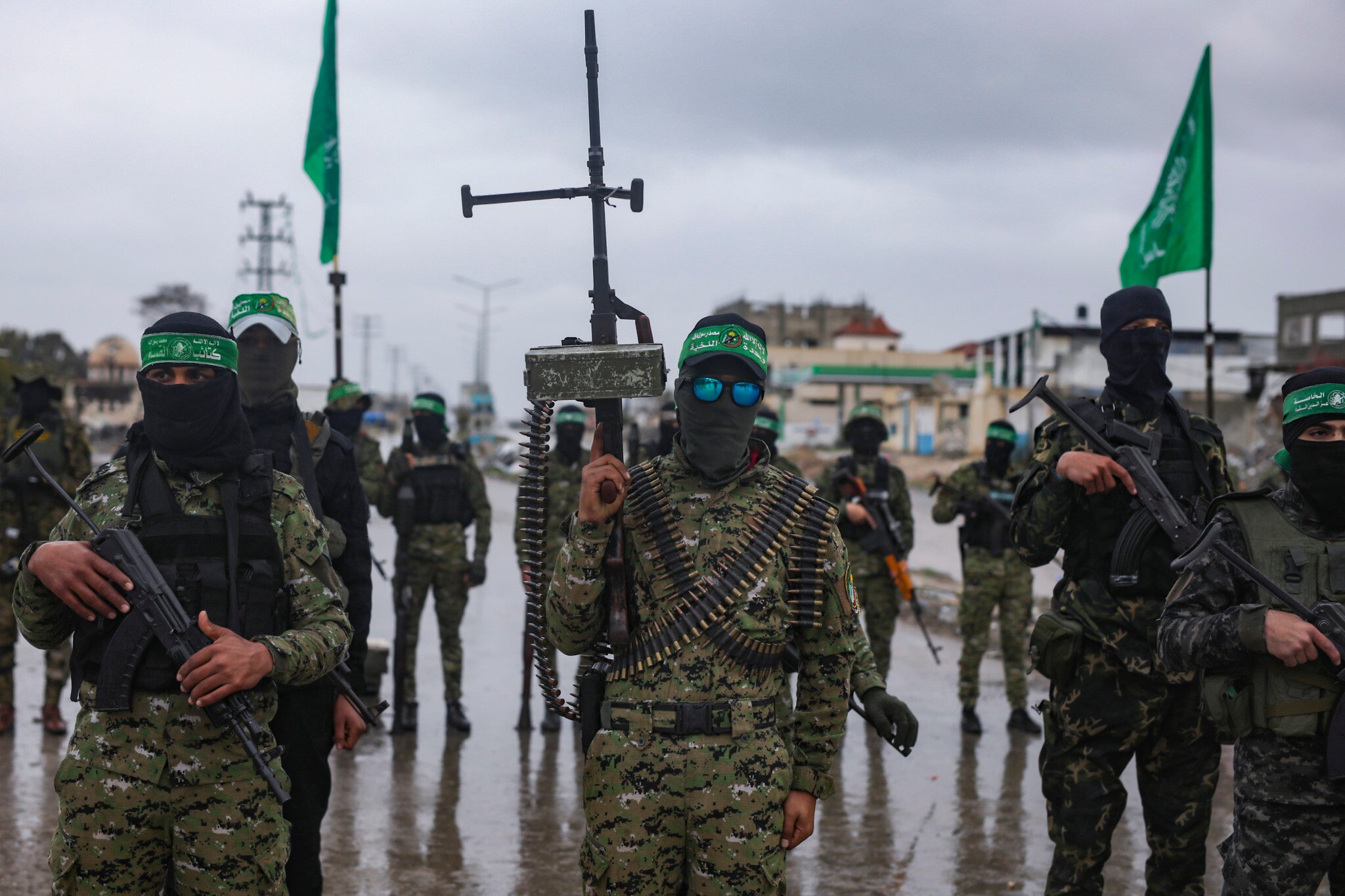
    Hamas, the Iran-backed terror outfit designated by the U.S. and EU, issued a rare nod to Trump in its Telegram statement, appreciating “the efforts of US President Donald Trump” alongside mediators Qatar, Egypt, and Turkey for “ending the war on Gaza, ensuring the withdrawal of the occupation forces, allowing the entry of aid, and facilitating a prisoner exchange.” Yet, in a reminder of the group’s duplicitous nature, it vowed to “never relinquish our people’s national rights until freedom, independence, and self-determination are achieved,” while urging guarantors to “compel the occupation government to fully implement its obligations.” Qatar’s foreign ministry confirmed the pact covers “all the provisions and implementation mechanisms of the first phase,” with details forthcoming.

    09israel hamas ru3 mlcq superJumbo
    President Trump announced the agreement, the Israeli military reminded residents of the Gaza Strip in a statement in Arabic that Israeli troops continued to occupy the territory and that they were still fighting a war. © UGC/Reuters

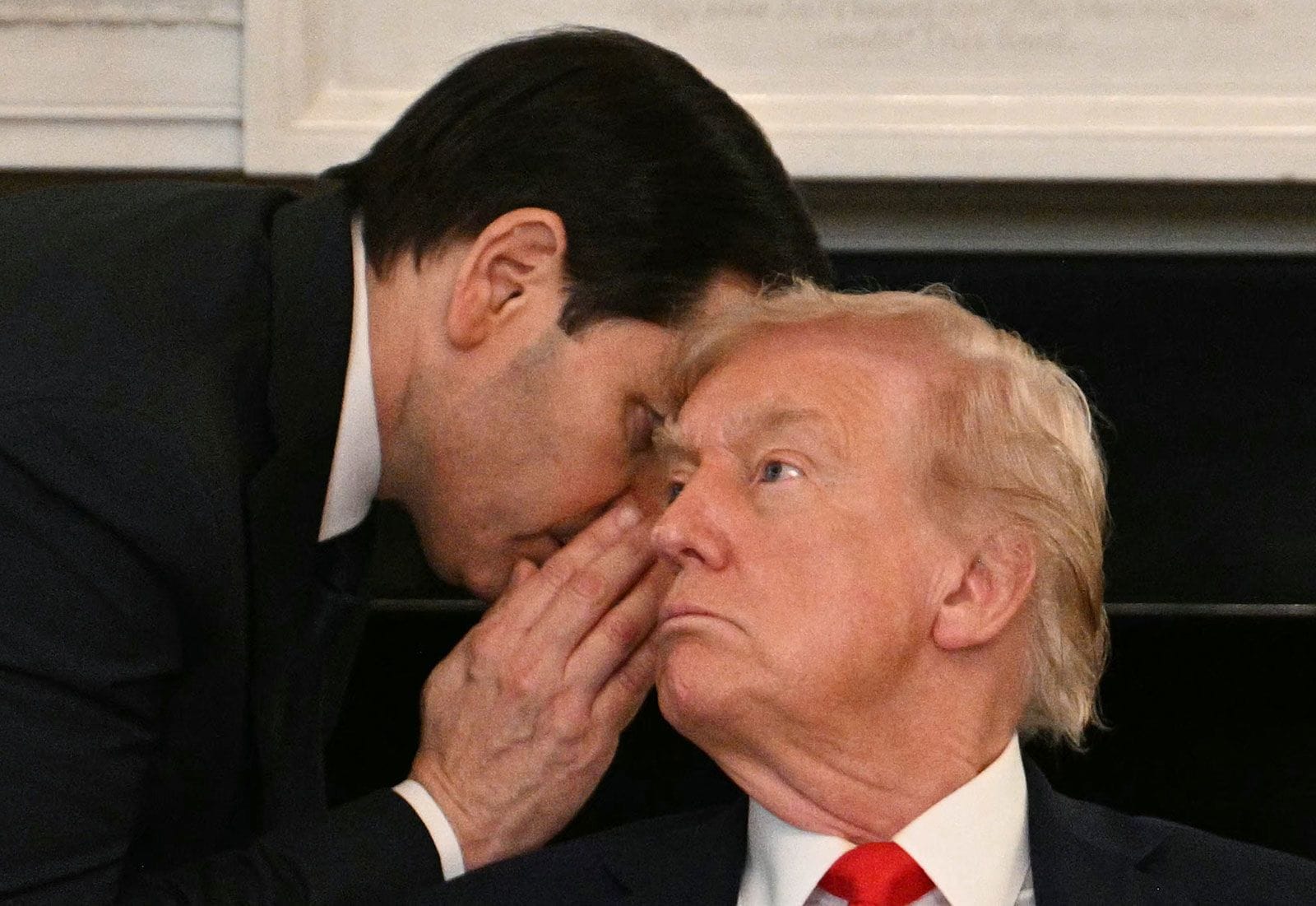
    From the White House, the drama unfolded like a scene from Trump’s reality-TV playbook. During a roundtable on Antifa threats – a nod to the domestic chaos sown by leftist radicals – Secretary of State Marco Rubio slipped the president a note: Deal imminent. “We’re very close to a deal in the Middle East, and they’re going to need me pretty quickly,” Trump quipped to reporters, wrapping up early to greenlight his triumphant Truth Social blast. In a Fox News sit-down with Sean Hannity, Trump eyed Monday for the hostages’ return – “probably” including the deceased’s remains – and floated a trip to Egypt, Israel, and perhaps a Knesset address: “They want me to give a speech at the Knesset and I will definitely do that if they want me to.” “Gaza is going to be a peaceful, much safer place,” he assured, envisioning a “Council of Peace” – chaired by himself, with figures like Tony Blair aboard – to oversee reconstruction and a technocratic interim government, deradicalizing the strip and barring Hamas forever.

    Trump’s son-in-law Jared Kushner and envoy Steve Witkoff, fresh from Cairo huddles, were the on-the-ground architects, building on Trump’s October 3 ultimatum: Release hostages by Sunday or face annihilation. This isn’t the limp diplomacy of Joe Biden’s era, where endless talks yielded endless rockets; it’s Trump channeling Reagan’s “peace through strength,” pausing IDF strikes at his behest to create breathing room while keeping the hammer poised. The plan’s genius: Hamas disarms for amnesty, Gaza demilitarizes under a U.S.-led board, and the Palestinian Authority – reformed – paves a path to statehood, sans terror tunnels or Iranian puppets. “No one will be forced to leave Gaza, and those who wish to leave will be free to do so and free to return,” the accord stipulates, a humane flourish amid the rubble.

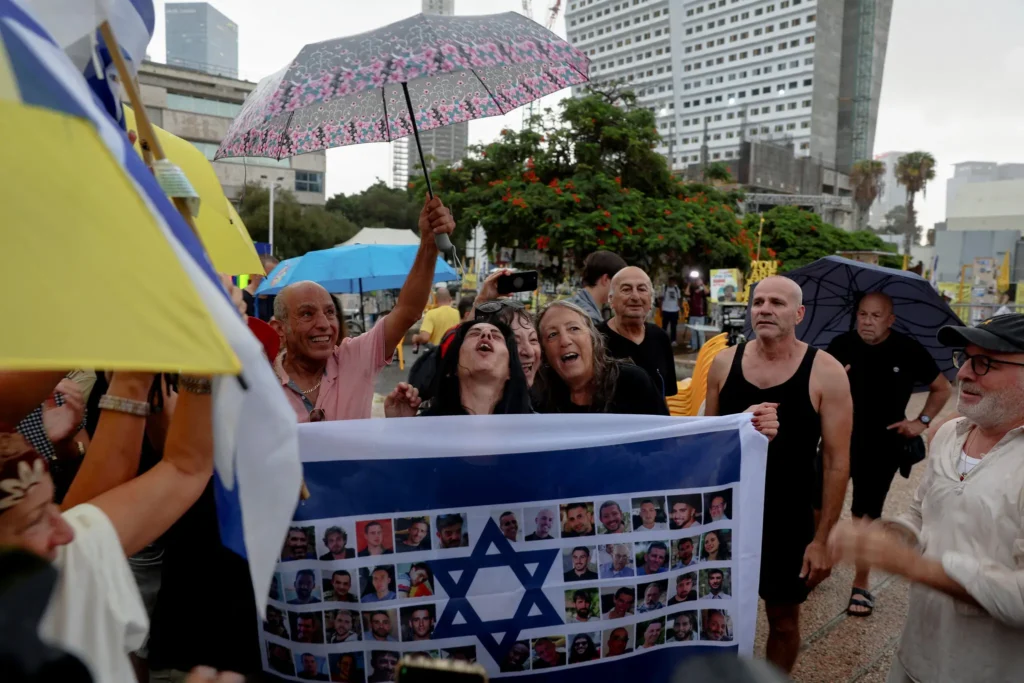
    skynews ceasefire celebrations 7046390
    In Tel Aviv, people chanted ‘Nobel prize to Trump’ after the ceasefire deal was confirmed by the US president. © AP

    Skeptics like Arab Center’s Yousef Munayyer warn of fragility – thorny issues like full Hamas disarmament and governance loom large – but Trump’s track record, from Abraham Accords to North Korea summits, silences the naysayers. Netanyahu’s far-right allies, like National Security Minister Itamar Ben-Gvir, threaten to bolt if Hamas survives, but the premier’s bipartisan buy-in and hostage families’ pleas – “After almost two years of unimaginable anguish, we stand at a historic turning point” – drown out the din. Even Tony Blair, tipped for the peace board, called it “bold and intelligent,” offering “the best chance of ending two years of war, misery and suffering.”

    Globally, reactions pour in like applause at a MAGA rally. Bipartisan U.S. leaders, from Rubio to hawks in Congress, hail the “fantastic day”; Saudi Arabia, Jordan, and Turkey – key mediators – see a ripple toward broader Arab-Israeli normalization. On X, the buzz is electric: “Trump Secures Israel-Hamas Deal for Hostage Release and Gaza Ceasefire,” posts one aggregator, echoing the sentiment that this is “a great day for the world.”

    The war’s toll – Houthi disruptions in the Red Sea, Israeli strikes on Lebanon, U.S. hits on Iran’s nukes – has scarred the region, but Trump’s vision resets the board: A terror-free Gaza as a launchpad for prosperity, not peril. As he eyes Walter Reed Thursday morning before jetting east, one truth endures: In the art of the deal, no one’s better than Donald J. Trump. If this holds, the Nobel whispers won’t be whispers for long.
  • Israel Launches Expanded Ground Operation in Push to Conclude Gaza Conflict

    Israel Launches Expanded Ground Operation in Push to Conclude Gaza Conflict

    AFP 20250919 76442CQ v1 HighRes PalestinianIsraelConflict e1758299474786
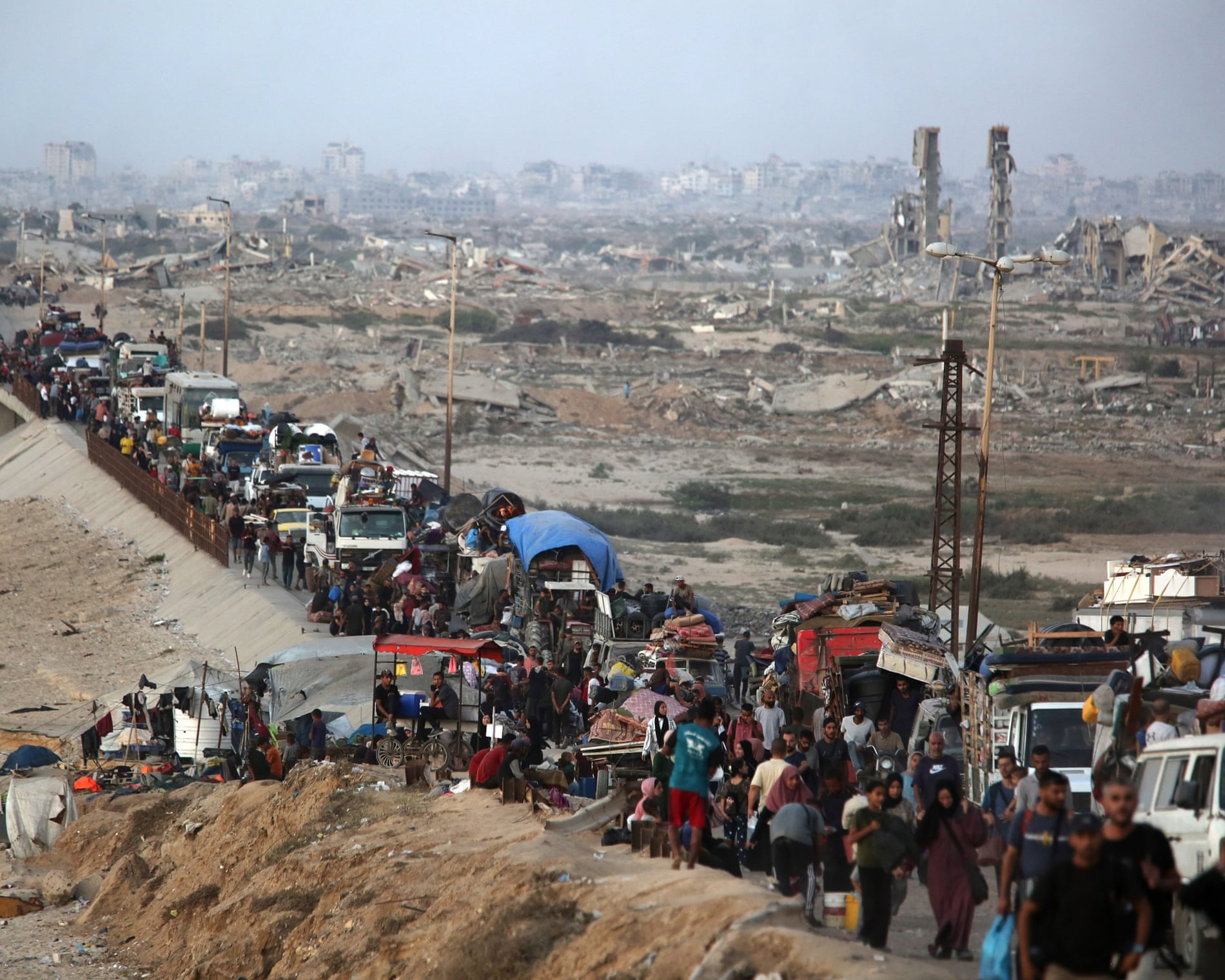
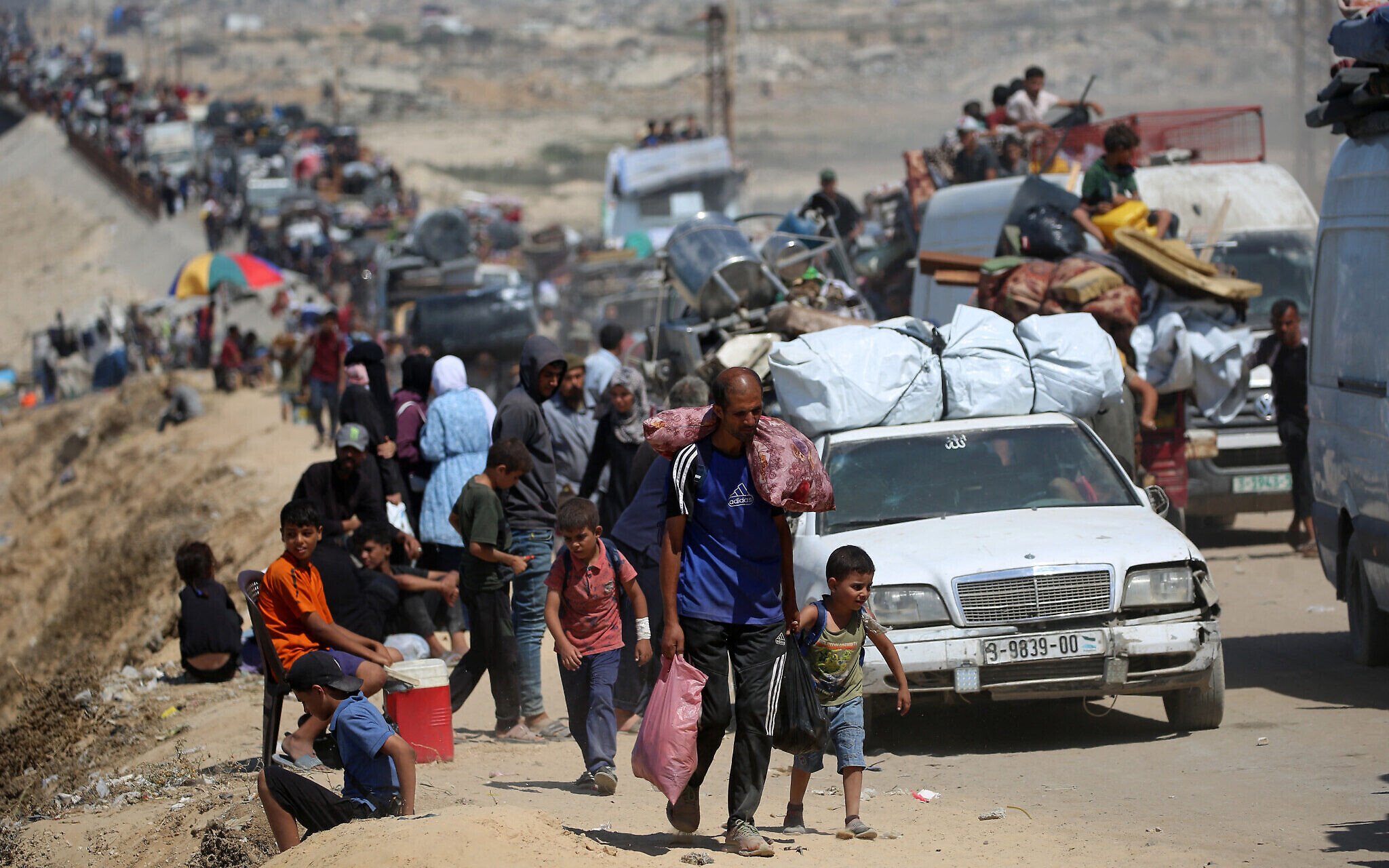
    Palestinians from Gaza City move southwards with their belongings, on the coastal road near the Nuseirat refugee camp in the central Gaza Strip, on September 19, 2025. © Eyad BABA / AFP

    The Israeli military intensified its ground assault on Gaza City on Friday, September 19, 2025, warning residents it would deploy “unprecedented force” against Hamas fighters as tanks and airstrikes hammered the territory’s largest urban center. The escalation, which began with a major incursion on Tuesday, comes amid a fresh United Nations report accusing Israel of committing genocide against Palestinians in Gaza—a finding that has drawn sharp rebukes from Israeli officials and renewed calls for international intervention nearly two years into the devastating war.

    The Israeli Defense Forces (IDF) issued stark evacuation orders via social media and leaflets, directing the estimated remaining population—down from about one million at the end of August—to flee southward along the coastal Al-Rashid road, the only remaining open route after the closure of the main Salah al-Din artery. “From this moment, Salah al-Din Road is closed for south-bound travel,” IDF Arabic-language spokesman Avichay Adraee posted on X, urging civilians to “take this opportunity and join the hundreds of thousands of city residents who have moved south to the humanitarian area.” The military estimates that 480,000 people have evacuated Gaza City since late August, though Gaza’s civil defense agency put the figure at 450,000 as of Friday. Many families, burdened by elderly relatives, young children, and scant belongings, described harrowing journeys on foot or in overloaded vehicles, with some resorting to carts or sleeping on streets while awaiting transport they could ill afford.

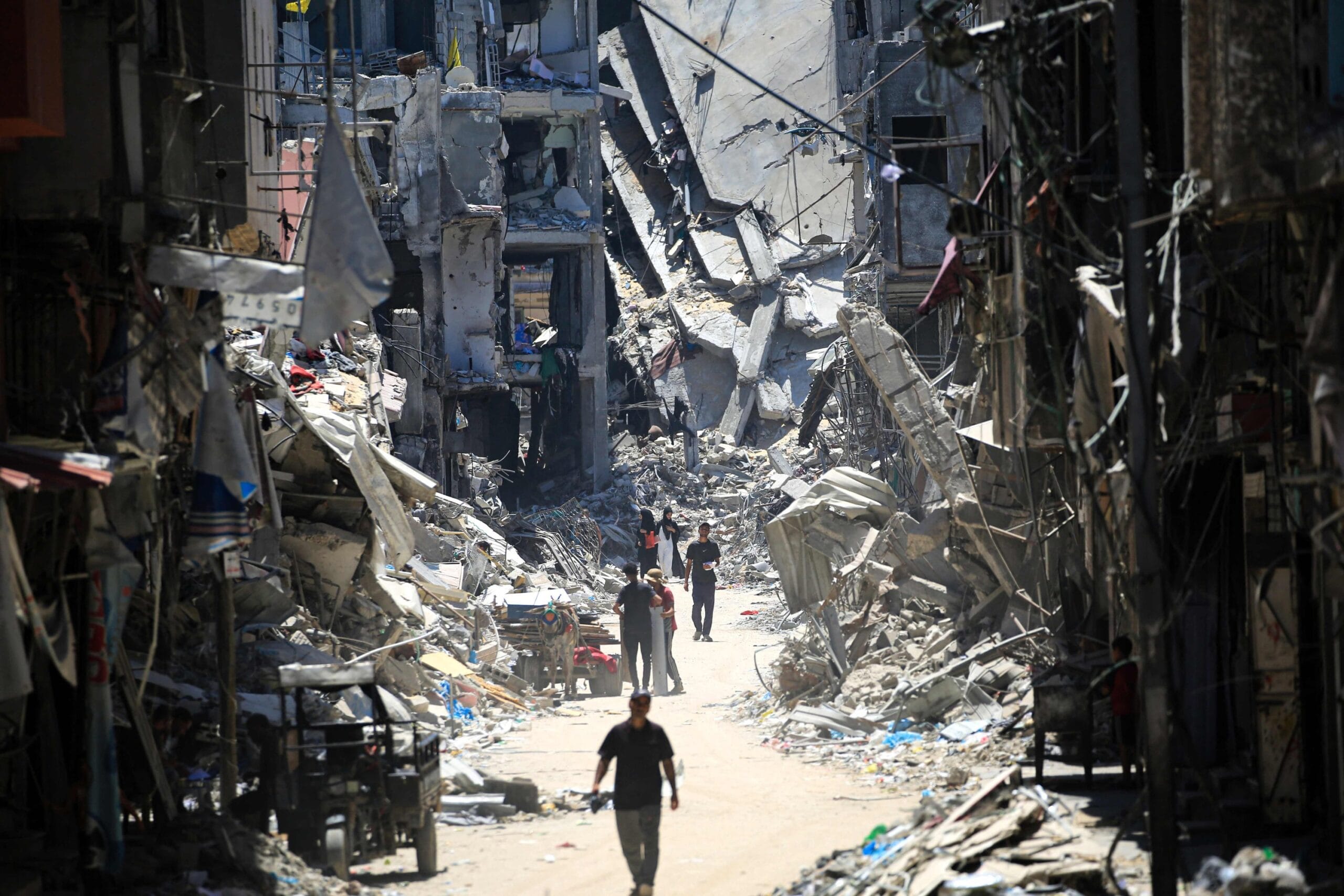
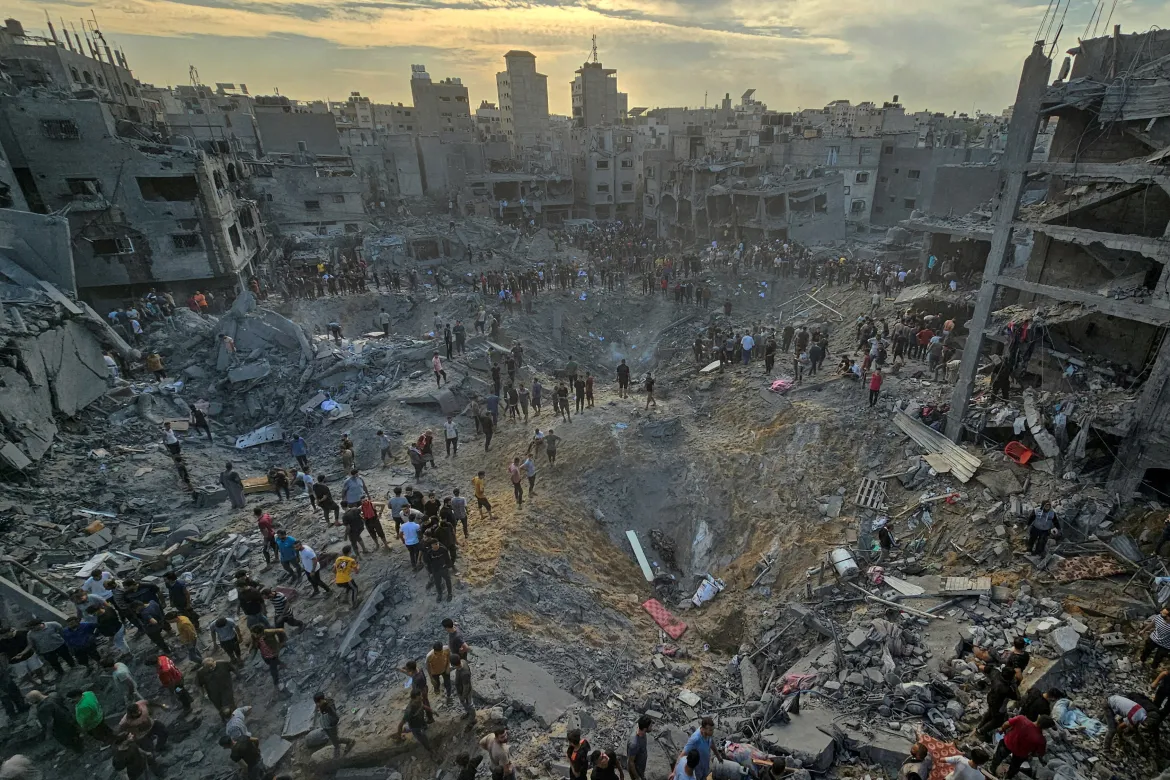
    The offensive aims to dismantle Hamas’s command structure and seize control of the city, which Israel views as the group’s symbolic stronghold. IDF troops, including armored and infantry divisions, have advanced deep into neighborhoods like al-Rimal and al-Sabra, dismantling over 20 suspected militant sites in the past day alone, according to military statements. Overnight strikes and tank fire have leveled buildings and infrastructure, with witnesses reporting “hellish” barrages that shook the enclave. Gaza health officials, citing hospital tallies, reported at least 22 deaths across the Strip on Friday, including 11 in Gaza City, bringing the war’s toll to nearly 65,000 Palestinians killed since October 7, 2023.

    For those heeding the warnings, escape is no salvation. Nivin Ahmed, a 50-year-old mother of seven, recounted walking more than 15 kilometers to Deir el-Balah on Thursday, her family “crawling from exhaustion” as her youngest son wept from fatigue. “We took turns dragging a small cart with some of our belongings,” she told reporters. Mona Abdel Karim, 36, has spent two nights on Al-Rashid street with her elderly in-laws and children, too weak or ill to trek further without a vehicle. “I feel like I am about to explode,” she said, highlighting the prohibitive costs of transport amid widespread poverty and famine. Footage from the road showed endless lines of pedestrians and cars piled high with mattresses and essentials, snaking toward the southern “humanitarian area” of Al-Mawasi—a zone Israel designated early in the war but has repeatedly struck, citing Hamas presence.

    3333
    Palestinians flee south from Gaza City on Thursday. © Hassan Al-Jadi/UPI/Shutterstock

    The push into Gaza City unfolds against a grim international backdrop. Just days earlier, on September 16, a United Nations Independent International Commission of Inquiry released a 72-page report concluding that Israel has committed genocide in Gaza, fulfilling four of the five acts outlined in the 1948 Genocide Convention: killing members of the group, causing serious bodily or mental harm, deliberately inflicting conditions of life calculated to bring about physical destruction, and imposing measures intended to prevent births. Chaired by former UN human rights chief Navi Pillay, the panel analyzed statements from Israeli leaders—including Prime Minister Benjamin Netanyahu, President Isaac Herzog, and former Defense Minister Yoav Gallant—as direct evidence of genocidal intent, alongside patterns of conduct like starvation tactics and attacks on healthcare and fertility clinics. The report also documented “systematic” sexual and gender-based violence, direct targeting of children, and the destruction of educational and religious sites.

    “The Commission concludes that the Israeli authorities and Israeli security forces have had and continue to have the genocidal intent to destroy, in whole or in part, the Palestinians in the Gaza Strip,” the inquiry stated, holding the state responsible for failing to prevent or punish the acts. It urged Israel to immediately halt operations and comply with International Court of Justice provisional measures from March 2024, while calling on all states to enforce accountability. Amnesty International echoed the findings, warning that “the very existence of Palestinians in Gaza is under threat” as the offensive intensifies.

    Israel vehemently rejected the report as “distorted and false,” with Netanyahu’s office insisting the war is a legitimate defense against Hamas, which killed 1,139 Israelis and took over 200 hostages on October 7, 2023—48 of whom remain captive. The IDF maintains it takes “all feasible measures” to minimize civilian harm and accuses Hamas of using human shields. Yet critics, including the European Commission, are preparing measures to pressure Israel, with EU foreign policy chief Kaja Kallas set to present a plan on Wednesday for member states to reassess ties. Canada labeled the offensive “horrific,” while Hamas decried it as “unprecedented” and “barbaric.”

    U.S. President Donald Trump, a staunch ally, suggested the operation could hasten hostage releases, telling reporters the risks to captives might rise but “also may be freed” in the chaos. His administration continues providing military aid, even as the UN warns of famine gripping Gaza City, with 441 deaths attributed to starvation alone. Aid groups report overwhelmed hospitals and acute malnutrition among children, half of Gaza’s displaced population.

    As smoke billows over Gaza City’s skyline and families press southward under fire, the offensive raises profound questions about the war’s endgame. Israel seeks to “force an end” by crippling Hamas, but with the enclave in ruins and global outrage mounting, the path to resolution remains as elusive as safety for those caught in the crossfire.

  • Rubio Heads to Israel Following Stalled Gaza Talks, Doha Strike

    Rubio Heads to Israel Following Stalled Gaza Talks, Doha Strike

    Secretary of State Marco Rubio departed for Israel on Sept. 13, announcing a renewed effort to win the return of hostages taken by Hamas and address humanitarian concerns after nearly two years of fighting in the Gaza Strip.

    “On my way to Jerusalem. My focus will be on securing the return of hostages, finding ways to make sure humanitarian aid reaches civilians, and addressing the threat posed by Hamas,” Rubio said in a post on X on Saturday afternoon.

    “Hamas cannot continue to exist if peace in the region is the goal.”

    Rubio’s visit comes on the heels of an Israeli strike on the Qatari capital of Doha that targeted Hamas leadership there. Hamas officials had recently received a U.S. proposal to secure the release of hostages remaining in Gaza.

    Following the Sept. 9 Israeli strike on Doha, Hamas issued a statement asserting that the attack proved Israeli Prime Minister Benjamin Netanyahu and his government “do not want to reach any agreement.”

    The Qatari monarchy, which has acted as a mediator for negotiations between Israel and Hamas, also condemned the Israeli strike.

    Before the Sept. 9 Israeli strike on Doha, President Donald Trump had said his administration was in “very deep negotiations with Hamas” to bring an end to the fighting in Gaza.

    The U.S. president said Israel acted alone in its strike on Doha. He said eliminating Hamas remains a worthy goal, but assured Qatari leaders that such a strike would not occur again on their soil.

    “Unilaterally bombing inside Qatar, a Sovereign Nation and close Ally of the United States, that is working very hard and bravely taking risks with us to broker Peace, does not advance Israel or America’s goals,” Trump wrote in a Sept. 9 post on his Truth Social platform.

    Qatar has played a key role hosting U.S. forces in the region. In June, U.S. forces stationed at Al Udeid Air Base defended against an Iranian missile barrage that Tehran ordered in retaliation for a U.S. strike that targeted three Iranian nuclear facilities.

    Qatari Prime Minister Mohammed bin Abdulrahman al-Thani visited the United States on Sept. 12 and met with Trump, Rubio, Vice President JD Vance, and special envoy Steve Witkoff.

    Speaking with reporters before his departure on Saturday, Rubio said his focus will be on helping win the release of 48 hostages, the permanent defeat of Hamas, and rebuilding the war-ravaged Gaza Strip. Rubio acknowledged he would also have to address how the Israeli strike on Qatar’s capital would impact the discussions surrounding the Gaza conflict.

    Rubio said that, despite the Doha strike, the U.S.–Israeli relationship remains strong.

    “Sometimes things happen or come up in those relationships that perhaps we’re not 100 percent aligned with, or unhappy. But it’s not going to change the nature of our relationship with the Israelis. But we are going to have to talk about it,” he said.

    Rubio’s visit to Israel also comes amid mounting pressure in the international community for recognition of a Palestinian state.

    The Trump administration has argued that international recognition of a Palestinian state would amount to a reward for Hamas.

    Speaking with reporters in Ecuador last week, Rubio warned that Israel could respond to international recognition of a Palestinian state by annexing the West Bank, a territory viewed as the heart of the Palestinian statehood claim. Additionally, Rubio warned that a move to legitimize the cause of Palestinian statehood could also undermine efforts to end the ongoing conflict in the Gaza Strip.

    “We told all these countries, before they went out and they did this—we told them that if they did this, they went through with this thing, there wasn’t going to be a Palestinian state because that’s not the way a Palestinian state is going to happen—because they have a press conference somewhere,” Rubio said on Sept. 5. “And we told them that it would lead to these sort of reciprocal actions and it would make a cease-fire harder.”

  • Nationwide Protests Erupt in Israel Demanding End to Gaza War

    Nationwide Protests Erupt in Israel Demanding End to Gaza War

    TEL AVIV, Israel — Hundreds of thousands of Israelis took to the streets across the country on Sunday, August 17, 2025, demanding an immediate end to the war in Gaza and a deal to secure the release of hostages still held by Hamas. The protests, which swept through Tel Aviv, Jerusalem, Haifa, and other cities, marked a significant escalation in public pressure on Prime Minister Benjamin Netanyahu’s government amid growing frustration over the ongoing conflict.

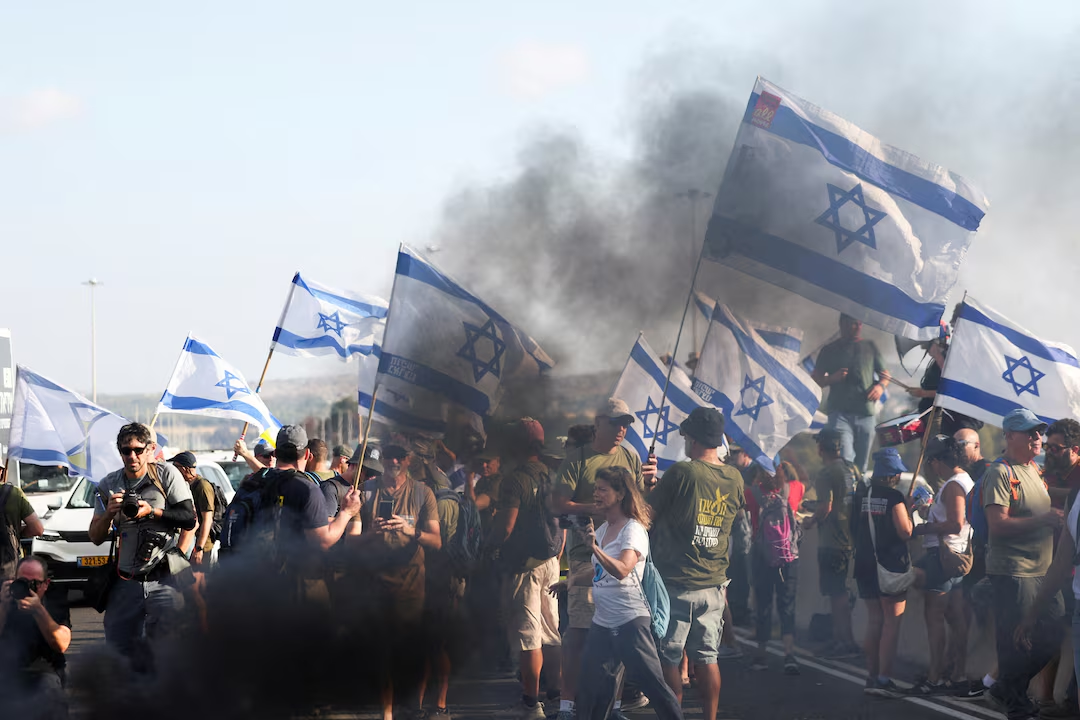
    Organizers, including the Hostages and Missing Families Forum, claimed that over one million people participated in hundreds of demonstrations nationwide, though The NYBudgets could not independently verify these figures. Images and videos showed packed streets and squares, with protesters blocking highways, lighting bonfires, and gathering outside politicians’ homes and military headquarters. The Israeli police reported multiple arrests, stating on X, “Officers have arrested multiple individuals engaging in unlawful behavior and will continue to act wherever public safety or freedom of movement is at risk.” They emphasized that while “the right to lawful protest” is a cornerstone of democracy, actions like burning tires or endangering public safety are unlawful.

    The protests reflect deep divisions over Netanyahu’s handling of the war, which began on October 7, 2023, when Hamas-led terrorists launched a deadly attack from Gaza, killing approximately 1,200 Israelis and taking 250 hostages. Israel’s response—an aerial bombing campaign followed by a ground offensive—has resulted in 61,900 Palestinian deaths, according to the Hamas-controlled health ministry in Gaza. A ceasefire in January 2025 led to a partial Israeli troop withdrawal, but the conflict persists, with 50 hostages still in Gaza, 30 of whom are believed to be dead.

    image?url=https%3A%2F%2Fimg.theepochtimes.com%2Fassets%2Fuploads%2F2025%2F08%2F18%2Fid5902633 Israel protest1 sb
    Families of hostages and supporters hold photos of hostages during a demonstration calling for an hostages deal in Tel Aviv, Israel on Aug. 17, 2025. © Amir Levy/Getty Images

    Netanyahu, addressing a government meeting on Sunday, defended his strategy, arguing that ending the war without defeating Hamas would embolden the group and jeopardize Israel’s security. “Those who are calling for an end to the war today without defeating Hamas are not only hardening Hamas’s stance and pushing off the release of our hostages, they are also ensuring that the horrors of the October 7 will recur again and again,” he said. “Together, we have had great achievements against our enemies on all fronts. Together we will fight and with God’s help, together we will complete the victory and end the war.”

    On August 8, Netanyahu announced a Security Cabinet-approved plan to retake Gaza City, disarm Hamas, and secure the release of all hostages. The five-point plan also seeks to demilitarize the Gaza Strip, restore Israeli security control, and establish a new civil administration independent of Hamas or the Palestinian Authority. The move has drawn sharp criticism from opposition figures and hostage families. Israeli opposition leader Yair Lapid posted on X, “This is exactly what Hamas wanted: for Israel to be trapped in the field without a goal, without defining the picture of the day after, in a useless occupation that no one understands where it is leading.”

    Yehuda Cohen, whose son Nimrod remains a hostage, expressed anguish over the government’s priorities, telling The Epoch Times, “We live between a terrorist organization that holds our children and a government that refuses to release them for political reasons.” Finance Minister Bezalel Smotrich labeled the protests “a bad and harmful campaign that plays into Hamas’s hands, buries the hostages in the tunnels and attempts to get Israel to surrender to its enemies and jeopardize its security and future.”

    image?url=https%3A%2F%2Fimg.theepochtimes.com%2Fassets%2Fuploads%2F2025%2F08%2F18%2Fid5902553 demonstrators
    People take part in a protest demanding the end of the war, the immediate release of hostages held by Hamas in the Gaza Strip, and against Prime Minister Benjamin Netanyahu’s government in Tel Aviv, Israel, on Aug. 16, 2025. © Mahmoud Illean/AP

    The Hostages and Missing Families Forum, representing relatives of those still held, thanked the public for their support, posting on X, “Throughout the day, over one million people participated in hundreds of actions held across the country. The hostage families wish to tell the people of Israel: ‘Thank you! From here, we will only intensify our efforts. Stay with us until the last hostage is returned!’”

    The planned Gaza City offensive, which will likely require mobilizing thousands of reservists, has yet to be scheduled, adding to public uncertainty. Critics argue that Netanyahu’s focus on military victory risks prolonging the war and delaying hostage releases, while supporters insist that neutralizing Hamas is essential for Israel’s long-term security. As tensions mount, the demonstrations underscore a nation grappling with the human and strategic costs of a conflict that shows no immediate end.

  • Israel Approves Plan to Seize Gaza City Amid International Condemnation

    Israel Approves Plan to Seize Gaza City Amid International Condemnation

    Israel has approved plans to take control of Gaza City, while distributing humanitarian aid to civilians outside combat zones, the office of Israeli Prime Minister Benjamin Netanyahu announced on Friday, amid international pushback.

    The decision follows a security cabinet meeting in which a majority of ministers endorsed five principles for ending the war.

    These include disarming the Hamas terrorist organization, securing the release of all remaining Israeli hostages held in Gaza, maintaining Israel’s security control over the territory, and establishing an alternative civil administration unaffiliated with either Hamas or the Palestinian Authority.

    In an interview with Fox News on Aug. 7, Netanyahu said the plans align with Israel’s long-standing objectives in Gaza, ensuring the enclave poses no threat to the country’s security or existence.

    Those goals have been central since Hamas’s Oct. 7, 2023, attack on Israel, in which more than 1,200 people were killed, and about 250 people kidnapped.

    The assault triggered a prolonged war.

    According to the Gaza Ministry of Health, which operates under the control of Hamas, more than 60,000 people have been killed in Gaza since Oct. 7, 2023. The number does not distinguish between combatants and civilians and includes some deaths from natural causes. The Epoch Times cannot verify the casualty numbers.

    International Reactions

    Countries remain divided over how to end the conflict. Western allies such as France, the UK, Canada, and Australia are pressing for a two-state solution—a Palestinian state alongside Israel. Israel and the United States reject recognizing Palestinian statehood under current conditions, arguing it would endanger Israel’s security.

    The UK, Australia, and Turkey on Friday condemned Israel’s plan to expand military operations in Gaza.

    British Prime Minister Keir Starmer said it would “only bring more bloodshed” and wouldn’t help secure the release of hostages, while Australian Foreign Minister Penny Wong said the move would worsen the humanitarian crisis in Gaza.

    In a statement, the Turkish Foreign Ministry said Israel’s plan aims to make Gaza uninhabitable and forcibly displace Palestinians from their land.

    The leaders back a two-state solution for the region, which will be a key focus of the 80th U.N. General Assembly in September, where France, the UK, and Canada said they plan to formalize their recognition of a Palestinian territory.

    U.N. officials urged Israel to stop its planned full military takeover of the Gaza Strip. U.N. High Commissioner for Human Rights Volker Türk cited a ruling by the International Court of Justice and said, “Israel must end its occupation and achieve a two-State solution giving Palestinians the right to self-determination,” according to a U.N. press statement on Aug. 8.

    Netanyahu dismissed the court’s findings as “fundamentally wrong” and one-sided, while the United States said the court should avoid any ruling that might hinder negotiations toward a two-state solution based on the “land-for-peace” principle.

    U.S. State Department spokesperson Thomas Pigott, when asked on Thursday to respond to Netanyahu’s remarks, reiterated U.S. policy priorities: delivering aid to Gaza without it being looted by Hamas, securing the release of hostages, and ensuring Hamas does not continue to exist.

    German Chancellor Friedrich Merz said on Aug. 8 that its exports of military equipment that could be used in Gaza will be suspended.

    Merz affirmed Israel’s right to defend itself and the need to disarm Hamas, but he said that measures approved by the Israeli Security Cabinet “are making it increasingly unclear how these goals will be achieved.”

    He also called on Israel to avoid steps toward annexing the West Bank.

    Internal Tensions

    Internal divisions deepened in Israel after the security cabinet approved sending forces into Gaza City, rejecting an alternative proposal that ministers said would not ensure Hamas’s defeat or the return of hostages.

    Opposition leader Yair Lapid called the decision “a disaster” on Aug. 8, warning it would drag on for months, lead to the deaths of hostages and soldiers, cost Israeli taxpayers tens of billions, and end in political collapse.

    “This is exactly what Hamas wanted: for Israel to be trapped in the field without a goal, without defining the picture of the day after, in a useless occupation that no one understands where it is leading,” Lapid said on X.

    The Hostages and Missing Families Forum, representing relatives of those held in Gaza, also condemned the decision as “abandoning the hostages.”

    The group said that expanding the fighting “only further endangers those still held in Gaza’s tunnels” and leaves them “at the mercy of Hamas.”

    “Hamas continues to exploit military escalation as justification for its brutal treatment of our loved ones,” the group said. “The only way to bring the hostages home is through a comprehensive deal.”

    In an interview with Fox News, Netanyahu said Israel is “doing everything“ in its power ”to salvage the hostages.”

    He said that Israel can achieve the release of the remaining 50 hostages “with a combination of the right military tactics and international pressure.”

    “Without military pressure, nothing works,” he said.

    Some protesters blocked a highway in Tel Aviv on Thursday, according to a report by the Times of Israel, demanding a deal for the release of the hostages and demonstrating against an expansion of the war in Gaza.

  • Hamas Releases Disturbing Video of Hostage Digging His Own Grave in Tunnel

    Hamas Releases Disturbing Video of Hostage Digging His Own Grave in Tunnel

    Hamas-held hostage Evyatar David is filmed charting his meager food consumption and digging what he says he fears will be his own grave in a tunnel in Gaza, in a Hamas propaganda video that his family cleared for publication on August 2, 2025.

    In a harrowing video released Friday by Hamas and approved for publication by his family the following day, Israeli hostage Evyatar David is seen pale, emaciated, and trembling, forced to dig what he fears may be his own grave inside a Gaza tunnel. The shocking footage, combined with desperate pleas from his family and mounting international pressure, has cast renewed urgency on stalled hostage negotiations and raised grave questions about the treatment of captives held by terror groups since the brutal October 7, 2023 massacre.

    David, a young Israeli man abducted from the Nova music festival near Re’im during Hamas’s unprecedented assault on southern Israel, appears barely alive in the footage. His ribs protrude through his skin, his eyes are sunken, and his voice is frail. “This is the grave I think I’m going to be buried in,” he says at one point. “Time is running out. You are the only ones who can end this.”

    His family, visibly distraught, released a statement on Saturday: “We are forced to witness our dear son and brother Evyatar being deliberately and cynically starved in Hamas’s tunnels in Gaza — a living skeleton buried alive. Our son has only a few days left to live in his current condition.”

    David’s footage paints a bleak portrait of conditions in Hamas captivity. In scenes inside a cramped tunnel — barely tall enough for him to stand — David is seen crossing off dates on a makeshift calendar etched into the wall, marking the sparse days when he received food. He describes eating only beans and lentils, sometimes going multiple days without a single meal. At one point, he is handed a small can. “This can is for two days. This whole can is for two days so that I don’t die,” he says with eerie composure.

    His voice grows fainter as he states: “I haven’t eaten for a few days in a row. I am in very, very difficult conditions… You can see how thin I am.”

    The family has called on President Donald Trump, the Israeli government, and the global community to intervene immediately:

    “We are begging the government of Israel, the people of Israel, every nation of the world, and especially President Trump: You must do everything in your power, by any means necessary, to save Evyatar and the rest of the hostages.”

    U.S. special envoy Steve Witkoff, sent by President Trump to handle hostage negotiations, addressed hundreds at Hostages Square in Tel Aviv on Saturday after the release of the video. “We now need to bring all of them home. We are very close to ending the war,” he said. “No more piecemeal deals. That doesn’t work. And we’ve tried everything.”

    Witkoff pledged that hostage recovery is the top priority of the Trump administration:

    “This is the most important thing President Trump asked me to work on, and I will work on it until my last breath,” he said. “We will get your children home and hold Hamas responsible for any bad acts on their part.”

    He also claimed that the U.S. believes all remaining hostages in Gaza are alive — a powerful message meant to assure families holding out hope.

    Deliberate Starvation Campaign?

    According to a Channel 12 report, a senior Israeli source confirmed that Hamas is not lacking food, but is intentionally starving the hostages. “We know from testimony of returned hostages and our own intelligence that the captors themselves are well-fed. This is deliberate. It’s psychological warfare.”

    Evyatar’s family echoed this sentiment:

    “Hamas is using our son as a living experiment in a disgusting hunger campaign. Our Evyatar is being starved for propaganda purposes. There is no limit to the pain the Hamas terror group causes the hostages and the residents of Gaza.”

    A Nation in Mourning: “Second Holocaust” and Mass Protest

    The chilling footage of David, alongside a similarly disturbing video of hostage Rom Braslavski, ignited anguish across Israel. Hundreds gathered in Hostages Square on Saturday, where families erected a barbed wire protest camp to symbolize their loved ones’ captivity.

    “Our children are undergoing a Holocaust,” said Einav Zangauker, mother of hostage Matan Zangauker. “Jews are becoming skin and bones because of political survival. If we don’t free them now, they won’t survive much longer.”

    Anat Angrest, mother of a captive soldier, called the crisis a “complete failure” for Prime Minister Benjamin Netanyahu:

    “My father survived the Holocaust, and now his grandson is living through one — in color, on video. The 2025 Holocaust is being carried out by inaction.”

    Hamas’s Narrative vs. Israel’s Defense

    Hamas released the videos in conjunction with inflammatory statements blaming Israel for starvation in Gaza. The UN and several humanitarian agencies have expressed concern about hunger in the territory, while Israel has forcefully denied orchestrating any starvation campaign.

    The Israel Defense Forces (IDF) say they have increased humanitarian corridors and implemented 10-hour ceasefires in various regions to allow aid distribution. Still, the Gaza Health Ministry — run by Hamas — claims over 60,000 deaths in the Strip, although this figure cannot be independently verified and includes both fighters and civilians.

    Witkoff said Hamas has “expressed willingness to demilitarize,” although the group later issued a statement rejecting the idea:

    “We will not disarm as long as the occupation exists,” Hamas declared, while also condemning U.S. efforts to increase humanitarian aid to Gaza.

    Meanwhile, Netanyahu faces a fractured government, with far-right members calling for the complete razing of Gaza City and opposing any ceasefire-hostage deal. Critics allege the Prime Minister is delaying resolution for political gain.

    In the midst of war, propaganda, and political calculations, Evyatar David’s haunted face, his trembling voice, and his forced shovel scraping the earth beneath him, have cut through the noise. His cry — and that of his family — now echoes across borders:

    “This isn’t fiction. This is real.”

  • The images of starvation in Gaza are deeply misleading

    The images of starvation in Gaza are deeply misleading

    rt34t34t34t5345t

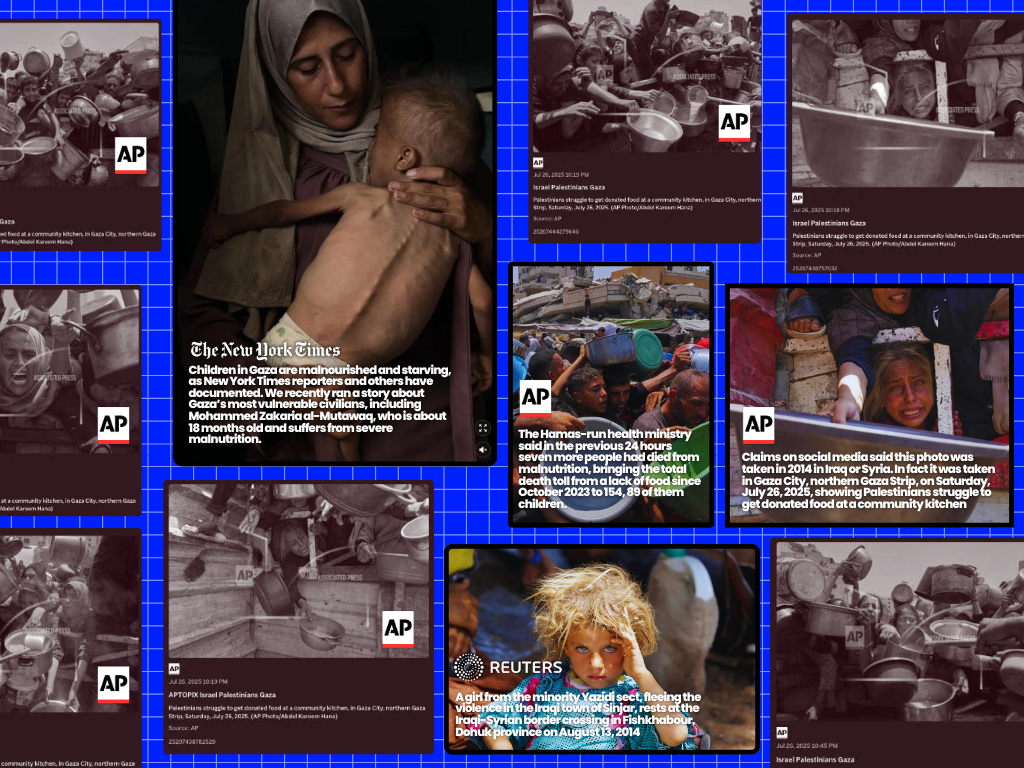
    It’s one of the most emotionally searing images circulated in recent months: a malnourished child behind a fence, desperate eyes piercing through the camera lens, with a woman stretching out a bowl for food. It’s been published by international media, invoked by politicians, and shared by millions online. It has come to symbolize, for many, the reported famine in Gaza.

    But there’s just one problem. The photo’s origin and context are hotly disputed — and increasingly, experts say, deliberately manipulated.

    Earlier this week, Israeli Prime Minister Benjamin Netanyahu told his 3.4 million followers on X:

    “There is no starvation in Gaza, no policy of starvation in Gaza.”

    His remarks unleashed a digital firestorm. Former President Donald Trump broke ranks with his usual ally and responded:

    “There is real starvation in Gaza. You can’t fake that.”

    youtube placeholder image

    This rare division between two strong allies laid bare the intensifying war not just over territory, but over information — a propaganda war playing out across social media, newsrooms, and governments.

    Hamas’s Propaganda Machinery and Media Blindness

    Many analysts and security experts argue that Hamas is adept at exploiting global sympathy through carefully staged imagery. Images of skeletal children, overwhelmed hospitals, and food queues are frequently disseminated, often with little journalistic scrutiny.

    Take, for instance, the viral image of a girl at a community kitchen. On X (formerly Twitter), thousands of users — aided by Elon Musk’s AI chatbot, Grok — claimed the photo was from 2014, portraying a Yazidi girl fleeing ISIS in Iraq.

    Claims on social media said this photo was taken in 2014 in Iraq or Syria. In fact it was taken in Gaza City, northern Gaza Strip, on Saturday, July 26, 2025, showing Palestinians struggle to get donated food at a community kitchen. © AP Photo/Abdel Kareem Hana

    Grok responded:

    “Yes, the photo is from August 2014… on Mount Sinjar in Iraq.”

    Citing Reuters, it labeled the image a case of repurposed content.

    rtr42bt8
    A girl from the minority Yazidi sect, fleeing the violence in the Iraqi town of Sinjar, rests at the Iraqi-Syrian border crossing in Fishkhabour, Dohuk province on August 13, 2014. © Youssef Boudlal—REUTERS

    But BBC Verify journalist Shayan Sardarizadeh debunked that claim. He identified the photo’s true source:

    “The image is from Gaza, taken on July 26, 2025, by AP photographer Abdel Kareem Hana.”

    Reverse image tools like TinEye confirmed the original publication date and location. Grok was simply wrong.

    As Sardarizadeh noted:

    “AI chatbots, including Grok, are not fact-checking tools and should not be used for that purpose, particularly in relation to breaking and developing events.”

    Still, damage was done. The manipulated claim was spread, repeated, and believed by many — a clear example of how quickly misinformation can overshadow the truth.

    The Case of Mohammed Zakaria al-Mutawaq

    nn

    Another image that shocked global audiences was that of 18-month-old Mohammed Zakaria al-Mutawaq. Published by The New York Times in a piece titled “Gazans Are Dying of Starvation”, the toddler was described as emaciated, with his father reportedly killed while searching for food.

    “As an adult, I can bear the hunger, but my kids can’t,” his mother was quoted.

    But investigative journalist David Collier quickly raised flags. He cited medical records showing Mohammed suffered from severe genetic disorders since birth and had required special supplements even before the war began.

    In response, The New York Times issued an editor’s note:

    “We have since learned new information… and have updated our story to add context about his pre-existing health problems.”

    They noted that while Mohammed’s condition had worsened due to the lack of medical care, his malnutrition was compounded, not caused, by the current war.

    To critics, the update wasn’t enough.

    “So you guys lied, got called out, and issued a complete non-apology,” one user posted on X.

    On Wednesday, a UN-backed food security task force warned that famine “is currently playing out” in Gaza. Their analysis said Gaza City had crossed famine thresholds for food consumption and acute malnutrition.

    The Hamas-run Gaza Health Ministry reports 154 deaths from hunger since October 2023 — including 89 children. However, critics question the credibility of the ministry’s figures, noting its alignment with Hamas and history of inflated or unverifiable statistics.

    Meanwhile, UN Secretary-General António Guterres called the situation “a humanitarian catastrophe of epic proportions.” Human rights organizations, including Israel-based B’Tselem and Physicians for Human Rights, claim Israel is committing genocide through starvation, mass displacement, and bombings.

    Yet at the same time, The New York Times also recently reported Israeli military officials denying Hamas’s alleged theft of UN aid — suggesting the crisis may be more due to distribution chaos, logistical breakdowns, and internal Hamas mismanagement than direct Israeli policy.

    A Media Reckoning Is Overdue

    The Western media’s responsibility in this tragedy cannot be ignored. In the rush to file emotionally evocative stories, due diligence has often been sacrificed. As the New York Budgets Editorial Standards outline: verifying visual content, especially in wartime, is not optional — it is essential.

    “Every journalist must ask: Who took this photo? Where? When? Under what conditions?”

    Hamas has repeatedly demonstrated it will exploit suffering for propaganda. That doesn’t mean suffering isn’t real — but it does mean every claim must be thoroughly scrutinized. Too often, however, global outlets like The New York Times, The Guardian, and Stuff have published without confirmation, only issuing updates days later.

    Starvation in Gaza may well be occurring. Humanitarian groups have sounded the alarm. But in a media landscape rife with misinformation, every image, every anecdote must be questioned — not to deny suffering, but to preserve the truth.

    Because when lies masquerade as evidence, the real victims — whether Palestinian civilians or the truth itself — are the ones who suffer the most.

  • Israel says it’s pausing fighting in parts of Gaza to allow aid in

    Israel says it’s pausing fighting in parts of Gaza to allow aid in

    %2Ffc31e35e 1759 4524 ac12 5b07d44b38bb
    © DAWOUD ABU ALKAS/REUTERS

    Tel aviv, Israel – Under mounting international pressure, Israel has implemented daily tactical pauses in military operations across select areas of Gaza, establishing designated “safe routes” to facilitate humanitarian aid delivery. The move comes amid escalating reports of a horrific hunger crisis, described by the UN as reaching famine-like levels in parts of the enclave.

    The Israel Defense Forces (IDF) confirmed daily pauses from 10 a.m. to 8 p.m. local time in parts of Gaza City, Deir al‑Balah, and Al‑Mawasi. Secure corridors for aid convoys, operating from 6 a.m. to 11 p.m., were also introduced, ensuring land-based deliveries can proceed with reduced risk. These measures were coordinated with the UN, WFP, UNICEF, and international aid organizations seeking immediate relief access.

    %2Feb05063e b1f8 475c a404 7d05c06ad480
    Palestinians at a lentil soup distribution point in Gaza City. © Omar Al-Qattaa/Getty Images

    Israel emphasized that while these pauses allow aid to flow, combat operations continue in other areas and it categorically denied accusations that it is using starvation as a weapon—labeling them propaganda.

    According to the World Food Programme, over a third of Gaza’s population—some 700,000 people—are going days without food. Approximately 1.25 million face life-threatening hunger (IPC Phase 5). Nearly 100,000 women and children suffer from severe acute malnutrition and require urgent treatment. The Gaza Health Ministry records at least 133 deaths from malnutrition in July alone, including 87 children, as official aid remains insufficient. The WHO reports 21 children under age 5 have already died from starvation and malnutrition-related illnesses in 2025—and malnutrition centers lack supplies. UN staff in Gaza report that many humanitarian workers have fainted from hunger and exhaustion in the last 48 hours. Since May, aid convoys and distribution points—including those run by the Gaza Humanitarian Foundation—have seen over 1,000 Palestinian deaths in chaotic, often violent crowding and shooting incidents.

    %2F9f94bf3f 4cb3 46f8 91d2 5042f0afa826
    © DAWOUD ABU ALKAS/REUTERS
    %2F9eba8262 a543 430a b7be cfa885ec69de
    ©DAWOUD ABU ALKAS/REUTERS

    Despite the new pauses, aid flow remains far below what’s needed:

    UN agencies estimate Gaza requires at least 120 aid trucks daily—but only a fraction of that number is entering, leaving relief piles stuck at crossing points in Jordan and Egypt. Aid delivered so far includes limited air-drops, such as airdrops of flour, sugar, and canned foods, plus joint efforts by Jordan and the UAE. Still, those methods are widely criticized as inefficient and.

    UN officials and humanitarian leaders described the situation as apocalyptic, warning that the humanitarian pauses are a start—but not a solution: full corridors and sustained access are urgently needed. Some international leaders, including India, have called for a permanent ceasefire and immediate access for relief convoys, branding current conditions a breach of international law. Israeli officials blame UN inefficiency and attribute starvation claims to Hamas propaganda, while maintaining the responsibility for food distribution rests with international agencies—not the IDF.

    AP25053233860270
    Hamas fighters are deployed in Rafah ahead of the planned release of two among six Israeli hostages set to be handed over to the Red Cross, Gaza Strip, on February 22, 2025. © AP/Jehad Alshrafi

    From the UN’s perspective, this pause is a critical but insufficient step:

    “Until we have that stability of assistance, this is going to be really difficult to control the situation on the ground,” WFP’s Ross Smith emphasized, warning that food assistance is currently the only lifeline for Gaza populations facing famine-like conditions.

    Israel’s tactical pause in parts of Gaza marks a significant shift—but it’s being overshadowed by the scale of the crisis on the ground. With hunger spreading rapidly and thousands already dead, the measures fall far short of addressing Gaza’s catastrophic needs. Humanitarian leaders caution that only sustained, full access can save lives before famine crosses irreversible thresholds.

  • Six people have been detained by police outside Palantir’s office during a protest concerning deportations and military contracts

    Six people have been detained by police outside Palantir’s office during a protest concerning deportations and military contracts

    Six people were taken into custody by police on Thursday as a group blocked the entrance to the New York office of Palantir to protest the tech company’s work for the U.S. Immigration and Customs Enforcement agency, the Israeli military and other efforts.

    More than 30 people participated in the protest, according to Planet Over Profit, the group that organized the demonstration in the Chelsea section of Manhattan.

    The New York Police Department had no immediate comment when asked if the six detained protestors were charged.

    Planet Over Profit said all six were released later in the morning.

    Planet Over Profit, in a statement, said it objected to Palantir’s “turbocharging ICE deportations, complicity in the genocide of Palestinians and plans to massively expand surveillance of every U.S. resident.”

    “Palantir’s tech programs are being used to deport our neighbors, kill civilians in Gaza, enhance oil extraction, and deny health insurance claims,” the group told CNBC.

    “If your company kills for profit, we will disrupt you,” a spokesperson added.

    Palantir did not immediately respond to CNBC’s request for comment.

    Palantir was co-founded by billionaire Peter Thiel and its current CEO Alex Karp, who donated $1 million to President Donald Trump’s inauguration fund. The firm has garnered attention for its defense and software contracts with the government.

    In April, ICE paid the company $30 million to provide the agency with “visibility” on people self-deporting, according to federal documents.

    Karp told CNBC news in March 2024 that some Palantir employees had left the company because of his public support for Israel, and that he expected more would leave for the same reason.

    During an earnings call a month earlier, Karp said he was “exceedingly proud” that Palantir was “on the ground” in Israel on the heels of the Oct. 7, 2023, attacks by Hamas. He also said Palantir was “involved in operationally crucial operations in Israel.”

    Shares of the company have rallied 500% over the past year and hit a new high for the year to date on Wednesday morning.

  • Bitcoin’s price is going up because a ceasefire between Israel and Iran has started, and the Senate has revealed a major new cryptocurrency bill

    Bitcoin’s price is going up because a ceasefire between Israel and Iran has started, and the Senate has revealed a major new cryptocurrency bill

    Crypto prices, including bitcoin, rose on Tuesday after President Trump announced a ceasefire between Iran and Israel.

    By midday Tuesday, bitcoin had passed the $105,000 level, ether jumped back above the $2,400 mark, and XRP climbed to $2.19. 

    The risk-on action in the markets, which also saw stocks rally on the Mideast de-escalation, wasn’t the only source of momentum, as Republican senators unveiled a major bill to set the rules of the road for crypto. Specifically, the legislation would define when crypto is a commodity or a security, allow crypto exchanges to register with the Commodity Futures Trading Commission, and reduce the Securities and Exchange Commission’s regulation of digital assets — a big reversal from the plans of President Biden’s SEC Chair Gary Gensler to closely regulate the crypto industry.

    The new framework was introduced by Senate Banking Committee Chairman Tim Scott of South Carolina and Senator Cynthia Lummis of Wyoming, who heads the panel’s Digital Assets Committee. Robinhood CEO Vlad Tenev said on CNBC’s “Squawk Box” that the regulatory development was important for the U.S. to regain the lead in the crypto industry, where he said it has fallen behind other markets, including Europe.

    Last week, the senate passed a stablecoin bill, marking the first major legislative win for the crypto industry, which now heads to the House for consideration of its version of the bill. Both bills prohibit yield-bearing consumer stablecoins — but differ on agency regulatory oversight. Visa CEO Ryan McInerney weighed in on the advancement of the Senate version, the Genius Act, telling CNBC’s “Squawk on the Street” that the credit card giant has been embracing stablecoins. 

    Meanwhile, investors increased their bets on crypto company Digital Asset, which raised $135 million in funding from several big names in banking and finance, including Goldman Sachs, BNP Paribas and hedge fund billionaire Ken Griffin’s Citadel Securities. The firm, which touts itself as a regulated crypto player, said it will use the funding to advance adoption of its Canton network, which is a blockchain for financial institutions, another sign of how major financial institutions are embedding themselves into the once obscure crypto world.