Category: Foreign Policy

  • US Intelligence chief avoids contradicting Trump on Iran war threat claims

    US Intelligence chief avoids contradicting Trump on Iran war threat claims

    Donald Trump’s top spy chief refused to say whether Iran had posed an imminent threat to the US as the president claimed at the outset of the war.

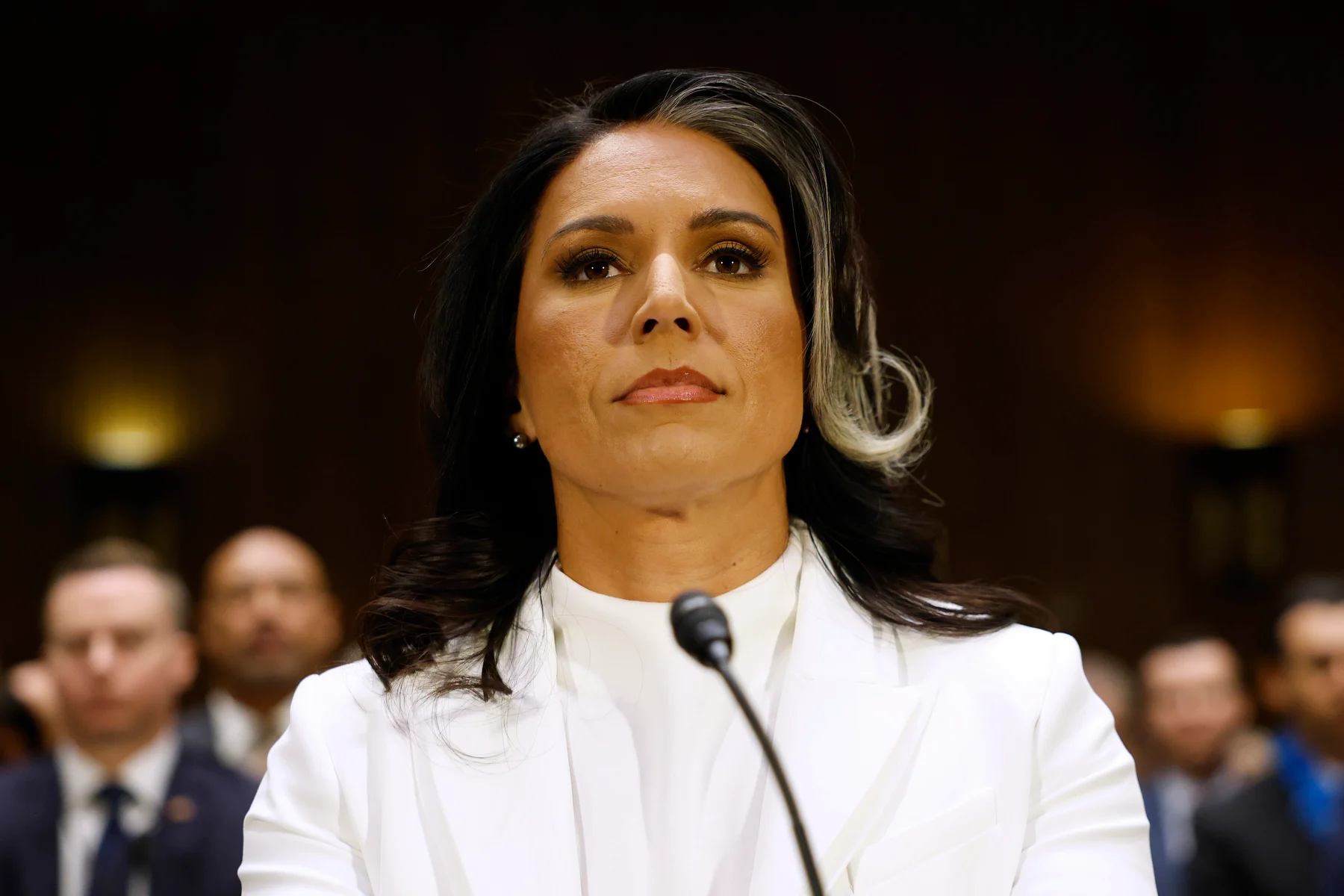
    Director of national intelligence Tulsi Gabbard struggled to avoid contradicting Trump as she and other top national security officials testified to the Senate Intelligence Committee on Wednesday about the biggest security threats facing the country.

    Pressed repeatedly on whether the intelligence community had assessed that Iran posed “an imminent nuclear threat” ahead of the start of the US-Israel attack on February 28 — one of the administration’s main justifications for the war — Gabbard said: “It is not the intelligence community’s responsibility to determine what is and is not an imminent threat. That is up to the president.”

    Gabbard’s testimony at the intelligence committee’s annual global threats hearing came a day after another top intelligence official resigned over what he claimed were the administration’s “unfounded” justifications for the war, further amplifying doubts about a conflict that has killed 13 American service members so far.

    In prepared opening remarks submitted to the committee ahead of her appearance, Gabbard said that Iran’s nuclear programme had been “obliterated” by US and Israeli strikes against the country’s nuclear sites last June.

    “There has been no efforts since then to try to rebuild their enrichment capability,” she wrote in her statement.

    But she veered from her prepared remarks when she addressed the Senate panel, saying that US intelligence believed that Iran had been “trying to recover” from the “severe damage” to its nuclear infrastructure before the renewed US-Israel strikes against the country.

    When Mark Warner, the intelligence committee’s top Democrat, asked Gabbard why she had strayed from her written testimony, she responded that she had skipped the relevant section because her testimony “was running long”.

    US officials have offered contradictory justifications for the war and the status of Iran’s nuclear programme, saying that Tehran was both “weeks” away from obtaining a nuclear bomb, and that its nuclear facilities had been “obliterated” by last year’s war.

    At the start of her testimony Gabbard stressed she was presenting “the intelligence community’s assessment of the threats facing US citizens, our homeland and our interests” and not her personal views or opinions.

    A combat veteran who has long opposed US military intervention overseas, Gabbard remained silent on the conflict until Tuesday when she posted a statement on X that repeated Trump’s justification for the war, but did not say whether she supported it.

    Joe Kent, a close ally of Gabbard who was director of the National Counterterrorism Center, on Tuesday became the first senior US official to resign in protest at the war, saying that Tehran posed “no imminent threat to our nation”.

    Kent’s resignation has raised questions about Gabbard’s future in the Trump administration and splits within his Maga movement which has long been opposed to US wars of regime change.

    White House press secretary Karoline Leavitt told reporters on Wednesday she had no “knowledge” of whether Trump was considering firing Gabbard, but said it was “a question for him”.

    Democrats expressed frustration during the hearing with the unwillingness of Gabbard and CIA director John Ratcliffe to answer questions about the information presented to the president ahead of his decision to go to war. FBI director Kash Patel and the leaders of the US defence and signals intelligence agencies also testified.

    Gabbard told the committee that US intelligence had “long” assessed that Iran would likely use the Strait of Hormuz as leverage in the event of a crisis.

    But both she and Ratcliffe declined to say whether they had given that assessment directly to the president ahead of the war. Gabbard did say that her agency assessed that Iran’s regime remained largely “intact” and would seek to reconstitute its military capabilities if they remained.

    Trump said this week that his administration had been surprised by Iran’s retaliatory strikes against US allies in the Middle East. There appears to have been little preparation for the closure of the Strait of Hormuz, a critical waterway through which 20 per cent of the world’s oil flows.

    “We’re trying to figure out if the president knew what the downside was of the Strait of Hormuz being closed, and I’m having a hard time finding out whether the White House asked, or whether there was a brief, whether the president knew,” said Democratic senator Mark Kelly.
  • Intel Says Regime Change in Iran Is ‘Unlikely’

    Intel Says Regime Change in Iran Is ‘Unlikely’

    A classified assessment produced by the National Intelligence Council has concluded that even a large-scale U.S. military assault on Iran would be unlikely to topple the Islamic Republic’s deeply entrenched clerical and military establishment, according to three people familiar with the document’s contents.

    The sobering intelligence analysis, completed roughly one week before the United States and Israel launched their joint military operation on Feb. 28, directly undercuts the Trump administration’s increasingly vocal ambitions to “clean out” Iran’s leadership and install a new ruler acceptable to Washington.

    The report examined succession scenarios under both a narrowly targeted campaign against senior Iranian figures and a broader offensive against leadership compounds and government institutions. In both cases, U.S. spy agencies determined that Iran’s clerical and military apparatus would swiftly follow long-established protocols to ensure continuity of power — even after the killing of Supreme Leader Ayatollah Ali Khamenei on the war’s opening day.

    The prospect of Iran’s fragmented opposition groups seizing control of the country was judged “unlikely,” the people said, speaking on the condition of anonymity to discuss the highly sensitive findings. The National Intelligence Council, whose analysts represent the collective judgment of all 18 U.S. intelligence agencies, produced the document as a forward-looking assessment of potential outcomes.

    The CIA referred questions about the report to the Office of the Director of National Intelligence, which declined to comment. The White House would not confirm whether President Donald Trump was briefed on the assessment before green-lighting the operation, which has rapidly expanded to include submarine warfare in the Indian Ocean and counter-missile operations near NATO member Turkey.

    White House spokeswoman Anna Kelly pushed back sharply, saying in a statement: “President Trump and the administration have clearly outlined their goals with regard to Operation Epic Fury: destroy Iran’s ballistic missiles and production capacity, demolish their navy, end their ability to arm proxies, and prevent them from ever obtaining a nuclear weapon. The Iranian regime is being absolutely crushed.”

    Doubts about the Iranian opposition’s ability to take power have surfaced in recent reporting by The New York Times and The Wall Street Journal, but the NIC’s specific analysis of both limited and expansive military scenarios — and its conclusion that the regime’s institutions would endure — has not been previously disclosed.

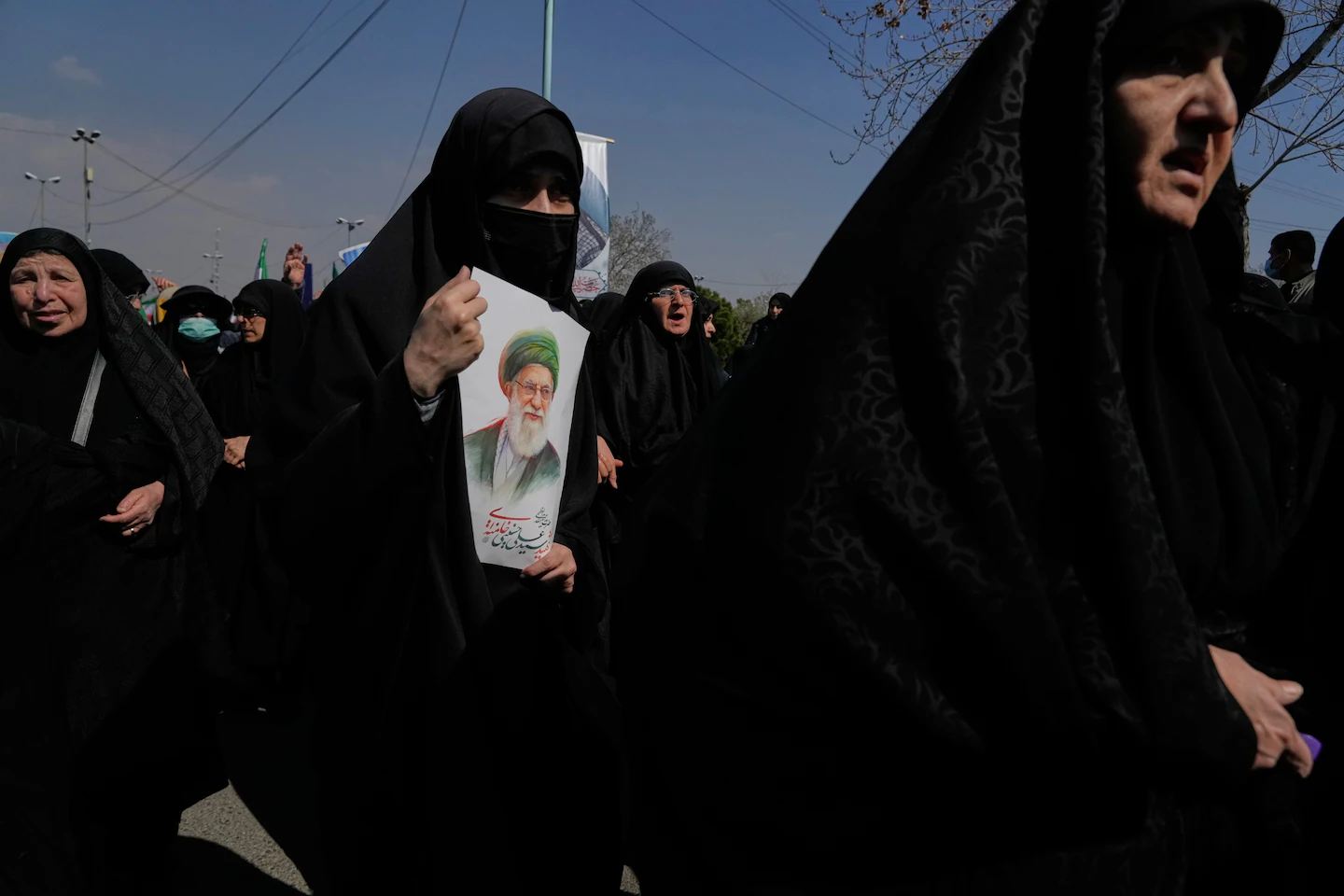
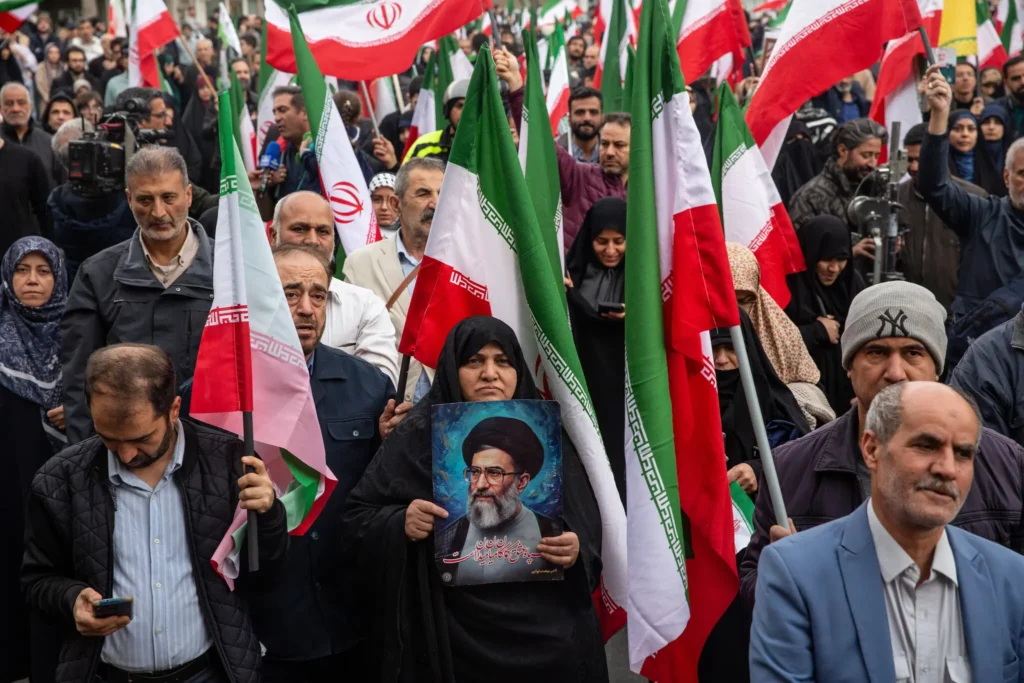
    People demonstrating in support of the government in Tehran on Saturday.(The New York Times)
    People demonstrating in support of the government in Tehran on Saturday. (The New York Times)

    Suzanne Maloney, a veteran Iran scholar and vice president at the Brookings Institution, said the assessment reflects deep institutional knowledge of how power works inside the Islamic Republic. “It sounds like a deeply informed assessment of the Iranian system and the institutions and processes that have been established for many years,” Maloney told The Washington Post.

    The report does not appear to have modeled more extreme scenarios, such as the insertion of U.S. ground troops or the arming of Iranian Kurdish groups to spark a wider rebellion. It also remains unclear whether the “large-scale” campaign analyzed in the document precisely matches the scope of current U.S.-Israeli operations.

    Inside Iran, the succession process anticipated by the NIC is already unfolding under intense pressure from the ongoing bombing campaign. The replacement of the supreme leader is formally the responsibility of the Assembly of Experts, a powerful clerical body, though senior commanders of the Islamic Revolutionary Guard Corps (IRGC) and other security figures wield significant influence.

    Intense speculation has centered on whether the assembly will choose Khamenei’s son, Mojtaba Khamenei. The IRGC has been actively promoting his candidacy, but it has encountered resistance from other power centers, including Ali Larijani, secretary of the Supreme National Security Council, according to a Western security official.

    As the conflict enters its second week, Trump has continued to escalate his rhetoric. In a Truth Social post he demanded Iran’s “UNCONDITIONAL SURRENDER” and has repeatedly suggested he should play a direct role in selecting Tehran’s next leader. Speaking to journalists, Trump dismissed Mojtaba Khamenei as “incompetent” and a “lightweight,” adding that Washington wants leaders who will not simply rebuild Iran’s nuclear and missile programs. “We want them to have a good leader,” he told NBC News. “We have some people who I think would do a good job.”

    Iran’s Parliament speaker, Mohammad Bagher Ghalibaf, rejected any foreign role in the process. In a post on X, he declared: “The fate of dear Iran, which is more precious than life, will be determined solely by the proud Iranian nation, not by [Jeffrey] Epstein’s gang” — a pointed reference to the late sex offender who was once a social acquaintance of Trump.

    Current and former U.S. officials say there are few visible signs of a mass popular uprising or significant cracks within Iran’s government or security forces. Iranian security services killed thousands of demonstrators during nationwide protests in January driven by economic collapse. Trump has publicly advised the Iranian people to “shelter in place” until the U.S.-Israeli campaign concludes.

    People attend Friday prayer in Tehran. (Majid Asgaripour/WANA/via REUTERS)
    People attend Friday prayer in Tehran. (Majid Asgaripour/WANA/via REUTERS)

    Experts say the NIC’s conclusions severely limit Trump’s leverage to dictate political outcomes. “Bending the knee to Trump would go against everything they stand for,” said Holly Dagres, a senior fellow at the Washington Institute for Near East Policy. “The upper echelons of the clerical establishment are ideological, and so their modus operandi is to resist American imperialism.”

    Maloney of Brookings echoed that view: “There’s no other force within Iran that can confront the remaining power that the regime has. Even if they’re not able to project that power very effectively against their neighbors, they can certainly dominate inside the country.”

    The intelligence community’s assessment arrives at a moment when the Trump administration has raised the possibility of a prolonged campaign. Senior officials have privately described the operation as one that has “only just begun,” even as public messaging continues to emphasize rapid, decisive gains. The classified report’s warning — that neither short nor extended military action is likely to produce the kind of clean regime change the president has repeatedly telegraphed — adds a layer of internal skepticism to an already volatile conflict.

  • Skeptical Researcher Tests Microwave Device on Himself, Develops Havana Syndrome–Like Symptoms

    Skeptical Researcher Tests Microwave Device on Himself, Develops Havana Syndrome–Like Symptoms

    Working in strict secrecy, a government scientist in Norway built a machine capable of emitting powerful pulses of microwave energy and, in an effort to prove such devices are harmless to humans, in 2024 tested it on himself. He suffered neurological symptoms similar to those of “Havana syndrome,” the unexplained malady that has struck hundreds of U.S. spies and diplomats around the world.

    The bizarre story, described by four people familiar with the events, is the latest wrinkle in the decade-long quest to find the causes of Havana syndrome, whose sufferers experience long-lasting effects including cognitive challenges, dizziness and nausea. The U.S. government calls the events Anomalous Health Incidents (AHIs).

    The secret test in Norway has not been previously reported. The Norwegian government told the CIA about the results, two of the people said, prompting at least two visits in 2024 to Norway by Pentagon and White House officials.

    Those aware of the test say it does not prove AHIs are the work of a foreign adversary wielding a secret weapon similar to the prototype tested in Norway. One of them noted that the effects suffered by the Norwegian researcher, whose identity was not disclosed by the people familiar, were not the same as in a “classic” AHI case. All spoke on the condition of anonymity because of the subject’s sensitivity.

    But the events bolstered the case of those who argue that “pulsed-energy devices” — machines that deliver powerful beams of electromagnetic energy such as microwaves in short bursts  can affect human biology and are probably being developed by U.S. adversaries.

    “I think there’s compelling evidence that we should be concerned about the ability to build a directed-energy weapon that can cause a variety of risk to humans,” said Paul Friedrichs, a retired military surgeon and Air Force general who oversaw biological threats on the White House National Security Council under President Joe Biden. Friedrichs declined to comment on the Norway experiment.

    The Trump administration took office promising to pursue the AHI issue aggressively. But there has been little apparent movement. A review ordered by Director of National Intelligence Tulsi Gabbard is expected to focus mostly on the Biden administration’s handling of the issue, and its release has been delayed, people familiar with the issue said.

    In a separate development that has become public in recent weeks, the U.S. government covertly purchased at the end of the Biden administration a different foreign-made device that produces pulsed radio waves and which some experts suspect could be linked to AHI incidents, according to two people familiar with the matter.

    The device is being tested by the Defense Department. It has some Russian-origin components, but the U.S. government still has not determined conclusively who built it, said one of the people.

    The U.S. acquisition of the device was first reported last month by independent journalist Sasha Ingber and CNN, which said it had been purchased for millions of dollars by Homeland Security Investigations, part of the Department of Homeland Security.

    The device that the scientist constructed in Norway was not identical to the one that the U.S. government covertly acquired, one of the people familiar with the events said. The Norwegian device was built based on “classified information,” suggesting it was derived from blueprints or other materials stolen from a foreign government, this person said.

    At about the same time the U.S. became aware of the two pulsed-energy machines, two spy agencies altered their previous judgment and concluded that some of the incidents involving AHIs could be the work of a foreign adversary, delivering that verdict in an updated U.S. intelligence assessment issued in January 2025 during the Biden administration’s final weeks.

    “New reporting,” the assessment said, led the two agencies “to shift their assessments about whether a foreign actor has a capability that could cause biological effects consistent with some of the symptoms reported as possible AHIs.”

    One was the National Security Agency, which intercepts and decodes foreign electronic communications, several people familiar with the issue said. The other, said two of those people, was the National Ground Intelligence Center, a U.S. Army intelligence agency in Charlottesville that produces intelligence on foreign adversaries’ scientific, technical and military capabilities.

    The majority of U.S. intelligence agencies, including the CIA and four others, said they continued to judge it “very unlikely” that the attacks were the result of a foreign adversary or that a foreign actor had developed a novel weapon. In conversations intercepted by U.S. spy agencies, American adversaries were heard expressing their own surprise at the AHI incidents and denying involvement, U.S. officials have said.

    The CIA declined to comment on the Norwegian test or how it impacted the agency’s analysis. Norway’s embassy in Washington did not respond to a request for comment.

    Some former officials and AHI victims have pointed to Russia as the prime suspect in the AHI incidents because of its decades of work in directed-energy devices. So far, no conclusive proof has publicly emerged, and Moscow has denied involvement.

    Taken together, the two known directed-energy devices along with other research appear to have prompted a reconsideration by some of the causes of Havana syndrome, so named because of the mysterious 2016 outbreak of symptoms reported by personnel at the U.S. Embassy in Havana.

    The U.S. Embassy in Havana, in February 2022. (Yamil Lage/AFP/Getty Images)
    The U.S. Embassy in Havana, in February 2022. (Yamil Lage/AFP/Getty Images)

    In subsequent years, U.S. personnel reported hundreds of cases globally, in China, Eastern Europe and elsewhere. A top aide to then-CIA Director William J. Burns reported symptoms while traveling in India in 2021.

    At a Foreign Policy Research Institute conference in Philadelphia earlier this month, retired Air Force Lt. Col. Chris Schlagheck, at times his voice breaking, said he was hit five times in 2020 in his home in Northern Virginia, where a Russian family lived across the street. It was not until last year that a doctor told him his symptoms were the same as those reported from Havana a decade earlier.

    Much about the Norway test remains obscured by its highly classified nature. People familiar with the events declined to identify the scientist or the Norwegian government agency he worked for.

    The results were all the more shocking because the Norwegian researcher had earned a reputation as a leading opponent of the theory that directed-energy weapons can cause the type of symptoms associated with AHIs, those familiar with the events said. Trying to dramatically prove his point, with himself as a human guinea pig, he achieved the opposite.

    “I don’t know what possessed him to go and do this,” one of the people said. “He was a bit of an eccentric.”

    A delegation of Pentagon officials traveled to Norway in 2024 to examine the device. In December of that year, a group of intelligence and White House officials also went to Norway to discuss the issue, those familiar with the events said.

    In January 2022, the CIA produced an interim assessment that concluded a foreign country was probably not behind Havana syndrome. It emerged weeks before a major panel of government and nongovernment experts produced a report commissioned by the director of national intelligence and deputy CIA director that came to a markedly different conclusion.

    That panel concluded in February 2022 that pulsed electromagnetic energy, particularly in the radio-frequency range, ‘‘plausibly explains the core characteristics of reported AHIs,” although it acknowledged many unknowns. “Information gaps exist,” it reported.

    The conclusion marked the first time a report issued publicly by the U.S. government acknowledged that the symptoms could be caused by man-made, external events.

    The IC Experts Panel, as it was known, interviewed several people who had suffered accidental exposure to electromagnetic energy, said David Relman, a Stanford University microbiologist who chaired the panel.

    But the CIA interim assessment overshadowed the expert panel’s report. Then, in March 2023, the full intelligence community issued an assessment that unanimously concluded that it was unlikely that a foreign adversary was behind the incidents. “There is no credible evidence that a foreign adversary has a weapon or (intelligence) collection device that is causing AHIs,” the unclassified version of their report said, citing secret intelligence data and open-source information about foreign weapons and research programs.

    U.S. intelligence agencies “essentially ignored” the experts panel’s work, Relman told the conference in Philadelphia. The agencies, particularly the CIA, “had developed a very firm set of conclusions, world view that caused them I think to become dug in,” he said.

    By late 2024, senior White House officials in the Biden administration had come to question the absolutist position taken by U.S. intelligence agencies in their 2023 assessment.

    There were some officials, including within the intelligence community, who insisted that “there was nothing here” — that every reported case could be explained by some environmental or medical factor, said one person familiar with the administration’s views.

    The more “responsible” view, the person said, was to admit “we don’t know the answers” and that it was “plausible that pulsed electromagnetic energy could account for some subset of cases.”

    After the November 2024 election, White House officials who were working on an AHI brief for the incoming Trump administration invited several victims to a meeting to offer their input. The officials also wanted to reassure the victims that they realized the intelligence community assessment called into question the very real health issues they experienced and what caused them.

    At one point, an official turned to the victims who were gathered in the Situation Room and said, “We believe you.” The White House wasn’t yet certain it was a foreign actor but believed it was plausible that the symptoms had been caused by external factors, said the person familiar with the administration’s views.

    Marc Polymeropoulos, a former CIA officer and AHI victim who attended the unclassified meeting, said, “It was clear to the victims, but also unsaid, that new information had come into the NSC that had caused them to make such a statement.”

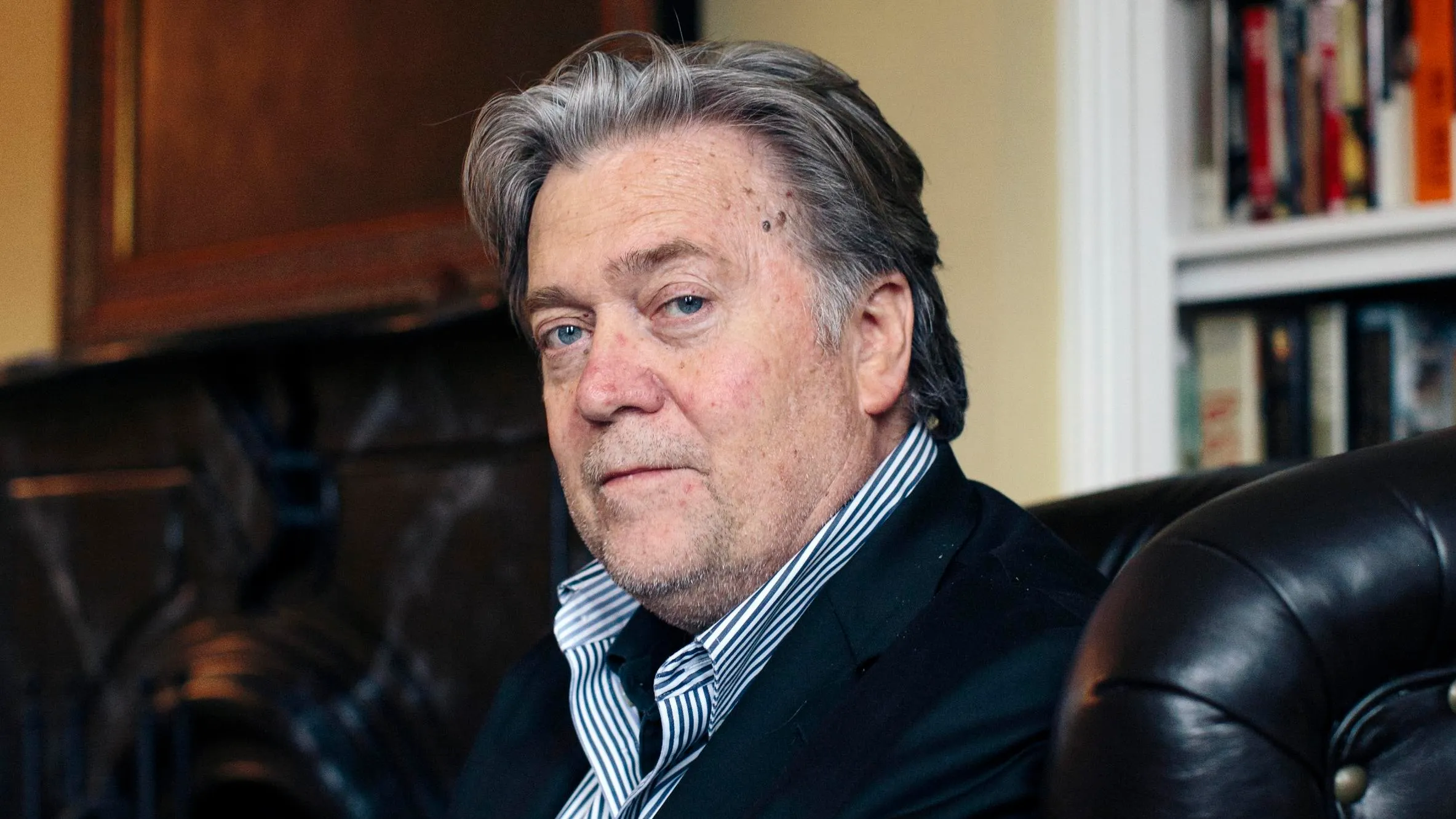
  • Justice Department Seeks Dismissal of Steve Bannon Jan. 6 Contempt Case

    Justice Department Seeks Dismissal of Steve Bannon Jan. 6 Contempt Case

    WASHINGTON, D.C. — In a bold move that underscores the Trump administration’s commitment to rectifying what many conservatives view as the weaponized excesses of the previous Biden-era Justice Department, federal prosecutors have formally requested the dismissal of Steve Bannon’s contempt of Congress conviction stemming from the January 6, 2021, Capitol events. This development, filed on Monday, represents a significant victory for Bannon, the fiery conservative strategist and former White House chief advisor, who has long maintained that his prosecution was a politically motivated witch hunt designed to silence dissent against the establishment.

    The request, led by U.S. Attorney for the District of Columbia Jeanine Pirro—a no-nonsense prosecutor known for her tough stance on crime and her appearances on Fox News—cites prosecutorial discretion and argues that dropping the charges is “in the interests of justice.” Pirro’s filing, submitted to U.S. District Judge Carl Nichols, a Trump appointee who originally oversaw the case, emphasizes that Bannon does not oppose the motion and requests dismissal with prejudice, ensuring the charges cannot be refiled. This comes as a welcome reprieve for Bannon, who endured four months in federal prison in 2024, a sentence many on the right have decried as unjust and emblematic of selective prosecution.

    Bannon’s ordeal began in 2021 when the Democrat-led House Select Committee investigating the January 6 riot subpoenaed him for testimony and documents. As a vocal supporter of President Trump’s efforts to challenge the 2020 election results—efforts rooted in widespread concerns over voting irregularities—Bannon had publicly predicted turmoil on his “War Room” podcast, stating on January 5, 2021, that “all hell is going to break loose tomorrow.” The committee targeted him for his insights into the so-called “Green Bay Sweep,” a strategic plan discussed among Trump allies to contest electoral votes from key swing states amid allegations of fraud.

    Refusing to comply, Bannon invoked executive privilege, a doctrine protecting presidential communications, despite having left the White House in 2017. Critics on the left painted this as defiance, but conservatives argue it was a legitimate legal stance, especially given Bannon’s advisory role to Trump. The House, under Democratic control, voted to hold him in contempt, and the Justice Department under Attorney General Merrick Garland swiftly indicted him on two counts. Bannon’s defense team later offered to testify after Trump waived privilege, but it was too late; a D.C. jury convicted him in 2022, and he was sentenced to prison time.

    Throughout his appeals, Bannon has steadfastly claimed he did not willfully defy the subpoena but was following his lawyers’ advice to resolve privilege issues first. An appellate court upheld the conviction, and the Supreme Court declined to halt his sentence. Yet, Bannon’s resilience shone through—he continued broadcasting his podcast from behind bars and emerged in October 2024 as a martyr figure in conservative circles, railing against what he calls the “deep state” and the “unselect committee” that pursued him.

    The Trump administration’s return to power in 2025 has brought swift changes to the DOJ, including the appointment of Attorney General Pam Bondi and Deputy Attorney General Todd Blanche, both of whom have prioritized dismantling what they describe as politically tainted prosecutions. In a statement on X (formerly Twitter), Blanche declared, “Under the leadership of Attorney General Bondi, this Department will continue to undo the prior administration’s weaponization of the justice system.” He specifically hailed the Bannon filing as a step to vacate the conviction arising from the “J6 ‘Unselect’ Committee’s improper subpoena.”

    Solicitor General D. John Sauer echoed this in a separate Supreme Court filing, urging the justices to remand the case back to Judge Nichols for dismissal. Sauer noted that even post-conviction, prosecutors retain the authority to drop charges if justice demands it—a principle that aligns with conservative values of fairness and limited government overreach.

    This isn’t an isolated incident. The administration has already pardoned over 1,500 individuals charged in connection with January 6, framing the event not as an “insurrection” but as a passionate protest against a stolen election. Similar leniency was extended to Peter Navarro, another Trump advisor convicted for defying the same committee; the DOJ announced last year it would no longer defend his conviction, with his appeal ongoing.

    The move has drawn predictable outrage from liberal quarters, who accuse the Trump DOJ of cronyism and undermining congressional authority. But for conservatives, it’s a long-overdue correction. Bannon, ever the provocateur, has positioned himself as a frontline warrior against elite corruption, and this dismissal bolsters his narrative. As one of the architects of Trump’s 2016 victory and a key voice in the MAGA movement, Bannon’s exoneration could energize the base ahead of future political battles.

    Comparisons have been drawn to other contempt cases, such as the recent House Oversight Committee vote to hold Bill and Hillary Clinton in contempt for refusing to testify in a Jeffrey Epstein probe. The Clintons eventually “caved,” as Republican Rep. James Comer put it, agreeing to depositions just before a full House vote. Conservatives point to this as evidence of double standards: why were the Clintons spared prosecution while Bannon was jailed?

    Legal experts on the right argue that the January 6 committee itself was flawed—lacking bipartisan balance and operating with a partisan agenda. “This dismissal acknowledges that the subpoena was improper from the start,” said a source close to Bannon’s legal team, speaking on condition of anonymity. “Steve has always been about fighting for the forgotten man, and this vindicates his stand against overreach.”

    As the nation grapples with ongoing debates over election integrity and government accountability, Bannon’s case highlights the deep divides in American politics. With Trump back in the Oval Office, expect more such reversals as the administration seeks to heal what it sees as wounds inflicted by a vindictive opposition.

    Bannon did not immediately respond to requests for comment, but his supporters are already celebrating online, viewing this as a triumph over “lawfare.”

  • Satellite Images Reveal U.S. Military Deployments Near Iran

    Satellite Images Reveal U.S. Military Deployments Near Iran

    imrs 14
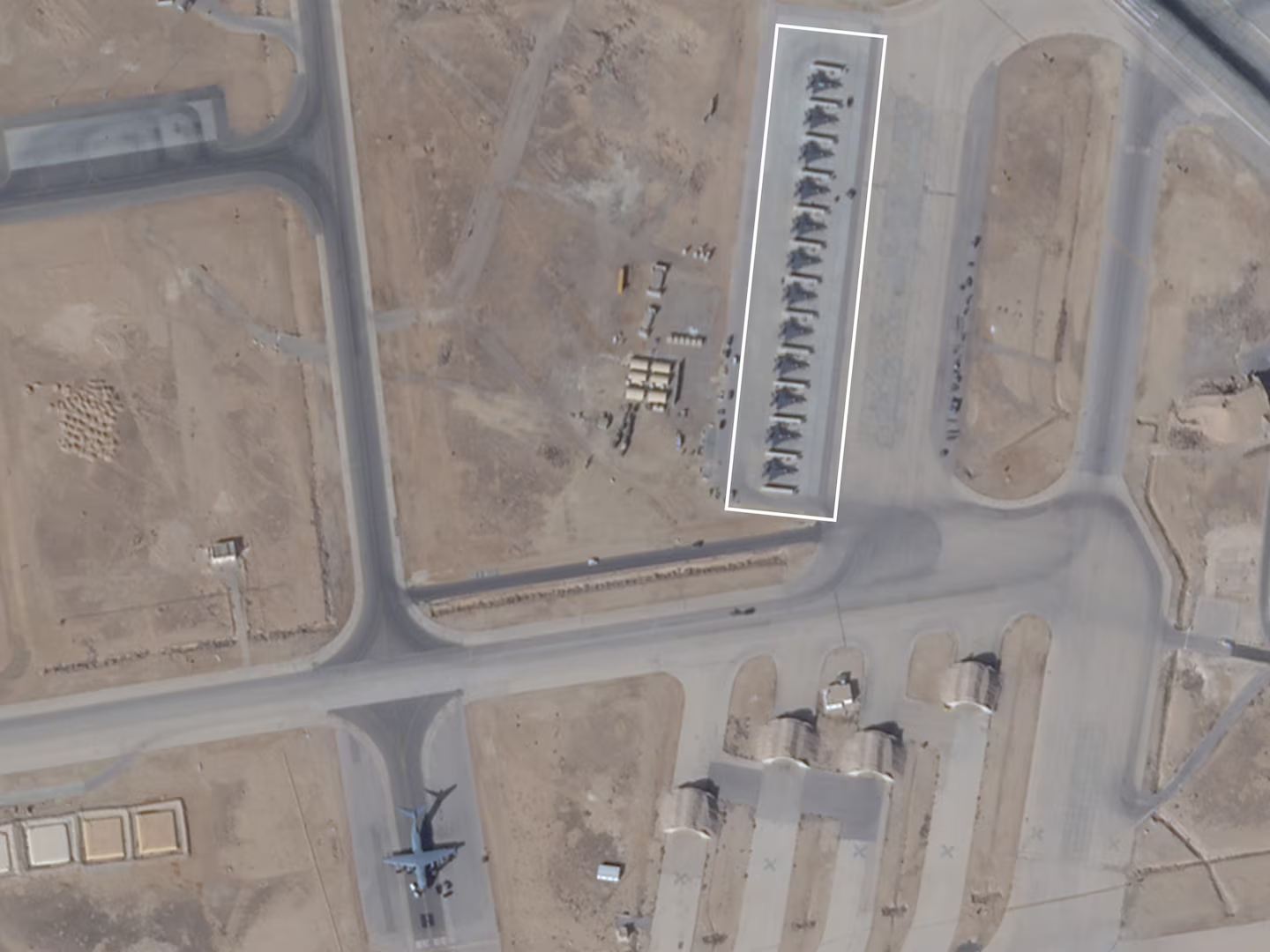
    Satellite imagery captured on Jan. 25 shows at least a dozen F-15E attack planes at Muwaffaq Salti Air Base in Jordan. (Planet Labs)

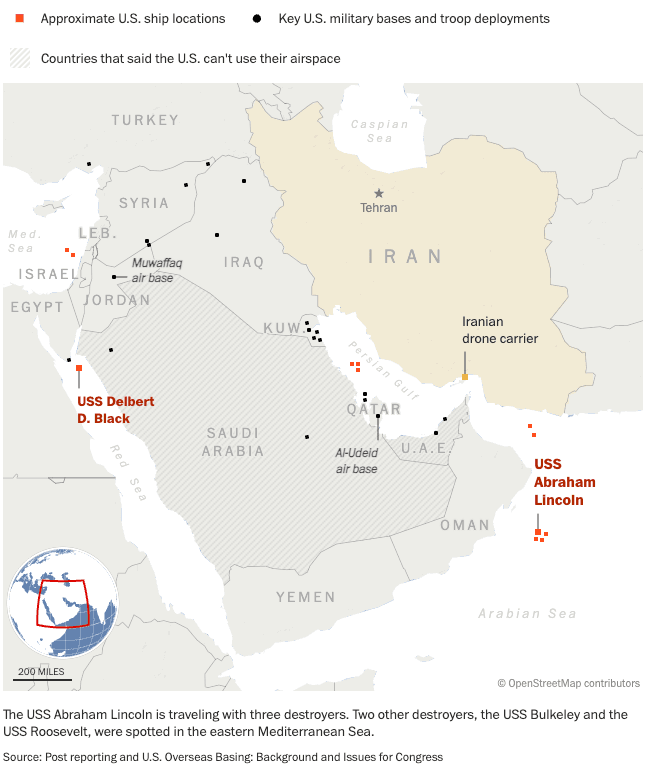
    In the shimmering haze of the Arabian Sea, where oil tankers carve silent paths through contested waters, a new specter looms: the unmistakable silhouette of American military might. Fresh satellite imagery, obtained from commercial providers like Planet Labs and corroborated by open-source tracking data, paints a chilling picture of Washington’s accelerating deployments encircling Iran. Dozens of fighter jets—F-15Es, A-10 Thunderbolts, and stealthy F-35s—now crowd airbases in Jordan, Qatar, and the UAE. The USS Abraham Lincoln carrier strike group, flanked by guided-missile destroyers bristling with Tomahawks, prowls the North Arabian Sea. At least a dozen warships, including electronic warfare vessels like EA-18G Growlers, have converged on the region since mid-January, transforming the Middle East into a powder keg primed for ignition.

    This buildup, far exceeding the targeted strikes on Iran’s nuclear sites last summer, reeks of neoconservative adventurism—a reckless echo of the Iraq War playbook that could drag the U.S. into another endless quagmire. Analysts warn it’s not just about deterrence; it’s a stage set for “expansive operations,” potentially aimed at regime change in Tehran. Yet, as President Donald Trump rattles sabers on Truth Social, threatening “speed and violence” akin to his Venezuelan escapade, the real beneficiaries appear to be Israeli Prime Minister Benjamin Netanyahu’s faltering coalition and the hawkish lobbies in Washington. Anti-war voices decry this as a manufactured crisis, one that prioritizes Zionist agendas over global stability, risking a regional inferno that could engulf U.S. allies and embolden adversaries like China and Russia.

    Our investigation—drawing on exclusive imagery from MizarVision, flight-tracking platforms like ADS-B Exchange, and declassified U.S. defense briefings—uncovers a deployment surge that defies Trump’s “America First” rhetoric. With Iran’s Supreme Leader issuing dire warnings of “immediate, comprehensive” retaliation, and Chinese experts mocking Washington’s inability to replicate its “Venezuela model,” the question isn’t if escalation happens—but who pays the price for this anti-diplomatic folly.

    Screenshot 2026 02 07 at 1.13.26 AM

    The Satellite Snapshot: A Ring of Steel Tightens

    The evidence is irrefutable, captured in high-resolution pixels from above. Planet Labs imagery dated January 25 reveals a dramatic uptick at Qatar’s Al Udeid Air Base—the Pentagon’s largest Middle East outpost. KC-135 refueling tankers, once sparse, now dominate the aprons, their numbers doubled since mid-January. Nearby, newly installed Patriot missile batteries—identified by their distinctive radar arrays—stand sentinel, a defensive bulwark against Iran’s vaunted ballistic arsenal. “This isn’t routine rotation,” Dana Stroul, former Deputy Assistant Secretary of Defense for the Middle East, told The Washington Post. “They’re setting the theater for expanded offensive options.”

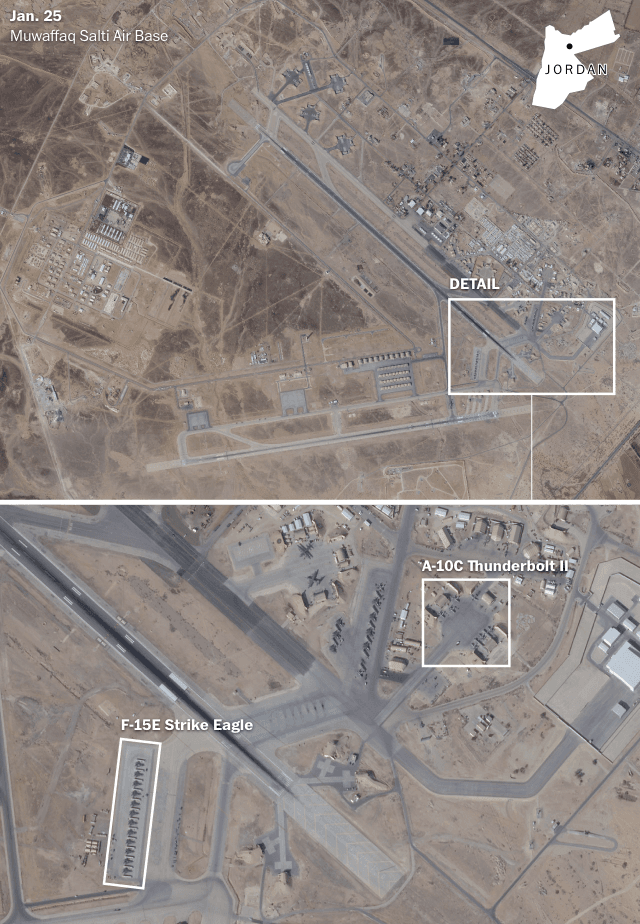
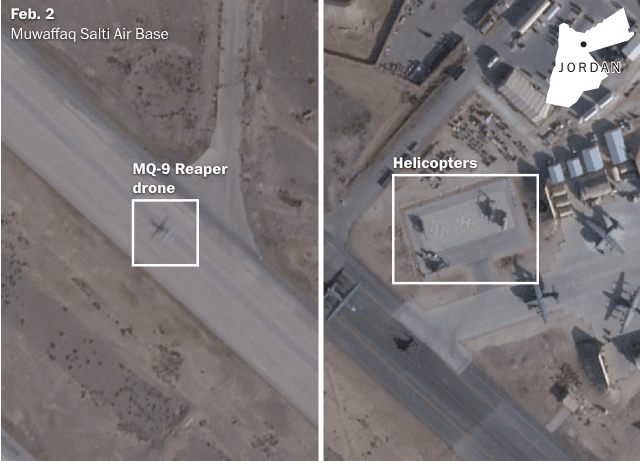
    Jordan’s Muwaffaq Salti Air Base tells a similar tale. January 25 shots show over a dozen F-15E Strike Eagles—veterans of last summer’s nuclear raids—parked alongside nine A-10 Thunderbolts, ground-attack workhorses for close air support. MQ-9 Reaper drones and HC-130J rescue planes have joined them, hinting at preparations for contested extractions deep in enemy territory. “Search-and-rescue assets like these scream high-risk ops,” Gregory Brew, a senior Iran analyst at Eurasia Group, noted in the Post. “If you’re planning to penetrate Iranian airspace, you need retrieval plans for downed pilots.”

    Naval forces amplify the threat. The Abraham Lincoln, redirected from the South China Sea in late January, now anchors the North Arabian Sea with three Arleigh Burke-class destroyers—USS McFaul, USS Mitscher, and others—each laden with air defenses and cruise missiles. Satellite views from January 26 confirm at least eight more warships in the Gulf, including the USS Delbert D. Black in the Red Sea and USS Bulkeley in the eastern Mediterranean. “This armada isn’t for show,” Brew added. “Growlers jam radars; F-35s punch holes in defenses. It’s geared for interior strikes, not just coastal deterrence.”

    Screenshot 2026 02 07 at 6.32.43 PM
    Satellite imagery captured on Jan. 25 shows at least a dozen F-15E fighter jets and nine A-10C Thunderbolt II, according to Sean O’Connor an imagery analyst with Janes who reviewed the imagery at The Post’s request.

    Chinese outlet Global Times, citing MizarVision imagery, echoes the alarm: January 26 shots of Kuwait’s Ali Al Salem base show fresh Patriot deployments, while Bahrain’s Naval Support Activity hosts littoral combat ships. “US forces have stepped up movements… for both attack and defense,” the report states, warning of a “rising probability” of limited strikes. ABC News, analyzing Planet Labs data from January 17 to February 2, highlights Patriot interceptors at Al Udeid—absent weeks prior—bolstering defenses against Iran’s Khorramshahr-4 missiles.

    Satellite imagery captured on Feb.2 shows at least one MQ-9 Reaper drone and several multiple-utility helicopters.
    Satellite imagery captured on Feb.2 shows at least one MQ-9 Reaper drone and several multiple-utility helicopters.

    Iran counters asymmetrically: Flight data shows drones swarming the Strait of Hormuz, with the Shahid Bagheri drone carrier spotted January 26. “Unsafe behavior risks escalation,” CENTCOM warned Friday.

    An Iranian drone carrier loiters in the Strait of Hormuz on Saturday. (Planet Labs)
    An Iranian drone carrier loiters in the Strait of Hormuz on Saturday. (Planet Labs)

    Neocon Fingerprints: From Iraq to Iran, the Same Playbook

    This surge isn’t born in a vacuum—it’s the toxic fruit of neoconservative ideology, long criticized for fabricating pretexts for endless wars. Trump’s January 28 Truth Social post—”Abraham Lincoln heading to Iran… far worse than last summer”—evokes the 2003 WMD lies that birthed the Iraq quagmire, costing trillions and millions of lives. Critics see Netanyahu’s shadow: Facing corruption trials and coalition fractures, the Israeli PM has lobbied Washington for strikes to divert domestic ire from Gaza’s fallout.

    “Neocons like Bolton and Pompeo—Trump’s ghosts—push this as ‘regime change lite,’” says Trita Parsi of the Quincy Institute, an anti-war think tank. “But it’s a trap: Venezuela’s Maduro raid was a farce; Iran’s hardened bunkers demand boots on ground Trump won’t commit.” Chinese expert Sun Degang, via Global Times: “Difficult to replicate ‘Venezuela model’—Iran’s structure isn’t one-man rule. Strikes weaken, but don’t topple.”

    Liu Zhongmin of Shanghai International Studies University: “U.S. retrenchment strategy contradicts entanglement. No ground forces? No regime change.” Anti-war activists decry the hypocrisy: While Trump sanctions Rosneft and Lukoil to squeeze Moscow’s oil lifeline, he’s inflating a Gulf bubble that benefits Israeli hawks. “Netanyahu’s lifeline—U.S. muscle—prolongs Palestinian suffering,” Parsi adds. “This buildup isn’t deterrence; it’s provocation.”

    Iran’s retort: Ali Shamkhani, Khamenei’s advisor, vowed January 28: “Any action… beginning of war. Response immediate, targeting aggressor, Tel Aviv, supporters.” FM Abbas Araghchi: “Ready for negotiations… or war.” Protests in Tehran—6,000 dead in crackdowns, per rights groups—fuel regime paranoia, but strikes risk unifying Iranians against “Zionist-American aggression.”

    The Human Cost: Echoes of Past Fiascos

    Last summer’s nuclear hits—B-2 bombers from Diego Garcia—crippled Iran’s program but sparked 12-day clashes with Israel. Now, imagery shows no B-2s at Diego (January 17-26: Just C-17s), but experts like Zhang Junshe warn: “Strategic bombers signal intent. Absent them, it’s bluff—or prelude.” The War Zone: “No mass tactical airpower influx—suggests limited op, unless Israel joins.”

    Yet escalation’s shadow: Iran’s missiles—intact post-2025—target U.S. bases within 700km. Fabian Hinz of IISS: “Arsenal designed for Israel/U.S. sites—still potent.” Anti-war lens: This risks “total eradication of Western civilization,” per Parsi—burning flags in “pro-Palestine” protests, not Israeli streets.

    Trump’s “armada” rhetoric—likening to Venezuela’s failed raid—ignores geography: Iran’s resilience, 4,000km from Diego, defies quick wins. “Neocons dream of decapitation,” says Liu. “But chaos ensues—uncontrolled outcome Washington dreads.”

    A Call for Sanity: Diplomacy Over Drums of War

    As satellites unmask this buildup, the anti-war imperative screams: Reject neocon siren songs propping Netanyahu’s regime. Trump’s sanctions—effective against Maduro—falter against Iran’s clerical fortress. “Negotiations progressing,” per Ali Larijani January 28. Embrace dialogue, not drones.

    The Gulf’s fragile peace hangs by a thread—severed by hawks, it unleashes hell. America First? Start by bringing troops home.