Bella Thorne has accused fellow US actor Mickey Rourke of bruising her genitals with a metal grinder on the set of a movie that they filmed together during what she described as “one of the all time worst experiences” of her career.
In a story on her Instagram account on Friday, Thorne alleged that the episode was part of a broader campaign to humiliate her while they collaborated on the 2020 thriller Girl. She wrote: “This fucking dude. GROSS” and relayed the account in writing over a copy of a BBC article reporting that Celebrity Big Brother’s producers had reprimanded him for aiming homophobic comments at the singer JoJo Siwa while they competed on the reality show.
A representative of Rourke did not immediately respond to a request for comment on Thorne’s allegations.
Thorne’s post recounted how she and the Oscar nominee were sharing a scene in which she was kneeling with her hands zip-tied around her back. “He’s supposed to take a metal grinder to my knee cap and instead he used it on my genitals [through] my jeans,” Thorne wrote. “Hitting them over and over again. I had bruises on my pelvic bone – Working with Mickey was one of the all time worst experiences of my life working as an actress.”
She also shared a screenshot of a post on X in which she alleged that Rourke separately revved an engine and covered her “completely in dirt” for another scene.
“I guess he thought it was funny to humiliate me in front of the entire crew,” Thorne – the 27-year-old former Disney star whose credits also include The Duff and Amityville: The Awakening – said of Rourke, 72.
Thorne then asserted that she had to take it upon herself to “go in his trailer absolutely alone” and talk him into finishing up the movie “as he shouted crazy demands that he wanted” from those helming the project written and directed by Chad Faust.
“He refused to speak to the director or producers – so I had to convince him to show up and complete his job,” Thorne continued. “In fact I had to beg.”
She said it was “uncomfortable”. But she said she endured it because “the movie could not be finished without him [and] everyone’s work would’ve just been lost and completely for nothing”.
Thorne’s comments about her on-set experience with Rourke on Girl capped off a week of unflattering headlines for the actor whose work on 2008’s The Wrestler once won him Golden Globe and Bafta awards.
He earned a formal warning from Celebrity Big Brother UK’s producers after going on the show and boasting to Siwa, who is gay, that he would “make her straight”.
Rourke also invoked a British slang word for cigarette that is also a homophobic slur in the US before directing himself at Siwa and saying: “I’m not talking to you.”
Celebrity Big Brother UK’s producers indicated to Rourke that they would remove him from the show if he kept up with the homophobic language.
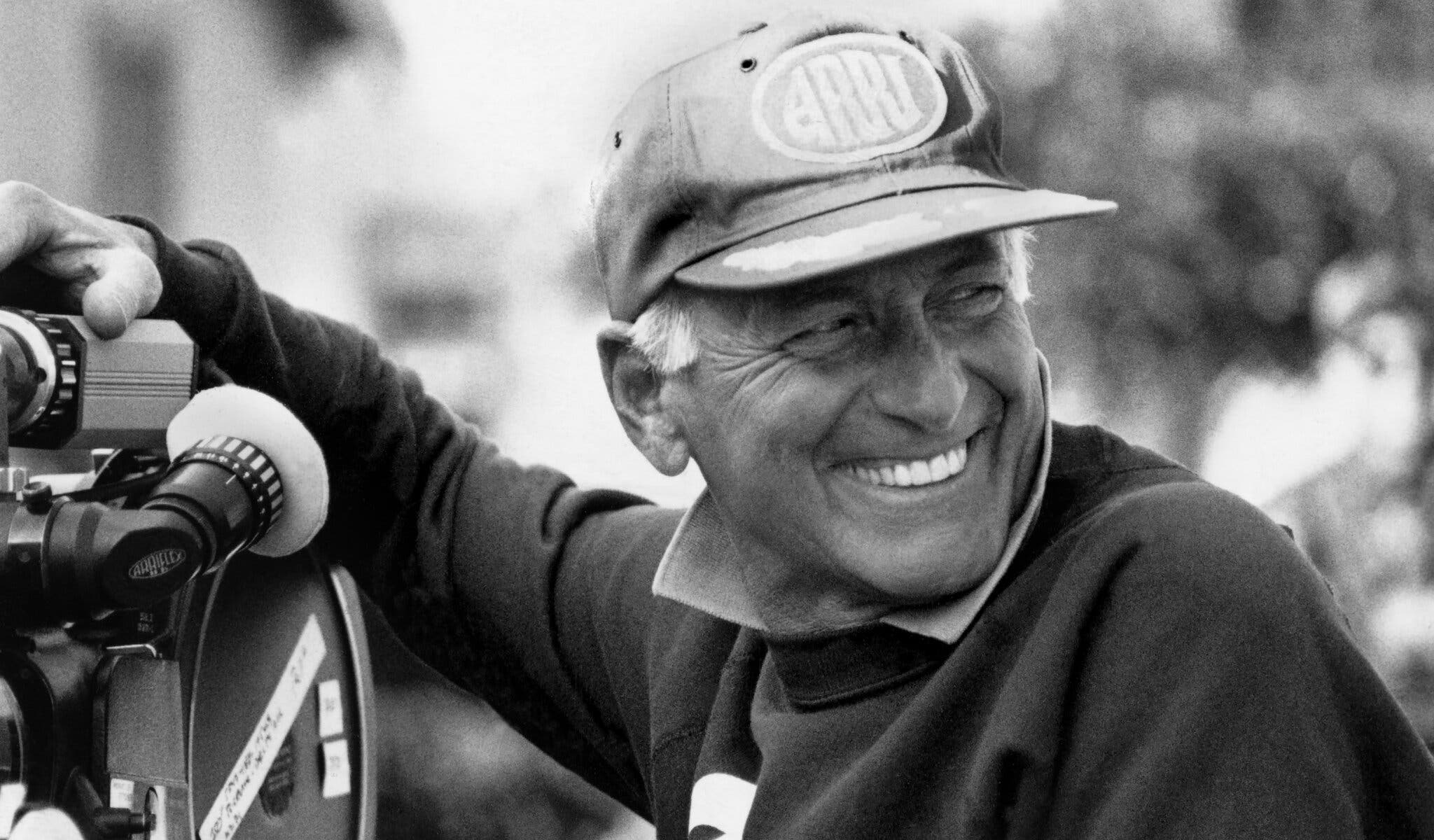
Rick Levine in 1988. “People don’t come to me just for pictures; they come with stories,” he said.
Rick Levine, an award-winning television commercial director who brought a big-screen sensibility to the small screen with widely celebrated spots, including a Diet Pepsi Super Bowl ad from the 1980s featuring Michael J. Fox risking life and limb for love, died on March 11 at his home in Marina del Rey, Calif. He was 94.
The death was confirmed by his daughter Abby LaRocca.
Mr. Levine was a product of what is often called the golden age of advertising. He rose in the business through the “Mad Men” era of the 1960s and founded his own company, Rick Levine Productions, in 1972. It was a time when network television held a hypnotic sway over the average American household and advertising, like so many other cultural arenas of the era, was exploding in creativity.
Often serving as his own cinematographer, Mr. Levine approached his big-budget commercials like a director of Hollywood blockbusters.
“We decided to make our ads look as good as films,” he said in a 2009 interview with DGA Quarterly, published by the Directors Guild of America. “I would direct and shoot, so I would have complete control.”
The Guild named him the best commercial director in 1981 and again in 1988, in particular for three specific spots.
Most notable among them was the Diet Pepsi commercial with Mr. Fox, which Mr. Levine made for BBDO New York. It was one of many ads he shot for Pepsi.
Known as “Apartment 10G,” the commercial stars Mr. Fox as a timid New York professional who turns heroic after he hears a knock on his apartment door and opens it to encounter a beautiful blond new neighbor (played by Gail O’Grady, later of ABC’s “NYPD Blue”). She flirtatiously asks if he has a Diet Pepsi to spare.
When a two-liter Pepsi bottle in his refrigerator turns out to be empty, a bedazzled Mr. Fox, determined to fetch what she asked for, climbs out of his bedroom window and clambers down the fire escape into a pounding rainstorm on a busy street. Mr. Fox, who did many of his own stunts, survives near-miss collisions with oncoming traffic in a mad dash to a Diet Pepsi vending machine. He returns, soaking and breathless, to present a can to the woman, only to find that her equally lovely roommate has shown up with the same request.
The ad aired during Super Bowl XXI (the New York Giants versus the Denver Broncos) on Jan. 25, 1987. It was named the world’s best video commercial the next year at the International Broadcasting Awards in Los Angeles; cited by ESPN as one of the best Super Bowl spots ever; and honored at the Smithsonian as an artifact of Americana.
Mr. Levine was admired as well for another BBDO commercial, for the chemical company DuPont, which featured Bill Demby, a real-life Vietnam veteran. He is first seen lacing up his basketball shoes in his New York City apartment before heading to a local schoolyard to shoot hoops with friends.
When he arrives, he strips down from sweatpants to basketball shorts, revealing two prosthetic legs — made from DuPont plastic — that he has relied on since being maimed in a Vietcong rocket attack. What appears to be a noble, if doomed, effort to keep up with the other players turns into a star turn for Mr. Demby, as he races around the court dishing assists and draining buckets.
Mr. Levine won a total of four Clio Awards — advertising’s equivalent of the Oscars — for both spots in 1988. In explaining his success, he told The New York Times: “I attract the story kind of commercial. People don’t come to me just for pictures; they come with stories.”
Richard Laurence Levine was born on July 10, 1930, in Brooklyn, the only child of Harry and Sally (Belof) Levine. His father was a philatelist.
After graduating in 1957 from the Parsons School of Design (now part of the New School), he worked as a graphic designer for NBC and CBS. He later became an art director for the storied Doyle Dane Bernbach agency, known for its “Think Small” campaign for Volkswagen, before moving to Mary WellsLawrence’s agency, Wells Rich Greene, hailed for its landmark “I ♥ NY” campaign. He also served as a creative director for Carl Ally Inc.
Mr. Levine started directing ads in about 1970, creating memorable spots for a host of U.S. clients, including Coca-Cola, Federal Express, Polo Ralph Lauren and General Electric, as well as for international companies.
He became known for his episodic approach, following the same characters through a series of commercials. One campaign in the 1980s — for Pacific Bell, the California telephone company, shot for the San Francisco agency Foote, Cone & Belding — played out like a TV mini-series, with 13 spots following three characters, the close friends Garland, Lawrence and Mary Ellen, from their youth in the 1920s into their golden years.
One episode, “The Depression,” set in the desperate 1930s, portrays an act of selfless friendship when an unemployed Garland, who has been chosen to travel to a day job, purposely slips off the back of a truck crowded with other men and pretends to injure himself so that Lawrence can take his place.
The commercial, which had the warm look and feel of scenes from Don Corleone’s early years in Francis Ford Coppola’s “The Godfather Part II,” concludes with Lawrence in his later years, bathed in memories of the incident, phoning Garland to give thanks. It won a Gold Lion award at the International Advertising Festival in Cannes, France (now the Cannes Lions International Festival of Creativity).
In addition to his daughter Abby, Mr. Levine is survived by another daughter, Susan Levine Henley, who like her is from his first marriage, to Ina Levine, which ended in divorce; two grandchildren; and one great-granddaughter. His second marriage, to Lark Levine, also ended in divorce.
Despite his cinematic flair, Mr. Levine never forgot his mandate. “It’s a beautiful craft, but a craft,” he said in a 1976 interview with the trade newspaper Backstage. “It’s possible to be artistic within the confines of a commercial, of course, but that is not really my job as a commercial film director. My purpose is to make the advertising come across.”
Academy Award-winning actor and environmental philanthropist Leonardo DiCaprio has once again expanded his already sprawling Los Angeles compound — this time by acquiring his next-door neighbor’s home for $10.5 million in a discreet, off-market deal finalized earlier this month.
The newly acquired residence is located in the prestigious Bird Streets of the Hollywood Hills, an enclave famous for its panoramic city views, celebrity residents, and exclusive multi-million-dollar estates. According to property records and aerial photos, the salmon-colored home spans over 3,500 square feet, offering four bedrooms, four bathrooms, a long driveway, and a private swimming pool — all tucked behind thick hedges and mature landscaping for maximum privacy.
The purchase, completed via a limited liability company linked to DiCaprio’s cousin and long-time business partner, Robert Hrtica, was not publicly listed on the open market, underscoring the private nature of the deal. Property insiders say the actor is strategically assembling a private compound with increasing autonomy and seclusion in one of LA’s most exclusive neighborhoods.
According to Dirt.com, which first reported the sale, this latest acquisition brings DiCaprio’s Bird Streets estate to a total of five adjoining parcels — a massive footprint that now stretches across more than five acres in one of the most expensive zip codes in the city.
The newly added house, originally built in 1963, is positioned on the northern boundary of DiCaprio’s existing estate, which began in the late 1990s when he famously purchased a property from pop icon Madonna for $2.5 million. That transaction marked the beginning of what has become one of Hollywood’s most valuable private estates.
The new purchase may also serve a strategic purpose beyond luxury. DiCaprio has had a turbulent history with some of his neighbors. In 2007, a lawsuit was filed against him alleging negligence during the construction of a basketball court, which neighbors claimed destabilized their property. The suit was settled out of court in 2009, but tensions lingered in the neighborhood for years. Expanding his property further could be a move to avoid future disputes — or perhaps a way to control the environment around him.
The Hollywood icon, 48, is no stranger to real estate dealings. Just earlier this year, DiCaprio offloaded the storied Red Oak Manor in Los Feliz — a nearly 100-year-old English Tudor-style home — which had been listed for $4.9 million, as reported by Mansion Global. He originally acquired that home from musician Moby in 2018 for $4.19 million, according to LA County records.
Over the past two decades, DiCaprio has built a diverse real estate portfolio that includes properties in Malibu, Palm Springs, and New York City, in addition to international holdings. He is known to prefer eco-conscious renovations and historically significant properties, often seeking homes with character and privacy.
Despite broader cooling in the U.S. housing market due to rising interest rates and tighter lending policies, Los Angeles’ ultra-luxury sector — especially areas like Hollywood Hills, Bel-Air, and Beverly Hills — continues to attract wealthy buyers who often purchase properties in all-cash deals.
According to Miller Samuel and Douglas Elliman’s Q2 2025 report, Los Angeles’ ultra-luxury market saw a 7.3% year-over-year increase in sales volume in the $10M+ category, with a total of 82 homes sold over $10 million in the last quarter. DiCaprio’s $10.5 million transaction aligns with the market’s ongoing strength among high-net-worth individuals and celebrities looking to consolidate or expand their private estates.
“These buyers aren’t influenced by mortgage rates. They’re playing a different game — expanding land, combining parcels, creating mega-compounds,” said Josh Flagg, a top agent at Douglas Elliman Beverly Hills, speaking to The New York Budgets.
While Leonardo DiCaprio is one of the most recognizable faces in the world, his real estate behavior is that of a person who highly values privacy and seclusion. His representatives did not return requests for comment on the recent purchase, and no plans for renovations or public architectural filings have surfaced so far.
Aerial views show that the newly acquired property blends seamlessly into the rest of his Hollywood Hills domain. The salmon-pink exterior and classic mid-century architecture are consistent with many of the original homes built during the area’s development in the 1960s.
What began as a single property next to Madonna’s mansion in the 1990s has grown into a five-parcel celebrity fortress, showcasing Leonardo DiCaprio’s long-term real estate vision. With a deep interest in climate advocacy and urban preservation, it remains to be seen whether DiCaprio will modernize the home with sustainable upgrades — as he’s done with past properties — or preserve its original charm as part of a larger estate aesthetic.
Regardless, the actor’s recent acquisition further cements his place not only as a cinematic legend but as one of LA’s most strategic and influential landowners.
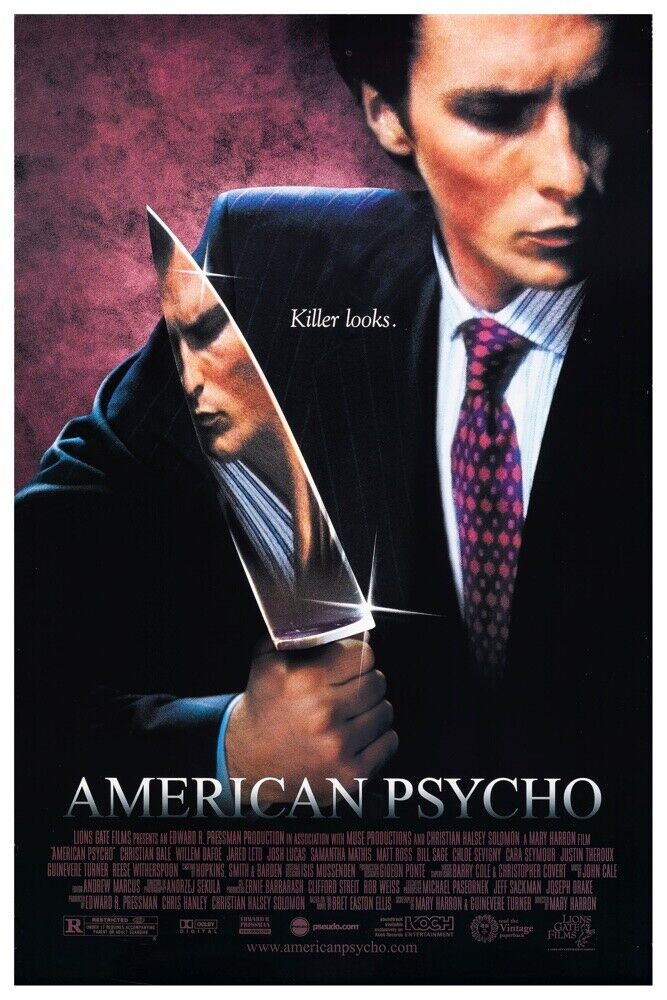
Director: Mary Harron Screenplay: Mary Harron & Guinevere Turner Cast: Christian Bale (Patrick Bateman), Willem Dafoe (Donald Kimball), Jared Leto (Paul Allen), Reese Witherspoon (Evelyn Williams), Chloë Sevigny (Jean) Genre: Satirical Psychological Horror/Dark Comedy Runtime: 102 minutes
THE NYBUDGETS MOVIE REVIEWRating: ★★★★☆ (4/5) Tagline:“Killer looks. Killer instincts. No conscience.”
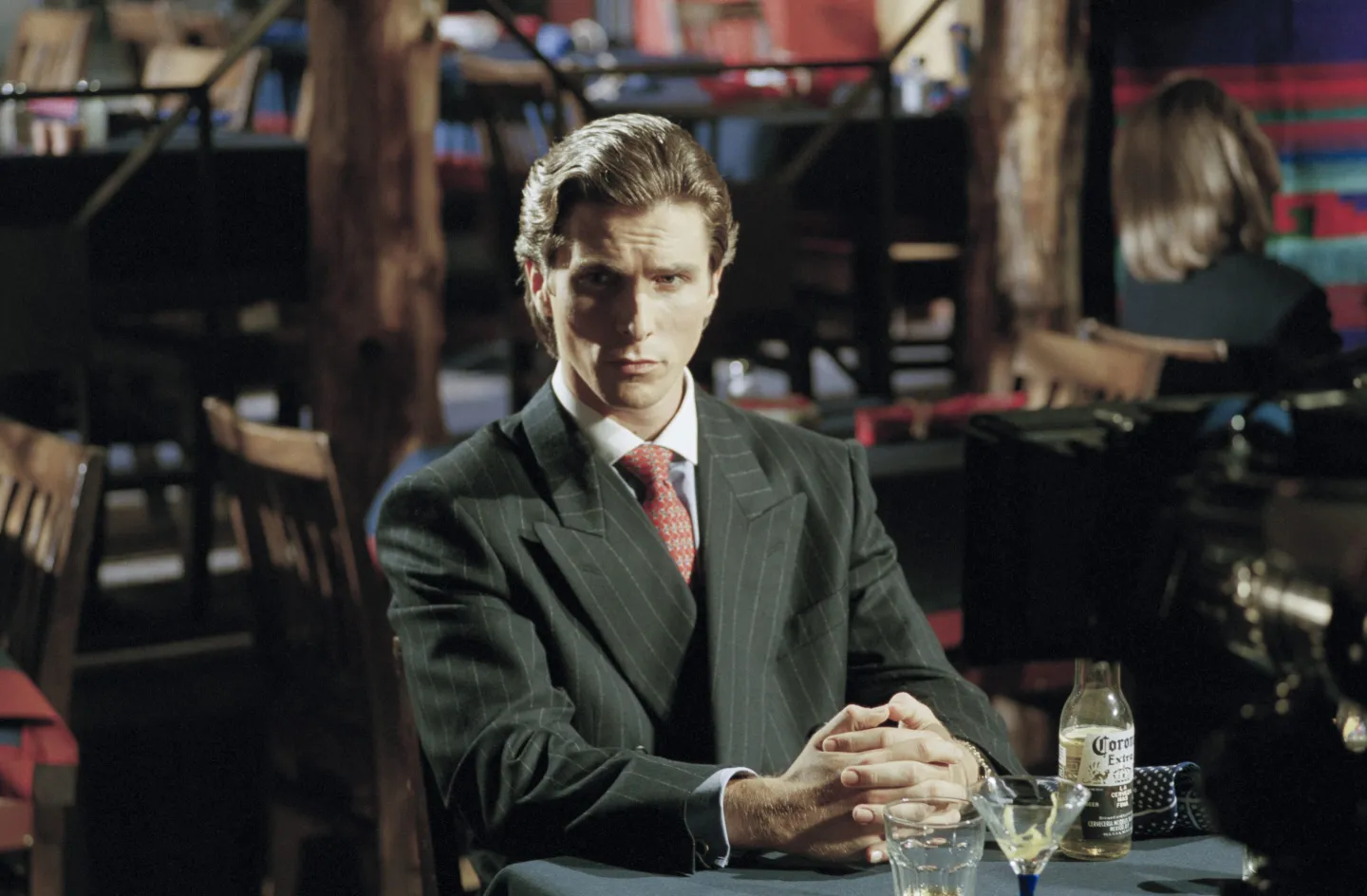
Set in the opulent, greed-driven landscape of 1980s Manhattan, American Psycho follows Patrick Bateman, a superficially flawless investment banker whose life revolves around designer suits, exclusive restaurants, and a meticulous skincare routine. Beneath his polished exterior, however, Bateman harbors a murderous alter ego, indulging in increasingly violent fantasies. The film oscillates between his gruesome acts and his vapid social circle, blurring the line between reality and psychosis. As his grip on sanity slips, the narrative questions whether his crimes are real or mere delusions of a fractured mind.
A scathing satire of Reagan-era consumerism, American Psycho dissects the hollowness of capitalist excess. Bateman’s obsession with status symbols—business cards, reservations at Dorsia, and Huey Lewis albums—mirrors the era’s moral bankruptcy. Director Mary Harron masterfully balances horror and dark comedy, using hyper-stylized violence (e.g., the iconic axe murder) to underscore the absurdity of Bateman’s world. Christian Bale delivers a career-defining performance, oscillating between chilling detachment and manic glee. His monologues, like the deadpan analysis of Hip to Be Square, are both hilarious and unnerving.
The film’s ambiguity—particularly its unresolved ending—sparks debate. Is Bateman a killer shielded by privilege, or a narcissist inventing grandeur? Harron leaves it open, forcing audiences to confront their complicity in glorifying monsters. Critics initially divided over its graphic content; Roger Ebert dismissed it as “morally vacant,” while others praised its intellectual audacity. The script’s razor-sharp dialogue (“I have to return some videotapes”) and supporting cast (Willem Dafoe’s sly detective, Jared Leto’s smug victim) elevate the tension.
Iconic Quotes:
“I have to return some videotapes.” – Patrick Bateman
“There is an idea of a Patrick Bateman, some kind of abstraction, but there is no real me.” – Patrick Bateman
“Don’t just stare at it. Eat it.” – Patrick Bateman (during a horrifyingly absurd date)
Cookie Consent
We use cookies to improve your experience on our site. By using our site, you consent to cookies.
Contains information related to marketing campaigns of the user. These are shared with Google AdWords / Google Ads when the Google Ads and Google Analytics accounts are linked together.
90 days
__utma
ID used to identify users and sessions
2 years after last activity
__utmt
Used to monitor number of Google Analytics server requests
10 minutes
__utmb
Used to distinguish new sessions and visits. This cookie is set when the GA.js javascript library is loaded and there is no existing __utmb cookie. The cookie is updated every time data is sent to the Google Analytics server.
30 minutes after last activity
__utmc
Used only with old Urchin versions of Google Analytics and not with GA.js. Was used to distinguish between new sessions and visits at the end of a session.
End of session (browser)
__utmz
Contains information about the traffic source or campaign that directed user to the website. The cookie is set when the GA.js javascript is loaded and updated when data is sent to the Google Anaytics server
6 months after last activity
__utmv
Contains custom information set by the web developer via the _setCustomVar method in Google Analytics. This cookie is updated every time new data is sent to the Google Analytics server.
2 years after last activity
__utmx
Used to determine whether a user is included in an A / B or Multivariate test.
18 months
_ga
ID used to identify users
2 years
_gali
Used by Google Analytics to determine which links on a page are being clicked
30 seconds
_ga_
ID used to identify users
2 years
_gid
ID used to identify users for 24 hours after last activity
24 hours
_gat
Used to monitor number of Google Analytics server requests when using Google Tag Manager