Category: Hollywood

  • Hulk Hogan, Pro Wrestler and Hollywood actor, Dies at 71: The Man Who Defined ‘Hulkamania’

    Hulk Hogan, Pro Wrestler and Hollywood actor, Dies at 71: The Man Who Defined ‘Hulkamania’

    Hulk Hogen
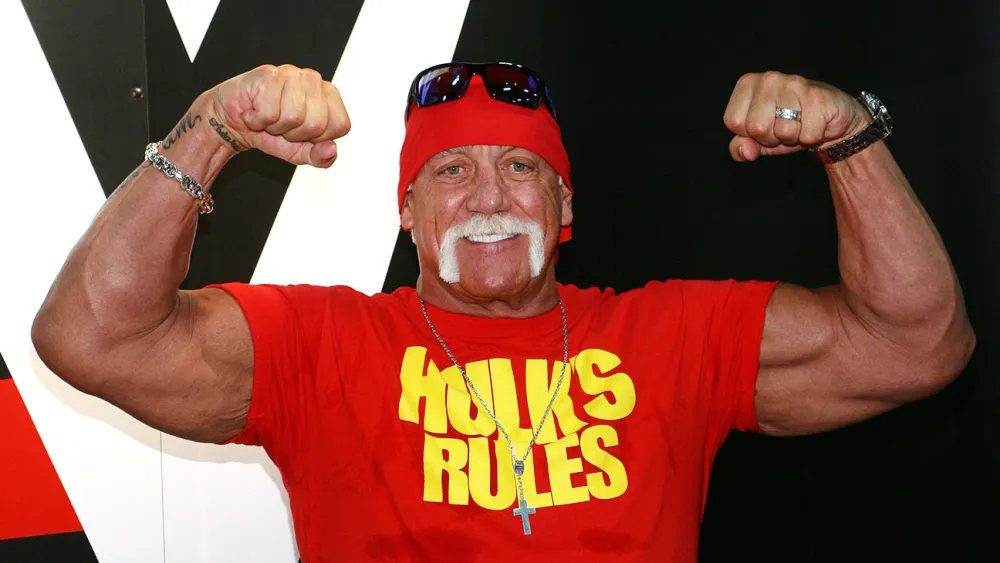
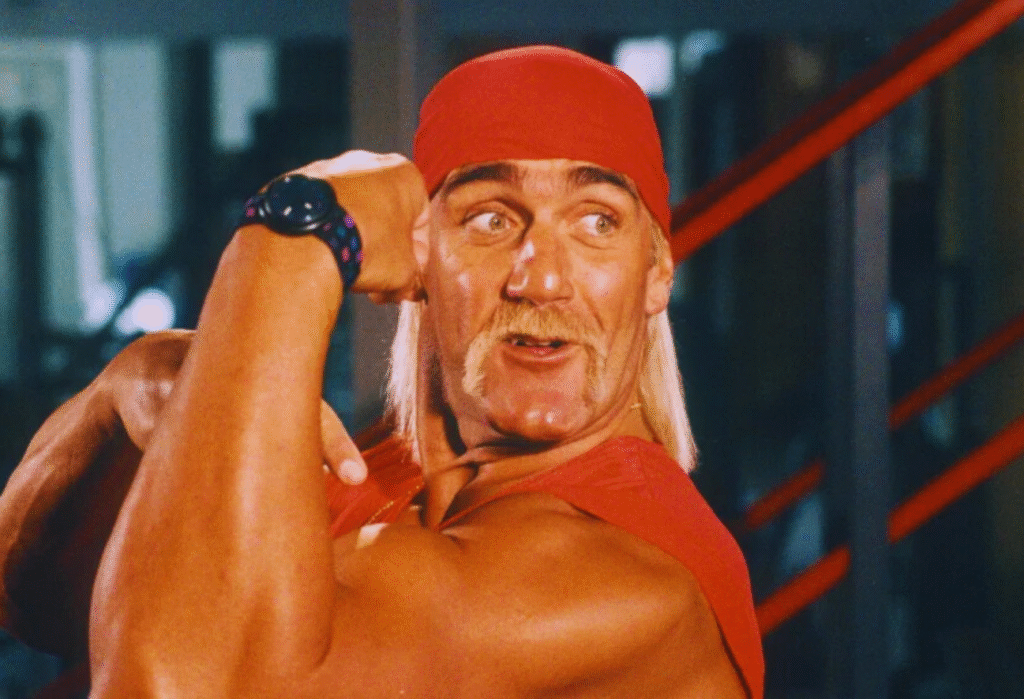
    Hulk Hogan shown flexing in 1994. © British Sky Broadcasting Ltd/Shutterstock

    Hulk Hogan, the towering, charismatic figure who revolutionized professional wrestling in the 1980s and became the first true household name in the sport, passed away on Thursday at the age of 71. His death, confirmed by longtime partner Eric Bischoff and other sources close to the wrestling legend, was reportedly due to a cardiac arrest. Hogan’s passing marks the end of an era for both wrestling and popular culture, where his influence transcended the ring.

    Hogan — born Terry Gene Bollea on August 11, 1953, in Augusta, Georgia — changed the landscape of professional wrestling, helping it become a mainstream entertainment spectacle. In a career that spanned over four decades, Hogan became one of the most recognizable celebrities in the world, known for his larger-than-life persona, trademark yellow trunks, bandana, and his signature move, the leg drop.

    A Wrestling Legacy Like No Other

    Hogan’s journey to wrestling superstardom began in Florida, where he was first discovered by wrestling scouts while playing in local rock bands and pitching for Little League baseball teams. Trained by Hiro Matsuda and inspired by legends like Dusty Rhodes, Hogan’s early career was marked by several lesser-known ring names, including Super Destroyer and Sterling Golden, before settling on the iconic Hulk Hogan.

    Hogan’s WWE debut in the 1980s heralded the beginning of Hulkamania, a cultural phenomenon that spanned beyond the squared circle. He became the face of the WWE, winning the WWE Championship six times and headlining WrestleMania an unprecedented eight times. His most memorable moment came in 1987 when he faced his mentor, Andre the Giant, in a historic match at WrestleMania III, where Hogan body-slammed the 520-pound Giant before a then-record crowd of 93,173 fans in the Pontiac Silverdome.
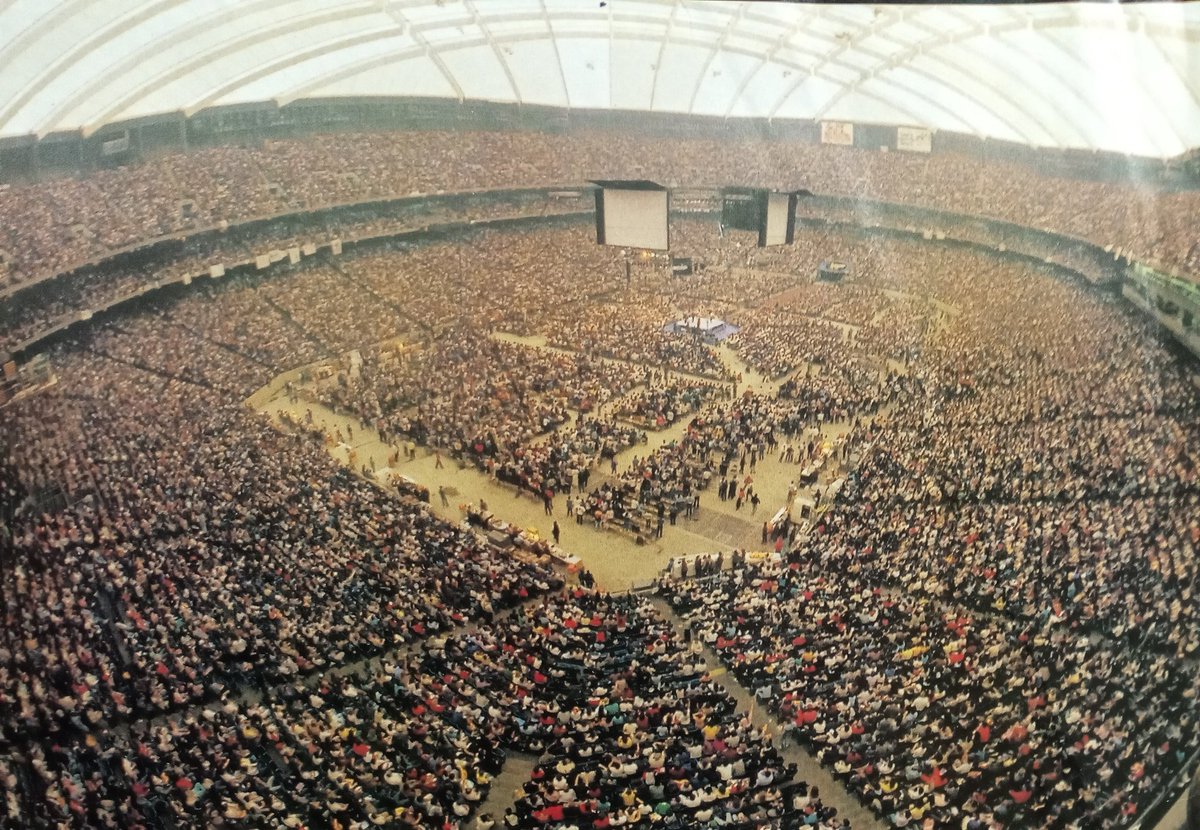
    WrestleMania III event venue: Pontiac Silverdome © WWE

    Hogan’s connection with the audience was unparalleled. He embodied the spirit of the American hero, often invoking his “Real American” entrance theme, flexing his 24-inch pythons, and posing with an American flag to the thunderous cheers of his fans. Hogan’s catchphrases, like “Whatcha gonna do when Hulkamania runs wild on you?” became as famous as his wrestling bouts.

    Hollywood and Beyond: The Wrestler Who Became a Pop Culture Icon

    Beyond the ring, Hogan’s acting career took off when he starred as Thunderlips in Rocky III (1982), marking his big-screen debut opposite Sylvester Stallone. His larger-than-life personality translated to Hollywood, where he appeared in films like No Holds Barred (1989), Suburban Commando (1991), Mr. Nanny (1993), and Santa With Muscles (1996). He also starred in the syndicated TV series Thunder in Paradise (1994).

    sylvester stallone hulk hogan rocky III 072525 3 31c3095fba85489fa234adb449accc3f
    Hulk Hogan and Sylvester Stallone in ‘Rocky III’ . © Metro-Goldwyn-Mayer

    Hogan became a fixture in popular culture, appearing in iconic TV shows such as The A-Team, Baywatch, Gremlins 2: The New Batch (1990), and even voicing characters in Robot Chicken and American Dad! He co-hosted Saturday Night Live with Mr. T in 1985, solidifying his place in the mainstream entertainment world.

    MrNanny
    “Mr. Nanny 1993”. © New Line Cinema

    But it wasn’t just acting that defined Hogan’s legacy. He became a beloved figure, especially for charity work — notably for the Make-a-Wish Foundation, where he was one of the most requested celebrities for children facing life-threatening illnesses.

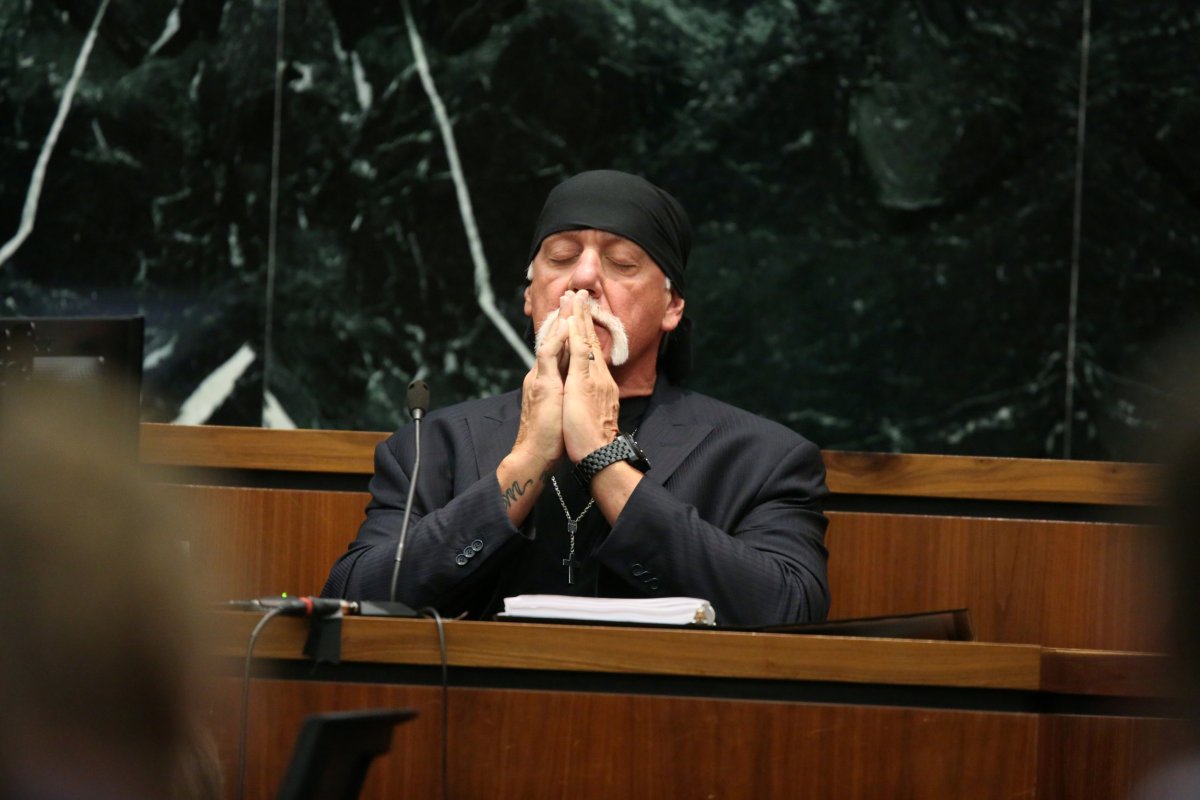
    Hogan’s personal life was as tumultuous as his wrestling career. In 1994, he admitted to using steroids for 13 years, a moment that would mark one of the first of many controversies in his life. Twelve years later, he was embroiled in scandal after a sex tape was leaked, containing racial slurs that led to his removal from the WWE Hall of Fame. However, Hogan made a dramatic comeback in 2016, when he won a $140 million lawsuit against Gawker after the website released the tape. The legal victory sent shockwaves through the media world, leading to Gawker’s bankruptcy and eventual sale to Univision.
    hulk hogan
    Terry Bollea, aka Hulk Hogan, testifies in court during his trial against Gawker Media at the Pinellas County Courthouse on March 8, 2016 in St Petersburg, Florida. © John Pendygraft-Pool/Getty Images

    Hogan was reinstated into the WWE Hall of Fame in 2018, cementing his status as one of the most influential figures in wrestling history.

    In recent years, Hogan stayed active in the wrestling world. In April 2025, he and longtime partner Eric Bischoff launched the Real America Freestyle Wrestling League, securing a TV rights deal with Fox Nation. Despite his age, Hogan remained passionate about promoting wrestling to new generations, never straying far from his roots.

    Hogan’s Impact on the Wrestling and Entertainment Industry

    The impact of Hulk Hogan’s death reverberates across both the wrestling industry and entertainment. His transformation from a regional wrestler to a global sensation helped propel WWE into the mainstream, and his legendary rivalries with wrestlers like Roddy Piper, Andre the Giant, Ric Flair, and Macho Man Randy Savagebecame the stuff of legend. His heel turn in 1996, as the leader of the New World Order (NWO) in WCW, remains one of the most shocking moments in wrestling history.

    wwe new world order
    In 1996, wrestling entertainment got a new trio of bad guys who ended up winning over the crowd and dominating the WWE for years. © WWE

    Hogan’s influence on professional wrestling is immeasurable — he helped shape the modern spectacle of wrestling, where entertainment and athleticism go hand in hand. His “Hulkamania” became a symbol not only of pro wrestling but of the broader entertainment culture that exploded in the 1980s and 1990s.

    Hogan is survived by his wife, Sky, whom he married in 2023, and his two children, Nick and Brooke, from his first marriage to Linda Claridge. He was also married to Jennifer McDaniel from 2009 until their separation in 2021.

    For the millions of fans who followed his career, Hulk Hogan was more than a wrestler — he was an icon, an inspiration, and a symbol of perseverance. In his own words, “Hulkamania will live forever.” Now, as the world mourns his passing, it is clear that Hogan’s legacy will continue to endure, immortalized in the hearts of fans and the annals of professional wrestling history.

  • Loretta Swit, Best Known as ‘Hot Lips’ on TV’s ‘MAS*H,’ Dies at 87

    Loretta Swit, Best Known as ‘Hot Lips’ on TV’s ‘MAS*H,’ Dies at 87

    00swit 01 print1 superJumbo v3
    Loretta Swit, in costume as Maj. Margaret Houlihan, on the set of the hit TV series “M*A*S*H” in 1975. (CBS Photo Archive/Getty Images)

    Loretta Swit, the Emmy-winning actress who made the high-strung and relentlessly militaristic Maj. Margaret Houlihan human, dignified and, against all odds, sympathetic on the acclaimed television series “M*A*S*H,” died on Friday at her home in Manhattan. She was 87.

    Her death was announced by her publicist, Harlan Boll.

    In the Oscar-winning 1970 film “M*A*S*H,” directed by Robert Altman, Major Houlihan (whose blatantly sexist nickname was Hot Lips) was played by Sally Kellerman. When the movie became a CBS series, Ms. Swit stepped into the role and made it her own, adding heretofore unseen nuance. She was nominated 10 years in a row for the Emmy Award for best supporting actress in a comedy series, and she won twice, in 1980 and 1982.

    “M*A*S*H,” which aired from 1972 through 1983 on CBS, was, like the movie that inspired it, set at a mobile Army hospital during the Korean War. Major Houlihan spent the first five seasons distracted by her open secret of an affair with the sniveling, very married Maj. Frank Burns (Larry Linville).

    Around the time Major Burns returned to the United States, she married a handsome officer whom she had met in Tokyo. But he proved unfaithful, and she was soon divorced and newly dedicated to her career as the unit’s head nurse. In a post on social media, her “M*A*S*H” co-star Alan Alda wrote, “We celebrated the day the script came out listing her not as Hot Lips, but as Margaret.”

    “It was the greatest time in my career,” Ms. Swit told the British newspaper The Guardian in 2001. Margaret’s ambition throughout the series was to be “the best damned nurse in Korea, and that motivated everything I did, even when it came to sex.” Major Houlihan did seem to be on a flirtatious first-name basis with every general who visited the camp.

    As early as Season 2, her nemesis, Capt. Benjamin Franklin Pierce (Alan Alda) — better known as Hawkeye — saw her good side, referring to her as “nurse, friend and all-around good egg.” Col. Sherman T. Potter (Harry Morgan) called her “the finest nurse I’ve ever scrubbed with.”

    00swit 02 superJumbo
    Ms. Swit with other members of the “M*A*S*H” cast, from left: Larry Linville, Wayne Rogers, Alan Alda (seated front), Gary Burghoff and McLean Stevenson. (CBS/Reuters)

    The character only grew in perceived stature as the seasons passed, wrestling violent patients into submission and performing triage in her wedding dress.

    Ms. Swit firmly believed that “if you’ve got a long-run series, then there’s always got to be room for growth,” she told The Toronto Star in 2010. “Of all the places you’d be inclined to grow, I certainly think somewhere you’re in danger every day and healing people every day would be just the right place.”

    The show explored Major Houlihan’s feelings about her proud military heritage, as the daughter of a general who would have preferred a son. And it looked in on the night of passion — under enemy fire — that she and Captain Pierce shared and, as soon as the morning-after dust settled, never spoke of again.

    Loretta Jane Szwed was born on Nov. 4, 1937, in Passaic, N.J., to Lester Szwed, a salesman, and Nellie (Kassack) Szwed.

    30Swit 01 jfpw superJumbo
    Ms. Swit at her home in 1971. She was a relatively unknown actress at the time; a year later, “M*A*S*H” would change everything. (Everett Collection)

    After graduating from high school in Passaic, Loretta attended the Katharine Gibbs School in Montclair, N.J., and began a secretarial career. Her employers included Elsa Maxwell, the society hostess and gossip columnist.

    But she was also preparing for an acting career; she enrolled in the American Academy of Dramatic Arts and studied with the director Gene Frankel.

    “That’s kind of all I ever wanted to be,” she recalled in a 2004 Archive of American Television interview. She remembered going to two movie double features a day with her mother, separated only by a dinner break, when she was growing up.

    She took voice lessons and dance lessons, but her parents were horrified by her choice of entertainment as an actual career. As Ms. Swit told The Toronto Star in 2010, after they saw her in a play at a small Greenwich Village theater, “My mother said to my father, ‘If you don’t stop her now, she may wind up doing this for the rest of her life.’”

    Her Off Broadway debut was in Ibsen’s “An Enemy of the People” in 1961. She was the understudy for the lead female role in the national tour of the romantic comedy “Any Wednesday.”

    She also appeared onstage in the musical “Mame,” in the comic role of Agnes Gooch, the lead character’s mousy secretary-nanny, who bursts out of her sheltered existence and comes home pregnant. She appeared alongside Celeste Holm on the national tour and Susan Hayward in the Las Vegas production.

    30Swit 02 jfpw superJumbo
    Ms. Swit appeared with Ted Bessell in “Same Time, Next Year” on Broadway in 1975.(Everette Collection)

    Later in her career, she also appeared on Broadway with Ted Bessell in “Same Time, Next Year” (1975) as a chronic adulterer and in “The Mystery of Edwin Drood” (1985), replacing Cleo Laine.

    Before“M*A*S*H,” Ms. Swit appeared on the television series “Mission: Impossible,” “Mannix,” “Gunsmoke” and “Hawaii Five-O,” all in 1970.

    And she kept busy with other projects during the show’s run. She played an obnoxious gossip columnist in a body cast in Blake Edwards’s Hollywood farce “S.O.B.” (1981), with Julie Andrews and William Holden. She was a crime boss’s unfaithful wife in “Freebie and the Bean” (1974), with Alan Arkin and James Caan. She appeared in the television movies “Mirror, Mirror” (1979), “The Love Tapes” (1980) and “Games Mother Never Taught You” (1982). And she made an enemy (temporarily) of Miss Piggy when she guest-starred in a 1980 episode of “The Muppet Show.”

    30Swit Sub wfqm superJumbo
    Ms. Swit appeared with Tyne Daly in the pilot of the police series “Cagney & Lacey” in 1981, but her part was played by Meg Foster, and then by Sharon Gless, when the show became a series. (Jeff Goode/Toronto Star/Getty Images)

    In 1981, she played Detective Christine Cagney in the pilot of the police series “Cagney & Lacey,” and she was set to take on the role for the run of the new show. But she was unable to get out of her commitment to “M*A*S*H,” and first Meg Foster (for six episodes) and then Sharon Gless ended up with the part instead.

    After “M*A*S*H” ended, Ms. Swit played the president of the United States in the satirical British movie “Whoops Apocalypse” (1986). She also continued to be seen regularly on TV series, including “Murder, She Wrote” (1994) and “Burke’s Law” (1995). And she continued her stage career, appearing in regional theater, graduating to the title role in “Mame” and winning the Sarah Siddons Award in Chicago for her performance in “Shirley Valentine.”

    She had planned to retire from acting after appearing in the 1998 comedy “Beach Movie,” but she returned to the screen two decades later in “Play the Flute” (2019), about a youth pastor with a wayward flock. It was her last movie.

    In 1983, Ms. Swit married Dennis Holahan — an actor who was also a lawyer, and who coincidentally bore an approximation of her most famous character’s surname — after they appeared together in an episode during the final season of “M*A*S*H.” They divorced in 1995.

    No immediate family members survive.

    As for concerns like aging and mortality, she shrugged them off in an interview with The Express, the London newspaper, in 2020.

    “I don’t think about the passage of time,” Ms. Swit said, “just what I’m doing with it.”

  • Lilo & Stitch vs. Mission: Impossible Has One Clear Winner

    Lilo & Stitch vs. Mission: Impossible Has One Clear Winner

    One key actor plays notable roles in both Mission: Impossible – The Final Reckoning and the Lilo & Stitch live-action remake, making them an undisputed winner of what should become one of the biggest box office weekends of 2025. Tom Cruise’s Mission: Impossible franchise may be coming to an end with the eighth installment after running strong for three decades, although Cruise’s recent comments saying that he plans to be the first 100-year-old action star cast doubt that Final Reckoning will truly be the last, although Cruise insists that it will be (via The Hollywood Reporter).

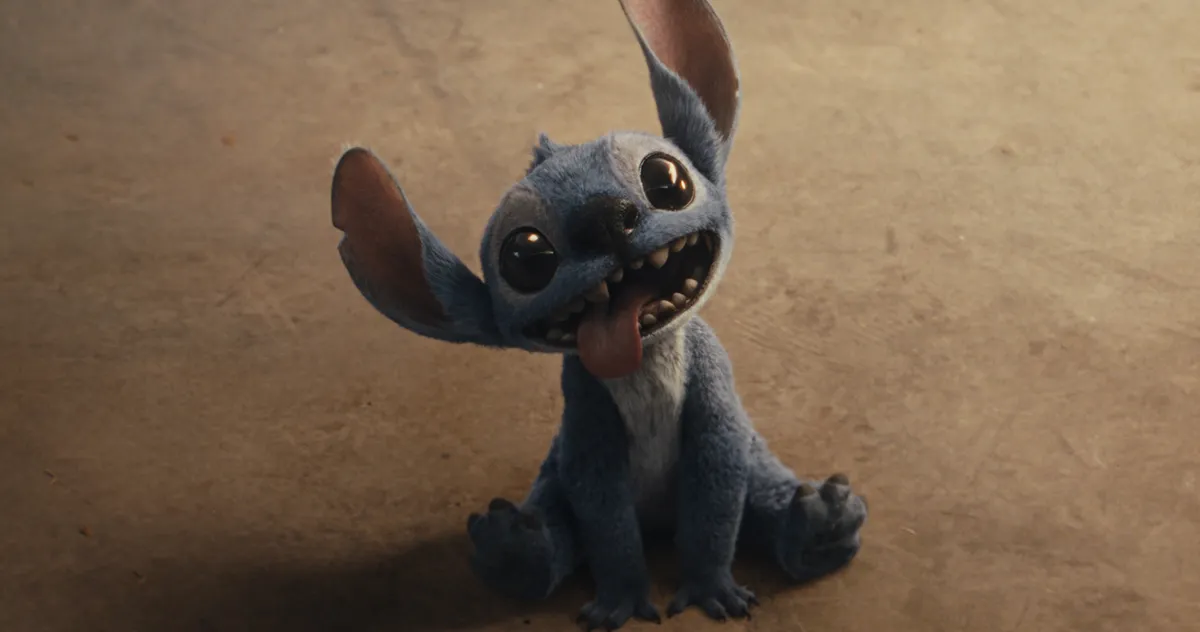
    Lilo & Stitch, on the other hand, looks to turn things around for Disney and fix their slump with live-action remakes of their classic animated films. Snow White’s disappointing box office performance failed to break even with its reported production budget of $240-270 million in March 2025. While The Lion King: Mufasa pulled in an impressive $722.6 million as a prequel to 2019’s The Lion King, its highest-grossing live-action remake of all time, Mufasa is both an original work and a prequel, not a remake. Lilo & Stitch has already shown box office promise with its massive $14.5 million gross in previews alone (via THR).

    Hannah Waddingham Is In Both Lilo & Stitch And Mission: Impossible – The Final Reckoning

    Waddingham Plays 2 Very Different Characters In The May 2025 Blockbusters

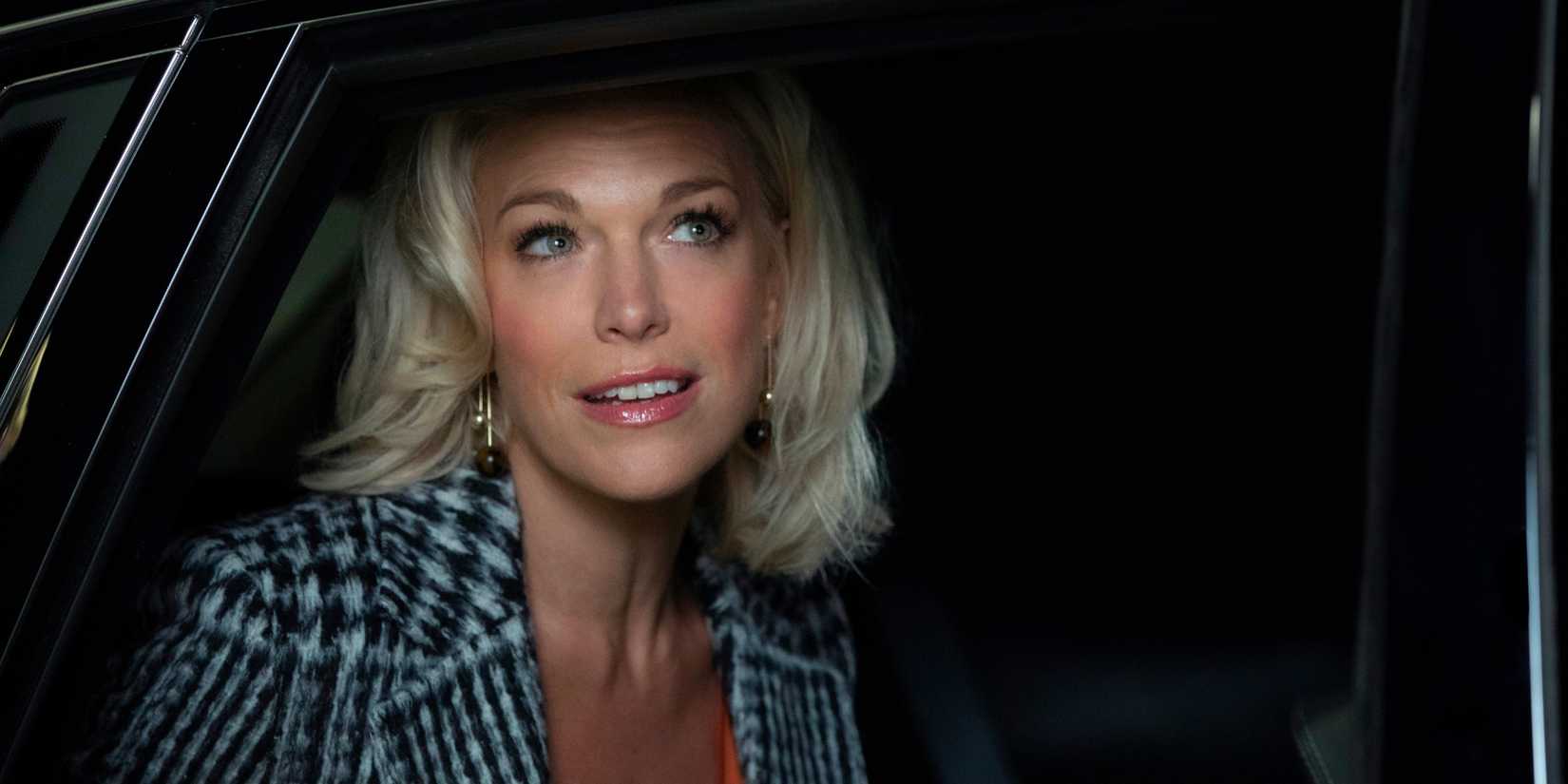
    rebecca in ted lasso pilot

    While she is not the star of either film, Emmy-winner Hannah Waddingham interestingly plays key supporting character roles in both Mission: Impossible – The Final Reckoning and the Lilo & Stitch live-action remake. Waddingham is the only actor appearing in both films, although she only lends her voice as the Grand Councilwoman character in Lilo & Stitch. The late actress Zoe Caldwell, known for films such as Extremely Loud & Incredibly Close, originally voiced the character in the 2002 animated original film. Caldwell also voiced Grand Councilwoman in 2003’s Stitch! The Movie and Lilo & Stitch: The Series.

    Waddingham makes her franchise debut in Mission: Impossible – The Final Reckoning as Admiral Neely, the commander of an American aircraft carrier stationed off the coast of Alaska, not far from the Russian border. Waddingham is best known for her award-winning role as Rebecca Welton in Apple’s hit comedy series Ted Lasso​​​​​​. She has typically played more lighthearted and comedic characters in recent years, including the relentless movie producer Gail Meyer in 2024’s The Fall Guy and Jinx in The Garfield Movie. There is nothing funny, however, about the ultra-serious role of Admiral Neely in Mission: Impossible 8.

    The Final Reckoning Has The Better Role For Hannah Waddingham Than Lilo & Stitch

    Admiral Neely Becomes One Of The Many Crucial Players In Ethan’s Plan

    Waddingham has a more prominent role in Mission: Impossible – The Final Reckoning than she does in the live-action Lilo & Stitch remake. Not only is her character in The Final Reckoning a bit more than Grand Councilwoman in Lilo & Stitch, but she is actually seen on screen in Mission: Impossible, whereas she only portrayed an animated character in the Disney movie. Waddingham now joins the likes of Henry Cavill, Jeremy Renner, and Rebecca Ferguson in playing a key supporting character in a Mission: Impossible movie, an opportunity that may never be available ever again.

    Hannah Waddingham Is The Winner Of Lilo & Stitch vs Mission: Impossible (No Matter What Happens At The Box Office)

    Waddingham Should Continue Her Box Office Success With July’s Smurfs Release

    grand councilwoman in lilo stitch

    No matter who wins the box office battle between Mission: Impossible – The Final Reckoning and the live-action Lilo & Stitch remake, Waddingham has put herself in the rare position of being on the winning side no matter what. She’s a winner either way, as both movies are projected to be massive at the box office and should end up being two of the highest-grossing films of 2025.

    Waddingham’s box office success should also continue with the upcoming release of Smurfs in July, in which she is set to appear in a currently undisclosed role.

    Waddingham’s box office success should also continue with the upcoming release of Smurfs in July, in which she is set to appear in a currently undisclosed role. Waddingham will join an enormous ensemble cast in Smurfs, including Rihanna, James Corden, John Goodman, Kurt Russell, Natasha Lyonne, Dan Levy, and Nick Offerman, who was also cast as an American military figure in Mission: Impossible – The Final Reckoning.

  • A Surreal Evening on the French Riviera With Jeff Bezos and Duran Duran

    A Surreal Evening on the French Riviera With Jeff Bezos and Duran Duran

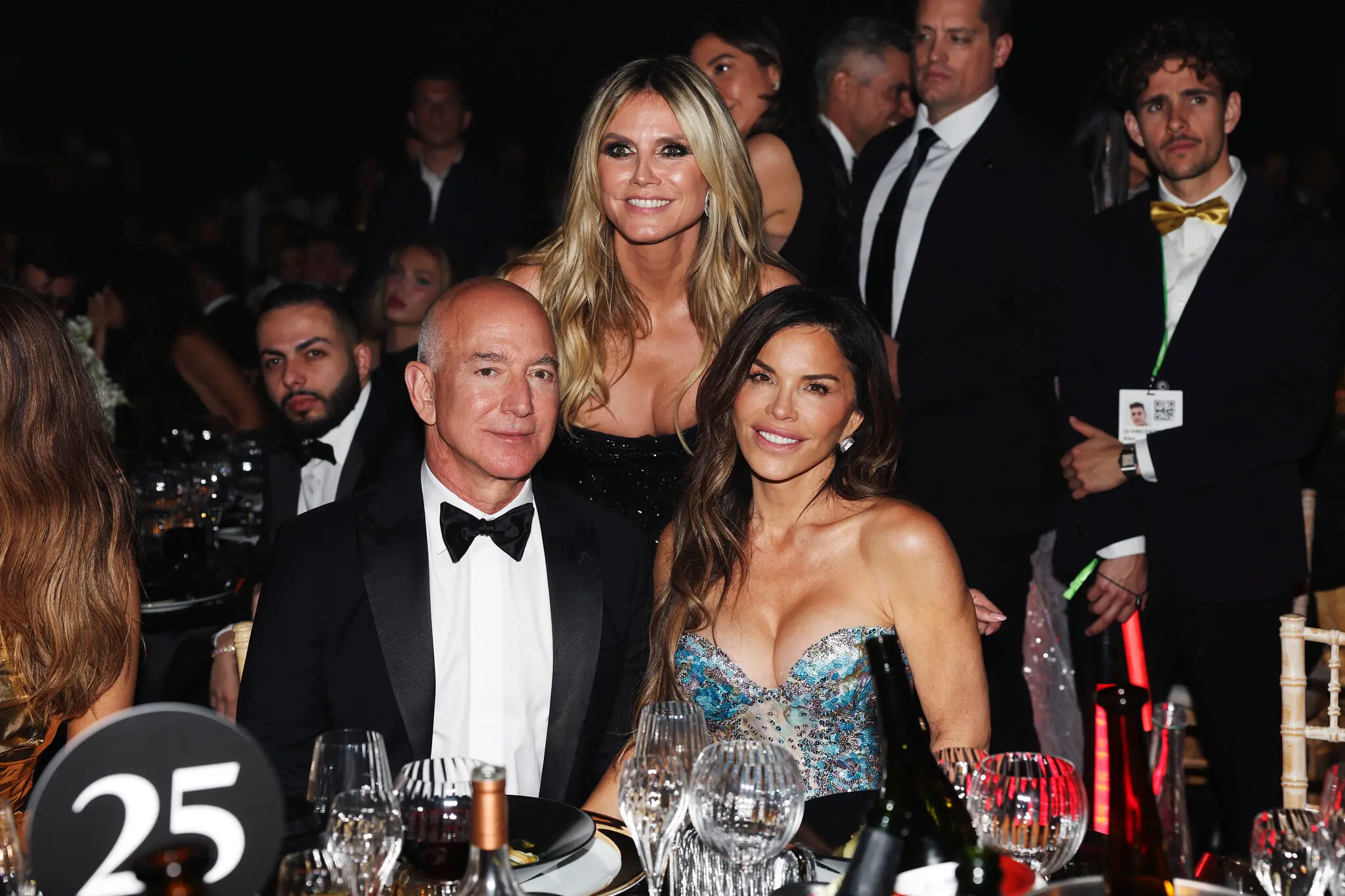
    From left, Jeff Bezos, Heidi Klum and Lauren Sánchez inside the amfAR gala on Thursday. (Pascal Le Segretain/amfAR/Getty Images)
    From left, Jeff Bezos, Heidi Klum and Lauren Sánchez inside the amfAR gala on Thursday. (Pascal Le Segretain/amfAR/Getty Images)

    Every year, as the Cannes Film Festival winds down, hundreds of celebrities and philanthropists gather at the palatial Hotel du Cap-Eden-Roc for the amfAR gala, an event that raises millions for biomedical research and also prides itself on being a lavish, fashion-forward party.

    That was certainly the case at the 31st installment Thursday, which featured performances from Ciara, Adam Lambert and Duran Duran.

    At blustery cocktails in the seaside town of Antibes overlooking the vast blue water of the French Riviera, the Oscar-nominated actor Colman Domingo, wearing a custom Valentino suit and Boucheron jewelry that he said made him feel like a “peacock,” admitted that it’s a surreal night.

    “It’s so maximalistic in all of this expression,” he said. “And it is all to draw eyes toward H.I.V. and AIDS research.”

    23ST PARTYREPORT AMFAR 02 vczj superJumbo
    From left, Spike Lee, Tonya Lewis Lee and Colman Domingo. (Andreas Rentz/amfAR,/Getty Images)
    23ST PARTYREPORT AMFAR 03 vczj superJumbo
    Adrien Brody, left, and Georgina Chapman. (Le Segretain/amfAR, /Getty Images)
    23ST PARTYREPORT AMFAR 04 vczj superJumbo
    The gala took place at the Hotel du Cap-Eden-Roc on the French Riviera.(Colby Tallia/amfAR,/Getty Images)

    The cause was the reason the actress Teri Hatcher, dressed in a sleek black gown, said she was excited to attend, “especially as an American wanting to, at this time, be putting light on causes that are important, that need funding.”

    It was her first time at the event, which was initially hosted by Elizabeth Taylor in 1993. The night raised more than $17 million.

    In his opening remarks at the dinner, the outgoing amfAR chief executive, Kevin Robert Frost, also alluded to the Trump administration’s cuts affecting H.I.V. prevention.

    “As you all know, this is not a great time for global health,” he said. “Many governments, especially mine, the U.S., but also the United Nations and others, are cutting back on investments in health, and many communities are already feeling the consequences, especially people living with H.I.V., who depend on daily medications for their survival.”

    Sitting near the stage was Kimberly Guilfoyle, Mr. Trump’s choice to be ambassador to Greece, in a bright red dress.

    23ST PARTYREPORT AMFAR 05 vczj superJumbo
    Kimberly Guilfoyle. (Pascal Le Segretain/amfAR,/Getty Images)
    23ST PARTYREPORT AMFAR adds 02 vjbm superJumbo
    Taraji P. Henson. (Sameer Al-Doumy/Agence France-Presse/Getty Images)
    23ST PARTYREPORT AMFAR adds 03 vjbm superJumbo
    Adam Lambert. (Sameer Al-Doumy/Agence France-Presse/Getty Images)

    Earlier Kyle Clifford, who is set to take over for Mr. Frost, said that the organization keeps politics outside of the gala tent, which this year was dressed up with hanging lanterns and moody red lighting.

    “We’re a nonpartisan organization and it’s a safe, fun place for people to do their philanthropy,” he said.

    Indeed, the night drew more than 850 people and many famous faces, including Jeff Bezos, Lauren Sánchez, Kevin Spacey, who was found not guilty of sexual assault charges by a British jury in 2023, and Leonardo DiCaprio, who tried to remain incognito in a black baseball cap.

    On the hotel’s perfect lawns, Ms. Guilfoyle was spotted posing for photos opposite Heidi Klum, the model and “Project Runway” host, who later bemoaned the adjacent film festival’s new dress code that prohibited nudity and “voluminous” outfits.

    “I think it’s boring,” she said, dressed in a strapless gown, with a sheer skirt and large feathered train.

    23ST PARTYREPORT AMFAR 07 vczj superJumbo
    Teri HatcherCredit…Andreas Rentz/amfAR, via Getty Images
    23ST PARTYREPORT AMFAR 08 vczj superJumbo
    Leonardo DiCaprioCredit…Kennedy Pollard/amfAR, via Getty Images
    23ST PARTYREPORT AMFAR 06 vczj superJumbo
    Ciara performed.Credit…Ryan Emberley/amfAR, via Getty Images

    At the bar, the director Spike Lee, who had just premiered his latest movie, “Highest 2 Lowest,” at the festival, chatted with the Oscar-winner Adrien Brody. Upon entering the party, Mr. Lee, a dedicated New York Knicks fan, said he was glad he missed the previous night’s playoff game, in which his team suffered a heartbreaking loss to the Indiana Pacers.

    “I was on another continent, a thousand miles away,” he said. “They cannot blame that disaster on me.”

    Mr. Brody had donated one of his artworks, a mixed media piece centered on Marilyn Monroe, to the night’s auction. He was not the only actor to do so. James Franco, who has recently been less visible following sexual misconduct allegations, also supplied a painting.

    Ciara kicked off the dinner with a performance of her hits including “1, 2 Step,” flanked by two backup dancers.

    23ST PARTYREPORT AMFAR 09 vczj superJumbo
    James FrancoCredit…Andreas Rentz/amfAR, via Getty Images
    23ST PARTYREPORT AMFAR adds 01 vjbm superJumbo
    Kevin SpaceyCredit…Scott a Garfitt/Invision, via Associated Press

    And while the night was hosted by Taraji P. Henson, the affair was dominated by the flashy live auction where items included Chopard diamond earrings, an Andy Warhol screenprint, and a Dodge Charger used in “Fast X,” the most recent installment in the “Fast & Furious” franchise, which the movie’s star, Michelle Rodriguez, hyped up with a giggly introduction.

    A George Condo painting, made specially for the occasion, was the big seller at 1,150,000 euros, or about $1.3 million. Mr. Lee contributed a surprise item of a walk-on role in his next movie, and added during the bidding he would take the winner to a Knicks game next season.

    As is now tradition at the gala, the auction featured a fashion show curated by the French fashion editor Carine Roitfeld, with a collection that immediately sold. This year’s theme was “From Cannes With Love,” a tribute to James Bond. Ms. Hatcher, who played a Bond girl in the 1997 film “Tomorrow Never Dies,” walked the runway.

    23ST PARTYREPORT AMFAR 10 vczj superJumbo
    Kevin Robert Frost, the chief executive of amfAR.Credit…Tristan Fewings/amfAR, via Getty Images

    After a brief intermission in bidding, Mr. Lambert performed a series of songs by Queen with accompaniment from the band’s drummer Roger Taylor.

    But it wasn’t until the end of the long event, well after midnight, that the 1980s pop dandies, Duran Duran, who are about to embark on a European tour, took the stage.

    While guests lit up cigarettes inside, Mr. Domingo, Mariska Hargitay and Georgina Chapman grooved along to songs like “Notorious” and “Ordinary World.”

    But the night, and the world, felt far from ordinary.

  • Billy Joel Cancels All Tour Dates Following Brain Disorder Diagnosis

    Billy Joel Cancels All Tour Dates Following Brain Disorder Diagnosis

    U.S. singer-songwriter and pianist Billy Joel said Friday he is cancelling all of his scheduled concerts — including a stop in Toronto — after he was recently diagnosed with normal pressure hydrocephalus, a brain disorder.

    The 76-year-old singer is undergoing physical therapy and has been advised to refrain from performing while he recovers, according to a statement on social media.

    “I’m sincerely sorry to disappoint our audience and thank you for understanding,” Joel said.

    Joel’s condition was exacerbated by recent concert performances, leading to problems with hearing, vision and balance, according to the statement.

    The condition, which is more likely in people over the age of 65, occurs when fluid builds up inside the skull and presses on the brain, according to the Cleveland Clinic. Symptoms, such as shuffling feet with short steps as well as memory challenges, resemble those of dementia and can sometimes be reversible within surgery. 

    The tour, which had 17 stops in the United States, Canada and England, had been due to start in February, but it was initially rescheduled to July due to an undisclosed medical condition.

    Joel, known for hits like Piano Man and Uptown Girl, ended his record-breaking monthly Madison Square Garden residency — which had begun in 2014 — last year.

  • Why Is IMAX Popping Up Everywhere All of a Sudden?

    Why Is IMAX Popping Up Everywhere All of a Sudden?

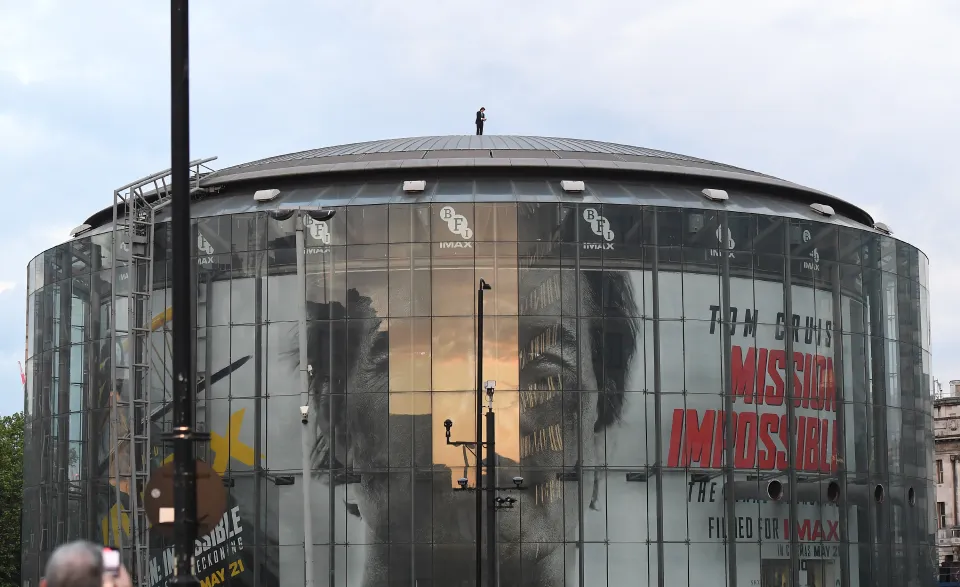
    Tom Cruise had a major request. He wanted IMAX to show his latest “Mission: Impossible” movie — and only his movie — on its giant screens for three weeks. It is the kind of exclusive run that few films get.

    So Mr. Cruise went straight to the top. He reached out to IMAX’s chief executive, Rich Gelfond, who had some requests of his own. He wanted all the “Mission: Impossible” premieres, along with press screenings and influencer screenings, to be held at an IMAX theater. And he wanted Mr. Cruise to endorse the company’s screens during his global press tour for the film, which opens this weekend.

    “As a joke I said, ‘Tom, no matter what question the press asks you, you’ve got to answer IMAX.’ ‘What’s your favorite scene?’ ‘IMAX,’” Mr. Gelfond, 69, said in an interview. “He agreed to do that.”

    In order to get something from IMAX these days, even Hollywood’s top power players have to give some, too.

    As movie theater audiences wane and at-home streaming audiences grow, IMAX increasingly stands out as a bright spot in the theater business. The company, founded in Toronto, aims to give moviegoers a more immersive experience with larger screens, better sound and steeper seating, which brings viewers closer to the screen. It now has 416 locations in North America and 1,322 overseas. That is only 1 percent of all the screens in the world, but they often account for a larger percentage of a movie’s box office return, drawing significant crowds for a more expensive ticket than a typical theater seat.

    In the past two months, IMAX screens delivered $39 million to the global box office for “Sinners” (out of $321 million total), $30.6 million for “A Minecraft Movie” ($930.1 million total) and $30.5 million for “Thunderbolts*” ($330 million total). (“Thunderbolts*” and “Minecraft” each played in IMAX theaters for two weeks. “Sinners” was brought back to nine locations for a third week.)

    As a result, Hollywood studios are putting more emphasis on the IMAX brand, even making the IMAX logo in larger type than the title of the movie in some marketing materials. Disney started this last year with “Kingdom of the Planet of the Apes” and “Alien: Romulus.” For “The Amateur,” a small action movie made by 20th Century Studios this year, the tagline “Vengeance is bigger in IMAX” appeared larger than the movie title. Marvel’s “Thunderbolts*” received similar treatment.

    “For some of these movies that have a franchise history — and are also available at home — the IMAX brand can help speak to the big-screen-worthiness of a film and the spectacle,” said Asad Ayaz, the president of marketing at Disney, which owns Marvel and 20th Century Studios. “It differentiates it from streaming, which is also a big business for us, so it can be helpful.”

    Yet not everyone in the movie business is thrilled with IMAX’s ascension. Some worry that its limited number of screens, and higher prices for admission, could turn moviegoing from a frequent activity into a luxury experience that further reduces overall attendance.

    imax dual 4k with laser projection system
    Imax Keeps Updating Itself at Breakneck Pace. (Courtesy of Imax)

    “It’s great to be able to provide premium experiences to people who want it,” said Greg Marcus, chief executive of the company that operates Marcus Theaters, the fourth-largest chain in the country, but with only three IMAX screens. “But 80 to 85 percent of our business is coming from traditional theaters. And so you have to be very careful to not put down the traditional experience in promoting the other.”

    Complicating matters further, most theater chains have their own large-format screens. Regal Cinemas has RPX. Cinemark Theaters has CinemarkXD, and Marcus has both UltraScreenDLX and SuperScreenDLX. AMC, the largest theatrical exhibitor, has several: Dolby Cinema, Prime and Laser.

    When a moviegoer buys a ticket to the majority of these large format screens, the exhibitor traditionally evenly splits the revenue with the studio. But when a moviegoer buys a ticket to an IMAX theater, the exhibitor and the studio must give a cut of their shares, often up to 12.5 percent, to IMAX. (Theaters also have to pay a yearly fee to IMAX for the upkeep of their projectors and screens.)

    Yet IMAX is the premium large-format option the studios promote more than the others.

    “Theaters are struggling, and what seems to really make a different to audiences is the premium format,” said Jeff Goldstein, the president of distribution for Warner Bros. “Each individual exhibitor doesn’t want to give up their brand, and I think their strategy is smart. Any way that brings audiences out for movie going is good, and I think IMAX leads that.”

    Mr. Gelfond bought IMAX in 1994 through an investment company he co-founded. At the time, IMAX was primarily known for theaters inside museums and other cultural institutions, showing what he calls “bears, whales and seals” films. It was not until 2003 that the company ventured into partnerships with Hollywood. When “Avatar” was released in 2009, it grossed $250 million on 282 IMAX screens. Hollywood noticed.

    IMAX expects to generate $1.2 billion in box office revenue this year, its most ever. But the company is still relatively small. It reported $87 million in revenue last quarter, and $8 million in profit. The majority of the company’s screens are operated by other theater owners as a joint venture, and they share revenue for ticket sales. In those cases, IMAX receives a cut of the box office only from the studios and not the exhibitors, yet it still controls the programming.

    The fact that IMAX works with theater chains does not stop Mr. Gelfond from insulting them. “Their premium screens are just regular screens that are just bigger,” he said. “We are investing in a great experience. They are investing in buying a standard projector and putting it on a bigger screen.”

    richard gelfond
    Imax CEO Richard Gelfond. (AP Images)

    Not everyone agrees with Mr. Gelfond’s assessment about his competitors, including his competitors themselves. Yet his pugilistic style has gotten him far in Hollywood. Recently, he waded into the thorny world of Netflix and theatrical distribution. The entertainment giant has long eschewed releasing movies in theaters before its streaming service. Last month, Ted Sarandos, Netflix’s co-chief executive, called the communal experience of watching a movie in a theater “an outmoded idea.”

    But IMAX reached a deal to show Greta Gerwig’s upcoming adaptation of “The Chronicles of Narnia,” a Netflix film, for two weeks in fall 2026 before it goes on the streaming service. That has left some industry insiders wondering whether theaters would be willing to play a Netflix film at all, even if they are contractually obligated to under their deal with IMAX.

    “It does cause a conflict in the sense that Netflix has been quite public with negative comments,” Adam Aron, AMC’s chief executive, said in an interview. “But to support Rich we are going to play ‘Narnia.’ And we’d love to be able to convince Ted Sarandos that Netflix would be advantaged if it embraced movie theaters.”

    Some say Mr. Gelfond’s direct relationships with some top Hollywood directors have often put him ahead of the studios when it comes to knowing filmmakers’ intentions. Christopher Nolan (“Oppenheimer”) and Ryan Coogler (“Sinners”), both of whom have shot with IMAX cameras, and others have become evangelists for the brand. At the Cannes Film Festival this month, Mr. Gelfond revealed that Mr. Nolan would film the entirety of his next movie, “The Odyssey,” with IMAX cameras.

    His connections with some movie stars can help, too — and he’s happy to boast about them. Mr. Gelfond was quick to pull out his phone to share his text exchange with Mr. Cruise moments after the actor rappelled into the stadium at the closing ceremony of the Paris Olympics last summer.

    “Beyond awesome!! You’re the best,” Mr. Gelfond messaged the actor. A minute later, Mr. Cruise responded: “Thank you, my friend. We are going to crush it next summer.”

  • Come what may in his federal trial, Sean ‘Diddy’ Combs deserves to remain the outcast he has become

    Come what may in his federal trial, Sean ‘Diddy’ Combs deserves to remain the outcast he has become

    The federal trial against Sean Combs that begins Monday in the Southern District of New York follows an indictment that accuses the entertainment mogul of human trafficking and drug trafficking, and of using his considerable wealth and power and brute force to keep his alleged victims silent. Combs has denied all the charges the government has brought against him and rejected a plea deal. The founder of Bad Boy Records is no stranger to the courts or to having trouble swirling around him. But this is the first time he stands accused by the U.S. Department of Justice; he’s never faced charges as serious as those he faces now.

    The founder of Bad Boy Records is no stranger to the courts or to having trouble swirling around him.

    In November 2023, R&B singer Cassie, whose legal name is Casandra Ventura and who had an on-again, off-again relationship with Combs, filed a lawsuit accusing Combs of beating, kicking, stomping and raping her and forcing her into sex with male prostitutes. Combs, who denied the claims the artist made against him, settled with her the next day. A statement from Combs’ attorney Ben Brafman said, “Mr. Combs’ decision to settle the lawsuit does not in any way undermine his flat-out denial of the claims.”

    Then, in May 2024, CNN released a 2016 security video from a hotel hallway showing Combs physically assaulting Cassie, including kicking and dragging her. Combs responded in an Instagram post that what he did happened during a dark time in his life. “I was f—-d up. I hit rock bottom. But I make no excuses. My behavior on that video is inexcusable. I take full responsibility for my actions in that video.”

    Combs was arrested in September and accused of hosting what he reportedly called “freak offs,” which the government describes as coerced sexual acts that Combs organized and recorded.

    Since November 2023, according to The Washington Post, there have been well over 70 lawsuits accusing Combs of sexual assault. He has denied all such allegations. And those cases against him haven’t been proved. But it’s hard not to put him in the same category as celebrities such as R. Kelly and Harvey Weinstein, powerful men accused of sexual abuse going back decades. We should ask ourselves why our society seems so willing to ignore the whispers and rumors and bits of evidence that link powerful men to violence against women.

    The violence Combs inflicts on Ventura in that unearthed hotel surveillance video is so awful it’s nearly unwatchable. It’s bad news for Combs, then, that U.S. District Judge Arun Subramanian has ruled that it’s admissible evidence the jury will get to see. Prosecutors say the hotel surveillance video shows Combs, wearing only a white towel around his waist, trying to drag Ventura back to a room where a “freak off” was happening.

    Since November 2023, according to The Washington Post, there have been well over 70 lawsuits accusing Combs of sexual assault.

    To be sure, that video does not automatically make Combs guilty of the charges the federal government has brought against him. But it’s clear why his team fought so hard to keep it out of evidence.

    Combs’ team has argued that CNN sped up the hotel surveillance video and ran it out of sequence. CNN has said it did not alter the video its source presented to the network.

    Combs has spent a career being a “shiny suit man” who nonetheless has been accused of disturbing flashes of violence. He was found guilty of criminal mischief in 1996 for threatening a New York Post photographer with a gun, and he paid a $1,000 fine. In April 1999, he was booked and charged with two felonies against rival record executive Steve Stoute, who says Combs and his bodyguards beat him with their fists and with a Champagne bottle and a chair. Combs publicly apologized and Stoute asked for a dismissal of the charges. Combs, whose childhood nickname “Puffy” was a description of the way he’d huff and puff when he lost his temper, pleaded guilty to harassment and was sentenced to a day of anger management classes.

    Combs was acquitted, though, after being criminally charged after a December 1999 shootout in a club in New York that left three people injured. A jury decided that the state didn’t prove Combs to be in possession of a gun or that he’d bribed witnesses in that case, but jurors convicted Bad Boy artist Shyne (real name Moses Barrow) and he was sent to prison.

    Combs’ history of brushes with the law may have added to his allure. But the fact that he’d never been convicted of a felony seemed to make him edgy and cool enough for Hollywood A-listers and the country’s movers and shakers to keep him as an associate. At the height of his popularity, there didn’t appear to be any celebrity who was too big (or considered him too toxic) to appear at a Combs party.

    There didn’t appear to be any celebrity who was too big (or considered him too toxic) to appear at a Combs party.

    Too many people reflexively assume that when word gets out that a celebrity is abusive to women that it’s nothing but a smear campaign meant to tarnish that person’s legacy. The race factor also has a peculiar impact. Some people might not always love the person who’s being accused but don’t trust that they’re being treated fairly. And the accused should be treated fairly. No matter how awful the charges against Combs, he has the right to a fair trial.

    That said, many might still be denying that Combs has been violent and characterizing him as some kind of victim, but for the hotel surveillance video that captures him attacking Ventura in the exact manner she had described in her November 2023 lawsuit. Ventura is likely to be a prominent witness as the Department of Justice attempts to prove to jurors that Combs has a penchant for abusive behavior and violent tactics.

    One of the messages of the #MeToo movement was that for too long, we, the public, have helped enable men, especially powerful men, to routinely hurt women. And as Combs goes on trial, we should be asking ourselves how much has changed since the start of #MeToo.

    In trying to keep the hotel surveillance footage out of the trial, Combs’ lawyers said the video “immediately and dramatically turned the tide of public opinion” against their client. They’re right. No matter what happens at the trial, for what he did to Cassie, the bad boy can expect to be a permanent pariah — as he should be.

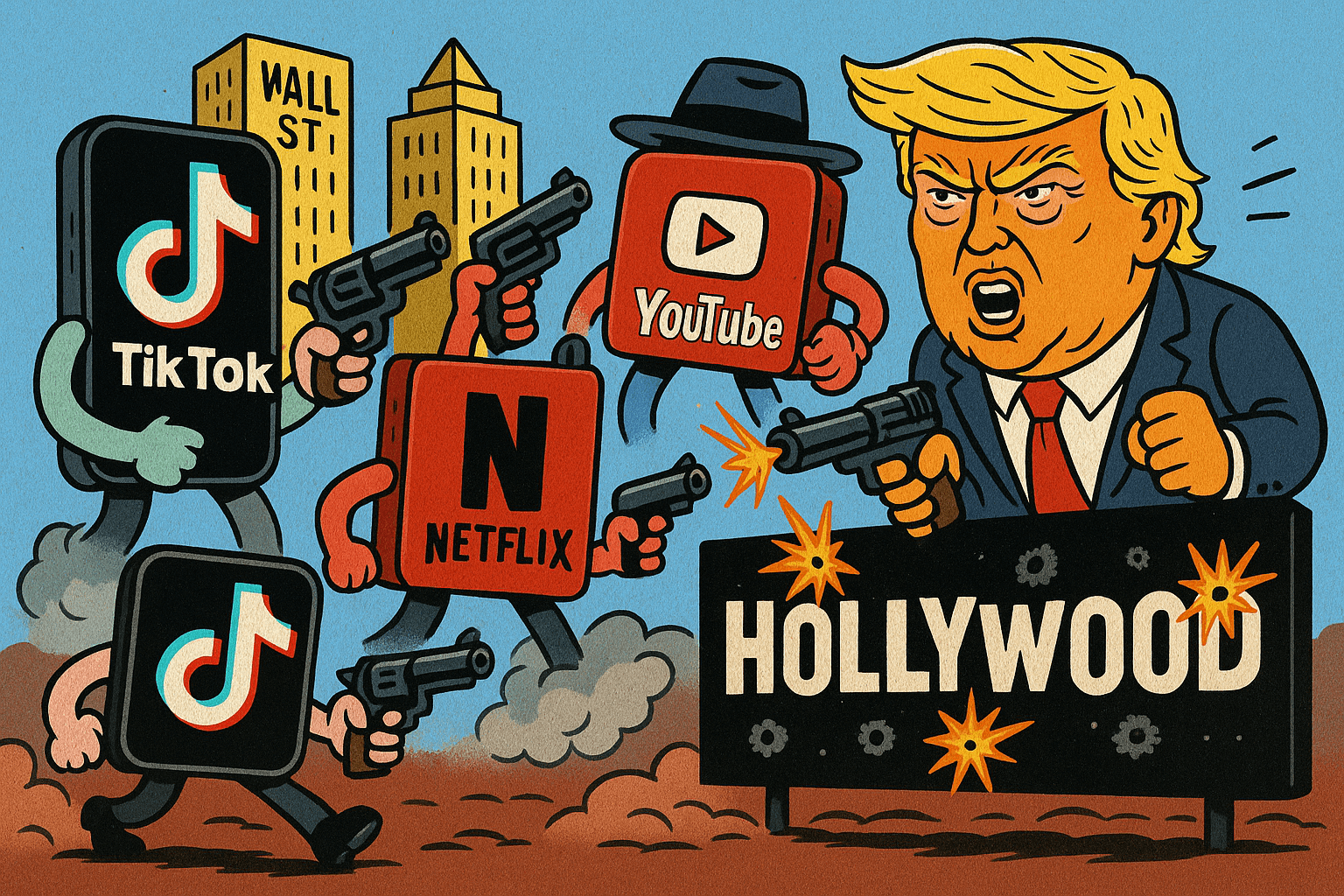
  • Wall Street predict that tariffs could inflict more damage on a Hollywood already weakened by streaming and social media

    Wall Street predict that tariffs could inflict more damage on a Hollywood already weakened by streaming and social media

    Wall Street analysts are sounding alarms that escalating tariffs—particularly on goods imported from China and other key trading partners—could deal a further blow to Hollywood, an industry already destabilized by the dual disruption of streaming economics and social media fragmentation.

    In a series of investor notes and earnings calls over the past two weeks, analysts from Morgan Stanley, JPMorgan Chase, and Bank of America warned that tariffs on audiovisual equipment, post-production software, and even branded merchandise could raise costs and compress margins for major studios and streaming platforms. This comes as the entertainment industry grapples with a structural reset following the end of the streaming boom and the dominance of TikTok-style user-generated content.

    “Tariffs could be the straw that breaks the back of an industry already under financial duress,” said Jessica Reilly, senior media analyst at JPMorgan. “Hollywood is in the middle of an identity crisis—tariffs only exacerbate its existential threats.”

    Tariffs Hit Production Costs and Global Strategy

    The Biden administration’s May 2024 trade package included sweeping tariffs on over $380 billion in Chinese imports, including a 25% levy on audiovisual equipment, cameras, and lighting rigs—gear used widely in Hollywood productions and increasingly sourced from Chinese and South Korean manufacturers. Editing software packages and animation tools that rely on offshore support are also affected, with a 15% duty slapped on cloud-based services provided by firms with overseas infrastructure.

    Studios, already slimming down production budgets in response to streaming losses, now face higher input costs at a time when the return on content investment is under intense scrutiny.

    “When you’re cutting back on original programming and trying to squeeze value from IP libraries, the last thing you need is a 25% jump in equipment and software expenses,” said David Knox, managing partner at media consultancy Horizon Works.

    Netflix and Warner Bros. Discovery have both signaled cost pressures in their Q1 2025 earnings calls. Warner Bros. cited “increased friction from global sourcing and regulatory complexity,” while Netflix executives mentioned “material cost inflation tied to international production logistics.”

    Streaming Disruption and Social Media Fragmentation

    The tariff wave lands as Hollywood’s traditional power centers are being hollowed out. Legacy studios, once flush with cable bundle revenues and global theatrical runs, are now adapting to an environment where streaming returns are slowing and subscriber growth is plateauing.

    Meanwhile, platforms like TikTok, YouTube, and Instagram have diverted both audiences and advertisers. Short-form content is rapidly becoming the dominant global viewing format, especially among the under-30 demographic. According to a March 2025 Nielsen report, viewers aged 18–34 now spend 62% of their video time on social or user-generated platforms—up from just 37% in 2020.

    “Hollywood used to compete with other studios. Now it’s competing with teenagers with ring lights,” quipped Goldman Sachs entertainment analyst Ray Wu. “And that competition is real—and brutal.”

    The rise of AI-generated content, often built on low-cost foreign cloud infrastructure, further complicates Hollywood’s cost model. Tariffs on AI compute and licensing services—many of which are hosted abroad—could raise barriers for studios attempting to modernize workflows or outsource post-production.

    Licensing and Merchandise in the Crosshairs

    Studios also face headwinds in the lucrative merchandising and licensing sector. The new tariffs include 20% duties on imported toys, apparel, and collectibles—products that make up a key portion of franchise monetization. Disney, Universal, and Paramount rely heavily on Chinese and Southeast Asian manufacturers to produce branded merchandise tied to film and TV franchises.

    “If you can’t move product profitably, you’re not just losing margin—you’re undermining the long-tail value of your IP,” noted Stephanie Chan, senior entertainment strategist at BofA Securities.

    Retailers are already warning of delayed shipments and price hikes on character merchandise. According to internal Walmart sourcing data leaked last week, tariffs on children’s toys and branded apparel could increase average consumer prices by 12–18% this holiday season.

    Wall Street is increasingly skeptical that major studios can absorb these shocks without further restructuring. Disney recently cut 7,000 jobs and announced a $5 billion cost-saving plan. Paramount Global has been exploring asset sales, and Warner Bros. Discovery is reportedly considering a partial spin-off of its streaming unit to shore up its balance sheet.

    “Studios once thought they could outspend disruption. But that era is over,” said Ken Rooke, head of media equity research at Wells Fargo. “They’re now being asked to do more with less—and tariffs add another layer of less.”

    Some see opportunity in adversity. A few independent producers are pivoting to domestic suppliers or doubling down on animation, which can be done entirely in-house. Others are lobbying for carve-outs or production credits to offset new tariff costs.

    Yet the broader message is clear: the industry’s margin for error is shrinking fast. Tariffs—once viewed as marginal trade policy—are now a major financial variable in a global entertainment business struggling to redefine itself.

    Hollywood is no stranger to reinvention. But this time, it must reinvent amid a trifecta of threats: a broken streaming model, an algorithm-driven attention economy, and now, rising trade barriers. For Wall Street, the question isn’t whether Hollywood can adapt—it’s whether it can do so fast enough, and profitably.

  • Trump’s proposed tariffs against Hollywood are showing signs of failure

    Trump’s proposed tariffs against Hollywood are showing signs of failure

    President Trump’s trade war had, until Sunday night, centered on goods — cars, toys, food, clothes, the tangible stuff we put in and out of virtual and physical shopping carts.

    But those goods make up less than a quarter of the American economy. The bigger chunk of our economic pie is known as services — think Google, Netflix, Facebook, the plumbing of the internet, banking, insurance. And, yes, Hollywood films, the industry Trump now thinks needs saving with — you guessed it — tariffs!

    ICYMI: Trump wrote on Truth Social late Sunday that he was directing the government to “immediately begin the process of instituting a 100% Tariff on any and all Movies coming into our Country that are produced in Foreign Lands.” (Watch out, Hayao Miyazaki — your days of flooding the American market with mystical whimsy and childlike wonderment are over.)

    Of course, Hollywood studios (and anyone thinking about it for more than a few seconds) were left scratching their heads over how such a tax would work.

    As we’ve come to expect with Trump 2.0, it’s not clear whether the president is serious. Jon Voight, who serves as one of Trump’s Hollywood Ambassadors, said Monday that he met with Trump recently to discuss “certain tax provisions that can help the industry – some provisions that can be extended and others than could be revived or instituted.” But that sounds like mostly incentives, not tariffs. In other words, Voight recommended a carrot and Trump announced a stick.

    California Governor Gavin Newsom on Monday appeared to prefer a gentler approach, calling on Trump to work with California to create a $7.5 billion federal tax credit for the movie and television industry. Currently, tax incentives are exclusively the realm of states and municipalities.

    “We’ve proven what strong state incentives can do. Now it’s time for a real federal partnership to Make America Film Again,” Newsom said in a post on X “@POTUS, let’s get it done.”

    The White House said hours after he posted published that “no final decisions” had been made, and Trump later told reporters he wanted to run the idea by folks in the movie industry.

    If he is serious about foreign movie tariffs, though, Trump would be opening a new front in a war he has no real plan to win. And he’d be admitting to the world that his love of tariffs is not, as he’s long claimed, tied to some deep concern about trade imbalances but rather a desire to wield an economic cudgel.

    The Goods Place

    Perhaps because Trump’s intellectual allegiance to opinions he formed 40-plus years ago is so strong, he may be imagining container ships full of VHS tapes and spools of Kodachrome crossing the oceans when he thinks of the global film industry.

    But movies are not goods that travel in and out of ports — they are intellectual property that fall under the “services” economy. To tax a movie like a good, the administration would have to clearly define what a movie’s value is, and determine how much overseas production would classify a project as an “import.” (Plus, some poor writer’s room will have to start working on the next season of Emily in Paris under the new title Emily in Albuquerque.)

    The goods/services distinction matters a great deal. Because for all of Trump’s outrage over the fact that America buys more goods from overseas than it sells, the US exports far more services than it imports. (It’s a “services surplus” — the “rural juror” of econ jargon.)

    In fact, the US is the biggest exporter of services in the world. That gives our trade partners leverage they could use against us.

    “If Trump is serious about tariffs on movies, it’s a very dangerous escalation,” economist Justin Wolfers noted on Bluesky. “We would be extremely vulnerable to any service-based retaliation.”

    The good news is, the president may not be serious. In keeping with Trumpian tariff tradition, he announced the import tax with few details in a late-night social media post with the kind of dramatic capitalizations you might associate with a teen group chat (“The Movie Industry in America is DYING a very fast death,” it begins.)

    Asked about the tariffs in a press briefing Monday afternoon, Trump was less definitive than he’d been Sunday night, saying: “We’re going to meet with the industry; I want to make sure they’re happy about it.”

    Spoiler alert, Mr. President: They’re not happy. Several movie studio and streaming industry executives who spoke with CNN are downright apoplectic, my colleagues Brian Stelter and Jamie Gangel write.

    Shares of Netflix, Disney and CNN parent company Warner Bros. Discovery fell on Monday.

    To be fair, Trump has hit on a real issue dogging Hollywood known as “runaway production.” For years, foreign cities like Toronto and Dublin have offered large tax breaks to film and television studios. In response, California Governor Gavin Newsom has proposed a massive tax credit to bring back production to Hollywood.

    But industry sources told Brian and Jamie the idea of using tariffs “would represent a virtually complete halt of production … But in reality, he has no jurisdiction to do this, and it’s too complex to enforce.”

  • Newsom seeks Trump’s partnership regarding a $7.5 billion Hollywood tax break

    Newsom seeks Trump’s partnership regarding a $7.5 billion Hollywood tax break

    California Gov. Gavin Newsom (D) is offering to partner with the Trump administration to create a federal film tax credit program worth at least $7.5 billion to boost domestic film production, his office said late Monday. The proposal came after President Donald Trump set Hollywood on edge by calling for massive tariffs on foreign-made films to address what he described as the “DYING” American film industry.

    If the proposal comes together, it would be the largest government tax initiative for the film industry in U.S. history and the first such program at the federal level, a spokesperson for Newsom’s office said.

    “America continues to be a film powerhouse, and California is all in to bring more production here,” Newsom said in a statement.

    He added that California is “eager to partner with the Trump administration to further strengthen domestic production and Make America Film Again.”

    The White House did not immediately respond to a request for comment.

    Newsom, a fierce Trump opponent, is making the request at a time when tariffs have upended the global economy and sowed uncertainty across many industries. Newsom sued the Trump administration last month to block the president’s sweeping tariffs, arguing they are causing irreparable harm to California’s economy.

    Trump’s call Sunday night for 100 percent tariffs on films produced overseas, in which he described foreign films as a national security threat, puzzled insiders in the highly globalized industry as to its implications. It was not clear how such tariffs would be applied or how they might affect U.S. films shot overseas or involving production abroad, The Post reported.

    Andrew deWaard, an assistant professor at the University of California at San Diego who studies the relationship between culture and commerce in the film industry, said the program proposed by Newsom on Monday is “highly unlikely” to go into effect.

    “I can’t imagine in such a partisan atmosphere that Trump would want to be seen subsidizing California entertainment workers just as the tariffs are starting to negatively affect U.S. factory workers, farmers, truckers, etc.,” he said in an email.

    “I think Newsom is calling Trump’s bluff,” he added. “… If Trump balks, which is likely, then Newsom can say he tried to be bipartisan.”

    Newsom’s office described the proposed federal tax credit as a way to bolster American stories, create U.S. jobs and benefit the industry’s behind-the-scenes workers such as set builders and electricians.

    The proposal would be modeled after California’s Film and Television Tax Credit Program that Newsom’s office said has generated more than $26 billion in economic activity and supported thousands of jobs across the state since its inception in 2009.

    But there is debate over the effectiveness of such film tax credits. In testimony to the state’s Senate Revenue and Taxation Committee this year, Michael Thom, a professor at the University of Southern California who has researched tax incentives for film and television production, said such initiatives “fail to stimulate enough economic activity to justify their substantial cost.”