Category: Middle East News

  • Israel Launches Expanded Ground Operation in Push to Conclude Gaza Conflict

    Israel Launches Expanded Ground Operation in Push to Conclude Gaza Conflict

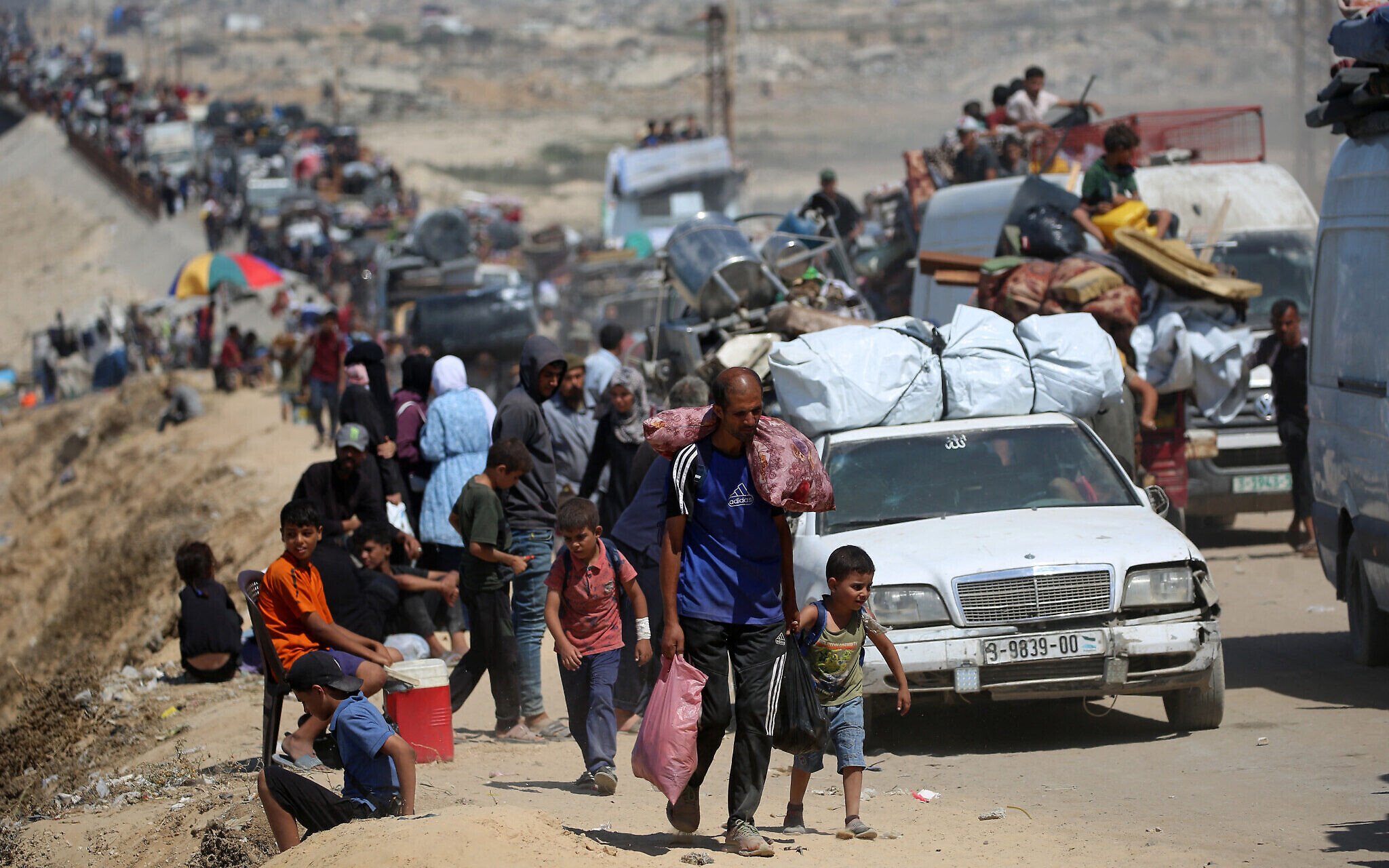
    Palestinians from Gaza City move southwards with their belongings, on the coastal road near the Nuseirat refugee camp in the central Gaza Strip, on September 19, 2025. © Eyad BABA / AFP

    The Israeli military intensified its ground assault on Gaza City on Friday, September 19, 2025, warning residents it would deploy “unprecedented force” against Hamas fighters as tanks and airstrikes hammered the territory’s largest urban center. The escalation, which began with a major incursion on Tuesday, comes amid a fresh United Nations report accusing Israel of committing genocide against Palestinians in Gaza—a finding that has drawn sharp rebukes from Israeli officials and renewed calls for international intervention nearly two years into the devastating war.

    The Israeli Defense Forces (IDF) issued stark evacuation orders via social media and leaflets, directing the estimated remaining population—down from about one million at the end of August—to flee southward along the coastal Al-Rashid road, the only remaining open route after the closure of the main Salah al-Din artery. “From this moment, Salah al-Din Road is closed for south-bound travel,” IDF Arabic-language spokesman Avichay Adraee posted on X, urging civilians to “take this opportunity and join the hundreds of thousands of city residents who have moved south to the humanitarian area.” The military estimates that 480,000 people have evacuated Gaza City since late August, though Gaza’s civil defense agency put the figure at 450,000 as of Friday. Many families, burdened by elderly relatives, young children, and scant belongings, described harrowing journeys on foot or in overloaded vehicles, with some resorting to carts or sleeping on streets while awaiting transport they could ill afford.

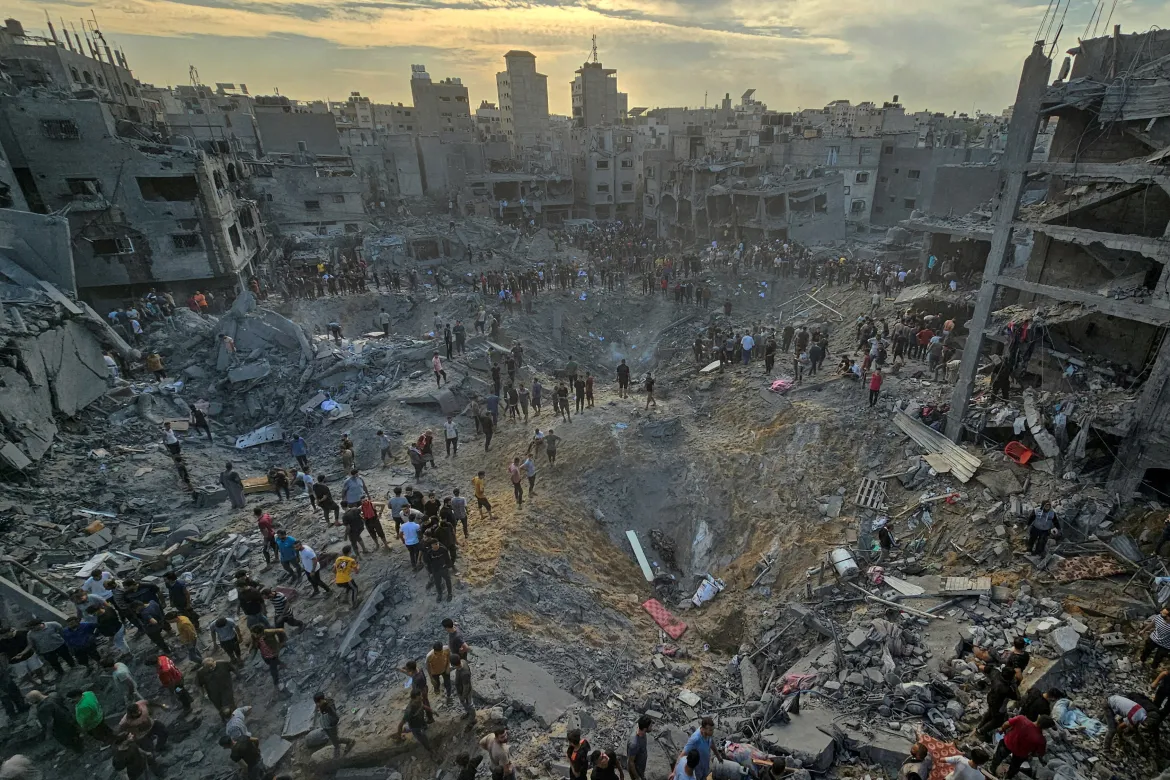
    The offensive aims to dismantle Hamas’s command structure and seize control of the city, which Israel views as the group’s symbolic stronghold. IDF troops, including armored and infantry divisions, have advanced deep into neighborhoods like al-Rimal and al-Sabra, dismantling over 20 suspected militant sites in the past day alone, according to military statements. Overnight strikes and tank fire have leveled buildings and infrastructure, with witnesses reporting “hellish” barrages that shook the enclave. Gaza health officials, citing hospital tallies, reported at least 22 deaths across the Strip on Friday, including 11 in Gaza City, bringing the war’s toll to nearly 65,000 Palestinians killed since October 7, 2023.

    For those heeding the warnings, escape is no salvation. Nivin Ahmed, a 50-year-old mother of seven, recounted walking more than 15 kilometers to Deir el-Balah on Thursday, her family “crawling from exhaustion” as her youngest son wept from fatigue. “We took turns dragging a small cart with some of our belongings,” she told reporters. Mona Abdel Karim, 36, has spent two nights on Al-Rashid street with her elderly in-laws and children, too weak or ill to trek further without a vehicle. “I feel like I am about to explode,” she said, highlighting the prohibitive costs of transport amid widespread poverty and famine. Footage from the road showed endless lines of pedestrians and cars piled high with mattresses and essentials, snaking toward the southern “humanitarian area” of Al-Mawasi—a zone Israel designated early in the war but has repeatedly struck, citing Hamas presence.
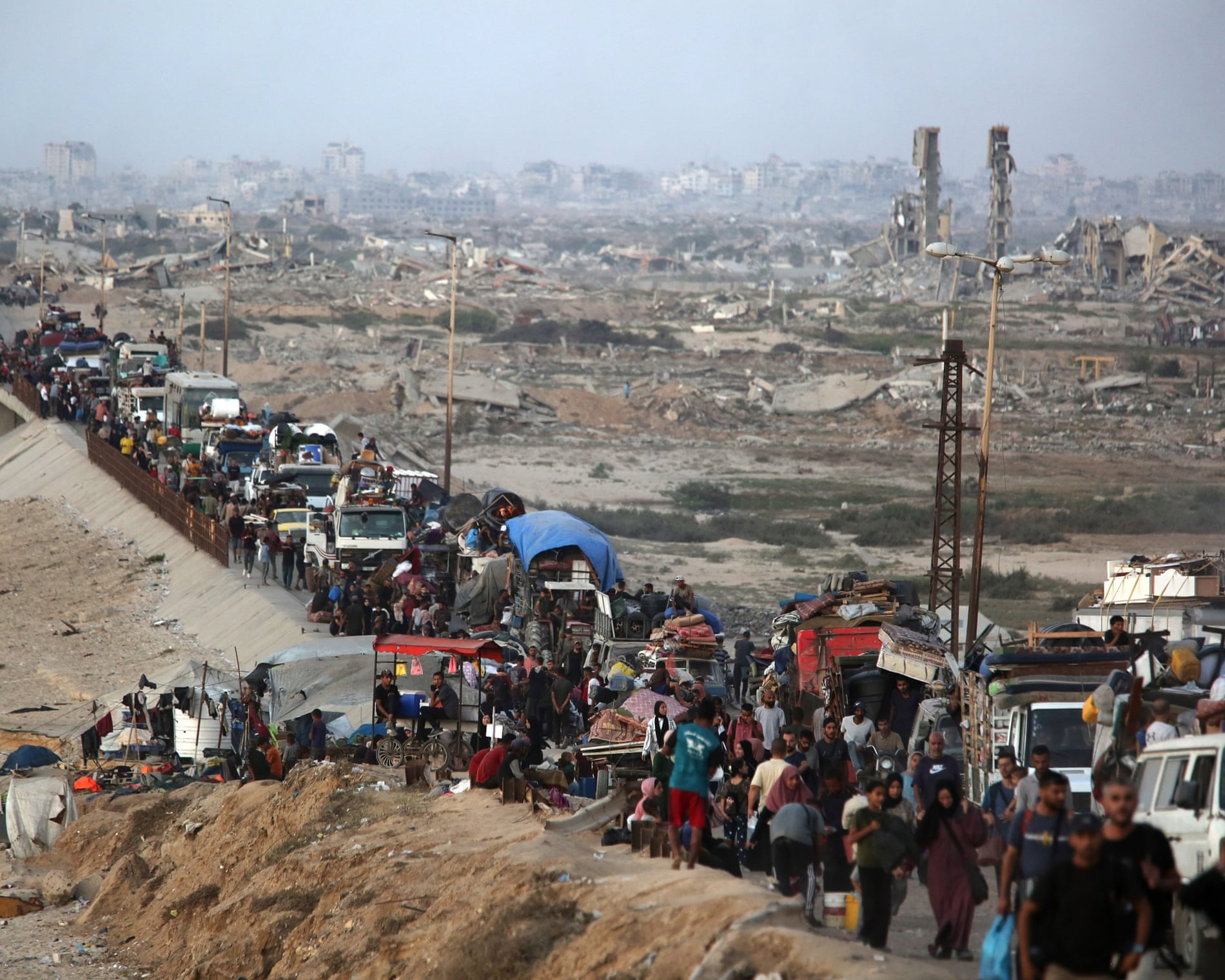
    Palestinians flee south from Gaza City on Thursday. © Hassan Al-Jadi/UPI/Shutterstock

    The push into Gaza City unfolds against a grim international backdrop. Just days earlier, on September 16, a United Nations Independent International Commission of Inquiry released a 72-page report concluding that Israel has committed genocide in Gaza, fulfilling four of the five acts outlined in the 1948 Genocide Convention: killing members of the group, causing serious bodily or mental harm, deliberately inflicting conditions of life calculated to bring about physical destruction, and imposing measures intended to prevent births. Chaired by former UN human rights chief Navi Pillay, the panel analyzed statements from Israeli leaders—including Prime Minister Benjamin Netanyahu, President Isaac Herzog, and former Defense Minister Yoav Gallant—as direct evidence of genocidal intent, alongside patterns of conduct like starvation tactics and attacks on healthcare and fertility clinics. The report also documented “systematic” sexual and gender-based violence, direct targeting of children, and the destruction of educational and religious sites.

    “The Commission concludes that the Israeli authorities and Israeli security forces have had and continue to have the genocidal intent to destroy, in whole or in part, the Palestinians in the Gaza Strip,” the inquiry stated, holding the state responsible for failing to prevent or punish the acts. It urged Israel to immediately halt operations and comply with International Court of Justice provisional measures from March 2024, while calling on all states to enforce accountability. Amnesty International echoed the findings, warning that “the very existence of Palestinians in Gaza is under threat” as the offensive intensifies.

    Israel vehemently rejected the report as “distorted and false,” with Netanyahu’s office insisting the war is a legitimate defense against Hamas, which killed 1,139 Israelis and took over 200 hostages on October 7, 2023—48 of whom remain captive. The IDF maintains it takes “all feasible measures” to minimize civilian harm and accuses Hamas of using human shields. Yet critics, including the European Commission, are preparing measures to pressure Israel, with EU foreign policy chief Kaja Kallas set to present a plan on Wednesday for member states to reassess ties. Canada labeled the offensive “horrific,” while Hamas decried it as “unprecedented” and “barbaric.”

    U.S. President Donald Trump, a staunch ally, suggested the operation could hasten hostage releases, telling reporters the risks to captives might rise but “also may be freed” in the chaos. His administration continues providing military aid, even as the UN warns of famine gripping Gaza City, with 441 deaths attributed to starvation alone. Aid groups report overwhelmed hospitals and acute malnutrition among children, half of Gaza’s displaced population.

    As smoke billows over Gaza City’s skyline and families press southward under fire, the offensive raises profound questions about the war’s endgame. Israel seeks to “force an end” by crippling Hamas, but with the enclave in ruins and global outrage mounting, the path to resolution remains as elusive as safety for those caught in the crossfire.
  • Nationwide Protests Erupt in Israel Demanding End to Gaza War

    Nationwide Protests Erupt in Israel Demanding End to Gaza War

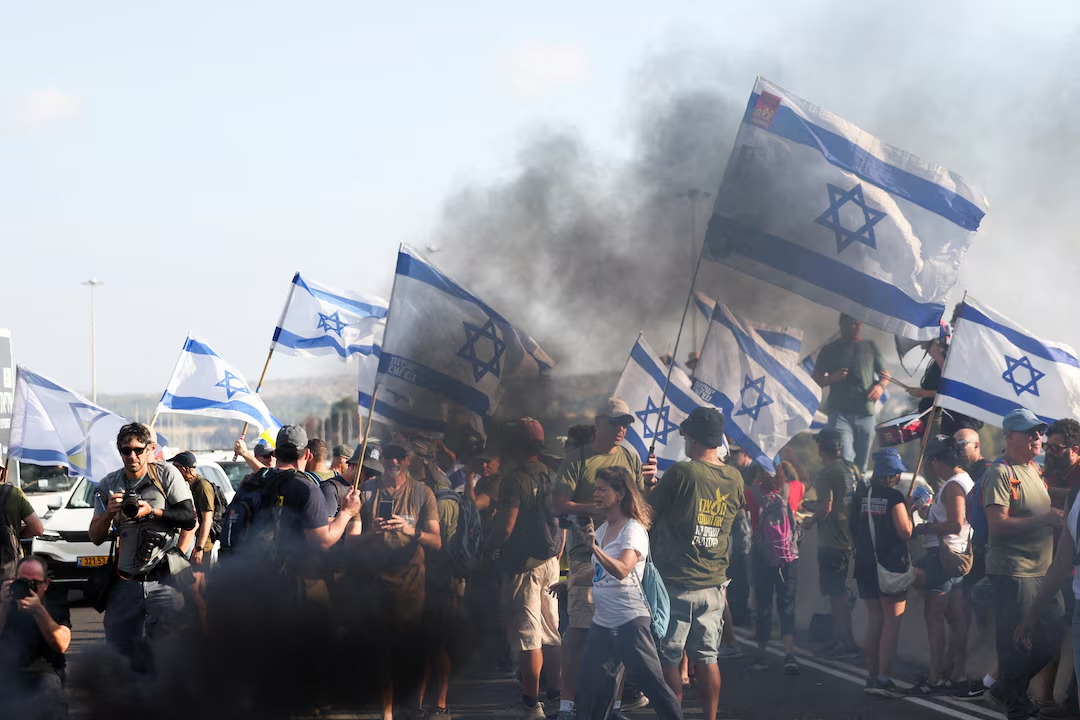
    TEL AVIV, Israel — Hundreds of thousands of Israelis took to the streets across the country on Sunday, August 17, 2025, demanding an immediate end to the war in Gaza and a deal to secure the release of hostages still held by Hamas. The protests, which swept through Tel Aviv, Jerusalem, Haifa, and other cities, marked a significant escalation in public pressure on Prime Minister Benjamin Netanyahu’s government amid growing frustration over the ongoing conflict.

    Organizers, including the Hostages and Missing Families Forum, claimed that over one million people participated in hundreds of demonstrations nationwide, though The NYBudgets could not independently verify these figures. Images and videos showed packed streets and squares, with protesters blocking highways, lighting bonfires, and gathering outside politicians’ homes and military headquarters. The Israeli police reported multiple arrests, stating on X, “Officers have arrested multiple individuals engaging in unlawful behavior and will continue to act wherever public safety or freedom of movement is at risk.” They emphasized that while “the right to lawful protest” is a cornerstone of democracy, actions like burning tires or endangering public safety are unlawful.

    The protests reflect deep divisions over Netanyahu’s handling of the war, which began on October 7, 2023, when Hamas-led terrorists launched a deadly attack from Gaza, killing approximately 1,200 Israelis and taking 250 hostages. Israel’s response—an aerial bombing campaign followed by a ground offensive—has resulted in 61,900 Palestinian deaths, according to the Hamas-controlled health ministry in Gaza. A ceasefire in January 2025 led to a partial Israeli troop withdrawal, but the conflict persists, with 50 hostages still in Gaza, 30 of whom are believed to be dead.

    Families of hostages and supporters hold photos of hostages during a demonstration calling for an hostages deal in Tel Aviv, Israel on Aug. 17, 2025. © Amir Levy/Getty Images

    Netanyahu, addressing a government meeting on Sunday, defended his strategy, arguing that ending the war without defeating Hamas would embolden the group and jeopardize Israel’s security. “Those who are calling for an end to the war today without defeating Hamas are not only hardening Hamas’s stance and pushing off the release of our hostages, they are also ensuring that the horrors of the October 7 will recur again and again,” he said. “Together, we have had great achievements against our enemies on all fronts. Together we will fight and with God’s help, together we will complete the victory and end the war.”

    On August 8, Netanyahu announced a Security Cabinet-approved plan to retake Gaza City, disarm Hamas, and secure the release of all hostages. The five-point plan also seeks to demilitarize the Gaza Strip, restore Israeli security control, and establish a new civil administration independent of Hamas or the Palestinian Authority. The move has drawn sharp criticism from opposition figures and hostage families. Israeli opposition leader Yair Lapid posted on X, “This is exactly what Hamas wanted: for Israel to be trapped in the field without a goal, without defining the picture of the day after, in a useless occupation that no one understands where it is leading.”

    Yehuda Cohen, whose son Nimrod remains a hostage, expressed anguish over the government’s priorities, telling The Epoch Times, “We live between a terrorist organization that holds our children and a government that refuses to release them for political reasons.” Finance Minister Bezalel Smotrich labeled the protests “a bad and harmful campaign that plays into Hamas’s hands, buries the hostages in the tunnels and attempts to get Israel to surrender to its enemies and jeopardize its security and future.”

    People take part in a protest demanding the end of the war, the immediate release of hostages held by Hamas in the Gaza Strip, and against Prime Minister Benjamin Netanyahu’s government in Tel Aviv, Israel, on Aug. 16, 2025. © Mahmoud Illean/AP

    The Hostages and Missing Families Forum, representing relatives of those still held, thanked the public for their support, posting on X, “Throughout the day, over one million people participated in hundreds of actions held across the country. The hostage families wish to tell the people of Israel: ‘Thank you! From here, we will only intensify our efforts. Stay with us until the last hostage is returned!’”

    The planned Gaza City offensive, which will likely require mobilizing thousands of reservists, has yet to be scheduled, adding to public uncertainty. Critics argue that Netanyahu’s focus on military victory risks prolonging the war and delaying hostage releases, while supporters insist that neutralizing Hamas is essential for Israel’s long-term security. As tensions mount, the demonstrations underscore a nation grappling with the human and strategic costs of a conflict that shows no immediate end.

  • Trump found his trip to the Gulf ideal due to the enthusiastic praise and absence of protest risks

    Trump found his trip to the Gulf ideal due to the enthusiastic praise and absence of protest risks

    In Saudi Arabia, he received a standing ovation from business elites as he announced the lifting of sanctions on Syria.

    In Qatar, he took home an investment pledge of billions of dollars in American goods and services.

    In the United Arab Emirates, he was awarded the country’s highest civilian honor.

    If President Trump has been dogged at home by backlash over his tariff policies, protests over his immigration crackdown and questions over his ethics, a week in the Arabian Peninsula produced nothing but wins for the president.

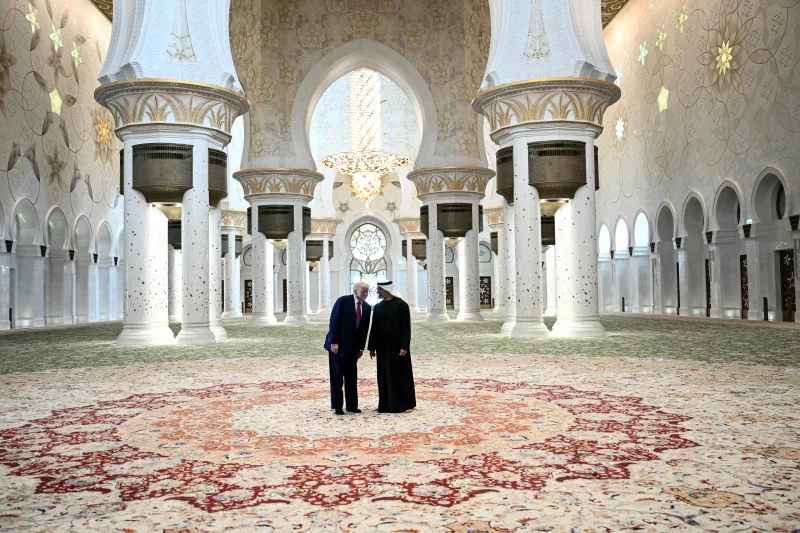
    “The last four days have been really amazing,” Mr. Trump said on Thursday, as he was leaving a palace in Abu Dhabi, United Arab Emirates, where he had just been feted. He added, looking rueful, “Probably going back to Washington, D.C., tomorrow.”

    On Friday, the president reflected on his trip on Air Force One: “The respect shown to our country was incredible. Nobody’s treated like that. Nobody’s treated well like that.”

    At every step of Mr. Trump’s whirlwind tour of the Middle East, he was treated with the kind of honor and respect he has long desired. Escorts of fighter jets. Extravagant welcoming ceremonies. Red and lavender carpets. Arabian horses. Glitzy chandeliers. Camels. Sword dancers. White marble palaces. In the United Arab Emirate of Dubai, the Burj Khalifa, the world’s tallest building, lit up with an image of the American flag. All in his honor.

    “As a construction person, I’m seeing perfect marble. This is what they call perfecto,” Mr. Trump said at one point, admiring the royal court in Doha, the capital of Qatar. “We appreciate those camels. I haven’t seen camels like that in a long time.”

    President Trump and Saudi Crown Prince Mohammed bin Salman meet with officials during a traditional welcome ceremony at the royal court in Riyadh, the capital, on Tuesday. (Win McNamee / Getty Images)

    Such a welcome would have been unlikely in most other corners of the world, where governments, including the United States’ closest allies, are reeling from Mr. Trump’s aggressive tariffs and bellicose rhetoric toward Canada, Greenland and Panama.

    But in the gulf, Mr. Trump’s every move was lauded.

    Mr. Trump was able to announce what he said was more than $2 trillion in economic investments between the United States and the three nations he visited: Qatar, Saudi Arabia and the United Arab Emirates, each longtime purchasers of American military equipment.

    Mr. Trump said that the investments from those three nations could reach as high as $4 trillion — roughly the size of all their sovereign wealth funds combined. While much of that total comes in the form of long-term pledges that may or may not materialize and counts some deals that were already underway, leaders of the gulf nations were all too happy to supply Mr. Trump with the eye-popping figures.

    At a business event in Abu Dhabi on Friday, Mr. Trump was treated to a tour of deals underway between American and Emirati companies, including purchases of Boeing jets and G.E. engines.

    Mr. Trump marveled at the wealth of his hosts, who can pay upfront for whatever deals they undertake.

    “They don’t say ‘subject to financing,’” Mr. Trump said. “They have no problem.”

    At each step of the trip, Mr. Trump surrounded himself with friendly audiences and often turned his events — such as a stop at Al Udeid Air Base in Qatar, the largest U.S. military facility in the Middle East — into campaign-style rallies: blasting his favorite playlists (“Gloria,” of course), bashing Democrats and falsely claiming he had won the 2020 election.

    President Trump spoke to American troops at Al Udeid Air Base in Qatar, the largest U.S. military facility in the Middle East. He was greeted with chants of “U.S.A.” (Doug Mills/The New York Times)

    Speaking to American troops as their commander in chief, he was greeted with chants of “U.S.A.”

    “We won three elections, OK? And some people want us to do a fourth. I don’t know. I’ll have to think about it,” Mr. Trump told the troops, yet again floating the idea of an unconstitutional third term in office. “The hottest hat is, it says, ‘Trump 2028.’ We’re driving the left crazy.”

    If Mr. Trump hoped to avoid controversy about his family’s business dealings in the region, the gulf leaders helped with just that — highlighting deals with private firms that are unrelated to Mr. Trump’s personal business interests. There was no visit to the site of the Trump Organization’s deal with a Saudi real estate company to build a residential high-rise in Jeddah; no presentation of a $400 million luxury jet that Mr. Trump is seeking as a gift from Qatar; and no promotion of the Abu Dhabi-backed fund that is making a $2 billion business deal using the Trump firm’s digital coins.

    On Air Force One, taking questions from reporters, Mr. Trump denied knowledge of the crypto deal.

    “I really don’t know anything about it,” he said. “But I’m a big crypto fan, I will tell you.”

    If a Democratic president did what Mr. Trump has done — praising a former jihadist, welcoming Qatar’s friendship with Iran and accepting a “gift” of a $400 million airplane — Republicans would have been howling in protest and ordering up congressional investigations. What transpired, instead, was mostly an uncomfortable silence.

    A few Trump allies, like Senator Josh Hawley of Missouri and the far-right activist Laura Loomer, made clear they did not like the plane gift, but contorted themselves to express their discomfort in ways that would be least likely to offend Mr. Trump. Ms. Loomer preceded her criticism by saying she would “take a bullet” for the president, and Mr. Hawley avoided the implication of corruption and simply said he would prefer “if Air Force One were a big, beautiful jet made in the United States of America — that would be ideal.”

    Mr. Trump’s declaration that the United States was shifting its policy toward the Middle East away from judgment and confrontation toward peace and profit was praised repeatedly.

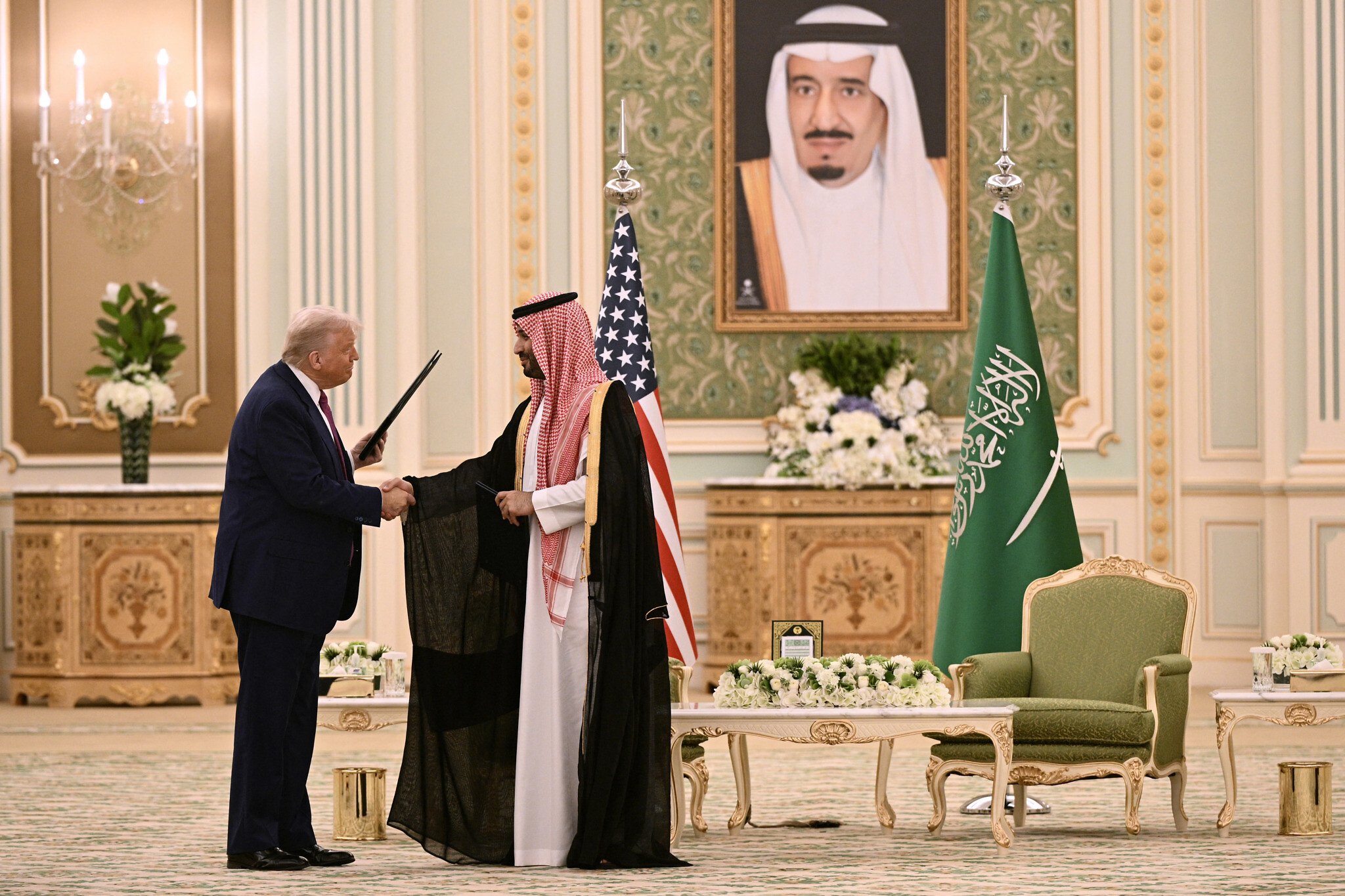
    US President Donald Trump, left, shakes hands with Saudi Crown Prince Mohammed bin Salman during a bilateral meeting in Riyadh on May 13, 2025. (Brendan Smialowski / AFP)

    “It’s crucial for the wider world to note this great transformation has not come from Western interventionists or flying people in beautiful planes, giving you lectures on how to live and how to govern your own affairs,” Mr. Trump said at a gathering of Saudi royalty and business elites in Riyadh.

    Even back home in the United States, Democrats and Republicans approved of Mr. Trump’s announcement that he was removing sanctions from Syria in an effort to give the war-torn country a fresh start.

    “We commend President Trump’s decision to lift all sanctions on Syria,” the leaders of the Senate Foreign Relations Committee, Jim Risch, Republican of Idaho; and Jeanne Shaheen, Democrat of New Hampshire, said in a joint statement.

    The trip was intended to deliver a series of economic, diplomatic and public relations wins for the countries involved, said Andrew Leber, an assistant professor at Tulane University in Louisiana, who focuses on the U.S.-Saudi relationship.

    A military jet formation over Air Force One after President Trump delivered remarks to troops at Al Udeid Air Base in Doha on Thursday. (Doug Mills/The New York Times)

    Saudi Arabia got the opportunity to highlight the changing nature of its society and economy, and present itself as a leader in global affairs, both in terms of business opportunities and diplomacy. Mr. Trump got a trip that essentially could not go wrong for him, Mr. Leber said.

    “This was the one place that’s guaranteed to give him a very enthusiastic, warm and tightly controlled welcome,” Mr. Leber added. “If he went anywhere in Latin America, there would be protests. If he went anywhere in Europe, there would be protests. This is a place that’s going to speak with him and deal with him on very transactional terms, that’s going to put on a big show and where there’s not going to be any domestic protests whatsoever.”

    That was indeed the case, as gulf leaders adopted Mr. Trump’s favorite phrases. Each nation talked about their trade deficits with the United States and how they buy more from the United States than they sell — a favorite topic of the president’s.

    At a business forum in Saudi Arabia, panelists talked of “making aviation great again,” playing off Mr. Trump’s campaign theme.

    At the meeting in Abu Dhabi on Friday, Mr. Trump walked into a large rotunda where five large screens showed various kinds of investment — starting with “Making Energy Great Again.” There, he was gifted a box containing a drop of oil.

    In Doha, Sheikh Tamim bin Hamad al-Thani, the emir of Qatar, adopted Mr. Trump’s energy slogan, “Drill, baby, drill.”

    “The U.S. and Qatar are feeding and fueling the world,” the emir said, before turning to Mr. Trump. “Glad to have you back on board.”

    President Trump with Emirati President, Sheikh Mohammed bin Zayed, at the presidential palace in Abu Dhabi, on Thursday. (Doug Mills/The New York Times)

    Mr. Trump is also a relief for gulf leaders: They now have a U.S. president who breezes past their human rights records as he chases high-dollar deals.

    “Governments and publics throughout the gulf like Trump a lot,” said Jon B. Alterman, a global security expert at the Center for Strategic and International Studies in Washington.

    “They feel Western liberals want to shame them on their domestic issues, everything from L.G.B.T. rights to abuse of migrant workers,” Mr. Alterman added. “While there certainly are rising liberal voices in the gulf, most people there see Trump as a common-sense, like-minded leader.”

    As he ended his trip in Abu Dhabi on Friday, Mr. Trump worried aloud to the news media that whoever becomes president after him would get credit for the deals once they reach fruition.

    “I’ll be sitting home, who the hell knows where I’ll be, and I’ll say, ‘I did that,’” he said. “Somebody’s going to be taking the credit for this. You remember, press,” he said, pointing to himself, “this guy did it.”

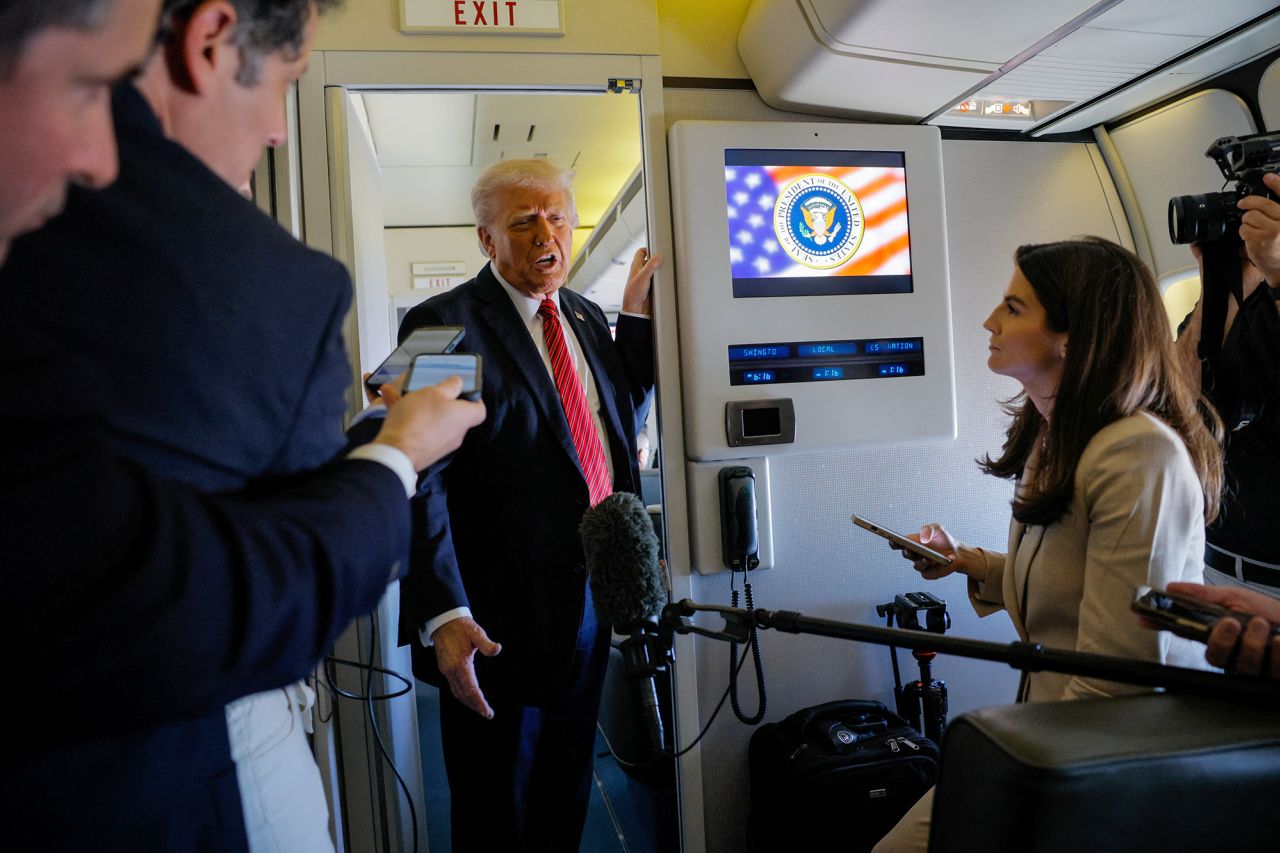
    U.S. President Donald Trump speaks to the press on board Air Force One en route to Doha, Qatar, on Wednesday. (Brian Snyder/Reuters)

  • Israel’s new plan strongly suggests it is engaged in ethnic cleansing in Gaza

    Israel’s new plan strongly suggests it is engaged in ethnic cleansing in Gaza

    Young Palestinians pass destroyed buildings Monday in Khan Younis, Gaza. (Abed Rahim Khatib / Anadolu/Getty Images)
    Young Palestinians pass destroyed buildings Monday in Khan Younis, Gaza. (Abed Rahim Khatib / Anadolu/Getty Images)

    Israel has unveiled a startling new plan for escalating its domination of the Gaza Strip that all but openly declares an ethnic cleansing agenda meant to permanently alter life and demography in the enclave. The signs that things were headed in this dark direction have been clear for a while. But Israel can be so plain-spoken in part because President Donald Trump is not just supporting Israel, but also celebrating neocolonialism as a legitimate foreign policy goal.

    NBC News reported that Israel’s security Cabinet has “unanimously approved a plan to seize all of the Gaza Strip in what Prime Minister Benjamin Netanyahu said would be an intensive military operation aimed at defeating Hamas.” The Israeli army is calling up tens of thousands of reserve soldiers for the effort. Netanyahu said the plan to take over the territory means the Israeli military will no longer “enter and then exit” from combat zones but do the “opposite” — indefinitely control any territory it seizes. And the plan calls for a mass displacement of Gaza’s Palestinian population to the southern part of the territory. BBC News reported that far-right Finance Minister Bezalel Smotrich said that “an Israeli victory in Gaza would see the territory ‘entirely destroyed’ and its residents ‘concentrated’ in the south, from where they would ‘start to leave in great numbers to third countries.’” Smotrich and his colleague Israeli National Security Minister Itamar Ben-Gvir have in the past also called for new Israeli settlements in Gaza.

    This is an all-out assault on human rights and the concept of self-determination.

    Alongside those plans, Israel’s security Cabinet approved a plan to change the way international aid flows into Gaza, which would involve Israel wresting control of the distribution of aid from international organizations. Under the new policy, aid would be distributed through designated hubs that would, according to The Washington Post, only distribute a tenth of what Israel did during the ceasefire, would be protected by American security contractors and would use facial recognition screening. The United Nations rejected that plan as “dangerous” and described it as “designed to reinforce control over life-sustaining items as a pressure tactic — as part of a military strategy.” Currently, Gaza is in the midst of its third month of a total Israeli blockade of food, fuel and medicine — and the plan to reopen (insufficient) humanitarian aid is only meant to take effect after the population is herded to the south.

    Israel’s retaliation against Hamas’ Oct. 7, 2023, war crimes has been going on for so long and with such intensity that its conduct may have begun to feel normal to many. But it must be said that this is the stuff of nightmares. This is an all-out assault on human rights and the concept of self-determination, and the U.S. cannot claim credibility on those matters either while supporting it. 

    Israeli officials say there is a “window of opportunity” for a new ceasefire deal during Trump’s visit to the Middle East next week that could forestall the occupation plan, but there’s little reason to be optimistic given Netanyahu’s decision to unilaterally renege on the last oneHamas has also said that there was “no point” to negotiations while the blockade remained in place. 

    Israel’s starvation and bombardment regime — which many human rights organizationshuman rights experts and genocide scholars have described as genocidal — has long telegraphed an agenda to render Gaza uninhabitable and force one of two outcomes: death or displacement. But this plan of calling up reservists for indefinite occupation is new. I asked Yousef Munayyer, the head of the Palestine/Israel Program at the Arab Center Washington D.C., whether Gaza is entering a categorically new phase since Israel began its response to the Oct. 7 attacks.

    “It is and isn’t. In some ways it is, because now you have the Israeli government and the security Cabinet within the Israeli government formally adopting this as a plan and making very clear their intentions to the public,” Munayyer said. “But I would also argue that this has been the intention all along, if you judge them by their actions and their lack of willingness to articulate a vision for Gaza that was different than this.”

    In other words, Israel is feeling more empowered to be forthright about its endgame of making Gaza uninhabitable for Palestinians.

    Daniel Levy, president of the U.S./Middle East Project and a former Israeli peace negotiator under Prime Ministers Ehud Barak and Yitzhak Rabin, told me Israel has gotten here by constantly pushing the boundaries of how it can mistreat the Palestinians since Hamas’ attacks and seeing what happens. “Israel has been consistently testing the waters of what it could get away with, whether impunity is still in place,” Levy wrote in an email. “Each time the answer comes back that there is no meaningful pressure.” Each subsequent move, he wrote, “brings into sharper focus the prospect of mass displacement or mass ethnic cleansing.”

    The permissiveness began under President Joe Biden, who offered unconditional support for Israel as it began its brutalization of Gaza and offered only modest public criticism and a one-off suspension of one shipment of munitions to Israel as it leveled the territory. It’s unclear how Biden would have reacted to these latest plans — if that “red line” that never emerged under his watch would have finally made an appearance. 

    The situation is ripe for a bigger, more permanent Israeli presence in Gaza than its pre-2005 settlements in the enclave. “The International arena is different in terms of a U.S. and Western zeitgeist, which is far more indulgent of aggressive and excessive Israeli actions,” Levy wrote in that email. “Israeli society is in some ways more divided, but in others, more unified in its willingness to support extreme and genocidal measures against Palestinians.”

    “Things are far more fluid than in the past, with a far more zero-sum mindset guiding policy,” he added.

    Munayyer and Levy noted that Trump’s own language has likely emboldened Israel to be blunter and more aggressive. Specifically, Trump’s idea to transform Gaza to create a Middle Eastern “Riviera” there, populated by “international people.” Trump’s erasure of Palestinians and fantasy of a new population dovetails with the right-wing segment of the Israeli government who want to annex Gaza. As Trump talks about taking control of the Panama Canal and Greenland and tries to undercut Ukraine’s position in peace negotiations with Russia, Israel may be wagering that it has a rare window of impunity for territorial control and possible annexation. Unfortunately, that calculation may be sound.

  • Dozens of individuals were reportedly killed in a U.S. strike in Yemen, targeting what appeared to be a detention center, according to visual reports

    Dozens of individuals were reportedly killed in a U.S. strike in Yemen, targeting what appeared to be a detention center, according to visual reports

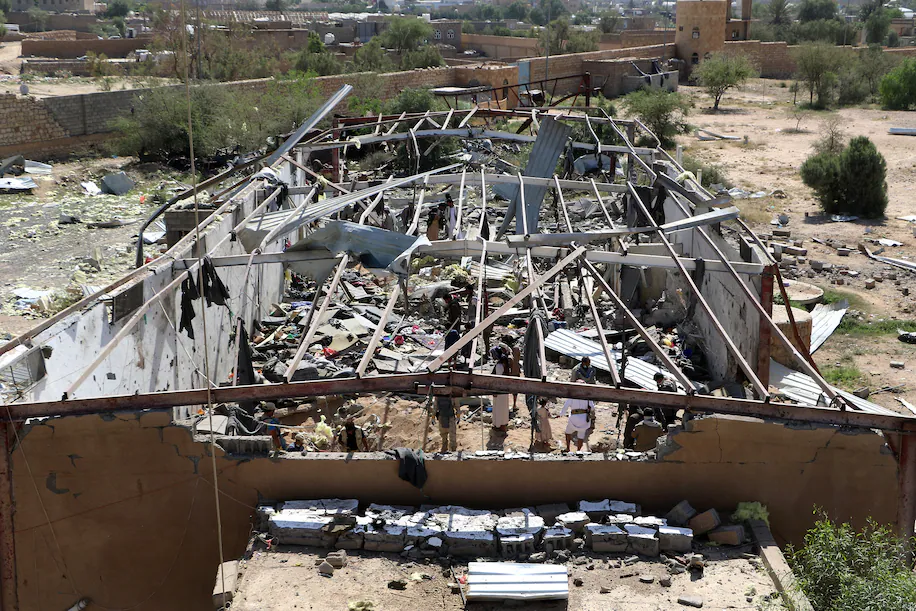
    A U.S. airstrike in Yemen on Monday appears to have killed at least three dozen people in a Houthi-run compound that human rights researchers say has been used for years as a detention center and at times for military purposes, according to images of the aftermath reviewed by The Washington Post.

    Houthi rebels say at least 68 people were killed and dozens more were injured in what they said was a U.S. strike on a prison holding African migrants. The Post’s analysis of visuals found at least 38 people who appeared to be dead and 32 injured, numbers that are almost certainly an undercount given the limited available imagery.

    It is not clear from the videos who among the dead are civilians; no military equipment or garb is visible in any visuals reviewed by The Post. Visuals could be located from only one of the two buildings that were destroyed in the attack.

    The Houthis have targeted American military forces in the Red Sea, as well as commercial vessels and Israeli military sites to protest the ongoing war in Gaza, which has killed many thousands of civilians. In mid-March, the Trump campaign launched “Operation Rough Rider,” targeting Houthi rebel leadership and infrastructure.

    Central Command, which oversees U.S. operations in the Middle East, has not said what it was targeting in the recent strike but is “aware of the claims of civilian casualties” and is assessing them, a defense official has said. The U.S. military has said its Yemen operations are executed with “detailed and comprehensive intelligence” to minimize risk to civilians.

    The current functions of the compound in northwest Yemen could not be independently determined. The United Nations has described it as having once included a military barracks and more recently as a migrant detention center. One human rights researcher told The Post that it ceased serving military purposes a decade ago, while another said it is used by the Houthis for other purposes and “the migrants are only a front.”

    Analysts and current and former U.S. officials said the strike appears to add to mounting evidence that the Trump administration has not prioritized minimizing civilian casualties in its ongoing air campaign against the Houthis. The Defense Department is moving to dismantle efforts focused on reducing civilian harm in U.S. military operations, The Post has reported, so commanders can focus more on “lethality”when conducting military strikes.

    “This strike in particular and the campaign in Yemen in general clearly show a higher tolerance for civilian casualties than previously seen in Yemen and even in the wars against ISIS,” a U.S. official familiar with the campaign said, speaking on the condition of anonymity to discuss ongoing operations. The same official confirmed that Monday’s strike was carried out by the United States.

    The videos provide a graphic view of the carnage. “I’m dying now,” one man tells the person filming the video, his body pinned between two slabs of concrete. Dozens of people are crushed by debris, their limbs protruding from the dust. Some are dismembered in the blast. Other remains are likely buried or in parts of the building not visible in the imagery.

    Emergency workers sift through the debris, looking for survivors among scattered mattresses, clothes and plastic bowls. The videos and photos were released either by Houthi-owned channels or journalists subject to strict Houthi oversight.

    Satellite imagery taken after the strike in the southwest outskirts of the city of Saada shows two large buildings destroyed inside a walled compound occupying about 50 acres, known as Saada City Remand Prison. Both buildings are similar in design and about 120 feet long and just over 500 feet apart, separated by a road.


    Other buildings in the same compound were struck in January 2022 by Saudi forces, killing at least 91 detainees and wounding at least 236, according to the U.N. human rights office. At the time, the compound held 1,300 pre-trial detainees and 700 migrants, the U.N. said. It was one of the deadliest strikes of a years-long Saudi-led campaign against the Houthis, which received substantial U.S. assistance.

    After the 2022 attack, a Saudi military spokesman said the site was a legitimate target because it was used by the Houthis for military purposes.

    Houthi militants used the detention center in northwestern Yemen for military purposes up until 2015 or 2016, when it was converted to a prison, said a Yemen human rights researcher who spoke on the condition of anonymity for fear of retribution. The other Yemen-based researcher, Adnan Al-Gabarni, called the compound an important site and said much is unknown about it.

    Representatives from the International Committee for the Red Cross have conducted regular visits to the prison complex since 2018; they declined to comment on the internal conditions of the facility. Visiting the site after the Saudi strike, U.N. human rights representatives said in a report that they saw no signs the compound had a military function.

    The Saudi bombing had “catastrophic results for vulnerable migrants being detained by the Houthis,” said Christopher Le Mon, former deputy assistant secretary of state for democracy, human rights and labor in the Biden administration. Speaking about the U.S. military, he said, “It’s just inconceivable that the military wouldn’t have anticipated a serious risk of civilian casualties.”

    An ICRC delegation visited the site on Monday following the strike. The ICRC said teams from the Yemen Red Crescent Society had evacuated wounded migrants to two hospitals nearby.

    Travelers from African countries have transited through the desert corridor for decades, according to a 2023 Human Rights Watch report, which estimated that more than 90 percent of those en route to Saudi Arabia come from Ethiopia. They have been routinely detained by Houthi forces, who are under increasing pressure from Saudi authorities to stop illegal migration, and often subjected to torture and abuse while detained at centers like the one in Saada, according to the rights monitor.

    “African migrants locked up in a prison in northern Yemen are not a lawful military objective,” said Brian Finucane, a former legal adviser at the State Department, noting that the U.S. military has not publicly identified what its target was or whether it was a mistake.

    The number of civilians killed in Yemen has exponentially increased in the weeks since the campaign began. According to Airwars, a Britain-based watchdog organization, U.S. strikes were estimated to have killed 27 to 56 Yemeni civilians in March. The nonprofit Yemen Data Project estimates that at least 97 strikes in March killed 28 people and wounded 66. The casualty toll in April to date is believed to be much higher.

    The Houthis said more than 70 people were killed by an airstrike on a Houthi-controlled oil port on April 18.

    After Monday’s strike, video released by the Houthi-owned al-Masirah television channel showed remnants of munitions and what appeared to be at least two craters where the building once stood. The visual evidence indicates multiple U.S.-manufactured GBU-39s were dropped, said Trevor Ball, a former Army explosive ordnance disposal technician. The guided munitions are designed to be capable of reducing risk to civilians with precision targeting and a relatively small size.

    Photo from the scene of the strike published by Yemen’s Mine Action Program, YEMAC, shows fragments of U.S.-made GBU-39 bombs, according to weapons expert Trevor Ball. At least two fuze wells indicate at least two munitions were used.

    There are no clear signs in the images that the damaged building had any military use, Ball said. The foundation is basic concrete, and the inside appeared to be sleeping quarters.

    Pentagon spokesman Sean Parnell said Tuesday the U.S. has struck 1,000 targets, or about 23 per day, since March 15. That pace has raised questions among some experts about whether commanders and analysts can properly assess targets.

    “They’ve had some questionable strikes already, and with the operation tempo, chance of mistakes and shortcuts are just going to increase,” Ball said.

    Democratic lawmakers last week said they were alarmed by what they called an apparent “serious disregard” for innocent life following reports of deaths in other strikes.