Category: Investment

  • Democrats are seeking clarification from Trump regarding the Binance founder’s request for a pardon

    Democrats are seeking clarification from Trump regarding the Binance founder’s request for a pardon

    Democrats are sounding the alarm and demanding answers on potential conflicts of interest in the Trump family’s business dealings with a pardon-seeking former cryptocurrency CEO. 

    Trump’s trip to the Middle East has highlighted the various foreign investments Trump and his family have received since Trump’s return to the White House, and Democrats are eager to highlight what seems like obvious corruption. 

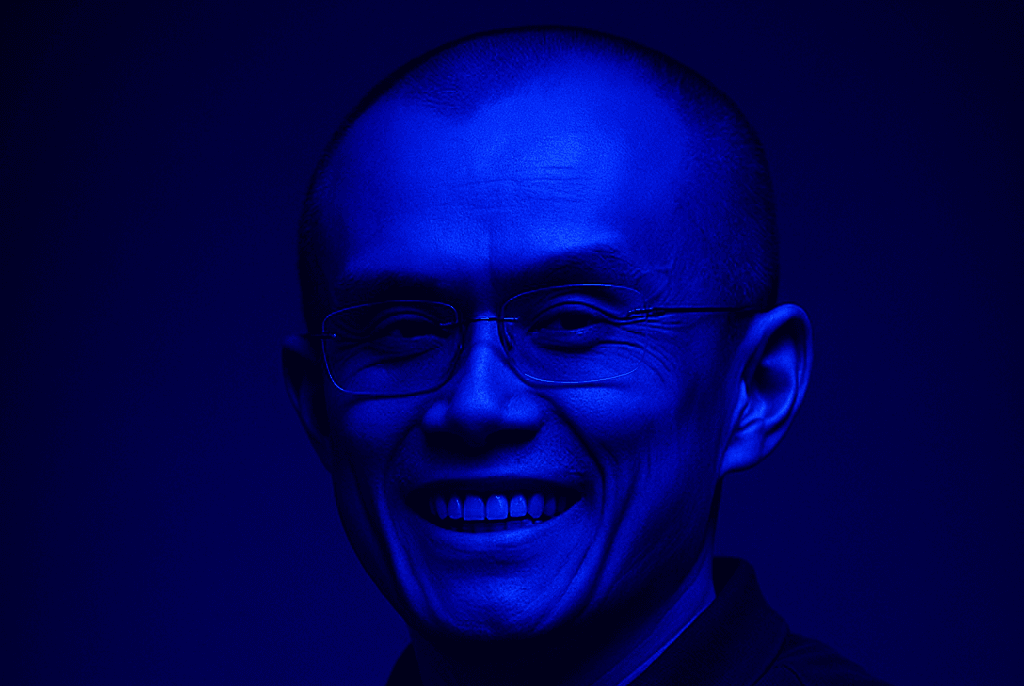
    Last week, Sen. Elizabeth Warren of Massachusetts and several other senators sent a letter to Treasury Secretary Scott Bessent and Attorney General Pam Bondi demanding answers about the Trump family’s business affiliations with Changpeng Zhao, the founder and former CEO of Binance, a cryptocurrency firm.

    Zhao pleaded guilty in 2023 to money laundering and was sentenced to four months in prison. Binance is no longer licensed to operate in several states across the U.S. but may not face a lawsuit from the SEC (depending on what Trump’s administration opts to do). Zhao has openly stated he’s been pushing for Trump to pardon him.

    Now Democrats are raising concerns about corruption, as the Trump family’s crypto firm, World Liberty Financial, reportedly struck a deal with Binance — a deal that could net the Trump family millions of dollars, according to The New York Times. The letter sent by Democratic senators last week demands answers about the Trump administration’s plans to uphold a settlement agreement previously made between the feds and Binance, and whether the company has raised the question of a potential pardon for Zhao amid its talks with Trump administration officials.

    Warren sent a separate letter — with fellow Democratic Sens. Richard Blumenthal of Connecticut and Dick Durbin of Illinois — to deputy Attorney General Todd Blanche and White House counsel David Warrington, demanding information about any discussions the Trump administration may have had about pardoning Zhao.

    The senators write of the reported Binance deal:

    These circumstances—involving billions of dollars in penalties and foreign investments, presidential family business interests, and the potential nullification of criminal sanctions— demand the highest levels of scrutiny to ensure that our justice system is operating free from inappropriate political and financial influence.

    Democrats like Warren and Sen. Chris Murphy of Connecticut have been the most outspoken lawmakers highlighting the riches the Trump family appears to be raking in from crypto investors, many of whom appear to be based in foreign countries. And the potential for Trump’s self-dealing as his administration proposes crypto-friendly policies is part of the reason Warren has opposed a cryptocurrency bill, known as the GENIUS Act, being pushed by Senate Republicans.

    In a video posted online, Warren explained her opposition to the GENIUS Act over its lack of parameters to rein in Trump’s potential self-enrichment. She told MSNBC host Chris Hayes on “All In” this week that the hasty push to pass the GENIUS Act and the Trump family’s dealings with Binance — juxtaposed with Republicans’ push to slash vital government programs like Medicaid — reveals that Trump’s vow to improve the lives of American families mainly applies to one particular family: his own.

  • Tesla’s Board Chairman Made $198 Million Selling Shares While Profit Dropped

    Tesla’s Board Chairman Made $198 Million Selling Shares While Profit Dropped

    In March, after a steep decline in Tesla’s share price, Elon Musk told employees, “Hang on to your stock.”

    The chair of Tesla’s board, Robyn Denholm, has not heeded his advice. Ms. Denholm has made $198 million in the past six months selling Tesla stock that she earned for serving on the board, according to a New York Times analysis of securities filings.

    That brings her total profit on the sale of Tesla stock to more than $530 million since becoming the board’s leader in late 2018, far more than her peers have made at the most valuable U.S. companies during that time, the analysis shows.

    The share sales raise questions about Ms. Denholm’s confidence in Tesla’s prospects. Her most recent sales, executed under a prearranged trading plan filed last summer, came as Mr. Musk, the company’s chief executive, took a time-consuming role in the Trump administration. Tesla’s car sales have plunged partly because Mr. Musk’s political activities have turned off some car buyers. The company’s quarterly profit fell in the first three months of 2025 to its lowest level in four years.

    Ms. Denholm earned the right to buy those shares, known as stock options, for serving on the board, a part-time position. Tesla granted the options between 2014 and 2020, and its share price has soared since then, giving Ms. Denholm the right to buy shares for a lot less than their current price. Last week, for example, she bought more than 112,000 shares for $24.73 apiece and sold them the same day for more than $270.

    Stock Sales Aligned With Surging Share Prices

    Robyn Denholm filed a stock sale plan soon after Elon Musk endorsed Donald Trump for president. The first sale came the week after Mr. Trump was elected.

    “To dump her stock, it doesn’t send a message that this is a board chair who is invested in the future of the company,” said the New York City comptroller, Brad Lander, who oversees the city’s five public pension funds. As of March, those funds held more than three million Tesla shares, valued at the time at roughly $817 million.

    A spokesman for Ms. Denholm said Tesla paid board members in a manner that was “completely aligned with shareholder interests.”

    “The reason the value of the Tesla directors’ options has increased is because Tesla has outperformed its industry peers and created outsized returns for the owners of the company, the shareholders,” he said in a statement.

    Stock options, which for years made up the bulk of Tesla directors’ compensation, are valuable only if the company’s share price rises, as Tesla’s did. Those who exercise their options to buy company stock can sell or hold on to their new shares.

    Ms. Denholm has sold more than 1.4 million Tesla shares and continues to hold 85,000 of them and roughly 49,000 stock options, according to the Times analysis. Equilar, a compensation research firm, reviewed the methodology. Her latest wave of stock sales were carried out under the plan she set into motion in July, soon after Mr. Musk endorsed Donald J. Trump for president.

    Under securities regulations, executives and other insiders can use such plans to trade shares in their companies. They are not required to disclose many details of their plans, including the reason for them or the conditions under which shares will be sold. They also have a lot of leeway to cancel the plans.

    A native of Australia and veteran technology executive, Ms. Denholm has maintained a low profile and rarely speaks publicly about Tesla or Mr. Musk. She was recruited to the Tesla board in 2014 and appointed chair in 2018 after Mr. Musk agreed to step down from the position under a settlement with the Securities and Exchange Commission.

    She and other board members have been criticized by some investors, activists and a Delaware judge for not serving as counterweights to Mr. Musk, who is widely seen as brash and impulsive. Tesla directors have also been faulted for failing to ensure that he remains focused on Tesla.

    “Musk operates as if free of board oversight,” Chancellor Kathaleen St. J. McCormick of the Delaware Court of Chancery wrote last year when she ruled in favor of a shareholder who had challenged Mr. Musk’s 2018 pay package, valued at around $56 billion. Judge McCormick, in that ruling, described Ms. Denholm’s style of overseeing Mr. Musk as “lackadaisical.”

    Tesla has appealed the decision, which voided Mr. Musk’s pay package, and Ms. Denholm has pushed back on Judge McCormick’s critique.

    “Anybody who knows me, knows that I am not lackadaisical, now that I know what that word means,” Ms. Denholm told The Financial Times last year. “It is probably the furthest from the truth. I am really intense and very diligent in what I do.”

    During the trial over Mr. Musk’s pay, Ms. Denholm described the money she had made from her Tesla board service as “life-changing.” Director pay at Tesla was subject to a separate lawsuit that Ms. Denholm and other board members settled in 2023.

    Mr. Musk, who has long been a part-time chief executive of Tesla, has taken on even more responsibilities over the years. He has become a regular presence in Washington, leading President Trump’s efforts to slash government spending and dismiss federal government employees.

    Mr. Musk said recently he would cut back his time in Washington to one or two days a week. His attention is likely to remain divided, however, because he also leads several other businesses, including SpaceX and X, the social media site he owns.

    Ms. Denholm’s first sales under her recent trading plan took place in November, the week after the presidential election, as Tesla’s share price was climbing. The stock reached a new high a few weeks later, in December. She continued to sell through early May, as the company faced consumer backlash over Mr. Musk’s political activities and the stock price fell.

    The stock is now down around 34 percent from its peak after recovering some of its losses over the last few weeks.

    Mr. Musk acknowledged Tesla’s difficulties during a meeting with company employees in March. “If you read the news it feels like, you know, Armageddon,” he said half-jokingly.

    He went on to advise workers not to sell their stock, saying Tesla would become the most valuable company in the world as it perfected self-driving taxis and robots that resembled and moved like humans. “The future is incredibly bright,” he said.

    Ms. Denholm’s sales have far outstripped those by other Tesla directors, with the exception of Mr. Musk, who remained on the board after stepping down as chair.

    She and other current and former Tesla board members agreed to settle a shareholder lawsuit over their pay in 2023, collectively agreeing to return compensation valued at $735 million. They denied wrongdoing. Stock options valued at more than $130 million were canceled on May 1 to satisfy Ms. Denholm’s obligations under that settlement, securities filings show.

    Board members agreed in June 2021, after that lawsuit was filed, to forgo new equity grants.

    Ms. Denholm also made more money selling her company’s stock than the leaders of other corporate boards during the same period. The Times reviewed stock sales by board chairs at the most valuable U.S. companies who, like Ms. Denholm, are not executives at those companies.

    The nonexecutive chair with the next-highest profit from selling shares in the company he oversees was Stephen Hemsley of UnitedHealth Group. Mr. Hemsley has earned more than $100 million from the sale of UnitedHealth shares since November 2018, though he received all of that stock while he was chief executive of the health care company.

    UnitedHealth Group confirmed the findings, but declined to comment. On Tuesday, the company announced that Mr. Hemsley would retake the chief executive job in addition to serving as chairman.

    Share sales by executives and directors often predict poor performance by the companies they lead, some academic research has found.

    Leaders like Ms. Denholm have access to nonpublic information and a deep understanding of how broader economic forces may affect company performance. That can make their trades especially profitable, according to Nejat Seyhun, a professor of finance at the University of Michigan.

    Insiders “set up plans when they have information,” Professor Seyhun said. If conditions change, “they can cancel those plans.”
  • Trump is hosting a dinner for the biggest buyers of his memecoin. The guest list is finalized, and many of the top buyers are from other countries

    Trump is hosting a dinner for the biggest buyers of his memecoin. The guest list is finalized, and many of the top buyers are from other countries

    For weeks, wealthy individuals have been scooping up the Trump family’s cryptocurrency in hopes of amassing enough to qualify for one of 220 seats at a dinner with President Donald Trump himself. In the words of Trump’s own website: “The competition is fierce. Own $TRUMP—or watch from the sidelines.” Now, the leaderboard is final and the winners from around the world are set to descend on Washington, D.C., to rub shoulders with the world’s most powerful man. So, who is going? 

    While the leaderboard is public, the identity of each winner—obscured by pseudonymous blockchain addresses—is not. But an analysis by Fortune revealed that 18 out of these top 25 holders have interacted with Binance, a foreign crypto exchange that excludes Americans, meaning they are likely foreign nationals. 

    Meanwhile, some of the winners—the top 25 of whom are entitled to attend an “ultra-exclusive private VIP Reception”—have publicly identified themselves or been identified by a crypto analytics firm. Here are three guests slated to go to the “Gala Dinner,” which critics have lambasted as an unprecedented example of corruption.

    The White House did not respond to a request for comment.

    Chinese crypto billionaire Justin Sun

    With more than $18 million in Trump’s memecoin, according to Monday prices, the top spot on the leaderboard is identified simply by the name “SUN.” The crypto analytics firms Arkham Intelligence and Nansen have said that the wallet is linked to HTX, a crypto exchange for which the billionaire Justin Sun serves as global adviser.

    Neither Sun, who told Forbes in March that his net worth exceeds $40 billion, nor HTX responded to requests for comment. 

    The billionaire is a controversial figure in the crypto industry. Born in China, Sun founded Tron, a blockchain that hosted 58% of all illicit activity in crypto in 2024, according to a report from crypto analytics firm TRM Labs. (Illicit crypto volumes on Tron, however, declined by $6 billion from the year prior.)

    Sun has found himself in the midst of numerous crypto debacles. Most recently, he allegedly pushed crypto trade outlet CoinDesk to spike a story on how the crypto billionaire bought and ate a $6.2 million banana.

    Singapore crypto firm MemeCore

    With about $17.5 million in Trump’s memecoin, the second largest holder on the leaderboard is the Singaporean crypto startup MemeCore, according to public posts from the firm and Nansen.

    Founded in January 2024, the firm is building a blockchain for memecoins, or cryptocurrencies created as jokes without any inherent value, Ting Hsu, MemeCore’s chief business development officer, told Fortune. Trump himself is one of the most “iconic” memes, she said.

    Hsu didn’t share exactly how the company is funding its Trump crypto investments, but she did say some of the money came from the company’s “internal treasuries” as well as from one of the startup’s anonymous cofounders, whose identity she declined to share. That anonymous founder will attend the dinner with Trump on May 22, according to Hsu. 

    The Memecore executive didn’t know who else was planning to attend the dinner and was also curious to see the guest list. “Why [do] you guys want to join this?” she asked.

    Australian investor Kain Warwick 

    While he’s not one of the top 25 largest Trump memecoin holders, Kain Warwick, an Australian crypto investor, has made the top 220, according to The New York Times. (Warick did not immediately respond to a request for comment from Fortune.)

    The founder of the crypto company Infinex, Warwick was playing basketball with his kids on a weekend afternoon in January when he saw on social media that the 47th president had apparently launched his own memecoin, according to his X account

    He didn’t know whether the cryptocurrency was legitimately Trump’s and worked feverishly to verify that it was real. He eventually did, invested some money, and went back to playing with his children.

    But, as he was taking his kids to the beach, he doubled his bet. “Yesterday was a once-in-a-career opportunity,” he wrote, reflecting one day later on Trump’s cryptocurrency launch.

  • Macquarie plans to hold off on selling more of its renewable energy assets until market volatility subsides

    Macquarie plans to hold off on selling more of its renewable energy assets until market volatility subsides

    SYDNEY — Macquarie Group Ltd. is hitting pause on major divestments from its renewable energy portfolio as global market volatility continues to cloud valuations and temper investor appetite. The Australian financial giant, one of the world’s largest infrastructure investors, signaled during its fiscal 2025 earnings announcement that it will take a “disciplined and patient” approach before unloading further renewable energy assets.

    The decision comes despite a robust performance from Macquarie Asset Management (MAM), which posted a 33% increase in annual profit, driven by higher performance fees, steady base management fees, and a growing pipeline of infrastructure mandates. Group-wide, Macquarie reported a full-year profit of A$5.4 billion (approx. $3.5 billion USD), largely in line with analyst expectations.

    Macquarie had been expected to divest several high-profile renewable energy holdings this year—including stakes in wind and solar platforms across Europe, North America, and Asia—but said current market conditions are “not conducive” to achieving fair value.

    “While we remain committed to recycling capital, we will only do so when market conditions support optimal outcomes for our investors and shareholders,” said Macquarie CEO Shemara Wikramanayake during Friday’s earnings call. “The volatility in interest rates, policy uncertainty, and inflationary pressure on construction costs are causing significant dislocations in asset pricing.”

    Industry observers have noted that the renewable energy sector, once red-hot, has cooled in recent quarters as higher rates have increased the cost of capital and compressed valuations. Investors are also more cautious amid delays in grid connections, permitting hurdles, and inconsistent government incentives across markets.

    Despite the strategic pause in divestments, Macquarie’s asset management business remains a powerhouse. MAM reported A$2.1 billion in annual profit, up 33% year-over-year, supported by:

    • AUM Growth: Assets under management reached A$910 billion, bolstered by fundraising across infrastructure and green energy funds.
    • Strong Mandates: Macquarie secured multiple new mandates from sovereign wealth funds and pension clients seeking to increase exposure to climate-aligned investments.
    • Performance Fees: Realizations from select mature assets—mainly in digital infrastructure and logistics—contributed to outsized performance fee revenue.

    “Long-duration investors are still backing the energy transition, but they’re more selective,” said Asha Kapoor, infrastructure analyst at AMP Capital. “Macquarie is wise to wait for a more stable pricing environment before executing exits.”

    Macquarie’s renewables platform spans more than 50 countries, with projects ranging from offshore wind farms in Taiwan to solar installations in Texas and Chile. The firm has also been a leading investor in hydrogen infrastructure and battery storage.

    Among the assets originally rumored to be up for sale were:

    • A controlling stake in Cero Generation, a European solar developer.
    • Interests in Blueleaf Energy, focused on Southeast Asia.
    • Select North American onshore wind assets, held via partnerships with local developers.

    Instead of rushing to sell, Macquarie is leaning into operations and value creation. Wikramanayake emphasized the group’s focus on “development-led growth” and “platform build-out,” with active investments continuing across key climate and energy security themes.

    The broader renewables market has faced headwinds in recent quarters. The IEA cut its 2025 global renewables deployment forecast by 5%, citing permitting delays and input cost pressures. In the U.S., rising Treasury yields and Inflation Reduction Act implementation delays have added uncertainty, while European markets have seen policy rollbacks and auction failures.

    Against this backdrop, Macquarie is choosing to bide its time.

    “The opportunity set hasn’t disappeared—it’s just temporarily mispriced,” said Rory Bell, a partner at Macquarie Green Investment Group. “We’re not in the business of forced exits. Our investors expect discipline, not haste.”

    Looking ahead, Macquarie says it will continue to originate and grow clean energy platforms globally, supported by $25 billion in dry powder across its infrastructure and energy funds. The firm’s upcoming secondaries strategy may also provide liquidity without requiring outright asset sales.

    Meanwhile, the group remains open to divestitures when market sentiment rebounds, possibly later in 2025 or early 2026, depending on macro conditions.

    “We remain optimistic about long-term fundamentals in the energy transition,” Wikramanayake said. “But this is a cycle that requires patience. Our approach has always been to take the long view—and that hasn’t changed.”


    Key Figures – Macquarie Fiscal Year Highlights:

    • Group Profit: A$5.4 billion (flat YoY)
    • Macquarie Asset Management Profit: A$2.1 billion (↑33%)
    • Assets Under Management: A$910 billion (↑6%)
    • Dry Powder for Infrastructure/Energy: A$25 billion
    • Renewables Investment Markets: 50+ countries
  • Renown Capital Partners, a firm that has just been established, has set its sights on a $500 million debut fund

    Renown Capital Partners, a firm that has just been established, has set its sights on a $500 million debut fund

    NEW YORK — A new player has entered the alternative investment scene. Renown Capital Partners, a freshly launched private equity firm spun out of hedge fund heavyweight Moore Capital Management, is aiming to raise $500 million for its debut fund, according to people familiar with the matter.

    The firm, founded by a team of Moore veterans, has already secured an anchor commitment from its former parent, Moore Capital, as it looks to establish itself in the competitive world of middle-market private equity investing. The debut fund, Renown Capital Partners Fund I, will target control investments in North American companies across sectors such as financial services, business services, healthcare, and technology-enabled platforms.

    Renown Capital was formed earlier this year by former Moore Capital dealmakers seeking to pivot from public markets to long-term private capital strategies. The move comes amid a broader shift within the hedge fund community, where firms are increasingly spinning off private investment units to capitalize on more stable, fee-predictable structures.

    Moore Capital, founded by legendary trader Louis Bacon in 1989, was once among the most influential global macro hedge funds. While Moore largely wound down its flagship fund operations in 2019, it continued to invest through internal strategies and support new ventures. Renown Capital is the latest beneficiary of that pivot, receiving both capital and operational support from the firm.

    “Renown is leveraging the deep research, risk discipline, and global insights of Moore while building a fresh identity focused on private, long-term value creation,” said a person familiar with the firm’s launch.

    Renown’s leadership team is expected to focus on investments in companies with enterprise values ranging from $100 million to $500 million, seeking to take majority ownership positions and drive operational improvements. The fund will favor founder-led businesses in need of growth capital, succession planning, or digital transformation.

    Sources say the firm plans to differentiate itself with a “hands-on” model, bringing in operating partners early and focusing on sectors where the team has deep domain knowledge, particularly in fintech, specialty finance, and tech-enabled services.

    “Our edge is the convergence of rigorous macroeconomic insight with private equity execution,” said one founding partner, requesting anonymity due to fundraising constraints. “We’re looking at companies that sit at the crossroads of structural trends—aging populations, automation, and digital financial infrastructure.”

    The launch of Renown comes at a time when the private equity fundraising environment is highly selective. Institutional limited partners (LPs) have pulled back on commitments amid a backlog of unexited assets and capital call delays, but first-time funds with pedigreed teams and credible backers are still finding traction.

    “Spinouts from legacy hedge funds or private equity platforms with a proven edge continue to command attention,” said Rachel Stein, managing director at an LP advisory firm in New York. “The Moore Capital affiliation helps Renown stand out in a crowded market.”

    Renown’s target of $500 million is considered ambitious but achievable, with several family offices, pensions, and endowments reportedly in preliminary discussions. The fund expects a first close by the fourth quarter of 2025.

    Renown Capital joins a growing list of hedge-fund spinouts seeking success in private markets. Similar transitions include Citadel alumni forming GrowthCurve Capital and former Viking Global professionals launching Haveli Investments.

    The shift reflects a broader realignment in asset management, as investors seek more stable returns and longer-dated exposure in a volatile public market environment. Private equity has become a favored path for institutional allocators, particularly in sectors where innovation outpaces public market efficiency.

    While Renown has yet to make its first investment, sources say the firm is actively evaluating multiple deals and intends to announce a platform acquisition by early 2026. The firm currently has a staff of 12, including partners, investment professionals, and operating advisors, and is headquartered in midtown Manhattan.

    Moore Capital’s support extends beyond capital: it includes administrative infrastructure, risk systems, and access to a network of global advisors. However, Renown is said to be fully independent in investment decision-making and branding.

    “We’re building something with the DNA of Moore but designed for a different cycle and a different asset class,” said one partner.

  • TaskUs will become a private company after its co-founders and a Blackstone affiliate purchase the outstanding shares

    TaskUs will become a private company after its co-founders and a Blackstone affiliate purchase the outstanding shares

    TaskUs, Inc. (NASDAQ: TASK), a global provider of outsourced digital services and customer experience support, announced Monday that it will be taken private in an all-cash transaction led by its co-founders and an affiliate of private equity giant Blackstone. The deal, valued at approximately $2 billion, will mark the end of TaskUs’s nearly four-year run as a public company.

    Under the terms of the agreement, TaskUs co-founders Bryce Maddock (CEO) and Jaspar Weir (President), together with Blackstone’s Core Private Equity Group — which already holds a controlling interest — will acquire all outstanding publicly traded shares at $15.75 per share. That price represents a 27% premium over the company’s 30-day volume-weighted average as of Friday.

    The transaction is expected to close in the second half of 2025, subject to regulatory approvals and customary closing conditions, including approval by a majority of TaskUs shareholders not affiliated with Blackstone or the management team.

    TaskUs, founded in 2008, went public in June 2021 during the height of investor enthusiasm for tech-enabled outsourcing firms. Initially valued at nearly $3 billion, the company saw its shares climb as high as $33 before declining amid broader tech-sector volatility and cost-cutting across digital-first businesses.

    The move to go private, according to executives, will provide TaskUs with greater flexibility to execute its long-term strategy without the short-term pressure of quarterly earnings expectations.

    “Taking TaskUs private will allow us to reinvest in our people, technology, and global operations with a focus on long-term innovation,” said Maddock in a press release. “We believe this transaction is the best path forward for all stakeholders — our employees, clients, and investors.”

    Blackstone, which first invested in TaskUs in 2018, will increase its ownership through this buyout via its Core Private Equity platform, which focuses on long-duration investments in market-leading businesses. TaskUs was among the first digital outsourcing companies in Blackstone’s portfolio and is seen as a strategic fit within its growing services and technology verticals.

    “TaskUs operates at the intersection of AI-enabled services and digital transformation,” said Sachin Bavishi, Managing Director at Blackstone. “We remain confident in the long-term trajectory of the company and are excited to deepen our partnership.”

    Industry analysts say the transaction reflects a broader trend of private equity firms doubling down on tech-adjacent assets amid rising interest in AI, automation, and scalable offshore labor models.

    TaskUs has built a reputation for supporting high-growth technology companies with digital customer experience, content moderation, and back-office support, with key delivery centers in the Philippines, India, and Latin America.

    The company reported $920 million in revenue in 2024, up 7% year-over-year, though margins have come under pressure due to wage inflation and client budget reductions. Adjusted EBITDA stood at $165 million last year, reflecting a 17.9% margin.

    Shares of TaskUs jumped more than 25% in premarket trading Monday on news of the deal, bringing its year-to-date gains to 32%.

    As part of the transaction, TaskUs’s board formed a special committee of independent directors to evaluate the offer. The committee unanimously approved the transaction, with legal advisers provided by Sullivan & Cromwell LLP and financial guidance from Centerview Partners.

    The Future: AI + Human Support

    Analysts expect the company to continue investing in automation-enhanced customer support, a fast-growing niche where artificial intelligence augments human workers rather than replacing them.

    “TaskUs has proven it can help some of the most innovative companies scale with quality support,” said Rana Ghosh, an enterprise services analyst at Raymond James. “As AI transforms the customer experience landscape, the ability to combine human empathy with intelligent automation will be critical — and TaskUs is well-positioned in that space.”

    Though the company has faced criticism in the past related to content moderation practices and employee wellness in high-pressure environments, it has also been praised for its investments in mental health resources and global training initiatives.

    Deal Highlights:

    • Buyer: TaskUs co-founders Bryce Maddock and Jaspar Weir, alongside Blackstone Core Equity
    • Valuation: ~$2 billion
    • Price Per Share: $15.75 (27% premium to 30-day average)
    • Transaction Type: All-cash
    • Expected Close: H2 2025
    • Legal Advisors: Sullivan & Cromwell LLP (to special committee), Simpson Thacher & Bartlett LLP (to Blackstone)
    • Financial Advisors: Centerview Partners (to special committee), Morgan Stanley (to Blackstone)
  • A Standard Chartered analyst has walked back their previous $120,000 bitcoin price prediction, suggesting that this target “may be too low.

    A Standard Chartered analyst has walked back their previous $120,000 bitcoin price prediction, suggesting that this target “may be too low.

    A Standard Chartered analyst who predicted bitcoin hitting $120,000 by the second quarter now says his price call is “too low.”

    “I apologise that my USD120k Q2 target may be too low,” Geoffrey Kendrick, head of digital assets at Standard Chartered, said in a tongue-in-cheek comment shared with clients via email Thursday.

    Last month, Kendrick wrote a note saying that he expects bitcoin to reach an all-time high of around $120,000 in the second quarter of 2025 on the back of a “strategic asset reallocation away from US assets” and “accumulation by ‘whales’ (major holders).”

    “We expect these supportive factors to push BTC to a fresh all-time high around USD 120,000 in Q2,” Kendrick said at the time. “We see gains continuing through the summer, taking BTC-USD towards our year-end forecast of 200,000.”

    On Thursday, Kendrick said his $120,000 bitcoin price call now “looks very achievable” and that this may even be too low a target.

    “The dominant story for Bitcoin has changed again,” the Standard Chartered analyst said. “It was correlation to risk assets … It then became a way to position for strategic asset reallocation out of US assets.”

    “It is now all about flows. And flows are coming in many forms,” he added.

    His comments come as bitcoin once again topped the $100,000 level. The price of the cryptocurrency was last trading up by 4.5% at $$100,511.22, according to Coin Metrics.

    In recent years, analysts have picked up on a pattern that shows bitcoin trading in a similar way to risk assets such as U.S. technology stocks — the rationale being that increased inflows of more institutional capital into bitcoin makes it more prone to the same market risks equity markets face.

    Kendrick — who has long held a bullish position on the cryptocurrency — said that U.S. spot bitcoin exchange-traded funds have seen $5.3 billion of inflows in the past three weeks, suggesting more institutional money is piling in.

    He pointed to several examples of large investors allocating part of their portfolios to bitcoin, including software firm MicroStrategy ramping up bitcoin purchases, the Abu Dhbai sovereign wealth fund holding BlackRock’s IBIT bitcoin ETF, and the Swiss National Bank buying shares of MicroStrategy.

    MicroStrategy is widely considered a proxy for bitcoin.

  • Apollo invested upwards of $100 billion, anticipating market turbulence due to tariffs

    Apollo invested upwards of $100 billion, anticipating market turbulence due to tariffs

    Apollo Global Management (NYSE: APO) says it is directing over $100 billion of capital into industries reshaped by trade friction. In a Q2 2024 investor briefing, the firm highlighted a multibillion-dollar allocation across private equity, credit and infrastructure to capitalize on reshoring trends, supply-chain reorientation and commodity arbitrage amid U.S.–China decoupling and new green levies. Apollo executives note that “private assets” can “offer a measure of stability during times of turbulence, such as the current stretch driven by U.S. President Donald Trump’s tariffs”. In effect, Apollo treats tariffs not merely as costs but as catalysts for value – redeploying capital from affected sectors to advantaged ones.

    • Investment breakdown: Apollo says roughly $28 billion is earmarked for North American reshoring infrastructure. This includes semiconductor fabs and EV battery plants supported by the U.S. CHIPS and Science Act, and new duties (e.g. U.S. tariffs on Chinese steel) that improve domestic project economics. Another $19 billion goes to energy and metals logistics – for example, warehouse and transport assets that can arbitrage carbon-border taxes and critical-mineral import curbs. A further $14 billion is set aside for supply-chain finance: credit lines and working-capital support for companies moving manufacturing out of China into Southeast Asia or Mexico (reducing tariff exposure to roughly 4% vs. 19% on Chinese imports).

    Apollo co-President Scott Kleinman puts it bluntly: “Tariffs are creating the most significant capital reallocation since the 2008 financial crisis.” His team views this shift as a once-in-a-decade rebalancing where firms must rebuild shorter, more secure supply chains.

    Market Context: Rising Tariffs and Supply Shifts

    Global tariff barriers are indeed on the rise. The U.S. now keeps duties on hundreds of billions of dollars of imports that average well above historical lows. For example, the Trump-era tariffs still cover over $300 billion of Chinese goods at rates from 7.5% up to 25%. And in 2024 the Biden administration approved further hikes: Chinese electric vehicles now face a 100% U.S. tariff, and solar panels 50%. New 25% duties also apply to certain medical supplies, lithium batteries and even China-made ship-to-shore cranes. (The U.S. now flatly bans EVs and advanced batteries from China, while quadrupling EV tariffs.) In short, import-tax burdens on high-value and strategic goods have jumped sharply (about double the 2016 level), reshaping sourcing economics.

    The policy backdrop has spurred a massive supply-chain overhaul. Industry surveys suggest a large majority of leading companies have shifted production since 2022. For instance, a recent McKinsey survey found roughly 78% of Fortune-500 firms have at least partially diversified their supply bases away from China. Apollo itself has banked on this trend: it now controls a growing real estate footprint south of the U.S. border (reports note Apollo’s platform includes some 12 industrial parks in Mexico) to serve nearshoring. European green trade rules add to the mix – with planned carbon border tariffs reaching about $95 per ton of embedded CO₂ by 2030 – which further tilts advantage toward low-carbon supply hubs. Notably, Apollo’s commodity and resource portfolio returned 34% in 2023, underscoring the payoff from such policy-driven gaps.

    Key Sectors in Focus

    • Semiconductors: Apollo is plowing roughly $12 billion into chip manufacturing. This includes equity stakes in established players (GlobalFoundries) and emerging firms (e.g. “VoltChip” start-ups). In June 2024 Apollo announced a near-$11 billion investment to take a 49% stake in Intel’s new fab in Ireland – effectively subsidizing part of Intel’s $18.4 billion buildout. Such deals are aimed at capturing government incentives (like CHIPS Act subsidies) and the U.S. drive to onshore cutting-edge chip capacity.
    • EV Materials: Apollo has allocated about $8 billion to critical battery raw materials. That includes projects in Chile and Canada to secure lithium and other inputs for North American EV supply chains. With tariffs and subsidies skewing autos’ geometry (e.g. U.S. duties on Chinese EVs, and local content bonuses under the Inflation Reduction Act), owning the upstream supply means higher margins.
    • Logistics and Industrial Real Estate: Some $6 billion is targeted at U.S.–Mexico warehousing and transport hubs. The thinking is that sprawling cross-border logistics parks will benefit from the southward shift of manufacturing. Apollo (through funds like its ACORE vehicle) has bulked up on industrial REITs and logistics portfolios. These assets serve goods coming in from Asia via alternative routes or from nearshore factories, and thus can charge rents that fully factor in tariff and friction premiums.

    No strategy is without headwinds. Numerous policy and market risks could blunt the playbook. For example, U.S. Section 301 tariffs on China have already been challenged at the WTO (China’s case DS543), and Congress or a future administration might roll back some measures. Similarly, some U.S. “green” levies could be softened or delayed following domestic political pressures (e.g. EU election outcomes may force renegotiation of carbon rules). Even where plants are built, capacity might overshoot demand: Goldman Sachs warns that up to 40% of U.S. battery cell capacitycould lie idle by 2026 absent stronger end-market growth. On Apollo’s own books, the $45 billion credit portfolio is exposed to 9% coupon lending and an estimated 5.2% default probability in a slowing economy – a reminder that higher rates and tariffs could strain borrowers.

    Some industry veterans counsel caution. As RBC Capital Markets strategist Gerard Cassidy tersely observes, “Betting on tariffs is betting on politics.” In other words, asset prices tied to trade policy must factor in the risk of political change, not just economic logic.

    Apollo is not alone in chasing trade-tailwinds. Other large asset managers have also announced bold commitments. Blackstone has cited roughly $50 billion of investment plans in Europe and emerging markets (notably data centers and Indian renewables) that ride parallel decoupling trends. KKR recently unveiled a $30 billion logistics fund targeting U.S. fulfillment centers (leveraging the e-commerce surge and re-shored inventory). Brookfield has dedicated about $20 billion to critical minerals and renewable energy worldwide, anticipating commodity supply strains. The competition underscores that supply-chain resilience – whether through warehouses, fiber routes or power plants – is increasingly prized. As Apollo’s chief economist Torsten Slok puts it, “In a multipolar world, supply chain resilience is the new prime real estate.”

    Apollo’s strategy treats tariffs not as mere externalities but as alpha-generating catalysts. By deliberately allocating capital to the beneficiaries of trade fragmentation – domestic fabs, alternative routes, and non-Chinese suppliers – Apollo aims to earn outsized returns so long as U.S.–China tensions and green trade frictions persist. The firm’s success hinges on the assumption that global supply chains will remain balkanized for years, rather than reverting quickly to pre-trade-war norms. If tariffs and subsidies indeed endure or deepen, Apollo’s repositioning could pay off handsomely. If not, or if demand falters, the strategy faces a stark test.

    By the Numbers: Key metrics and targets mentioned above include 100% (new U.S. tariff on Chinese EVs); 50% (tariff on Chinese solar panels); 25% (tariff on ship-to-shore cranes); 17% (year-over-year AUM growth in Q1 2025); $785 billion (Apollo’s assets under management, Mar. 2025); $43 billion (new capital raised by Apollo in Q1 2025); 21% (year-on-year jump in Apollo’s fee revenue for Q1); $11 billion (Apollo’s announced investment in the Intel Ireland fab JV); and $300+ billion (approximate value of Chinese imports still under U.S. tariffsreuters.com).

  • StepStone’s latest growth-equity fund has exceeded $700 million

    StepStone’s latest growth-equity fund has exceeded $700 million

    StepStone Group (NASDAQ: STEP) said its latest middle-market growth-equity fund, StepStone Growth Partners V, closed at $720 million, beating its $700 million target. The firm’s new fund follows StepStone’s 2021 Tactical Growth Fund IV, which raised about $705 million. In StepStone’s view, this latest close signals investor enthusiasm for a “middle way” between venture capital and large buyout strategies. Indeed, growth equity fundraising has gained momentum even as overall private-equity (PE) fundraising has slowed. Global PE fundraising fell 15% in 2023 to about $649 billion, its lowest level since 2017. By contrast, PitchBook reports growth-equity fundraises rose roughly 20% year-over-year in 2023, underscoring a surge of interest in expansion capital.

    Fund Focus: AI, Healthcare and Climate Tech

    StepStone says Fund V will back founder-led, high-growth companies in tech and healthcare – and increasingly in climate tech. Fund IV, for example, aimed at “technology and healthcare sectors”. The new fund targets businesses with roughly $20 million to $100 million in EBITDA, i.e. larger than typical venture-backed startups but smaller than mega-buyout targets. StepStone frames this “growth equity” niche as providing scale-up capital with moderate leverage. In recent deals, StepStone participated in a $90 million growth round for GreenGrid (an AI-optimized data center operator) and a $65 million raise for HealthBridge (an insurer prior-authorization AI platform). Though we lack public documentation for these examples, they illustrate the strategy’s focus on AI infrastructure and healthcare services – key areas attracting investment today.

    Fund V attracted a diverse global investor base. Company announcements note “strong participation” from U.S. and overseas allocators. Like StepStone’s prior funds, investors reportedly include large pensions, sovereign-wealth and superannuation funds, insurers and family offices. (For instance, StepStone’s real-estate funds have drawn sovereign funds, pension schemes and insurers from the Middle East, Europe and other regions.) Industry sources say the Fund V management fee is about 1.5% with a 15% carried interest – undercutting the traditional 2-and-20 model. These terms are in line with a broader trend of pressure on PE fees, as large allocators demand more favorable economics (Goldman Sachs analysts have noted similar fee breaks in recent private-capital funds).

    StepStone points to its track record to win investor confidence. Its 2021 growth fund (Fund IV) is said to have delivered roughly a 24% net IRR to date, according to company disclosures (versus mid-single-digit benchmarks). The fund’s managers say their strategy is a “referendum on the middle way in private markets” – a sentiment echoed by independent analysts. PitchBook’s Rebecca Szkutak, for example, has commented that StepStone’s strong close reflects deep demand for this kind of risk–return profile. (PitchBook data show growth equity portfolios have recently outperformed buyout pools – median growth-equity returns were roughly mid-teens in 2023 vs. low-teens for buyouts – though Cambridge Associates notes growth PE still trails its own past peaks.)

    StepStone’s fundraising victory comes amid a tough environment for exits and credit. Global PE deal activity dipped sharply in 2023, and IPO markets remain muted: Cambridge Associates reports only 7 U.S. PE-backed companies went public in all of 2023. (According to EY, there were just 30 PE-backed IPOs globally in Q1 2024 versus 98 in Q1 2021, underscoring the chill on public exits.) Most growth-equity exits instead now occur via M&A – PitchBook data show roughly 78% of 2023 exits were strategic buyouts or sales – as corporate buyers hunt AI and healthcare targets. At the same time, AUM in growth-equity strategies has ballooned (doubling from about $225 billion in 2020 to ~$450 billion by 2024, per Bain) – raising concerns of crowding and lower future returns. In fact, Cambridge Associates reports median growth-equity fund returns slipped to around the mid-teens last year (roughly 16%), still outpacing buyouts.

    Higher interest rates and economic stress add caution. U.S. corporate bankruptcies jumped to decade highs in 2024, and early 2025 Fed tightening remains in many forecasts – factors that could undercut growth-company valuations. Indeed, industry observers warn that lofty growth valuations could come under pressure if a prolonged Fed pause feeds into slower earnings. “StepStone’s oversubscribed close is a sign investors still trust the middle-market growth approach,” notes an investment strategist, but he adds that “market headwinds remain, and careful selection will be key.”

  • A regulatory filing reveals Jeff Bezos’ plan to sell up to $5 billion of his Amazon stock

    A regulatory filing reveals Jeff Bezos’ plan to sell up to $5 billion of his Amazon stock

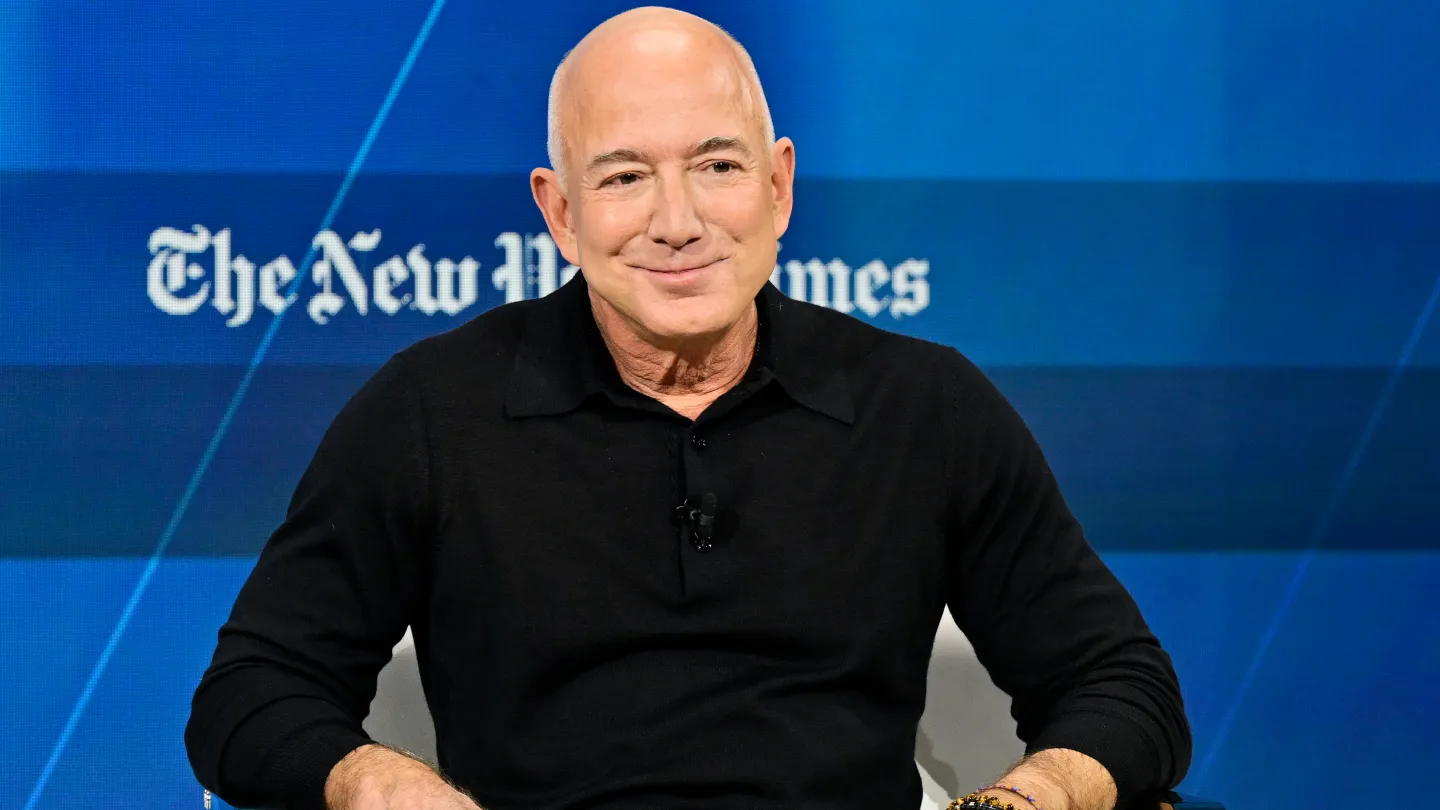
    Amazon founder and executive chairman Jeff Bezos is planning to sell some of his holdings in the company.

    Bezos, whose net worth is valued at over $200 billion, will sell up to 25 million shares in the company, valued at around $5 billion, Amazon disclosed in a regulatory filing Friday. The value of the shares could change, of course, depending on Amazon’s stock price. If it declines, they would be worth less, if it rises, they would be worth more.

    Amazon filed its quarterly 10-Q report with the Securities and Exchange Commission Friday morning, revealing a 10b5-1 trading plan for Bezos. The plans are meant to preempt concerns of insider trading by creating a pre-planned schedule for sales that are executed automatically when certain stock conditions are met.

    The specifics of the trading plan were not disclosed, beyond the 25 million share figure, and an end date of May 29, 2026. For comparison, Disney CEO Bob Iger disclosed a 10b5-1 plan late last year covering about $41 million in stock.

    Bezos, it should be noted, has consistently sold a small portion of his Amazon holdings for the last couple of years to help fund his other ventures, which include The Washington Post and the space firm Blue Origin. Last year, for example, he filed a trading plan that covered up to 50 million shares in the company.

    The planned sale comes amid a challenging environment for Amazon, which is navigating tariff uncertainty. That said, the company’s advertising business continues to surge, growing 19 percent in Q1 to $13.9 billion.