Category: Headline

  • Japan Prime Minister Sanae Takaichi Scores Decisive Election Win

    Japan Prime Minister Sanae Takaichi Scores Decisive Election Win

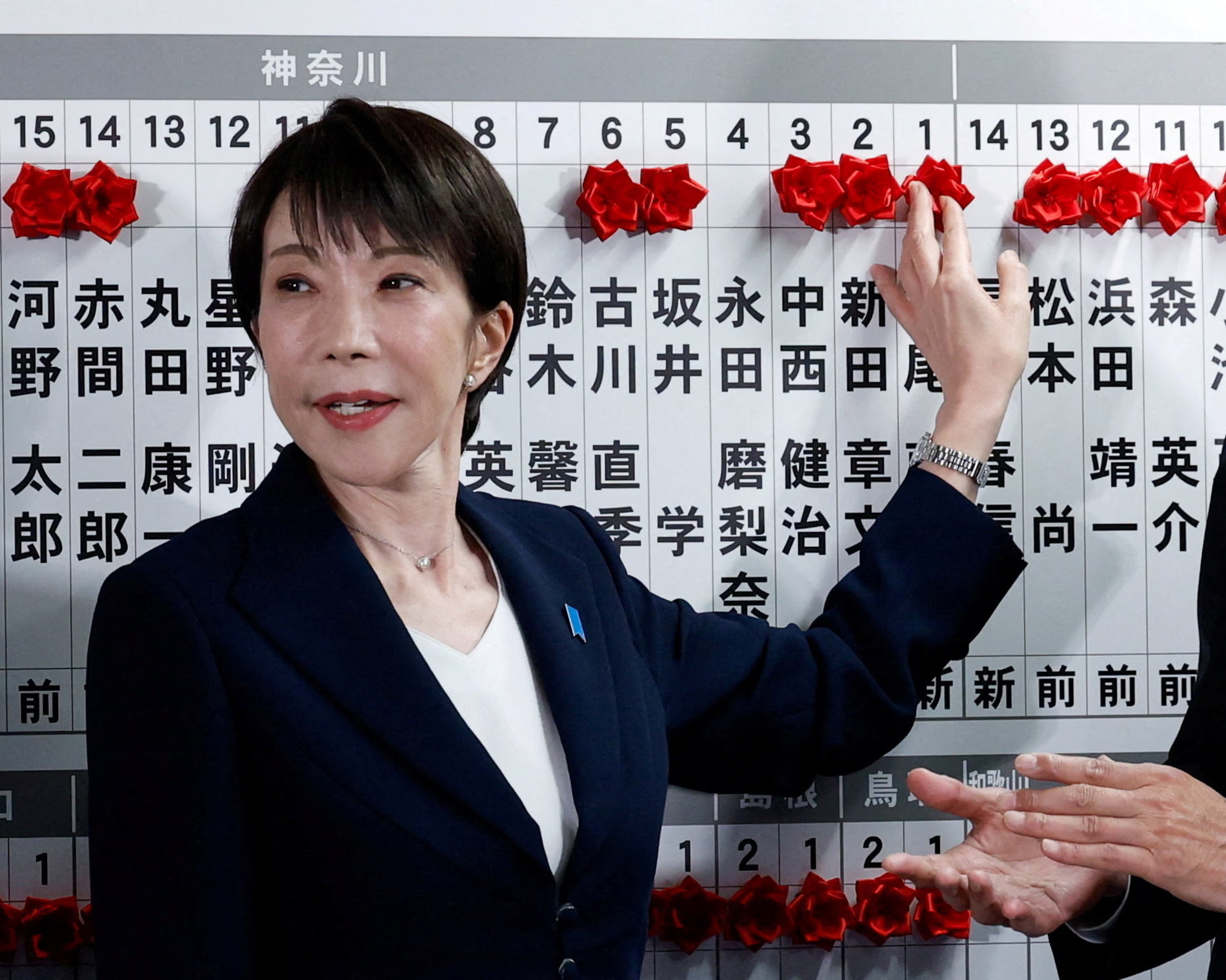
    Tokyo, Japan – In a stunning political resurrection that underscores the enduring appeal of strong leadership and nationalist fervor, Japanese Prime Minister Sanae Takaichi’s high-stakes gamble on a snap election has paid off handsomely. Her Liberal Democratic Party (LDP) not only reclaimed a commanding majority in the 465-seat lower house of parliament but achieved an unprecedented two-thirds supermajority on its own—a feat never before accomplished by the party, according to projections from public broadcaster NHK. This landslide victory positions Takaichi to pursue an ambitious agenda that aligns closely with American interests: bolstering defense spending, deepening U.S.-Japan ties, and revitalizing industrial policy to counter regional threats like China’s expansionism.

    From an America First perspective, Takaichi’s triumph is a win for U.S. strategic priorities in the Indo-Pacific. A stronger, more assertive Japan means a reliable ally that shares the burden of deterring Beijing’s aggression—without dragging American troops into unnecessary conflicts. Her rapport with President Donald Trump, reminiscent of his bond with her mentor, the late Shinzo Abe, promises enhanced cooperation on trade, security, and supply chain resilience. As Trump himself posted on Truth Social, “The Prime Minister, Sanae Takaichi, has already proven to be a strong, powerful, and wise Leader, and one that truly loves her Country.” With a planned White House visit on March 19, this could translate to deals that benefit American workers, from joint tech investments to fairer trade terms.

    Takaichi, 64, Japan’s first female prime minister who assumed office in October 2025, dissolved parliament after just three months, betting her career on public validation. She vowed to resign if her coalition lost its majority—a bold move amid the LDP’s recent scandals and electoral setbacks. In 2024 and 2025, the party hemorrhaged seats due to financial improprieties and public frustration over rising costs, forcing her predecessor, Shigeru Ishiba, to step down after a year. But Takaichi’s personal charisma—fueled by her motorcycle-riding, heavy metal drumming image—reversed the tide. NHK’s exit polls projected the LDP securing between 274 and 326 seats, with the coalition alongside the Japan Innovation Party (JIP) ranging from 302 to 366. This supermajority allows Takaichi to override the opposition-controlled upper house, paving the way for constitutional reforms long sought by conservatives.

    Voters braved brutal winter conditions—sub-zero temperatures, heavy snowfall, and rare Tokyo flurries—to deliver this mandate. The transport ministry reported 37 train lines suspended, 58 ferry routes canceled, and 54 flights grounded, yet turnout reached about 21.6% by late afternoon, per the Nikkei. “People want their lives to be better and more comfortable,” Tokyo voter Ritsuko Ninomiya told the BBC. “We need a long-term solution rather than short-term fixes.” Younger demographics, drawn to Takaichi’s viral social media presence—including a drumming session with South Korean President Lee Jae Myung set to K-pop—propelled her success. “This election is more important for the younger generation,” said Daniel Hayama, emphasizing her appeal to those prioritizing national strength.
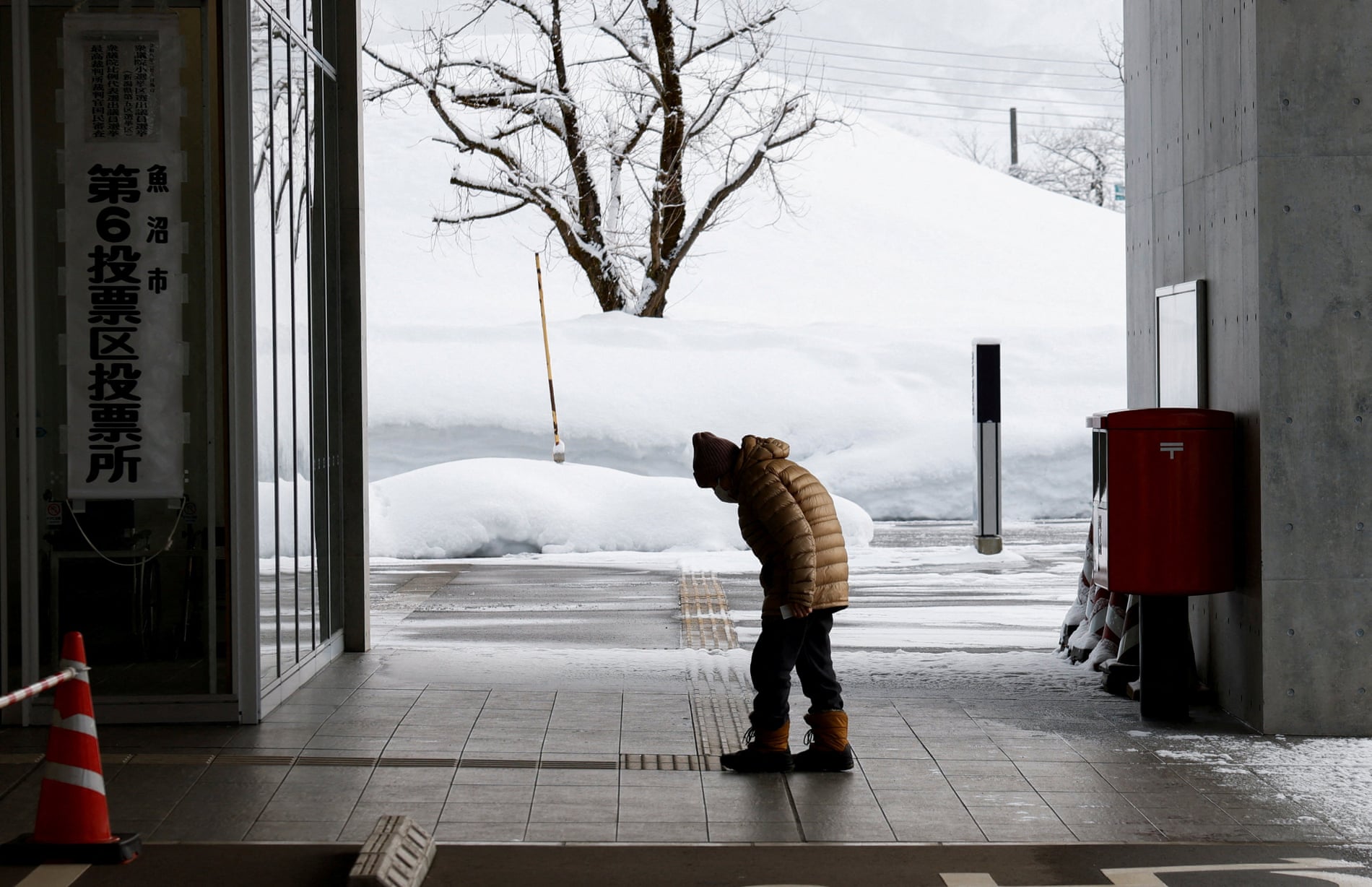
    A voter at a polling station in Uonuma, Niigata prefecture. ( Manami Yamada/Reuters)
    A voter at a polling station in Uonuma, Niigata prefecture. ( Manami Yamada/Reuters)

    The opposition crumbled under the onslaught. The Centrist Reform Alliance, a hastily formed bloc including the LDP’s former partner Komeito and the Constitutional Democratic Party, was projected to retain only a quarter of its 167 seats. Co-secretary general Nakano Hiromasa conceded to NHK that the results demanded “humble and serious” reflection. Meanwhile, the ultranationalist Sanseito party, with its “Japanese first” platform, surged from two seats to as many as 14, signaling a rightward shift that could amplify Takaichi’s conservative base.

    Economically, Takaichi campaigned on a 21 trillion yen ($140 billion) stimulus package to combat the cost-of-living crisis, pledging to suspend the 8% consumption tax on food for two years—a move costing 5 trillion yen annually. “We have consistently stressed the importance of responsible and proactive fiscal policy,” she told reporters as polls closed. Critics, including businesses, warn this could exacerbate Japan’s debt burden—already over twice its GDP, the highest among developed nations. Financial markets reacted with volatility, but supporters argue it’s essential to revive sluggish growth. In a post-election interview with NHK, Takaichi called for a cross-party forum to discuss tax cuts, noting broad support for reducing rates on essentials to zero or 5%.

    On the international front, Takaichi’s victory empowers her to fortify alliances that serve American interests. Her November statement that Japan could militarily respond to a Chinese invasion of Taiwan—breaking from Tokyo’s traditional ambiguity—drew Beijing’s wrath: flight cancellations, seafood bans, and intensified patrols near Japanese waters. Yet, it resonated with voters and allies alike. Taiwan’s President Lai Ching-te congratulated her on X: “May your victory bring a more prosperous and secure future for Japan and its partners in the region.” U.S. Treasury Secretary Scott Bessent echoed this on Fox News: “When Japan is strong, the US is strong in Asia.”
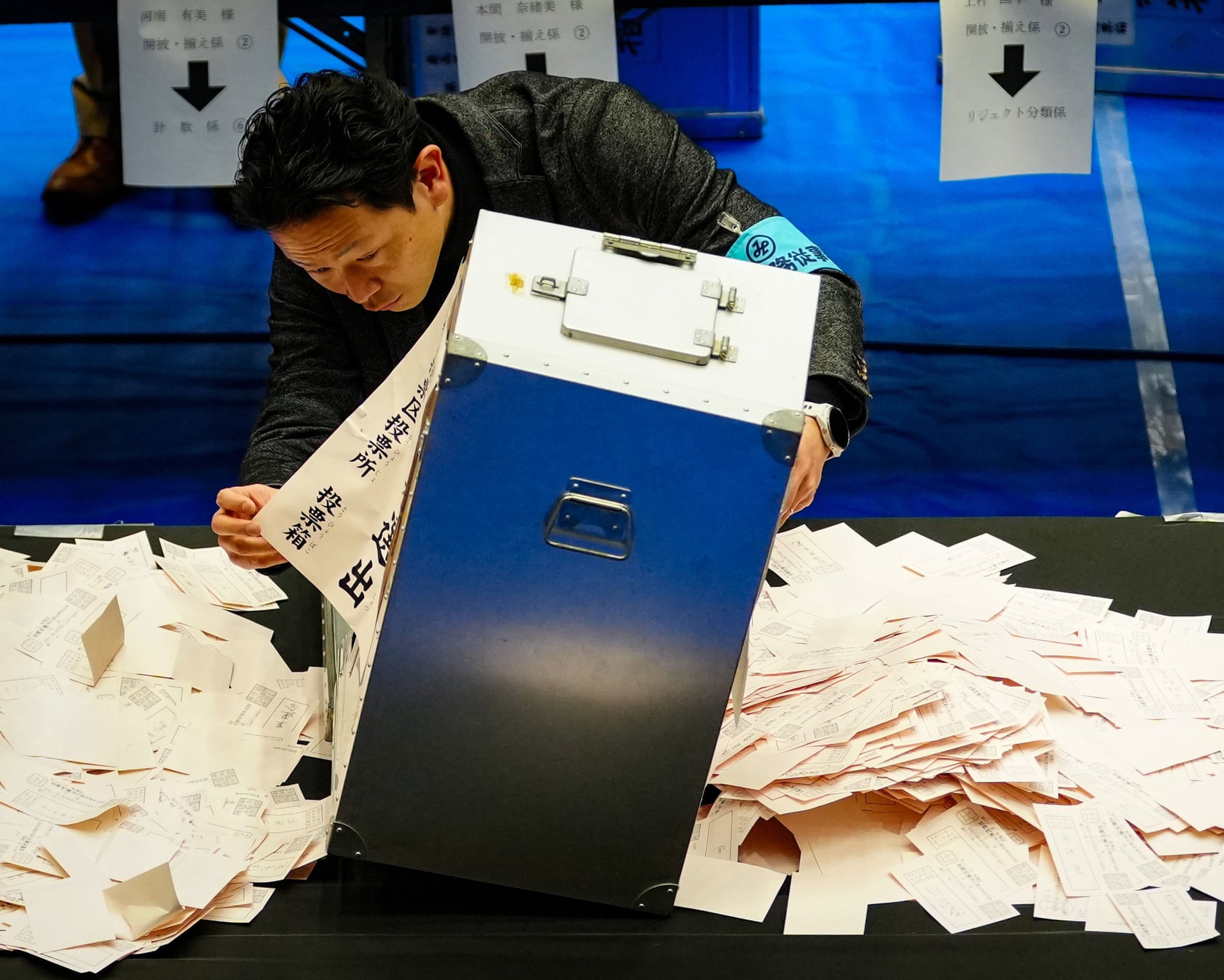
    An election official empties a ballot box at a counting station in Tokyo. (Xinhua/Shutterstock)
    An election official empties a ballot box at a counting station in Tokyo. (Xinhua/Shutterstock)

    Takaichi’s agenda includes ramping up defense spending—already at 2% of GDP—and reviewing foreign land ownership rules to curb Chinese influence. She aims to tighten immigration, targeting non-payments of taxes and health insurance by foreigners—in a nation where immigrants comprise just 3% of the population. Critics accuse her of stoking division, but proponents see it as safeguarding Japanese sovereignty. With a supermajority, she could advance her long-term goal: revising Japan’s pacifist constitution to allow more proactive military roles, aligning with U.S. calls for burden-sharing in containing China.

    Domestically, Takaichi maintains conservative views—opposing same-sex marriage and female imperial succession—while her “work, work, work” slogan earned catchphrase-of-the-year honors. Her unconventional persona has shattered glass ceilings, attracting voters tired of the male-dominated establishment.

    This political stability coincides with Japan’s cultural boom. The film industry hit a record $1.79 billion box office in 2025, up 32% from 2024, driven by anime like “Demon Slayer: Kimetsu no Yaiba – Infinity Castle – Part 1” ($255 million) and the Oscar-nominated “Kokuho” ($127 million). The global anime market, valued at $25 billion, bolsters Japan’s soft power exports. As Country of Honor at the 2026 Cannes Film Market, Tokyo plans to promote animation and co-productions—opportunities that could yield U.S.-Japan collaborations in entertainment.

    Analysts like Syracuse University’s Margarita Estévez-Abe suggest Takaichi now has breathing room until 2028 upper house elections to mend China ties. But Seiji Inada of FGS Global warns markets could punish fiscal largesse, pressuring the yen. For America, her win means a steadfast partner in the Pacific—investing in defense, aligning on trade, and countering Beijing—without overcommitting U.S. resources. It’s a model of smart alliances that put American interests first.
  • Lawmakers Warn $30 Billion Welfare Program Is Vulnerable to Abuse

    Lawmakers Warn $30 Billion Welfare Program Is Vulnerable to Abuse

    More than $30 billion in taxpayer-funded welfare money intended to help America’s poorest families has instead beeen used as a ‘slush fund’ – diverted into programs ranging from college scholarships to government budget backfills.

    The Temporary Assistance for Needy Families program, known as TANF, was created nearly three decades ago to provide direct financial support and services to struggling families. 

    Today, the program distributes about $16.5 billion annually in federal funds, supplemented by roughly $15 billion in state contributions.

    But federal auditors and analysts say the program’s structure, which gives states broad control over spending with limited reporting requirements, has made it difficult to track how billions of dollars are ultimately used.

    States often use TANF money to finance programs with only indirect connections to helping poor families, said Hayden Dublois of the Foundation for Government Accountability. He described the system’s lack of oversight as ‘fraud by design.’

    ‘There are very little, if any, safeguards,’ Dublois told the Wall Street Journal

    He estimates that roughly one in five TANF dollars, or about $6 billion each year, is misspent.

    Then President Bill Clinton prepares to sign legislation in the Rose Garden of the White House overhauling America's welfare system on Aug. 22, 1996. (AP Photo/J. Scott Applewhite)
    Then President Bill Clinton prepares to sign legislation in the Rose Garden of the White House overhauling America’s welfare system on Aug. 22, 1996. (AP Photo/J. Scott Applewhite)

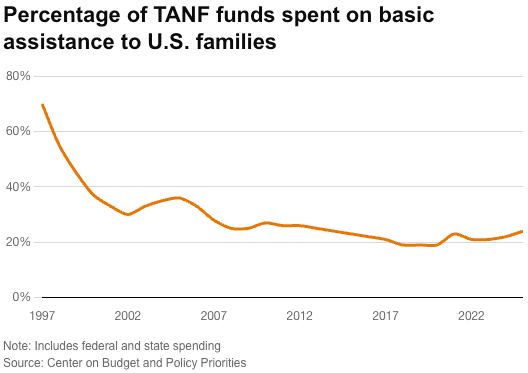
    Despite the program’s size, fewer families now receive direct cash assistance than in previous decades.

    Federal data shows that about 849,000 families received monthly TANF payments in fiscal year 2025, down from approximately 1.9 million families in 2010.

    Instead, states have increasingly directed funds to contractors, nonprofits and other government programs.

    Nick Gwyn, a policy expert with the Center on Budget and Policy Priorities, said the shift reflects a broader transformation in how the program operates.

    ‘The program has drifted away from the core purpose of supporting families with very little income,’ Gwyn told the WSJ.

    Audits conducted in multiple states have uncovered persistent problems with oversight and financial reporting.

    In Louisiana, auditors found in 2024 that state officials failed to verify required work participation hours tied to TANF eligibility – the 13th straight year auditors flagged the same issue. 

    The audit also found gaps in documentation showing how TANF funds were distributed to contractors.

    Even though employment numbers are back up, many people are worse off now because the government is no longer providing the cushion it did in 2020 and 2021. Rick Bowmer/AP
    Even though employment numbers are back up, many people are worse off now because the government is no longer providing the cushion it did in 2020 and 2021. Rick Bowmer/AP

    Louisiana officials said they agreed with the findings and would improve oversight.

    In Connecticut, auditors reported that the state did not adequately review financial reports from more than 130 subcontractors receiving $53.6 million in TANF funds, making it difficult to confirm whether the money was spent on approved purposes.

    Connecticut officials said they would strengthen compliance procedures.

    Auditors also identified oversight problems in Florida, underscoring how weaknesses in TANF spending controls extended across states regardless of political leadership.

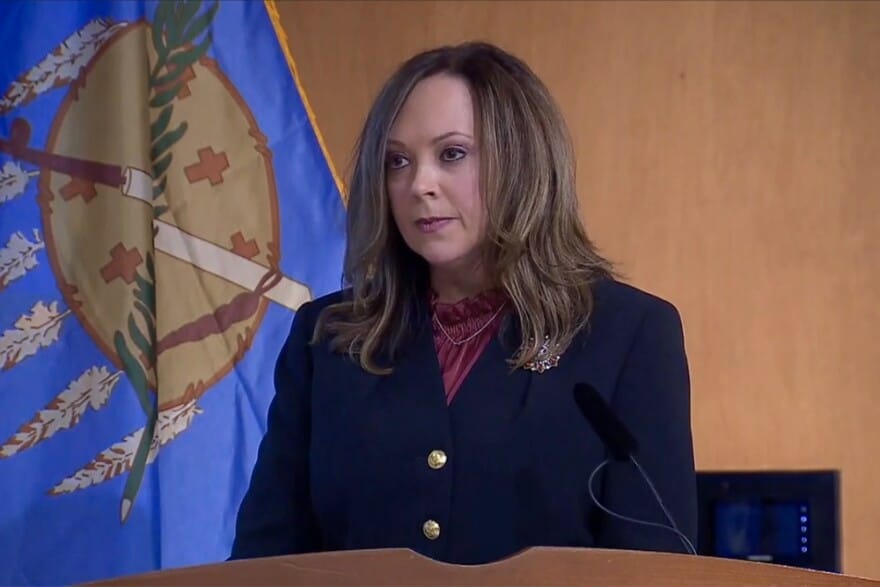
    In Oklahoma, state auditor Cindy Byrd said her office has similarly found weak documentation tracking TANF expenditures.

    State and federal records show TANF money has been used for a wide range of programs critics say fall outside the program’s intended mission.

    These include college scholarship programs benefiting students from middle-income families, payments to antiabortion pregnancy centers, and child welfare programs already supported by other federal funding sources.

    In Michigan, more than $750 million in TANF funds were directed into scholarship programs between 2011 and 2024, according to the Michigan League for Public Policy.

    In Texas, federal data shows the state spent about $251 million in TANF funds in fiscal year 2023 on foster care and child welfare programs, while just 1.9 percent of TANF spending went directly to basic assistance payments.

    More for you

    Ann Flagg, who oversaw TANF at the federal level during the Biden administration, said the program’s layered structure made it difficult for federal officials to monitor spending.

    ‘Knowing that there were so many layers between the activity on the ground and the federal perch, there were many, many instances, I am sure, that funds were used in crazy ways,’ Flagg said.

    The biggest scandal involving TANF funds took place in Mississippi. The embezzlement scheme saw at least $77 million of taxpayers’ money go toward frivolous things instead of helping those in need in America’s poorest state, according to authorities.

    Instead of helping the less fortunate, cash was splurged on a lavish home in Jackson, cars, paying off a non-profit leader’s speeding ticket, and funding a new $5 million volleyball stadium at Mississippi University, among other items, authorities said.

    A total of seven people have pleaded guilty to state or federal charges related to the fraud case, but former WWE wrestler Ted DiBiase Jr decided to plead not guilty and stand trial.

    Most Read in Politics

    Concerns about misuse of public welfare funds have been amplified by a series of major fraud scandals in Minnesota, where federal and state investigators uncovered schemes involving millions of taxpayer dollars intended for child care and food programs. 

    Trump’s fraud crackdown was ignited by issues in Minnesota, but the state’s cases are unrelated to TANF. 

    In one case dating back to the 2010s, authorities found the operators of several daycare centers billed the government for services that were never provided, with surveillance footage appearing to show parents briefly bringing children to facilities before leaving immediately. 

    Prosecutors later said the scheme allowed providers to collect reimbursement payments despite not delivering actual care, and several individuals pleaded guilty to felony theft by swindling.


    More recently, federal authorities have investigated what they described as a vast fraud network involving federally funded child nutrition programs.

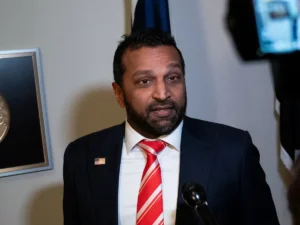
    FBI Director Kash Patel said the bureau had ‘surged personnel and investigative resources to Minnesota’ to dismantle fraud schemes exploiting federal assistance programs. 

    Patel warned that such activity may represent ‘the tip of a very large iceberg,’ adding that ‘fraud that steals from taxpayers and robs vulnerable children will remain a top FBI priority in Minnesota and nationwide.’

    Federal watchdog agencies have also repeatedly warned about weaknesses in TANF oversight.

    The Government Accountability Office found that audits in 37 states identified 162 deficiencies in financial oversight, including 56 considered severe. 

    The agency criticized what it described as ‘opaque accounting practices’ among groups receiving TANF funds.

    The GAO has recommended since at least 2012 that Congress strengthen reporting requirements and expand federal oversight. 

    Those recommendations have not been enacted.

    The ongoing fraud scandal in Minnesota dates back a decade as a 2015 video shows parents appearing to pretend to drop their children off at a phony daycare center
    The ongoing fraud scandal in Minnesota dates back a decade as a 2015 video shows parents appearing to pretend to drop their children off at a phony daycare center

    In testimony to Congress, GAO official Kathy Larin said states often use TANF funds precisely because of their flexibility.

    ‘States told us they use TANF because it’s more flexible and can cover costs not eligible’ under other federal programs, she said.

    TANF was created in 1996 as part of sweeping welfare reform legislation signed by President Bill Clinton, who described the measure as ‘ending welfare as we know it.’

    The reforms replaced an open-ended federal entitlement with block grants, giving states significant authority over spending decisions.

    Supporters credited the program with reducing welfare dependency, but critics say the system created incentives for states to redirect funds away from direct aid.

    Robert Rector, a senior fellow at the Heritage Foundation who helped draft the legislation, said the program has drifted from its original goals.

    TANF Trends and Its Oversight—Welfare Assistance Continues to Shift Away from Cash Assistance
    TANF Trends and Its Oversight—Welfare Assistance Continues to Shift Away from Cash Assistance

    ‘Today all states are in de facto violation of the law’ because they aren’t spending all TANF funds on the intended purposes outlined in the original law, Rector said.

    He added that both Republicans and Democrats share responsibility for failing to enforce stricter oversight.

    The Trump administration has recently moved to freeze billions in federal welfare-related grants to several states over concerns about fraud and misuse, including funds tied to TANF. 

    Several states challenged the move in court, and a federal judge temporarily blocked the freeze.

    Despite growing scrutiny and repeated warnings from auditors and watchdog agencies, Congress has not enacted any comprehensive reforms.

    Economy

  • How a $30 Billion Welfare Program Turned Into a ‘Slush Fund’ for States

    How a $30 Billion Welfare Program Turned Into a ‘Slush Fund’ for States

    When the Trump administration targeted billions of dollars in federal welfare funds recently over fraud concerns, it singled out five Democratic-run states.

    An examination by The Wall Street Journal found that the main federal aid program the administration is seeking to block, Temporary Assistance for Needy Families, or TANF, has long been plagued by poor financial oversight and questionable spending in states led by both Republicans and Democrats.

    Auditors in numerous states, including Connecticut, Louisiana and Florida, have uncovered problems with TANF—once America’s primary welfare program for low-income families. Created three decades ago, it comprises more than $30 billion.

    TANF funds flow annually through block grants to states, which have wide latitude to spend them and minimal reporting requirements—a structure critics say hampers oversight. Meant to allow states to be creative in serving needy families, it has resulted in a shift: States now award most of the money to nonprofits, companies and their own state agencies. An average of about 849,000 families got direct cash aid each month in fiscal 2025, federal data shows, down from about 1.9 million in fiscal 2010.


    Average number of families receiving direct TANF aid


    Average number of families receiving direct TANF aid

    Note: Monthly averages for fiscal years ending in September
    Source: U.S. Department of Health and Human Services

    Audits have shown a range of problems, including states inaccurately reporting large expenditures and disbursing millions of dollars to contractors without tracking how the cash was spent. State and federal records show red and blue states alike have directed hundreds of millions of dollars to programs with tenuous—or no—connections to TANF’s goals.

    Questionable expenditures have included college scholarships that benefited middle- or upper-income families, antiabortion centers, a volleyball stadium in Mississippi, and an Ohio job-training nonprofit where leaders and employees were later sentenced to prison after prosecutors said they used TANF money for vacations, real estate and salaries for people who didn’t work there.

    Both conservative and liberal groups—and repeated reports from the Government Accountability Office, Congress’s nonpartisan watchdog—say the federal government for years hasn’t paid enough attention to how states use the money.

    Last year, the GAO identified 37 states where recent audits found 162 deficiencies in financial oversight, “56 of which were severe.” It criticized “opaque accounting practices” by many groups receiving TANF funds.

    States often use TANF money as a “slush fund” to plug budget shortfalls and finance initiatives that don’t help poor people get jobs or strengthen families, said Hayden Dublois of the conservative Foundation for Government Accountability. He describes TANF’s lack of oversight as “fraud by design.”

    “There are very little, if any, safeguards,” said Dublois, who estimates one in five TANF dollars, or about $6 billion, is misspent every year.

    Ann Flagg, the top TANF official under then-President Joe Biden, said she and other officials tried to rein in questionable state spending through a proposed regulation change that would have limited how TANF dollars can be spent.

    “Knowing that there were so many layers between the activity on the ground and the federal perch, there were many, many instances, I am sure, that funds were used in crazy ways,” she said.

    Then President Bill Clinton prepares to sign legislation in the Rose Garden of the White House overhauling America's welfare system on Aug. 22, 1996. (AP Photo/J. Scott Applewhite)
    Then President Bill Clinton prepares to sign legislation in the Rose Garden of the White House overhauling America’s welfare system on Aug. 22, 1996. (AP Photo/J. Scott Applewhite)

    Trump has focused on fraud after a safety-net scandal in Minnesota, but those cases don’t involve TANF. The most prominent scandal involving TANF funds, at least $77 million, took place several years ago in Mississippi. The Trump administration in January signaled plans to extract a potentially hefty penalty from the state after earlier pausing a Biden administration effort to do so.

    Reinventing welfare

    Today’s TANF program was created during a fleeting moment of bipartisan cooperation 30 years ago. The GOP, led by House Speaker Newt Gingrich, pushed for the welfare overhaul as part of the Republican “Contract with America.” Leaders of both parties hailed the program as giving more freedom to states, which knew their own needs better than anyone in Washington.

    President Bill Clinton praised it for “ending welfare as we know it.”

    States which receive TANF funds were given broad flexibility to disburse the money as they saw fit. Some observers point to successes, primarily a dramatic drop in welfare rolls, though critics say that was driven partly by onerous work requirements and not declining poverty rates.

    TANF, overseen by the U.S. Department of Health and Human Services, supplies $16.5 billion a year from the federal government, matched by about $15 billion in state funds. Nationwide, around 20% of impoverished families receive cash assistance, according to recent analyses. Time-limited maximum monthly payments for a family of three ranged from $204 in Arkansas to $1,370 in Minnesota in 2024.

    “The program has drifted away from the core purpose of supporting families with very little income,” said Nick Gwyn, who studies TANF for the Center on Budget and Policy Priorities, a left-leaning think tank.

    Lorem ipsum dolor sit amet, consectetur adipiscing elit. Ut elit tellus, luctus nec ullamcorper mattis, pulvinar dapibus leo

    Audits and reports on the use of TANF funds have been have been limited in scope. But those conducted show state officials have often failed to track where the money goes or whether it is spent properly.

    A Louisiana audit in 2024 found that state employees didn’t verify or document the hours worked by some TANF enrollees, a federal requirement. It was the 13th consecutive year that auditors had reported the same problem. The audit also said the state hadn’t accurately documented TANF distributions to contractors.


    Louisiana said it concurred with the findings and would step up compliance.

    In Connecticut, auditors said the state in 2024 didn’t sufficiently review the financial reports of 131 subcontractors who received $53.6 million in TANF funds, making it difficult to assess whether the money was being spent on “allowable activities.”

    Connecticut promised to verify that contractors met their obligations.

    Oklahoma Republican state auditor Cindy Byrd said her agency’s audits have found weak or nonexistent documentation showing how TANF funds have been spent.

    The GAO recommended at least as early as 2012 that Congress tighten reporting requirements for TANF spending by states, and called on HHS to increase program auditing. No legislation was passed.

    Oklahoma state auditor Cindy Byrd pointed to instances of weak or nonexistent TANF documentation.

    In 2016, an HHS official testified before a House committee that limitations in federal law prevented the agency from estimating improper payments in TANF. “That doesn’t make any sense to me,” Republican Rep. Gary Palmer of Alabama said at the time.

    In a recent interview, Palmer said he supports mandating such reporting through legislation. “Just from fiscal responsibility, we have an obligation to do this,” he said. Several Democrats have pushed for legislation to monitor third-party TANF contractors.

    Unlike with some other welfare programs, states don’t have to spend all their TANF money in a single year, and many have built up large surpluses. In times of fiscal pressure, such as the 2007-09 recession, many states used TANF funds for purposes that had little to do with the program’s original goals, said Robert Rector, a senior research fellow at the conservative Heritage Foundation who helped draft the 1996 legislation that created the program.

    He said as the number of welfare recipients dropped, states were supposed to direct funds to help poor parents get jobs and to strengthen families. Instead, states spent the money on unrelated programs, and the federal government didn’t intervene.

    Most Read in Politics

    “Today all states are in de facto violation of the law” because they aren’t spending all TANF funds on the 1996 law’s goals, Rector said in an interview.

    Rector said Democrats and Republicans are both to blame after the law was passed. Many Democrats didn’t want the reforms, and Republicans, after 1996, “told their base that they had ended welfare and just closed the book. I was flabbergasted,” he said.

    Scholarships for rich kids

    Missouri set aside several million dollars in TANF funds annually in recent years for its Alternatives to Abortion program, state records show. For this fiscal year, the state says it allocated about $12 million in TANF funds to 10 providers, including eight antiabortion pregnancy resource centers.

    The program aligns with TANF’s aim of supporting needy families so children can be cared for at home, a Missouri state Department of Social Services spokeswoman said. During pregnancy and for a year after a child’s birth, low-income parents can access services such as counseling and parental education and get help with basic needs.

    Abortion-rights supporters say using TANF for services limited to poor Missourians who commit to taking a pregnancy to term is a misuse of funds and intended to support a conservative agenda.

    Some states spend large amounts of TANF dollars on child-welfare programs such as foster care, despite receiving dedicated funding for them from other sources, Kathy Larin, a GAO director, testified to Congress in April 2025. “States told us they use TANF because it’s more flexible and can cover costs not eligible” for reimbursement, she said.

    Texas used about $251 million of its $884 million in TANF expenditures in fiscal year 2023 on child welfare and foster-care services and payments, according to federal data. The state used just 1.9% of its TANF dollars on basic assistance to needy families. Texas officials didn’t respond to requests for comment.

    States use TANF for so many purposes that it raises the question of who is benefiting, the GAO’s Larin said. For example, she noted, one state has a “marriage promotion program, but they can’t assess whether the program improved marriage quality or duration.”

    Several states have also used TANF money for programs available to people well above the poverty threshold.

    Between 2011 and 2024, Michigan faced criticism for pumping more than $750 million in TANF funds into two college scholarship programs that aided many students from middle-income and even affluent families, according to the nonprofit Michigan League for Public Policy.

    More for you

    In November 2024, under Biden, the federal Administration for Children and Families, which oversees TANF, picked five states—California, Minnesota, Kentucky, Maine and Ohio—for a pilot program aimed at measuring outcomes of TANF spending to improve effectiveness.

    Months later, the Trump administration canceled the pilots except in Ohio, and substituted in Arizona, Virginia, Iowa and Nebraska.

    In April 2025, the GAO again called for Congress to require states to provide more data on TANF spending.


    So far, Congress hasn’t acted on the proposal, and the Trump administration has taken no position on the issue.

    The GOP’s “One Big, Beautiful Bill,” a tax-and-spending megabill passed in 2025, imposed various requirements on states’ spending of federal social-welfare funds, including stricter verifications for SNAP and Medicaid recipients. States can be penalized if error rates are too high. But the legislation didn’t address TANF.

    Last month, the administration said it was freezing about $10.6 billion in child-care and family-assistance grants, much of it under TANF, to the Democratic-led states of California, Colorado, Illinois, Minnesota and New York.

    The states sued, and a federal judge temporarily blocked the administration’s effort. The federal agency that administers TANF declined to comment, citing the pending litigation.

    Economy

  • Crypto Exchange Accidentally Sends $40 Billion in Bitcoin to Users

    Crypto Exchange Accidentally Sends $40 Billion in Bitcoin to Users

    A South Korean cryptocurrency exchange apologised on Saturday after mistakenly transferring more than $40 billion worth of bitcoin to users, which briefly prompted a selloff on the platform.

    Bithumb said it accidentally sent 620,000 bitcoins, currently worth more than $40 billion, and blocked trading and withdrawals for the 695 affected users within 35 minutes after the error occurred on Friday.

    According to local reports, Bithumb was meant to send about 2,000 won ($1.37) to each customer as part of a promotion, but mistakenly transferred roughly 2,000 bitcoins per user.

    “We sincerely apologise for the inconvenience caused to our customers due to the confusion that occurred during the distribution process of this (promotional) event,” Bithumb said in a statement released Saturday.

    The platform said it had recovered 99.7 percent of the mistakenly sent bitcoins, and that it would use its own assets to fully cover the amount that was lost in the incident.

    It admitted the error briefly caused “sharp volatility” in bitcoin prices on the platform as some recipients sold the tokens, adding that it brought the situation under control within five minutes.

    Its charts showed the token’s prices briefly went down 17 percent to 81.1 million won on the platform late Friday.

    Most Read in Cryptocurrency

    The platform stressed that the incident was “unrelated to external hacking or security breaches”.

    Bitcoin, the world’s biggest cryptocurrency, sank this week, wiping out gains sparked by US President Donald Trump’s presidential election victory in November 2024.

  • Missing Minneapolis Student Reportedly Seen in ICE Detention Facility in Texas

    Missing Minneapolis Student Reportedly Seen in ICE Detention Facility in Texas

    In a development that highlights the challenges and necessities of robust immigration enforcement under the Trump administration, school officials in suburban Minneapolis have located a missing fifth-grade girl who was found in a U.S. Immigration and Customs Enforcement (ICE) detention center in Texas. The discovery, made through a chance encounter between classmates, underscores the critical role ICE plays in upholding federal immigration laws while ensuring the safety and accountability of families involved in deportation proceedings.

    Jason Kuhlman, principal of Valley View Elementary School in Columbia Heights, expressed relief upon learning the whereabouts of the student, who had abruptly stopped attending classes in early January. This coincided with the administration’s surge of federal immigration officers to the Minneapolis area, a move aimed at addressing backlogs in immigration cases and enhancing border security amid rising concerns over illegal immigration. Kuhlman described the initial concern when the girl’s family became unreachable: phone calls went unanswered, and a visit by the landlord revealed an empty home, though the student’s school-issued Chromebook remained behind.

    Jason Kuhlman, principal of Valley View Elementary School, feared the worst when the girl stopped coming to class and her family wasn’t picking up the phone. (Kerem Yücel/Minnesota Public Radio/AP)
    Jason Kuhlman, principal of Valley View Elementary School, feared the worst when the girl stopped coming to class and her family wasn’t picking up the phone. (Kerem Yücel/Minnesota Public Radio/AP)

    “It was surreal,” Kuhlman recounted in an interview. “We wondered how many kids might be unaccounted for in these situations.” After a month of uncertainty, the breakthrough came when two brothers—fellow Valley View students in second and fifth grades—who had been temporarily detained with their mother, spotted the girl in the cafeteria of the South Texas Family Residential Center in Dilley, Texas. The boys shared this with Kuhlman upon their release and return to Minnesota on Wednesday, February 4.

    The Columbia Heights Public Schools district, which serves about 3,300 students, has reported that seven children from its schools have been involved in ICE detentions since the surge began, ranging in age from 5 to 17. Five have been released, with two believed to still be in custody—one at Dilley and another at an undisclosed location. District spokesperson Kristen Stuenkel emphasized the district’s efforts to support affected families, declining to release names to protect privacy.

    Department of Homeland Security Assistant Secretary Tricia McLaughlin affirmed ICE’s procedures, stating that the agency does not target children or schools but focuses on enforcing immigration laws consistently across administrations. “No one in ICE custody is missing,” McLaughlin explained. “Detainees are searchable online, and they have access to phones to contact families. Parents are given the option to be removed with their children or designate a safe guardian—ensuring family unity where possible.”

    This approach, McLaughlin noted, aligns with longstanding policies designed to prioritize child welfare during enforcement actions. ICE’s online locator system allows families and advocates to track detainees, and facilities like Dilley are equipped to handle family units humanely, with access to education, medical care, and legal resources. Critics on the left have decried these operations as disruptive, but supporters argue they are essential for maintaining the rule of law and deterring illegal crossings that strain local resources.

    The Trump administration’s renewed focus on immigration enforcement has been a cornerstone of its agenda, building on promises to secure the southern border and expedite removals of individuals without legal status. The surge in Minneapolis, a sanctuary city area with a significant immigrant population, targets families with final deportation orders or those who have overstayed visas. This has led to a dip in school attendance, which Kuhlman compared to pandemic-era disruptions, as some families go into hiding to avoid detection.

    However, administration officials and conservative lawmakers praise the operations for restoring order. “ICE is doing the job Congress mandated—enforcing our laws to protect American communities and ensure fair immigration processes,” said Rep. Tom Emmer (R-Minn.), whose district includes parts of the Minneapolis suburbs. “These detentions aren’t arbitrary; they’re about accountability for those who ignore court orders. And importantly, ICE prioritizes family integrity and child safety.”

    One high-profile case drawing attention is that of 5-year-old Liam Conejo Ramos, detained with his father in late January. Images of the boy’s detention sparked outrage from Democrats, who lobbied for his release. Ramos was among those held at Dilley before being freed, highlighting the facility’s role in processing cases efficiently. The two Valley View brothers and their mother, who had an active asylum case, were detained on January 29 and transported to Dilley. A judge ordered their release the next day, per court documents, allowing their swift return home.

    Most Read in US Politcs

    Kuhlman personally assisted in reuniting the boys with their mother at the Whipple Federal Building in Minneapolis before their transfer south. Upon their return, the boys’ revelation about spotting their classmate provided closure for the school. Despite initial searches on ICE’s locator failing to find the girl—possibly due to processing delays—the district has now connected her family with legal aid.

    As the district shifts focus to another silent family, Kuhlman plans a welfare check, illustrating the proactive role schools play in community stability. Yet, this incident also spotlights the broader benefits of ICE’s work: by addressing immigration violations promptly, the agency helps prevent exploitation and ensures that legal pathways remain viable for those who follow the rules.

    Conservative analysts point out that such enforcement deters future illegal entries, reducing the humanitarian crises at the border seen under previous administrations. “The Trump surge is working—it’s about law and order, not cruelty,” said Mark Krikorian, executive director of the Center for Immigration Studies, a think tank advocating for reduced immigration. “Facilities like Dilley are family-oriented, with schools and recreation, far from the ‘cages’ narrative pushed by the left.”

    Democrats, however, continue to criticize the tactics. Sen. Amy Klobuchar (D-Minn.) called for oversight, arguing the surge traumatizes children and disrupts education. But with bipartisan support for border security growing amid record migrant encounters, the administration’s approach garners backing from right-center voices who see it as a balanced enforcement of existing laws.

    As this story unfolds, it serves as a reminder of the complexities in immigration policy—balancing compassion with the imperative to uphold sovereignty. For now, Valley View Elementary can breathe easier knowing their student is accounted for, thanks to the structured processes of ICE detention.

    Exclusive articles

  • Kash Patel Slams FBI Use of Anti-Trump Sedition Hunters as Paid J6 Informants

    Kash Patel Slams FBI Use of Anti-Trump Sedition Hunters as Paid J6 Informants

    he Biden-era FBI made more than $100,000 in payments to informants who were members of an anonymous group of tech sleuths known as the “Sedition Hunters” to gather and analyze video evidence in the January 6 Capitol riot — echoing the bureau’s reliance on paid FBI informant and British ex-spy Christopher Steele in 2016.

    Just the News reported this week that the FBI made payments to a number of so-called “sedition hunters” as confidential human sources (CHS) as part of the January 6 Capitol riot and Arctic Frost probes despite the online network’s significant anti-Trump pronouncements and known ties to foreigners.

    The payments are due to be disclosed by FBI Director Kash Patel to Congress along with acknowledged concerns that the Christopher Wray-run bureau’s approval of certain members of the Sedition Hunters as confidential human sources may have violated bureau policies concerning informant bias, informant secrecy, foreign influence, and contracting transparency, officials said.

    Reminiscent of the ill-fated “Crossfire Hurricane” lawfare campaign

    The revelations of source payments are certain to revive FBI concerns among Republicans that date back to the now-discredited Crossfire Hurricane probe, where agents used Steele as a CHS to pursue unsubstantiated allegations of Trump colluding with Russia. This was despite Steele’s foreign connections, his clear anti-Trump bias, and his work as a contractor for the campaign law firm of Trump’s main 2016 rival, Hillary Clinton. Wray had promised significant reforms in the wake of the 2016 debacle at the bureau.

    Steele was eventually terminated in November 2016 as an FBI informant for violating his confidentiality requirements as a confidential human source, disclosing his role with the bureau, and making unauthorized disclosures to the media.

    Government officials said a half decade later, the bureau may have entered into another troubling relationship by treating members of the Sedition Hunters as informants in a new Trump probe when, in fact, they were essentially performing computer analysis contract work identifying January 6 defendants around the Capitol and clearly expressed dislike for Trump.

    FBI burned by decision to deploy the Steele Dossier against Trump

    DOJ inspector general Michael Horowitz uncovered huge flaws with the FBI’s Crossfire Hurricane investigation in a December 2019 report, finding at least 17 “significant errors and omissions” related to the FISA warrants targeting former Trump campaign associate Carter Page. Horowitz also criticized the “central and essential” role of Steele’s debunked dossier in the FBI’s politicized FISA surveillance. Steele, a years-long FBI CHS, had been hired by the opposition research firm Fusion GPS, which was being paid by Clinton campaign lawyer Marc Elias. Elias was later fined for “misleading” filings to the court in his advocacy for Democratic Party candidates.

    The DOJ watchdog also said Steele’s alleged main source — Russian national Igor Danchenko — “contradicted the allegations of a ‘well-developed conspiracy’ in” Steele’s dossier. Danchenko was made an FBI CHS for years after 2016, up until his indictment by now-former special counsel John Durham.

    Lorem ipsum dolor sit amet, consectetur adipiscing elit. Ut elit tellus, luctus nec ullamcorper mattis, pulvinar dapibus leo.

    Trump Administration

    Horowitz’s report noted that Steele’s FBI interview “highlighted discrepancies between Steele’s presentation of information in the election reporting and the views of his Primary Sub-source” — Danchenko — and “revealed bias against Trump.”

    Stefan Halper was a Pentagon consultant and academic, and he, along with Steele, was used as a CHS by bureau agents to build the politicized Crossfire Hurricane case against Trump and his advisers during the end of the 2016 election and the beginning of Trump’s first term in office.

    Wray repeatedly promised serious CHS reform inside the bureau

    Horowitz wrote in a November 2019 report that “the FBI’s vetting process for CHSs, known as validation, did not comply with the Attorney General Guidelines.”

    “We also found deficiencies in the FBl’s long-term CHS validation reports which are relied upon by FBI and Department of Justice officials in determining the continued use of a CHS,” the DOJ watchdog said. “Further, the FBI inadequately staffed and trained personnel conducting long-term validations and lacked an automated process to monitor its long-term CHSs.”

    Wray quickly spoke with the press after the release of the December 2019 report, with the Associated Press writing that “Wray said the FBI would make changes to how it handles confidential informants.”

    He also sent a letter to Horowitz that month where he assured the DOJ inspector general that the FBI was fixing its CHS process.

    “We are making significant changes to how the FBI manages its Confidential Human Source Program. Many FBI investigations rely on human sources, but the investigative value derived from CHS-provided information rests in part on the CHS’s credibility, which demands rigorous assessment of the source,” the now-former FBI chief wrote. “The modifications we are making to how the FBI collects, documents, and shares information about CHSs will strengthen our assessment of the information these sources are providing.”

    Wray also sent a letter to the Foreign Intelligence Surveillance Court in January 2020, where he laid out further plans to reform the bureau’s handling of informants.

    The now-former FBI director said that one “FISA-related Corrective Action I have directed will require that all information known at the time of a FISA request and bearing on the reliability of a CHS whose information is used to support the FISA application is captured as part of the FISA Request Form and verified by the CHS handler.”

    Wray said that “in coordination with the FBI’s Directorate of Intelligence, the working group is developing a new CHS Questionnaire, which will be used as an addendum to the FISA Request Form, identifying the categories of source information (e.g., payment information, criminal history) that [the Office of Intelligence] should be informed of when preparing FISA applications that rely on CHS reporting. Completion of this Corrective Action will require consultation with external partners, finalization of the CHS Questionnaire, and the training of FBI personnel.”

    Wray also insisted to the Senate in March 2021 that the FBI was fixing its CHS process.

    “We accepted all of the findings and recommendations in the Inspector General’s report. I ordered, at the time, over 40 corrective actions to go above and beyond the recommendations of the inspector general’s report, and those have been implemented,” he said. “Those include everything from strengthening our procedures to ensure accuracy and completeness, to make sure the court gets all the information it’s supposed to, changes in our protocols for CHS, confidential human sources, training changes.”

    Steele and Danchenko exemplified the politicized nature of FBI’s lawfare

    The FBI used Steele’s discredited dossier to obtain four Foreign Intelligence Surveillance Act warrants and renewals targeting Trump campaign associate Carter Page, and fired FBI Director James Comey and former FBI Deputy Director Andrew McCabe pushed to include the dossier’s baseless collusion allegations in the 2017 Intelligence Community Assessment on Russian election meddling in the 2016 election.

    During all this, the FBI concealed the extent of Steele’s anti-Trump biases from the FISA Court. Just the News revealed last year that a declassified House Intelligence report showed the Steele Dossier was directly cited in the highly classified version of the ICA on Russian meddling.

    Horowitz wrote in 2019 that “the FBI was aware of the potential for political bias in the Steele election reporting from the outset of obtaining it.”

    More from United States

    Ex-DOJ official Bruce Ohr, who served as a conduit between Steele and the FBI even after the former MI6 agent was cut off as a confidential human source, told the bureau by late November 2016 that Steele was “desperate that Donald Trump not get elected and was passionate about him not being the U.S. president.” The DOJ watchdog noted that during a 2017 interview with the FBI, Steele described Trump as his “main opponent” and that an FBI analyst said this was “clear bias.”

    FBI analyst Brian Auten, who interviewed Steele’s alleged main source, Russian lawyer Igor Danchenko, in early 2017 and was there when the Justice Department set up a partial immunity agreement with Danchenko, was among the FBI employees who interviewed Steele in Rome in early October 2016 as the FBI sought more details on the dossier. Auten revealed in court that the FBI had offered Steele an incentive of up to $1 million if he could prove the allegations of collusion in his dossier and if the evidence led to prosecutions, but Auten said the former MI6 agent was unable to corroborate any of his dossier claims.

    FBI notes of a January 2017 interview with Danchenko showed he told the bureau he “did not know the origins” of some Steele claims and “did not recall” other dossier information. Nevertheless, Danchenko was put on the FBI’s payroll as a confidential human source from March 2017 to October 2020 before he was charged in November 2021 with five counts of making false statements to the bureau. The FBI agent assigned to be the handler for Danchenko testified that he sought to have the bureau pay Danchenko more than $500,000.

    Danchenko was found not guilty at trial.

    FBI failed to scrutinize Steele until after dossier deployed

    Just the News also revealed in 2025 that declassified records released last year also included a “Human Source Validation Report” (HSVR) by the FBI’s Validation Management Unit (VMU) related to Steele.

    The VMU assessed in 2017 that the bureau had only “medium confidence” that Steele had contributed to the FBI’s criminal program, in part because “Steele’s reporting has been minimally corroborated.” The unit said that, despite Steele working for the bureau for years, including on the high-profile Trump-Russia collusion investigation, “this is the first HSVR completed on Steele.”

    The FBI unit said that, in addition to baseless collusion claims, Steele had provided the bureau with information on a bribery scandal related to FIFA and Russia, a cyberattack from China, and “Weapons of Mass Destruction issues.”

    The VMU also claimed that “during Steele’s operation, VMU found no issues regarding his or her reliability” and that “VMU did not locate any information to suggest Steele fabricated information during the operation.”

    Yet declassified footnotes from Horowitz’s report showed that “a 2015 report concerning oligarchs written by the FBI’s Transnational Organized Crime Intelligence Unit (TOCIU) noted that from January through May 2015, ten Eurasian oligarchs sought meetings with the FBI, and five of these had their intermediaries contact Steele.” The TOCIU report “noted that Steele’s contact with five Russian oligarchs in a short period of time was unusual and recommended that a validation review be completed on Steele because of this activity,” Horowitz said.

    According to Horowitz, the FBI’s Validation Management Unit “did not perform such an assessment on Steele until early 2017” — well after the bureau had deployed the dossier in the FISA court and in the 2017 intelligence community assessment on alleged Russian meddling in the election.

    More from Economy

    The Horowitz report’s declassified footnotes also said that some of the Steele dossier’s claims about now-former Trump lawyer Michael Cohen were “part of a Russian disinformation campaign to denigrate U.S. foreign relations.” The footnote also added that a U.S. intelligence community report concluded that the Steele dossier’s baseless and salacious claims about Trump at the Ritz-Carlton Moscow were the result of Russian intelligence who “infiltrate[d] a source into the network” managed by Steele.

    Steele and his company, Orbis Business Intelligence, worked for Russian oligarch Oleg Deripaska in 2016, allegedly helping recover millions of dollars the Russian oligarch claimed Paul Manafort had stolen from him. Steele sought help in this anti-Trump research effort from Fusion GPS, the founders of the company wrote, and Fusion GPS hired Steele soon after.

    The Senate Intelligence Committee’s 2020 report assessed that “the Russian government coordinates with and directs Deripaska on many of his influence operations.” The report found “multiple links between Steele and Deripaska” and “indications that Deripaska had early knowledge of Steele’s work” and said Steele’s relationship with Deripaska “provid[ed] a potential direct channel for Russian influence on the dossier.”

    Being an FBI informant was lucrative for Russiagate figure Stefan Halper

    Just the News also reported last year that declassified documents show that Stefan Halper, a key FBI informant in the widely-debunked Russia collusion case, was paid nearly $1.2 million over three decades and was motivated in part by “monetary compensation” — and that he continued snitching for the bureau even after agents concluded he told them an inaccurate story about future Trump National Security Advisor Mike Flynn.

    FBI agents ultimately deemed Halper’s accounts to be “not plausible” and “not accurate”, but the bureau proceeded to investigate Flynn, kept paying Halper and continued to vouch for his veracity as a confidential human source codenamed “Mitch,” the memos show. A March 2017 memo showed the FBI’s Validation Management Unit (VMU) wrote that it “assesses it is likely HALPER is suitable for continued operation, based on his or her authenticity, reliability, and control.”

    The VMU’s review from May 2013 to March 2017 recommended that the FBI continue using Halper as a source despite FBI agents working the Flynn case determining that he had provided them incorrect information. Nonetheless, the bureau unit also contended that “during the period of review, VMU found no derogatory issues regarding MITCH’s reliability” despite later admitting that “VMU notes there is no corroboration concerning MITCH’s reporting. Due to the singular nature of his or her access, VMU was unable to locate corroboration concerning MITCH’s reporting.”

    That memo made no mention in its unredacted portions of the concerns about the account Halper gave about Flynn and Lokhova, which were confirmed in a memo from William Barnett, the FBI agent who handled the retired Flynn’s case in 2016 and 2017.

    Patel: “A stunning abuse of bureau authorities” 

    Senate Judiciary Committee Chairman Chuck Grassley, R-Iowa, has continued to push for more answers related to the presence of FBI confidential informants during the Capitol riot.

    It is likely that the revelations by Just the News related to the FBI’s use of paid “Sedition Hunter” informants to provide assistance in identifying January 6-related suspects will lead to further scrutiny of the bureau’s CHS program.

    “The American people deserve the truth about how the FBI was weaponized against them. Paying openly anti-Trump activists to identify Americans using questionable technology is a stunning abuse of bureau authorities and a clear violation of longstanding informant rules,” Patel said in a statement to Just the News on Tuesday.

    “Under my leadership, the FBI will fully disclose these actions to Congress and ensure the bureau never again serves partisan or political ends instead of the Constitution,” the FBI chief added.

  • Britain Can Still Avoid an Inflation Spiral

    Britain Can Still Avoid an Inflation Spiral

    Britain can still save itself from an inflation spiral. © Getty
    Britain can still save itself from an inflation spiral. © Getty

    LONDONBritain’s economy is staring down a familiar foe: creeping inflation that threatens to erode living standards and stall recovery. Yet amid the headlines of a 3.4% CPI rise in December 2025—the first uptick in five months—and a slowdown in wage growth to 4.5% annually (regular earnings excluding bonuses) in the three months to November, per the Office for National Statistics (ONS)—a more optimistic path emerges. The UK possesses the structural levers to break free from this inflationary trap without resorting to punitive interest rate hikes or endless fiscal giveaways. The key? A renewed focus on domestic production, export revival, and supply-side reforms that rebuild economic resilience from the ground up.

    Chancellor Rachel Reeves, fresh from her Autumn Budget’s £13 billion in targeted relief over three years—including £5.4 billion this year for pocketbook boosts—faces a tough early 2026. Inflation climbed from November’s 3.2% to 3.4% in December, driven by airfares, tobacco duties, and persistent services pressures (4.5% annual rise), according to ONS data released January 21. Economists had penciled in 3.3%, making this a mild surprise that likely keeps the Bank of England on hold at 3.75% for its February meeting, per Reuters polling and City pricing.

    Wage momentum has cooled too: Regular pay growth eased to 4.5% from 4.6%, with private-sector earnings dropping sharply to 3.6%—the lowest since November 2020, ONS figures show. Public-sector pay remains elevated at 7.9% due to timing effects from prior awards, but overall trends signal easing labor-market heat. Unemployment held at 5.1%—highest since January 2021—while payrolled employees fell 155,000 year-on-year to November, with provisional December estimates showing another 184,000 drop.

    This isn’t the 1970s wage-price spiral redux. Real wages have grown just 9% over the past decade, a far cry from the unchecked rises that fueled stagflation then. Today’s pressures stem from structural imbalances: a chronic trade deficit widened post-2008 financial crisis, when financial services exports—once a sterling stabilizer—plummeted 25% and stagnated. The City lost its allure as a global capital magnet, siphoning fewer foreign inflows and weakening the pound by over 20% against major currencies since the crash peaks.

    A depreciated sterling inflates import costs for essentials—food up 0.8% monthly in December, nearly doubled since 2008; clothing and footwear reversing long-term deflation to rise 20% in five years. This feeds services inflation, the economy’s dominant driver. Yet the ONS and Bank of England data point to transience: Headline inflation is forecast to drop sharply in January (potentially 0.5 percentage points, per Resolution Foundation), with the BoE eyeing a return near 2% by mid-2026. Deutsche Bank’s Sanjay Raja predicts the UK’s biggest G7 inflation fall this year, with Q4 forecasts averaging 2.2% (Treasury economists) to 2.1% (OBR November outlook).

    Escaping the Whirlpool: Production Over Handouts

    Reeves’ £150 energy bill cuts, rail fare freeze, and prescription charge hold are welcome short-term palliatives, but lasting relief demands supply-side boldness. Britain’s post-crisis malaise—widening trade gaps, sterling weakness, import dependence—mirrors vulnerabilities that subsidies alone can’t fix. The answer lies in revitalizing domestic manufacturing and agriculture to reduce reliance on overseas goods, create high-value jobs, and strengthen the currency organically.

    Since the 1980s, the UK has shed a million hectares of farmland, per historical data, exacerbating food import exposure. Yet glimmers of reversal exist: Textile production shows tentative growth after decades of decline, with Q3 2025 sales rebounding 4.3% for small-to-mid fashion manufacturers to £500,517 average revenue, per Unleashed reports. Broader manufacturing output grew modestly in late 2025, though confidence dipped amid fragile demand (Make UK/BDO Q4 survey forecasts 0.5% growth in 2025 before a 0.5% contraction in 2026).

    Policymakers should accelerate this shift: Targeted incentives for onshore production in essentials—cars, clothing, food—could rebuild supply chains. Challenge the defeatist myth that Britain can’t compete; scale and innovation can offset labor costs if energy prices fall and taxes ease. High electricity bills (among world’s highest) and employment taxes deter investment—abandoning rigid net-zero timelines for pragmatic energy policy could unlock competitiveness without subsidies’ fiscal drag.

    Public discourse underscores this: Commentators lament foreign ownership of utilities and manufacturing siphoning dividends abroad, urging British-owned firms to retain profits domestically. Others decry subsidies as non-solutions, advocating deregulation, lower energy costs, and tax relief instead. Freeing food imports could collapse prices short-term, but long-term security demands balanced domestic capacity.

    New export powerhouses—beyond stagnant finance—could replace lost sterling inflows. Green tech, advanced manufacturing, and services innovation offer paths if regulations don’t stifle them.

    Market Implications and Political Calculus

    Sterling held steady post-inflation data at around $1.32 and €1.146 (Wise mid-market January 22), reflecting expectations of temporary blips. BoE futures price one to two cuts in 2026, likely from April if January data confirms cooling. Gilt yields and FTSE sectors sensitive to rates (banks, utilities) show muted reaction, betting on gradual easing.

    Politically, 2026 is Reeves’ proving ground: Deliver cost-of-living relief via growth, not handouts, or face voter backlash. As she once advocated “make, sell and buy more in Britain,” returning to that vision—boosting production, jobs, investment—offers sustainable escape from inflation’s grip. Handouts fade; productive capacity endures.

    Britain isn’t doomed to perpetual import dependence or sterling weakness. With supply-side courage—lower barriers, energy realism, domestic focus—the UK can rebuild strength, tame prices, and deliver genuine prosperity. The tools are there; the will must follow.

  • Indian Students Win $200K Over ‘Pungent’ Food Complaint at US University

    Indian Students Win $200K Over ‘Pungent’ Food Complaint at US University

    In a case that has sparked widespread discussion in Indian diaspora communities and beyond, two Indian doctoral students at the University of Colorado Boulder have received a $200,000 settlement from the university following a federal civil rights lawsuit. The dispute originated from a 2023 complaint about the smell of homemade Indian food—specifically palak paneer—being heated in a departmental microwave, which the students claim spiraled into broader discrimination, retaliation, and the derailment of their academic careers.

    Aditya Prakash, then a PhD student in cultural anthropology, was reheating his lunch of palak paneer—a traditional North Indian dish of pureed spinach and paneer (cottage cheese)—in the anthropology department’s shared kitchen on September 5, 2023. According to accounts in the federal lawsuit and interviews with the students, a staff member entered the room, remarked that the food smelled “pungent,” and informed Prakash there was a rule prohibiting the microwaving of foods with strong odors.

    Prakash, now 34, described the comment as a racialized microaggression, evoking childhood experiences of exclusion in Europe over the scent of Indian home-cooked meals. “It wasn’t about that one lunch. It was about whether I had to change what I eat and where I eat it,” he told The Independent. He calmly explained to the staff member that it was simply food and returned to his desk to eat, feeling “othered and saddened.”

    The incident quickly escalated. Prakash confronted the staff member, who brought in an administrator. The administrator reportedly expressed a desire to keep the office “smelling nice” and disposed of Prakash’s empty container in front of him. When asked about acceptable foods, she cited “sandwiches” as fine but singled out “curry” as problematic. Prakash pointed out inconsistencies, noting that beef chili brought by the same administrator the previous year had not drawn complaints.

    Two days later, Prakash and four fellow students—including his partner, Urmi Bhattacheryya, who had recently joined the department as a doctoral student and teaching assistant—heated Indian food together in an act of solidarity. Another staff member allegedly “heckled” them and closed the kitchen door, which the group interpreted as a gesture of disgust.
    Aditya Prakash and Urmi Bhattacheryya (Supplied)

    The department accused the students of “inciting a riot” and referred the matter to the Office of Student Conduct, though no formal findings resulted. Bhattacheryya invited Prakash to speak in her class on ethnocentrism and cultural relativism about lived experiences of food-based exclusion among South Asians—without naming individuals. Shortly after, she was locked out of her teaching roster without warning or explanation.

    A department-wide email soon reinstated restrictions on preparing foods with “strong or lingering smells” in the main office kitchen. Prakash and Bhattacheryya responded by emailing the entire department, calling the policy discriminatory. From there, the couple alleges, the focus shifted to their “behavior and professionalism.” Prakash was told staff felt threatened by him and required chaperoning in certain areas.

    By January 2024, their PhD advisory committees resigned en masse, and they were reassigned to advisers outside their research fields—effectively stalling their doctoral progress. They lost eligibility for teaching roles and funding, jeopardizing their immigration status. A university official later acknowledged the couple’s experience of “pain, discrimination and racism” in correspondence.

    In May 2025 (some reports cite September 2025 for filing), Prakash and Bhattacheryya filed a federal civil rights lawsuit in the U.S. District Court for Colorado, alleging discrimination based on national origin and culture, as well as retaliation under civil rights laws.

    The University of Colorado Boulder settled the case in late 2025 (reported as September or four months after filing), agreeing to pay $200,000 while explicitly denying any liability. As part of the agreement, the university conferred Master’s degrees on the couple for work already completed but permanently barred them from future enrollment or employment at the institution. The prolonged stress exacerbated Bhattacheryya’s fibromyalgia, a chronic pain condition, and left years of PhD work unfinished.

    A university spokesperson, Deborah Méndez-Wilson, stated: “The university is committed to an inclusive environment for all students, faculty and staff regardless of national origin, religion, culture. When these allegations arose in 2023, we took them seriously and adhered to established, robust processes to address them, as we do with all claims of discrimination and harassment. We reached an agreement with the students in September and deny any liability in this case.”
    Prakash and Bhattacheryya, now engaged, left the United States this month (January 2026) and have returned to India. Their story has gained traction online, particularly in Indian communities, where many view it as emblematic of subtle biases faced by South Asian immigrants in Western academic and professional spaces—often framed around hygiene, comfort, or “shared norms” that disproportionately target non-Western cuisines.

    Prakash framed the ordeal in broader terms: “This is something that we as a people have been bearing for a long time. If this is the path we have to walk, then so it be. Our people should see a better day.”

    The case highlights ongoing debates about cultural sensitivity in shared academic environments, the line between personal preferences and discrimination, and the challenges international students face when asserting rights in U.S. institutions.

  • Pentagon Testing Radio Wave Device Potentially Linked to Havana Syndrome

    Pentagon Testing Radio Wave Device Potentially Linked to Havana Syndrome

    Ten years ago U.S. officials stationed in Cuba started reporting a strange collection of symptoms, from ringing ears and dizziness to crushing headaches and memory loss. The symptoms, collectively dubbed “Havana syndrome” and more formally known as anomalous health incidents (AHIs), suggested a neurological issue. But what, exactly, the root cause was has remained a matter of intense debate among both medical and military experts.

    Now, according to CNN, the U.S. Department of Defense has reportedly been testing a machine that is believed to produce pulsed radio waves and may be linked to Havana syndrome. The DOD and the Department of Homeland Security did not immediately respond to a request for comment.

    A device that could produce powerful pulsed radio waves is among the many speculated but unproven causes of Havana syndrome, which also include possible exposure to neurotoxins and mass psychogenic illness (collective anxiety).

    🏛️ More National Security
    Plus sign png

    Medical experts continue to debate even the specific neurological consequences of Havana syndrome: researchers at the National Institutes of Health and their colleagues performed magnetic resonance imaging (MRI) scans on 81 federal workers and their family members who said that they had heard a noise and felt pressure in their head and then developed headaches and other cognitive symptoms. The results, published in 2024 in JAMAshowed no differences between the brains of these individuals and those of a control group. Other studies have also found inconclusive results.

    “It is possible that individuals with an [anomalous health incident] may be experiencing the results of an event that led to their symptoms, but the injury did not produce the long-term neuroimaging changes that are typically observed after severe trauma or stroke. We hope these results will alleviate concerns about AHI being associated with severe neurodegenerative changes in the brain,” said Carlo Pierpaoli, lead author of the NIH study, in a statement at the time.

    Exclusive articles

  • US-Japan Panel Holds Second Meeting to Advance $550B Trade Deal Investments

    US-Japan Panel Holds Second Meeting to Advance $550B Trade Deal Investments

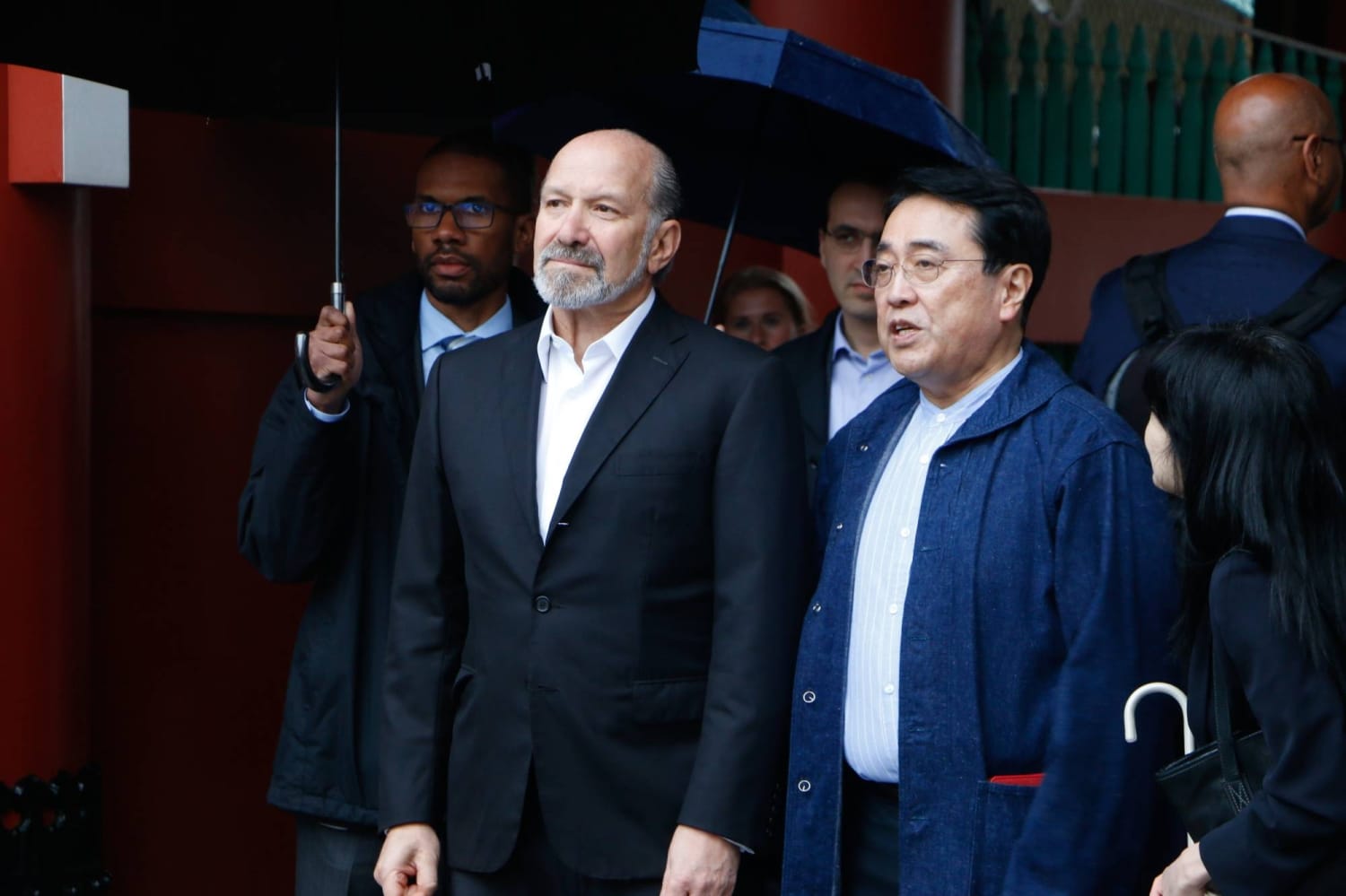
    Japan and the United States convened their second high-level consultation committee meeting on Tuesday, signaling renewed momentum in deploying a landmark $550 billion Japanese investment pledge that anchors the allies’ hard-won trade agreement. The two-hour virtual session, co-chaired by Japanese Economy, Trade and Industry Minister Ryosei Akazawa, U.S. Commerce Secretary Howard Lutnick, and U.S. Energy Secretary Chris Wright, focused on expediting project selections, with officials pledging to announce the inaugural initiative “as soon as possible,” according to a statement from Japan’s Ministry of Economy, Trade and Industry (METI).

    The gathering builds on the panel’s inaugural online meeting last week, where representatives from Japan’s foreign, trade, and finance ministries joined U.S. counterparts from the Commerce and Energy Departments to exchange views on potential investments. Energy projects emerged as early frontrunners, with sources familiar with the discussions indicating a handful under review for priority funding. Recommendations from the consultation committee will feed into an investment panel chaired by Lutnick, culminating in final approvals by President Donald Trump—a structure that underscores Washington’s directive role in allocating the funds.

    This accelerated pace reflects mounting pressure to operationalize the pledge, formalized in a September memorandum of understanding (MOU) following July’s framework accord. The $550 billion commitment—upped from an initial $400 billion discussion at Trump’s insistence—secured Japan’s relief from steep U.S. tariffs, capping duties at 15% on automobiles and most goods after an earlier spike to 25%. Non-compliance risks penalty clauses, including tariff hikes, potentially unraveling the deal and exposing Tokyo to renewed trade friction.

    Target sectors span strategic priorities: semiconductors, pharmaceuticals, critical minerals, metals, shipbuilding, energy, artificial intelligence, and quantum computing. Financing will flow through project-by-project commitments, leveraging institutions like the Japan Bank for International Cooperation (JBIC) and Nippon Export and Investment Insurance (NEXI) for equity, loans, and guarantees. Investments must materialize by January 19, 2029—the end of Trump’s term—aligning with his administration’s push to revitalize U.S. industrial capacity and bolster supply chains amid global competition, particularly from China.

    More from Economics

    Market reactions have been muted but positive. The Nikkei 225 edged up 0.4% on Wednesday, buoyed by clarity on tariff stability, while U.S. futures showed modest gains in chip and energy stocks. Analysts at Nomura Securities project the fund could inject $100-150 billion annually into U.S. infrastructure, creating hundreds of thousands of jobs in swing states—a political windfall for Trump. However, skeptics note execution hurdles: Japan’s characterization of the pledge as facilitated private-sector flows contrasts with U.S. portrayals of direct government-directed capital, potentially complicating disbursements.

    The process traces to Trump’s October visit to Tokyo, where an initial project shortlist was floated. Early contenders include LNG terminals, rare earth processing facilities, and semiconductor fabs—areas ripe for de-risking U.S. dependencies. “This isn’t charity; it’s mutual security,” Lutnick remarked in a recent CNBC interview, emphasizing profit-sharing tilted heavily toward America post-recoupment (90-10 split).

    For Japan, already the largest foreign investor in the U.S. with over $800 billion in holdings, the pledge reinforces alliance ties while mitigating tariff pain on exporters like Toyota and Sony. Yet, domestic critics decry it as concessional, with opposition lawmakers questioning the fiscal burden amid Japan’s aging demographics and debt load.

    As the committee eyes a third session next week and potential Trump sign-offs in early 2026, the initiative tests the Trump administration’s dealmaking prowess. Success could blueprint similar pacts with other trading partners; delays risk reigniting trans-Pacific tensions in an era of reshoring and economic nationalism.