Category: Rare Earth Elements

  • Trump Imposes 100% Tariff on China Over Rare-Earth Restrictions

    Trump Imposes 100% Tariff on China Over Rare-Earth Restrictions

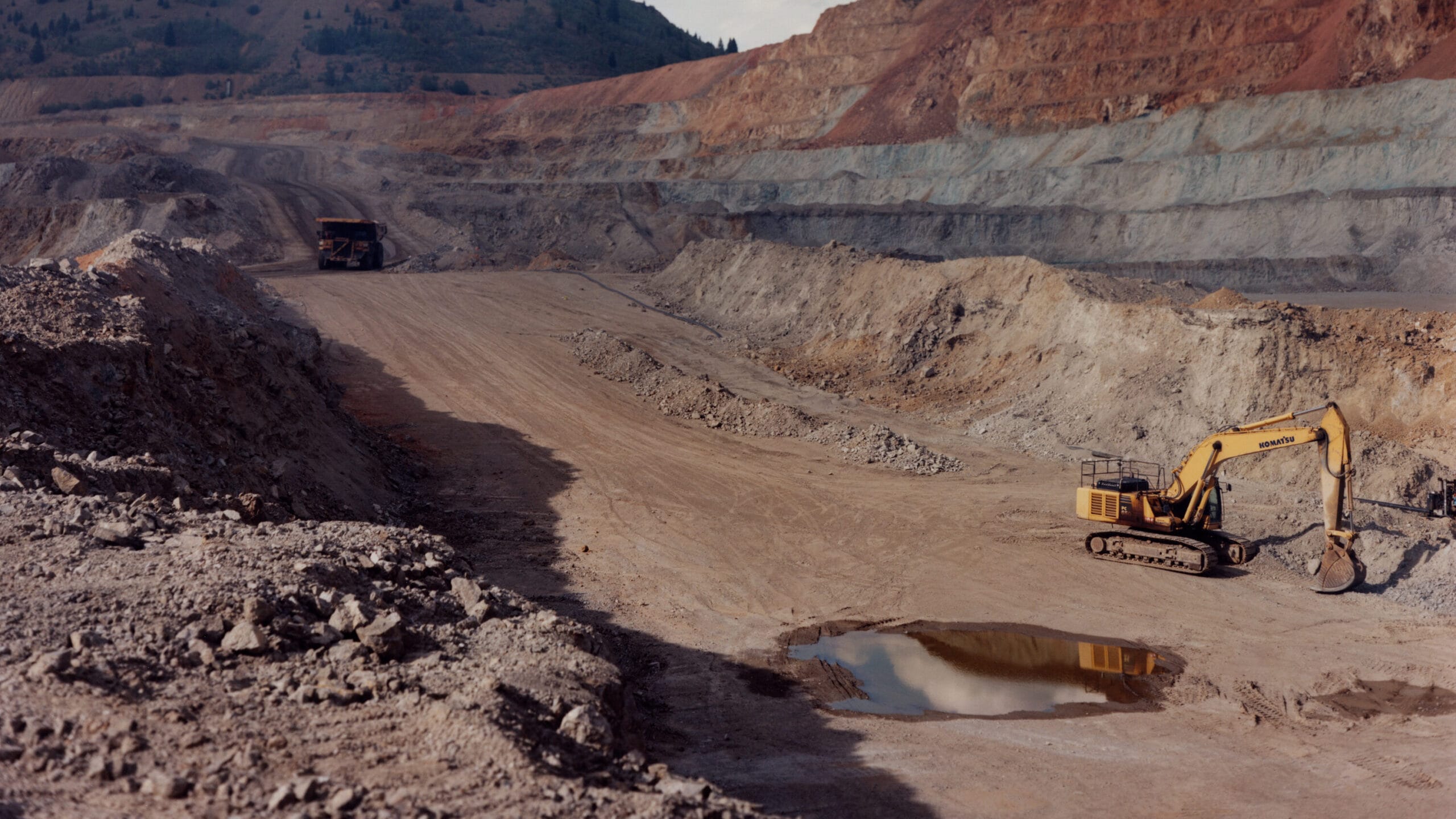
    China Dominates the Rare Earths Market. This U.S. Mine Is Trying to Change That. © Bridget Bennett for Poltico

    President Donald Trump announced on Friday that the United States will slap an additional 100% tariff on all Chinese imports starting November 1, on top of existing duties, while imposing sweeping export controls on “any and all critical software.” The move, framed as retaliation for Beijing’s recent tightening of export restrictions on rare earth elements, sent shockwaves through global markets, wiping out nearly $2 trillion in stock value and reigniting fears of a full-blown decoupling between the world’s two largest economies. With bilateral trade already strained by springtime tariff spikes that peaked at 145% on U.S. goods into China, Trump’s latest salvo—potentially pushing effective rates above 130%—threatens to upend supply chains for everything from semiconductors to electric vehicles, at a time when the global rare earth market is forecasted to exceed $6 billion annually by decade’s end.

    Trump’s announcement, delivered via a series of fiery Truth Social posts and reiterated during an Oval Office press availability, accused China of a “sinister and hostile” strategy to hold the world “hostage” through its dominance in rare earths—a group of 17 metals vital for high-tech manufacturing, defense systems, and green energy technologies. “It is impossible to believe that China would have taken such an action, but they have, and the rest is History,” Trump wrote, vowing that the tariffs could arrive “sooner” if Beijing escalates further. He also hinted at broader U.S. countermeasures, including restrictions on airplane parts and other exports, noting China’s reliance on Boeing components. The president stopped short of confirming the cancellation of his planned meeting with Chinese President Xi Jinping at the Asia-Pacific Economic Cooperation (APEC) summit in South Korea later this month, but earlier posts declared “no reason” for the sit-down, citing the “extraordinarily aggressive” timing of China’s moves—just days after a U.S.-brokered Middle East ceasefire.

    Beijing’s Rare Earth Gambit: A Calculated Squeeze on Global Supply Chains

    China’s actions, unveiled by the Ministry of Commerce on October 9, mark a significant hardening of its position in the ongoing trade skirmishes. Under “Announcement Number 61 of 2025,” Beijing expanded export licensing requirements to cover products containing more than 0.1% of rare earth elements sourced from China, even if manufactured abroad, effectively barring unlicensed shipments to foreign defense and semiconductor firms starting December 1. The curbs now encompass 12 of the 17 rare earths, including newly added holmium, erbium, thulium, europium, and ytterbium, alongside technologies for extraction, refining, and magnet production. Additional restrictions on lithium-ion batteries, graphite cathodes, and artificial diamonds take effect November 8.

    These measures build on decades of state-backed dominance: China controls 61% of global rare earth mining and a staggering 92% of refining capacity, per the International Energy Agency, fueled by subsidies that have undercut competitors worldwide. Rare earths are indispensable for neodymium-iron-boron magnets in EV motors, fighter jet engines, and smartphone vibrators—sectors where U.S. firms like Tesla, Lockheed Martin, and Apple are heavily exposed. Analysts at the Center for Strategic and International Studies warn that the restrictions could disrupt U.S. defense supply chains, echoing 2010 when Beijing briefly cut off exports to Japan over territorial disputes. “This isn’t just trade policy; it’s economic warfare aimed at critical vulnerabilities,” said Dr. Elena Vasquez, a trade economist at the Peterson Institute for International Economics.

    The timing appears deliberate, coming amid fragile progress in U.S.-China talks. After tit-for-tat hikes earlier this year drove tariffs to extreme levels—145% on U.S. imports to China and 125% in reverse—the two sides agreed in May to slash rates to 30% and 10%, respectively, pausing 24% of levies until November 10. Positive negotiations in Switzerland and the U.K. had raised hopes for a broader deal, but Beijing’s rare earth letter—sent to trading partners worldwide—has derailed that momentum. Trump decried it as a “moral disgrace” and a long-planned “lie in wait,” while posts on X from industry insiders echoed the surprise: “China’s rare earth curbs hit like a gut punch—right when talks were thawing,” one analyst tweeted.

    Trump’s response was swift and unyielding. In his initial Truth Social broadside, he lambasted Beijing for “clogging global markets” and provoking “trade hostility” that has drawn ire from allies like the EU and Japan. The 100% tariff—layered atop the current 30% effective rate on $438.9 billion in annual Chinese imports—could add $439 billion in costs to U.S. businesses and consumers if fully implemented, according to Wells Fargo economists. Coupled with export controls on critical software—potentially targeting AI tools, cybersecurity suites, and enterprise systems from firms like Microsoft and Oracle—the measures aim to mirror China’s leverage in minerals with America’s edge in tech.

    During a White House meeting on drug pricing, Trump doubled down, telling reporters the curbs were “shocking” and “very, very bad,” affecting “all countries without exception.” He floated expanding restrictions to “a lot more” items, including aviation parts, given China’s fleet of over 1,000 Boeing aircraft. On the Xi summit, Trump hedged: “I don’t know if we’re going to have it… but I’m going to be there regardless.” Earlier, he had signaled outright cancellation, writing, “now there seems to be no reason to do so.” Beijing has yet to respond formally, but state media like Global Times called the tariffs “economic bullying,” while separately imposing port fees on U.S. ships in retaliation for American “discriminatory” docking charges.

    The broader U.S.-China economic ties add layers of complexity. Last year, China ranked as the third-largest U.S. trading partner, with a $295.4 billion deficit. Ongoing flashpoints include TikTok’s U.S. operations—requiring Beijing’s blessing for a ByteDance divestiture—and visa restrictions on Chinese students. Trump’s moves could jeopardize these, even as they bolster his domestic base ahead of midterms.

    Market Mayhem: Stocks Plunge, Safe Havens Surge Amid Trade Fears

    Inline Market Movers

    Wall Street’s reaction was visceral. The S&P 500 .SPX -2.70% ▼ cratered 2.7% on Friday, shedding Dow Jones Industrial Average .DJI -2.25% ▼ 878 points, while the Nasdaq Composite .IXIC -3.60% ▼—its worst day since March—as tech giants like Nvidia NVDA -6.00% ▼ and Apple AAPL -4.00% ▼, reliant on Chinese rare earths for chips and devices, bore the brunt. The sell-off erased $1.9 trillion in market cap, with X users dubbing it “the day markets fell” amid a “perfect storm” of U.S. shutdown fears, tariff threats, and Fed signaling confusion. Crypto markets fared worse: Bitcoin BTC -7.50% ▼, Ethereum ETH -12.00% ▼, and liquidations hit $19 billion, per SoSoValue data, as leveraged longs unwound en masse.

    Safe havens rallied. Gold surged 2.1% to $2,650 per ounce, while U.S. rare earth miners like MP Materials jumped 8%, buoyed by prospects of domestic substitution. Globally, the Shanghai Composite dipped 1.9%, and the Hang Seng fell 2.4%, reflecting spillover risks. Semiconductor firms like ASML braced for fallout, with shares down 4.2%, as China’s curbs threaten the $500 billion chip industry’s raw materials.

    Economists warn of deeper scars. The global rare earth market, valued at $3.95 billion in 2024, is projected to hit $6.28 billion by 2030 at an 8% CAGR, driven by EV and renewable demand—but tariffs could inflate prices 20-30%, per Grand View Research. U.S. consumers might face $1,000 annual household cost hikes, akin to 2018’s trade war, while exporters like Boeing could lose $10 billion in orders. “This risks a vicious cycle: higher costs, slower growth, and fragmented innovation,” said JPMorgan’s Michael Feroli.

    Economic Stakes: From EVs to National Security

    The rare earth flashpoint underscores the trade war’s evolution from tariffs to strategic chokepoints. China’s monopoly—forged through subsidies and lax environmental rules—has long irked Washington, prompting the CHIPS Act’s $52 billion in domestic incentives. Yet, U.S. refining capacity remains nascent, covering just 15% of needs. Trump’s software controls, meanwhile, target China’s AI ambitions, potentially stalling Huawei and Baidu’s advancements.

    For Beijing, the curbs safeguard “national security,” but they invite blowback. Exports of rare earths generated $5.2 billion last year; restrictions could shave 2% off GDP growth if retaliation spirals, per Oxford Economics. Allies like Australia and Canada, ramping up mines, stand to gain, but short-term disruptions loom for Europe’s auto sector, where 40% of EV magnets are Chinese-sourced.

    X chatter reflects the angst: “Trump’s tariff nukes markets—China’s rare earth play was checkmate,” one trader posted, while another quipped, “Trade war 2.0: Now with extra monopoly drama.” Broader ripple effects include a 0.5% hit to U.S. GDP in 2026, per Federal Reserve models, and stalled WTO reforms.

    As November 1 looms, the onus falls on diplomacy—or its absence. Trump’s APEC attendance keeps the Xi channel ajar, but observers like Al Jazeera’s Ahmed Fouad doubt a breakthrough: “Beijing’s holding aces in minerals; Washington in tech—stalemate seems likely.” A Reuters analysis pegs escalation odds at 60%, potentially costing $500 billion in lost trade.

    For businesses, the message is clear: Diversify now. “Potentially painful” in the short term, Trump insists, but “very good… for the U.S.A.” in the end. Yet, as markets reel and supply chains fray, the world watches a high-stakes poker game where both players hold loaded dice—and rare earths are the wild card.
  • USA Rare Earth: significant increase in customer demand, coinciding with a sharp rise in its stock value

    USA Rare Earth: significant increase in customer demand, coinciding with a sharp rise in its stock value

    Stock Widget

    USA Rare Earth USAR +23.20% ▲, a key player in the domestic rare earths and magnet production industry, is riding a wave of investor enthusiasm following a flurry of positive developments. The company reported its second-quarter 2025 financial results on August 12, 2025, and announced a new memorandum of understanding (MOU) with Enduro Pipeline Services, marking its 12th such agreement to date. These milestones, coupled with strong customer interest in its upcoming rare earth magnet production facility in Stillwater, Oklahoma, have propelled USAR shares up 23.2% as of 10:08 a.m. ET on August 13, recovering sharply from a 5% decline the previous day.

    USA Rare Earth, a key player in the domestic rare earths and magnet production industry, is riding a wave of investor enthusiasm following a flurry of positive developments. The company reported its second-quarter 2025 financial results on August 12, 2025, and announced a new memorandum of understanding (MOU) with Enduro Pipeline Services, marking its 12th such agreement to date. These milestones, coupled with strong customer interest in its upcoming rare earth magnet production facility in Stillwater, Oklahoma, have propelled USAR shares up 23.2% as of 10:08 a.m. ET on August 13, recovering sharply from a 5% decline the previous day. The surge underscores the market’s growing confidence in USA Rare Earth’s potential to address critical supply chain gaps in the U.S. amid rising geopolitical tensions and demand for rare earth magnets.

    USA Rare Earth is positioning itself as a cornerstone of America’s efforts to reduce reliance on foreign rare earth supplies, particularly from China, which dominates global production. The company’s flagship project, a rare earth magnet manufacturing facility in Stillwater, Oklahoma, is on track to begin production in the first quarter of 2026. This facility will produce neodymium-iron-boron (NdFeB) magnets, essential components in electric vehicles (EVs), wind turbines, aerospace, and defense applications. The strategic importance of domestic rare earth production has drawn significant attention, with posts on X highlighting USA Rare Earth as a “must-watch” stock in the context of U.S. supply chain resilience.

    The company’s announcement of 12 signed MOUs and joint development agreements, representing potential commitments for 300 tons of annual magnet production, signals robust demand. Joshua Ballard, CEO of USA Rare Earth, emphasized the momentum in a press release: “With a dozen initial signed agreements and active engagements with over 70 companies across multiple high-growth industries, we have the potential to sell out our first 1,200-ton production line prior to commissioning its full capacity.” The latest MOU with Enduro Pipeline Services, a provider of pipeline cleaning and inspection tools, further diversifies the company’s customer base, which already includes clients in aerospace, defense, and data sectors.

    Q2 2025 Financials: A Pre-Revenue Pivot Point

    As a pre-revenue company, USA Rare Earth’s Q2 2025 financial results, released after market close on August 12, 2025, offer limited traditional metrics for investors. The company reported a net loss of $142.7 million, compared to $2.8 million in the same quarter the previous year, primarily due to increased investment in its Oklahoma facility and operational scaling. However, its adjusted earnings per share of -$0.08 beat analyst expectations of -$0.10, providing a silver lining. The company also maintained a strong liquidity position, with $121.8 million in cash at the end of Q2, rising to $128.1 million as of August 7, 2025, and no debt on its balance sheet.

    While the lack of revenue may temper some investor enthusiasm, the market’s reaction suggests confidence in USA Rare Earth’s operational progress and strategic positioning. Posts on X reflect this sentiment, with one user noting, “$USAR’s cash position and customer deals make it a rare opportunity in a critical sector.” The company’s ability to secure agreements before production begins underscores its potential to capture a significant share of the domestic rare earth market, projected to grow to $5.6 billion by 2030 as demand for EVs and renewable energy surges.

    Market Dynamics: A Race for Rare Earth Dominance

    The rare earths market is at a critical juncture, driven by geopolitical tensions and the global push for clean energy. China currently controls approximately 80% of global rare earth production and over 90% of NdFeB magnet manufacturing, creating vulnerabilities for Western supply chains. U.S. efforts to bolster domestic production have gained urgency, particularly in light of export restrictions and high prices, as noted by industry analyst Scott Lincicome on X. USA Rare Earth’s Stillwater facility, one of the few domestic projects nearing completion, positions the company as a linchpin in these efforts.

    The company’s success in securing 12 MOUs, including the recent agreement with Enduro Pipeline Services, highlights its appeal across diverse industries. These agreements cover potential deliveries of magnets for applications ranging from EV motors to defense systems, reflecting the versatility of rare earth magnets. With active discussions ongoing with over 70 companies, USA Rare Earth is poised to sell out its initial 1,200-ton production line, a significant milestone for a facility still under construction.

    However, risks remain. The Stillwater plant’s completion and operational success are not guaranteed, and any delays could dampen investor confidence. Additionally, the company faces competition from other domestic players like MP Materials and global producers in Australia and Canada. Despite these challenges, USA Rare Earth’s focus on vertical integration—from mining at its Round Top deposit in Texas to magnet production in Oklahoma—gives it a unique edge in controlling the entire supply chain.

    The 23.2% surge in USAR shares on August 13 reflects investor optimism about the company’s trajectory, but potential investors should approach with caution. As a pre-revenue company, USA Rare Earth carries inherent risks, particularly given the capital-intensive nature of its operations. The Stillwater facility’s construction and the company’s ability to meet its Q1 2026 production timeline will be critical tests. Delays or cost overruns could pressure the stock, which has already experienced volatility, as evidenced by the 5% drop on August 12.

    On the upside, USA Rare Earth’s strategic importance in the U.S. supply chain revolution cannot be overstated. The company’s Round Top deposit, which has successfully extracted gallium and heavy rare earth concentrates, positions it to supply critical materials for both civilian and defense applications. Posts on X from users like @financefelix have called USA Rare Earth “the most undervalued play in America’s supply chain revolution,” citing its potential to capitalize on the growing demand for rare earths in EVs, wind turbines, and defense systems.

    Analysts remain cautiously optimistic. “USA Rare Earth is well-positioned to benefit from the push for domestic supply chains, but execution is everything,” said Sarah Thompson, a metals and mining analyst at Bernstein Research. “The MOUs are a strong signal of demand, but investors should monitor construction progress and the company’s ability to scale production.” The absence of debt and a healthy cash reserve provide a buffer, but the company’s path to profitability will depend on its ability to deliver on its ambitious timeline.

    Geopolitical and Economic Context

    The surge in customer interest comes against a backdrop of heightened U.S.-China tensions over critical minerals. Recent export restrictions from China have driven up rare earth prices, creating opportunities for domestic producers like USA Rare Earth. The Biden administration’s focus on securing critical supply chains, coupled with incentives under the Inflation Reduction Act, has provided tailwinds for the company. Additionally, the Department of Defense has expressed interest in domestic rare earth suppliers to reduce reliance on foreign sources for military applications, further boosting USA Rare Earth’s strategic relevance.

    The company’s progress also aligns with broader market trends. The global rare earth magnet market is expected to grow at a compound annual growth rate of 7.5% through 2030, driven by demand for EVs and renewable energy technologies. USA Rare Earth’s ability to secure contracts before production begins positions it to capture a significant share of this market, particularly as Western companies seek alternatives to Chinese suppliers.

    As USA Rare Earth approaches its Q1 2026 production milestone, the company faces a pivotal year. The successful commissioning of the Stillwater facility could cement its position as a leader in the U.S. rare earth industry, while any setbacks could erode investor confidence. The 12 MOUs and ongoing discussions with over 70 companies signal strong market demand, but execution will be key to translating this interest into revenue.

    For now, the market’s enthusiasm is palpable, with USAR shares reflecting the potential of a company at the forefront of a critical industry. As the U.S. seeks to rebuild its rare earth supply chain, USA Rare Earth’s progress offers a glimpse of what’s possible—but also a reminder of the challenges ahead in a high-stakes, geopolitically charged market.