Category: Cars

  • Tesla’s Board Chairman Made $198 Million Selling Shares While Profit Dropped

    Tesla’s Board Chairman Made $198 Million Selling Shares While Profit Dropped

    In March, after a steep decline in Tesla’s share price, Elon Musk told employees, “Hang on to your stock.”

    The chair of Tesla’s board, Robyn Denholm, has not heeded his advice. Ms. Denholm has made $198 million in the past six months selling Tesla stock that she earned for serving on the board, according to a New York Times analysis of securities filings.

    That brings her total profit on the sale of Tesla stock to more than $530 million since becoming the board’s leader in late 2018, far more than her peers have made at the most valuable U.S. companies during that time, the analysis shows.

    The share sales raise questions about Ms. Denholm’s confidence in Tesla’s prospects. Her most recent sales, executed under a prearranged trading plan filed last summer, came as Mr. Musk, the company’s chief executive, took a time-consuming role in the Trump administration. Tesla’s car sales have plunged partly because Mr. Musk’s political activities have turned off some car buyers. The company’s quarterly profit fell in the first three months of 2025 to its lowest level in four years.

    Ms. Denholm earned the right to buy those shares, known as stock options, for serving on the board, a part-time position. Tesla granted the options between 2014 and 2020, and its share price has soared since then, giving Ms. Denholm the right to buy shares for a lot less than their current price. Last week, for example, she bought more than 112,000 shares for $24.73 apiece and sold them the same day for more than $270.

    Stock Sales Aligned With Surging Share Prices

    Robyn Denholm filed a stock sale plan soon after Elon Musk endorsed Donald Trump for president. The first sale came the week after Mr. Trump was elected.

    “To dump her stock, it doesn’t send a message that this is a board chair who is invested in the future of the company,” said the New York City comptroller, Brad Lander, who oversees the city’s five public pension funds. As of March, those funds held more than three million Tesla shares, valued at the time at roughly $817 million.

    A spokesman for Ms. Denholm said Tesla paid board members in a manner that was “completely aligned with shareholder interests.”

    “The reason the value of the Tesla directors’ options has increased is because Tesla has outperformed its industry peers and created outsized returns for the owners of the company, the shareholders,” he said in a statement.

    Stock options, which for years made up the bulk of Tesla directors’ compensation, are valuable only if the company’s share price rises, as Tesla’s did. Those who exercise their options to buy company stock can sell or hold on to their new shares.

    Ms. Denholm has sold more than 1.4 million Tesla shares and continues to hold 85,000 of them and roughly 49,000 stock options, according to the Times analysis. Equilar, a compensation research firm, reviewed the methodology. Her latest wave of stock sales were carried out under the plan she set into motion in July, soon after Mr. Musk endorsed Donald J. Trump for president.

    Under securities regulations, executives and other insiders can use such plans to trade shares in their companies. They are not required to disclose many details of their plans, including the reason for them or the conditions under which shares will be sold. They also have a lot of leeway to cancel the plans.

    A native of Australia and veteran technology executive, Ms. Denholm has maintained a low profile and rarely speaks publicly about Tesla or Mr. Musk. She was recruited to the Tesla board in 2014 and appointed chair in 2018 after Mr. Musk agreed to step down from the position under a settlement with the Securities and Exchange Commission.

    She and other board members have been criticized by some investors, activists and a Delaware judge for not serving as counterweights to Mr. Musk, who is widely seen as brash and impulsive. Tesla directors have also been faulted for failing to ensure that he remains focused on Tesla.

    “Musk operates as if free of board oversight,” Chancellor Kathaleen St. J. McCormick of the Delaware Court of Chancery wrote last year when she ruled in favor of a shareholder who had challenged Mr. Musk’s 2018 pay package, valued at around $56 billion. Judge McCormick, in that ruling, described Ms. Denholm’s style of overseeing Mr. Musk as “lackadaisical.”

    Tesla has appealed the decision, which voided Mr. Musk’s pay package, and Ms. Denholm has pushed back on Judge McCormick’s critique.

    “Anybody who knows me, knows that I am not lackadaisical, now that I know what that word means,” Ms. Denholm told The Financial Times last year. “It is probably the furthest from the truth. I am really intense and very diligent in what I do.”

    During the trial over Mr. Musk’s pay, Ms. Denholm described the money she had made from her Tesla board service as “life-changing.” Director pay at Tesla was subject to a separate lawsuit that Ms. Denholm and other board members settled in 2023.

    Mr. Musk, who has long been a part-time chief executive of Tesla, has taken on even more responsibilities over the years. He has become a regular presence in Washington, leading President Trump’s efforts to slash government spending and dismiss federal government employees.

    Mr. Musk said recently he would cut back his time in Washington to one or two days a week. His attention is likely to remain divided, however, because he also leads several other businesses, including SpaceX and X, the social media site he owns.

    Ms. Denholm’s first sales under her recent trading plan took place in November, the week after the presidential election, as Tesla’s share price was climbing. The stock reached a new high a few weeks later, in December. She continued to sell through early May, as the company faced consumer backlash over Mr. Musk’s political activities and the stock price fell.

    The stock is now down around 34 percent from its peak after recovering some of its losses over the last few weeks.

    Mr. Musk acknowledged Tesla’s difficulties during a meeting with company employees in March. “If you read the news it feels like, you know, Armageddon,” he said half-jokingly.

    He went on to advise workers not to sell their stock, saying Tesla would become the most valuable company in the world as it perfected self-driving taxis and robots that resembled and moved like humans. “The future is incredibly bright,” he said.

    Ms. Denholm’s sales have far outstripped those by other Tesla directors, with the exception of Mr. Musk, who remained on the board after stepping down as chair.

    She and other current and former Tesla board members agreed to settle a shareholder lawsuit over their pay in 2023, collectively agreeing to return compensation valued at $735 million. They denied wrongdoing. Stock options valued at more than $130 million were canceled on May 1 to satisfy Ms. Denholm’s obligations under that settlement, securities filings show.

    Board members agreed in June 2021, after that lawsuit was filed, to forgo new equity grants.

    Ms. Denholm also made more money selling her company’s stock than the leaders of other corporate boards during the same period. The Times reviewed stock sales by board chairs at the most valuable U.S. companies who, like Ms. Denholm, are not executives at those companies.

    The nonexecutive chair with the next-highest profit from selling shares in the company he oversees was Stephen Hemsley of UnitedHealth Group. Mr. Hemsley has earned more than $100 million from the sale of UnitedHealth shares since November 2018, though he received all of that stock while he was chief executive of the health care company.

    UnitedHealth Group confirmed the findings, but declined to comment. On Tuesday, the company announced that Mr. Hemsley would retake the chief executive job in addition to serving as chairman.

    Share sales by executives and directors often predict poor performance by the companies they lead, some academic research has found.

    Leaders like Ms. Denholm have access to nonpublic information and a deep understanding of how broader economic forces may affect company performance. That can make their trades especially profitable, according to Nejat Seyhun, a professor of finance at the University of Michigan.

    Insiders “set up plans when they have information,” Professor Seyhun said. If conditions change, “they can cancel those plans.”
  • The world’s largest automaker reports a 21% profit drop as tariffs take a toll

    The world’s largest automaker reports a 21% profit drop as tariffs take a toll

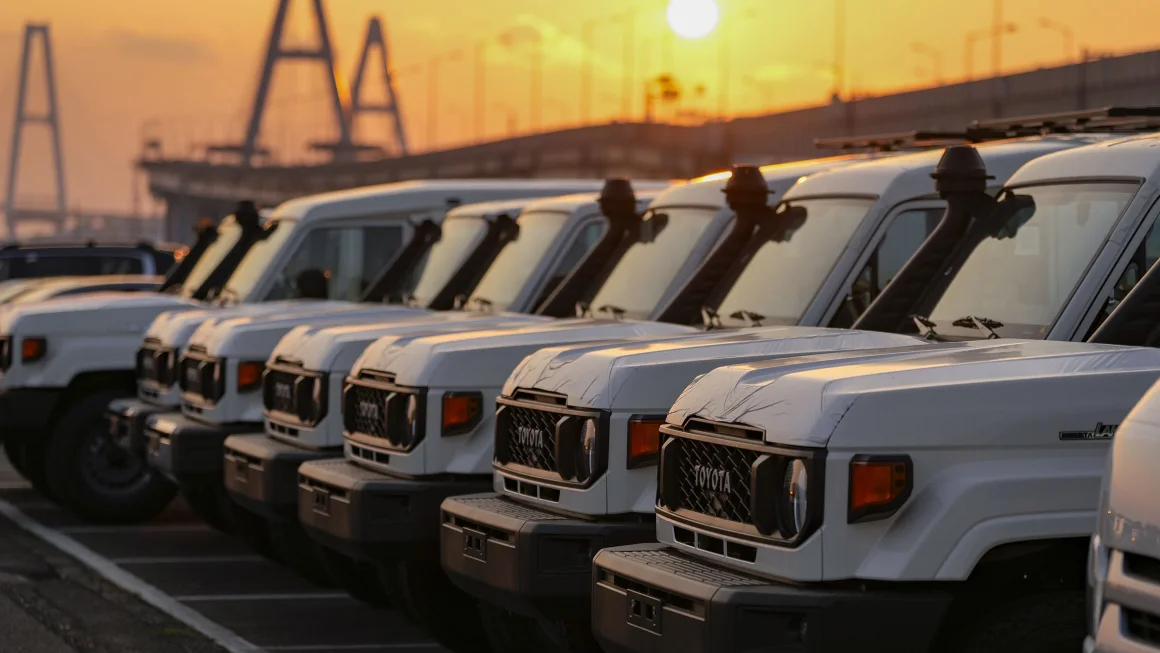
    Toyota Motor forecast a 21% profit decline for the current financial year on Thursday, as the strain from US President Donald Trump’s tariffs and an appreciating yen take some of the shine off strong demand for hybrid vehicles.

    The world’s top-selling automaker expects operating income to total 3.8 trillion yen ($26 billion) in the year to March 2026, versus 4.8 trillion yen in the financial year that just ended. That was roughly in line with the 4.75 trillion yen average of 25 analysts surveyed by LSEG.

    Toyota faces the risk of being hit by widespread fallout from Trump’s tariffs, not only from the impact on its US-bound exports but also because of the potential for a downturn in consumer sentiment in the US and elsewhere. Price rises can lead to a decline in consumer sentiment.

    The lower profit for the coming year was due to the negative impact from a stronger yen, as well as higher material prices and the impact of tariffs, Toyota said in a presentation.

    Like other global automakers doing business in the world’s top economy, Toyota could face high labor costs and be forced to spend more on investment, if it decides to expand its US production base further.

    While Toyota has seen its vehicle sales in China fall less than other Japanese automakers, it has still struggled to halt a sales decline in the world’s biggest auto market amid heavy competition from Chinese brands.

  • Tesla Resolves Lawsuit from Black Worker Claiming Widespread Harassment

    Tesla Resolves Lawsuit from Black Worker Claiming Widespread Harassment

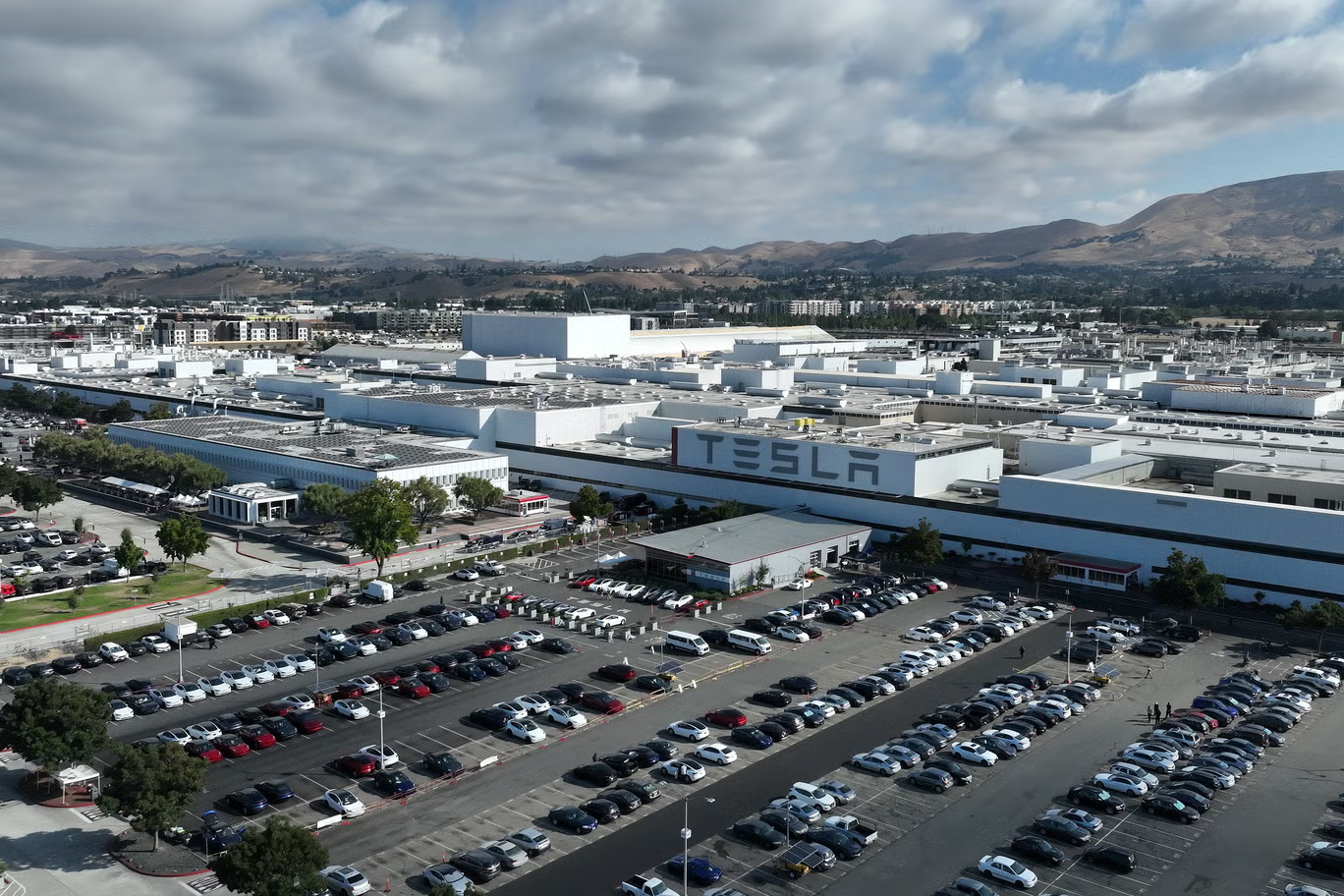
    Tesla has settled a racial discrimination lawsuit by a Black female employee who claimed a manager at its Fremont, California, plant sometimes greeted workers by saying “welcome to the plantation” or “welcome to the slave house.”

    Raina Pierce, who installed latches on car doors, and the automaker led by billionaire Elon Musk agreed to a settlement proposed by a mediator, according to a joint filing Thursday in San Francisco federal court.

    Terms were not disclosed, and both sides are finalizing a settlement agreement, the filing said.

    Lawyers for Pierce and Tesla did not immediately respond to requests for comment. Musk is not a defendant.

    Pierce said she was subjected to pervasive harassment, including a common racial slur she said was scrawled throughout the plant including in bathrooms, and a gender-based insult.

    She also said she was yelled at or disciplined for conduct for which non-Black workers were excused.

    Pierce’s complaint quotes a Tesla employee who temporarily joined her production line and said, “Ma’am, you need to go to HR because these leads are saying things about you that are not right.”

    Tesla has faced other accusations of racial discrimination and harassment at the Fremont plant.

    One plaintiff, elevator operator Owen Diaz, settled in March 2024 for undisclosed terms after a $3.2 million jury verdict. Another jury had awarded Diaz $137 million in 2021, but the case was retried after he rejected a lower sum the judge proposed.

  • Hertz Stock Soars 56% After Billionaire Investor Bill Ackman Reveals His Stake

    Hertz Stock Soars 56% After Billionaire Investor Bill Ackman Reveals His Stake

    Share prices of Hertz surged 56% after billionaire investor Bill Ackman’s firm disclosed a stake in the car rental company.

    Pershing Square Capital Management said in a regulatory filing on Wednesday that it had acquired 12.7 million shares valued at $46.5 million. Pershing Square owns 4.1% of Hertz, making it the third-largest investor after Knighthead Capital Management and BlackRock, according to LSEG data.

    CNBC reported on Wednesday that Pershing Square’s purchase — which includes shares and swaps — took its Hertz holdings to about 19.8%

    Hertz shares closed 56.4% higher at $5.71 apiece on Wednesday and were up 33.8% in after-hours trade. The stock was little changed this year before Pershing Square’s disclosure.

    Even though Hertz’s gains on Wednesday were massive, the car rental company’s stock isn’t a stranger to such eye-watering jumps.

    In summer 2020, Hertz’s shares surged over 800% in weeks after filing for pandemic-induced Chapter 11 bankruptcy protection — making it the original meme stock.

    It exited Chapter 11 bankruptcy in 2021 and started investing heavily in electric vehicles, including a plan to buy 100,000 Teslas.

    However, the company started backtracking on its EV plan due to the cost of maintenance and repairs for the cars. Used EV prices have also been falling sharply.

    Hertz was selling a significant number of its EVs by 2024 and was even asking customers if they wanted to buy the vehicles.

    The failed bet on EVs showed up in earnings. Vehicle depreciation cost Hertz a $1 billion non-cash impairment charge in the third quarter.

    Pershing Square did not immediately respond to Business Insider’s request for comment sent outside regular business hours.

  • Trump’s Tariffs Are Already Reducing Car Imports and Idling Factories

    Trump’s Tariffs Are Already Reducing Car Imports and Idling Factories

    A few carmakers have closed factories, laid off workers or shifted production in response to the auto tariffs that took effect last week.

    President Trump’s 25 percent tariffs on imported vehicles, which went into effect last week, are already sending tremors through the auto industry, prompting companies to stop shipping cars to the United States, shut down factories in Canada and Mexico and lay off workers in Michigan and other states.

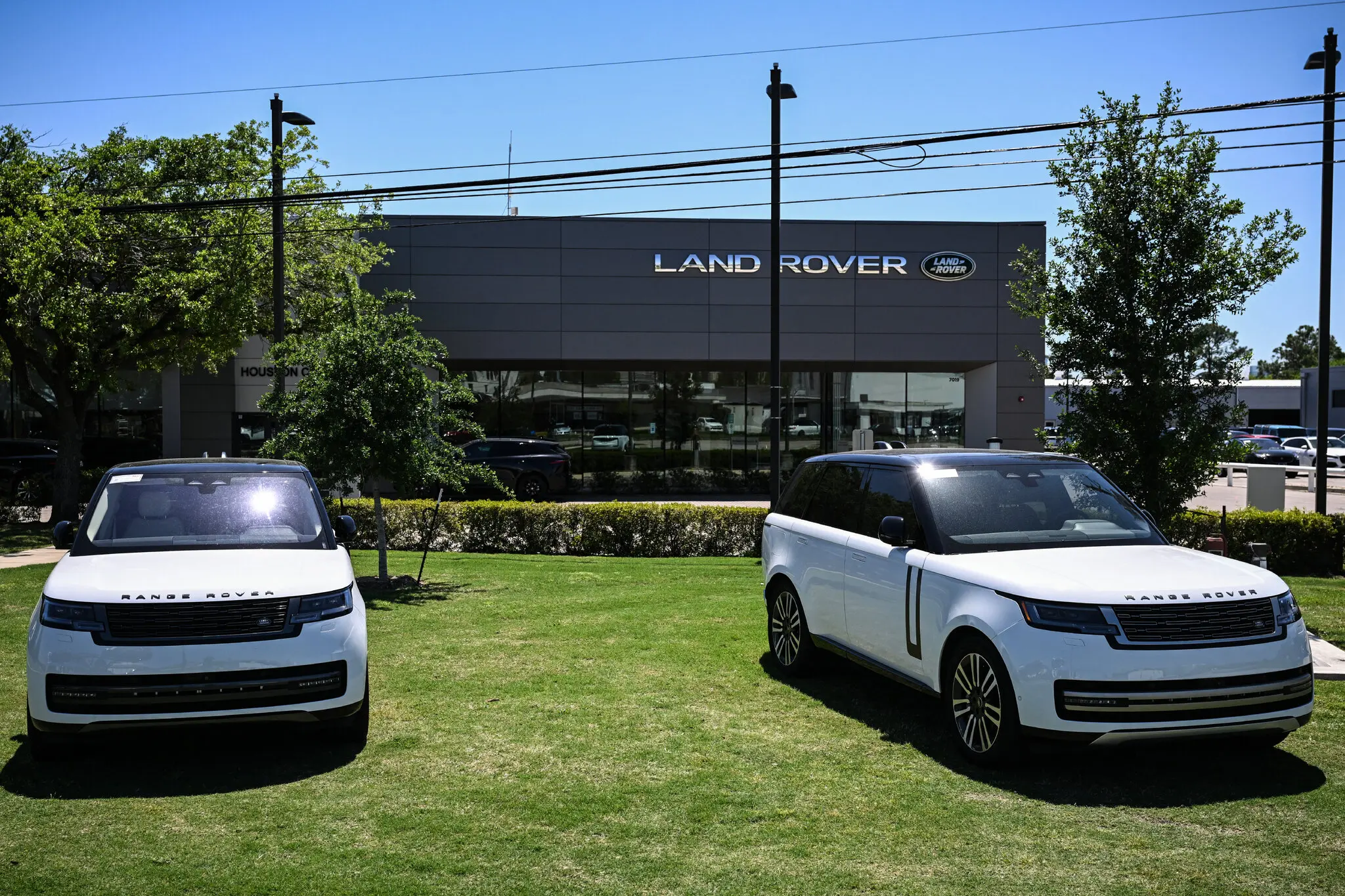
    Jaguar Land Rover, based in Britain, said it would temporarily stop exporting its luxury cars to the United States. Stellantis idled factories in Canada and Mexico that make Chrysler and Jeep vehicles and laid off 900 U.S. workers who supplied those factories with engines and other parts.

    Audi, the luxury division of Volkswagen, also paused exports of cars to the United States from Europe, telling dealers to sell whatever they still had on their lots.

    If other carmakers make similar moves, the economic impact could be severe, leading to higher car prices and widespread layoffs. The tariffs on cars are among the first of several industry-specific levies that Mr. Trump has in his sights and could offer early clues about how businesses will respond to his trade policies, including whether they raise prices or increase manufacturing in the United States. The president has said he also wants to tax the imports of medicines and computer chips.

    Applying the new tariff to imported cars could increase their cost to consumers by thousands of dollars, sharply reducing demand for those vehicles. For some Jaguar Land Rover or Audi models, the tariffs could amount to more than $20,000 per car.

    While much of the initial impact of the tariffs has been disruptive, in at least one case Mr. Trump’s duties have had the intended effect of increasing production in the United States. General Motors said late last week that it would increase production of light trucks at a factory near Fort Wayne, Ind.

    The longer-term impact of the 25 percent tariffs is unclear. Many automakers are still trying to figure out how to avoid increasing prices so much that consumers can no longer afford new cars. Investors are pessimistic. Shares of Ford Motor, G.M. and Tesla have fallen in the past several days of trading.

    “Everyone in the automotive supply chain is focused on what they can do to minimize the tariff impact to their own balance sheets and to prices,” said Kevin Roberts, director of economic and market intelligence at CarGurus, an online shopping site.

    But carmakers have never before had to deal with the imposition of such high tariffs with such little notice. Nor have they had as little insight into what the president will do next, analysts and dealers said.

    “The traditional playbook is not enough,” said Lenny LaRocca, who leads the auto industry team at the consulting firm KPMG.

    Mr. LaRocca predicted that automakers would increasingly focus on producing larger, heavier sport utility vehicles and pickup trucks. Those vehicles, many of which are assembled in U.S. factories, are usually the most profitable and give companies more room to absorb the cost of tariffs rather than passing it on to customers.

    Many modern assembly lines are able to produce several models, giving companies flexibility to shift to the most profitable vehicles and to abandon vehicles that don’t make as much money. Mercedes-Benz has said it will take advantage of flexible assembly lines at its factory in Alabama.

    This strategy comes with downsides. It may be harder for car buyers to find moderately priced new cars. Already, the average price of a new car is almost $50,000.

    Analysts say this much is clear: Tariffs will not prompt companies to open new factories or reopen closed plants right away. Companies won’t take that expensive step until they are sure that the tariffs are permanent and that investing hundreds of millions — or billions — of dollars in new production capacity will pay off.

    “I haven’t seen any big moves,” Mr. LaRocca said. “It’s wait and see.”

    A Stellantis assembly plant in Toluca, Mexico. The automaker idled factories in Canada and Mexico that make Chrysler and Jeep vehicles and laid off 900 U.S. workers who supplied those factories with engines and other parts.Credit…Henry Romero/Reuters

    Some carmakers and suppliers expanded their U.S. operations before Mr. Trump took office. Often, they were reacting to the coronavirus pandemic, when it became risky to rely on distant factories for critical parts. Others made big investments in factories that make electric vehicles or E.V. batteries to take advantage of incentives offered by the Biden administration.

    ZF, a German parts maker, spent $500 million last year to expand a factory in South Carolina that produces transmissions for BMW and other automakers. And in recent years G.M. has opened two U.S. battery factories with a South Korean partner, LG Energy Solution, to make the most important component of electric vehicles.

    In the short run, some foreign carmakers may simply stop sending vehicles to the United States, either because they can no longer make a profit or because they can make more money elsewhere. That may be the case with Jaguar Land Rover. The company, known for luxury sport utility vehicles made in Britain, sells about one-fifth of its cars in the United States.

    If other companies stop selling certain models to Americans, consumers will have fewer vehicles to choose from and the remaining automakers will have more leeway to raise prices.

    So far, however, the tariffs have not led to widespread price increases for new cars. Hyundai Motor said last week that it would not raise the manufacturer’s suggested retail price of Hyundai and Genesis cars until June 2.

    Of course, car dealers can raise prices even if an automaker pledges not to. That happened a lot during the pandemic, when shortages of computer chips and other parts limited the supply of new vehicles.

    Dealers and automakers have reported brisk sales in recent days as people have rushed to buy vehicles before the tariffs took effect. The average time that a vehicle spent on the lot fell from 77 days at the end of January to fewer than 50 days at the beginning of April, according to CarGurus.

    Demand has been especially high for Japanese brands like Honda, Subaru and Nissan, apparently because buyers assume they are imported, said Sean Hogan, the vice president of Sierra Auto Group, which owns a dozen dealerships in Southern California. All three Japanese companies have factories in the United States, though they do import some cars.

    Another tariff shock will come on May 3, when the Trump administration will apply tariffs to auto parts. That means that even cars made in the United States will be affected because virtually all vehicles contain components from abroad. Repairs will also become more expensive.

    “The educated public is definitely making some moves to get ahead of the tariffs, which I think is smart,” Mr. Hogan said.

    But the long-term impact of Mr. Trump’s trade policies is still impossible to predict, he said. “This administration moves pretty fast, and you really don’t know what’s going to happen next,” Mr. Hogan added. “Buckle up.”