Category: Software

  • Salesforce CEO Marc Benioff states that AI is handling up to half of the company’s workload

    Salesforce CEO Marc Benioff states that AI is handling up to half of the company’s workload

    Salesforce is accelerating its use of artificial intelligence in automating workloads, according to CEO Marc Benioff.

    “All of us have to get our head around this idea that AI could do things, that before, we were doing, and we can move on to do higher-value work,” he said in an interview with Bloomberg, noting that the technology currently accounts for about 30% to 50% of the company’s work.

    Technology companies are hunting for new ways to trim costs, boost efficiencies and transform their workforce with the help of AI.

    The aftershocks have already hit the tech industry, with the software giant cutting more than 1,000 positions earlier this year as it restructured around AI.

    Other technology companies have made similar moves, including cybersecurity giant CrowdStrike.

    Klarna CEO Sebastian Siemiatkowski said the company has shrunk its headcount by 40% due in part to AI investment, while Amazon CEO Andy Jassy said the e-commerce giant will use artificial intelligence to reduce roles.

    Benioff called the rise of AI in the workforce a “digital labor revolution,” estimating that the software company has reached about 93% accuracy with the technology.

    “It’s pretty good,” he said, but it’s not “realistic” to hit 100%. He added that other vendors are at “much lower levels because they don’t have as much data and metadata” to build higher accuracy.

  • The CEO of HubSpot says he avoids the anxiety of Sunday night by simply working through the weekend

    The CEO of HubSpot says he avoids the anxiety of Sunday night by simply working through the weekend

    We all know that familiar feeling of dread: setting our alarm clocks for Monday morning on Sunday evening, or even earlier in the day knowing your weekend of fun has come to an end.

    But HubSpot CEO Yamini Rangan knows no such feeling, she said in an episode of The Grit podcast published last week. That’s because she uses Sundays as her own personal work day. 

    “I’m not scared of Sundays. I enjoy it because it’s my time,” said Rangan, who helms the $34 billion software company. “I get to decide what I’m learning, what I’m doing, what I’m thinking, what I’m writing. It is completely my schedule.”

    Instead, Rangan—who said she struggles to sit still and take time away from work—carves out Friday night and all of Saturday to take a break. She spends this time going on walks with her husband Kash (a managing director with Goldman Sachs), doing yoga, meditating, and reading. 

    “Saturdays are precious to me,” Rangan said. “When I didn’t take breaks, I got burned out pretty quickly.” 

    HubSpot employees know Rangan won’t look at or respond to emails on Saturdays, but she’ll spend time on Sundays scheduling emails that hit inboxes in the wee morning hours on Mondays. 

    Rangan, who’s been with HubSpot for about five years now, typically starts her weekdays around 6 a.m. and is on work calls by 7 a.m. She says she will work as late as 11 p.m. 

    She joined the marketing software company right before the pandemic began as chief customer officer. The pandemic actually boded well for HubSpot as more and more companies started digitizing more of their processes and procedures. The company’s revenue more than doubled, said Rangan, who became CEO in September 2021. HubSpot was also recognized on Fortune’s Future 50 list in 2024 for companies that are likely to adapt, thrive, and grow. HubSpot didn’t immediately respond to Fortune’s request for comment about Rangan’s worth ethic and how she’s impacted the company.

    Rangan built her 25-year-plus tech career serving in leadership positions at other large software companies including Dropbox, Workday, and SAP. But the tech powerhouse came from humble beginnings. 

    Rangan was born and raised in South India, where she grew up in a 350-foot apartment with her parents and older sister. She says her mother inspired her to become a woman pioneer—whether it was becoming the first woman in India to win a major case, the first woman engineer to “do something really cool,” or becoming a doctor who would do something amazing, Rangan said. 

    She ended up studying computer engineering at Bharathiar University in India, and moved to the U.S. at age 21 to earn her MBA from the University of California—Berkeley’s Haas School of Business. She used her combined experience of engineering and business to become a successful salesperson, eventually climbing the ranks in the tech industry. 

    Although Rangan is successful—and has a near-$26 million salary to match—she reminds her two teenage sons they’ll have to work hard like she did in order to earn the lifestyle they live now. Rangan is one of the highest-paid Indian-origin CEOs in the U.S., alongside Nikesh Arora, CEO of Palo Alto Networks.

    She takes her sons to India every couple of years to show where she and her husband grew up and takes her sons to see a local orphanage they sponsor to “give them a sense of what your responsibility is in society,” Rangan said. 

    “[It’s] not just for you to make money and live in the Bay Area,” she said. “It is to figure out how you can actually have a broader impact.”

  • Google has integrated AI into Chrome so it can identify potentially scam websites the moment you click a link

    Google has integrated AI into Chrome so it can identify potentially scam websites the moment you click a link

    Almost anyone who has used the internet has probably experienced that alarming moment when a window pops up claiming your device has a virus, encouraging you to click for tech support or download security software. It’s a common online scam, and one that Google is aiming to fight more aggressively using artificial intelligence.

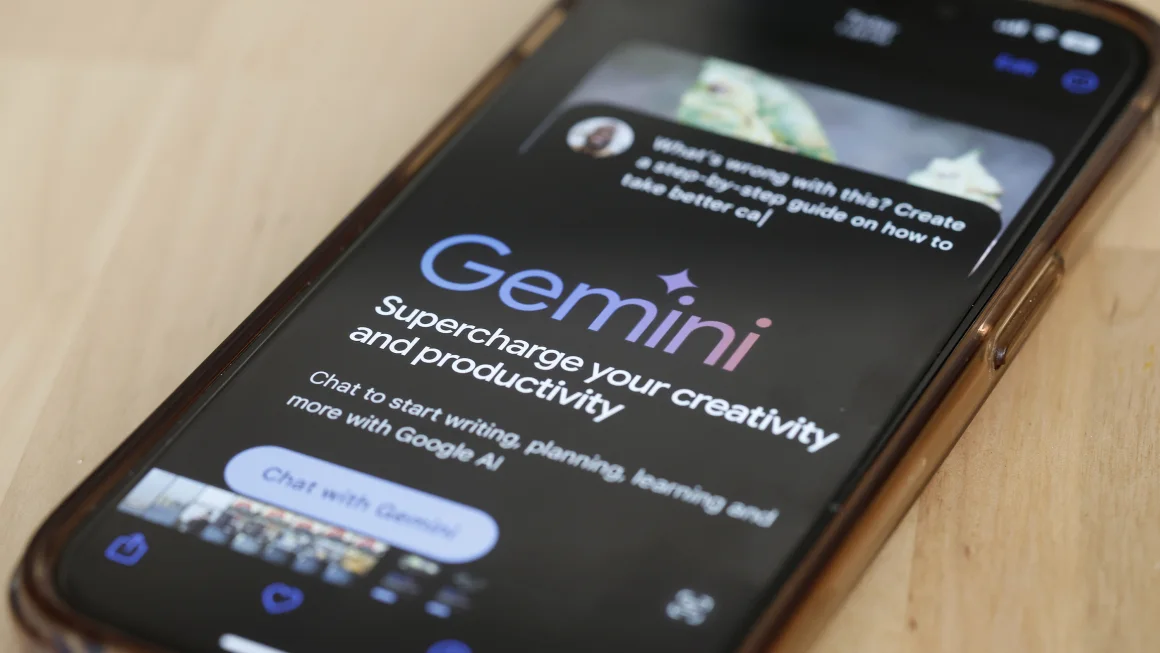
    Google says it’s now using a version of its Gemini AI model that runs on users’ devices to detect and warn users of these so-called “tech support” scams.

    It’s just one of a number of ways Google is using advancements in AI to better protect users from scams across Chrome, Search and its Android operating system, the company said in a blog post Thursday.

    The announcement comes as AI has enabled bad actors to more easily create large quantities of convincing, fake content — effectively lowering the barrier to carrying out scams that can be used to steal victims’ money or personal information. Consumers worldwide lost more than $1 trillion to scams last year, according to the lobbying group Global Anti-Scam Alliance. So, Google and other organizations are increasingly using AI to fight scammers, too.

    Phiroze Parakh, senior director of engineering for Google Search, said that fighting scammers “has always been an evolution game,” where bad actors learn and evolve as tech companies put new protections in place.

    “Now, both sides have new tools,” Parakh said in an interview with CNN. “So, there’s this question of, how do you get to use this tool more effectively? Who is being a little more proactive about it?”

    Although Google has long used machine learning to protect its services, newer AI advancements have led to improved language understanding and pattern recognition, enabling the tech to identify scams faster and more effectively.

    Google said that on Chrome’s “enhanced protection” safe browsing mode on desktop, its on-device AI model can now effectively scan a webpage in real-time when a user clicks on it to look for potential threats. That matters because, sometimes, bad actors make their pages appear differently to Google’s existing crawler tools for identifying scams than they do to users, a tactic called “cloaking” that the company warned last year was on the rise.

    And because the model, called Gemini Nano, runs on your device, the service works faster and protects users’ privacy, said Jasika Bawa, group product manager for Google Chrome.

    As with Chrome’s existing safe browsing mode, if a user attempts to access a potentially unsafe site, they’ll see a warning before being given the option to continue to the page.

    In another update, Google will warn Android users if they’re receiving alerts from fishy sites in Chrome and let them automatically unsubscribe, so long as they have Chrome website notifications enabled.

    Google has also used AI to detect scammy results and prevent them from showing up in Search, regardless what kind of device users are on. Since Google Search first launched AI-powered versions of its anti-scam systems three years ago, it now blocks 20 times the number of problematic pages.

    “We’ve seen this incredible advantage with our ability to understand language and nuance and relationships between entities that really made a change in how we detect these scammy actors,” he said, adding that in 2024 alone, the company removed hundreds of millions of scam search results daily because of the AI advancements.

    Parakh said, for example, that AI has made it better able to identify and remove a scam where bad actors create fake “customer service” pages or phone numbers for airlines. Google says it has has now decreased scam attacks in airline-related searches by 80%.

    Google isn’t the only company using AI to fight bad actors. British mobile phone company O2 said last year it was fighting phone scammers with “Daisy,” a conversational AI chatbot meant to keep fraudsters on the phone, giving them less time to talk with would-be human victims. Microsoft has also piloted a tool that uses AI to analyze phone conversations to determine whether a call may be fraudulent and alert the user accordingly. And the US Treasury Department said last year that AI had helped it identify and recover $1 billion worth of check fraud in fiscal 2024 alone.

  • NSO Group, the maker of spyware, received a $167 million judgment against it for hacking into WhatsApp

    NSO Group, the maker of spyware, received a $167 million judgment against it for hacking into WhatsApp

    A federal jury on Tuesday ordered the best-known maker of government spyware to pay a record-setting $167 million for hacking more than 1,000 people through WhatsApp messages in a stunning cap to six years of litigation.

    The verdict came on the second day of deliberations in the damages phase of the trial in Oakland, California. U.S. District Judge Phyllis J. Hamilton granted WhatsApp’s motion for summary judgment against Israel-based NSO Group in December, finding that it had violated the U.S. Computer Fraud and Abuse Act and a similar California law with its spying program known as Pegasus.

    Tuesday’s award was for $167,256,000 in punitive damages and $440,000 in compensatory damages, the largest blow ever dealt to the burgeoning spyware industry.

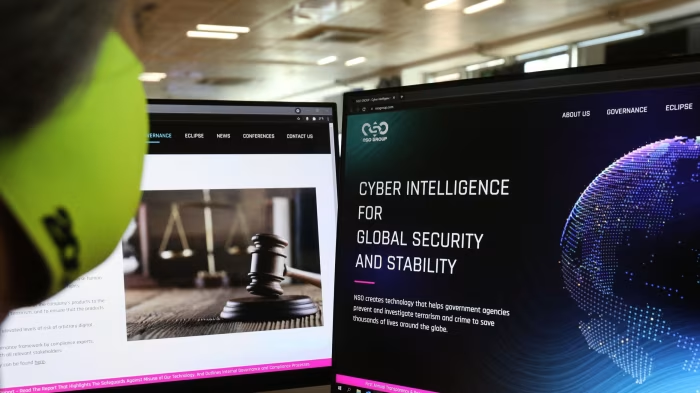
    While Pegasus is marketed to governments as a tool to fight terrorism and organized crime, a steady stream of investigations have shown it being used against political leaders, peaceful activists and journalists around the world.

    “Today’s verdict in WhatsApp’s case is an important step forward for privacy and security as the first victory against the development and use of illegal spyware that threatens the safety and privacy of everyone,” WhatsApp parent Meta said.

    “The jury’s decision to force NSO, a notorious foreign spyware merchant, to pay damages is a critical deterrent to this malicious industry against their illegal acts aimed at American companies and the privacy and security of the people we serve.”

    NSO said it would probably appeal.

    “NSO remains fully committed to its mission to develop technologies that protect public safety, while continuously strengthening our industry-leading compliance framework and ensuring our technology is deployed solely for their legitimate, authorized purposes by legitimate sovereign governments,” spokesman Gil Lanier said.

    Meta said that if it collects the money from the Israeli company, it would donate to the sort of digital rights groups that have been critical in detecting and examining spyware attacks.

    “We have a long road ahead to collect awarded damages from NSO and we plan to do so,” it said. “Ultimately, we would like to make a donation to digital rights organizations that are working to defend people against such attacks around the world. Our next step is to secure a court order to prevent NSO from ever targeting WhatsApp again.”

    The Toronto-based nonprofit Citizen Lab, which led the way in exposing Pegasus, praised WhatsApp for persisting in its litigation and for notifying victims when it detected attacks.

    “Back in 2019 no country had sanctioned NSO Group,” Citizen Lab researcher John Scott-Railton posted on Bluesky. “No parliamentary hearings, no hearings in congress, no serious investigations. For years, WhatsApp’s lawsuit helped carry momentum & showed governments that their tech sectors were in the crosshairs from mercenary spyware too.”

    Hamilton’s December ruling held NSO liable for hacking into the Meta unit’s systems by sending malicious software through its servers to about 1,400 targeted phones, which Meta said belonged to government officials, journalists, human rights activists and dissidents in dozens of countries.

    Hamilton also found that WhatsApp was entitled to sanctions against NSO for its refusal to turn over source code for the software in discovery, with the penalty to be determined later. She ruled that with the underlying legal issues settled, the case should proceed to trial only to determine how much the company should pay in civil damages.

    The case included the first U.S. testimony from NSO executives, who have long taken pains to stay out of the public eye.

    The jury’s award is by far the most consequential result from scores of lawsuits in an industry at the center of global disputes over governmental surveillance powers and individual freedoms. That it took so long to come to trial, after an appeal that reached the U.S. Supreme Court, underscores the high stakes and national interests involved.

    The U.S. government blacklisted NSO and a handful of other companies and individuals after determining that they were operating in opposition to U.S. interests. Most American allies have been slow to follow suit.

    Apple dropped a similar case against NSO in September after Israeli authorities reportedly seized the company’s source code and NSO said it could no longer produce it. NSO has been closely allied with the Israeli government, from which the company has said it needs permission to export its products.

    NSO had argued that it should be exempt from legal punishment because it sells only to government agencies, which determine which people to target with the programs, but appeals courts rejected that defense. The company’s executives acknowledged in depositions that it determines how hacks are conducted, based on what phone and software each target uses.

    Pegasus and similar wares have exploited security flaws, including those in WhatsApp and Apple’s operating system, to get inside phones and capture pictures, emails and texts, even those that are fully encrypted in transmission.

    In some cases, those exploits require no user interaction and leave the software all but indiscoverable.

    Evidence developed in the case showed how capable and dangerous NSO has been, with 140 employees looking for ways to exploit Apple’s iPhone and Google-supported Android phones and the apps that run on them. An NSO executive testified that the spyware had been installed through operating systems, instant messengers and browsers.

    Pegasus is programmed with technical blocks against spying within the United States and on phones with U.S. numbers that are physically located elsewhere in the world, an attorney for NSO said.

    But spy programs made by other vendors or within national agencies do not have such limitations. That is one reason security experts have been aghast at the use of Signal and an archiving program for its messages by White House officials including Michael Waltz, who was recently ousted as national security adviser, and Defense Secretary Pete Hegseth. Although Signal is end-to-end encrypted, any spy software that can take control of a phone can access all of those messages.

    Testimony in the WhatsApp case showed that NSO used a succession of attacks on the company between 2018 and 2020, altering its technique when WhatsApp blocked earlier methods. One of those modifications came after WhatsApp had filed suit, strengthening Meta’s argument that NSO had acted willfully.

    Meta told the court that it had paid more than $400,000 in salary to employees as they battled with NSO.

    But NSO attorney Joseph Akrotirianakis told the jury that those salaries would have been paid in any case and that jurors were not being asked to weigh the impacts on the ultimate hacking targets, only any costs to Meta.

    “This lawsuit is about publicity,” he said in closing arguments. “Facebook wanted to make headlines about how deeply and strongly and genuinely they believe in protecting their users’ privacy, and it viewed suing NSO as an easy way to get those good headlines.”

    NSO emphasized that it had used WhatsApp’s computers only in passing tainted messages through to the victims.

    “Pegasus did not take anything from WhatsApp servers,” Akrotirianakis said. “It did not leave anything behind. It did not execute any code on WhatsApp servers, it did not delete, change or corrupt any data.”

    To win punitive damages under the California hacking statute, Meta had to show by convincing evidence that NSO was “guilty of oppression, fraud, or malice.”

    To convey to the jury how big an award would need to be to have an impact, WhatsApp established in sometimes combative testimony that NSO spent about $50 million yearly on research and development.

    NSO chief executive Yaron Shohat testified that NSO lost $12 million in 2024 and $9 million in 2023 and that it would struggle to pay significant damages.