Category: Beverage

  • Chief Executive of Japan’s Beverage Giant Suntory Resigns Amid Drug Probe

    Chief Executive of Japan’s Beverage Giant Suntory Resigns Amid Drug Probe

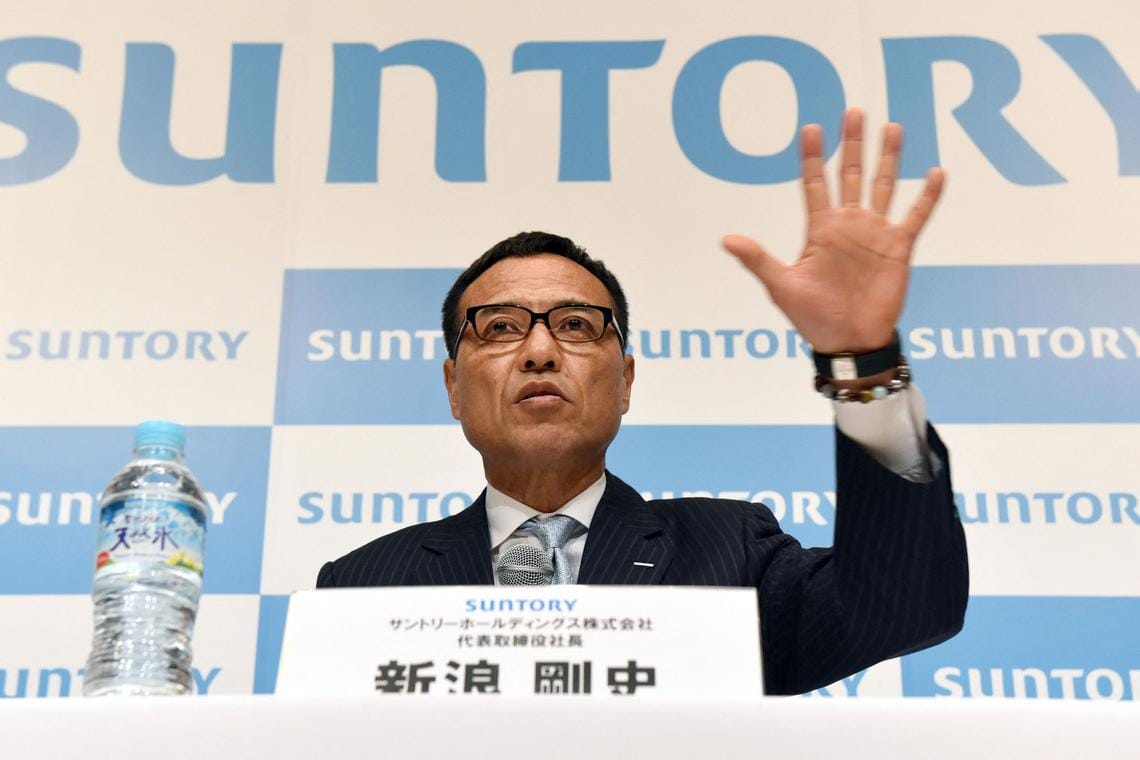
    Tokyo — In a stunning turn of events that underscores the unforgiving rigidity of Japan’s drug laws, Takeshi Niinami, the charismatic and outspoken CEO of Suntory Holdings, has stepped down amid a police investigation into his alleged purchase of supplements containing tetrahydrocannabinol (THC), the psychoactive compound derived from cannabis. At 66, Niinami wasn’t just another corporate executive; he was a fixture in Japan’s business elite, a Harvard Business School graduate who bridged the gap between traditional family-run conglomerates and global capitalism. His resignation, effective September 1, 2024, raises uncomfortable questions about the intersection of personal missteps, cultural conservatism, and the high-stakes world of international business.

    The scandal erupted into public view this week, with Suntory confirming Niinami’s departure during a press conference in Tokyo on Tuesday. According to company president Nobuhiro Torii—a great-grandson of Suntory’s founder Shinjiro Torii—Niinami first informed colleagues on August 22 that he was under police scrutiny. Investigators from Fukuoka Prefectural Police had searched his Tokyo home, suspecting he received products containing cannabis-derived substances from an overseas acquaintance. Media outlets, including public broadcaster NHK and the Tokyo Shimbun, reported that the supplements in question may have included THC, which is strictly prohibited in Japan regardless of its intended use—recreational, medical, or otherwise.

    Niinami, for his part, has vehemently denied any intentional wrongdoing. In an interview with the Asahi newspaper published Tuesday evening, he insisted, “I was not aware that it was an illegal supplement. I am innocent.” He explained that he purchased the items under the assumption they were legal, perhaps mistaking them for products containing cannabidiol (CBD), which is permissible in Japan and widely available in health stores. Yet, in a country where possession of THC can land someone in prison for up to seven years, and trafficking carries even harsher penalties, assumptions can be costly. Niinami told the company he felt compelled to resign to avoid fracturing Suntory’s unity, a decision that Torii described as a “real shame,” praising his former boss as a “bold, decisive leader who got things done.”

    This isn’t just a personal downfall; it’s a blow to corporate Japan. Niinami was the first outsider to lead Suntory, the family-founded beverage behemoth known for its whiskies, beers, and soft drinks like Orangina. Under his tenure since 2014, the company ballooned its revenue and profits, most notably through the $16 billion acquisition of U.S. spirits maker Beam (including debt), which catapulted Suntory into the global spotlight. He was the face of Japanese business on the world stage—frequently appearing at Davos, advising multiple prime ministers on economic policy, and chairing the influential Keizai Doyukai business lobby. Fluent in English, he often graced international media like CNN, opining on everything from Japan’s economy to central bank strategies. His scheduled press conference with Keizai Doyukai on Wednesday is now poised to be a media circus, where he’ll likely elaborate on the saga.

    But let’s pause for a moment of opinionated reflection: Japan’s draconian drug laws, while rooted in a cultural aversion to substances that dates back decades, seem increasingly out of step with global trends. Countries like the U.S., Canada, and even parts of Europe have liberalized cannabis regulations, distinguishing between THC and CBD, and recognizing medical benefits. In Japan, there’s no such nuance—it’s all outlawed, full stop. This zero-tolerance approach has ensnared high-profile figures before: Just last year, Olympus Corp. fired its German CEO Stefan Kaufmann over allegations of illegal drug purchases, and in 2015, Toyota executive Julie Hamp, an American, was arrested for importing oxycodone (though later released). These cases highlight a pattern: Foreign-influenced executives, often more accustomed to lenient Western norms, clash with Japan’s unyielding legal framework.

    Is Niinami a victim of this cultural chasm? Possibly. As a global traveler and Harvard alum who previously helmed convenience store chain Lawson, he embodies the modern Japanese leader—outward-looking and ambitious. Yet, his alleged oversight speaks to a broader issue: In an era of e-commerce and international shipping, how can busy executives navigate the minefield of varying global regulations? If the supplements were indeed sent from abroad, as reports suggest (tied to a man arrested in July), it underscores the risks of cross-border transactions. Police have questioned Niinami and searched his home, but no confirmation of possession or use has emerged. Until proven otherwise, he deserves the presumption of innocence, not the swift corporate exile that followed.

    Suntory, meanwhile, is steering back toward its roots. With Niinami’s exit, Torii assumes full control, marking a return to family leadership after a brief experiment with external talent. The company, immortalized in Sofia Coppola’s 2003 film “Lost in Translation” where Bill Murray’s character hawked its whisky amid Tokyo’s neon haze, remains a cultural icon. Shares in its listed unit, Suntory Beverage & Food, even rose 3% on Tuesday, suggesting investors view this as a contained crisis rather than a systemic rot.

    In the end, Niinami’s resignation feels like a cautionary tale for Japan’s business world: Innovation and global expansion are prized, but stray too far from conservative norms, and the fall is precipitous. He has no plans to step down from Keizai Doyukai, per the Asahi report, which could allow him to salvage his legacy as a thought leader. But for Suntory, the loss of such a dynamic figure is undeniable. As Torii lamented, it’s a shame they couldn’t “continue as a team.” In a nation grappling with economic stagnation and demographic decline, Japan needs more leaders like Niinami—bold and unapologetic—not fewer. Whether this probe uncovers malice or mere misunderstanding will determine if his story ends in redemption or regret. For now, it’s a sobering reminder that even the mightiest CEOs aren’t above the law, especially in Japan.
  • Coca-Cola to launch new version of Coke sweetened with U.S.-grown cane sugar

    Coca-Cola to launch new version of Coke sweetened with U.S.-grown cane sugar

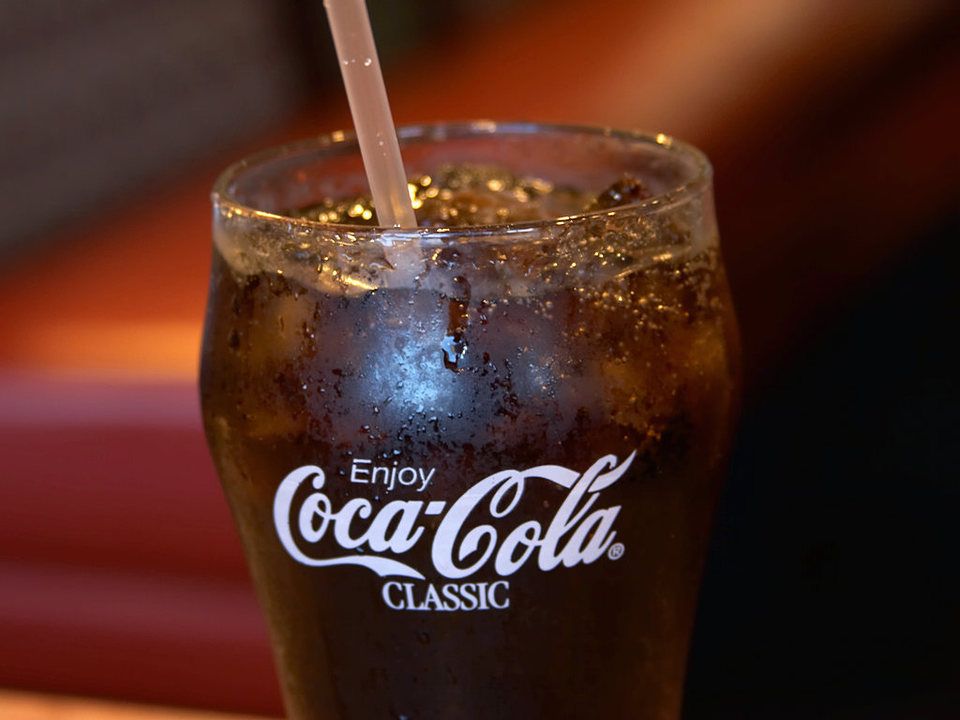
    Coca-Cola said it will roll out a new version of its signature soft drink that will be sweetened with cane sugar instead of corn syrup — days after President Trump posted about it on social media.

    “As part of its ongoing innovation agenda, this fall in the United States, the company plans to launch an offering made with US cane sugar to expand its Trademark Coca-Cola product range,” the company said in a Tuesday statement.

    The Coke made with US cane sugar will complement the company’s existing product line, the Atlanta-based company added.

    Coca-Cola produced for the US market is typically sweetened with corn syrup, while the company uses cane sugar in some other countries, including Mexico and various European countries.

    The Tuesday announcement came days after President Donald Trump wrote on Truth Social that he had “been speaking to Coca-Cola about using REAL Cane Sugar in Coke in the United States, and they have agreed to do so.”

    Trump — who is famously an avid consumer of Diet Coke — also said, “This will be a very good move by them — You’ll see. It’s just better!”

    Coca-Cola initially stopped short of confirming Trump’s post. The company told NBC News last week that it appreciated Trump’s “enthusiasm for our iconic Coca-Cola brand” but that “details…will be shared soon.”

    In the United States, Coca-Cola made with cane sugar is colloquially known as “Mexican Coke” as it’s often imported from the United States’ southern neighbor.

    Coca-Cola CEO James Quincey discussed the coming product on an earnings call Tuesday morning, telling investors that the company already uses cane sugar in the company’s tea, lemonade, coffee and Vitamin Water offerings.

    “I think that it will be an enduring option for consumers,” he said.

    “We are definitely looking to use the whole toolkit of available sweetening options where there are consumer preferences.”

    The Trump administration’s “Make America Healthy Again” initiative, named for the social movement aligned with Health and Human Services Secretary Robert F. Kennedy Jr., has pushed food companies to alter their formulations to remove ingredients like artificial dyes.

    But medical experts warn that health outcomes may not change with the switch in sweetener.

    Dr. Dariush Mozaffarian, a cardiologist and director of the Food is Medicine Institute at the Friedman School of Nutrition Science and Policy at Tufts University, told NBC News that “both high fructose corn syrup and cane sugar are about 50% fructose, 50% glucose, and have identical metabolic effects.”

    “That is, both can equally raise the risk for obesity, diabetes, high triglycerides and blood pressure,” he said, adding that “both provide the same number of calories, but the body processes them differently.”

    The move to transition to cane sugar was also met with pushback from agricultural interests.

    John Bode, the CEO of the Corn Refiners Association, said last week that “replacing high fructose corn syrup with cane sugar doesn’t make sense” given Trump’s support of American farmers.

    “Replacing high fructose corn syrup with cane sugar would cost thousands of American food manufacturing jobs, depress farm income, and boost imports of foreign sugar, all with no nutritional benefit,” he added in a statement.

    Sourcing could also be a factor. US cane sugar is primarily produced in Texas, Florida and Louisiana, according to the Agriculture Department. However, domestic production accounts for only 30% of total US sugar supply. The rest comes from sugar beets or is imported.

    Trump has long tied himself publicly to Coca-Cola products. In 2012, he said on Twitter that Coke was not happy with him but “that’s ok, I’ll still keep drinking that garbage.”

    Trump also wrote on social media the same year that drinking Diet Coke “makes you happy.”

    In January, Quincey traveled to Trump’s Mar-a-Lago resort and presented him with a custom bottle commemorating his upcoming inauguration.

    “President Trump pledged to Make America Healthy Again, and that starts with what we eat and drink,” White House spokesperson Kush Desai told The NY Budgets.

    “The Trump administration is committed to partnering with food and beverage companies to expand options for the American people.” 

    The NY Budgets has sought comment from HHS, Coca-Cola and the Corn Refiners Association.

  • How America’s Hydration Obsession Turned Into a $1.5 Billion Industry

    How America’s Hydration Obsession Turned Into a $1.5 Billion Industry

    “A majority of consumers, Americans and people around the world are chronically dehydrated,” he told CNN News. “They just don’t know it.”

    Even if consumers don’t know if they’re actually suffering from a lack of fluids, they’re still buying electrolyte-filled products like they are. Liquid I.V. has become one of the biggest brands to capitalize on hydration, part of the overall “better for you” wellness trend that’s been percolating within the food and beverage industry over the past several years.

    Hydration, in particular, has been at the center of social media trends — like #WaterTok on TikTok — and buzzy viral products with analysts projecting it growing into a multibillion-dollar market in the next few years.

    “The category has benefited from changing consumption patterns. It’s no longer just about sports recovery, but about maintaining daily wellness, and managing hangovers,” Nate Rosen, a consumer packaged goods expert, told. “A lot of people simply don’t like plain water and really treat these hydration drinks as a way to flavor their water.”

    Liquid I.V. launched in 2012, initially targeted toward hardcore athletes recovering from a tough workout. The flavored powder mix is marketed as a healthier alternative to sugar-filled sports drinks, with the potion containing salt, vitamins and electrolytes that support rapid hydration.

    “The category has been really tired and dusty,” Keech said. “Before, it was a sports person who was sponsored and the idea was, ‘If it’s good enough for them, then it’s good enough for me.’”

    That was initially a successful proposition and sales soared, prompting Unilever to buy Liquid I.V. for an undisclosed price in 2020.

    Under Keech, who became CEO of Liquid I.V. following the acquisition, the brand and his team broadened its “positioning it to a much wider audience,” shifting from just sports stars to “the business person, the mom and the gym bunny.”

    From there, the brand’s distribution doubled and the product has expanded the number of flavors, including a viral firecracker blend, as well as a new sugar-free selection. Liquid I.V. is on track to becoming a $1 billion unit with Unilever labeling it a “power brand” in its most recent earnings report, which has helped its wellbeing category achieve double-digit sales growth.

    “We recognized that hydration is just not for athletes,” Keech said. “That’s where lift-off happened.”

    Powder power

    Hydration has largely been dominated for years by liquids, notably Pedialyte, which is commonly used to prevent or treat dehydration in children. But the drink grew in popularity through the mid-2010s as young people used it as a hangover cure and athletes drank it for recovery.

    Then there’s PepsiCo’s Gatorade, which holds a commanding lead in the sports drink category, plus Mexico-based Electrolit, which is investing $400 million in a new US plant to meet growing demand.

    However, powders have recently become a “success story,” according to Howard Telford, head of soft drinks for analytics company Euromonitor.

    “The big thing is convenience: It’s something that you can have on the kitchen counter, desk drawer at work or in the gym bag. There’s no bulky purchase where you have to allocate space to it in your fridge,” he told. “The flavor profiles are also pretty good for Liquid I.V. as well, which is not nothing.”

    Keech also credits the convenience factor for Liquid I.V.’s growth, pointing toward festival-goers at Coachella, which it sponsors, as an example.

    “You can’t just rock out with all sorts of water bottles,” he said. “That’s helps us hydrate people in ways others can’t.”

    Sales of powdered mixes has achieved double-digit sales growth for the past four consecutive years, most recently growing 20% in 2024, ballooning into a $1.5 billion category, according to Circana, a Chicago-based market research firm.

    The growth has sparked new entrants for portable mixes ranging from Gatorade, who’s sales of enhancers has grown 200% over the last four years, and Coca-Cola’s BodyArmor to smaller startups like diet-friendly LMNT and the Novak Djokovic-backed Waterdrop — all in hopes of emulating market leader Liquid I.V.’s popularity.

    “When one brand achieves significant traction in a space, numerous fast followers emerge, especially when the original doesn’t own anything truly proprietary beyond a great name,” said Rosen, who writes the Express Checkout newsletter. “After all, anyone can produce an electrolyte powder.”

    BodyArmor, which recently relaunched its entire line, has seen a bright spot in growth with its Flash I.V. hydration drinks and powders. Both products generated $120 million in sales in its first year.

    The space “saw a big jump in consumption during Covid because people started to realize how important hydration was. There’s also a very heightened sense for longevity as a well, immunity and also overall addition of vitamins into your body,” BodyArmor CEO Federico Muyshondt told CNN News.

    Does it work?

    Liquid I.V. is “obsessed with science,” Keech said, adding that it spends a “very significant amount of money on clinical studies to make sure that we can stand by the claims we make.”

    A page on Liquid I.V.’s website claims its product has “superior hydration” compared to simply drinking water, proclaiming that if you’re thirsty “then you already may be dehydrated.”

    However, Heidi Skolnik, a senior sports nutritionist at the Hospital for Special Surgery in New York, is skeptical that dehydration is a common problem for people with unrestricted water access and that people being “chronically dehydrated is probably an overstatement.”

    “Athletes and active people can benefit from using electrolyte powder and drinks,” she told The Budgets, but “less active people probably do not need them.”

    Although water itself is sufficient for hydrating the average person, she said flavoring it “helps people drink more, so that is a positive and it elevates their awareness of what and how much they are drinking.”

  • Hulk Hogan’s Real American Beer is now available at Walmart in 8 states in anticipation of WWE WrestleMania 41

    Hulk Hogan’s Real American Beer is now available at Walmart in 8 states in anticipation of WWE WrestleMania 41

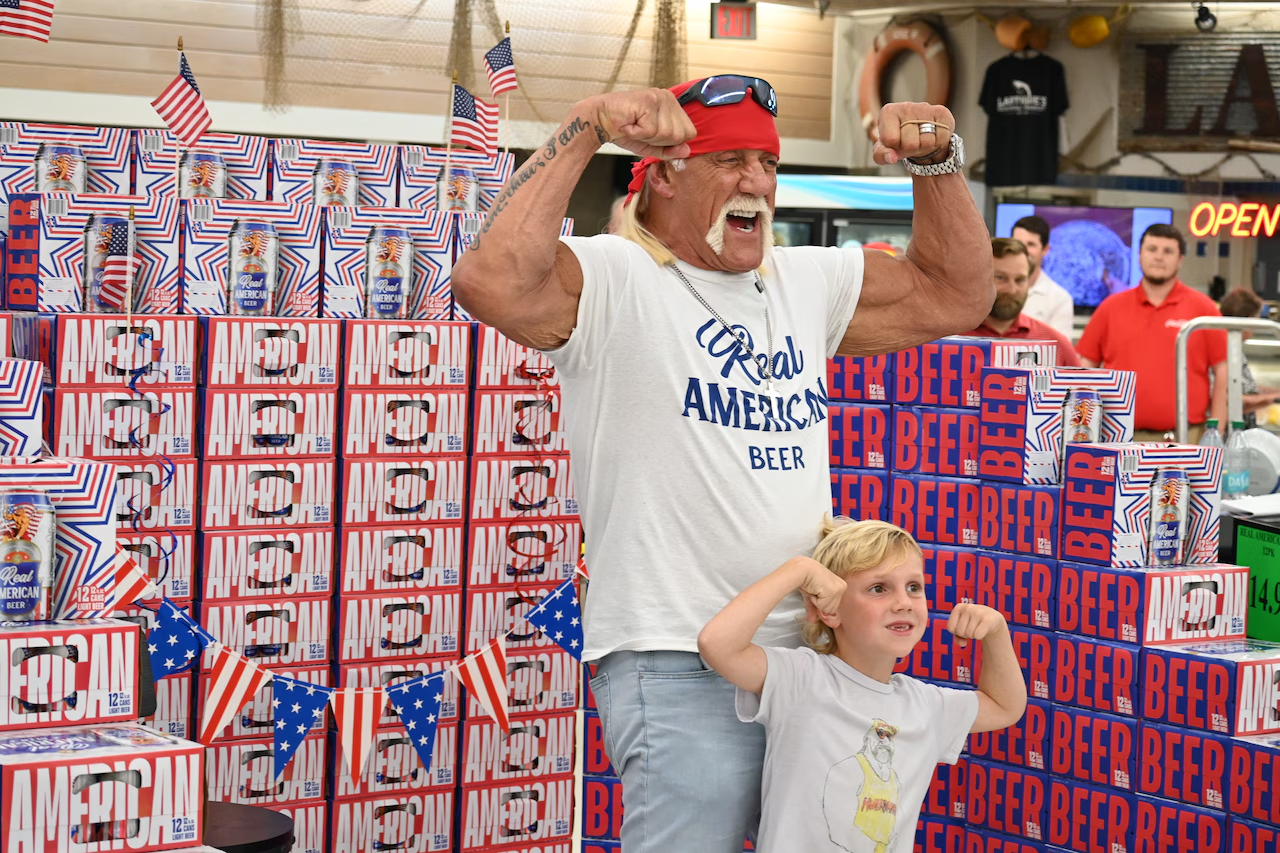
    Real American Beer, the patriotic brew co-founded by wrestling icon Hulk Hogan, just landed its biggest retail win yet. The brand is now stocked in select Walmart stores across eight states — a move that Hogan and the company say makes it easier than ever for Americans to grab “a real American beer” ahead of grilling season.

    Hogan, whose real name is Terry Bollea, launched the beer last summer as a tribute to the wrestling glory days and his entrance anthem, “Real American.” With WrestleMania 41 kicking off this weekend in Las Vegas, the timing couldn’t be better for WWE fans craving a themed brew to go along with the action.

    According to the company, Real American Beer is now available at Walmart stores in Florida, Illinois, Idaho, Michigan, Missouri, New York, Ohio and Wisconsin. In total, the beer is sold in 23 states and has quickly become a standout in the light beer category.

    CEO Terri Francis called the Walmart deal a “massive step forward,” noting how quickly the beer sells out when entering new markets. “This is about building an iconic American brand that people want to celebrate,” Francis said in a statement.

    The brand says it appeals to fans of American pastimes like tailgating, sports, and family barbecues — and that it was made with summer in mind.

    Hogan’s Real American Beer is the official beer of WWE and is capitalizing on its growing fandom. WrestleMania 41 begins Saturday in Las Vegas and will once again be a two-night spectacle. That synergy between sports entertainment and branded beverages is helping Hogan’s beer grow quickly, with some stores reportedly selling out within days of stocking.

    The name itself nods to Hogan’s iconic entrance song, “Real American,” which played throughout his 1980s wrestling dominance.

    “Americans deserve a real American beer, and now they can grab Real American Beer at Walmart — America’s store,” Hogan said in a statement. “Our team is passionate about building a beer that brings America together… and now, it’s easier than ever to get some, brother.”

    Francis added that the company’s fan base continues to show up wherever the beer is launched. “We see it when we roll into a new Real American Beer town and lines wrap around the block,” she said.

    The Walmart partnership signals continued expansion for the brand. While only eight Walmart states are part of this rollout, Hogan’s team says Real American Beer is on track to reach more shelves nationwide. With the summer season approaching — and WrestleMania hype peaking — the company is positioning itself for even more visibility.

    This article is based on previous FOX reporting as well as statements from Hulk Hogan and Real American Beer CEO Terri Francis, as reported in a press release distributed ahead of WrestleMania 41. Background information about Real American Beer’s expansion and retail partnerships was provided by the company. Additional wrestling context was included in reference to WWE’s WrestleMania schedule.Real American Beer Achieves What Takes Most Great Brands Years—Walmart Rollout within its first year of operations