Category: Auto Industry

  • Boeing to Sidestep Prosecution for 737 Max Crashes Under Justice Department Deal

    Boeing to Sidestep Prosecution for 737 Max Crashes Under Justice Department Deal

    The justice department has reached a deal with Boeing that will allow the airplane giant to avoid criminal prosecution for allegedly misleading US regulators about the 737 Max jetliner before two of the planes crashed and killed 346 people, according to court papers filed on Friday.

    Under the “agreement in principle” that still needs to be finalized, Boeing would pay and invest more than $1.1bn, including an additional $445m for the crash victims’ families, the justice department said. In return, the department would dismiss the fraud charge in the criminal case against the aircraft manufacturer.

    “Ultimately, in applying the facts, the law, and Department policy, we are confident that this resolution is the most just outcome with practical benefits,” a justice department spokesperson said in a statement.

    “Nothing will diminish the victims’ losses, but this resolution holds Boeing financially accountable, provides finality and compensation for the families and makes an impact for the safety of future air travelers.”

    Many relatives of the passengers who died in the crashes, which took place off the coast of Indonesia and in Ethiopia less than five months apart in 2018 and 2019, have spent years pushing for a public trial, the prosecution of former company officials, and more severe financial punishment for Boeing.

    “Although the DOJ proposed a fine and financial restitution to the victims’ families, the families that I represent contend that it is more important for Boeing to be held accountable to the flying public,” Paul Cassell, an attorney for many of the families in the long-running case, said in a statement earlier this week.

    Boeing was accused of misleading the Federal Aviation Administration about aspects of the Max before the agency certified the plane for flight. Boeing did not tell airlines and pilots about a new software system, called MCAS, that could turn the plane’s nose down without input from pilots if a sensor detected that the plane might go into an aerodynamic stall.

    The Max planes crashed after a faulty reading from the sensor pushed the nose down and pilots were unable to regain control. After the second crash, Max jets were grounded worldwide until the company redesigned MCAS to make it less powerful and to use signals from two sensors, not just one.

    Boeing avoided prosecution in 2021 by reaching a $2.5bn settlement with the justice department that included a previous $243.6m fine.

    A year ago, prosecutors said Boeing violated the terms of the 2021 agreement by failing to make promised changes to detect and prevent violations of federal anti-fraud laws. Boeing agreed last July to plead guilty to the felony fraud charge instead of enduring a potentially lengthy public trial.

    But in December, US district judge Reed O’Connor in Fort Worth rejected the plea deal. The judge said the diversity, inclusion and equity (DEI) policies in the government and at Boeing could result in race being a factor in picking a monitor to oversee Boeing’s compliance with the agreement.

  • Honda is pushing back its electric vehicle plant plans in Canada by at least two years

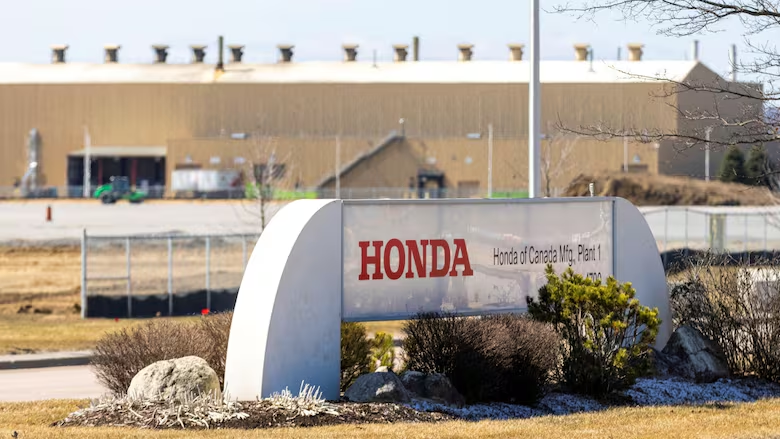
    Honda is pushing back its electric vehicle plant plans in Canada by at least two years

    A year after the $15-billion electric vehicle project in Ontario was announced, Honda Canada is pushing the project back.

    The company said Tuesday it would put the plan to build an EV supply chain — which included a proposed EV battery plant and retooled vehicle assembly facility — in Alliston, Ont., on hold for about two years. 

    “Due to the recent slowdown of the EV market, Honda Motor has announced an approximate two-year postponement of the comprehensive value chain investment project in Canada. The company will continue to evaluate the timing and project progression as market conditions change,” Honda Canada spokesperson Ken Chiu told CBC News in an email statement on Tuesday.

    Honda also said the decision “has no impact” on current employment or production at the Alliston manufacturing facility.

    Honda’s EV project in Canada includes a retooled assembly plant and an electric vehicle battery plant in close proximity, as well as two key battery parts facilities located elsewhere in Ontario.

    The project was expected to see the two main plants create 1,000 jobs on top of retaining the existing 4,200 jobs at the assembly plant.

    Under the original plan, the plant was set to produce up to 240,000 vehicles per year when fully operational in 2028.

    The project was first announced in April 2024 at an event that included then-prime minister Justin Trudeau and Ontario Premier Doug Ford and was to receive support from the federal and Ontario governments.

    Ottawa was set to give the Japanese automaker around $2.5 billion through tax credits, while Ontario committed to provide up to $2.5 billion in support directly and indirectly. However, Jennifer Cunliffe, a spokesperson for Ontario’s minister of economic development, job creation and trade, said the province hasn’t doled out any of that money to Honda yet.

    Ford told reporters at a news conference that he was confident Honda would continue making cars in the province.

    “When I talked to Honda, they promised us they’re going to continue on with that expansion,” Ford said of the pause. “So we’ll just see how that moves forward. But we’re very confident that we’ll continue producing Honda vehicles here in Ontario.”

    The premier also said he would hold automakers that pull out of Ontario “accountable,” should that happen.

    Richard Norcross, the mayor of New Tecumseth, which Alliston is part of, said he was still optimistic the project will come online, even though that day is further in the future now.

    “Obviously a two-year delay, that’s not desirable, but understandable [given] what’s going on in the world today,” Norcross said. “I think the process is slowing down, but I don’t think they’ll walk away from the process. I believe [and] they believe that the EV battery is the way to go and that will be the future.”

    Tariffs and smaller appetite for EVs having an impact

    Flavio Volpe, president of the Automotive Parts Manufacturers’ Association, said Tuesday’s decision shows how U.S. tariffs continue to be felt in the auto industry.

    “We hope to find a solution for Canada soon that restores the confidence Honda had when it made its historic EV expansion decision here,” Volpe wrote in an email statement.

    In reporting its latest financial results Tuesday, Honda Motor Co. said its profit for the financial year through March fell 24.5 per cent from the previous year and warned that U.S. President Donald Trump’s tariffs will worsen its earnings. 

    The Tokyo-based automaker said its annual profit totalled 835.8 billion yen (around $8 billion Cdn), down from 1.1 trillion yen in the previous year. Annual sales edged up 6.2 per cent to nearly 21.69 trillion yen (around $205 billion Cdn).

    Officials stressed major uncertainties remain, but said they felt it was important to give a realistic projection, no matter how pessimistic it might be.

    Chief executive Toshihiro Mibe said Honda will do its best to minimize the impact from tariffs. In the long term, Honda will transfer auto production to U.S. plants and rethink its investment plans. All decisions will be made “very carefully,” Mibe told reporters.

    David Adams, president and CEO of Global Automakers of Canada, says that while tariffs were a factor in today’s announcement, the slower than expected uptake of EVs also likely played a big role.

    “Is electrification moving forward? Sure, it is. Are consumers continuing to buy EVs? Yes,” Adams said. “But we’re not seeing the sort of [rapid] uptake of EVs that … environmentalists and some in government anticipated.”

    Despite that, Adams says EVs are still the way of the future — he says trillions have been spent globally to transition from traditional internal combustion engines to battery electric instead, and carmakers won’t simply walk away from those commitments. “But those investments might not just come to fruition as quickly as maybe originally anticipated.”

    Gal Raz, a professor of operations management and sustainability at Western University’s Ivey Business School, agrees that today’s news comes as a result of tariffs and softer-than-expected demand for electric cars.

    He says while governments in Canada have made big investments in getting more EVs built — including investments in this paused Honda project — there hasn’t been as much work done to address issues with demand.

    Consumers are still worried about the upfront cost of battery EVs and the lack of charging facilities to keep these cars running. Raz says the latter has been a particular barrier.

    “That’s where I feel that the government has not done enough,” Raz said. He points to countries like Norway, where the network of charging infrastructure is extensive. Electric cars now outnumber gas-powered ones in Norway.

    Adams says he hopes the federal government will pause its zero-emission vehicle sales target, which aims to achieve 100 per cent zero-emission vehicle sales by 2035, given the amount of flux the industry is going through with U.S. tariffs and the slower uptake of EVs by consumers.

  • Nissan will eliminate another 11,000 jobs and close seven plants

    Nissan will eliminate another 11,000 jobs and close seven plants

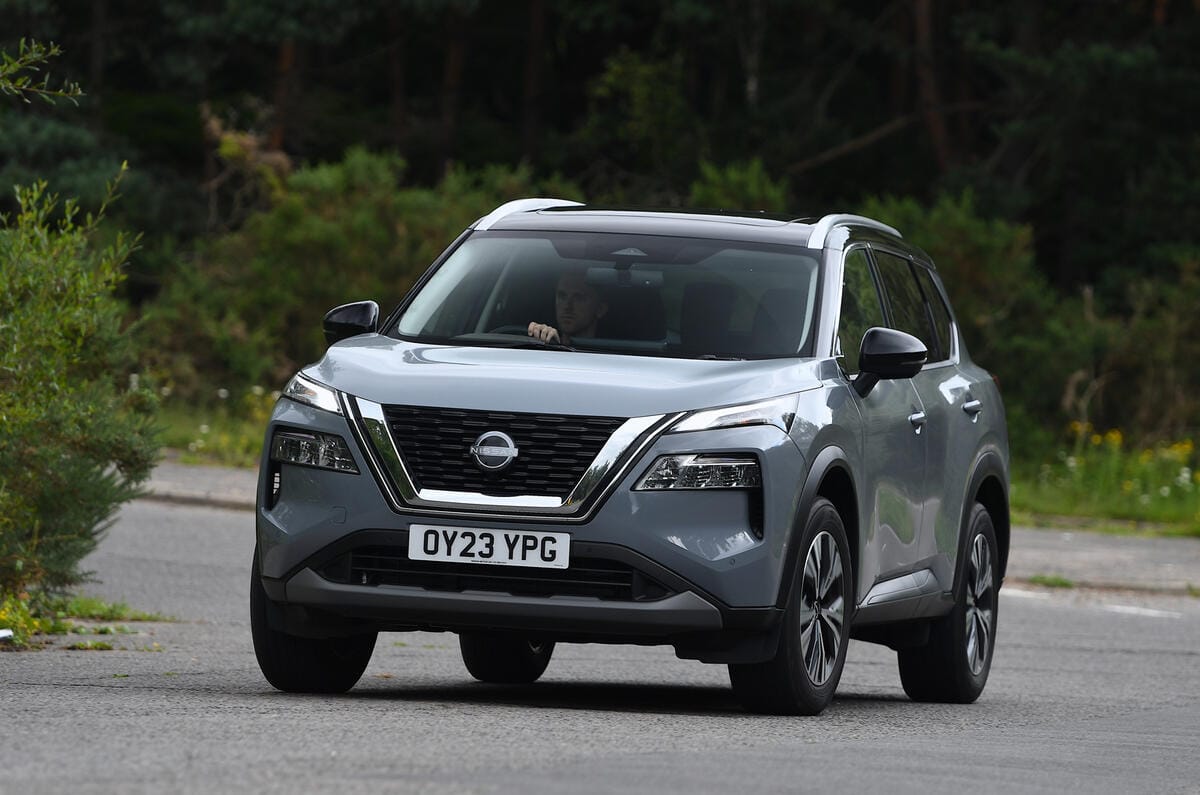
    Japanese carmaker Nissan has said it will cut another 11,000 jobs globally and shut seven factories as it shakes up the business in the face of weak sales.

    Falling sales in China and heavy discounting in the US, its two biggest markets, have taken a heavy toll on earnings, while a proposed merger with Honda and Mitsubishi collapsed in February.

    The latest cutbacks bring the total number of layoffs announced by the company in the past year to about 20,000, or 15% of its workforce.

    It was not immediately clear where the job cuts will be made, or whether Nissan’s plant in Sunderland will be affected.

    The government said the plant was of “vital importance” to the north east of England, and that it would “engage closely” with Nissan over its restructuring plans.

    Nissan employs about 133,500 people globally, with about 6,000 workers in Sunderland.

    Two-thirds of the latest job cuts will come from manufacturing, with the rest from sales, administration jobs, research and contract staff, said the company’s chief executive, Ivan Espinosa.

    The latest layoffs come on top of 9,000 job cuts Nissan announced in November as part of a cost saving effort that it said would reduce its global production by a fifth.

    In February, talks between Nissan and its larger rival Honda collapsed after the firms failed to agree on a multi-billion-dollar tie-up.

    The plan had been to combine their businesses to fight back against competition from rival firms, especially in China.

    The merger would have created a $60bn (£46bn) motor industry giant, the fourth largest in the world by vehicle sales after Toyota, Volkswagen and Hyundai.

    After the failure of the negotiations, then-chief executive Makoto Uchida was replaced by Mr Espinosa, who was the company’s chief planning officer and head of its motorsports division.

    Nissan also reported an annual loss of 670 billion yen ($4.5bn; £3.4bn), with US President Donald Trump’s tariffs putting further pressure on the struggling firm.

    Mr Espinosa said that the previous financial year had been “challenging”, with rising costs and an “uncertain environment”, adding that the results were a “wake-up call”.

    The car giant did not give a forecast for income in the coming year due to the “uncertain nature of US tariff measures”.

    It said it expected flat profit this year even without accounting for the impact of tariffs.

    Last week, Nissan announced it had scrapped plans to build a battery and electric vehicle factory in Japan as it cuts back on investment.

    The firm has been in trouble in key markets, including China where growing competition has led to falling prices.

    In China, many foreign carmakers have struggled to compete with homegrown firms such as BYD.

    China has become the world’s biggest producer of electric vehicles, with some established car-making nations having failed to anticipate demand for the new technology.

    In the US, another major market for Nissan, inflation and higher interest rates have hit new vehicle sales, although Nissan retail sales rose slightly last year.

    But sales fell 12% in China, and also dropped in Japan and Europe.

  • Tesla’s Board Chairman Made $198 Million Selling Shares While Profit Dropped

    Tesla’s Board Chairman Made $198 Million Selling Shares While Profit Dropped

    In March, after a steep decline in Tesla’s share price, Elon Musk told employees, “Hang on to your stock.”

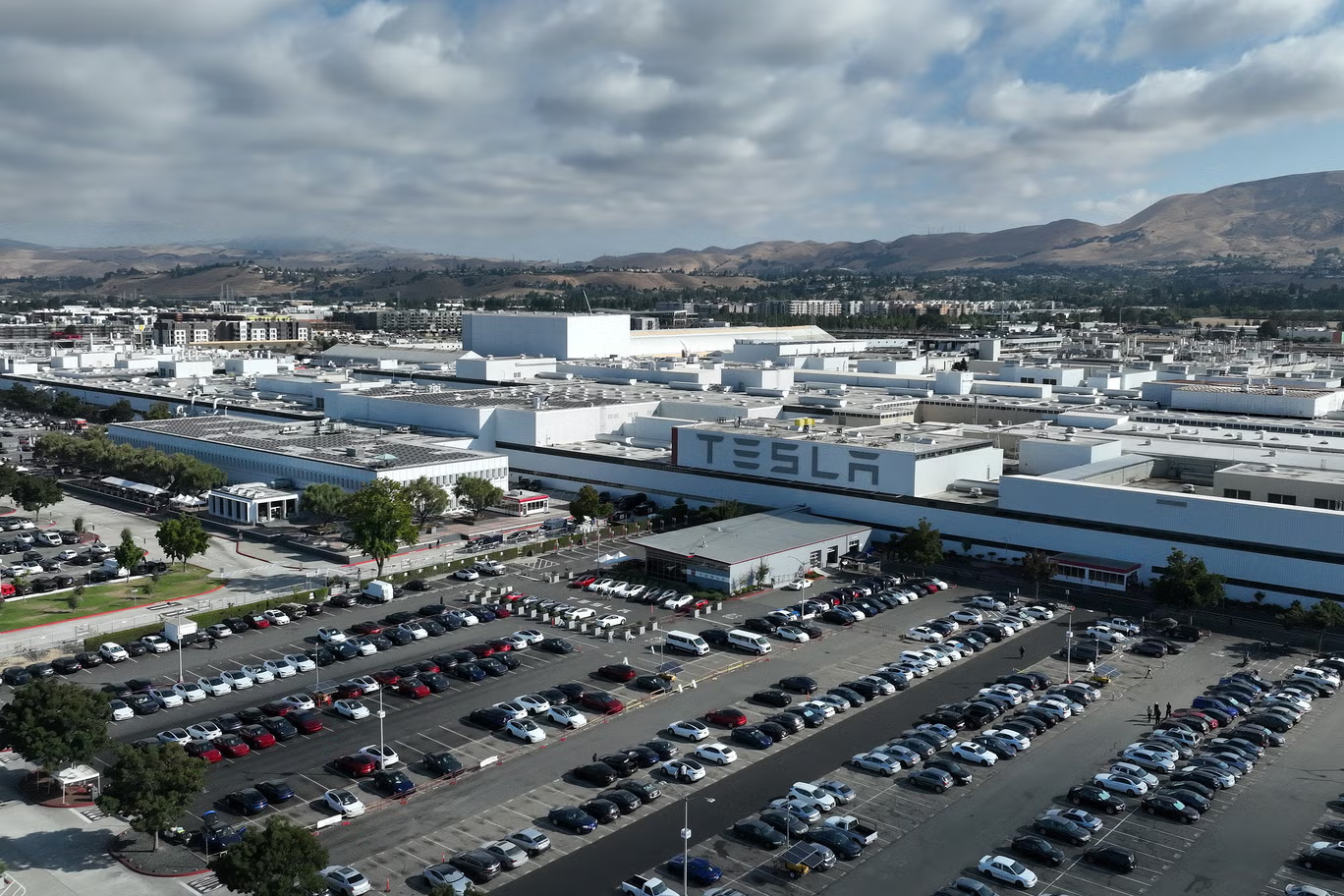
    The chair of Tesla’s board, Robyn Denholm, has not heeded his advice. Ms. Denholm has made $198 million in the past six months selling Tesla stock that she earned for serving on the board, according to a New York Times analysis of securities filings.

    That brings her total profit on the sale of Tesla stock to more than $530 million since becoming the board’s leader in late 2018, far more than her peers have made at the most valuable U.S. companies during that time, the analysis shows.

    The share sales raise questions about Ms. Denholm’s confidence in Tesla’s prospects. Her most recent sales, executed under a prearranged trading plan filed last summer, came as Mr. Musk, the company’s chief executive, took a time-consuming role in the Trump administration. Tesla’s car sales have plunged partly because Mr. Musk’s political activities have turned off some car buyers. The company’s quarterly profit fell in the first three months of 2025 to its lowest level in four years.

    Ms. Denholm earned the right to buy those shares, known as stock options, for serving on the board, a part-time position. Tesla granted the options between 2014 and 2020, and its share price has soared since then, giving Ms. Denholm the right to buy shares for a lot less than their current price. Last week, for example, she bought more than 112,000 shares for $24.73 apiece and sold them the same day for more than $270.

    Stock Sales Aligned With Surging Share Prices

    Robyn Denholm filed a stock sale plan soon after Elon Musk endorsed Donald Trump for president. The first sale came the week after Mr. Trump was elected.

    “To dump her stock, it doesn’t send a message that this is a board chair who is invested in the future of the company,” said the New York City comptroller, Brad Lander, who oversees the city’s five public pension funds. As of March, those funds held more than three million Tesla shares, valued at the time at roughly $817 million.

    A spokesman for Ms. Denholm said Tesla paid board members in a manner that was “completely aligned with shareholder interests.”

    “The reason the value of the Tesla directors’ options has increased is because Tesla has outperformed its industry peers and created outsized returns for the owners of the company, the shareholders,” he said in a statement.

    Stock options, which for years made up the bulk of Tesla directors’ compensation, are valuable only if the company’s share price rises, as Tesla’s did. Those who exercise their options to buy company stock can sell or hold on to their new shares.

    Ms. Denholm has sold more than 1.4 million Tesla shares and continues to hold 85,000 of them and roughly 49,000 stock options, according to the Times analysis. Equilar, a compensation research firm, reviewed the methodology. Her latest wave of stock sales were carried out under the plan she set into motion in July, soon after Mr. Musk endorsed Donald J. Trump for president.

    Under securities regulations, executives and other insiders can use such plans to trade shares in their companies. They are not required to disclose many details of their plans, including the reason for them or the conditions under which shares will be sold. They also have a lot of leeway to cancel the plans.

    A native of Australia and veteran technology executive, Ms. Denholm has maintained a low profile and rarely speaks publicly about Tesla or Mr. Musk. She was recruited to the Tesla board in 2014 and appointed chair in 2018 after Mr. Musk agreed to step down from the position under a settlement with the Securities and Exchange Commission.

    She and other board members have been criticized by some investors, activists and a Delaware judge for not serving as counterweights to Mr. Musk, who is widely seen as brash and impulsive. Tesla directors have also been faulted for failing to ensure that he remains focused on Tesla.

    “Musk operates as if free of board oversight,” Chancellor Kathaleen St. J. McCormick of the Delaware Court of Chancery wrote last year when she ruled in favor of a shareholder who had challenged Mr. Musk’s 2018 pay package, valued at around $56 billion. Judge McCormick, in that ruling, described Ms. Denholm’s style of overseeing Mr. Musk as “lackadaisical.”

    Tesla has appealed the decision, which voided Mr. Musk’s pay package, and Ms. Denholm has pushed back on Judge McCormick’s critique.

    “Anybody who knows me, knows that I am not lackadaisical, now that I know what that word means,” Ms. Denholm told The Financial Times last year. “It is probably the furthest from the truth. I am really intense and very diligent in what I do.”

    During the trial over Mr. Musk’s pay, Ms. Denholm described the money she had made from her Tesla board service as “life-changing.” Director pay at Tesla was subject to a separate lawsuit that Ms. Denholm and other board members settled in 2023.

    Mr. Musk, who has long been a part-time chief executive of Tesla, has taken on even more responsibilities over the years. He has become a regular presence in Washington, leading President Trump’s efforts to slash government spending and dismiss federal government employees.

    Mr. Musk said recently he would cut back his time in Washington to one or two days a week. His attention is likely to remain divided, however, because he also leads several other businesses, including SpaceX and X, the social media site he owns.

    Ms. Denholm’s first sales under her recent trading plan took place in November, the week after the presidential election, as Tesla’s share price was climbing. The stock reached a new high a few weeks later, in December. She continued to sell through early May, as the company faced consumer backlash over Mr. Musk’s political activities and the stock price fell.

    The stock is now down around 34 percent from its peak after recovering some of its losses over the last few weeks.

    Mr. Musk acknowledged Tesla’s difficulties during a meeting with company employees in March. “If you read the news it feels like, you know, Armageddon,” he said half-jokingly.

    He went on to advise workers not to sell their stock, saying Tesla would become the most valuable company in the world as it perfected self-driving taxis and robots that resembled and moved like humans. “The future is incredibly bright,” he said.

    Ms. Denholm’s sales have far outstripped those by other Tesla directors, with the exception of Mr. Musk, who remained on the board after stepping down as chair.

    She and other current and former Tesla board members agreed to settle a shareholder lawsuit over their pay in 2023, collectively agreeing to return compensation valued at $735 million. They denied wrongdoing. Stock options valued at more than $130 million were canceled on May 1 to satisfy Ms. Denholm’s obligations under that settlement, securities filings show.

    Board members agreed in June 2021, after that lawsuit was filed, to forgo new equity grants.

    Ms. Denholm also made more money selling her company’s stock than the leaders of other corporate boards during the same period. The Times reviewed stock sales by board chairs at the most valuable U.S. companies who, like Ms. Denholm, are not executives at those companies.

    The nonexecutive chair with the next-highest profit from selling shares in the company he oversees was Stephen Hemsley of UnitedHealth Group. Mr. Hemsley has earned more than $100 million from the sale of UnitedHealth shares since November 2018, though he received all of that stock while he was chief executive of the health care company.

    UnitedHealth Group confirmed the findings, but declined to comment. On Tuesday, the company announced that Mr. Hemsley would retake the chief executive job in addition to serving as chairman.

    Share sales by executives and directors often predict poor performance by the companies they lead, some academic research has found.

    Leaders like Ms. Denholm have access to nonpublic information and a deep understanding of how broader economic forces may affect company performance. That can make their trades especially profitable, according to Nejat Seyhun, a professor of finance at the University of Michigan.

    Insiders “set up plans when they have information,” Professor Seyhun said. If conditions change, “they can cancel those plans.”

  • United CEO Scott Kirby has reassured customers that Newark Airport is safe

    United CEO Scott Kirby has reassured customers that Newark Airport is safe

    United Airlines CEO Scott Kirby on Tuesday moved to calm growing concerns about operational safety at Newark Liberty International Airport (EWR), assuring customers that the facility remains “absolutely safe and fully compliant” despite a recent series of technical disruptions and staffing shortfalls that prompted the airline to reduce its daily flight schedule from the hub.

    In a letter shared with frequent flyers and during remarks at a press conference held at United’s Terminal C, Kirby acknowledged the recent frustrations experienced by passengers traveling through Newark—United’s third-busiest hub—while pushing back on what he called “sensationalist narratives” about safety risks.

    “Let me be very clear: Newark is safe,” Kirby said. “We are facing challenges, yes—but they are operational, not structural. We are proactively scaling back to ensure reliability and safety remain our top priorities.”

    United has cut approximately 14% of its daily departures out of Newark, or about 40 flights, citing a “perfect storm” of FAA staffing constraints, legacy software outages, and an unusual spate of severe weather over the past six weeks that has disproportionately affected Northeast air traffic.

    The reductions are temporary, Kirby emphasized, with most cuts affecting regional and short-haul domestic routes, such as service to upstate New York and parts of New England. Transatlantic flights and major domestic corridors remain largely intact.

    “We’d rather operate fewer flights well than stretch the system too thin,” said Toby Enqvist, United’s Chief Customer Officer.

    According to internal memos obtained by The New York Budget, recent issues at Newark have included:

    • Technology Glitches: A malfunction in United’s gate management software caused widespread delays in late April.
    • Air Traffic Staffing: FAA tower staffing at EWR remains 23% below optimal levels, according to union estimates.
    • Runway Congestion: Construction and overlapping arrival times led to ground delays averaging 65 minutes during peak evening hours.

    The FAA, which oversees air traffic control, acknowledged the staffing shortfall and pledged to accelerate hiring and training efforts. A spokesperson confirmed that Newark is among the agency’s top-priority zones for controller recruitment in 2025.

    Meanwhile, the Port Authority of New York and New Jersey—the operator of EWR—said the airport infrastructure is “not in question,” pointing instead to “national airspace bottlenecks” and rising passenger demand as contributing factors.

    “Our systems passed all recent safety inspections,” said Kevin O’Toole, chairman of the Port Authority. “We are in constant communication with United and federal authorities to minimize disruption.”

    Despite assurances, the disruptions have not gone unnoticed by travelers. On social media, some have labeled EWR the “black hole of East Coast airports,” citing multiple cancellations and missed connections.

    United’s Net Promoter Score (NPS) dropped 7 points in Q2 compared to the same period last year, with the Newark hub cited as the number one complaint area in customer service surveys.

    To win back goodwill, United is offering 5,000-mile travel credits to MileagePlus members who experienced flight disruptions out of EWR between April 10 and May 5. The airline is also deploying additional customer service personnel and rebooking agents at the terminal during peak hours.

    “We owe it to our customers to get this right,” Kirby said. “We’ve made hard choices, and we’re going to be transparent every step of the way.”

    United executives said they expect flight schedules to return to normal by late June, contingent on FAA staffing progress and continued stability in their software systems. The airline has also initiated a $300 million investment in terminal upgrades and digital infrastructure at Newark, set to roll out over the next two years.

    Industry analysts note that while United is not alone in grappling with post-pandemic capacity strains and labor mismatches, its aggressive Northeast footprint makes it particularly vulnerable to chokepoints like Newark.

    “This is about long-term resilience,” said Helane Becker, airline analyst at TD Cowen. “United has taken a short-term reputational hit, but their decision to reduce flights instead of risking bigger meltdowns shows maturity.”

    Newark remains a critical pillar of United’s domestic and international network, and despite current operational headwinds, the airline’s leadership insists safety is not up for compromise. With summer travel season approaching, United’s next challenge is to restore passenger confidence—flight by flight.

  • The world’s largest automaker reports a 21% profit drop as tariffs take a toll

    The world’s largest automaker reports a 21% profit drop as tariffs take a toll

    Toyota Motor forecast a 21% profit decline for the current financial year on Thursday, as the strain from US President Donald Trump’s tariffs and an appreciating yen take some of the shine off strong demand for hybrid vehicles.

    The world’s top-selling automaker expects operating income to total 3.8 trillion yen ($26 billion) in the year to March 2026, versus 4.8 trillion yen in the financial year that just ended. That was roughly in line with the 4.75 trillion yen average of 25 analysts surveyed by LSEG.

    Toyota faces the risk of being hit by widespread fallout from Trump’s tariffs, not only from the impact on its US-bound exports but also because of the potential for a downturn in consumer sentiment in the US and elsewhere. Price rises can lead to a decline in consumer sentiment.

    The lower profit for the coming year was due to the negative impact from a stronger yen, as well as higher material prices and the impact of tariffs, Toyota said in a presentation.

    Like other global automakers doing business in the world’s top economy, Toyota could face high labor costs and be forced to spend more on investment, if it decides to expand its US production base further.

    While Toyota has seen its vehicle sales in China fall less than other Japanese automakers, it has still struggled to halt a sales decline in the world’s biggest auto market amid heavy competition from Chinese brands.

  • Boeing’s current plan is to deliver the new Air Force One jets in 2027, which is before Trump could leave office

    Boeing’s current plan is to deliver the new Air Force One jets in 2027, which is before Trump could leave office

    Long-delayed next Air Force One jets from Boeing might now be delivered by 2027 — in time for President Donald Trump to use them, according to a top Air Force official.

    While that’s still years behind the original delivery date of 2022, it’s one to two years earlier than Boeing had most recently predicted.

    Trump has expressed anger at the delays, and he reportedly had been looking at buying a different jet to use on an interim basis.

    News of the potential 2027 delivery came Wednesday from Darlene Costello, the Air Force’s acting acquisitions chief, who testified before the House Armed Service Committee about recent negotiations between the Air Force and Boeing.

    “I would not necessarily guarantee that date, but they are proposing to bring it in ’27, if we can come to agreement on the requirement changes,” Costello said.

    She was referring to contract requirements that are being loosened to get to that earlier date – such as the Air Force “relieving” Boeing of some of the top-clearance security requirements for workers performing work on the aircraft, which has been blamed for some of the delays.

    Boeing said it had no comment on Costello’s testimony.

    Keeping Trump and the Air Force happy is critical for Boeing, which gets 42% of its revenue from US government contracts, according to its most recent filing.

    Boeing’s $3.9 billion contract to replace the two Air Force One jets has become an expensive and embarrassing albatross. Boeing has reported losses totaling $2.5 billion already on the program, known as VC-25B, since it agreed to be responsible for what has become soaring cost overruns.

    There are multiple reasons for the delay in delivery. After signing the original contract in 2017, Boeing began refurbishing two 747 jets in February 2020 that it had built for another customer but never delivered because of that customer’s bankruptcy — a process that in hindsight probably was more expensive and time consuming than if it had built from scratch.

    And the onset of the Covid-19 pandemic, which started just weeks after Boeing began refurbishing the planes, caused significant additional delays.

    Current jets used by six different presidents

    The two jets now in use, which have the code letters VC-25A and carry the Air Force One designation when the president is on board, have been in service for nearly 35 years, starting during the term of President George H.W. Bush. Replacing the planes has long been a priority for Trump.

    “I’m not happy with the fact that it’s taken so long,” Trump told reporters aboard Air Force One in February. “There’s no excuse for it.” He said he wouldn’t turn to Boeing’s European rival Airbus, but would consider buying a used 747 and having a different company refurbish it for use as Air Force One.

    Soon after those comments Boeing CEO Kelly Ortberg told investors that he is “all in” on trying to speed up the delivery and praised suggestions made by Elon Musk, who visited the Texas facility where the work is being done in December on Trump’s behalf.

    “The president is clearly not happy with the delivery timing,” Ortberg said at that time. “He’s made that well known. Elon Musk is actually helping us a lot in working through the requirements… to try to help us get the things that are non-value-added constraints out of the way, so we can move faster and the president those airplanes.”

    Even before Trump took office for the first time in 2017, he complained about the cost of the Boeing contract and threatened to cancel an existing deal. In February 2018 he negotiated the current contract for two of the jets, which saved the Air Force $1.4 billion over the previous deal, the White House said at the time. He had requested that the aircraft be delivered by 2021.

    The Wall Street Journal, citing people familiar with the situation, reported last week that the government has commissioned defense contractor L3Harris to overhaul a Boeing 747 formerly used by the Qatari government, with the aim to have it in service by this fall as an Air Force One jet. But that contract has not been announced by the government, and Costello was not asked about it during the hearing.

    The challenge is not the basic jet, but what it takes to turn a run-of-the-mill Boeing 747 into the flying communications and command post fit for the president of the United States, said Richard Aboulafia, managing director at AeroDynamic Advisory, an aerospace consulting firm. They are supposed to be able to fly and protect its occupants from missile attack or even the shock waves of a nuclear blast.

    “You can have a jet anytime,” he said. “But it takes a great deal of work to have encrypted communications and manage the military and federal government from anywhere around the world in any circumstance.”

  • Tesla Resolves Lawsuit from Black Worker Claiming Widespread Harassment

    Tesla Resolves Lawsuit from Black Worker Claiming Widespread Harassment

    Tesla has settled a racial discrimination lawsuit by a Black female employee who claimed a manager at its Fremont, California, plant sometimes greeted workers by saying “welcome to the plantation” or “welcome to the slave house.”

    Raina Pierce, who installed latches on car doors, and the automaker led by billionaire Elon Musk agreed to a settlement proposed by a mediator, according to a joint filing Thursday in San Francisco federal court.

    Terms were not disclosed, and both sides are finalizing a settlement agreement, the filing said.

    Lawyers for Pierce and Tesla did not immediately respond to requests for comment. Musk is not a defendant.

    Pierce said she was subjected to pervasive harassment, including a common racial slur she said was scrawled throughout the plant including in bathrooms, and a gender-based insult.

    She also said she was yelled at or disciplined for conduct for which non-Black workers were excused.

    Pierce’s complaint quotes a Tesla employee who temporarily joined her production line and said, “Ma’am, you need to go to HR because these leads are saying things about you that are not right.”

    Tesla has faced other accusations of racial discrimination and harassment at the Fremont plant.

    One plaintiff, elevator operator Owen Diaz, settled in March 2024 for undisclosed terms after a $3.2 million jury verdict. Another jury had awarded Diaz $137 million in 2021, but the case was retried after he rejected a lower sum the judge proposed.

  • Hertz Stock Soars 56% After Billionaire Investor Bill Ackman Reveals His Stake

    Hertz Stock Soars 56% After Billionaire Investor Bill Ackman Reveals His Stake

    Share prices of Hertz surged 56% after billionaire investor Bill Ackman’s firm disclosed a stake in the car rental company.

    Pershing Square Capital Management said in a regulatory filing on Wednesday that it had acquired 12.7 million shares valued at $46.5 million. Pershing Square owns 4.1% of Hertz, making it the third-largest investor after Knighthead Capital Management and BlackRock, according to LSEG data.

    CNBC reported on Wednesday that Pershing Square’s purchase — which includes shares and swaps — took its Hertz holdings to about 19.8%

    Hertz shares closed 56.4% higher at $5.71 apiece on Wednesday and were up 33.8% in after-hours trade. The stock was little changed this year before Pershing Square’s disclosure.

    Even though Hertz’s gains on Wednesday were massive, the car rental company’s stock isn’t a stranger to such eye-watering jumps.

    In summer 2020, Hertz’s shares surged over 800% in weeks after filing for pandemic-induced Chapter 11 bankruptcy protection — making it the original meme stock.

    It exited Chapter 11 bankruptcy in 2021 and started investing heavily in electric vehicles, including a plan to buy 100,000 Teslas.

    However, the company started backtracking on its EV plan due to the cost of maintenance and repairs for the cars. Used EV prices have also been falling sharply.

    Hertz was selling a significant number of its EVs by 2024 and was even asking customers if they wanted to buy the vehicles.

    The failed bet on EVs showed up in earnings. Vehicle depreciation cost Hertz a $1 billion non-cash impairment charge in the third quarter.

    Pershing Square did not immediately respond to Business Insider’s request for comment sent outside regular business hours.

  • Tariffs disrupt Boeing’s supply chain, jeopardizing U.S. jobs and exports

    Tariffs disrupt Boeing’s supply chain, jeopardizing U.S. jobs and exports

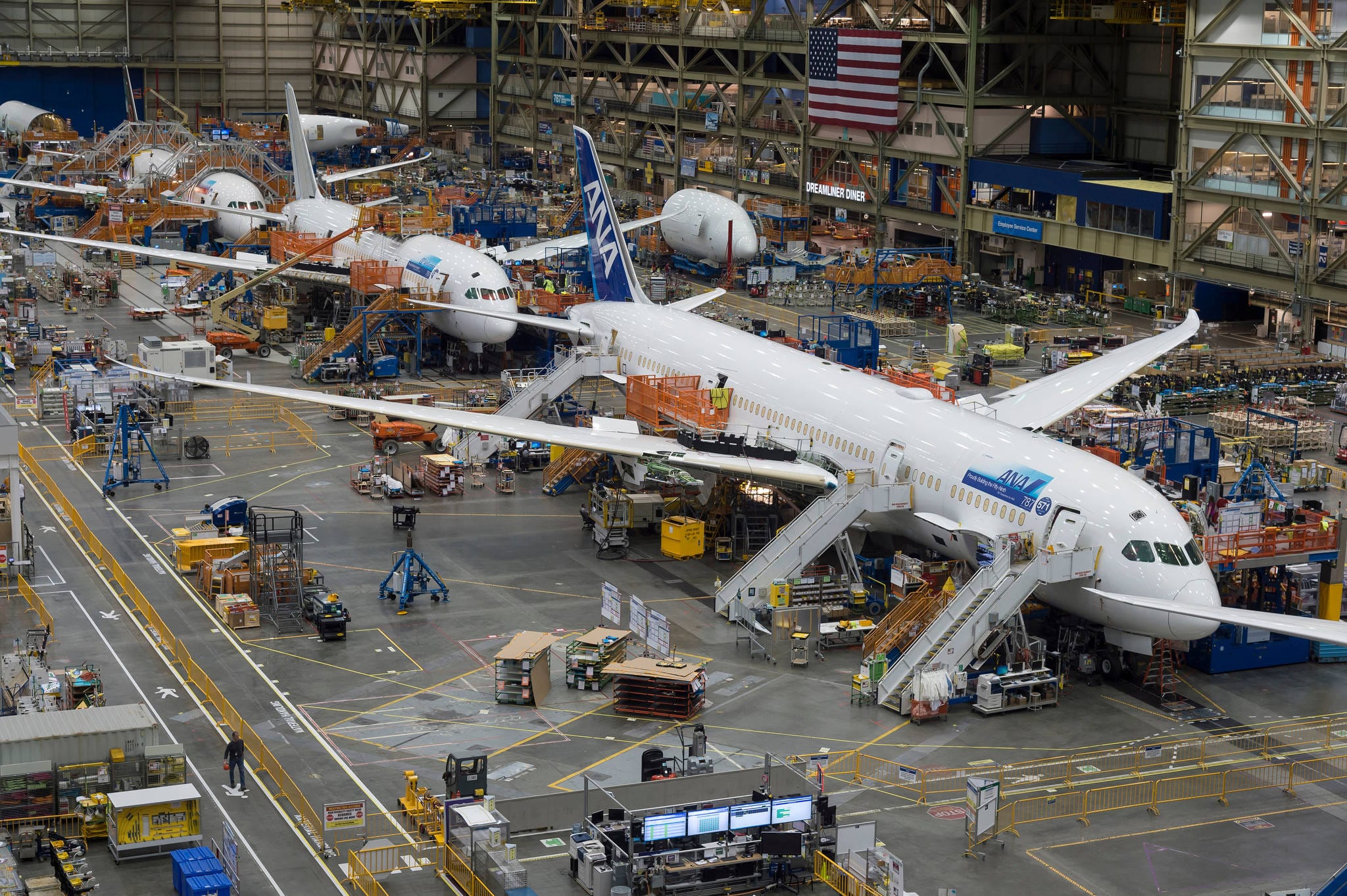
    Boeing’s 787 Dreamliner jet is a multinational concoction, made of parts from around the globe. Wings from Japan. Doors from France. Portions of the fuselage are built in Italy before they are shipped to the United States to be assembled by workers in South Carolina.

    It’s an arrangement made possible by a nearly 50-year-old trade agreement that allowed Boeing and other players in the U.S. aerospace industry to sell airplanes and buy parts from anywhere in the world, duty-free.

    Now President Donald Trump’s global tariffs threaten to disrupt this interlocking supply chain. For the first time in nearly half a century, Boeing will pay a levy to import those wings, doors and other components. For now, there is a new 10 percent tax on most imports. But that levy could rise depending on what the president decides during a 90-day reprieve he declared before stiffer tariffs land on most countries.

    While Trump has said his sweeping protective tariffs will reduce the U.S. trade deficit, the levies on Boeing’s parts supply line will tax a company that is America’s biggest exporter of goods. About 80 percent of Boeing’s multimillion-dollar planes are shipped to overseas customers.

    Trump’s trade war also is causing retaliatory moves that could hurt Boeing. On Wednesday, conflicting news reports suggested China had directed its national carriers to stop ordering or accepting new Boeing planes. Trump then posted on Truth Social that China “just reneged on the big Boeing deal, saying they will ‘not take possession’ of fully committed to aircraft.” Trump did not elaborate on what deal he was referencing, adding to the confusion. Boeing, based in Arlington, Virginia, did not respond to requests for comment.

    “These tariffs and trade restrictions have unleashed chaos in the global aerospace and airline industry,” said Ken Quinn, a partner at Clyde & Co and former general counsel at the Federal Aviation Administration. “It’s only harmful and destructive.”

    Boeing is not the only aerospace company with international operations coping with the effects. Airbus, the European aerospace manufacturer that has an assembly operation in Alabama, said it is assessing impacts. Other international vendors that make everything from engines to landing gear face disruption.

    Experts say it makes little sense to apply tariffs so broadly they burden the biggest U.S. exporters.

    “I absolutely agree that there are certain countries, most notably China, that have mistreated the United States when it comes to trade,” said Scott Hamilton, managing director at Leeham Company, an aviation consultancy firm. “But you just don’t go out there with a sledgehammer. You gotta go out with a ball peen hammer to deal with this stuff.”

    The 1980 Agreement on Trade in Civil Aircraft governs how companies do business around the world and is credited with opening markets to U.S. aerospace products, particularly in Europe. Dak Hardwick, vice president of international affairs for the Aerospace Industries Association, an industry trade group, said the trade pact has translated into a more than 2,000 percent increase in U.S. exports over a 40-year period.

    The suspension of the agreement has confounded many experts and industry officials. Richard Aboulafia, a managing director at Aerodynamic Advisors, said it makes no sense given the industry enjoys a “monster trade surplus” in the United States.

    The American aerospace industry exported $136 billion worth of goods in 2024, helping to lower the overall U.S. trade deficit by 13 percent, according to Morningstar. Aerospace was second only to the oil industry in exports. The administration did not respond to questions about the 1980 trade pact and why it thinks tariffs should be imposed on aerospace companies.

    Parts for the 787 come from around the world to Boeing’s factories in Charleston, South Carolina, which employ about 7,800 workers. The largest components, such as wings and fuselage sections, arrive from aboard air freighters dubbed “Dreamlifters” with cavernous cargo bays, which Boeing built especially for the job.

    Trump visited the factory in 2017, only a month after he was inaugurated for his first term, to celebrate the plant as an example of American manufacturing while denouncing companies that offshore their work.

    “Our goal as a nation must be to rely less on imports and more on products made right here in the U.S.A.,” he told the crowd then. “I don’t want companies leaving our country, making their product, selling it back, no tax, no nothing, firing everybody in our country.”

    Trump’s tariffs have set off a private lobbying effort as the aerospace industry seeks to minimize the impact, according to one industry leader who spoke on the condition of anonymity because of the sensitivity of negotiations.

    “There are war rooms being set up at suppliers across the industry,” said Kevin Michaels, a managing director at AeroDynamic Advisory. He said companies will have to negotiate with their customers who will pay the higher costs.

    Boeing imports parts built at its production facility in Sheffield, England, which the company opened in 2018 to manufacture high-tech components for the next generation 737, the 737 Max and 767 aircraft. The company also sources approximately $1.25 billion a year worth of parts from a network of more than 300 suppliers in India, where it directly employs 7,000 people, while an additional 13,000 people work for other partners in its supply chain, according to the company’s website.

    Airbus employs more than 5,000 people in the United States. It has 2,000 employees in Mobile, Alabama, alone, where workers assemble the company’s A220 and A320 jets at a 53-acre campus.

    The company’s arrival was transformational, said Bradley Byrne, CEO of the Mobile Chamber. Airbus broke ground on the factory in 2013, and workers began assembling A320 jets two years later. (Mobile landed the Airbus assembly plant after losing its bid to be home to Boeing’s 787 Dreamliner campus, which went to Charleston.) It’s helped the community attract more businesses as suppliers seek to be closer to the company that buys their products.

    Byrne has been in close contact with the company, most recently receiving assurances that it is moving forward with plans to open a third manufacturing line in Mobile, which would add 1,000 jobs. Still, Byrne can’t help but worry.

    “We don’t know, and Airbus doesn’t know, what impact [tariffs] could have on the number of orders that they get,” he said.

    For its part, Airbus said it is trying to figure out the effect tariffs will have.

    “Like others in the industry, we are actively assessing the impact of these trade policy changes on our operations and supply chain, and are working closely with our customers and suppliers to evaluate how best to navigate these evolving conditions,” the company said in a statement.

    A crucial question roiling the industry is who will pick up the tab for U.S. tariffs. In an earnings call this month, Delta Air Lines CEO Ed Bastian said the carrier will not be responsible for the additional costs on the jets it expects to receive from Airbus this year.

    “These times are pretty uncertain, and if you start to put a 20 percent incremental cost on top of an aircraft, it gets very difficult to make that math work,” he said.

    Howmet Aerospace, a Pittsburgh-based company that supplies components for jet engines and counts Boeing and Airbus among its customers, has warned that it might halt some shipments because of tariffs, according to Reuters. In a letter sent to customers, the company said it may not be able to honor contract prices.