Author: kenzie Lauren

  • Meta appoints Dina Powell McCormick and Patrick Collison as new board directors amid a refresh.

    Meta appoints Dina Powell McCormick and Patrick Collison as new board directors amid a refresh.

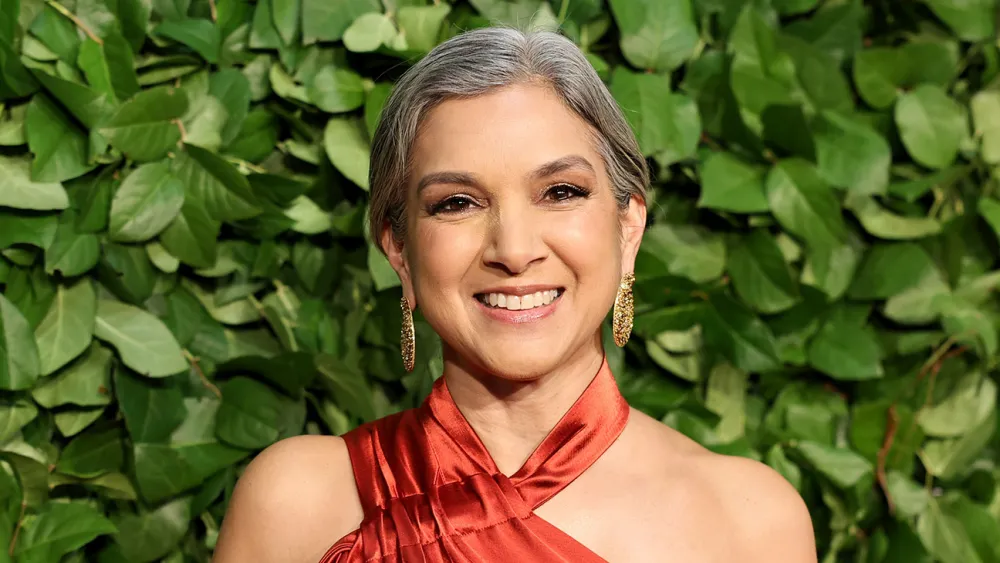
    The tech giant Meta Platforms Inc. continues to refresh its board of directors, naming Dina Powell McCormick and Patrick Collison as board members, effective April 15.

    Collison is the co-founder and CEO of the payments platform Stripe, while Powell McCormick is vice chair, president and head of global client services at the merchant bank BDT & MSD Partners. 

    Powell McCormick also has strong connections in Republican politics, serving as deputy National Security Advisor to President Trump, and as an assistant Secretary of State for Condoleezza Rice. She is also married to Republican Senator Dave McCormick of Pennsylvania.

    The additions of Collison and Powell McCormick to Meta’s board comes just a few months after Meta CEO Mark Zuckerberg announced three new board members, including UFC CEO Dana White. The company has now added five new board members in just four months.

    “Patrick and Dina bring a lot of experience supporting businesses and entrepreneurs to our board,” Zuckerberg said in a statement. “Patrick is deeply committed to expanding economic opportunity, and Dina has a long career advocating for economic development and supporting entrepreneurs. Their perspective will be extremely valuable to businesses that rely on our services to grow.”

    “Between WhatsApp, Instagram and Facebook, Meta is one of the internet’s most important platforms for businesses. I look forward to helping them navigate the abundant opportunities of the coming years,” said Collison.

    “I’m excited to bring my experience in finance, government and economic development to support the people and entrepreneurs who use Meta’s services,” added Powell McCormick.

  • Trump eased one trade war. Another may just be getting started.

    Trump eased one trade war. Another may just be getting started.

    The United States and China have sharply raised tariffs on each other’s imports over the last week, raising the prospect of a long and painful trade war between the world’s two largest economies.

    Even as investors rallied to his decision to pause “reciprocal” tariffs on imports from dozens of countries Wednesday, President Donald Trump raised tariffs on Chinese goods to 145 percent — an increase of nearly 50 percent in a day, and his fourth tariff action against Beijing since January. President Xi Jinping has not backed down, either, retaliating by raising China’s tariffs on U.S.-made goods to 84 percent and imposing new curbs on critical resources. (Trump on Wednesday said the tariff rate on China would be 125 percent, but a White House official, speaking on the condition of anonymity to explain government policy, said Thursday the actual rate would be 145 percent.)

    The intensifying financial hostilities represent a potentially significant threat to the United States and global economies regardless of the delay in higher tariffs for other trading partners. Government officials in Beijing and Washington have, for years, girded for a major clash between the two superpowers, and some economists say further escalation could do perhaps as much to push the U.S. into a recession as Trump’s initial tariff proposal would have.

    Treasury Secretary Scott Bessent said Wednesday morning that “everything is on the table” to respond to China, and lawmakers in Congress have begun pushing measures designed to increase financial pressure on Beijing.

    The two nations have become increasingly interlinked over the past several decades, with Americans dependent on cheap consumer imports and Chinese exporters reliant on the vast U.S. market. The trade ties include iPhones (made in China), soybeans (grown in the United States) and financial instruments that form the bedrock of the U.S. financial system. The consequences of an all-out trade war would be global; combined, the two countries account for more than 40 percent of the world economy.

    China accounts for about 14 percent of U.S. imports, and the tariffs on Chinese goods are now so high that the overall U.S. tariff rate rose slightly Wednesday even though Trump simultaneously lowered duties on many other countries, according to Ernie Tedeschi, a former Biden administration official now at Yale University’s Budget Lab.

    “Everyone is breathing a sigh of relief today, but if we’d just started with just 100-plus percent tariffs with the world’s two largest economies, we’d be saying we’re in a global trade war the likes of which we have not seen in decades‚” said Josh Lipsky, senior director of the Atlantic Council’s GeoEconomics Center. “If these tariffs were to stay on at this level … the recession risks are still high, in part because there’s still so much uncertainty.”

    Jason Furman, a Harvard University economist who served in the Obama administration, said Trump’s tariffs are “now higher and more inflationary” than they were when the president unveiled major trade measures on April 2.

    There are indications that de-escalation remains possible. On Wednesday, Trump appeared to express sympathy for the Chinese position, saying that Xi wanted to reach an agreement but that Beijing was not sure how to do so. The president said he was optimistic further escalation would not prove necessary and called Xi “a friend of mine” who understood how to reach a deal.

    “China wants to make a deal. They just don’t know how quite to go about it,” Trump told reporters. “They don’t know quite how to go about it, but they’ll figure it out.”

    Later in the day, he said he did not think higher tariffs on China would be necessary: “I don’t think we’ll have to do it more.”

    Beijing had not retaliated by Thursday afternoon local time. “We will not sit and watch the destruction of international trade rules,” said Lin Jian, a spokesman for the Foreign Affairs Ministry. “If the U.S. insists on launching a tariff or trade war, China will fight to the end.”

    Other experts warn that it’s possible both leaders would be unable to soothe the tensions inflamed by a rapid set of new trade barriers. And many officials influential with the Trump administration are pushing measures that could deepen, rather than calm, economic hostilities. Economists and policymakers in both parties have long accused China of unfair trade practices, such as stealing U.S. intellectual property and undercutting labor and environmental standards.

    Sen. Rick Scott (R-Florida), a close Trump ally, has pushed legislation to require stockbrokers to provide warning labels for investors on firms linked to Chinese entities. While in the Senate, Secretary of State Marco Rubio also pushed significant restrictions preventing Chinese firms from accessing U.S. capital markets, blocking them or their subsidies from U.S. exchanges. Investor Kevin O’Leary, who has spoken with Trump, has called for tariffs of 400 percent on China.

    “There’s not a high enough tariff for me. I don’t think we should buy anything from China,” Scott said in an interview. He added, of the Trump administration: “I think they get it — they understand that China wants to destroy us, destroy our allies, destroy our way of life.”

    Top Trump advisers such as Bessent and Stephen Miran, the chair of the White House Council of Economic Advisers, have said they believe China is in a much more vulnerable position than the U.S. That has suggested their willingness to push even greater punitive measures, perhaps beyond import duties.

    “We might end up with escalation that goes beyond tariffs,” said Eswar Prasad, a Cornell University professor who was previously chief of the financial services division at the International Monetary Fund. “As of today, many of the scenarios considered completely unrealistic are looking more likely.”

    Beijing has tools for further retaliation. China could move faster to shed its large U.S. Treasury holdings, which would drive up the price of issuing debt and disrupt the bond market. It could choose to target the U.S. housing market by selling hundreds of billions in mortgage-backed securities, which could push rates up. Other options include restricting pharmaceutical exports, semiconductor chips, critical minerals and other resources essential to the U.S. economy, said Adam Posen, president of the Peterson Institute for International Economics, a centrist think tank.

    “They can create shortages of things we really need and can’t switch away from anytime soon,” Posen said.

    Posen also said China could cut off tourism to U.S. cities.

    “Essentially, China does not have to engage in the tariffs game with Trump,” he said. “They can deprive us of things we need directly either for households or for our everyday lives.”

    China cannot back down in the face of what amounts to an attack on Chinese manufacturing, said Wang Yiwei, an international relations scholar at Renmin University in Beijing.

    “When no common ground exists between ‘the great rejuvenation of the Chinese nation’ and ‘make America great again,’ decoupling becomes the underlying reality and tensions will only escalate,” Wang said, referring to a favored slogan of Xi’s and Trump’s slogan.

    Yet Trump may not be seeking more confrontation. Hawkish voices in the administration believe China is weak and that the U.S. should take advantage of this opportunity to increase financial pressure, according Michael Pillsbury, a leading scholar on China at the Heritage Foundation, a right-leaning think tank. But Pillsbury said Trump’s comments suggest a desire to bring down the temperature.

    “The super-hawks are saying, ‘China is down now; we really have to finish this off.’ I oppose that approach,” Pillsbury said. “Trump is right: The Chinese don’t know exactly how to get out of this situation. We need to find a back-channel way to help them see what they should do next.”
  • Radhika Jones, Vanity Fair’s chief editor, steps down

    Radhika Jones, Vanity Fair’s chief editor, steps down

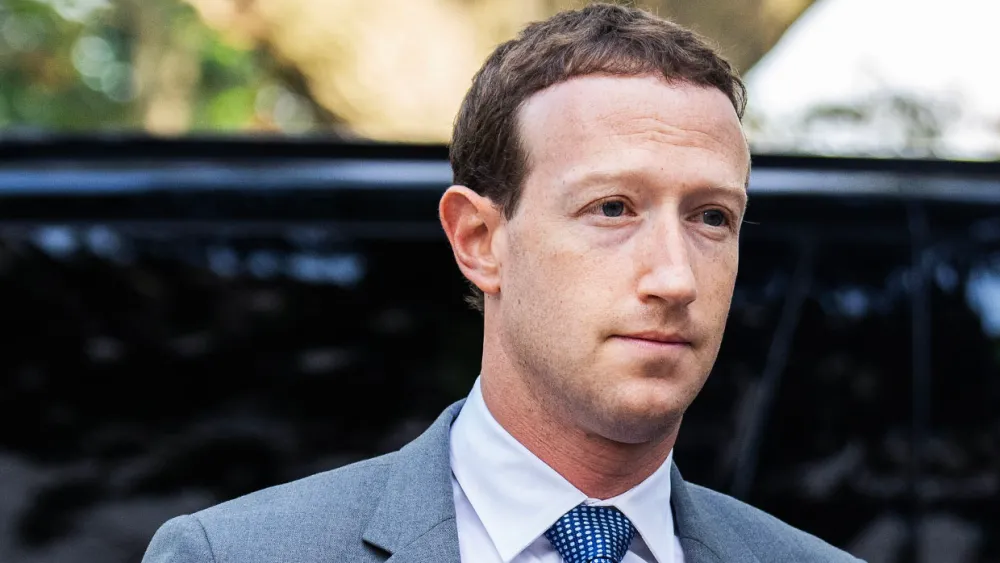
    Radhika Jones, the editor of Vanity Fair since 2017, said on Thursday that she would step down, a surprise decision that opens up one of the most highly visible jobs in American journalism.

    Ms. Jones, 52, said in an email to Vanity Fair’s staff that she was leaving to take on new challenges, adding that she didn’t want to experience the “horror of staying too long at the party.”

    “I began to feel, more powerfully, the pull of new goals in my life, around family and friends and writing and other ways to make an impact,” Ms. Jones wrote.

    She addressed Vanity Fair’s staff in a short meeting at the magazine’s offices at One World Trade Center on Thursday, joined by Anna Wintour, the chief content officer at the magazine’s publisher, Condé Nast, who gave Ms. Jones an emotional farewell, according to a transcript of the gathering.

    Ms. Jones said in her email that her last day would be in the spring. She did not comment on her future plans.

    Ms. Wintour told staff at the meeting that Ms. Jones would help with the transition “as we start the search for a new editor.”

    “We look forward to Vanity Fair’s exciting next chapter,” Ms. Wintour said. She added: “Radhika, we are so grateful for your high standards of journalism, your fearlessness and your empathetic leadership. You will be much missed.” David Remnick, the top editor of The New Yorker, another Condé Nast magazine, called Ms. Jones an editor of “incredible intelligence and grace” in an email.

    “She brought enormous humanity to Vanity Fair and into every meeting of Condé Nast editors,” Mr. Remnick said. “I’ll miss her enormously.”

    Ms. Jones is leaving one of journalism’s top jobs at a time of profound disruption in the magazine business. Though many magazines have been shuttered or sold over the last decades as advertising pages have shrunk, Vanity Fair has held on as a staple of Condé Nast, which also publishes Vogue.

    The magazine’s paid circulation held steady at around 1.2 million from 2017 to 2025, according to figures from the Alliance for Audited Media, with growth in digital subscriptions offsetting a decline in print. Web traffic has declined 39 percent over the last four years, according to the digital analytics firm Comscore.

    Ms. Jones started the job in December 2017, succeeding Graydon Carter, who retired that year after 25 years at the helm. A former editorial director of the books department at The New York Times and a former top editor at Time magazine, she was something of a surprise choice, picked over many of Mr. Carter’s top lieutenants.

    Once her tenure as editor got underway, Ms. Jones had to compete with some of Vanity Fair’s best-known alumni. Mr. Carter launched Air Mail, a digital weekly, after he left, persuading some of his former writers and editors from Vanity Fair to join him. Jon Kelly, a former senior editor at Vanity Fair, launched Puck, a digital start-up that covers much of the same ground as the magazine.

    Ms. Jones was the fifth editor of the modern incarnation of Vanity Fair, a Jazz Age relic that Condé Nast relaunched in 1983 and that became a definitional publication of late-century American excess, celebrity and materialism. Under the editor Tina Brown and later Mr. Carter, the magazine grew into a global brand that was epitomized by its annual Oscar party, where moguls and movie stars mingled over Michelin-starred canapés and an appearance was tantamount to joining the Hollywood elite.

    Mr. Carter, who left the magazine when he sensed that the industry’s glory days were over, released a memoir last week chronicling his years of abundance at Vanity Fair. The tales of Concorde flights and limitless expense accounts only highlighted the diminished state of Condé in an era when social media influencers and digital upstarts have gutted the advertising base that once sustained its printed glossies.

    Ms. Jones’s appointment also coincided with a cultural reckoning within Condé Nast. She lamented that Vanity Fair, which for years had the ability to mint new stars, had overwhelmingly featured white actors on its covers, and her debut issue featured Lena Waithe, the Black actress and screenwriter. Ms. Jones was applauded for her efforts to diversify the magazine’s stable of writers and celebrities, but she also faced pushback from some colleagues who believed that her editorial vision lacked focus and panache.

    The appeal of the Oscar party itself became litigated in the Manhattan and Hollywood press. “When invitations went out this year, one of my big clients asked me, ‘Is Vanity Fair still a hot invite?,’ which tells you everything you need to know,” one publicist said in 2019. (The party remained a coveted ticket under Ms. Jones, generating record revenue this year, and still attracts a high-wattage tier of celebrity.)

    Ms. Jones notched scoops (Beto O’Rourke’s presidential announcement in 2019) and commissioned an Amy Sherald painting of Breonna Taylor, a Black woman who was killed by police officers in Kentucky, that made waves when it appeared as the magazine’s cover in September 2020. Katherine Eban, a correspondent for Vanity Fair, won a Polk Award this year for her reporting on bird flu. But like other modern editors in chief, Ms. Jones was forced to contend with shrinking budgets, layoffs and emboldened story subjects who no longer rely on traditional magazines to reach the public.

  • Jim Simons, the 86-year-old philanthropist who made his mark on Wall Street through the power of mathematics, has passed away

    Jim Simons, the 86-year-old philanthropist who made his mark on Wall Street through the power of mathematics, has passed away

    Jim Simons on April 16, 2007, in New York. (Mark Lennihan/AP)
    Jim Simons on April 16, 2007, in New York. (Mark Lennihan/AP)

    James “Jim” Simons, a renowned mathematician who built a fortune on Wall Street and then became one of the nation’s biggest philanthropists, died May 10 at his home in Manhattan. He was 86.

    The charitable foundation that Dr. Simons co-founded with his wife, Marilyn, announced the death but gave no specific cause.

    Dr. Simons’s first career was in mathematics, making advances in the studies of particle physics such as quantum field theory and string theory. He led classes at the Massachusetts Institute of Technology and Harvard University before taking a job at the Institute for Defense Analyses in Princeton, N.J., as a code breaker for the National Security Agency. And from 1968 to 1978, he was chairman of the mathematics department at the State University of New York at Stony Brook.

    In 1976, Dr. Simons received the American Mathematical Society’s Oswald Veblen Prize in Geometry for research that would prove to be influential to string theory and other areas of physics.

    But in 1978, he traded academia for Wall Street. He leased a small office in a Long Island strip mall with the goal of using his skills in applied mathematics to guide investments in the stock market. The team he built was much like him: mathematicians, scientists and experts at prediction-based analysis using data and specialized computer coding.

    The hedge fund he created, which eventually became known as Renaissance Technologies, pioneered the use of mathematical modeling — also known as quantitative trading — to pick stocks and other investments. The approach was wildly successful, helping Simons and his wife build over the years an estimated net worth of more than $30 billion.

    “I wasn’t the fastest guy in the world,” Dr. Simons told the New York Times in 2014 about his problem-solving abilities in math. “I wouldn’t have done well in an Olympiad or a math contest. But I like to ponder. And pondering things, just sort of thinking about it and thinking about it, turns out to be a pretty good approach.”

    James Harris Simons was born April 25, 1938, in Brookline, Mass. His father was the general manager of a shoe factory, and his mother was a homemaker. The family moved to nearby Newton while he was in high school.

    As a boy, he was obsessed with logic and mathematical proofs, Dr. Simons recalled. One time his father was worried the car was close to running out of gas. Dr. Simons said he used theoretic math to explain to his incredulous father the impossibility of reaching zero.

    “And I said to myself and then to him, ‘Well, you don’t have to run out of gas. You can use half of what you have, and then you can use half of that and then half of that, and you’ll never run out of gas,’” he recalled in a 2020 oral history with the American Institute of Physics.

    His practical side, however, was not as sharp. During a school break over the holidays when he was 14, he was demoted to floor sweeper at a garden supply store. He was hired for a stockroom job but he repeatedly forgot where to put items.

    He graduated from MIT with a mathematics degree in 1958 and received a doctorate in math from the University of California at Berkeley in 1961. His doctoral work explored the mathematical structures of curved spaces, which Albert Einstein had used in his general theory of relativity to explain how gravity bends space and time.

    At the NSA, his political views eventually clashed publicly with those of his boss, Army Gen. Maxwell D. Taylor. In 1967, Taylor defended the Vietnam War in a New York Times Magazine article. Dr. Simons published a reply, saying the war undermined U.S. security and appealing for a military pullout “with the greatest possible dispatch.”

    Soon after, he was dismissed. Stony Brook University on Long Island offered him the job as head of the math department.

    In 1978, Dr. Simons started his investment firm. He retired as CEO of the hedge fund in 2010, then focused on philanthropic work through the foundation he and his wife founded in 1994 to support scientists and organizations engaged in research in science, math and education.

    Over the years, the couple donated billions of dollars to hundreds of philanthropic causes. In 2023, they gave $500 million through their foundation to the State University of New York at Stony Brook to support the university’s endowment and boost scholarships, professorships, research and clinical care.

    Dr. Simons came in second behind only Warren Buffett in the Chronicle of Philanthropy’s list of the biggest charitable donations from individuals or their foundations in 2023.

    His marriage to Barbara Bluestein, a computer scientist, ended in divorce. He married Marilyn Hawrys, an economist, in 1977. One son from his first marriage, Paul Simons, was killed in a bicycle accident in 1996; a son from his second marriage, Nicholas Simons, drowned off Bali in Indonesia in 2003.

    Besides his wife, survivors include two children from his first marriage; a daughter from his second marriage; five grandchildren and one great-grandson.

    In the oral history interview, Dr. Simons was asked whether he saw a religious or moral underpinning to his philanthropy.

    “It’s not a spiritual framework,” he replied. “It makes me feel good, to give away this money and see that it’s going to a good cause, and in particular with science, learning things.”

  • Leonardo DiCaprio Purchases Neighbor’s Home for $10.5 Million

    Leonardo DiCaprio Purchases Neighbor’s Home for $10.5 Million

    GettyImages 1913169522
    US actor Leonardo DiCaprio. Getty Image

    Academy Award-winning actor and environmental philanthropist Leonardo DiCaprio has once again expanded his already sprawling Los Angeles compound — this time by acquiring his next-door neighbor’s home for $10.5 million in a discreet, off-market deal finalized earlier this month.

    The newly acquired residence is located in the prestigious Bird Streets of the Hollywood Hills, an enclave famous for its panoramic city views, celebrity residents, and exclusive multi-million-dollar estates. According to property records and aerial photos, the salmon-colored home spans over 3,500 square feet, offering four bedrooms, four bathrooms, a long driveway, and a private swimming pool — all tucked behind thick hedges and mature landscaping for maximum privacy.

    The purchase, completed via a limited liability company linked to DiCaprio’s cousin and long-time business partner, Robert Hrtica, was not publicly listed on the open market, underscoring the private nature of the deal. Property insiders say the actor is strategically assembling a private compound with increasing autonomy and seclusion in one of LA’s most exclusive neighborhoods.

    NYPICHPDPICT000009613437
    An aerial view of the property. © SplashNews.com

    According to Dirt.com, which first reported the sale, this latest acquisition brings DiCaprio’s Bird Streets estate to a total of five adjoining parcels — a massive footprint that now stretches across more than five acres in one of the most expensive zip codes in the city.

    The newly added house, originally built in 1963, is positioned on the northern boundary of DiCaprio’s existing estate, which began in the late 1990s when he famously purchased a property from pop icon Madonna for $2.5 million. That transaction marked the beginning of what has become one of Hollywood’s most valuable private estates.

    The new purchase may also serve a strategic purpose beyond luxury. DiCaprio has had a turbulent history with some of his neighbors. In 2007, a lawsuit was filed against him alleging negligence during the construction of a basketball court, which neighbors claimed destabilized their property. The suit was settled out of court in 2009, but tensions lingered in the neighborhood for years. Expanding his property further could be a move to avoid future disputes — or perhaps a way to control the environment around him.

    NYPICHPDPICT000012744486
    The compound is extensively landscaped. © BACKGRID

    The Hollywood icon, 48, is no stranger to real estate dealings. Just earlier this year, DiCaprio offloaded the storied Red Oak Manor in Los Feliz — a nearly 100-year-old English Tudor-style home — which had been listed for $4.9 million, as reported by Mansion Global. He originally acquired that home from musician Moby in 2018 for $4.19 million, according to LA County records.

    Over the past two decades, DiCaprio has built a diverse real estate portfolio that includes properties in Malibu, Palm Springs, and New York City, in addition to international holdings. He is known to prefer eco-conscious renovations and historically significant properties, often seeking homes with character and privacy.

    NYPICHPDPICT000012744524
    The landscaped grounds include a wooden walkway and pebble pond. © BACKGRID

    Despite broader cooling in the U.S. housing market due to rising interest rates and tighter lending policies, Los Angeles’ ultra-luxury sector — especially areas like Hollywood Hills, Bel-Air, and Beverly Hills — continues to attract wealthy buyers who often purchase properties in all-cash deals.

    According to Miller Samuel and Douglas Elliman’s Q2 2025 report, Los Angeles’ ultra-luxury market saw a 7.3% year-over-year increase in sales volume in the $10M+ category, with a total of 82 homes sold over $10 million in the last quarter. DiCaprio’s $10.5 million transaction aligns with the market’s ongoing strength among high-net-worth individuals and celebrities looking to consolidate or expand their private estates.

    NYPICHPDPICT000012744528
    The complex shares a property line with Keanu Reeves, a nextdoor neighbor. © BACKGRID

    “These buyers aren’t influenced by mortgage rates. They’re playing a different game — expanding land, combining parcels, creating mega-compounds,” said Josh Flagg, a top agent at Douglas Elliman Beverly Hills, speaking to The New York Budgets.

    While Leonardo DiCaprio is one of the most recognizable faces in the world, his real estate behavior is that of a person who highly values privacy and seclusion. His representatives did not return requests for comment on the recent purchase, and no plans for renovations or public architectural filings have surfaced so far.

    Aerial views show that the newly acquired property blends seamlessly into the rest of his Hollywood Hills domain. The salmon-pink exterior and classic mid-century architecture are consistent with many of the original homes built during the area’s development in the 1960s.

    NYPICHPDPICT000012744521
    The main house features an infinity pool, a sauna and a subterranean primary suite. © BACKGRID

    What began as a single property next to Madonna’s mansion in the 1990s has grown into a five-parcel celebrity fortress, showcasing Leonardo DiCaprio’s long-term real estate vision. With a deep interest in climate advocacy and urban preservation, it remains to be seen whether DiCaprio will modernize the home with sustainable upgrades — as he’s done with past properties — or preserve its original charm as part of a larger estate aesthetic.

    Regardless, the actor’s recent acquisition further cements his place not only as a cinematic legend but as one of LA’s most strategic and influential landowners.

  • The United States authorities arrested El Chapo’s wife and charged her with assisting in the operation of his drug trafficking organization

    The United States authorities arrested El Chapo’s wife and charged her with assisting in the operation of his drug trafficking organization

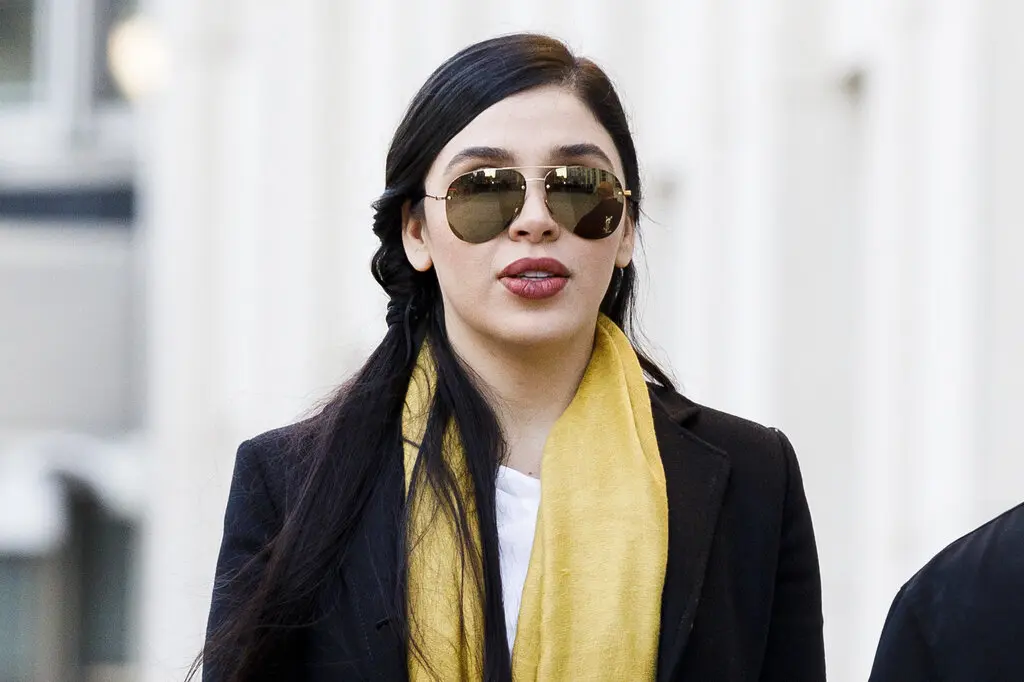
    Emma Coronel Aispuro, the wife of Mexico’s most notorious drug trafficker, best known as El Chapo, was arrested Monday and charged with helping her husband run his multibillion-dollar criminal empire and plotting to break him out of prison after he was captured in 2014.

    Ms. Coronel, a former beauty queen, had been under investigation for at least two years by U.S. federal authorities for being an accomplice to her husband, Joaquín Guzmán Loera, who was convicted in 2019 at a trial in Brooklyn of masterminding a huge drug conspiracy and was subsequently sentenced to life in prison.

    Court documents filed in Ms. Coronel’s case said she relayed messages for Mr. Guzmán that helped him make drug shipments from 2012 to 2014 and evade capture by the legions of American and Mexican authorities who had been pursuing him for years. Evidence emerged at Mr. Guzmán’s trial that Ms. Coronel was also a chief conspirator in a sophisticated plot to break him out of the Altiplano prison in Mexico by digging a nearly mile-long tunnel into the shower of his cell.

    Ms. Coronel, 31, is a dual U.S.-Mexican citizen with roots in both Southern California and the city of Culiacán in Mexico’s Sinaloa State, which has long served as the base of operations for Mr. Guzmán’s drug organization, the Sinaloa cartel. She was taken into custody at Dulles International Airport, near Washington, and is scheduled to make an initial appearance on Tuesday in the U.S. District Court for the District of Columbia. Her lawyer, Jeffrey Lichtman, who also represented Mr. Guzmán, declined to comment on the arrest.

    While it is unusual for law enforcement officials to go after the spouses of drug-world figures, prosecutors at Mr. Guzmán’s trial offered substantial evidence that Ms. Coronel, unlike other wives of narco-traffickers, was deeply enmeshed in her husband’s criminal business.

    They introduced BlackBerry messages that made clear that she had helped Mr. Guzmán conduct his operations — sometimes with her own father. Other messages indicated that she was intimately involved not only in Mr. Guzmán’s famous 2015 tunnel escape from Altiplano, but also in helping him to evade capture by American and Mexican authorities after a botched raid in 2012 in the Mexican resort town Cabo San Lucas.

    At Mr. Guzmán’s trial, his onetime chief of staff, Dámaso López Núñez, told the jury that Ms. Coronel had sought to help her husband escape yet again after he was recaptured in 2016 and returned to Altiplano. According to testimony by Mr. López, Ms. Coronel hatched a plot to bribe Mexico’s top prison official, but before the plan could be carried out Mr. Guzmán was extradited to the United States to stand trial.

    Ms. Coronel, who is Mr. Guzmán’s third — or possibly fourth — wife and the mother of two of his numerous children, grew up in the drug business. Court filings note that her father, Inés Coronel Barreras, who was taken into custody in 2013 in Mexico, was one of Mr. Guzmán’s top lieutenants.

    Prosecutors have brought charges against several members of Mr. Guzmán’s nuclear family. His two eldest sons, Jesús Alfredo Guzmán Salazar and Ivan Archivaldo Guzmán Salazar, who remain at large in Mexico, have been under indictment in the United States for years. Two of his younger sons, Joaquín Guzmán López and Ovidio Guzmán López, were charged in Washington just days after their father’s conviction and also remain fugitives.

    The F.B.I. said Ms. Coronel married Mr. Guzmán in about 2007. The wedding — in the rough mountain country outside Culiacán — took place when Ms. Coronel was 17 and Mr. Guzmán was more than twice her age.

    In an interview with The New York Times during Mr. Guzmán’s trial, Ms. Coronel stuck up for her husband, saying that she did not recognize him as the drug lord prosecutors had portrayed him as. “I admire him as the human being that I met,” she said, “and the one that I married.”

    She was a constant presence in the courtroom in New York during the three-month trial, often showing up in the latest designer fashions. Fiercely loyal to her husband — despite his serial philandering — Ms. Coronel orchestrated one of the trial’s most dramatic nonlegal moments, sending a message to one of Mr. Guzmán’s mistresses, Lucero Guadalupe Sánchez López, who appeared one day as a witness.

    After Ms. Sánchez López proclaimed her love for Mr. Guzmán from the stand, Ms. Coronel arranged for her husband to arrive in court next day wearing a burgundy velvet smoking jacket, identical to the one she was wearing. It was a signal that Ms. Coronel was Mr. Guzmán’s wife and that Ms. Sánchez López, in her blue prison uniform, was merely the other woman.

    It remained unclear on Monday night why federal authorities arrested Ms. Coronel now after implicating her in her husband’s crime more than two years ago.