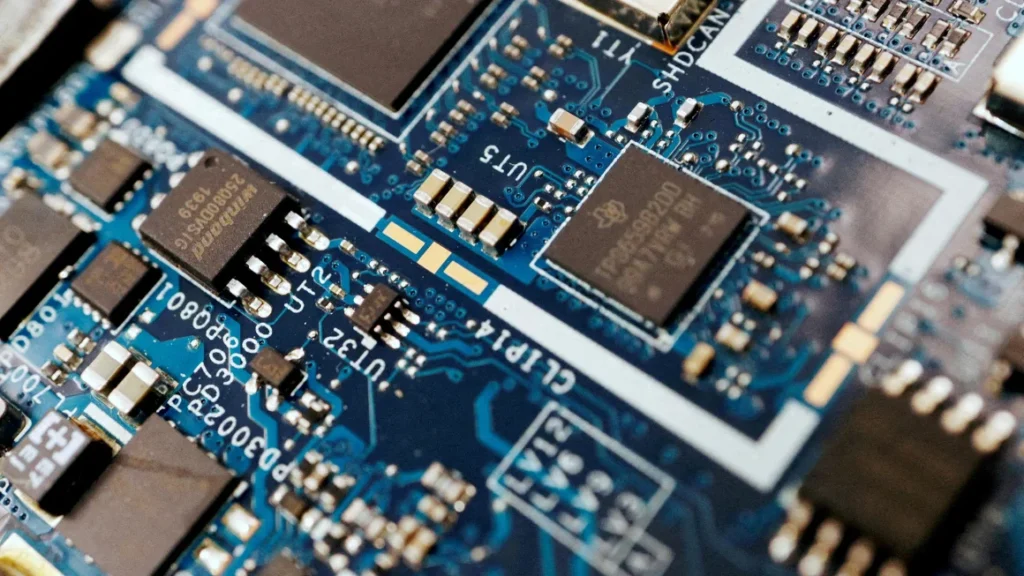
President Donald Trump will rescind a set of Biden-era curbs meant to keep advanced technology out of the hands of foreign adversaries but that has been panned by tech giants.
The move could have sweeping impacts on the global distribution of critical AI chips, as well as which companies profit from the new technology and America’s position as a world leader in artificial intelligence.
“I vocally opposed this rule for months, and indeed, the ranking member and I together urge the Biden administration not to adopt it, and I’m very pleased that President Trump has now confirmed he plans to rescind it,” US Senator Ted Cruz (R-Texas) said during a Senate committee hearing to discuss AI regulation on Thursday.
Cruz said he will soon introduce a new bill that “creates a regulatory AI sandbox,” adding that he wants to model new regulation after the approach former President Bill Clinton took at the “dawn of the internet.” OpenAI CEO Sam Altman, AMD CEO Lisa Su, Microsoft vice chair and president Brad Smith and CoreWeave CEO Michael Intrator testified during the hearing.
Altman, whose company collaborates with Apple by integrating its ChatGPT technology into Siri’s voice assistant, said he visited an Apple facility in Texas where they’re building “what will be the largest AI training facility in the world.” Apple said in February that its investing $500 billion in expanding its US footprint, which includes building a facility in Houston to produce servers for its Apple Intelligence AI features.
“We need a lot more of that,” Altman said.
The curbs, which were set to take effect on May 15 and were introduced during the final days of former President Joe Biden’s administration, sorted countries into three tiers subject to specific AI-related trade regulation.
Those in the top tier, which include the United Kingdom, Spain, Japan, Germany and Ireland among other countries, face the least restrictions, while countries like China and Russia are in the tier with the strictest constraints. It’s the countries that fall in between that have raised concern among critics like Microsoft.
Microsoft’s Smith wrote in February that countries that fall into this second bucket may look elsewhere for AI, potentially China.
“The unintended consequence of this approach is to encourage Tier Two countries to look elsewhere for AI infrastructure and services,” he wrote. “And it’s obvious where they will be forced to turn.”
AI chip giant Nvidia has also publicly pushed back against the curbs.
The tech executives called for more innovation and faster AI adoption in their prepared remarks. Smith also discussed the importance of using AI to boost job growth in America, a key tenet of Trump’s push to bring tech manufacturing to the US despite the challenges of shifting away from vast supply chains and cheaper labor in China and elsewhere abroad.
“Are we trying to build machines that will outperform people in all the jobs that they do today, or are we trying to build machines that will help people pursue better jobs and even more interesting careers in the future?” said Smith. “Indisputably, it needs to be the second, not the first.”
Much of the hearing focused on the challenge of balancing the ability to move quickly while adopting necessary standards and export controls to prevent technology from being diverted to China. But the tech executives were also grilled on ethical issues related to AI, such as the trustworthiness of the information chatbots produce, copyright concerns and how to protect children from potential harm.
Nonprofit media watchdog Common Sense Media recently published a report saying AI apps pose “unacceptable risks” to children and teens, coming after a lawsuit was filed last year over the suicide death of a 14-year-old boy whose last conversation was with a chatbot.
“This idea of AI and social relationships, I think this is a new thing that we need to pay a lot of attention to,” Altman said, after saying his company would be willing collaborate on a framework to help protect young users.
The Trump administration has previously pushed for less regulation around AI, with Vice President JD Vance saying that “excessive regulation of the AI sector” could “kill a transformative industry just as it’s taking off” during remarks at the Artificial Intelligence Action Summit in Paris. Trump is also pushing for the US to be a leader in both the AI industry and in technology manufacturing, frequently touting vows from TSMC and Apple to expand their US infrastructure as victories.
The hearing also comes as tariffs on semiconductors are expected to arrive imminently. Last month, after saying smartphones and other select electronics would be exempt from reciprocal tariffs, Trump said in a Truth Social post that those products would be moved to a “different tariff bucket” as the administration examines the “whole electronics supply chain.”
The AI race between the US and China escalated earlier this year with the arrival of Chinese tech startup DeepSeek’s supposedly cheap yet sophisticated AI model, which shook both Wall Street and Silicon Valley. It grabbed headlines in January for the company’s claims that its R1 model could roughly match OpenAI’s o1 model for a fraction of the price, challenging the notion that powerful performance required costly investments.
“The number one factor that will define whether the United States or China wins this race is whose technology is most broadly adopted in the rest of the world,” Smith said.