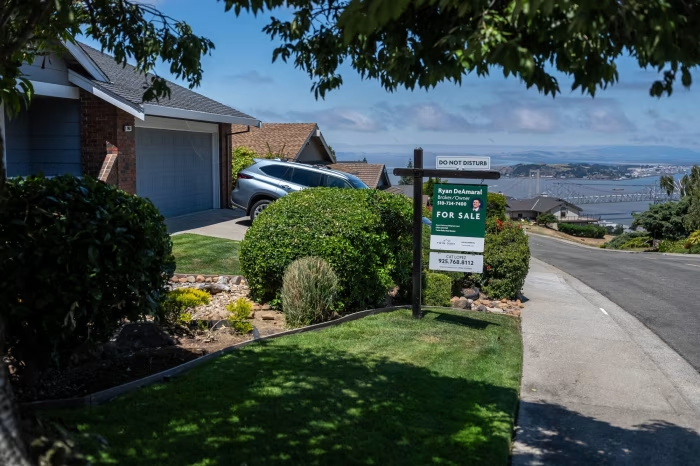
Home sales declined in June, ending the housing market’s key spring season on a sour note as buyers grappled with high mortgage rates and record home prices.
Sales of existing homes slid 2.4% in June over the previous month to a seasonally adjusted annual rate of 4.09 million, the National Association of Realtors said Thursday. The number fell well short of expectations: Economists surveyed by The Wall Street Journal had forecast an increase of 0.7%.
The June decline marked a turnaround from an unexpectedly strong increase in May.
Economists have dimmed their expectations for the housing market in 2026, largely due to the war in Iran, which has boosted inflation and mortgage rates. Realtor.com now expects existing home sales to reach 4.10 million for the year, down from the 4.13 million projected last December, but still up 1% over 2025.
The national median existing-home price in June rose to $440,600, a 1.8% increase from a year earlier, NAR said.
“The back-and-forth in monthly home sales activity, driven by mild fluctuations in mortgage rates, shows how sensitive home buyers are to affordability conditions,” said Lawrence Yun, NAR’s chief economist.
The housing market has been mired in a yearslong slump, with the rise in mortgage rates in 2022 putting an end to a pandemic-era buying spree.
Mortgage rates briefly fell below 6% at the beginning of 2026, sparking hope for a housing resurgence. But after the war in Iran began, rates surged and have remained volatile since. Last week, 30-year fixed mortgage rates averaged 6.43%, according to Freddie Mac.
Many homeowners locked in to low rates from years ago have opted to stay put to maintain their rates, which has weighed on available inventory. This has contributed to rising prices, making it harder for would-be first-time home buyers to crack into the market.
Weak sentiment among Americans about the economy has also weighed on their willingness to undertake large purchases.
Despite June’s decline, there are still signs of improvement since last year. June sales were 2.8% higher than a year ago, for example. Inventory has improved, and NAR noted that wage gains are rising faster than home prices. Pent-up demand has also helped some, even while mortgage rates remain elevated.
Still, it remains a challenging market for many renters who would like to become homeowners.
Jason de Leon and his wife, currently renting in Jersey City, N.J., have been looking for their first house for about three years, but haven’t found something they like in their budget.
“You’re walking into a $6,000 a month mortgage plus whatever costs you’re going to need to spend on top of it to bring the house up to whatever you wanted it to be,” he said. “Rent is cheaper. It doesn’t make sense for me to buy it.”
Plus, de Leon, who works in banking, is somewhat concerned about the job market. “Even though I have stable employment, I do worry about it going forward.”
The de Leons expect to continue looking for homes cautiously over the coming months.
“We’re ready to move when the right opportunity is there. So for the next year and change, we’ll be looking,” he said. “I’m not in a rush to make the largest financial decision in both of our lives.”